
Reviewed · 3-HOUR EXPERIENCES
3-Hour Private Tour to Jewish Ghetto and Shanghai Bund
Shanghai’s past is full of surprises. This private tour links the Jewish Refugees Museum, old stone-gate lanes, and the Bund into one thoughtful morning or afternoon. I especially like the small-group format and the chance to see both refugee life and the grand commercial buildings tied to Shanghai’s Jewish community.
I also like that hotel pickup and local transport are included, which saves you from piecing together two distant parts of the city. The main consideration is scope: the tour moves quickly, and hotel pickup is limited to central Shanghai. At $90 per person, it makes the most sense for visitors who want context and conversation, not just photo stops.
In This Review
- Key points at a glance
- Why this Jewish Shanghai tour is worth your time
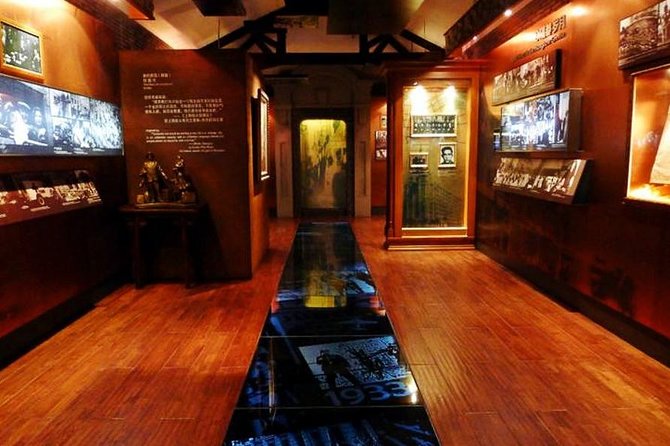
- Stop one: the Jewish Refugees Museum and Ohel Moishe Synagogue
- Stop two: the old Jewish neighborhood and stone-gate houses
- Stop three: the Bund, Peace Hotel, and Jewish architecture
- Guides make the difference
- Private transport and timing
- Is $90 per person a fair price?
- Who should take this tour?
- Should you book it?
- FAQ
- How long does the Jewish Ghetto and Bund tour last?
- Is hotel pickup included?
- What happens if my hotel is outside central Shanghai?
- Is transportation between the locations included?
- Is the Jewish Refugees Museum admission included?
- Is hotel drop-off included?
- Can I cancel for a full refund?
Key points at a glance
- The Jewish Refugees Museum anchors the visit: See photographs, films, documents, and personal belongings connected to Jewish refugees in Shanghai.
- Old lanes bring the story down to street level: Walk past stone-gate houses and the former Jewish neighborhood, where thousands once lived.
- The Bund adds a second chapter: Connect Jewish business and architecture with Shanghai’s British colonial-era waterfront.
- Private transport keeps the route practical: Central hotel pickup and transfers are included, with a premium local ride for groups of one to four.
- Guide quality matters here: Guides including Lea, Sunny, Annie, Mason, Aron, Robert, and Ruby have been praised for clear explanations and flexible pacing.
- This suits history-minded visitors: It is especially useful if you want a focused look at Shanghai’s 1930s and 1940s refugee story.
Why this Jewish Shanghai tour is worth your time
Shanghai is often sold through its skyline, shopping streets, gardens, and food. Those are good reasons to visit, but they can leave out the city’s role as a refuge during one of Europe’s darkest periods.
This tour gives you a focused look at the Jewish community that formed in Shanghai, including European Jews who escaped persecution and found shelter in China. You will also see how that story fits into the city itself, from crowded residential lanes to the grand buildings of the Bund.
I like the balance. The museum gives you documents and personal stories. The neighborhood walk shows where people lived. The Bund then shifts the setting to finance, hotels, and architecture. You are not simply looking at old buildings. You are following the movement of people through three very different parts of the city.
The experience is private, so only your group participates. That matters more than it might on a standard sightseeing route. You can ask about a family name, pause over a photograph, or request a simpler explanation if English is not your first language. One Spanish-speaking visitor found the guide patient and clear despite taking the tour in English.
The tour earns a strong overall rating of 5 out of 5 from 69 reviews, with 99 percent recommending it. The praise centers on the guides, the museum, and the unusual subject matter. That is a good sign, but you should still understand what the tour can and cannot do: it is a compact introduction, not a full academic study of Jewish life in China.
A few more tours in Shanghai worth putting side by side
- Shanghai: 3-Hour Old Shanghai City Tour
★ 4.9 · 45 reviews - Private 3 hour bike tour with coffee break
★ 4.5 · 38 reviews - 3-Hour Shanghai Bund Swift Tour with River Cruise or Skyscraper
★ 5.0 · 26 reviews
Stop one: the Jewish Refugees Museum and Ohel Moishe Synagogue
Your guide meets you in your Shanghai city hotel lobby, if the hotel is in the downtown pickup area. From there, you travel to the historic Jewish center in a private vehicle.
The first stop takes about 1 hour and 20 minutes, making it the longest part of the experience. Entrance is included, so you can focus on the exhibits instead of sorting out another ticket.
The museum, located at Ohel Moishe Synagogue, uses photographs, films, personal items, and written material to explain the Jewish refugee experience in Shanghai. This is where the tour gets its emotional weight. You may see the story through official documents, but also through the everyday objects and images that make displacement feel personal.
I would allow yourself time to read. The museum is not just a quick room to pass through before the next landmark. Guides such as Mason have been praised for allowing visitors to explore at their own pace, while still explaining the larger story and answering questions.
Sunny has also received strong praise for explaining both the wartime refugee migration and the longer story of Jewish settlement in China. Lea is noted for presenting the subject in chronological order, which is useful because the history can otherwise feel like a jumble of dates, arrivals, and political changes.
A particularly meaningful possibility is finding a family name among the roughly 20,000 refugees connected with Shanghai during this period. That will not happen for everyone, but the museum’s records and personal material give the visit a sense of connection that a broad city tour cannot provide.
The main limitation is that the museum may be the most demanding stop for children or visitors who prefer active sightseeing. There is a lot to absorb, and the subject includes war, persecution, displacement, and hardship. Families should make sure children are ready for serious historical material, since children must be accompanied by an adult.
Stop two: the old Jewish neighborhood and stone-gate houses
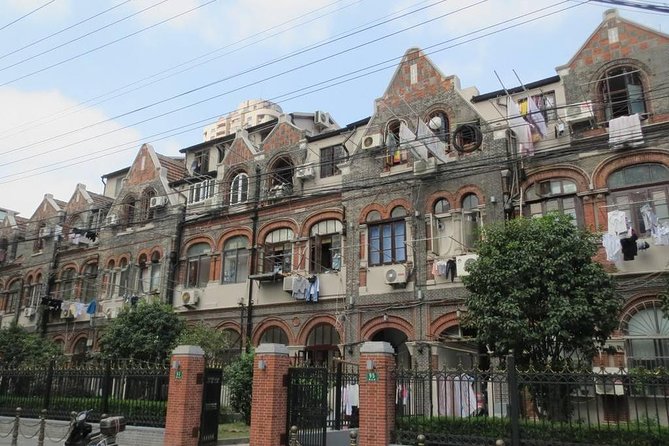
After the museum, you spend about an hour in the former Jewish neighborhood. The route includes the old Jewish park, the former JDC center, and local back streets lined with traditional Shanghai stone-gate houses.
This is the point where the story leaves the display cases. You see the type of housing that sheltered thousands of refugees, along with the tight lanes and older buildings that formed part of daily life. The architecture also gives you a useful comparison with more typically Chinese historic neighborhoods elsewhere in Shanghai.
The phrase Little Vienna is used for this part of the city because of its European Jewish character, but you should not expect a preserved European district frozen in time. The area is a living neighborhood, and the buildings have been affected by later use and change. That is part of the value. You are seeing a place where history remains mixed with ordinary modern life.
One especially interesting option is a visit connected with the former living quarters of a Jewish refugee. The home is still occupied by the family connected with that refugee, including later generations. This offers a rare look at how Jewish refugee history and present-day Shanghai housing can meet in one small space.
Do not expect every building to be fully restored or marked with a large sign. Much of the experience depends on your guide pointing out what you would otherwise walk past. Mason, Aron, Annie, and Sunny are among the guides praised for making those connections clear.
Wear comfortable shoes. The walking is not described as strenuous, and most travelers can participate, but the route uses back streets and neighborhood lanes rather than a single smooth museum path. The tour operates in all weather, so bring suitable clothing, especially during hot, rainy, or cold periods.
Stop three: the Bund, Peace Hotel, and Jewish architecture
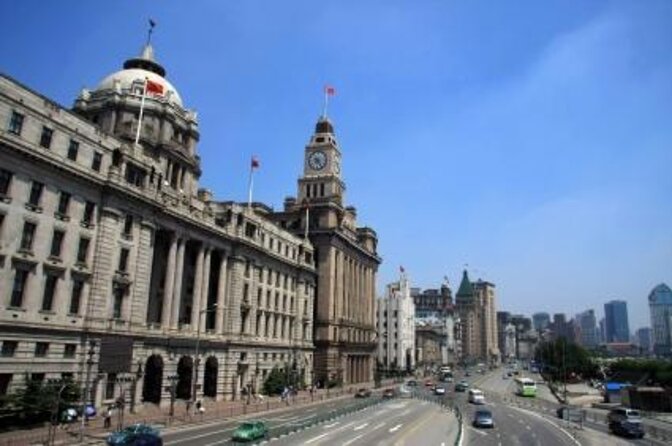
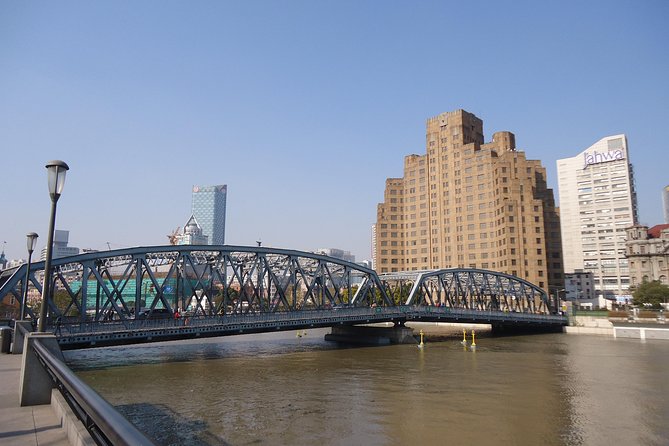
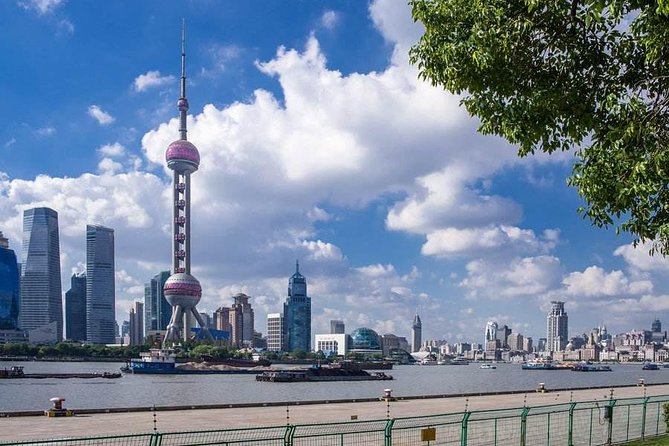
The final stop takes about 50 minutes at the Bund, Shanghai’s famous waterfront promenade. Here the focus shifts from refugee neighborhoods to the city’s international business past.
Your guide points out the Peace Hotel, associated with the Sassoon family and British Jewish commercial influence. The building’s art-deco design gives the tour a striking visual change after the smaller stone-gate houses and narrow residential lanes.
This part works best when you look beyond the skyline photographs. The Bund is a place of grand facades, but the guide helps connect those buildings to the people and companies that shaped Shanghai’s international trade and finance. The result is a wider picture of Jewish life in the city, not limited to refugees from Europe.
You will not receive a full architectural tour of every Bund building. The stop is short, and the Bund can be crowded and distracting. Still, it is a smart final chapter because it shows the contrast between two sides of Jewish Shanghai: the private struggle of refugee families and the public wealth represented by major hotels and commercial buildings.
I also like the way the Bund prevents the tour from becoming narrowly focused on one era. You learn about refugee life, then see an older British-Jewish business legacy in the same city. That connection gives the afternoon more shape.
A few more tours worth putting side by side
- Authentic Local Food Tour in Central Shanghai
★ 5.0 · 1,382 reviews - Zhujiajiao Water Town and Shanghai City Private Day Tour
★ 5.0 · 1,016 reviews - Private Shanghai Full Day City Tour with Old and New Highlights
★ 5.0 · 995 reviews - Shanghai: Hop-on Hop-off Bus Ticket and Optional Attractions
★ 3.4 · 692 reviews
Guides make the difference
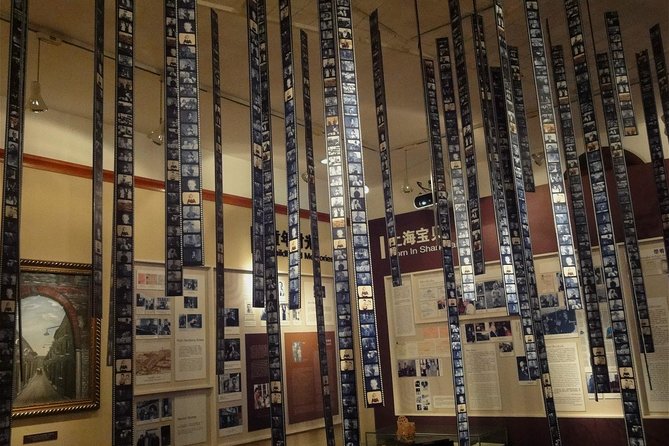
This is the kind of tour where a guide can turn a good itinerary into a valuable one. The subject requires explanation, and the streets alone will not tell you which buildings mattered or how the Jewish community changed over time.
The guides praised most often include Mason, Sunny, Lea, Annie, and Aron. Mason is described as clear, accommodating, and especially familiar with the museum. Sunny is praised for combining Jewish history with broader Shanghai culture. Lea is noted for her careful chronological storytelling.
Robert has been praised for making the museum and old neighborhood easy to understand, while Aron is described as warm and detailed in his explanation of Jewish life in Shanghai. Ruby is praised for bringing an energetic and enjoyable style to the tour.
Of course, guide quality can vary by date and assignment. The provider lists a professional English-speaking guide, but you cannot choose a particular guide unless the operator confirms that in advance. Still, the repeated praise for clear English, patience, and strong subject knowledge is encouraging.
If you have a family connection to Shanghai, Jewish refugee history, Europe, or wartime migration, tell the guide at the start. A private tour gives you a better chance to shape the conversation around those interests.
Private transport and timing
The advertised duration is about 2 hours and 30 minutes to 3 hours. The listed stop times total slightly more than three hours, so allow some flexibility for transfers, museum pacing, and local conditions.
Morning and afternoon departures are available. I would choose the time that gives you the least rushed schedule, rather than trying to squeeze the tour between fixed train, flight, or cruise plans.
Pickup is included only for hotels in central Shanghai. Hotels in areas such as Jiading, Songjiang, Qingpu, Jinqiao, Chuansha, Pudong airport, or near Disneyland are outside the regular pickup area. In those cases, the guide can arrange a downtown meeting point, but you will need to plan your way there.
For one to four people, transportation is provided by a local premium Uber. Groups larger than four receive an air-conditioned minivan. That is a practical advantage in Shanghai, where crossing the city can take time and public transport may not be ideal when you are moving between a museum district and the Bund.
Hotel drop-off is not included. If you have an evening reservation, train, flight, or cruise departure, leave a comfortable buffer after the tour. Pickup and drop-off at Wusongkou cruise port can be arranged for an added charge, but it is not part of the standard service.
Is $90 per person a fair price?
At $90 per person, this is not the cheapest way to see the Jewish Refugees Museum or the Bund. You are paying for a private guide, museum entry, central hotel pickup, and transfers between stops, not simply admission to three sights.
For a solo visitor, the price is harder to justify than for a couple or small group. For two to four people, the private format becomes more reasonable because you share the guide and vehicle while keeping the pace suited to your group.
The value is strongest if you want interpretation. You could visit parts of this route independently, but you would need to arrange transport, research the Jewish neighborhood, understand what remains at each site, and connect the refugee story with the Bund’s architecture.
I would book this for a first visit to Shanghai when you want one well-organized historical outing. I would skip it if your schedule is extremely tight, you prefer unstructured wandering, or your main interest is only in the Bund skyline.
Group discounts are available, though the exact savings are not stated. Confirmation is sent within 48 hours of booking, subject to availability. Free cancellation is available up to 24 hours before the local start time. Changes or cancellations inside that window are not accepted for a refund.
Who should take this tour?
This tour suits you if you enjoy social history, migration stories, architecture, or lesser-known chapters of major cities. It is also a strong choice for anyone with Jewish family connections or an interest in World War II refugee history.
The private setup works well for couples, families with older children, and small groups who want to ask questions. It also helps if you are visiting Shanghai for only a few days and want a clear route without spending time arranging taxis between districts.
You should think twice if you want a relaxed walking tour with long café stops. The itinerary is compact, and each location has a job to do. The museum explains the story, the neighborhood shows where people lived, and the Bund gives you the wider commercial setting.
Good walking shoes and weather-appropriate clothing are sensible. The tour runs in all weather, and the route includes outdoor streets and back lanes.
Should you book it?
I would book this tour if you want to understand a side of Shanghai that is easy to miss. The Jewish Refugees Museum is the essential stop, but the old neighborhood and the Bund make the visit more complete. Together, they show both the human cost of displacement and the city’s international business past.
The strongest reason to go is the guide. Mason, Sunny, Lea, Annie, Aron, Robert, and Ruby have each been praised for clear, engaging explanations, though guide assignment is not guaranteed. The main reasons to hesitate are the central pickup limits, the short overall schedule, and the $90 price for solo visitors.
For a couple or small group with an interest in history, architecture, or family research, this is a well-focused use of half a day. It will not explain every part of Jewish life in China, but it can give you a memorable and grounded understanding of how Shanghai became a place of refuge.
FAQ
How long does the Jewish Ghetto and Bund tour last?
The experience lasts approximately 2 hours and 30 minutes to 3 hours. The three listed stops include about 1 hour and 20 minutes at the museum, 1 hour in the former Jewish neighborhood, and 50 minutes at the Bund.
Is hotel pickup included?
Hotel pickup is included for hotels located in downtown Shanghai. Hotels in outlying areas, including Jiading, Songjiang, Qingpu, Jinqiao, Chuansha, Pudong airport, and Disneyland-area hotels, are not included in the standard pickup service.
What happens if my hotel is outside central Shanghai?
The guide can provide instructions for meeting near the downtown area. You will need to arrange your way to that meeting point.
Is transportation between the locations included?
Yes. For groups of one to four, transportation is provided in a local premium Uber. Groups larger than four receive an air-conditioned minivan.
Is the Jewish Refugees Museum admission included?
Yes. The entrance fee to the Jewish Refugees Museum and Jewish Ghetto area is included.
Is hotel drop-off included?
No. Hotel drop-off is not included. Pickup and drop-off at Wusongkou cruise port can be arranged for an additional charge.
Can I cancel for a full refund?
Yes, if you cancel at least 24 hours before the experience start time. Cancellations or changes made less than 24 hours before the local start time are not accepted for a refund.
Newest reviews from Shanghai
- Private Qibao Ancient Town Walking Tour with Tea Tasting and Calligraphy Experience★ 5.0 · 4 reviews
- Shanghai Pudong and Shanghai Hongqiao Airport to Hotels Transfer★ 5.0 · 4 reviews
- Flexible Airport Layover Tour of Shanghai City Highlights with Spa Option★ 5.0 · 4 reviews
- Discover Local Life and Street Food Shanghai Bike Adventure★ 5.0 · 4 reviews
- Shanghai Zhujiajiao water town,Yugarden&Bund one day tour★ 5.0 · 4 reviews
- Quick Tour to Xi’an Terracotta Warriors from Shanghai by Air in One Day★ 5.0 · 4 reviews
- Wuzhen Private Full-Day Tour from Shanghai★ 5.0 · 4 reviews
- Private Round Trip Transfer to Zhouzhuang Water Village from Shanghai★ 5.0 · 4 reviews
3-Hour Experiences, compared.
3-Hour Private Night Tour: Beijing Foodie Experience
Read our review →
3-Hour Shanghai Bund Swift Tour with River Cruise or Skyscraper
Read our review →
3-Hour Shanghai Yu Garden &Old Town Private Tour with Tea Tasting
Read our review →
Browse the lists this tour appears in