
Reviewed · WATER TOWN TOURS
4-Hour Food Tour in Qibao Water Town from Shanghai by Subway
Come hungry, leave curious. This small-group outing pairs a subway ride from central Shanghai with Qibao’s old lanes, canals, temples, tea, and up to eight local snacks. I especially like the street-food focus and the chance to enter small eating places that can feel difficult to navigate without Chinese language skills. The guides, including Queena, Alana, Vicky, and Berlin, are praised for friendly service and clear English.
I also like the choice of a morning or afternoon departure, plus the optional one-hour Chinese foot massage. The main consideration is pace: this is a food walk through busy lanes, not a quiet sightseeing tour, and the exact foods can vary. You also need to reach the People’s Square meeting point yourself.
In This Review
- Key points at a glance
- Why Qibao makes a good food outing
- Starting at People’s Square
- Walking Qibao Old Street
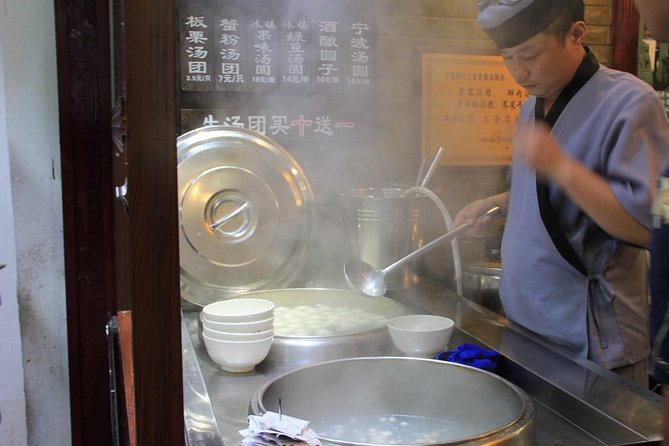
- What you may taste in Qibao
- Small food shops and a thousand-year-old dumpling house
- Tea after the tasting stops
- The optional one-hour foot massage
- Guide quality and personal service
- Price and overall value
- Who should book this Qibao outing
- Should you book the Qibao food tour?
- FAQ
- Where does the Qibao food tour begin?
- Does the tour include hotel pickup and drop-off?
- How do you reach Qibao?
- How long does the experience last?
- How many foods will you taste?
- Is tea included?
- Is the foot massage included in every booking?
- What should I wear?
- Can children join the tour?
Key points at a glance
- Up to eight local foods: Expect possibilities such as soup dumplings, crab-meat dumplings, fried dumplings, bamboo rice, sweet cakes, tofu, potatoes, and glutinous rice soup.
- Qibao beyond the snacks: You’ll see canals, stone bridges, Ming and Qing era buildings, souvenir shops, and a temple.
- Subway travel included: The tour starts at the Shanghai Urban Planning Exhibition Center near People’s Square, with subway tickets covered.
- Small group, maximum 15 people: This makes it easier to ask questions, share dishes, and move through narrow food lanes.
- Tea closes the food walk: A Chinese tea tasting, and in some cases a full tea ceremony, gives the tour a calmer finish.
- Massage upgrade available: Choose the one-hour Chinese foot massage option for a four-hour outing rather than the roughly three-hour walking tour.
Why Qibao makes a good food outing
Shanghai has plenty of polished restaurants and famous shopping streets. Qibao gives you a different side of the city. This old water town has canals crossed by stone bridges, old buildings, narrow lanes, small shops, food stalls, and a more local feel than the main tourist districts.
The setting is part of the meal. You might pause for a photo on a bridge, pass a shop selling souvenirs, then turn into a food store where the menu is not easy to understand on your own. That combination is the real value here. You are not simply being driven to a restaurant and handed a plate.
Qibao is described as having Ming and Qing era architectural features, and the tour also includes a temple visit. Do not expect an untouched village. It is still a popular destination with commercial streets and food shops. The appeal lies in seeing how old-town scenery and everyday eating fit together.
More Food Tours in Shanghai
- Authentic Local Food Tour in Central Shanghai
★ 5.0 · 1,382 reviews - Eat Like A Local: Shanghai Night Food Tour
★ 5.0 · 616 reviews - Late Night Food Tour in the Shanghai’s French Concession
★ 5.0 · 260 reviews
Starting at People’s Square
Your meeting point is the Shanghai Urban Planning Exhibition Center at 100 Ren Min Da Dao, near People’s Square. The tour does not include hotel pickup or drop-off, so allow enough time to reach this central location.
From there, you travel by subway with your guide. Subway tickets are included, which removes one small but useful task from the morning or afternoon. The ride also gives you a practical look at Shanghai’s public transport system rather than keeping you inside a private vehicle.
A subway departure matters in Shanghai. Road traffic can be heavy, and one account of the experience praised the guide for handling difficult conditions when private transport was used for a return trip. For this scheduled tour, the stated transport is subway travel, so you should follow the meeting instructions carefully and avoid assuming that hotel transport is part of the package.
The group can include up to 15 people. That is not a private tour, but it is small enough for a guide to explain dishes, help with ordering, and keep the group together in narrow lanes.
Walking Qibao Old Street
Once in Qibao, the tour takes you along Qibao Old Street. The walking portion covers the old buildings, bridges, canals, shops, and food area, with stops for photographs and explanations along the way.
The canals and bridges are not just background scenery. They help explain why Qibao feels different from central Shanghai. Water towns are organized around crossings, lanes, and waterside buildings, so the route gives you a compact introduction to the town’s layout.
The southern part of Old Street is the main food zone. This is where the tour shifts from sightseeing to tasting. You will likely spend time moving between small food shops rather than sitting down for one long meal.
Wear comfortable shoes. The tour lasts about three hours without the massage option, and you will be walking through old streets in all weather. Rain has not stopped the experience, but it has made umbrellas and practical clothing important. The activity operates in all weather conditions, so check the forecast and dress accordingly.
What you may taste in Qibao
The tour offers up to eight food tastings from a changing selection. The supplied food examples and detailed accounts give you a good sense of the range:
- Soup dumplings and crab-meat dumplings
- Fried dumplings
- Bamboo rice
- Sweet Haitang cake
- Red bean sweet cakes
- Taro fried cakes
- Glutinous rice ball soup
- Spicy tofu
- Spicy small potatoes
- Chinese tea
You should not expect every item on this list every time. The exact selection can depend on the day, shop availability, and your guide’s choices. That flexibility is useful because the guide can introduce classics while also responding to your preferences.
The food is varied in texture and flavor. Dumplings provide the familiar starting point, while bamboo rice, taro cakes, sweet pastries, tofu, and glutinous rice soup broaden the experience. If you prefer savory food, tell your guide. If you have a sweet tooth, mention that too.
The guides are especially helpful here. Alana is praised for encouraging people to try unfamiliar foods while remaining patient and accommodating. Vicky is praised for handling the logistics, from tickets to deciding what to sample. Queena is described as enthusiastic and willing to answer questions without rushing the group.
One practical tip is simple: skip breakfast for the morning tour. Several food stops can add up quickly, and the tasting format works best when you have room for more than one or two bites.
More water town trips:
- Zhujiajiao Water Town and Shanghai City Private Day Tour
★ 5.0 · 1,016 reviews - Shanghai Private Tour: Zhujiajiao Water Town and Boat Ride
★ 5.0 · 661 reviews - Shanghai: Zhujiajiao Private Tour w/ Boat Ride & Garden
★ 5.0 · 460 reviews - Suzhou and Zhouzhuang Water Village Day Trip from Shanghai
★ 4.0 · 426 reviews
Small food shops and a thousand-year-old dumpling house
One of the more distinctive details connected with this outing is a stop at a dumpling house described as 1,000 years old. That detail gives the food some context, though you should treat it as part of the guide’s presentation rather than expecting a formal museum visit.
The appeal of these small establishments is access. A guide can help you enter places that may feel intimidating when signs and menus are in Chinese. You can ask what you are eating, how it is prepared, and which items are considered local favorites.
This is also where the tour feels most authentic. You are tasting food in the setting where it is sold, rather than receiving a generic Chinese snack selected for an international audience. At the same time, the old street is commercial, so the experience is not a secret corner of town. It is a lively visitor area with souvenir stalls and popular food shops.
Tea after the tasting stops
After the food, the group finishes with Chinese tea. Some accounts describe this as a beautiful tea ceremony, which makes the final part feel slower and more traditional than the earlier street-food stops.
Tea is a smart ending. It gives you time to settle after several tastings and ask broader questions about Chinese food and customs. The guide can also explain what you have eaten, which is useful when the dishes are unfamiliar or have similar appearances.
Do not book this as a formal tea-school experience. The central purpose is food and Qibao sightseeing. Still, the tea stop adds a cultural layer and prevents the tour from feeling like a quick checklist of snacks.
The optional one-hour foot massage
The standard walking experience lasts about three hours. You can select an option that adds a one-hour Chinese foot massage, bringing the total duration to about four hours.
This is a useful choice if you want a gentler end to the outing or have already spent several days walking around Shanghai. It also changes the rhythm of the experience. Without the massage, the focus remains on Qibao, food, and tea. With it, you get a short sightseeing outing followed by time to relax.
The massage is optional, so do not pay for it unless you actually want that extra hour. If your schedule is tight, the shorter version may fit better. If you enjoy adding a wellness stop to a food day, the upgrade offers a clear reason to choose the longer option.
Guide quality and personal service
Guide quality is one of the strongest reasons to book this tour. Queena, Alana, Vicky, and Berlin receive repeated praise for friendly attitudes, strong English, patience, and care with the group.
That matters more on a food tour than on a standard walking route. A good guide can explain a dish before you taste it, suggest an item suited to you, keep track of subway logistics, and adjust the pace when someone needs a rest.
One account describes Alana helping with umbrellas during heavy rain. Another describes a guide arranging a special car back to a hotel when weather became severe. Those actions are not guaranteed parts of the tour, but they show the kind of practical attention you may receive when conditions become difficult.
The group limit of 15 supports this personal feel. It does not guarantee a private experience, and a full group could still feel busy in narrow streets. Still, it is a better setup for conversation than a large coach outing.
Price and overall value
At $94.94 per person, this is not the cheapest way to see Qibao. You are paying for more than snacks: the local guide, subway tickets, tea, several food stops, and the planning needed to connect them in a short visit.
The value is strongest if you are new to Shanghai, curious about Chinese street food, or uneasy about ordering in small local shops. The guide reduces the language barrier and gives the food meaning. You also avoid spending time deciding which stalls are worth trying.
The value is weaker if you already speak Chinese, know Qibao well, or prefer choosing every dish yourself. Independent visitors can explore the old street without paying a tour fee, though they will not receive the same explanations or organized tasting route.
Food portions are tastings, not a full restaurant meal. You may eat enough to replace breakfast or lunch, but do not assume that every stop provides a large serving. The best approach is to view the price as covering a guided food crawl and cultural introduction.
Who should book this Qibao outing
I would recommend it to first-time visitors who want an easy introduction to local snacks without spending a full day away from central Shanghai. It also suits curious eaters who want guidance but still prefer a small, informal group.
Families can join, provided children are accompanied by an adult. Most people can participate, but you should be comfortable walking for roughly three hours and using public transport. Comfortable shoes are essential.
The tour may not suit someone who wants a quiet water-town visit. Food streets can be active, shops are commercial, and the route includes several stops in a limited time. It is also not the best choice for anyone with strict dietary needs unless those requirements are explained at booking. Specific dietary requests should be provided in advance.
Service animals are allowed. The activity is near public transportation, and it operates in all weather, so plan for rain or heat rather than expecting a weather cancellation.
Should you book the Qibao food tour?
Book it if you want local food with a guide who handles the awkward parts, including subway travel, unfamiliar menus, and choosing worthwhile snacks. The strongest features are the range of tastings, the old-town setting, the tea finish, and the warm personal service associated with guides such as Alana, Queena, Vicky, and Berlin.
Skip it if you want a private itinerary, a guaranteed list of exact dishes, or hotel pickup. Also skip the massage upgrade if your schedule is short. For most first-time Shanghai visitors, though, this is a well-organized way to spend three to four hours seeing a historic water town and eating beyond the usual restaurant menu.
Cancellation is free if you cancel at least 24 hours before the start time. Changes or cancellations made less than 24 hours ahead are not accepted for a refund.
FAQ
Where does the Qibao food tour begin?
It begins at the Shanghai Urban Planning Exhibition Center, 100 Ren Min Da Dao, near People’s Square in central Shanghai.
Does the tour include hotel pickup and drop-off?
No. Hotel pickup and drop-off are not included. The activity starts and ends at the People’s Square meeting point.
How do you reach Qibao?
You travel from central Shanghai to Qibao by subway with your guide. Subway tickets are included.
How long does the experience last?
The walking food tour lasts about three hours. If you select the one-hour Chinese foot massage option, the full experience lasts about four hours.
How many foods will you taste?
You may taste up to eight different Chinese snacks. The exact foods can vary, but examples include dumplings, bamboo rice, sweet cakes, tofu, taro cakes, potatoes, and glutinous rice soup.
Is tea included?
Yes. Tea tasting is included, and the tour finishes with Chinese tea.
Is the foot massage included in every booking?
No. The one-hour Chinese foot massage is available only if you select that tour option.
What should I wear?
Wear comfortable shoes and dress appropriately for the weather. The tour operates in all weather conditions.
Can children join the tour?
Yes, but children must be accompanied by an adult.
Newest reviews from Shanghai
- Private Qibao Ancient Town Walking Tour with Tea Tasting and Calligraphy Experience★ 5.0 · 4 reviews
- Flexible Airport Layover Tour of Shanghai City Highlights with Spa Option★ 5.0 · 4 reviews
- Shanghai Pudong and Shanghai Hongqiao Airport to Hotels Transfer★ 5.0 · 4 reviews
- Discover Local Life and Street Food Shanghai Bike Adventure★ 5.0 · 4 reviews
- Shanghai Zhujiajiao water town,Yugarden&Bund one day tour★ 5.0 · 4 reviews
- Quick Tour to Xi’an Terracotta Warriors from Shanghai by Air in One Day★ 5.0 · 4 reviews
- Wuzhen Private Full-Day Tour from Shanghai★ 5.0 · 4 reviews
- Private Round Trip Transfer to Zhouzhuang Water Village from Shanghai★ 5.0 · 4 reviews
Water Town Tours, compared.

Zhujiajiao Water Town and Shanghai City Private Day Tour
Read our review →
Shanghai Private Tour: Zhujiajiao Water Town and Boat Ride
Read our review →
Suzhou and Zhouzhuang Water Village Day Trip from Shanghai
Read our review →
Yu Garden, Old Street, Bund & Zhujiajiao Water Town Bus Tour
Read our review →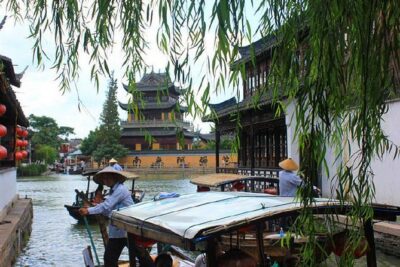
Zhujiajiao Water Town Private Tour with Boat Ride
Read our review →
Shanghai Day Tour to Zhujiajiao Water Town, Yu Garden, Bazaar, Bund
Read our review →Browse the lists this tour appears in