
Reviewed · SUMMER PALACE TOURS
Beijing: Summer Palace Highlight Walking Tour
Start where the palace feels most picturesque. This two-hour Summer Palace tour links the main sights from the North Gate to the East Gate, with an English or Chinese guide adding context as you walk. I like the small group, limited to 10 people, and the built-in photography help at the best viewpoints.
I also like the clear route through Suzhou Street, the Four Great Regions, Travel in Picture, the Marble Boat, and the Long Corridor. The main caution is the pace and walking demand: although the activity is marked wheelchair accessible, it is also listed as unsuitable for people with mobility impairments, so check carefully before booking.
In This Review
- Key points at a glance
- Why this two-hour route works at the Summer Palace
- Getting to the North Palace Gate
- Suzhou Street and the first change of scene
- The Four Great Regions and Buddhist ideas
- Travel in Picture and the Sea of Wisdom
- The Marble Boat and Kunming Lake
- Walking the 728-meter Long Corridor
- Hall of Joyful Longevity and the imperial household
- The political halls and the East Gate finish
- Is $41 a fair price?
- Timing, pace, and who should book
- Should you book the Summer Palace walking tour?
- FAQ
- Where does the Summer Palace tour meet?
- How do I reach the North Palace Gate by subway?
- Can I reach the meeting point by taxi or Didi?
- How long does the experience last?
- What languages are available?
- Is transportation included?
Key points at a glance
- Start at the North Palace Gate: Exit C at Beigongmen Station on Subway Line 4 puts you about a five-minute walk from the meeting point.
- See the palace’s best-known sights in two hours: The route includes Suzhou Street, the Four Great Regions, Travel in Picture, the Marble Boat, the Long Corridor, and key imperial halls.
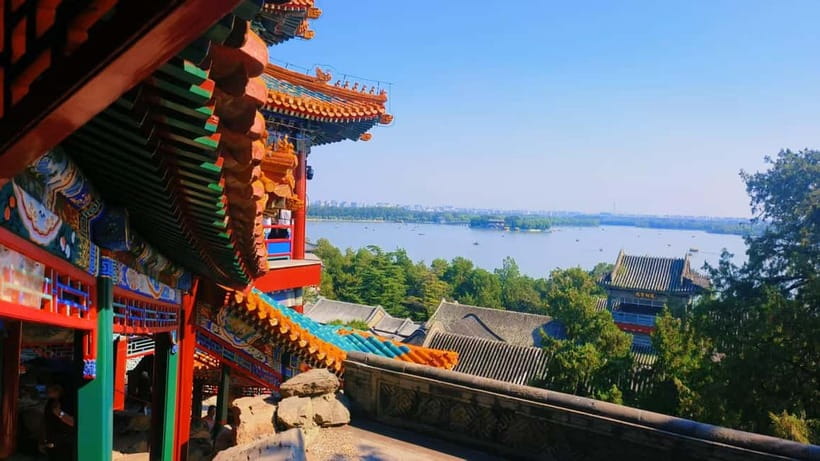
- Travel in Picture is the visual high point: The glazed-tile temple offers broad views toward Kunming Lake and makes an excellent photo stop.
- The Long Corridor rewards a slower look: Its 728 meters are lined with thousands of painted scenes, not just a walkway to hurry through.
- A guide makes arrival easier: James has contacted taxi drivers in Chinese for visitors, while other highly praised guides include Jack.
- Small groups keep questions practical: With no more than 10 people, you can ask about Buddhism, palace customs, architecture, and photography without shouting across a crowd.
Why this two-hour route works at the Summer Palace
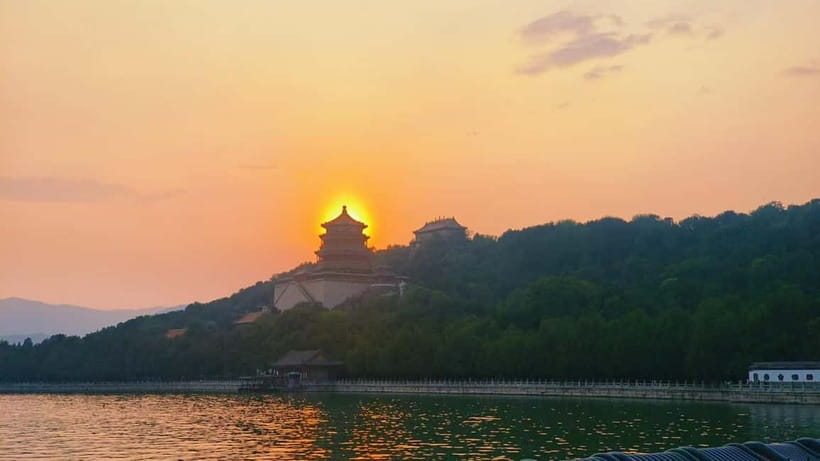
The Summer Palace is large enough to overwhelm a first visit. You can spend hours wandering beside Kunming Lake, climbing toward the hilltop buildings, or stopping at one painted beam after another. This tour solves that problem by giving you a focused path between the North and East Gates.
I see the route as a good introduction rather than a complete visit. You get the major architectural and cultural sights, but you will not have time to explore every corner of the grounds. The two-hour length is useful if your Beijing schedule is tight or if you want a guide-led orientation before returning on your own.
The group size matters here. A party capped at 10 people is small enough for a guide to answer individual questions and help with photos. It also makes it easier to keep moving through narrow sections of the route without the stop-and-start feel of a large coach group.
The strongest part of the experience is the guide’s role. James receives repeated praise for clear English, a friendly manner, and detailed explanations. He has also helped visitors get to the correct gate by speaking with taxi drivers in Chinese. Jack is another guide praised for making the route enjoyable and explaining what you are seeing in a relaxed way.
More Walking Tours in Beijing
- Beijing Hutong Walking Food and Beer Tour at Hidden Restaurants
★ 5.0 · 1,132 reviews - Private Beijing Walking Tour of the Forbidden City with 7 Options
★ 5.0 · 675 reviews - Forbidden City Private Walking Tour with Optional Sights
★ 5.0 · 400 reviews
Getting to the North Palace Gate
You meet at the North Palace Gate, also called 颐和园北宫门. The simplest public transport option is Subway Line 4 to Beigongmen Station. Use Exit C, turn around after leaving the station, and walk west for about five minutes.
That meeting point is practical because it begins the tour away from the most central palace buildings and takes you directly into the planned route. You should allow enough time to find the gate, especially if you are unfamiliar with Beijing’s subway system or are arriving during a busy part of the day.
A taxi or Didi is also possible. Enter North Palace Gate of the Summer Palace or 颐和园北宫门 as the destination. The meeting instructions suggest calling the guide once you are in the taxi so the driver’s destination can be checked in Chinese. That small bit of help can prevent a frustrating arrival at the wrong entrance.
There is no hotel pickup or drop-off. You arrange your own transport to the North Gate and from the East Gate after the walk. One visitor received help getting a taxi back into the city, but this should be viewed as helpful guidance rather than an included transfer.
Suzhou Street and the first change of scene
The tour begins at Suzhou Street, a water-town-style area built with traditional bridges, shops, and canal-side details. It offers a gentler introduction to the palace than beginning with a major ceremonial hall.
This section is particularly good for photographs. Ornate bridges and shopfronts create close-up subjects, while the water gives the scene a different feel from the formal imperial buildings farther along the route. Your guide can help you choose useful angles rather than simply pointing out a place and moving on.
Suzhou Street is also a reminder that the Summer Palace was designed as a place of pleasure as well as power. The setting imitates the atmosphere of southern Chinese canal towns, giving the imperial grounds a sense of variety. You are not looking at one uniform complex. The experience changes from commercial-looking streets to Buddhist buildings, garden paths, lake views, and political halls.
Because this is an active walking tour, photo stops are built into the route rather than treated as a separate activity. If you enjoy taking pictures, tell your guide early. The included photography assistance is a nice extra, especially for solo visitors or couples who want a picture together.
The Four Great Regions and Buddhist ideas
Next comes the Four Great Regions, a group of buildings inspired by Buddhist cosmology. This is one of the places where a guide adds real value. The architecture is not simply decorative, and the layout can be hard to understand if you only walk past it with a map.
Several visitors found that the guides could answer questions about Buddhism and Chinese culture as well as the palace itself. That wider knowledge helps connect the buildings to ideas beyond imperial decoration. You can ask about the meaning of the complex, the role of Buddhist imagery, or how the palace combined political, religious, and recreational spaces.
The Four Great Regions also changes the mood of the visit. Suzhou Street feels intimate and picturesque. Here, the buildings point upward and carry a more formal religious character. The contrast makes the route feel carefully chosen, even within a short visit.
You should expect some walking and changes in level along a route that includes temple buildings and hill-facing sights. If you have limited mobility, ask the provider to confirm the exact conditions before paying. The activity is marked wheelchair accessible, yet it is also marked unsuitable for people with mobility impairments. That conflicting information deserves attention.
More Summer Palace visits:
- Beijing: The Temple of Heaven or Summer Palace Entry Ticket
★ 4.6 · 1,286 reviews - Mubus: Mutianyu Great Wall Bus Tour with Summer Palace Options
★ 5.0 · 1,272 reviews - Beijing: Mutianyu Great Wall & Summer Palace Day Tour
★ 4.8 · 1,004 reviews - Mutianyu Great Wall&Summer Palace Excursion:Group/Private Options
★ 5.0 · 816 reviews
Travel in Picture and the Sea of Wisdom
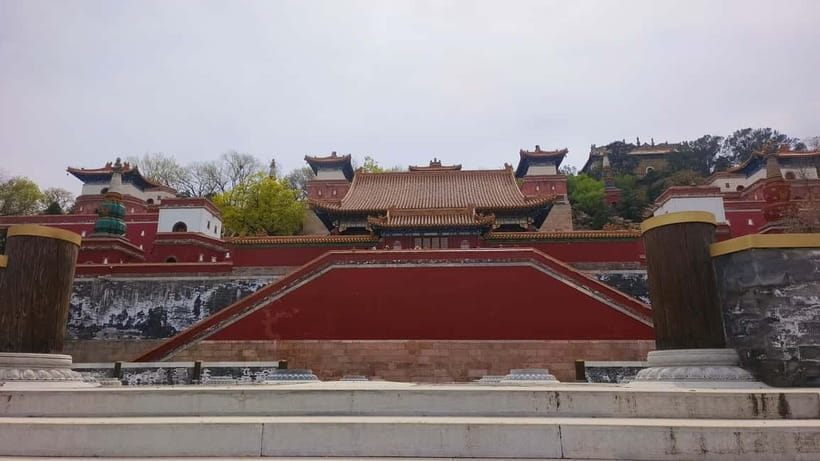
Travel in Picture is presented as one of the tour’s main visual moments. The name fits the setting: the glazed-tile temple and surrounding views are intended to feel like a scene from a painting.
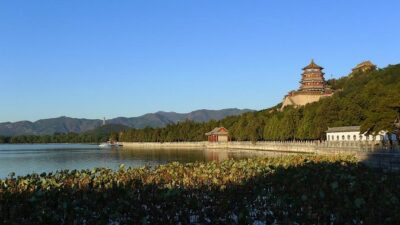
From here, you can look toward Kunming Lake and the palace’s wider natural setting. This is where the guide’s photo advice becomes especially useful. A good guide can help you pause in the right place, frame the rooflines with the lake, and avoid rushing through a view that deserves a moment.
The Sea of Wisdom is another architectural highlight associated with this upper section. Its glazed tiles give the building a striking surface, and the bright details make it different from the wood-heavy halls and long painted corridors later in the walk.
The route does not treat these buildings as isolated photo props. You learn how they fit into the imperial retreat and how architecture, religion, and views were planned together. I would pay close attention here, since this is one of the points where a short explanation can turn an attractive building into a memorable one.
The Marble Boat and Kunming Lake
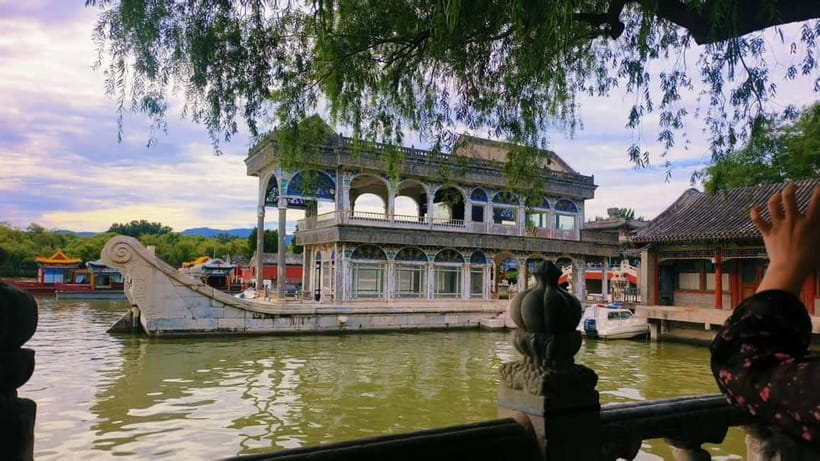
The Marble Boat is one of the Summer Palace’s most recognizable structures. Its unusual form makes it an easy sight to remember, and its position by the water gives the route a welcome change after the more enclosed temple areas.
You will not necessarily take a boat ride as part of this experience. One visitor noted arriving too late for the lake boat, so anyone hoping to add a boat trip should ask about timing before the tour begins. The listed experience focuses on walking and sightseeing, not on a boat excursion.
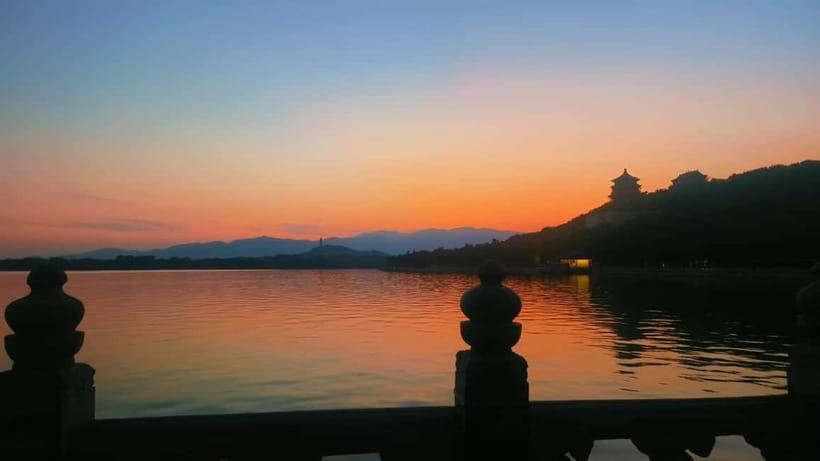
The stop still works well without a ride. The Marble Boat gives you a strong subject for photographs and a chance to appreciate the palace’s playful side. It also helps you understand how Kunming Lake shapes the entire complex. Water is not just a backdrop here. It opens long views and breaks up the dense collection of buildings.
Your guide can help you make sense of the contrast between a grand imperial retreat and the practical limits of a two-hour visit. You see the lake, but you will not circle it. That is an important distinction when deciding if this tour is enough for your day.
Walking the 728-meter Long Corridor
The Long Corridor is one of the route’s most rewarding stops. At 728 meters, it is far more than a covered path between attractions. Its beams and panels carry thousands of historical paintings, giving you something to examine at nearly every stage of the walk.
I would resist the urge to treat the corridor as a passage to the next sight. Look up, look along the painted sections, and ask your guide to point out details that are easy to miss. The corridor shows how the Summer Palace turned movement through the grounds into part of the experience.
It also offers some relief from direct sun or light rain, though the tour information does not promise any particular weather protection conditions. The covered walkway creates a steady rhythm: painted scenes above, garden and lake views opening to the side, and the palace buildings appearing at intervals.
The main limitation is time. Two hours is enough to see the corridor and learn why it matters, but not enough for a slow inspection of every painting. If you are an art enthusiast, you may want to return later and explore it at your own speed.
Hall of Joyful Longevity and the imperial household
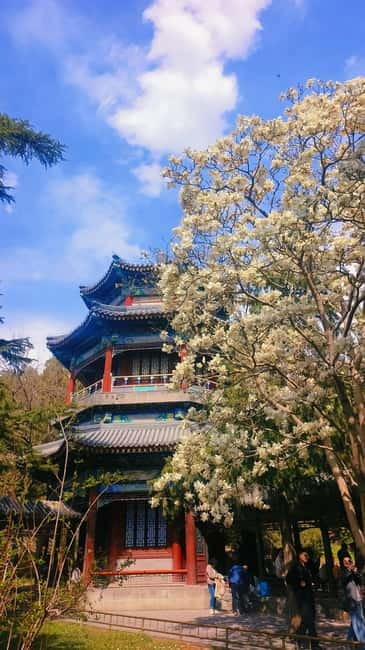
The Hall of Joyful Longevity brings the route into the more opulent residential side of the palace. Its name and setting point to the personal world of the imperial household, different from the religious buildings and the political halls.
This stop helps you see the Summer Palace as more than a garden. The site also supported court life, formal visits, rest, ceremony, and administration. A guide can explain how these purposes overlapped, giving you a clearer sense of why the complex contains such different types of buildings.
The Hall is especially useful for visitors who want historical context rather than only scenic views. You can ask about the people connected with the building and how the imperial family used this part of the palace. The precise detail you receive will depend on your guide, but James and Jack are both praised for answering questions and keeping explanations easy to follow.
The political halls and the East Gate finish
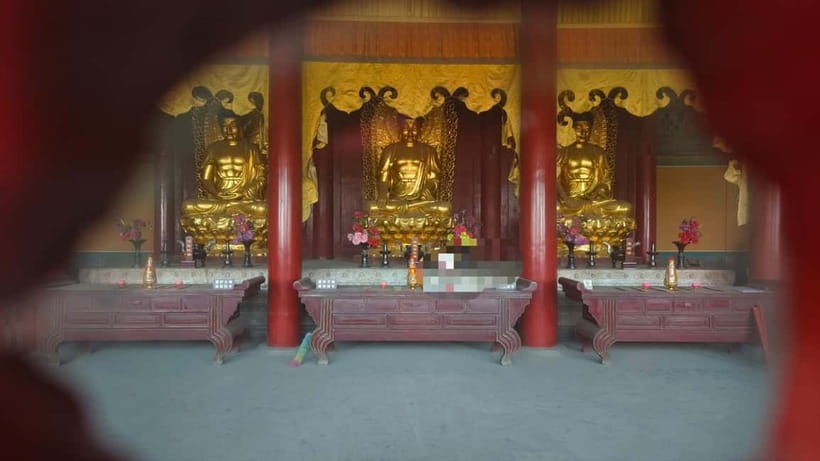
The route continues through the political area, including the Hall of Benevolence and Longevity. This is where the palace’s official role comes into focus. The building is linked to imperial administration and formal affairs, giving you a counterpoint to the leisure areas around the lake.
The change from pleasure grounds to political space is important. It shows that the Summer Palace was not only a retreat for scenery and quiet. It also functioned as a place where serious state business could take place.
The tour finishes at the East Gate. Ending there gives you a clear exit and lets you continue independently, find a taxi, or make your own way elsewhere in Beijing. Since there is no return transport included, plan your next move before the guide says goodbye.
The final photo opportunities are part of the experience. Your guide can help you record the palace’s roofs, lake views, and garden setting at key points. That is a practical touch for solo visitors, couples, and anyone who would otherwise have to rely on a stranger for every group photograph.
Is $41 a fair price?
At $41 per person, the cost is reasonable if you value a live guide and want the entrance fee handled for you. The price includes admission, professional guiding, and help taking photos at key spots. It does not include hotel transport, taxis, personal spending, or a lake boat ride.
The value comes from focus. You are paying to avoid spending your first hours guessing which gate to use, which buildings matter, and how the palace’s religious, residential, and political areas connect. The skip-the-ticket-line benefit can also save time, though it does not remove the need to arrive at the correct North Gate.
I would choose this tour if I had only part of a day or wanted a clear first visit. I would be less inclined to book it as my only Summer Palace experience if I wanted long periods beside Kunming Lake, detailed painting study, or an unhurried boat trip.
The 4.8 out of 5 score from 25 ratings fits the strongest pattern here: guides receive consistent praise for clear English, friendly service, useful history, and a comfortable pace. That does not guarantee every tour will feel identical, but the guide quality appears to be the main reason the experience works so well.
Timing, pace, and who should book
The tour lasts two hours, and an earlier start may be wise when starting times allow. James advised one group to begin early to avoid heavier crowds, and that advice proved useful. Morning timing can also give you more breathing room at the main photo stops.
This is a good match for:
- First-time visitors who want the key sights without planning a route
- People who enjoy architecture, imperial history, Buddhism, and garden design
- Solo visitors who want photo help
- Small groups who prefer questions and conversation
- Visitors with limited Beijing time
- Anyone who wants to continue exploring after finishing at the East Gate
I would hesitate to recommend it to someone seeking a slow, quiet day beside the lake. It is also not a good choice for anyone who finds extended walking, uneven routes, or changes in level difficult. Confirm the accessibility details directly, since the supplied information gives two different signals on this point.
Smoking is not allowed. English and Chinese guiding are available, and the small group limit of 10 keeps the experience personal without making it a private tour.
Should you book the Summer Palace walking tour?
Book it if you want a well-organized introduction to the Summer Palace, especially with limited time. The route covers the places most visitors hope to see, and the guides appear particularly strong at explaining Buddhism, imperial life, architecture, and the meaning behind the views.
The best reason to choose it is not simply the entrance ticket. It is the combination of a sensible North Gate to East Gate route, a small group, photo assistance, and guides such as James and Jack who can make the history easy to follow.
Skip it if you want to explore at your own speed or plan to spend much of the day on the lake. Also pause before booking if mobility is a concern, and confirm the route conditions with the provider. For a focused first look at one of Beijing’s most important palace grounds, though, $41 is a fair price.
FAQ
Where does the Summer Palace tour meet?
The meeting point is the North Palace Gate, also called 颐和园北宫门.
How do I reach the North Palace Gate by subway?
Take Subway Line 4 to Beigongmen Station. Use Exit C, turn around after leaving the station, and walk west for about five minutes.
Can I reach the meeting point by taxi or Didi?
Yes. Enter North Palace Gate of the Summer Palace or 颐和园北宫门 as the destination. The instructions suggest calling the guide after entering the taxi so the destination can be checked with the driver.
How long does the experience last?
The walking tour lasts two hours. Starting times vary, so you need to check availability when booking.
What languages are available?
The live guide is available in English or Chinese.
Is transportation included?
No. Hotel pickup and drop-off are not included. You arrange your own transport to the North Gate and from the East Gate, and personal expenses are also separate.
Newest reviews from Beijing
- Beijing: Explore the Forbidden City in Hanfu★ 5.0 · 4 reviews
- Beijing Tai Chi and Tea Ceremony Experience★ 5.0 · 4 reviews
- Jinshangling Great Wall Of Beijing Tickets And Other Option★ 4.0 · 4 reviews
- Private Full-Day Great Wall of China Hiking Tour from Jiankou to Mutianyu★ 4.5 · 4 reviews
- Tour the Great Wall with a Native from Downtown Beijing★ 4.8 · 4 reviews
- Beijing: Badaling Great Wall Private Tour w Language Option★ 4.3 · 4 reviews
- Beijing:Summer Palace & Tea or Calligraphy Experience Tour★ 4.6 · 4 reviews
- 7 Days Private Tour of Beijing, Xian, Shanghai by Bullet Train★ 5.0 · 4 reviews
Summer Palace Tours, compared.
The Temple of Heaven or Summer Palace Entry Ticket
Read our review →
Mubus: Mutianyu Great Wall Bus Tour with Summer Palace Options
Read our review →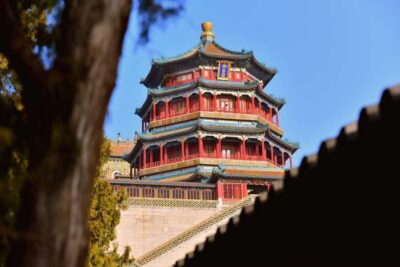
Mutianyu Great Wall&Summer Palace Excursion:Group/Private Options
Read our review →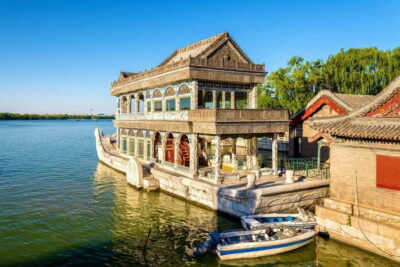
Summer Palace Entry Ticket and Optional Guided Tour
Read our review →
Beijing Classic Full-Day Tour including the Forbidden City, Tiananmen Square, Summer Palace and Temple of Heaven
Read our review →
Mutianyu & Summer Palace Tour–Group/Private Options
Read our review →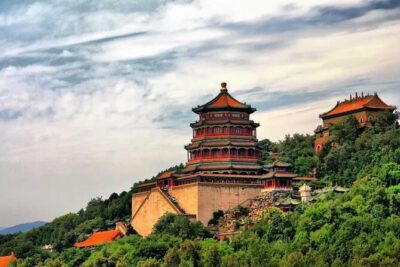
Temple Heaven, Lama Temple, Summer Palace & Peking Duck Bus Tour
Read our review →Browse the lists this tour appears in