Reviewed · TICKETS
Beijing: YuanMingYuan Park (Garden of Gardens) e-Ticket
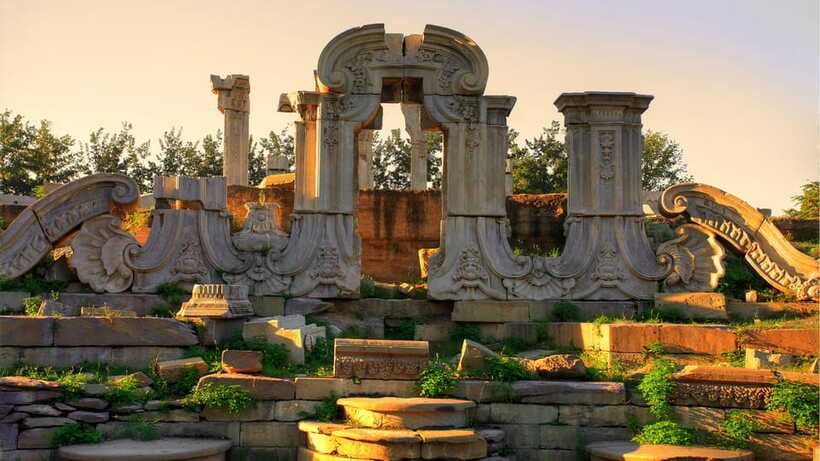
History can feel haunting here. Yuanmingyuan, also called the Old Summer Palace, offers a rare look at Qing Dynasty imperial taste through broad gardens, lakes, pavilions, and damaged palace ruins. I like the mix of Eastern garden design and Western-style architecture, and I like that the $9 ticket includes an English text and visual guide rather than only basic admission.
The main drawback is the park’s size. You can easily spend four and a half hours seeing only part of it, and the lack of a live guide or audio guide means you need to manage your own route and bring some patience. Still, for anyone interested in China’s imperial past and the difficult history of the Second Opium War, this is one of Beijing’s most thoughtful places to visit.
In This Review
- Key points before you go
- Why Yuanmingyuan feels different from Beijing’s grand palaces
- The Qing Dynasty garden at its height
- What you will see among the ruins
- Western architecture in an Eastern garden
- Allow at least half a day for a serious visit
- A self-guided visit with useful but limited support
- Extra activities and the WeChat warning
- Is the $9 ticket good value?
- Who will enjoy Yuanmingyuan most?
- Practical planning advice for a better visit
- Should you book the Yuanmingyuan e-ticket?
- FAQ
- What is Yuanmingyuan Park?
- How much does the e-ticket cost?
- How long is the ticket valid?
- What does the ticket include?
- Is a live tour guide included?
- Is an audio guide included?
- What identification should I bring?
- Can I cancel the booking?
- Can I pay later?
Key points before you go
- A huge Qing Dynasty royal garden: Yuanmingyuan was created in the 18th century as an imperial retreat with lakes, bridges, gardens, pavilions, and palace buildings.
- Ruins tell the central story: Foreign troops burned and looted the complex in 1860 during the Second Opium War.
- Western and Eastern styles meet: Marble structures and European-inspired features sit alongside Chinese garden scenery and impressionistic water views.
- Plan for several hours: The park is so large that a basic visit can take more than four hours, and you may still miss parts of it.
- Self-guided rather than guided: Your ticket includes an English textual and visual guide, but no live guide or audio commentary.
- Good value at $9: The low price makes this an easy addition to a Beijing sightseeing plan, especially for history fans.
Why Yuanmingyuan feels different from Beijing’s grand palaces

Beijing has polished imperial sites where halls, gates, and courtyards are carefully restored. Yuanmingyuan offers something less tidy and, in many ways, more affecting. Here, the missing buildings are part of the story.
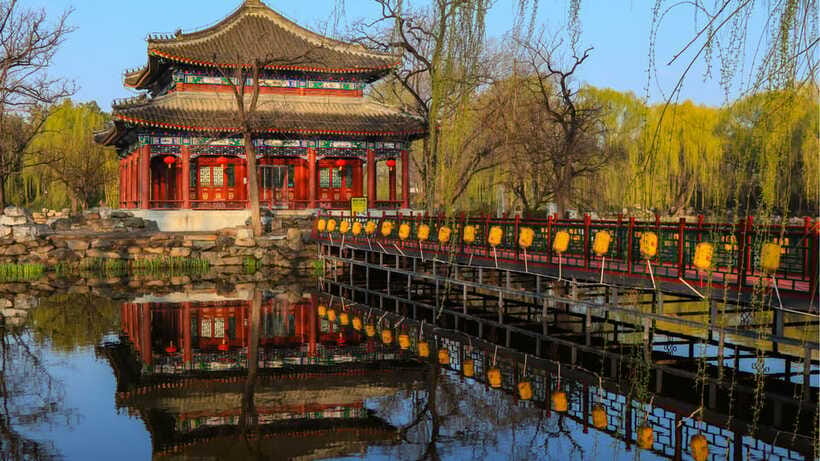
The complex was built during the Qing Dynasty in the 18th century. It served as a royal retreat and was designed as a vast garden rather than a single formal palace. Water, plants, bridges, pavilions, sculptures, and buildings were arranged to create changing views as the emperor moved through the grounds.
The name Yuanmingyuan is often translated as the Garden of Gardens. That name fits the scale and ambition of the place. You are not simply walking toward one famous building. You are moving through a large collection of garden areas, each with its own mood and design language.
I find the combination of cultivated beauty and destruction especially powerful. A quiet pond or stand of greenery can lead you toward broken stonework, overgrown structures, or shattered sculptures. The contrast gives the park a melancholy quality that a fully restored palace cannot provide.
A few more tours worth putting side by side
- From Beijing: Mutianyu Great Wall Tours with Options
★ 4.9 · 9,216 reviews - Beijing: Forbidden City Tour(Group/Private)-Tickets Included
★ 4.8 · 7,974 reviews - Beijing: T-Square & Forbidden City Group or Private Tour
★ 4.8 · 4,446 reviews
The Qing Dynasty garden at its height
To understand Yuanmingyuan, picture an imperial garden built for pleasure, ceremony, art, and escape from the pressure of court life. The grounds included tranquil lakes, delicate bridges, pavilions, marble halls, and decorative features linked by paths and water.
The park reflected the high point of Qing garden design. Chinese traditions shaped the use of water, framed views, bridges, plants, and carefully arranged spaces. At the same time, parts of the garden drew from Western architectural ideas. This blend gives Yuanmingyuan its unusual visual character.
The supplied English guide should help you connect the remains to the larger story. Without some context, a broken wall can look like only a broken wall. With historical notes and images, you can begin to imagine the scale of the original buildings and the decorative detail that once filled the grounds.
That guide is useful, but it is not the same as having a person explain the site. If you enjoy stopping often, reading at your own pace, and forming your own impressions, the format works well. If you prefer a flowing story with questions answered on the spot, you may find the visit less satisfying than a guided palace tour.
What you will see among the ruins
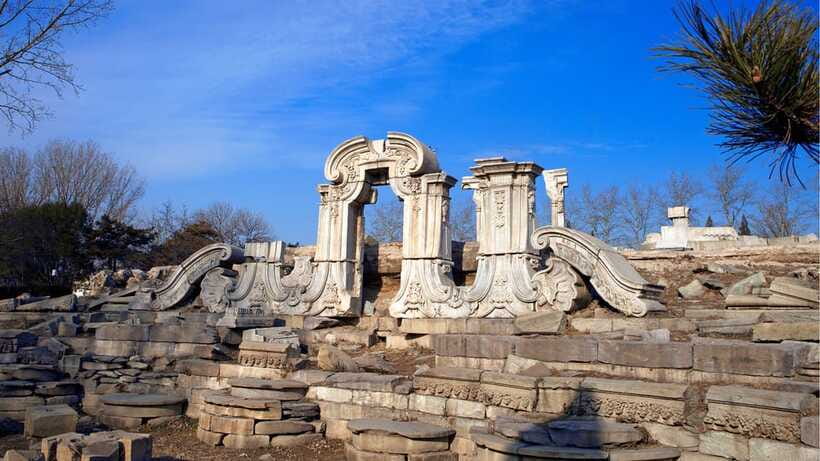
The most famous experience here is not one isolated sight. It is the gradual discovery of ruins within a large garden setting.
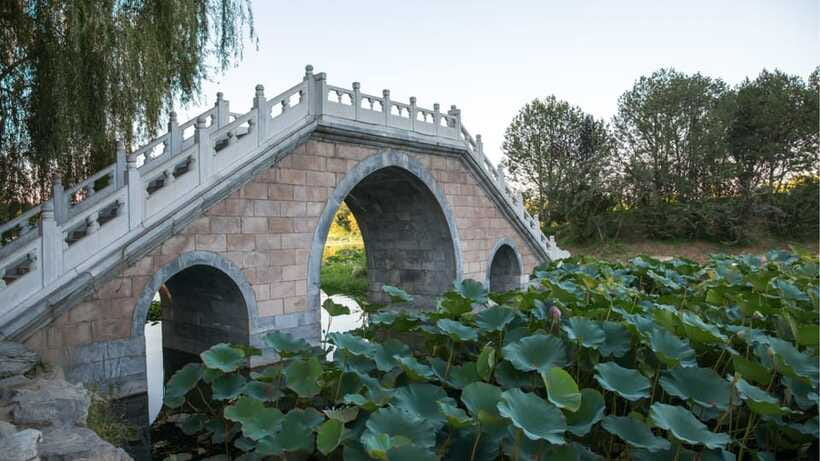
You might first notice the open water and plant life. Large water lilies were singled out as a particularly lovely feature, and the ponds help explain why the garden was designed as a place of changing views rather than a simple collection of buildings.
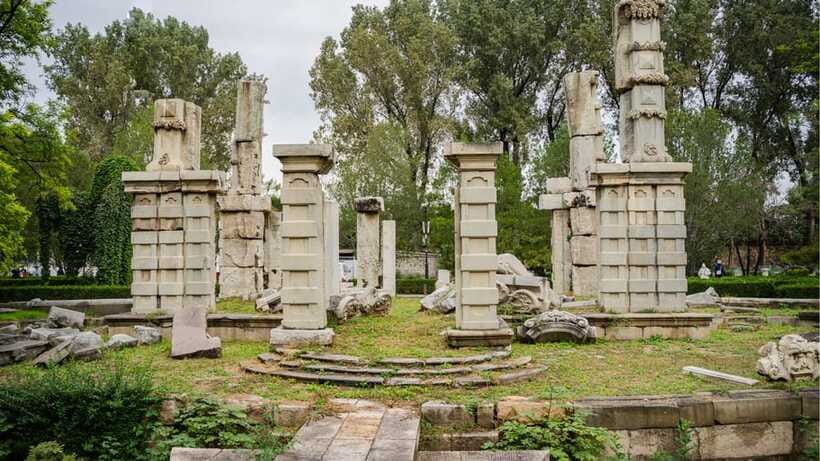
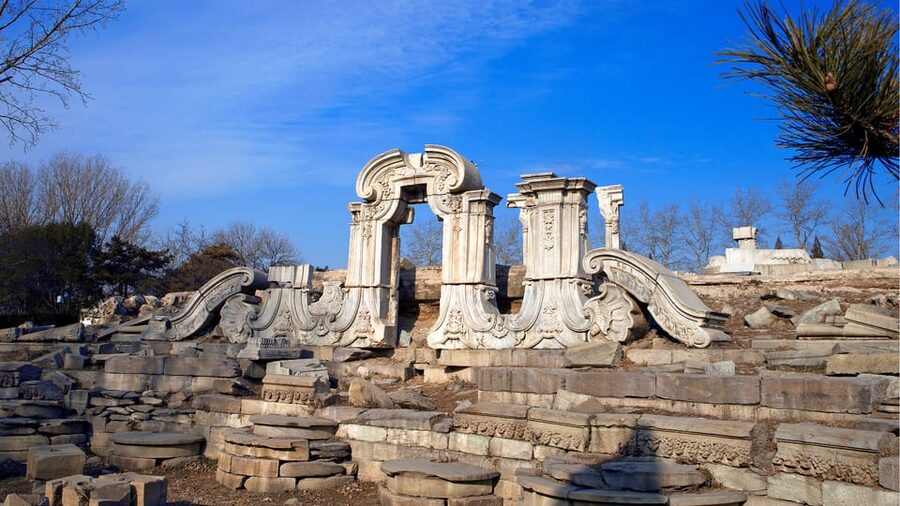
As you continue, you can encounter ruined pavilions, damaged sculptures, and remnants of marble structures. These remains are not presented as a complete palace complex. Their broken condition is central to the visit.
The ruins can be visually beautiful, but the site also asks you to confront loss. In 1860, during the Second Opium War, foreign troops looted and burned Yuanmingyuan. The destruction erased much of the palace and its contents, including artworks and valuable objects associated with the imperial complex.
That background matters. Without it, you may simply see an attractive park with scattered stones. With it, the broken buildings become evidence of a violent turning point in China’s modern history. The experience links imperial luxury, foreign intervention, cultural loss, and present-day preservation.
Western architecture in an Eastern garden
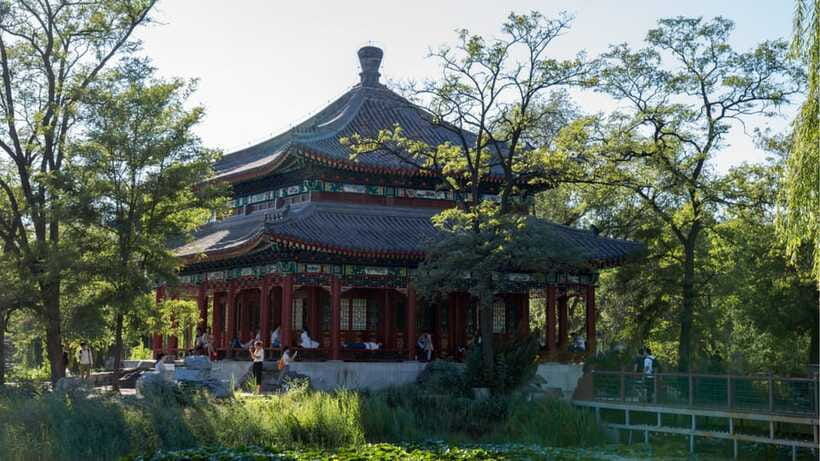
Yuanmingyuan is especially worthwhile if you want to see how Chinese garden traditions incorporated outside influences. The complex included Western-inspired architecture, including marble halls and features that differed from the usual Chinese palace style.
The surrounding garden remained deeply shaped by Eastern ideas. Water, planting, bridges, framed views, and the movement from one scene to another create an impressionistic setting. The result is not a simple split between European buildings and Chinese gardens. The two styles were placed together within one imperial project.
I like this aspect because it gives you more to look at than standard palace symmetry. The garden can feel calm and spacious in one area, then suddenly formal or architectural in another. You may find the contrast most interesting when viewed alongside the ruins, since the surviving fragments make the original design harder to read but more rewarding to imagine.
Take your time around the water. The ponds and lilies can soften the severity of the ruined structures, while the ruins give the natural scenery a stronger sense of place. This interplay is one reason the park can appeal to photographers, history fans, and anyone who prefers a slower outdoor visit.
A few more tours in Beijing worth putting side by side
- 4-Hour Small Group Tour to Forbidden City with Entry Tickets
★ 5.0 · 1,863 reviews - Beijing: Tiananmen Square Registration Service(Ticket)
★ 4.5 · 1,704 reviews - Beijing: The Temple of Heaven or Summer Palace Entry Ticket
★ 4.6 · 1,286 reviews - Beijing Forbidden City Ticket Booking (Optional: guide service)
★ 5.0 · 1,263 reviews
Allow at least half a day for a serious visit
The ticket is valid for a one-day visit, but that does not mean you need to spend an entire day there. It does mean you should not treat Yuanmingyuan as a quick stop between two nearby attractions.
A basic circuit can take more than four and a half hours. Even then, you may not see every section. The park’s size is its strength and its main practical problem. There is room for quiet views and varied scenery, but it is easy to lose track of where you are or how much remains.
I suggest deciding in advance what kind of visit you want:
- For a quick introduction, focus on the most important ruin areas and selected water views.
- For a history-focused visit, use the English guide carefully and pause to connect each ruin to the 1860 destruction.
- For photography and garden scenery, give yourself extra time near the ponds, bridges, and planted areas.
- For a full exploration, keep much of the day free and expect some wandering.
Do not arrive with the mindset that you can see everything in one brisk hour. That approach will leave you rushed and confused. The park rewards a slower pace, but only if you accept that the full site may be too large for a short Beijing itinerary.
A self-guided visit with useful but limited support
The $9 e-ticket includes admission and an English textual and visual guide. It does not include a live guide or audio guide, so the experience depends on how much independent reading you want to do.
The guide is a practical middle ground. It gives you more historical help than a bare entrance ticket, yet it lets you stop and move on when you choose. An English guide is particularly useful here because the ruined remains do not always explain themselves.
You should save the ticket and guide where you can find them easily. One booking issue was resolved when Panda, the organizer, resent the e-tickets and guide after they were misplaced. That suggests a helpful level of customer support, but it also gives you a simple lesson: download the documents before heading to the park and check that they open properly.
The booking arrangement also includes skip-the-ticket-line entry. That can save time at the entrance, though it does not shorten the walking time inside the park. Think of it as a convenience at the gate, not a shortcut through the gardens.
Bring your passport or ID card. This is specifically required information for admission, so do not leave your identification behind while sightseeing in Beijing.
Extra activities and the WeChat warning
The basic ticket covers entry to Yuanmingyuan Park. It does not automatically include every possible activity inside the grounds.
A boat ride proved difficult for one party because WeChat was needed and there was not enough time to set it up. The exact activity arrangements can vary, so check in advance if a boat trip is important to you. Do not assume that the standard admission ticket includes it.
This is a useful distinction between visiting for the garden and visiting for add-on activities. If your main goal is the ruins, ponds, and garden scenery, the basic ticket may be enough. If you have your heart set on a ride or another extra, confirm the payment or booking requirements before you go.
You should also allow time for the park’s scale. An extra activity may sound simple, but it can take time away from the main areas. With only one day available, choose the parts that matter most to you.
Is the $9 ticket good value?
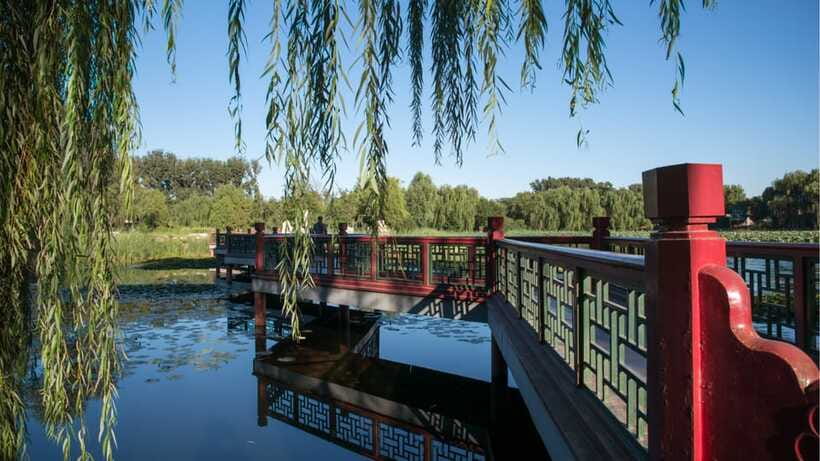
At $9 per person, this is an inexpensive way to see one of Beijing’s less polished but more reflective imperial sites. The value is strongest for you if you care about historical context, ruins, garden design, or a quieter contrast with Beijing’s better-known palace attractions.
The ticket is less compelling if you want a fully explained tour. There is no live guide and no audio guide, so you must read the English material and make sense of the site yourself. You also need to invest several hours to appreciate the park properly.
The English text and visual guide improve the value considerably. They help turn admission into a self-guided history visit rather than a walk through attractive grounds with no explanation. Customer support from Panda Happy Journey in China also appears useful when ticket documents need to be resent or clarified.
The price is particularly fair for flexible planners. You can reserve now and pay later, and cancellation is available up to 24 hours before the visit for a full refund. That gives you room to adjust a Beijing schedule if weather, fatigue, or another attraction changes your plans.
Who will enjoy Yuanmingyuan most?
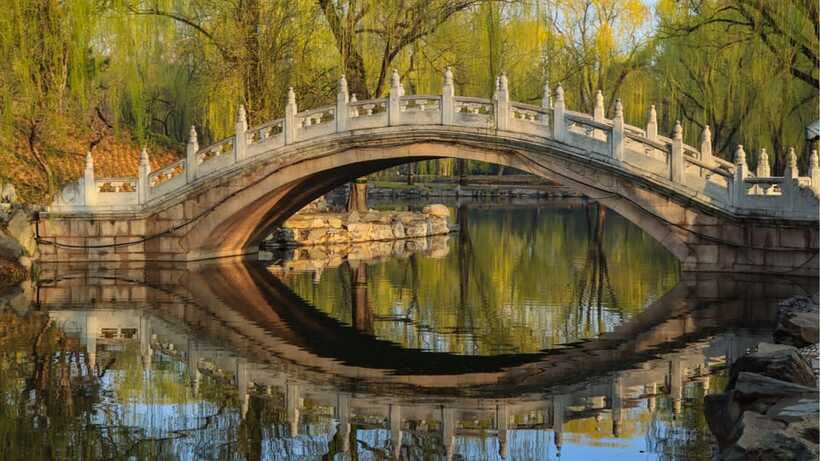
I would recommend this experience most strongly to:
- History and cultural enthusiasts
- Visitors interested in the Qing Dynasty
- People who want to think about the impact of the Second Opium War
- Garden lovers who enjoy lakes, bridges, plants, and changing views
- Independent sightseers who are comfortable using a written guide
- Anyone with at least half a day for a large outdoor site
Families may also enjoy the open garden setting, but the historical meaning could be lost on younger children unless an adult explains it. The park is not simply an amusement stop. Its strongest moments come from noticing how natural beauty surrounds damaged architecture.
You may want to skip it if your Beijing schedule is already packed with short visits. A rushed walk through Yuanmingyuan will not show you why the place matters. The park works best when you can slow down, read, look closely, and accept a little wandering.
Practical planning advice for a better visit
Start by downloading your e-ticket and English guide. Keep your passport or ID card with you, and make sure the ticket information is easy to retrieve at the entrance.
Wear comfortable shoes. The site is very large, and the most important practical fact is the walking time. A visit can last four and a half hours or longer, even with only the basic ticket.
Give yourself a simple goal instead of trying to conquer every path. You might focus on the major ruins, then spend time near the water and gardens. This helps you enjoy the place rather than turning the visit into a race.
Bring enough time to pause. The damaged pavilions and sculptures are worth more than a quick photograph. Read the guide, compare the images with what remains, and think about the difference between the palace at its height and the site you see today.
If you need help with the digital documents, contact Panda Happy Journey in China before the visit. Support was available when ticket files were lost, but solving the problem ahead of time is much easier than doing it at the gate.
Should you book the Yuanmingyuan e-ticket?
Book it if you want an affordable, self-guided look at a major Qing Dynasty garden shaped by both imperial ambition and tragic destruction. The $9 price, skip-the-line entry, English visual guide, and flexible cancellation terms make it an easy choice for history fans.
Skip it if you have only a short window or expect a guide to explain every ruin. Yuanmingyuan is huge, and the basic ticket does not include live commentary or audio.
My call is positive, with one condition: give the park enough time. Its best feature is not a single restored hall. It is the way lakes, plants, Western-style ruins, and the memory of 1860 come together across a very large garden. Plan patiently, and Yuanmingyuan can become one of the most affecting stops in Beijing.
FAQ
What is Yuanmingyuan Park?
Yuanmingyuan, also known as the Old Summer Palace, is a large Qing Dynasty royal garden in the Beijing area. It includes gardens, lakes, pavilions, bridges, and the remains of palace structures.
How much does the e-ticket cost?
The listed price is $9 per person.
How long is the ticket valid?
The activity is described as lasting one day. You should check availability for the specific starting times offered when booking.
What does the ticket include?
The ticket includes admission to Yuanmingyuan Park and an English textual and visual guide.
Is a live tour guide included?
No. A live tour guide is not included.
Is an audio guide included?
No. An audio guide is not included.
What identification should I bring?
Bring your passport or ID card, as this is required information for the visit.
Can I cancel the booking?
Yes. You can cancel up to 24 hours in advance for a full refund.
Can I pay later?
Yes. The reserve now and pay later option allows you to book without paying immediately.
Newest reviews from Beijing
- Jinshanling Great Wall to Simatai West Sunset Hiking Private Tour★ 5.0 · 4 reviews
- Beijing: Forbidden City Guided Tour with Options★ 4.3 · 4 reviews
- Private Tour: Mutianyu/Badaling Great Wall and Temple of Heaven★ 5.0 · 4 reviews
- Beijing: Acrobatic Show Tickets Traditional & Modern Fusion★ 5.0 · 4 reviews
- Beijing: Private Biking Tour Along Central Axis of Beijing★ 4.8 · 4 reviews
- Best Beijing Day Tour To Forbidden City and Great Wall★ 5.0 · 4 reviews
- BusDa- Private Tour: Mutianyu Great Wall &Ming Tombs(Chang Ling)★ 5.0 · 4 reviews
- Beijing: Explore the Forbidden City in Hanfu★ 5.0 · 4 reviews
Tickets, compared.

Forbidden City Tour(Group/Private)-Tickets Included
Read our review →
Mutianyu Great Wall Daily Tour with Ticket & Lunch
Read our review →
4-Hour Small Group Tour to Forbidden City with Entry Tickets
Read our review →

Ngong Ping 360: Cable Car Return Tickets & Combos
Read our review →
The Temple of Heaven or Summer Palace Entry Ticket
Read our review →
Beijing Forbidden City Ticket Booking (Optional: guide service)
Read our review →