
Reviewed · CHONGQING TOURS
Chongqing 1941 theatre: Tea Art Performance with Folk Art
A small cup of tea opens the show. Chongqing 1941 offers a compact introduction to Sichuan folk entertainment, combining covered-bowl tea, opera, kung fu, music, magic, storytelling, and traditional customs in one 45-minute indoor performance. It is a useful choice when you want a taste of local culture without giving up half a day.
I like the wide mix of acts and the friendly, close-up setting. The 1.2-meter long teapot, pipa music, money-board storytelling, and face-changing all give the program more character than a simple tea demonstration. I also like that tea and a snack are included, though the snack is small and the show may feel brief for the $31 price.
The main drawback is value. One recent purchaser reported saving about $45 by buying at the venue, so I would compare the local price before paying online. The performance has also received mixed ratings, partly because the audience can be small and the program is simple rather than a large theater production.
In This Review
- Five details that shape the experience
- What Chongqing 1941 is really offering
- Finding the theater and arriving on time
- The opening tea service and covered bowl
- Long-mouth pot tea with a 1.2-meter teapot
- Sichuan drama, kung fu, and the Human Good scene
- Pipa music and the sound of the money board
- Magic, folk customs, and face-changing
- Seating, audience size, and the best place to sit
- Is $31 a fair price?
- Who will enjoy this short folk-art show?
- Booking, cancellation, and language notes
- Should you book Chongqing 1941?
- FAQ
- How long does the Chongqing 1941 performance last?
- What is included in the ticket?
- What kind of tea is served?
- What happens if I arrive late?
- Where is the meeting point?
- Is transportation included?
- Is the performance in English?
- Is the venue wheelchair accessible?
- Can I cancel for a refund?
Five details that shape the experience
- The 1.2-meter long teapot: The long-mouth pot tea demonstration is the visual trick at the center of the tea portion.
- Five traditional entertainment styles: Expect a compact mix of opera, music, magic, folk customs, and storytelling rather than one long performance.
- Sichuan drama with kung fu: The program includes Human Good, a Sichuan dramatic piece that adds movement and martial-arts action.
- Tea and a light snack: You receive covered-bowl tea and a small snack, with nuts and similar items reported as part of the serving.
- Close seating can mean audience interaction: A front-row seat may put you into direct contact with performers and may offer a chance to take a photo afterward.
What Chongqing 1941 is really offering
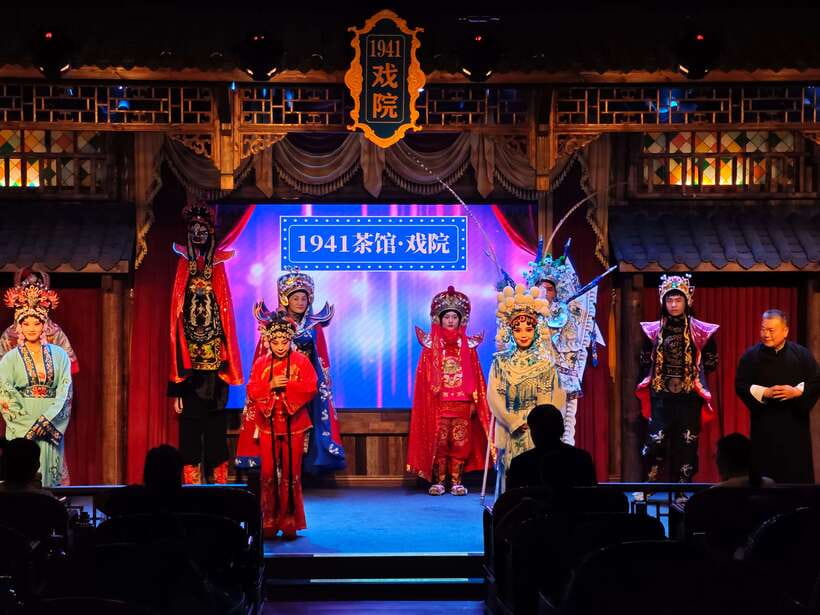
This is not a full evening theater production. It is a short sampler of Chinese stage traditions, built around the familiar social ritual of tea.
That distinction matters. If you expect a polished, large-scale opera with elaborate scenery, this may feel modest. If you want to see several recognizable folk forms in one sitting, the format makes sense. You can sample a range of customs without needing to understand every word of Chinese.
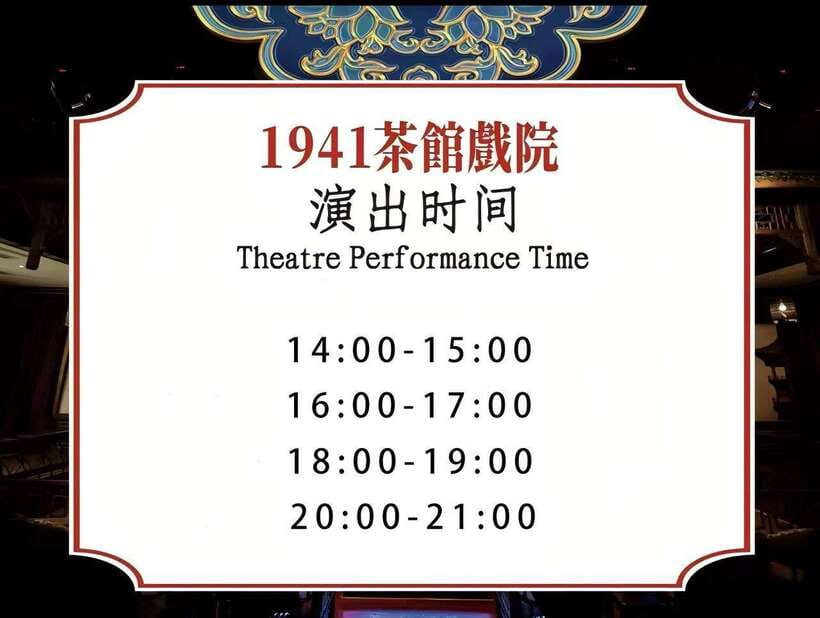
The performance is indoors and lasts about 45 minutes. That makes it easy to fit between sightseeing stops, particularly if you are spending a short time in Chongqing. You will not need to commit a whole afternoon, and the theater setting provides a break from the city’s steep streets, traffic, and weather.
The host and performance language are Chinese. You should not expect an English explanation of each act. Still, much of the program is visual: a long teapot pouring tea, kung fu movement, instrument playing, magic, facial transformation, and expressive stage work can be understood without translation.
A few more tours worth putting side by side
- Chongqing Wulong National Park Private Tour
★ 5.0 · 87 reviews - Chongqing: Two Rivers Night Cruise- Yangtze & Jialing Rivers
★ 4.5 · 64 reviews - Chongqing deep explore & private car service including meals
★ 4.9 · 51 reviews
Finding the theater and arriving on time
The meeting point is the garage entrance of Yutian Building, next to the time elevator. From there, go to the eighth floor.
This is the kind of address where arriving early matters. The instructions ask you to arrive 30 minutes before the start, and you should take that seriously. The building entrance and the elevator location may take a little attention, especially if you are unfamiliar with Chinese signs or the building is busy.
The tea is specifically tied to arrival. If you are late, tea will not be provided. That is an important practical detail because the drink is part of the ticket rather than an optional extra. Arriving early also gives staff time to seat you before the stage program begins.
You do not need to arrange transportation with the experience. Getting to and from Yutian Building is your responsibility, and personal expenses are not included. Check the starting time carefully before booking because the available times can change by date.
The opening tea service and covered bowl
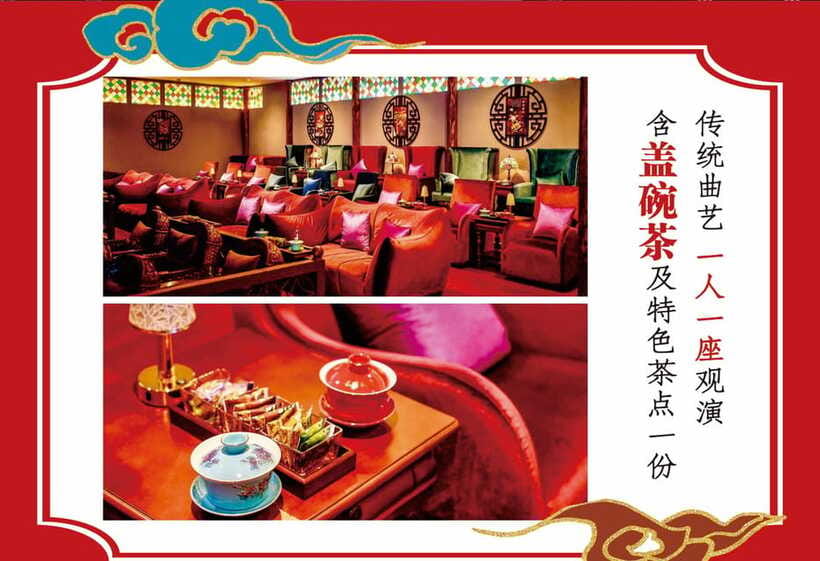
The experience begins with a covered bowl of tea, known in China as a gaiwan. The cup has a lid that helps hold back the leaves while you drink, and the tea service gives the performance a calm beginning before the faster stage acts appear.
The tea is not simply handed over as a sealed bottle. Staff bring the bowl and hot water, and the preparation is part of the atmosphere. One particularly positive account described the tea arriving with snacks before the show got fully underway.
The snack should be treated as a small accompaniment, not a meal. Nuts and similar items have been served, so I would eat beforehand if you are hungry. The snack adds a pleasant touch, but it is unlikely to replace lunch or dinner.
The tea ritual also gives you a cultural reference point. Chongqing tea houses have long been places for conversation, entertainment, and daily social life. This performance presents that idea in a stage-friendly form, allowing you to watch tea preparation while sitting with a drink in hand.
Long-mouth pot tea with a 1.2-meter teapot
The most unusual tea act uses a teapot about 1.2 meters long. This is the sort of visual detail that makes the show easy to remember.
The long spout turns ordinary pouring into a performance skill. Instead of watching a server simply fill a cup, you see tea handled with distance, control, and theatrical timing. It is less about tasting rare tea and more about the technique and spectacle of serving it.
Do not book this for a serious tea lesson. The available information presents the tea art as entertainment, not as an in-depth class on tea varieties, water temperature, or brewing methods. That is not a flaw, as long as you arrive with the right expectation.
For many people, this will be the clearest link between the drink at your seat and the show on stage. You are not just sipping tea before a separate performance. The act explains why tea service itself can be part of Chinese folk entertainment.
A completely different kind of day out on the same trip:
- Chongqing: 1-day Essential Guided City Tour without Car
★ 5.0 · 44 reviews - Chongqing private luxury city tour: Must-sees All in One
★ 5.0 · 39 reviews - Chongqing: Magic Night View and Secret Viewing Spots Tour
★ 5.0 · 27 reviews - Chongqing Wulong: All inclusive luxury private trip to 2 spots
★ 5.0 · 26 reviews
Sichuan drama, kung fu, and the Human Good scene
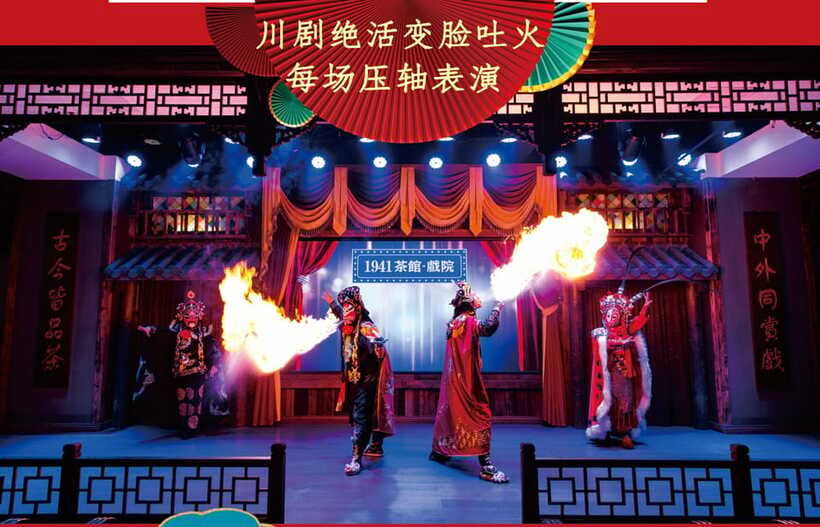
One listed highlight is a Sichuan drama called Human Good, presented with kung fu. The title may appear in English translation, and the exact story may be difficult to follow if you do not understand Chinese.
The physical action helps bridge that language gap. Martial-arts movement gives the scene energy, while dramatic gestures and stage expressions communicate mood even when dialogue does not. You can enjoy the rhythm and performance skill without trying to translate every line.
This is also where expectations need balance. The show is short, so the drama cannot develop like a full-length play. Think of it as a concentrated scene or excerpt, one part of a fast-moving program.
If you enjoy traditional theater but worry about the language barrier, this section may work well. If you want a detailed plot explained in English, it will be less satisfying. The program gives you a visual introduction, not a guided lesson in Sichuan opera.
Pipa music and the sound of the money board
The pipa performance supplies a quieter change of pace. The pipa is a traditional Chinese lute with a clear, ringing sound. The advertised performance emphasizes an interwoven, sonorous quality, so listen for the way the notes overlap rather than expecting a large ensemble.
The pipa act helps prevent the program from becoming one long sequence of loud visual tricks. It gives you a moment to focus on the instrument, the melody, and the performer’s handwork.
Another section uses the quyi money board, a form that combines singing and storytelling. Quyi traditions often rely on rhythm, spoken delivery, and percussion or clacking sounds to support a narrative. Here, the money board gives the performer a steady pulse while the story unfolds.
Again, Chinese-language ability will affect how much you get from the words. Even without understanding the story, you can follow changes in tempo and tone. If you know some Chinese, this part may reward you more than the visual acts.
Magic, folk customs, and face-changing
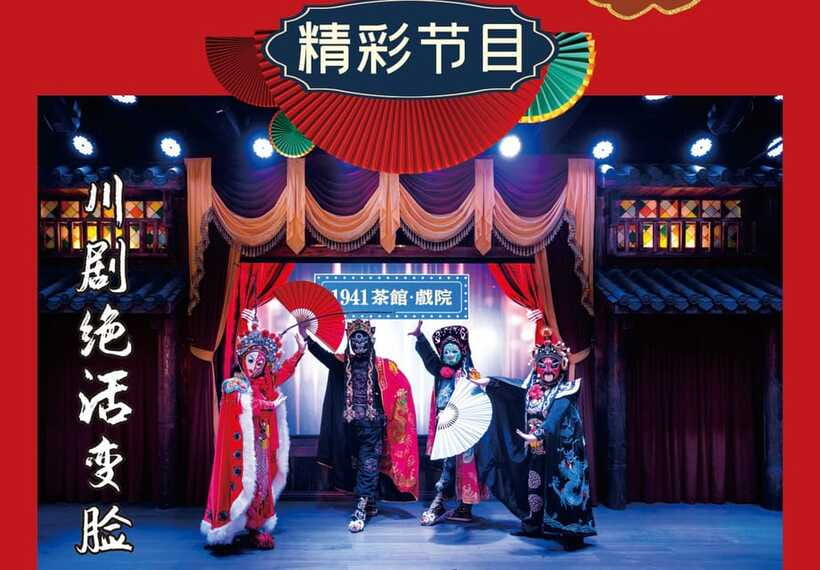
The program also includes magic and folk-custom performances. These sections keep the show moving and provide the surprises that make a short variety program work.
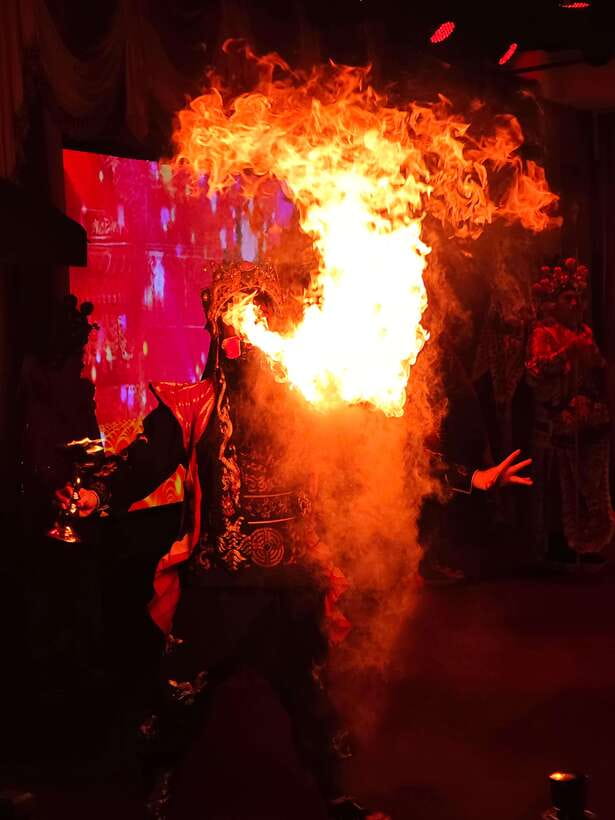
The most talked-about feature is the unpredictable facial makeup change, commonly known as face-changing. The appeal comes from seeing a performer alter a painted face almost instantly, often as part of a highly stylized Sichuan stage tradition.
The close seating adds to the excitement. A fortunate audience member may even be allowed to touch the face-changing performer’s mask or makeup. That opportunity is not guaranteed, so treat it as a bonus rather than part of the promised itinerary.
The folk-custom material is broad in the description, so the exact order and content may vary. You should expect a rotation of traditional music, opera, magic, and customs rather than a fixed museum-style presentation with detailed explanations.
Seating, audience size, and the best place to sit
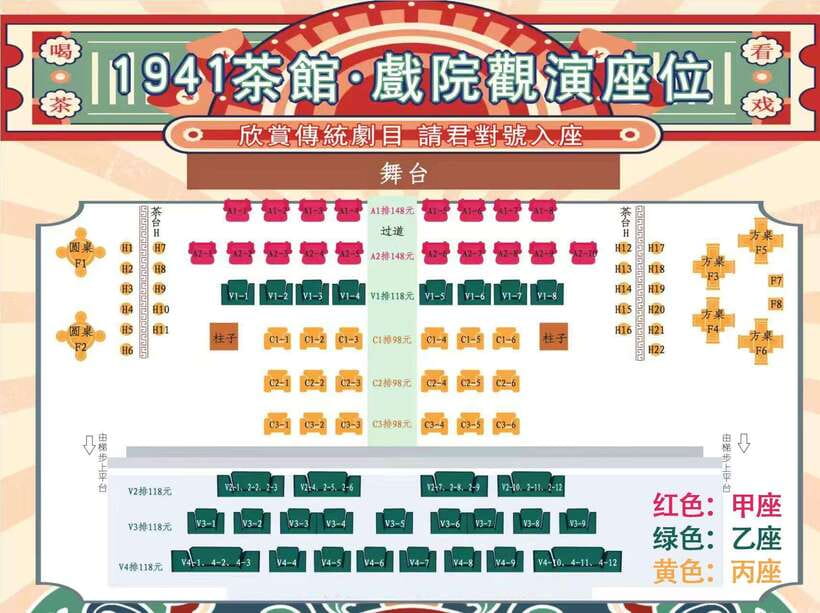
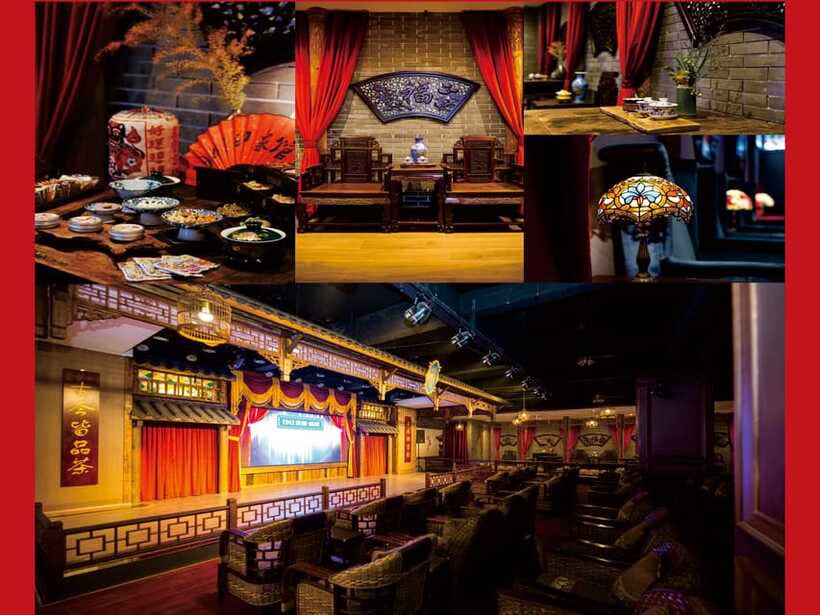
Seating position can affect this experience more than it would at a large theater. One particularly enthusiastic account came from a person seated in the very front, who described frequent interaction with performers and a chance to take photos after the show.
That does not mean every seat will produce the same level of contact. Front seating may be best if you enjoy participation and close facial expressions. It may be less comfortable if you prefer to watch quietly from a distance.
The audience can be small. A small room has one advantage: the performance may feel personal, and the artists can respond more directly to the people in front of them. The downside is that a thin crowd can make the event feel less grand than advertised.
The performers still give the program their full effort, but atmosphere depends partly on the size of the room and audience on your date. I would book this as an intimate folk show, not as a major Chongqing spectacle.
Is $31 a fair price?
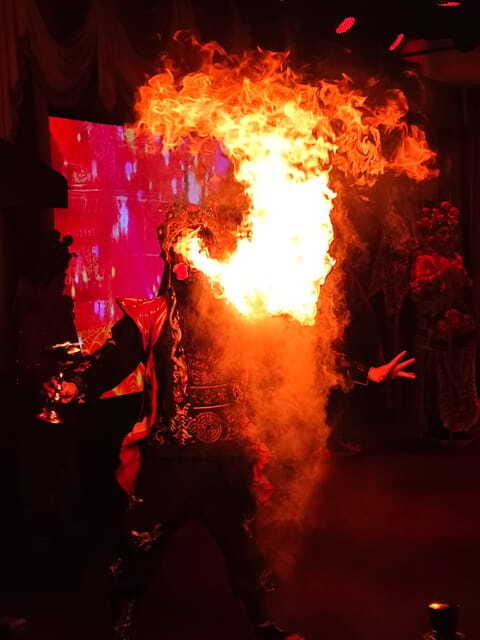
At $31 per person, the ticket includes the 45-minute performance, a covered-bowl tea, and a special snack. The package is reasonably clear, but the short duration makes the price worth checking carefully.
I see the value in the variety. You receive several forms of entertainment in one stop: tea art, drama, kung fu, pipa music, money-board storytelling, magic, face-changing, and folk customs. Paying separately for each type of performance would not be practical, and the compact format is convenient.
Still, $31 is not automatically a bargain for a 45-minute show. The snack is light, the language is Chinese, and the theater production is simple. The experience makes more sense if you place a high value on convenience and cultural variety.
I would compare the online price with the venue price before booking. A recent purchaser reported that buying at the location could save about $45, a warning that deserves attention even though local pricing can change. If the local ticket is substantially lower, that may be the better choice. If you want cancellation protection and the convenience of reserving ahead, the online price may still be worthwhile.
Who will enjoy this short folk-art show?
I would recommend Chongqing 1941 to you if you want:
- A short indoor cultural activity
- A first look at several Chinese folk-art forms
- Tea service included with a performance
- Visual entertainment that does not depend entirely on English
- A close setting with possible performer interaction
- An easy activity to fit into a busy Chongqing schedule
Families may appreciate the quick changes between acts, especially the magic, kung fu, and face-changing. People interested in tea culture will enjoy seeing the gaiwan and long-mouth pot used as part of the stage program.
It may not suit you if you want a full-length opera, a large theater production, a substantial meal, or detailed English interpretation. Serious tea enthusiasts may also find the tea component too brief and theatrical.
The wheelchair-accessible venue is a useful plus. Since the activity is indoors, it can also serve as a practical rainy-day or hot-weather option. The supplied information does not describe the exact seating layout, so wheelchair users should confirm any specific seating needs when booking.
Booking, cancellation, and language notes
The host or greeter speaks Chinese, and the listed activity language is Chinese. Plan to use your booking details and the meeting-point instructions rather than expecting a long orientation in English.
You can cancel up to 24 hours before the start for a full refund. A reserve-now, pay-later option is also available, which helps if your Chongqing schedule is still changing.
Arrive 30 minutes early. This is especially important because late arrivals do not receive the included tea. Bring enough time to locate the garage entrance, find the time elevator, and reach the eighth floor without rushing.
Should you book Chongqing 1941?
Book it if you want a short, varied, and visual introduction to Chinese folk performance, especially if tea service and face-changing appeal to you. The pipa, kung fu, long-mouth teapot, and money-board storytelling give the 45 minutes a pleasing range.
Before paying $31, check the venue price and decide how much you value advance booking and flexible cancellation. I would choose this show for convenience and cultural sampling, not for a grand theatrical night. Arrive early, eat something before you go, and try for a front seat if you enjoy interaction.
FAQ
How long does the Chongqing 1941 performance last?
The performance lasts 45 minutes.
What is included in the ticket?
The ticket includes one traditional performance ticket, one covered-bowl tea, and one special snack.
What kind of tea is served?
The experience includes authentic Chongqing gaiwan tea served in a covered bowl.
What happens if I arrive late?
Tea will not be provided if you arrive late. You are asked to arrive 30 minutes before the activity begins.
Where is the meeting point?
Meet at the Yutian Building garage entrance next to the time elevator, then go to the eighth floor.
Is transportation included?
No. Transportation to and from the activity is not included.
Is the performance in English?
No. The host or greeter and the listed activity language are Chinese.
Is the venue wheelchair accessible?
Yes, the activity is listed as wheelchair accessible.
Can I cancel for a refund?
Yes. You can cancel up to 24 hours before the activity for a full refund.
Newest reviews from Chongqing
- 4D3N Yangtze River Cruise:Chongqing to Yichang by Victoria Cruise★ 4.0 · 4 reviews
- 2Day Wulong Karst Park+Dazu Carvings World Heritage Private Tour★ 5.0 · 4 reviews
- Chongqing: Historical Blocks, Temple, and Mountain Tour★ 5.0 · 4 reviews
- Private Day Tour to Ciqikou, Liziba, Jiefangbei etc. in Chongqing★ 4.5 · 5 reviews
- Chongqing Local Food Tour Adventure★ 5.0 · 5 reviews
- Chongqing: Qingyu Banquet Experience with Show and Dinner★ 4.8 · 6 reviews
- Chongqing Luxury Hot Spring and Massage Luxury Meal Private Tour★ 5.0 · 6 reviews
- True Taste of Chongqing: Offbeat Walks & Hotpot in One Day★ 5.0 · 6 reviews
Chongqing Tours, compared.


Two Rivers Night Cruise- Yangtze & Jialing Rivers
Read our review →
Chongqing deep explore & private car service including meals
Read our review →

Chongqing private luxury city tour: Must-sees All in One
Read our review →

Chongqing Wulong: All inclusive luxury private trip to 2 spots
Read our review →Browse the lists this tour appears in