
Reviewed · CHONGQING TOURS
Chongqing: Surreal Urban, Ancient Town, and Secret Viewpoint
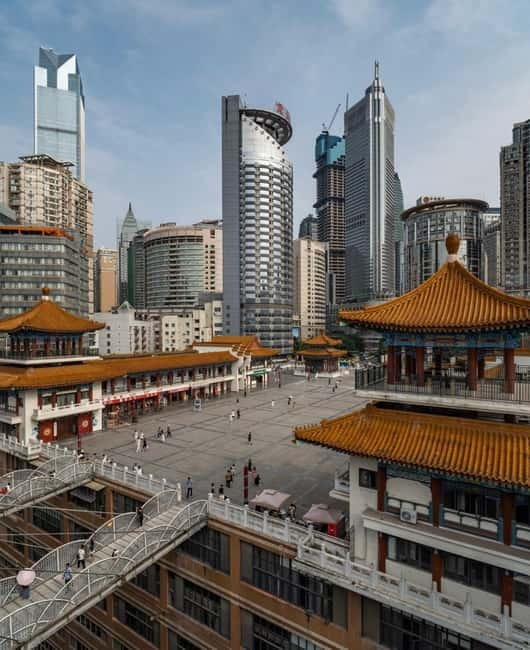
Chongqing bends the rules of city design. This full-day outing brings together the Liziba monorail, the Yangtze cableway, old streets, river views, and a few places that are easy to miss on your own. I like the smart mix of modern city marvels and everyday local life, and I like that guides such as Diego, Hao, Linxin, Flora, and Sofia have been praised for patience, personal attention, and help with photos. The main drawback is the pace: ten hours, crowds, steep city terrain, and several stops can make this a tiring day.
I also like the flexible pickup from anywhere in Chongqing and the choice of eight guide languages. You get cableway and planning-gallery tickets, two local snacks with drinks, and transport help, but lunch is not included, so you will need to choose and pay for your own midday meal.
In This Review
- Key points to know before booking
- Why this one-day Chongqing route works
- Liziba: the monorail that enters a residential tower
- Riding Chongqing’s monorail through the city
- Kuixing Tower and the city’s confusing street levels
- The Yangtze cableway, Chongqing’s air bus
- Ciqikou Ancient Town and the taste of old Chongqing
- The Urban Planning Exhibition Gallery
- Longmenhao Old Street and a slower riverfront mood
- Guides, languages, and the human side of the day
- Is $216 a fair price?
- Practical advice for a smoother day
- Who should book this Chongqing day?
- FAQ
- How long does the Chongqing experience last?
- Where does pickup take place?
- How many people can join the tour?
- Which languages are available?
- Are the Yangtze cableway and planning gallery tickets included?
- Is lunch included?
- What should I bring?
- Is the tour suitable for wheelchair users?
Key points to know before booking
- Ride through the Liziba building: See the train from the famous viewpoint, then board the monorail for the full surreal effect.
- Feel Chongqing’s 8D layout at Kuixing Tower: River views and confusing changes in street level show why this city can make a map feel useless.
- Cross the Yangtze by cableway: The air bus gives you a rare high view of the river, hills, and layered city.
- Pair old streets with future planning: Ciqikou and Longmenhao show historic Chongqing, while the Urban Planning Exhibition Gallery explains its rapid growth.
- Expect personal guiding: The small group size, from one to twelve people, allows the guide to adjust conversations and help with photos.
- Plan for a long, active day: Comfortable shoes matter, and crowded roads may mean using taxis instead of a private car.
Why this one-day Chongqing route works
Chongqing can be hard to read at first. Roads climb, buildings appear at different levels, and a station that looks nearby on a map may sit far above or below you. This itinerary makes that confusion part of the fun while giving you a guide to explain what you are seeing.
The route moves between Yuzhong District, riverfront neighborhoods, Ciqikou, and the city’s planning museum. You are not only collecting photo stops. You are seeing how Chongqing grew around two major rivers, steep hills, dense housing, and an urgent need for unusual transport solutions.
The experience lasts about ten hours. That is long enough to see the major sights, but it is not a relaxed hop-on, hop-off day. You will walk, board public transport, manage crowds, and move through areas with changing elevations. I would choose it for a first full day in Chongqing, especially if you want a guide to handle the city’s odd geography.
Pickup and drop-off are available anywhere in Chongqing city. The group can be as small as one person or as large as twelve. A smaller group should feel more personal, while a full group may take longer to gather and move through busy places.
A few more tours worth putting side by side
- Chongqing Wulong National Park Private Tour
★ 5.0 · 87 reviews - Chongqing: Two Rivers Night Cruise- Yangtze & Jialing Rivers
★ 4.5 · 64 reviews - Chongqing deep explore & private car service including meals
★ 4.9 · 51 reviews
Liziba: the monorail that enters a residential tower
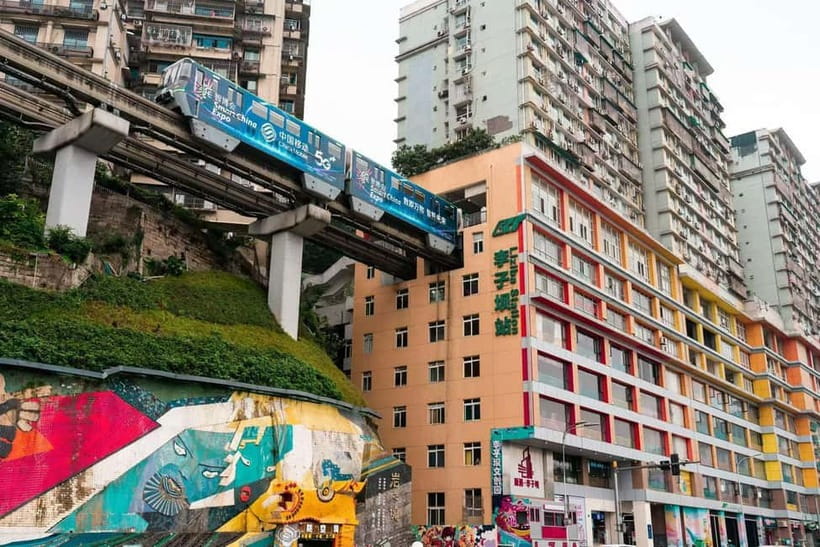
The Liziba Monorail Viewpoint is the tour’s most instantly recognizable stop. From the viewing area, you can watch a train appear to pass straight through a residential building. It is an excellent example of Chongqing’s practical response to limited space.
The sight looks like a movie trick, but the key appeal is that you do not stop at the photo. You also ride the monorail yourself. That gives you two views of the same design: first from outside, then from inside the train as it glides through the building.
I would pay attention to the timing here. The best photo depends on a train arriving, and the viewpoint may be crowded. Your guide can help you find a good angle and explain where to stand, but you should expect some waiting and repeated attempts if you want a clean picture.
Sofia has been especially praised for helping people find the right angle at Liziba and for explaining the city’s past along the way. Flora has also been praised for taking photos and steering people toward quieter spots when crowds became too much. Those details matter because Liziba is simple to visit but easier to enjoy when someone handles the practical side.
Riding Chongqing’s monorail through the city
The ride itself is brief, but it changes the way you understand the viewpoint. You are no longer looking at Chongqing as a strange collection of towers. You are moving through it, with the train threading between homes, roads, and steep urban levels.
I like this part because it turns an internet-famous image into a real piece of public transport. Chongqing’s monorail is not just a tourist attraction. It is part of daily city movement, which makes the experience more meaningful than a quick photo stop.
Do not expect a private carriage or a quiet ride. This is shared transport in a busy city. The guide’s role is useful here, especially if you are unsure where to board or how the ride fits into the rest of the day.
Kuixing Tower and the city’s confusing street levels
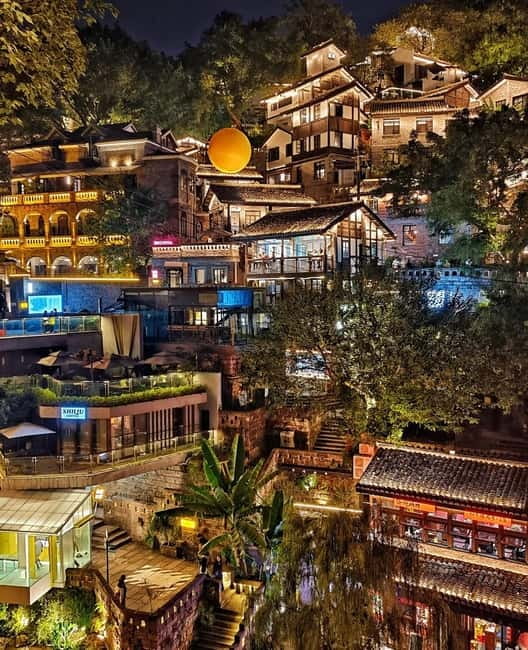
Kuixing Tower is a quieter stop with a different mood. It sits in Yuzhong District, where local tradition and extreme urban density meet. The site was once linked with prayers for academic success, giving it a connection to ordinary hopes rather than grand imperial history.
The surprise is the view. From one level, you may feel as if you are on the ground floor. From another, you can look out from what seems like the 22nd floor. That odd sensation explains Chongqing’s nickname as China’s 8D Magic City better than any slogan can.
You get broad views toward the Jialing River and a chance to pause between the larger attractions. I would use this stop to ask your guide how Chongqing’s streets and buildings fit together. Linxin has been praised for noticing personal interests and shaping conversations around them, which is exactly the kind of guiding that can make a confusing city easier to understand.
Kuixing Tower may not offer the polished presentation of a major museum. That is part of its appeal, but it also means the experience depends heavily on the guide’s explanation and your interest in urban form. If you only want famous photo locations, this stop may feel less urgent. If you want to understand how the city works, it is one of the more useful stops.
A completely different kind of day out on the same trip:
- Chongqing: 1-day Essential Guided City Tour without Car
★ 5.0 · 44 reviews - Chongqing private luxury city tour: Must-sees All in One
★ 5.0 · 39 reviews - Chongqing: Magic Night View and Secret Viewing Spots Tour
★ 5.0 · 27 reviews - Chongqing Wulong: All inclusive luxury private trip to 2 spots
★ 5.0 · 26 reviews
The Yangtze cableway, Chongqing’s air bus
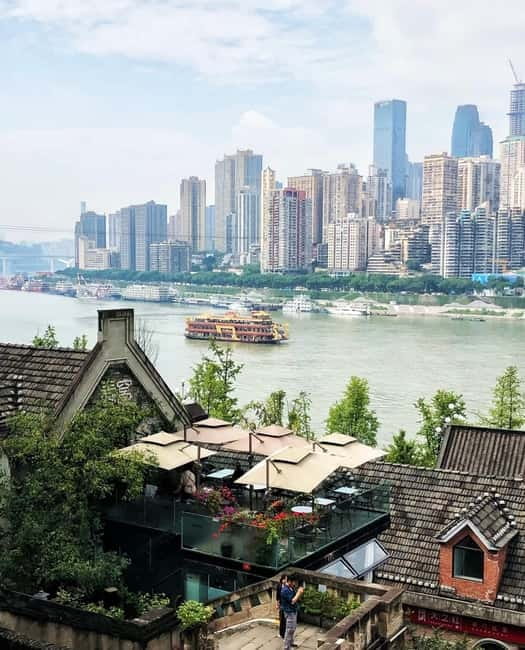
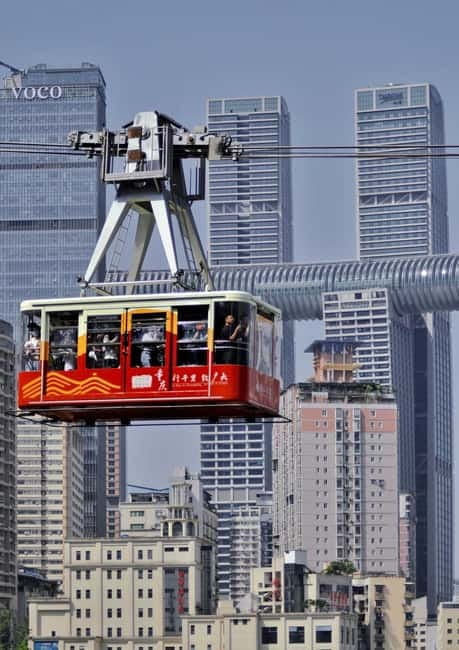
The Yangtze River Cableway is one of the day’s major ticketed attractions. Locals call it the city’s air bus because it carries people high above the river between the two banks.
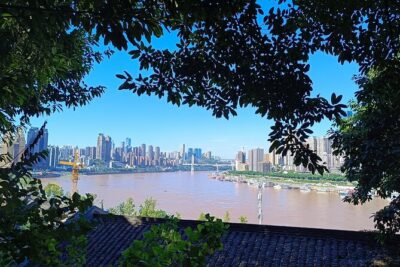
The crossing gives you a view that roads and ordinary trains cannot provide. You can look down toward the Yangtze, across to the skyline, and back toward the steep hills where Chongqing’s buildings stack upward. The city’s scale becomes easier to grasp from the cabin.
This is likely to be one of the busiest parts of the day. Crowds can affect the wait and the space around the windows. I would keep your camera ready, but also accept that the best view may last only a moment as the cabin moves.
The cableway ticket is included, which improves the value of the $216 price. It also removes one small planning task on a day already packed with transport changes. Still, the included ticket does not guarantee a private cabin or a crowd-free crossing.
The ride is valuable because it connects several ideas in the itinerary. The monorail shows how Chongqing builds through dense neighborhoods. Kuixing Tower shows how confusing the elevations can be. The cableway shows the river that shaped the city and forced it to think vertically.
Ciqikou Ancient Town and the taste of old Chongqing
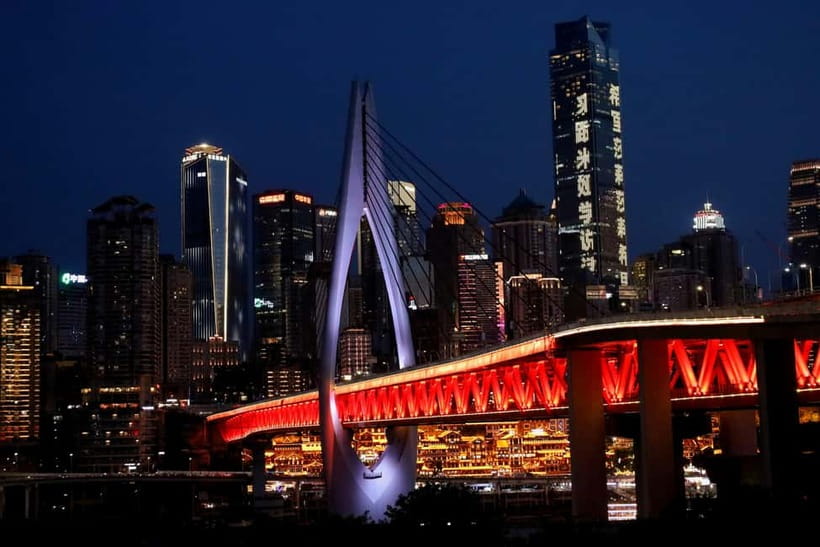
Ciqikou Ancient Town brings you into a different side of the city. It was an important port town, and its old lanes, shops, food stalls, and traditional buildings give you a feel for Chongqing before the modern skyline took over.
This is a place for wandering rather than checking off a single monument. You can look at old architecture, browse shops, notice local cooking smells, and try regional snacks. Two local snacks and drinks are included during the day, though the exact choice is not specified.
I would keep your expectations sensible. Ciqikou is a popular heritage area, so it can be crowded and commercial. It is not an untouched old town. The value comes from watching how historic streets function as a living part of the city, not from expecting a silent museum.
The guide can help you move beyond the main shopping paths and point out local flavors. Lunch is not included, but the guide provides recommendations for local dishes. That arrangement gives you choice, though you should budget extra money and be ready to make a decision during a busy day.
If food is important to you, Ciqikou may become one of your favorite sections. If you dislike crowds or shopping streets, it may be the stop you enjoy least. Flora’s approach, finding less crowded local places, could be especially helpful for people who want a calmer visit.
The Urban Planning Exhibition Gallery
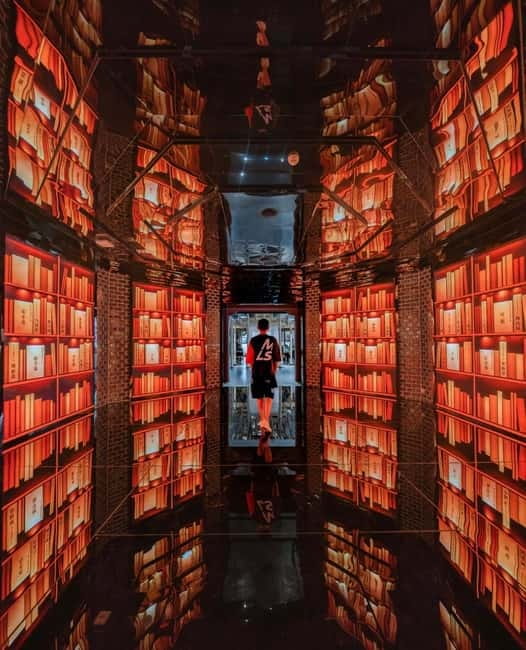
The Chongqing Urban Planning Exhibition Gallery explains the city behind the strange views. Its large city model and multimedia displays show how Chongqing developed as a mountain city shaped by rivers, hills, and dense construction.
I find this stop useful because it gives structure to everything you have seen earlier. After the monorail, tower, and cableway, the museum helps you connect the pieces. You can better understand why transport lines run through buildings, why roads change height, and why high-rise construction dominates so many views.
The gallery ticket is included. The exhibits are modern and interactive, with rotating displays, so the exact presentation can change. You should allow time to look at the city model rather than treating the museum as a quick indoor break.
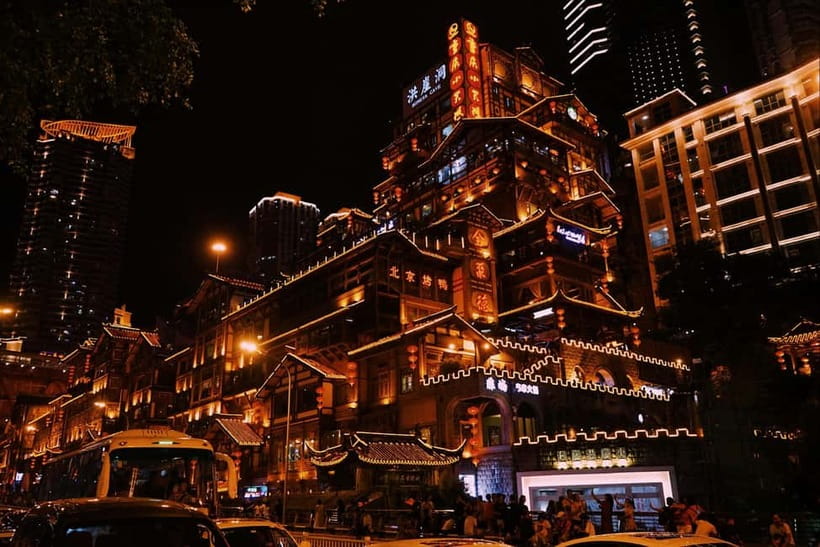
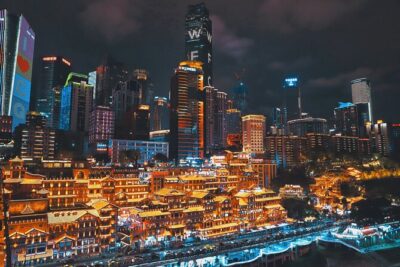
The setting is also part of the attraction. The gallery offers views toward the river and the city, with a promenade where you can watch boats move past. From here, the contrast is clear: futuristic towers rise beside steep, layered hillsides.
This stop suits anyone who enjoys city design, architecture, or fast-growing urban centers. It may be less exciting if you want only street life, but it gives the day a needed explanatory pause.
Longmenhao Old Street and a slower riverfront mood
Longmenhao Old Street shifts the tone again. Restored buildings, old trees, tea spaces, independent bookstores, cafes, and artist studios give this riverfront area a more lived-in feel.
I like the contrast with the cableway and planning gallery. Instead of looking at Chongqing from above or studying it through a model, you can slow down at street level. A local teahouse offers a chance to see how people spend time together over tea, conversation, and card games.
Sofia’s help at Jiaotong Teahouse was particularly valuable for connecting with locals. A guide who can help with simple conversations makes this kind of stop feel less like sightseeing from the outside.
Longmenhao is not a major thrill ride. Its appeal is atmosphere, restored streets, and small details. You may prefer it if you want a break from crowds and photo hunting. You should also know that the day’s schedule may limit how long you can linger at cafes or bookstores.
Guides, languages, and the human side of the day
The guide can make or break a dense one-day route. Here, the strongest pattern is personal care. Diego has been praised for making the day easier and helping people reach the places they wanted to see. Maria Elena also valued his friendly, patient manner and felt comfortable with a Spanish-speaking guide.
Hao was praised for looking after a 65-year-old family member throughout the day. That suggests the tour can work for older relatives when the guide pays close attention, though the walking and terrain still require honest consideration.
Linxin’s strength is adapting conversation to your interests. Flora is noted for photo help and quieter local places. Sofia combines city history with practical help, including finding the right Liziba photo angle and helping people speak with locals at a teahouse.
Guiding is available in English, Chinese, Spanish, Japanese, Korean, Russian, French, and Italian. I would state your interests clearly at the start. Tell the guide if you care most about food, architecture, photography, history, or avoiding crowded areas.
Is $216 a fair price?
At $216 per person, this is not a budget sightseeing day. The value depends on what you would otherwise need to arrange yourself.
You receive city pickup and drop-off, a guide in your chosen language, the Yangtze cableway ticket, the Urban Planning Exhibition Gallery ticket, transport assistance, and two snacks with drinks. The group may include only you or up to twelve people, which makes the price easier to justify for solo visitors or small private parties who want a full day of help.
Lunch is extra. Taxi use may also replace private-car travel in congested areas, so flexibility is part of the deal. The experience is best judged as a guided city day rather than a simple collection of admission tickets.
I think the price is strongest for first-time visitors with limited time, people who want help with Chongqing’s transport, and anyone needing a guide in a less common language. It is weaker value if you are comfortable using public transport, reading Chinese, and planning each stop yourself.
Practical advice for a smoother day
Wear comfortable walking shoes. Chongqing’s steep streets and changing levels are central to the experience, not minor details.
Bring your passport or ID card and a camera. Crowds are likely at Liziba and the cableway, so keep your belongings secure and allow patience for photo opportunities.
Pickup details are confirmed the evening before. Because traffic can be difficult, some congested areas may be reached by taxi instead of private car. Treat that as a practical adjustment, not a service failure.
The tour is not suitable for wheelchair users. If someone in your group has limited mobility, the steep terrain, public transport, crowds, and long duration deserve careful thought even if they do not use a wheelchair.
You can reserve now and pay later, and cancellation is allowed up to 24 hours before the experience for a full refund. Those terms help if your Chongqing schedule is still changing.
Who should book this Chongqing day?
I would book this experience if you have one full day and want the city explained as well as photographed. It suits first-time visitors, photographers, architecture fans, families with an attentive guide, and people who want a language match.
I would also choose it if the idea of figuring out monorails, cableways, old-town lanes, and steep riverfront districts alone sounds tiring. The guide’s practical help is a central part of the value.
I would hesitate if you prefer slow travel. Ten hours is a lot, and Ciqikou or Longmenhao could each fill a half-day for someone who likes to linger. I would also hesitate if you avoid crowds, though the guide may be able to steer you toward quieter corners.
For most visitors with limited time, the route earns its place. You get Chongqing’s strangest transport sight, its best river crossing, a historic port town, a city-planning explanation, and a slower old street finish. The day is busy, but it gives you a clear sense of why Chongqing feels unlike almost anywhere else.
FAQ
How long does the Chongqing experience last?
The experience lasts approximately 10 hours.
Where does pickup take place?
Pickup and drop-off are available from anywhere in Chongqing city. Staff confirm the pickup details the evening before.
How many people can join the tour?
The group size ranges from 1 to 12 people. Larger groups can ask about custom options.
Which languages are available?
Guiding is available in English, Chinese, Spanish, Japanese, Korean, Russian, French, and Italian.
Are the Yangtze cableway and planning gallery tickets included?
Yes. The Yangtze River Cableway and Chongqing Urban Planning Exhibition Gallery tickets are included.
Is lunch included?
No. Lunch is not included, but local food recommendations are provided.
What should I bring?
Bring your passport or ID card, comfortable shoes, and a camera.
Is the tour suitable for wheelchair users?
No. The experience is not suitable for wheelchair users.
Newest reviews from Chongqing
- 2Day Wulong Karst Park+Dazu Carvings World Heritage Private Tour★ 5.0 · 4 reviews
- Chongqing: Historical Blocks, Temple, and Mountain Tour★ 5.0 · 4 reviews
- Private Day Tour to Ciqikou, Liziba, Jiefangbei etc. in Chongqing★ 4.5 · 5 reviews
- Chongqing Local Food Tour Adventure★ 5.0 · 5 reviews
- Chongqing: Qingyu Banquet Experience with Show and Dinner★ 4.8 · 6 reviews
- Chongqing Luxury Hot Spring and Massage Luxury Meal Private Tour★ 5.0 · 6 reviews
- True Taste of Chongqing: Offbeat Walks & Hotpot in One Day★ 5.0 · 6 reviews
- Chongqing Wulong Exploration Private Day Tour With the Lunch★ 5.0 · 6 reviews
Chongqing Tours, compared.
Two Rivers Night Cruise- Yangtze & Jialing Rivers
Read our review →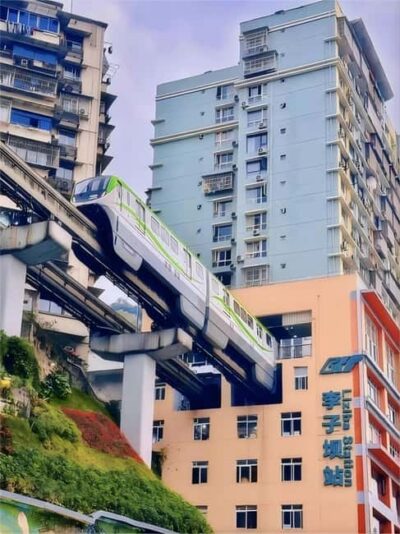
Chongqing deep explore & private car service including meals
Read our review →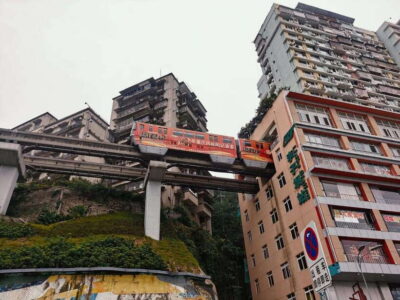
Chongqing private luxury city tour: Must-sees All in One
Read our review →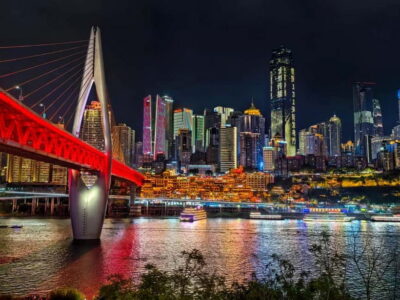
Chongqing Wulong: All inclusive luxury private trip to 2 spots
Read our review →Browse the lists this tour appears in