
Reviewed · DINNER EXPERIENCES
Old Beijing Dinner Tour
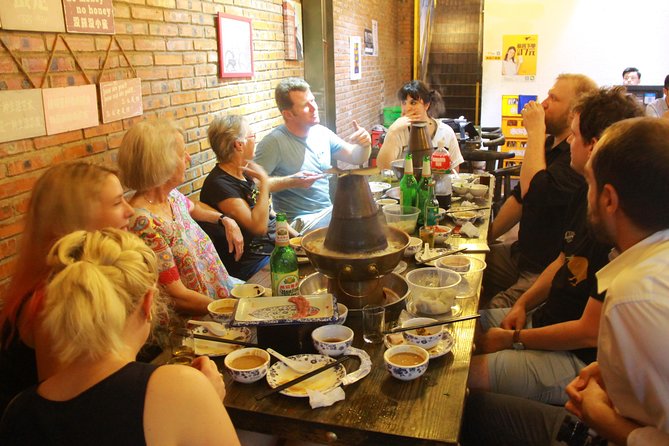
Beijing tastes best down a narrow lane. This three-hour evening walk leads you through Old Beijing’s hutongs to small local restaurants and food stalls, where you can sample dishes that are hard to find on your own. I especially like the small-group format, usually about eight people, and the chance to try several distinct foods, from Mongolian-style hotpot to stuffed dumplings and Beijing sauced meats. The main drawback is simple: there can be a lot of food, so pace yourself from the first stop.
The guides add real value, especially people such as Garth, Kelly, Shan, and Zeben, who have been praised for explaining both the dishes and the city around them. You also get local beer, other drinks, bottled water, and a useful restaurant recommendation packet. Since the tour starts at 7 p.m. and ends near Zhangzizhong Road Metro, you should plan your return route before the night gets late.
In This Review
- Key points to know before booking
- Why this dinner tour feels different from a restaurant meal
- Starting near Beixinqiao Station at 7 p.m.
- Walking through the hutongs
- Hotpot, dumplings, noodles, and jianbing
- Local drinks and the pace of the meal
- A final stop at Nuoyan Rice Wine Shop
- Ghost Street and what it adds
- The guides are a major part of the value
- Is $75 a fair price?
- Who should book this experience?
- Booking, weather, and cancellation details
- Should you book the Old Beijing Dinner Tour?
- FAQ
- Where does the Old Beijing Dinner Tour begin?
- Where does the tour end?
- How long does the tour last?
- Is hotel pickup included?
- How large is the group?
- What food might be included?
- Are drinks included?
- Does the tour include a rice wine tasting?
- Can dietary restrictions be accommodated?
- Can I cancel for a full refund?
Key points to know before booking
- The meal is spread across several local stops: Expect enough food that you may not want another full meal for several hours.
- The hutong route is the real setting: Narrow lanes and family-run eateries give you a view of everyday Beijing beyond major sights.
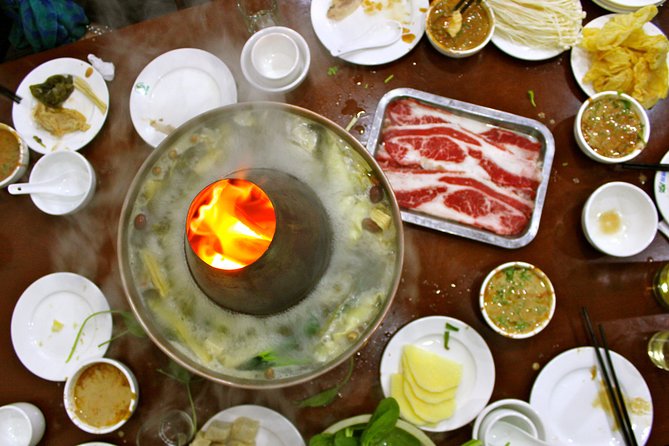
- Hotpot and jianbing are likely highlights: Possible tastings include Mongolian-style hotpot, hand-stuffed dumplings, sauced meats, noodles, and egg crepes.
- Groups stay fairly small: The standard size is eight people, with a maximum of 12.
- Rice wine finishes the evening: A tasting flight at Nuoyan Rice Wine Shop offers a pleasant final stop and a bit of drink history.
- You must make your own way there and back: The meeting point is near Beixinqiao Station, and the tour ends near Zhangzizhong Road Metro.
Why this dinner tour feels different from a restaurant meal
A standard Beijing dinner gives you food. This tour gives you a food route.
You begin near Beixinqiao Station at 7 p.m., then walk into one of the city’s remaining hutong districts. These narrow lanes can be confusing if you do not know the area, especially after dark, so having a guide matters. The point is not simply to see old streets. It is to understand how small restaurants, snack counters, and neighborhood businesses fit into daily life.
I like that the tour does not depend on one elaborate meal in a polished dining room. Instead, you move from place to place, tasting a series of specialties. That format lets you compare flavors, cooking styles, and settings. It also means you can try foods you might skip if faced with a long Chinese menu and no idea how to order.
The atmosphere should feel social rather than formal. A group of eight is large enough for conversation but small enough for the guide to explain what is on the table. In some cases, the group can reach 12 people with a second guide. That is still manageable, but the most intimate experience will come when the group is closer to the standard size.
More dinners out in Beijing:
- 4-Hour Private Illuminated Beijing Tour with Authentic Chinese Dinner on Hutong Street
★ 5.0 · 34 reviews - Din Tai Fung Dinner and VIP Class River Cruise Experience in Shanghai
★ 5.0 · 31 reviews - Beijing:Temple of Heaven Private Tour w/Option Show & Dinner
★ 4.8 · 18 reviews
Starting near Beixinqiao Station at 7 p.m.
The meeting point is near Beixinqiao Station in Dongcheng District. This is a practical starting point because the tour relies on walking and public transportation rather than private hotel pickup.
You should arrive with your phone charged and your meeting details ready. The tour has a mobile ticket, and finding a guide at a busy station area can take a little attention. One useful detail from the experience is that guides have helped with onward transportation, including directions and assistance arranging a taxi or Didi after the tour.
The evening timing works well for dinner, but you should remember that Beijing’s enormous traffic can make a subway arrival more dependable than a taxi. The tour ends near the intersection of Dongsi North Street and Dongsi 10th Alley, close to Zhangzizhong Road Metro Station on Line 5. Hotel pickup and drop-off are not included, so you handle both ends yourself.
Walking through the hutongs
The hutong portion lasts roughly two hours, although the food stops are woven into that walk. You move through narrow lanes where small neighborhood businesses can be easy to miss from a main road.
This is where the guide’s local route earns its keep. Some of the eateries are difficult to locate without someone who already knows the area, and ordering can be challenging if you do not read Chinese or understand the local routine. Your guide handles the practical part, then explains what you are eating and why it matters.
The walking is not presented as a grand monument tour. It is more personal and ordinary, which is exactly its strength. You see the lanes as places where people live, eat, and meet, rather than as a backdrop for photographs.
Still, you should be comfortable walking for much of the evening. The streets are narrow, the route is active, and seating at local shops may be basic. If you want a quiet, polished dinner with plenty of personal space, this is not the right format. If you like exploring on foot and trying food in small local places, it fits well.
Hotpot, dumplings, noodles, and jianbing
The exact tasting lineup can vary, but the tour may include Mongolian-style hotpot, hand-stuffed boiled dumplings, Beijing sauced meats, noodles, and jianbing. That range is one of the strongest reasons to book it.
Hotpot often makes an early impression because it turns dinner into a shared activity. Ingredients are cooked at the table, and the guide can explain what you are adding and how the meal is traditionally approached. One practical warning: do not fill up immediately. The portions across the evening can be generous, and the hotpot is only one part of the meal.
The dumplings provide a different experience. Hand-stuffed boiled dumplings are simple in appearance but make a useful comparison with the more familiar restaurant versions served outside China. Your guide can help you understand what is in them and how they fit into northern Chinese cooking.
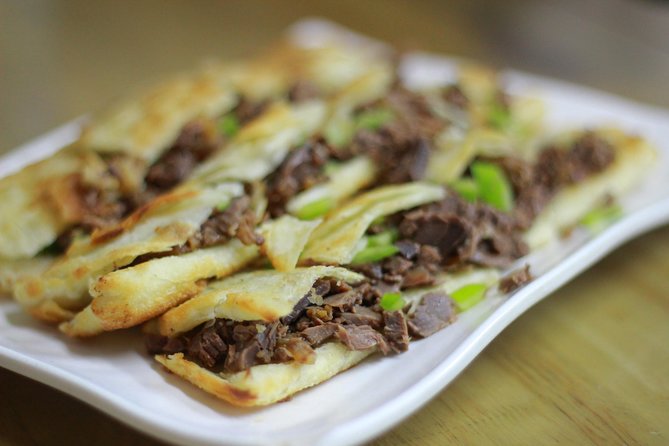
Jianbing, a savory egg crepe, has been singled out as a favorite. Some versions may include crispy wonton, giving the crepe a pleasant contrast in texture. This is the sort of food that can be hard to identify or order on your own, yet easy to appreciate once someone explains it.
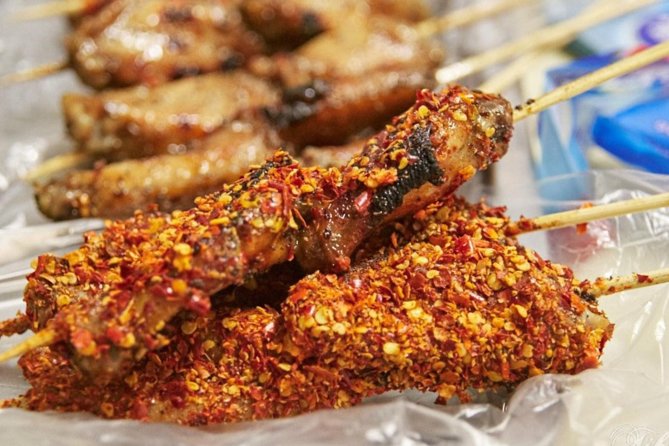
Noodles and sauced meats add further variety. Rather than bringing one huge dish to the table, the tour lets you sample several foods in smaller stages. That is valuable for first-time visitors who want an introduction to Beijing cooking without committing to a single unfamiliar order.
More dining experiences in Beijing:
- Beijing Imperial Dining Experience at Bai Jia Da Yuan Restaurant with Houhai Lake Bar Tour
★ 5.0 · 16 reviews - Beijing Evening Tour: Chaoyang Acrobatic Show with Peking Duck Dinner
★ 5.0 · 13 reviews - Beijing Hutong Dinner and Beer Walking Private Tour
★ 5.0 · 9 reviews - Beijing: Acrobatic Show with Peking Duck Dinner Private Tour
★ 4.9 · 8 reviews
Local drinks and the pace of the meal
A bottle of local beer is paired with the meal, and the inclusions also list soft drinks, local alcoholic beverages, and bottled water. The drinks make the stops feel more like an evening out than a series of hurried tastings.
The pace is worth considering. You are walking, eating, talking, and moving again. That helps prevent the experience from feeling too heavy, but the total amount of food can still be substantial. I would treat this as your main dinner and avoid scheduling a late restaurant reservation afterward.
The drink component is not unlimited drinking for its own sake. It supports the food and the social rhythm of the route. If you do not drink alcohol, advise the operator about your preference. Specific dietary requirements should also be provided when booking, with advance notice needed to accommodate restrictions.
The food is intended to be authentic rather than simplified for an international audience. That can be a plus, but it also means you should come ready to try unfamiliar flavors and textures. Anyone with a serious allergy should communicate clearly before the tour, not only at the meeting point.
A final stop at Nuoyan Rice Wine Shop
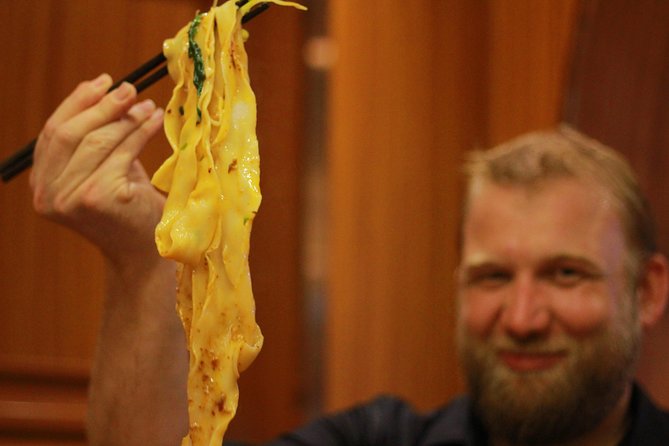
The evening ends at Nuoyan Rice Wine Shop, a boutique producer where you sample a small flight of rice wines. The stop lasts about 30 minutes.
This is a nice change of pace after the restaurant visits. Instead of another full plate, you get a focused introduction to a traditional drink and an explanation of how it fits into Chinese food culture. It also gives the evening a clear finish rather than simply ending after the last dish.
The rice wine tasting may be less familiar than beer or spirits, so the guide’s explanation is useful. You do not need to be a drink enthusiast to enjoy this stop. It works best as a cultural add-on to the meal.
The tour then finishes near Dongsi North Street and Dongsi 10th Alley. Your guide can help with directions back to your hotel, but you should still know your hotel’s address and have a plan for the final journey.
Ghost Street and what it adds
The route includes a brief stop near Ghost Street, or Gui Jie, a popular area for snacks. This part is listed as only about 10 minutes, so do not expect a second full food tour there.
Its value is mainly geographical and atmospheric. You get a glimpse of one of Beijing’s well-known eating streets after spending the evening in quieter hutong lanes. The contrast helps explain the purpose of the tour: Gui Jie is easy to find, while the smaller local spots require more guidance.
You may not spend enough time there to make it a major highlight. Consider it a short orientation point near the end of the route, not the main event.
The guides are a major part of the value
Food tours depend heavily on the person leading them, and this one seems to place unusual weight on explanation. Guides including Garth, Kelly, Shan, Zeben, and Jesus have been praised for their warmth, clear storytelling, and ability to connect food with Chinese history and customs.
Garth, in particular, has been described as careful in explaining the origin of dishes and the stories behind the restaurants and their owners. Kelly has been praised for managing a group of eight attentively, remembering names, and handling a temporary restaurant delay by taking the group to a nearby microbrewery with fresh fruit and beer.
That sort of flexibility matters. Small local businesses do not always operate with the rigid timing of a large tourist attraction. A good guide keeps the evening moving if a reservation is delayed or a stop changes.
The strongest guides also help bridge cultural gaps. They explain not only what a dish contains, but how it relates to Beijing life, northern Chinese cooking, and older food traditions. You get more from the meal when someone gives you the context without turning dinner into a lecture.
Is $75 a fair price?
At $75 per person, this is not the cheapest way to eat in Beijing. You can certainly find inexpensive dishes on your own for far less.
The price makes more sense when you consider what it bundles together: about three hours of guiding, several food stops, local alcoholic and nonalcoholic drinks, bottled water, navigation through hutongs, and a rice wine tasting. You are also paying for access to a tested route and for help ordering in places you might not comfortably manage alone.
I see the value as strongest for a first visit to Beijing, especially if you want a food introduction without spending days researching restaurants. It is also useful early in your stay because the post-tour packet includes restaurant recommendations and local travel tips. Those suggestions can help you plan later meals beyond the tour.
The value is weaker if you already know Beijing well, speak Chinese, and have a trusted list of local eateries. It is also less appealing if you prefer one long, leisurely restaurant dinner rather than moving between stops.
Who should book this experience?
I would recommend it to first-time visitors, food-focused couples, solo visitors who want an easy social evening, and anyone curious about the hutongs beyond the usual sightseeing route.
It suits people who like trying several foods and asking questions. The small group gives you a chance to talk with the guide and other members of the group, while the walking keeps the night active.
Families and older adults may also manage it, since most people can participate, but the route involves walking through narrow lanes for much of the evening. Anyone with strict dietary restrictions should contact the operator early. The company may be able to help, but advance notice is required.
I would not choose it for a traveler seeking hotel pickup, a private luxury meal, or a tightly controlled schedule. I would also avoid booking it on the same night as another major dinner plan. The amount of food is one of the tour’s strengths, but it can become a problem if you underestimate it.
Booking, weather, and cancellation details
Confirmation is provided at booking, and the mobile ticket makes the experience easy to carry on your phone. The tour requires a minimum number of participants, so an unusually small booking may lead to a change of date or experience, or a full refund.
Bad weather can also cause cancellation, with the choice of another date or a full refund. You can cancel for a full refund up to 24 hours before the 7 p.m. start time. Changes or cancellations made less than 24 hours ahead are not accepted for a refund.
Should you book the Old Beijing Dinner Tour?
Yes, if you want Beijing food with a sense of place. The best part is not any single dish. It is the combination of narrow hutong lanes, small family-run restaurants, several types of northern Chinese food, local drinks, and guides who can explain what you are eating.
Book it near the beginning of your Beijing stay so the restaurant tips can shape the rest of your visit. Arrive hungry but not starving, wear comfortable shoes, tell the operator about dietary needs early, and leave your late evening open.
Skip it if you want a cheap standalone dinner or a private car-based outing. For most food-curious visitors, though, $75 buys more than a meal. It buys a guided route into parts of Beijing that are easy to miss and difficult to recreate alone.
FAQ
Where does the Old Beijing Dinner Tour begin?
The tour begins near Beixinqiao Station in Dongcheng District, Beijing. The listed start time is 7 p.m.
Where does the tour end?
It ends near the intersection of Dongsi North Street and Dongsi 10th Alley, close to Zhangzizhong Road Metro Station on Line 5.
How long does the tour last?
The experience lasts approximately three hours.
Is hotel pickup included?
No. Hotel pickup and drop-off are not included, so you must make your own way to the meeting point and return from the ending area.
How large is the group?
The standard group size is eight people. In some cases, the group can reach 12 people with a second guide, and the maximum is 12 travelers.
What food might be included?
Possible tastings include Mongolian-style hotpot, hand-stuffed boiled dumplings, Beijing sauced meats, noodles, and jianbing egg crepes. The exact selection may vary.
Are drinks included?
Yes. The tour includes bottled water, soft drinks, local alcoholic beverages, and a bottle of local beer paired with the meal.
Does the tour include a rice wine tasting?
Yes. The evening ends at Nuoyan Rice Wine Shop, where you sample a small flight of rice wines and learn about the traditional drink.
Can dietary restrictions be accommodated?
You should provide any specific dietary requirements when booking. Advance notice is required so the operator can try to accommodate them.
Can I cancel for a full refund?
Yes. You can cancel at least 24 hours before the experience start time for a full refund. Cancellations or changes made less than 24 hours before the start are not accepted for a refund.
Newest reviews from Beijing
- Beijing: Explore the Forbidden City in Hanfu★ 5.0 · 4 reviews
- Beijing Tai Chi and Tea Ceremony Experience★ 5.0 · 4 reviews
- Jinshangling Great Wall Of Beijing Tickets And Other Option★ 4.0 · 4 reviews
- Private Full-Day Great Wall of China Hiking Tour from Jiankou to Mutianyu★ 4.5 · 4 reviews
- Tour the Great Wall with a Native from Downtown Beijing★ 4.8 · 4 reviews
- Beijing: Badaling Great Wall Private Tour w Language Option★ 4.3 · 4 reviews
- Beijing:Summer Palace & Tea or Calligraphy Experience Tour★ 4.6 · 4 reviews
- 7 Days Private Tour of Beijing, Xian, Shanghai by Bullet Train★ 5.0 · 4 reviews
Dinner Experiences, compared.

Shanghai Night River Cruise Tour with Xinjiang Style Dining Experience
Read our review →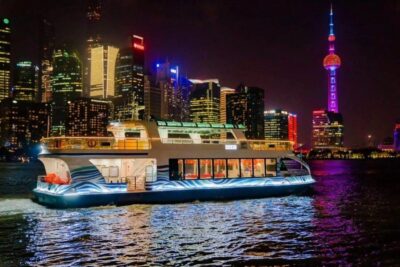
Night River Cruise Tour with Xinjiang Style Dining
Read our review →
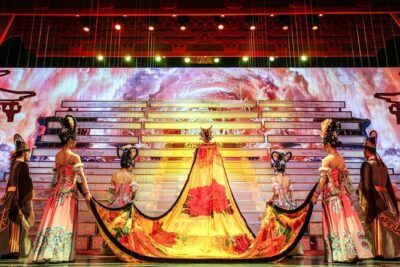
Xi’an Tang Dynasty Show Ticket Optional Dumplings or Royal Dinner
Read our review →
Shanghai Night River Cruise VIP Seating with Private Transfer and Dinner Option
Read our review →
Wuzhen and Xitang Water Town Private Full Day Trip from Shanghai with Lunch and Dinner
Read our review →
Shanghai Night River Cruise VIP Seat with Authentic Dinner
Read our review →
Shanghai Tower: Lunch or Dinner on the 119th Floor
Read our review →Browse the lists this tour appears in