
Reviewed · FORBIDDEN CITY TOURS
Private City Tour By Public Transportation: Temple Of Heaven, Tiananmen Square and Forbidden City
See Beijing the local way. This private tour links the Temple of Heaven, Tiananmen Square, and the Forbidden City by metro, bus, and plenty of walking. I like the personal guide and the chance to learn Beijing’s transport system while moving between major sights. I also like that the pace and focus can be adjusted for your group. The catch is simple: this is a long day on foot, and the public transport connections can feel rushed.
At $110 per person, the price is fair if you value a private English-speaking guide, advance Forbidden City arrangements, entrance fees, and transport. Guides such as Roy Li, Alice, and Coco have earned especially warm praise for clear explanations and patience with questions. Just prepare for strict security at Tiananmen Square, possible crowds on buses, and as much as 15 kilometers of walking in hot weather.
In This Review
- Key details before you book
- Why this Beijing tour feels different
- The Temple of Heaven gives the morning a local feel
- Hall of Prayer for Good Harvest
- Echo Wall and Yuanqiutan
- Tiananmen Square requires patience and flexibility
- Entering the Forbidden City through the southern approach
- Hall of Great Harmony and the central halls
- The inner court and imperial family life
- The Imperial Garden
- What the $110 price really covers
- The public transport challenge is part of the deal
- Who should book this tour?
- Practical advice for a smoother day
- My recommendation: book it for context, not comfort
- FAQ
- How long does the tour last?
- Is hotel pickup included?
- Is hotel drop-off included?
- How do we travel between the sights?
- Is this a private tour?
- Are entrance fees included?
- Do I need to provide passport details?
- What happens if Tiananmen Square is closed?
- What if security at Tiananmen Square takes too long?
- Can the tour operate in bad weather?
Key details before you book
- Three essential Beijing sights in one morning and afternoon: You visit the Temple of Heaven, Tiananmen Square, and the Forbidden City in about five to six hours.
- Public transport is part of the experience: You travel by metro, city bus, and a double-decker bus rather than using a private vehicle.
- A truly private group: Only your party joins the tour, so you can ask questions and request some itinerary adjustments.
- The guide handles the difficult parts: English commentary, public transport costs, entrance fees, and advance Forbidden City ticket arrangements are included.
- Expect a serious walking day: One detailed account put the distance at more than 15 kilometers, especially under summer sun.
- Tiananmen access can change: Security lines may last more than an hour, and the square can close without notice for official activity.
Why this Beijing tour feels different
Many Beijing sightseeing tours move from hotel to landmark in a private van. This one takes another route. You meet your guide in your hotel lobby around 8:30 a.m., then use the metro or a bus, depending on where you are staying.
That choice gives the tour a practical purpose. You do not simply look at Beijing from behind a vehicle window. You see how the city connects its central sights, learn how the metro works, and get a small lesson in everyday movement around the capital.
The public transport also keeps the day active. You may ride a city bus to Tiananmen Square, use a double-decker route, and walk through large squares, temple grounds, and palace courtyards. The exact route depends partly on your hotel and conditions on the day.
This is best understood as a private guided walking tour with transport between sections, not as a relaxed ride from one entrance to another. The private format helps. You can ask about imperial rituals, architecture, politics, or modern Beijing without waiting for a large group to catch up.
More City Tours in Beijing
- Beijing: Forbidden City Tour(Group/Private)-Tickets Included
★ 4.8 · 7,974 reviews - Beijing: T-Square & Forbidden City Group or Private Tour
★ 4.8 · 4,446 reviews - All-Inclusive Tour: Tiananmen Square, Forbidden City, Great Wall
★ 5.0 · 2,873 reviews
The Temple of Heaven gives the morning a local feel
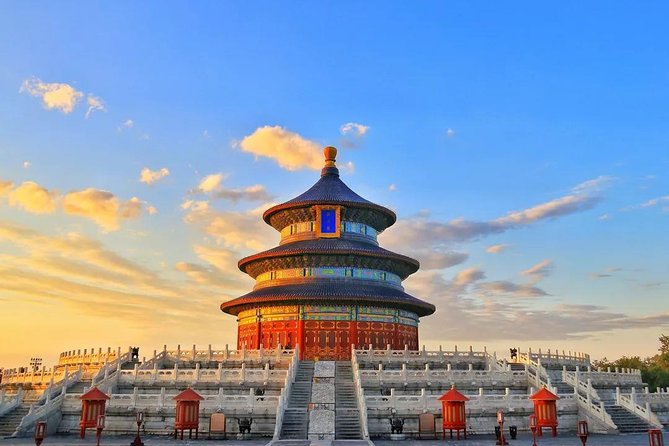
The first major stop is the Temple of Heaven, one of Beijing’s most important imperial religious sites. The complex was used for ceremonies connected with the emperor’s role as the Son of Heaven, and its layout reflects old Chinese ideas about the relationship between heaven and earth.
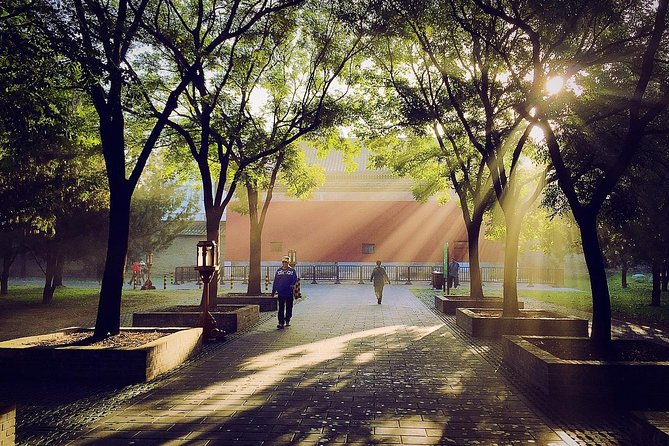
The morning timing is useful. Local people often gather in and around the grounds for exercise, social activities, and other routines. That gives you a look at present-day Beijing before the tour turns fully toward imperial monuments.
You have about an hour for the Temple of Heaven area, with admission included. Your guide explains the purpose of the complex and points out the buildings that matter most. The wide grounds mean that this part of the tour involves steady walking, but it also gives you room to spread out after the metro or bus ride.
Hall of Prayer for Good Harvest
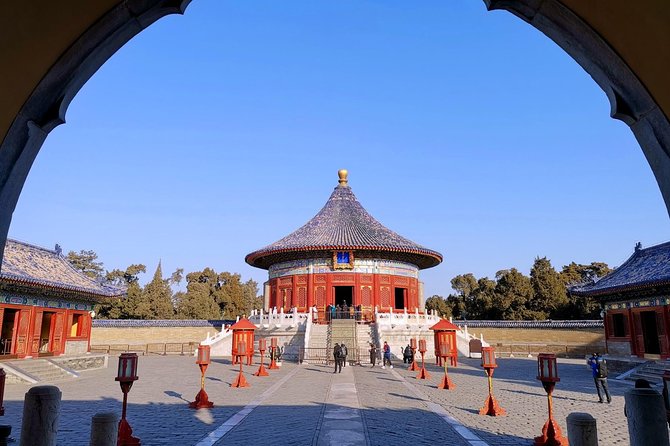
The Hall of Prayer for Good Harvest is the most recognizable building here. Its circular form, layered roof, and timber construction make it easy to remember, but the guide adds the part that photographs cannot provide: why the emperor came here and what the ceremonies were meant to accomplish.
You also visit the Hall of Imperial Zenith and the Circular Mound Altar. The Hall of Imperial Zenith served as a place connected with the ritual objects used in ceremonies. The Circular Mound Altar was the setting for the winter solstice sacrifice to Heaven.
The altar’s three circular marble tiers reflect the old belief that heaven is round and earth is square. It is a small detail, but it helps make sense of the geometry throughout the site.
Echo Wall and Yuanqiutan
The Echo Wall area adds another stop within the temple complex. It is connected with the Hall of Imperial Zenith and is often included in the explanation of how sound and sacred space were understood at the site.
Yuanqiutan, the three-tiered white marble platform, is tied to the winter solstice ritual. You spend roughly 20 minutes there, enough to understand its role without lingering so long that the later palace visit gets squeezed.
The main drawback here is the size of the grounds. The Temple of Heaven can feel like an easy first stop, but the walking adds up quickly. Wear shoes with real support, and do not treat the five to six hour duration as a low-effort sightseeing session.
More Forbidden City visits:
- 4-Hour Small Group Tour to Forbidden City with Entry Tickets
★ 5.0 · 1,863 reviews - Beijing Full Day Tours: Tiananmen Sq, Forbidden City, Great Wall
★ 5.0 · 1,634 reviews - Beijing: Tianmen Square, Forbidden City & Royal Museum Tours
★ 4.6 · 1,288 reviews - Beijing Forbidden City Ticket Booking (Optional: guide service)
★ 5.0 · 1,263 reviews
Tiananmen Square requires patience and flexibility
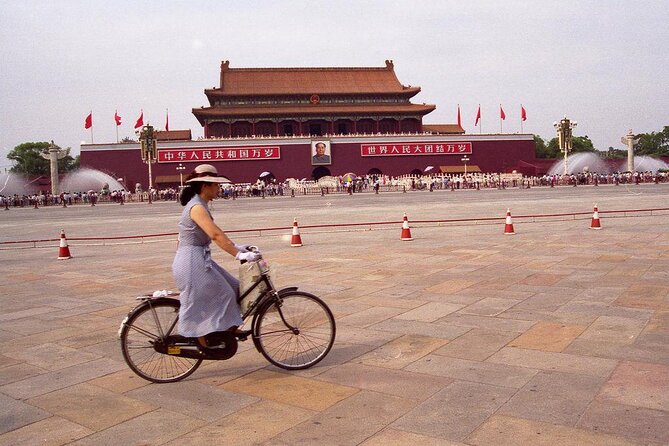
After the temple, you head toward Tiananmen Square by bus, including a double-decker bus on the planned route. This is one of the tour’s most distinctive moments because you are moving through central Beijing as residents do, not simply arriving at a reserved coach stop.
The square is enormous and heavily controlled. You should expect security checks, identification checks, and possible delays. If the line lasts more than an hour, the guide may suggest taking a bus past the square instead. That is a sensible tradeoff. Spending the rest of the day in a security queue would damage the main purpose of the tour.
The square can also close without warning because of government activities. If that happens, it is skipped, and there is no refund for this portion because entry to the square itself is free. This is not a flaw unique to the tour, but you should accept it before booking.
When access is open, you have about 30 minutes to see the square and hear about its political and national importance. The visit is more about scale and context than about architectural detail. From here, you walk toward the Forbidden City.
Entering the Forbidden City through the southern approach
The Forbidden City, now the Palace Museum, was the imperial palace of the Ming and Qing dynasties. It shaped Beijing’s central layout for centuries and remains the largest, most demanding part of this half-day experience.
Advance passport information is required for every participant so the entrance ticket can be arranged. Bring the same passport used when booking. This requirement matters because the Forbidden City is not a place where you want to discover that your entry details are incomplete.
The tour allows about two hours inside the palace complex. That is enough for the major halls and the inner court, but not enough to see every building. The guide helps you focus on the main route instead of wandering through a maze of courtyards with no idea what you are looking at.
The name Forbidden City comes from Zijin Cheng. Zi refers to the Purple Star, associated with the celestial emperor, while the palace was the earthly residence of China’s emperors and their families. That symbolism appears in the design, the gates, the courtyards, and the strict separation between public ceremony and private court life.
Hall of Great Harmony and the central halls
The Hall of Great Harmony is the grand centerpiece of the outer court. It was used for major ceremonies and is the largest and most prestigious of the principal halls.
You also see the Hall of Central Harmony and the Hall of Preserving Harmony. Together, these buildings show the formal sequence of imperial ceremony. Your guide can explain who used each hall, how ceremonies moved through the complex, and why the central axis matters.
This is where a private guide earns much of the $110 price. The palace can look like one ornate hall after another if you visit without context. A good guide turns the buildings into a sequence of functions, ranks, rituals, and daily decisions.
Roy Li received especially strong praise for making the history understandable and for answering children’s questions. That is useful here, since the Forbidden City rewards explanation more than speed. The buildings are impressive, but the meaning behind them is what makes the visit stick.
The inner court and imperial family life
The route then moves into the inner court, including the Palace of Heavenly Purity, the Hall of Union, and the Hall of Earthly Tranquility. These spaces shift the emphasis from state ceremony to the emperor, empress, and members of the imperial household.
You have about 20 minutes for this section. It is shorter than the outer court visit, so listen closely when the guide explains how palace life was organized. The distinction between official duties and private residence helps you read the complex as more than a series of courtyards.
The tour does not include every extra inner attraction. Any additional admission fee inside the Forbidden City is excluded, so ask your guide what is covered before you expect access to a smaller ticketed site. The main entrance and principal route are included.
The Imperial Garden
The last listed stop inside the palace is the Imperial Garden. It is a compact classical Chinese garden with winding paths, Taihu stone rockeries, old cypress trees, and trees said to be more than 400 years old.
The scheduled visit is only about 10 minutes. That is enough for an introduction and a few photographs, but not a leisurely garden visit. If gardens are a priority for you, ask at the start how much flexibility the private format allows.
You leave through the North Gate. That detail matters because the Forbidden City is vast, and exiting from the wrong place can add a great deal of unnecessary walking. From the North Gate, your guide accompanies you on public transport toward your hotel, but hotel drop-off is not included as a formal tour feature.
What the $110 price really covers
The $110 per-person cost includes hotel pickup, public transport costs, a private tour, an English-speaking guide, and entrance fees for the included sights. Group discounts may also be available, though the exact reduction is not specified.
The strongest value is the private guide. If you are two people, the cost is higher than joining a large group, but you gain a more personal pace and the ability to ask questions throughout the day. A family may find this especially useful because the guide can respond to different ages and interests.
The advance ticket handling is another practical benefit. The Forbidden City requires passport details for every participant, and entrance capacity can make casual planning difficult. Having the ticket arranged in advance removes one major worry from a packed Beijing sightseeing day.
Food and drinks are not included. Plan to eat before pickup or carry something suitable if permitted. The provided details do not identify a meal stop, so do not count on a sit-down lunch during the tour.
The public transport challenge is part of the deal
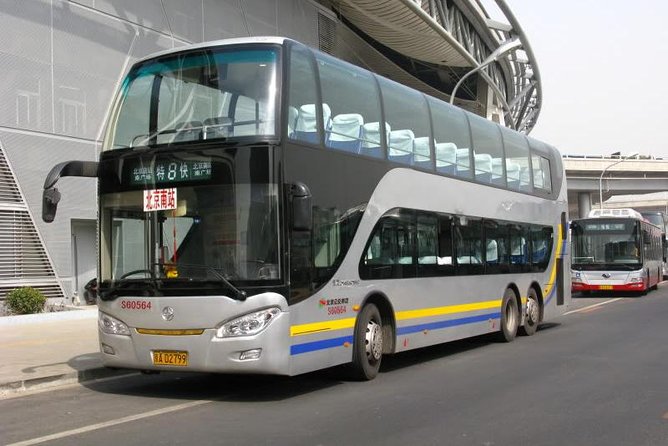
The transport element is a genuine advantage if you want to learn Beijing’s system. One participant who had recently moved to the city found that learning the metro and buses was especially useful. After using the metro once with a guide, you may feel more confident getting around independently.
Still, public transport takes effort. You may need to stand, move with a crowd, climb stairs, or board quickly. One account described rushing onto buses with local passengers. That does not mean the tour is unsafe, but it does mean you should keep your group together and stay alert at transfers.
The route can also be affected by the location of your hotel. The first connection may be by metro or bus, and the guide chooses the practical option. Since the tour operates in all weather, bring clothing suited to the forecast. Beijing sun, heat, rain, or cold will affect how the day feels.
A guide named Roy was praised for clear English and engaging explanations. Alice was described as informative, helpful, and unhurried. Coco also received praise for making an early first day in Beijing easier after a late arrival. Individual guide quality matters a great deal on a private tour, so these names are useful when you receive your guide assignment.
One caution comes from a less positive experience: a guide was distracted by frequent texting and phone calls because of a family matter. The company acknowledged the problem and discussed it with the guide. This appears to be an isolated concern in the supplied feedback, but it is a reminder that the guide makes or breaks a private experience.
Who should book this tour?
I would recommend it to first-time visitors who want Beijing’s three headline sights in one efficient day. It suits couples, families, and small groups who prefer asking questions freely rather than following a flag through a large tour party.
It also works well for anyone curious about local transport. You receive more than sightseeing. You get a guided introduction to the metro and bus system, which can help you move around Beijing on later days.
Families may appreciate the private setup. Children can ask direct questions, and the guide can adjust explanations. Roy’s ability to handle many questions is a good sign for families who want more than a quick photo stop.
I would be cautious if you dislike walking, heat, public transport, or fixed morning starts. The day begins around 8:30 a.m., and the total distance can exceed 15 kilometers. The tour is not designed for a slow, restful pace.
It is also not ideal if Tiananmen Square is your main reason for booking. The square may be closed, or security may take so long that the guide recommends passing it by bus. The Temple of Heaven and Forbidden City remain the main dependable parts of the day.
Practical advice for a smoother day
- Bring your passport, the same one used to provide booking details.
- Wear comfortable walking shoes with good support.
- Dress for the weather because the tour runs in all conditions.
- Expect several hours of walking, including large outdoor spaces and transport transfers.
- Keep your belongings organized during crowded bus and metro sections.
- Allow extra patience at Tiananmen Square security.
- Ask early about any flexibility you want inside the Forbidden City.
- Remember that food, drinks, extra inner-site admission, and formal hotel drop-off are not included.
Free cancellation is available if you cancel at least 24 hours before the start time. Changes or cancellations made later are not accepted for a refund. Chinese citizens, including residents of Hong Kong, Macau, and Taiwan, need to book seven days in advance and provide the required Chinese name and identification details.
My recommendation: book it for context, not comfort
Book this tour if you want a private guide, major imperial sights, and a useful introduction to Beijing public transport in one concentrated outing. The combination of Temple of Heaven ritual space, Tiananmen’s national scale, and the Forbidden City’s palace courtyards gives you a strong first look at the city.
Skip it if you want a vehicle, long breaks, or a guaranteed Tiananmen Square visit. The best reason to choose it is the guide-led context and the chance to move through Beijing like a resident for a day. At $110, that is solid value for a small private group, provided you are ready to walk, wait, and keep moving.
FAQ
How long does the tour last?
The tour lasts approximately five to six hours, with the schedule beginning around 8:30 a.m.
Is hotel pickup included?
Yes. Pickup from your Beijing hotel is included.
Is hotel drop-off included?
No. Hotel drop-off is not included, although the guide accompanies you on public transport as you make your way back toward your hotel.
How do we travel between the sights?
You travel by public transportation, including the metro, city buses, and a double-decker bus. The exact first connection depends on your hotel location.
Is this a private tour?
Yes. Only your own group participates.
Are entrance fees included?
Entrance fees for the included sights are included. Additional admission fees for inner sites within the Forbidden City are not included.
Do I need to provide passport details?
Yes. The passport name and number for every participant are required when booking so the Forbidden City entrance ticket can be arranged in advance.
What happens if Tiananmen Square is closed?
The square may be skipped if it closes because of government activities. There is no refund for the square because it is free to enter.
What if security at Tiananmen Square takes too long?
If the wait exceeds one hour, an alternative may be used, such as taking a bus past the square.
Can the tour operate in bad weather?
Yes. The tour operates in all weather conditions, so you should dress appropriately and wear comfortable walking shoes.
More Temple of Heaven Visits
- Beijing: The Temple of Heaven or Summer Palace Entry Ticket
★ 4.6 · 1,286 reviews - Temple of Heaven Ticket
★ 5.0 · 482 reviews - Beijing: Entry to Temple of Heaven Park
★ 4.6 · 314 reviews - Temple of Heaven, Summer Palace, Lama Temple, Hutong Tours
★ 5.0 · 311 reviews
More Tiananmen Square Walks
- Beijing: Tiananmen Square Registration Service(Ticket)
★ 4.5 · 1,704 reviews - Beijing: Forbidden City and Tian’anmen Square Waking Tour
★ 4.9 · 1,002 reviews - Beijing: The Forbidden City or Tiananmen Square Entry Ticket
★ 4.3 · 836 reviews - Beijing Classic Full-Day Tour including the Forbidden City, Tiananmen Square, Summer Palace and Temple of Heaven
★ 4.0 · 610 reviews
Newest reviews from Beijing
- Beijing: Explore the Forbidden City in Hanfu★ 5.0 · 4 reviews
- Beijing Tai Chi and Tea Ceremony Experience★ 5.0 · 4 reviews
- Jinshangling Great Wall Of Beijing Tickets And Other Option★ 4.0 · 4 reviews
- Private Full-Day Great Wall of China Hiking Tour from Jiankou to Mutianyu★ 4.5 · 4 reviews
- Tour the Great Wall with a Native from Downtown Beijing★ 4.8 · 4 reviews
- Beijing: Badaling Great Wall Private Tour w Language Option★ 4.3 · 4 reviews
- Beijing:Summer Palace & Tea or Calligraphy Experience Tour★ 4.6 · 4 reviews
- 7 Days Private Tour of Beijing, Xian, Shanghai by Bullet Train★ 5.0 · 4 reviews
Forbidden City Tours, compared.
Forbidden City Tour(Group/Private)-Tickets Included
Read our review →
T-Square & Forbidden City Group or Private Tour
Read our review →
All-Inclusive Tour: Tiananmen Square, Forbidden City, Great Wall
Read our review →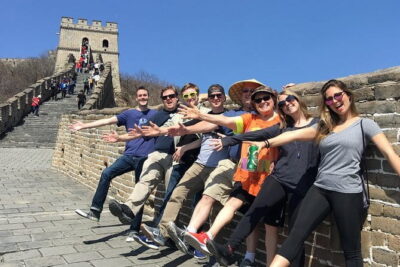
4-Hour Small Group Tour to Forbidden City with Entry Tickets
Read our review →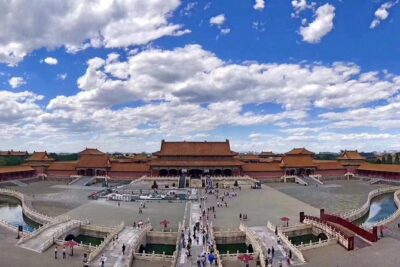
Beijing Full Day Tours: Tiananmen Sq, Forbidden City, Great Wall
Read our review →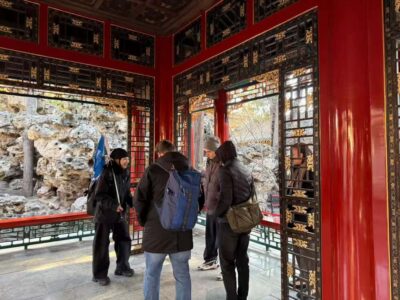
Tianmen Square, Forbidden City & Royal Museum Tours
Read our review →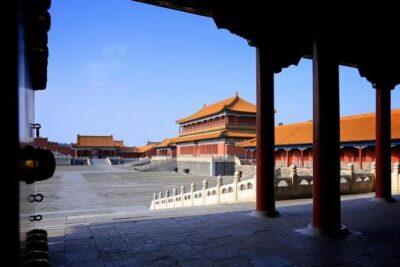
Beijing Forbidden City Ticket Booking (Optional: guide service)
Read our review →
Forbidden City and Tian’anmen Square Waking Tour
Read our review →Browse the lists this tour appears in