
Reviewed · FRENCH CONCESSION TOURS
Private Walking Tour in the Former French Concession
Old Shanghai reveals itself on foot. This private walk through the Former French Concession links Art Deco buildings, quiet lanes, and major moments in Chinese history with a personal guide who can adjust the pace and discussion to suit you. I especially like the mix of grand architecture and ordinary street life, plus the chance to visit places such as Sun Yat-Sen’s former home and Fuxing Park.
I also like the choice of a 10 a.m. or 2 p.m. start, which makes the tour easy to fit around a Shanghai itinerary. Guides including Penny, Maggie, Kelly, and Lily have been praised for clear English, warmth, humor, and useful local suggestions. The main consideration is the walking: expect at least three hours on foot, and taxi or public transport costs between some stops are paid separately.
In This Review
- Key points to know before booking
- Why the Former French Concession works so well on foot
- Meeting your guide and setting the pace
- Okura Garden Hotel and the French Club’s elegant beginning
- Lanxin Theatre and Shanghai’s western stage
- Cathay Mansion and the Art Deco city
- King Albert Apartment and a residential side of Shanghai
- Sun Yat-Sen’s former residence and the birth of modern China
- St. Nicholas Church and Shanghai’s Russian connection
- Fuxing Park, from morning exercise to evening entertainment
- What the history coverage is really like
- The walking, transport, and weather equation
- Is $95 per person good value?
- Who should book this Shanghai walking tour?
- Should you book it?
- FAQ
- How long does the Private Walking Tour in the Former French Concession last?
- What departure times are available?
- Does the tour include hotel pickup?
- Is transportation included?
- Are entrance fees included?
- What should I wear for the tour?
Key points to know before booking
- A three-hour private walk through the Former French Concession: Expect personal attention rather than a large group presentation.
- Architecture with a story: The route covers 1930s Art Deco, French classical interiors, a former Russian Orthodox church, and old apartment compounds.
- History from 1850 to 1950: The guide connects Shanghai’s foreign concessions with the formation of modern China.
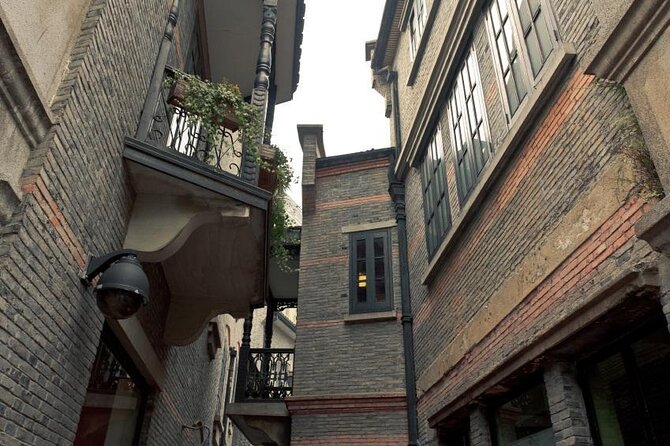
- A useful local perspective: The route includes back streets, residential communities, parks, and everyday scenes beyond the main shopping roads.
- Flexible morning or afternoon timing: Choose a 10 a.m. or 2 p.m. departure, then continue exploring on your own afterward.
- A good fit for curious walkers: Comfortable shoes and moderate fitness matter more than speed.
Why the Former French Concession works so well on foot
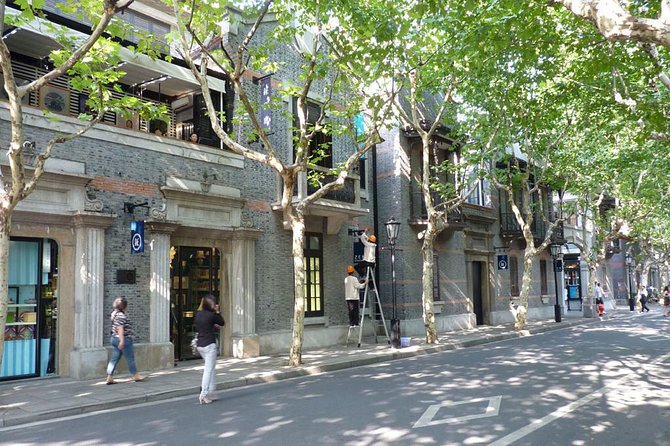
Shanghai is a city of sudden changes. One block can give you a polished hotel, a leafy avenue, an old apartment entrance, and a narrow lane where daily life continues much as it has for decades.
The Former French Concession is especially rewarding because its story is written into the buildings. Foreign influence, Chinese political change, Russian migration, Catholic institutions, luxury apartments, and modern nightlife all appear within a fairly compact part of the city.
I like a walking tour here because a vehicle would flatten the experience. From a car, you see facades. On foot, you notice balconies, gates, trees, shop fronts, laundry, courtyards, and the way old buildings sit among newer Shanghai life.
This is not a checklist tour built around one famous attraction. It is a guided stroll through a neighborhood, with stops that give the area shape. The guide supplies the connections, explaining how the French Concession developed and how Shanghai changed between roughly 1850 and 1950.
More Walking Tours in Shanghai
- Shanghai City Guided Walking Tour | China’s 1st and Best Rated
★ 5.0 · 285 reviews - Shanghai Highlights Walking Tour With A Real Local
★ 4.9 · 153 reviews - Shanghai Breakfast Walking Tour of Former French Concession
★ 5.0 · 139 reviews
Meeting your guide and setting the pace
The guide meets you in your hotel lobby. From there, you may use a taxi or public transport to reach the first attraction, with that local transportation cost paid by you. This arrangement is worth clarifying before departure, especially if you are watching your budget or staying far from the Former French Concession.
The walk itself lasts about three to three and a half hours. The stated minimum walking time is around three hours, so do not treat this as a short orientation stroll. You will be standing and walking for most of the experience, though the private format lets the guide adjust the pace and spend more time on subjects that interest you.
The tour is limited to a maximum of 10 people per booking. Since it is sold as a private experience, the real advantage is not simply the group size. It is the ability to ask questions, pause for photographs, spend longer at a museum, or shift the emphasis toward architecture, politics, local life, or food suggestions.
Several guides have received particularly strong praise. Penny is described as warm, patient, fluent in English, and especially strong on Shanghai’s past and present. She has been a teacher, and that shows in the way she explains difficult subjects in an accessible manner. Maggie has been praised for listening closely to individual interests and helping with onward plans, including finding the way to Tianzifang. Kelly has also been noted for excellent English and strong knowledge of the neighborhood, while Lily has been described as clear and well prepared.
You cannot assume a particular guide unless the operator confirms it, but these names give you a useful sense of the guiding style to expect: personal, conversational, and focused on context rather than memorized facts.
Okura Garden Hotel and the French Club’s elegant beginning
The route may begin at the Okura Garden Hotel, formerly the French Club. Its lobby preserves one of the clearest examples of French classical interior design on the walk.
This is a good opening stop because it introduces the polished side of the old concession. You see how expatriate institutions once presented themselves, with formal design and a sense of status. The setting also gives the guide a natural way to explain the role of foreign communities in Shanghai before moving into more specifically Chinese political and social stories.
The hotel is not just an architectural photo stop. Its past helps you understand the divided character of old Shanghai, a city where foreign-controlled areas operated alongside Chinese neighborhoods and institutions.
If you are mainly interested in interiors, make that clear at the start. A private guide can often spend a little more time explaining what you are seeing instead of rushing toward the next address.
Lanxin Theatre and Shanghai’s western stage
Lanxin Theatre is presented as Shanghai’s first Western-style theatre. It adds a cultural layer to the tour, showing that the Former French Concession was not only a place of consulates, villas, and apartment buildings.
The theater helps explain how new forms of entertainment and public life entered Shanghai. Your guide may connect the building to the city’s changing social world, especially the way Chinese and foreign influences met in the early modern period.
The value here is less about spending a long time inside and more about seeing the building as part of a wider story. If you enjoy theatre, architecture, or the history of urban entertainment, this stop should be more than a quick photograph.
More French Concession walks:
- Eat Like a Local Through Shanghai’s French Concession
★ 5.0 · 353 reviews - Late Night Food Tour in the Shanghai’s French Concession
★ 5.0 · 260 reviews - French Concession Guided Walking Tour | China’s 1st & Best Rated
★ 5.0 · 91 reviews - Private Yu Garden, The Bund, French Concession, Pudong Half-Day Tour
★ 5.0 · 51 reviews
Cathay Mansion and the Art Deco city
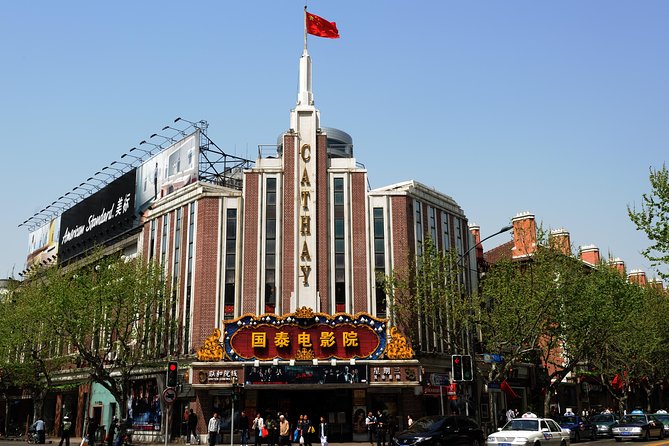
Cathay Mansion, once associated with the Sassoon family, is one of the route’s key architectural highlights. Its Art Deco design reflects the luxury and ambition of Shanghai in the 1930s.
The building also opens a discussion about the city’s elite social world. It was known for hosting prominent international figures, and its design tells you something about the image Shanghai wanted to project during that period.
I find Art Deco most interesting when a guide explains why it appears where it does and who used the buildings. Otherwise, it can become a parade of attractive facades. Here, the personal guide is important. You can ask how the building fitted into the concession, who lived there, and how the neighborhood changed after 1950.
Architecture fans should pay close attention to details rather than expecting a formal architectural lecture. The tour is broad, covering history, culture, and street scenes as well as design.
King Albert Apartment and a residential side of Shanghai
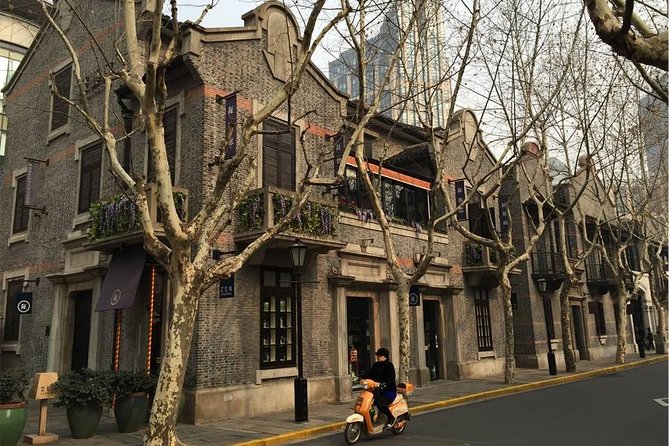
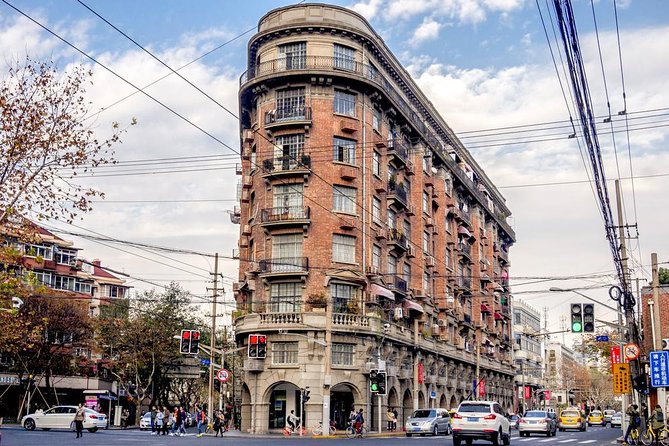
King Albert Apartment, also called Royal Garden, was built by the French Catholic church for expatriates. It is tucked between two busy, narrow streets, which makes it valuable precisely because it is not presented as a grand public monument.
Walking through this living community gives you a closer look at how the Former French Concession functioned as a place to live. The setting shifts the focus from famous names to apartment life, urban planning, and the contrast between quiet residential spaces and Shanghai’s crowded roads.
This is the kind of stop you could easily miss without a guide. You might walk past the entrance without realizing what it is or why it matters. A local guide can point out how the compound fits into the neighborhood and help you notice the small details that make the area feel lived-in rather than staged for sightseeing.
Because the route passes through residential spaces, you should behave as you would anywhere people live. Keep voices reasonable, follow the guide’s instructions, and avoid treating private doorways as photo props.
Sun Yat-Sen’s former residence and the birth of modern China
The former residence of Dr. Sun Yat-Sen is one of the tour’s strongest historical stops. It now functions as a museum focused on China’s revolutionary past.
Sun Yat-Sen played a central role in the creation of the Republic of China, and the house gives the guide a clear setting for explaining the end of imperial rule and the beginning of modern Chinese political life. The period can be difficult to follow if you arrive without context. A guide makes the names, dates, and competing forces easier to connect.
The stop also works well for families and mixed-age groups. One parent and child described the explanations as accessible even for kids, while another visitor with long experience studying China still found the discussion useful for clarifying events.
Allow enough energy for the museum after several outdoor stops. The tour description includes entrance fees, so you are not expected to arrange those separately. The exact amount of time spent inside can depend on your questions and the guide’s route that day.
St. Nicholas Church and Shanghai’s Russian connection
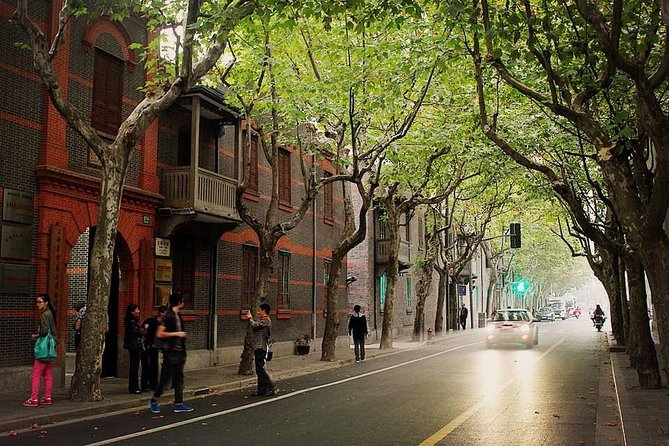
St. Nicholas Church is a small Orthodox church built by Russian expatriates in the 1920s. It is described as delicate rather than grand, and that is part of its appeal.
The church broadens the story beyond French influence. Shanghai attracted people from many parts of the world, and the Russian presence adds another strand to the city’s complicated foreign and immigrant past.
Do not expect the scale of a major European cathedral. This is a modest architectural stop, best appreciated for its setting and the story behind it. The guide’s explanation is what gives the building weight.
For photographers, the smaller scale can be an advantage. You are looking at a neighborhood church with a specific community behind it, not a monumental attraction designed to dominate a square.
Fuxing Park, from morning exercise to evening entertainment
Fuxing Park is usually the final major stop and offers a welcome change from buildings and museums. It is described as the only French-style garden in China, with more than a century of changes behind it.
The park remains part of everyday Shanghai. In the morning, older residents gather for exercise. Later, the atmosphere shifts, with clubs and KTV venues drawing a different crowd in the evening. That contrast helps you see the park as a living public space rather than a preserved historical display.
One especially appealing detail is the possibility of seeing local ballroom dancing. The park can be a gentle ending after the more concentrated history of the earlier stops, giving you room to watch people use the city rather than simply photograph it.
Depending on your interests and the pace of the day, you may want to stay in the area after the formal tour ends. The guide can arrange a taxi back to your hotel, but hotel drop-off is not included. You can also continue walking independently.
What the history coverage is really like
The tour focuses on modern Shanghai and China, especially the century from about 1850 to 1950. You should expect discussion of foreign concessions, 1930s architecture, revolutionary politics, migration, religion, and the city’s social development.
The strongest part of this approach is the connection between place and event. Sun Yat-Sen’s home is not treated as an isolated museum. The surrounding buildings, clubs, apartment compounds, and parks help show the wider city in which political and cultural changes took place.
Guides have also connected the route to later events, including the 1972 accord associated with Richard Nixon and Zhou Enlai. If twentieth-century Chinese history interests you, ask questions as you go. This is a much better setting for sorting out a complicated timeline than reading disconnected facts in a guidebook.
The tour is not advertised as a specialist academic seminar. You will get a broad explanation, then can steer the conversation toward your own interests. That works especially well for first-time visitors, families, and people who want more than surface-level sightseeing without spending a full day in museums.
The walking, transport, and weather equation
Wear comfortable shoes. The tour requires a moderate level of physical fitness, and the walking time is at least three hours. The route includes streets, parks, historic compounds, and museum stops, so you should be comfortable walking on varied urban surfaces and standing for explanations.
The experience operates in all weather. That makes a rain jacket, sun protection, and sensible clothing important, depending on the season. One particularly wet outing had to spend more time indoors, which reduced the amount of outdoor neighborhood walking. That is a fair warning: poor weather will not necessarily cancel the tour, but it can change its character.
The morning departure is at 10 a.m. The afternoon option begins at 2 p.m. Morning is likely the better choice if you want the rest of the day free for independent exploring. The afternoon works well if you prefer a slower start or have a morning arrival schedule.
The guide can arrange a taxi afterward, but you pay for the ride. Since the tour includes hotel pickup but not hotel drop-off, ask about the meeting point and return plan when you book.
Is $95 per person good value?
At $95 per person, this is not the cheapest way to walk through the Former French Concession. It can still be good value if you want a private guide, entrance tickets, hotel pickup, and a route built around explanation rather than simple navigation.
The price makes more sense for two or more people sharing the private booking. You are paying for a half-day of attention, not just transportation or admission. A guide who can explain the buildings, answer questions, adjust the pace, and offer food or neighborhood suggestions adds value that a self-guided walk cannot easily match.
It is less compelling if you prefer wandering alone, already know Shanghai’s modern history, or plan to spend most of your time shopping and eating. In that case, you could explore parts of the area independently and save the fee.
The strongest value comes from the human element. Penny has sometimes spent longer than the scheduled three hours when the discussion continued, and other guides have offered practical suggestions for the rest of a Shanghai stay. Extra time should never be assumed, but the private format gives you a better chance of a natural, flexible outing.
Who should book this Shanghai walking tour?
I would recommend it to first-time visitors who want a clear introduction to Shanghai. It is also a good choice for repeat visitors who have seen the main sights but still feel they lack a framework for understanding the city.
History fans will get the most from the route, especially those interested in the fall of imperial China, the Republic of China, foreign communities, and the years before and after the Second World War. Architecture lovers should also enjoy the Art Deco buildings and French classical interiors.
Families can benefit from the private format. The guide can explain complex subjects in simpler terms for children while giving adults room to ask harder questions. The walk has also worked well for older people who remain comfortable with several hours of walking.
I would be more cautious if you have limited mobility, dislike long walks, or want a fast tour with little commentary. The itinerary is relaxed, but relaxed does not mean physically easy. You should also be clear about taxi and public transport costs, since those are not fully covered.
Should you book it?
Book this tour if you want Shanghai to make sense, not just look impressive. The Former French Concession is easy to admire on your own, but a strong guide gives its streets a timeline, its buildings a purpose, and its parks a place in local life.
I would book the morning departure for a first day in the city, then use the guide’s suggestions to shape the rest of your stay. Ask for a guide with strong English and a particular interest in history or architecture, and mention any mobility, family, or subject needs in advance.
Skip it if you want a bargain self-guided walk or would rather spend three hours shopping and eating. For curious walkers, though, the combination of private attention, entrance fees, major landmarks, quiet residential corners, and thoughtful local commentary makes the $95 price defensible.
FAQ
How long does the Private Walking Tour in the Former French Concession last?
The tour lasts approximately three to three and a half hours, with a minimum walking time of around three hours.
What departure times are available?
You can choose a morning departure at 10 a.m. or an afternoon departure at 2 p.m. Indicate your preferred time when booking.
Does the tour include hotel pickup?
Yes. Your English-speaking guide meets you in your hotel lobby.
Is transportation included?
Transportation to the attractions is arranged by taxi or public transport, but you pay that cost separately. Hotel drop-off is not included, though the guide can arrange a taxi after the tour.
Are entrance fees included?
Yes. Entrance tickets for the included attractions are covered in the tour price.
What should I wear for the tour?
Wear comfortable shoes and dress appropriately for the weather. The tour operates in all weather conditions and requires moderate physical fitness.
Newest reviews from Shanghai
- Quick Tour to Xi’an Terracotta Warriors from Shanghai by Air in One Day★ 5.0 · 4 reviews
- Shanghai Zhujiajiao water town,Yugarden&Bund one day tour★ 5.0 · 4 reviews
- Wuzhen Private Full-Day Tour from Shanghai★ 5.0 · 4 reviews
- Private Round Trip Transfer to Zhouzhuang Water Village from Shanghai★ 5.0 · 4 reviews
- Full Day Private Tour Amazing Shanghai City Highlights★ 5.0 · 4 reviews
- Shanghai Tower Observation Deck 118 floor Tickets Pre-booking.★ 5.0 · 4 reviews
- Private Wet Market Visit with Cooking Class in Shanghai★ 3.0 · 4 reviews
- Zhujiajiao & Shanghai:Small Group Tour Water Town to Skyline★ 5.0 · 4 reviews
French Concession Tours, compared.
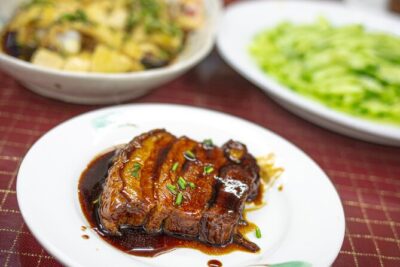
Eat Like a Local Through Shanghai’s French Concession
Read our review →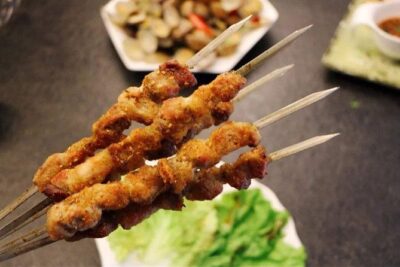
Late Night Food Tour in the Shanghai’s French Concession
Read our review →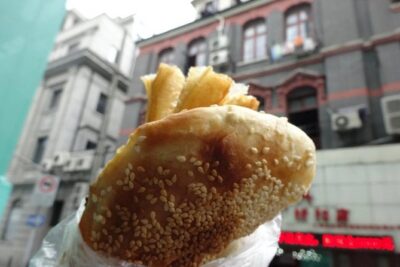
Shanghai Breakfast Walking Tour of Former French Concession
Read our review →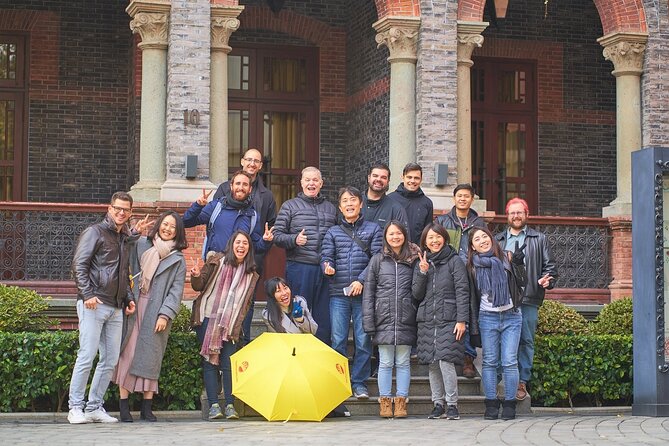
French Concession Guided Walking Tour | China’s 1st & Best Rated
Read our review →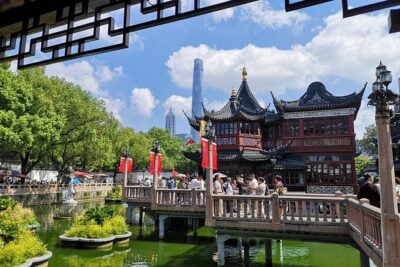
Private Yu Garden, The Bund, French Concession, Pudong Half-Day Tour
Read our review →
Shanghai bar hopping tour in the former french concession
Read our review →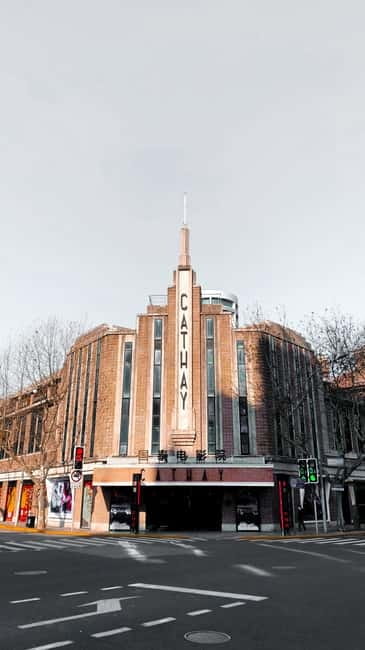

Private Guided Breakfast Tour of Former French Concession
Read our review →Browse the lists this tour appears in