Reviewed · SHANGHAI TOURS
Shanghai: Dragon Beard Candy Making with a Chef
Sugar becomes silk in this Shanghai pastry class. This two-hour workshop offers a rare taste of old Chinese confectionery, with a Shanghai-born host combining traditional pastry skills with French training from Le Cordon Bleu. I like the hands-on stretching technique, which turns molten sugar into hair-fine strands, and I like the local touch: Luc explains Shanghai life and suggests places to visit. The main consideration is that the class focuses on one specialty, so it may feel narrow if you want a broad cooking lesson.
For $38, you get instruction, ingredients, equipment, extra pastries, a recipe, water, and optional photos. The small set of six ratings gives the experience an excellent 4.8 score, with praise for Luc’s clear English, friendly manner, and careful answers. Still, you should be ready to work with sugar for much of the session and possibly eat more than you planned.
In This Review
- Key points at a glance
- What Dragon Beard Candy actually is
- Meeting a Shanghai-born pastry host
- Inside the two-hour workshop
- The opening story
- The chef’s demonstration
- Your turn with the sugar dough
- Wrapping the filling
- Why the French connection matters
- The food, the take-home extras, and the messy reality
- A good value at $38
- Who should book this experience
- Location and timing at Makerhub
- What the ratings tell you
- Final call: book it for the craft, not just the candy
- FAQ
- How long does the Dragon Beard Candy workshop last?
- How much does the experience cost?
- Where does the workshop meet?
- What language is the class taught in?
- Who teaches the class?
- What will I make during the workshop?
- What is included in the price?
- Is the workshop wheelchair accessible?
- Can I cancel or pay later?
Key points at a glance
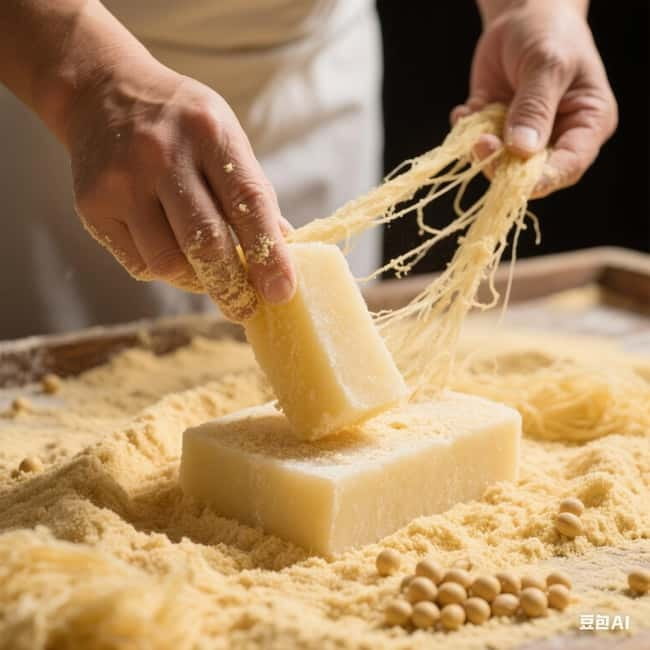
- A 2,000-year-old sweet: Learn how Dragon Beard Candy began as a delicacy linked with Chinese royalty.
- Stretching takes real work: You will fold and pull the sugar dough more than 10,000 times to create its fine threads.
- Chinese and French pastry skills meet: The chef’s traditional Chinese pastry background is paired with classical French training from Le Cordon Bleu.
- You make and take home treats: The finished candy contains crushed peanuts, sesame, and coconut, with additional pastries included.
- English instruction is a strength: Luc explains each step clearly and answers questions during the workshop.
- Easy to fit into a Shanghai schedule: The class lasts two hours, takes place at Makerhub, and allows free cancellation up to 24 hours before the start.
What Dragon Beard Candy actually is
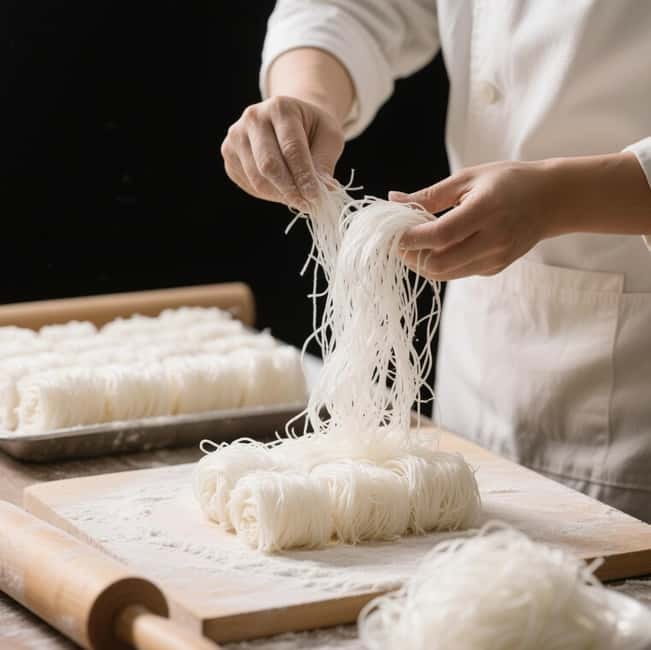
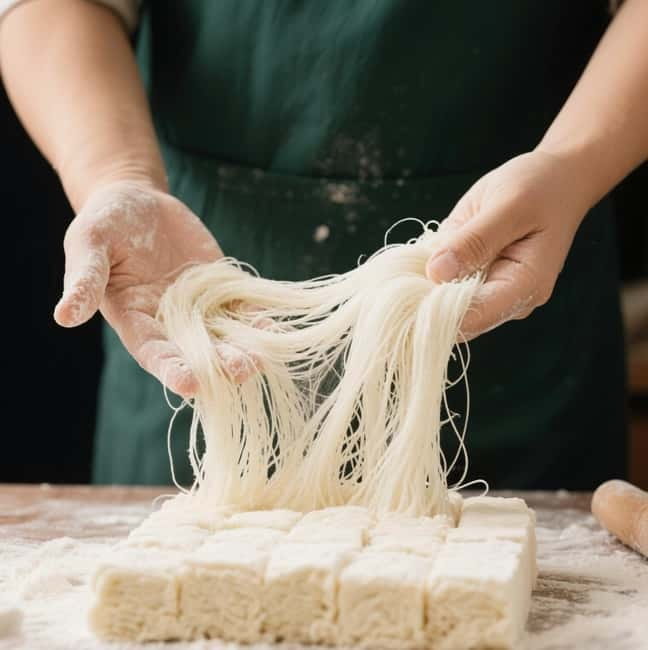
Dragon Beard Candy is not a hard boiled sweet or a simple ball of pulled sugar. It begins as a warm sugar dough that is stretched and folded again and again until it forms thousands of delicate strands. The result looks like a little nest of white sugar fibers, which explains the dragon’s beard name.
Inside, the strands wrap around a filling of crushed peanuts, sesame, and coconut. That mix gives the candy a nutty, toasted flavor and keeps it from being pure sugar. The fine threads add a soft, slightly crumbly texture that makes the finished sweet different from familiar Western confections.
The workshop places this food in a long Chinese tradition. You start with a short story about its 2,000-year history and its former connection with royalty. That background matters because the activity is not just a modern pastry trick. You are learning a food that once had a special place at the Chinese court, then became a traditional sweet that could be made and enjoyed more widely.
I like this format because the history stays tied to the food in front of you. You hear why the candy matters, then watch the technique, then try it yourself. The story gives the handwork a purpose instead of treating it as a novelty.
A few more tours worth putting side by side
- Authentic Local Food Tour in Central Shanghai
★ 5.0 · 1,382 reviews - Zhujiajiao Water Town and Shanghai City Private Day Tour
★ 5.0 · 1,016 reviews - Private Shanghai Full Day City Tour with Old and New Highlights
★ 5.0 · 995 reviews
Meeting a Shanghai-born pastry host
The instructor brings two useful forms of experience. He is Shanghai born and raised, so he can add local context beyond the recipe. He is also professionally trained in both traditional Chinese pastry and classical French patisserie at Le Cordon Bleu.
That combination gives the class a clear point of difference. The Chinese side supplies the heritage and method behind Dragon Beard Candy. The French pastry background suggests a careful approach to temperature, texture, timing, and presentation. You get a pastry lesson shaped by both traditions rather than a generic demonstration.
Luc is the name to remember when booking or arriving for the workshop. His English communication is one of the strongest parts of the experience. A Canadian participant described him as kind and encouraging, while Solene specifically praised the way he explained each step and handled questions. Niels also found his English very clear and appreciated the extra Shanghai suggestions.
For you, this means the class should be suitable even if you have little experience with Chinese pastry. You can ask questions as the candy changes in your hands, rather than simply watching an expert work. The instruction is in English, and the emphasis is on step-by-step help.
Inside the two-hour workshop
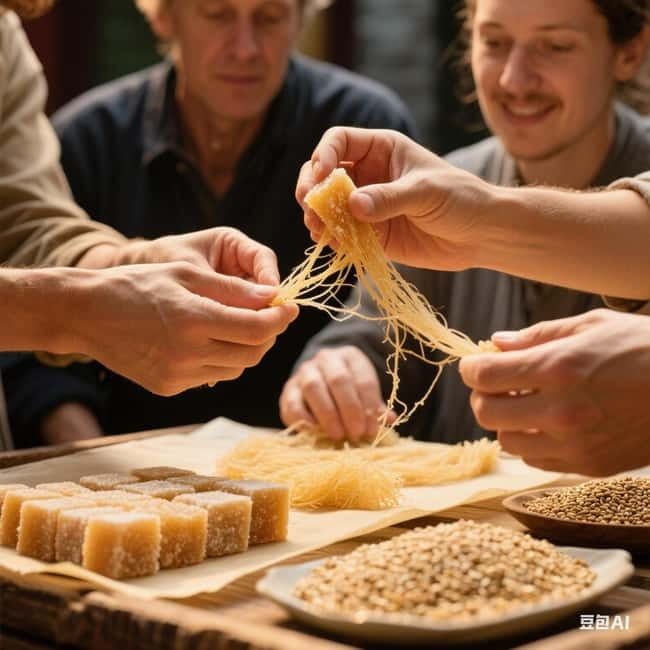
The class follows a sensible progression. You begin with the background story, move into a live demonstration, and then take over the work yourself. Because the session lasts two hours, it has enough time for both explanation and practice without becoming an entire day commitment.
The opening story
The first section introduces the candy’s long history and its place in Chinese culture. You learn about its connection with royalty and why the fine strands make the sweet special.
This opening should help you notice details later. Once you know the candy has been made through repeated stretching and folding, the finished threadlike texture feels less mysterious. You can see the amount of labor hidden inside a small piece.
A completely different kind of day out on the same trip:
- Shanghai: Hop-on Hop-off Bus Ticket and Optional Attractions
★ 3.4 · 692 reviews - Shanghai Private Tour: Zhujiajiao Water Town and Boat Ride
★ 5.0 · 661 reviews - Eat Like A Local: Shanghai Night Food Tour
★ 5.0 · 616 reviews - Huangpu Night Cruise: Cozy Vibe & Modern Shanghai Glow
★ 4.3 · 520 reviews
The chef’s demonstration
Next comes the part that is difficult to understand from a photograph. The chef works with molten sugar and shows how it changes into thin, silky strands. The demonstration gives you a model for the movements before you handle the sugar yourself.
This is important because the technique is repetitive but precise. The goal is not simply to pull the sugar apart. You need to stretch and fold it in a controlled way, gradually multiplying the number of strands until they become fine enough to resemble hair.
Watching first should make the practical lesson less frustrating. You see the rhythm, the shape of the sugar dough, and the general motion before your own turn begins. The experience is still hands-on, but you are not asked to figure out the method without guidance.
Your turn with the sugar dough
The main activity is stretching and folding the dough more than 10,000 times. That number gives you a sense of the process. Dragon Beard Candy looks delicate at the end because the sugar has gone through a remarkable amount of repeated handling.
This is also the part that demands patience. You will not simply stir a mixture, wait for it to bake, and collect a finished dessert. Your hands help create the texture, and the instructor provides corrections as you work.
I would treat this as a craft class with an edible result. It rewards attention more than speed. If you like making things by hand, you will probably enjoy the repetition. If you prefer a quick demonstration with plenty of free time, this may feel more involved than expected.
Wrapping the filling
Once the strands are ready, you wrap them around crushed peanuts, sesame, and coconut. This gives you the final contrast of textures: fine sugar threads outside and a nutty, fragrant center inside.
The filling also makes the candy more satisfying than a plain sugar confection. Peanuts and sesame add flavor, while coconut brings another layer to the mix. Anyone with a nut allergy should ask the host before booking or attending, since peanuts and sesame are part of the stated filling.
The exact amount you make is not specified, but you leave with your handmade treats. Additional pastries are also provided to take home, so the food keeps going after the class ends.
Why the French connection matters
The French training is not there just for a fancy name. Classical pastry depends on precision, and that fits a sweet where temperature and texture are central. Sugar can be difficult to handle, so a chef trained in a formal pastry tradition brings useful discipline to the lesson.
At the same time, the French background does not replace the Chinese technique. The focus remains Dragon Beard Candy, a traditional Chinese pastry. That balance is the most interesting part of the class for anyone who enjoys food culture rather than just dessert tasting.
You also receive a recipe for making the candy at home. That is a practical extra, although you should not assume the home version will be simple. The workshop equipment and professional instruction help you learn the method, but the recipe gives you a way to keep practicing after Shanghai.
The food, the take-home extras, and the messy reality
The finished candy is meant to be eaten, not displayed forever. The thin sugar strands are fragile, and the peanut, sesame, and coconut center makes them especially tempting to sample before you leave.
You receive additional pastries as well as the candy you make. That improves the value of the session because you get more than a single tasting. It also lets you compare what you produced with other pastry results from the workshop.
Free drinking water is available. Optional photos can document the experience, which may be useful because your hands will be busy during the main technique. The listing makes a joke about resisting the urge to eat everything before reaching home, but the practical point is simple: plan to leave with sweets, not just a recipe.
You do not need professional pastry chef shoes. That detail signals the relaxed nature of the class. You are learning a professional technique, but you are not expected to arrive dressed like a restaurant pastry cook.
A good value at $38
The $38 price is reasonable if you want an activity that combines food, history, instruction, and something to take home. You are not paying only for a dessert sample. The fee covers a full two-hour workshop, high-end ingredients, baking equipment, personal instruction, extra pastries, water, and a recipe.
The chef’s formal training adds value, particularly because the class is not a basic cooking demonstration. You receive guided practice with a technique that would be hard to understand from written instructions alone.
The value is less clear if you only want to taste Chinese sweets. A bakery visit or food market stop would likely give you more variety and less time commitment, though this experience offers something those options do not: you make the candy yourself.
I would also consider the price worthwhile for families, couples, and solo visitors who want a structured cultural activity. It is short enough to pair with other Shanghai plans, and the reserve now, pay later option helps if your schedule is still changing. Free cancellation is available up to 24 hours in advance.
Who should book this experience
I would recommend the workshop to several types of visitors:
- Food-focused visitors who want more than a tasting and enjoy learning how a traditional sweet is made.
- First-time visitors to Shanghai who appreciate local context and want a host who can suggest other places to visit.
- Families and groups looking for a creative activity that does not take a full day.
- Pastry fans interested in the meeting point between Chinese confectionery and French technique.
- People who enjoy practical souvenirs, since you take home handmade treats and a recipe.
It may be less suitable for anyone who dislikes repetitive handwork, has a peanut or sesame allergy, or wants a broad survey of many Chinese dishes. The class has one clear subject, and that focus is both its strength and its limit.
The workshop is wheelchair accessible, which makes it available to more people than many hands-on food activities. The provided information does not give details about the room layout or work surfaces, so you should confirm any specific access needs before attending.
Location and timing at Makerhub
The meeting point is Makerhub, on the fourth floor. You should allow enough time to find the building and reach the correct floor, since the activity begins at a specific starting time selected through availability.
The two-hour length works well in a city as large as Shanghai. You can place it between sightseeing plans without giving up an entire afternoon. It is also long enough for the story, demonstration, repeated sugar work, filling, and packing your treats.
The activity is offered in English. That matters here because the technique has several stages, and clear instructions make a real difference. The strongest praise attached to this workshop concerns Luc’s explanations and his ability to answer questions, so English-speaking participants have a practical reason to consider it.
What the ratings tell you
The experience holds a 4.8 rating from six reviews. That is a strong result, though the number of ratings is still small, so I would treat it as encouraging rather than final proof of every possible class experience.
The praise is consistent in the areas that matter most. The instructor is described as friendly, encouraging, clear in English, and capable of explaining the process. The activity is also repeatedly described as fun, tasty, and culturally original.
Niels found the workshop worth the price and valued the extra suggestions for Shanghai. Solene enjoyed learning the steps and having questions answered. Pearl liked the chance to learn an ancient confectionery art in a supportive setting.
Taken together, these details suggest that the host is the main reason to book. The recipe and ingredients are useful, but patient instruction is what turns a difficult sugar technique into an enjoyable two-hour activity.
Final call: book it for the craft, not just the candy
I would book this experience if you want a personal, food-based look at Shanghai culture and enjoy making something with your hands. The mix of a 2,000-year-old sweet, local guidance from Luc, English instruction, French pastry training, and take-home treats gives the class real substance for $38.
You should skip it if you want lots of different dishes, a casual tasting, or a short activity with no repetitive work. For everyone else, this is a focused and unusual addition to a Shanghai itinerary. Just remember the peanuts and sesame, arrive ready for sugar work, and leave a little room in your bag for the pastries.
FAQ
How long does the Dragon Beard Candy workshop last?
The workshop lasts two hours.
How much does the experience cost?
The price is $38 per person.
Where does the workshop meet?
The meeting point is Makerhub, on the fourth floor.
What language is the class taught in?
The instruction is in English.
Who teaches the class?
The class is led by a professionally trained pastry chef with a background in traditional Chinese pastry and classical French patisserie from Le Cordon Bleu. The host, Luc, is Shanghai born and raised.
What will I make during the workshop?
You will make Dragon Beard Candy by stretching and folding sugar dough into fine strands, then wrapping the strands around crushed peanuts, sesame, and coconut.
What is included in the price?
The price includes the two-hour workshop, ingredients, baking equipment, personalized instruction, step-by-step guidance, additional pastries to take home, drinking water, and a recipe. Photos are available as an optional part of the experience.
Is the workshop wheelchair accessible?
Yes, the activity is listed as wheelchair accessible.
Can I cancel or pay later?
You can cancel up to 24 hours in advance for a full refund. You can also reserve now and pay later.
Newest reviews from Shanghai
- Quick Tour to Xi’an Terracotta Warriors from Shanghai by Air in One Day★ 5.0 · 4 reviews
- Shanghai Zhujiajiao water town,Yugarden&Bund one day tour★ 5.0 · 4 reviews
- Wuzhen Private Full-Day Tour from Shanghai★ 5.0 · 4 reviews
- Private Round Trip Transfer to Zhouzhuang Water Village from Shanghai★ 5.0 · 4 reviews
- Shanghai Tower Observation Deck 118 floor Tickets Pre-booking.★ 5.0 · 4 reviews
- Full Day Private Tour Amazing Shanghai City Highlights★ 5.0 · 4 reviews
- Private Wet Market Visit with Cooking Class in Shanghai★ 3.0 · 4 reviews
- Zhujiajiao & Shanghai:Small Group Tour Water Town to Skyline★ 5.0 · 4 reviews
Shanghai Tours, compared.
Authentic Local Food Tour in Central Shanghai
Read our review →
Zhujiajiao Water Town and Shanghai City Private Day Tour
Read our review →
Private Shanghai Full Day City Tour with Old and New Highlights
Read our review →
Hop-on Hop-off Bus Ticket and Optional Attractions
Read our review →
Shanghai Private Tour: Zhujiajiao Water Town and Boat Ride
Read our review →

Huangpu Night Cruise: Cozy Vibe & Modern Shanghai Glow
Read our review →