
Reviewed · TERRACOTTA WARRIORS TOURS
Terracotta Warriors Museum Ticket with Professional English-speaking tour guide
History comes alive underground here. This Xi’an tour pairs skip-line museum entry with an English-speaking guide who explains the soldiers, horses, pits, and Qin dynasty story instead of leaving you to decode a huge archaeological site alone. I especially like the access to Pits 1, 2, and 3, plus the Bronze Chariots Exhibition, and I like that the tour is short enough to fit neatly into a busy Xi’an day.
The main caution is crowding. The entrance process is designed to save time, but the museum can still feel packed, especially during national holidays and in Pit 1. A few guides have also pushed guests toward shopping or other add-ons, so confirm what you want before the tour begins.
In This Review
- Key points before you book
- Why the Terracotta Army deserves your time
- Starting at the museum ticket office
- Pit 1: the grandest first impression
- Pits 2 and 3: smaller spaces, useful details
- The Bronze Chariots Exhibition
- What the English-speaking guide adds
- Price, inclusions, and what you still arrange
- Timing, crowds, and the two-hour limit
- Who should book this experience?
- Should you book the Terracotta Warriors tour?
- FAQ
- Does the tour include Terracotta Warriors Museum admission?
- Is transportation included?
- How long does the tour last?
- Does the tour include an English-speaking guide?
- Can I cancel for a full refund?
- Is lunch included?
Key points before you book
- Pits 1, 2, and 3 are included: You see the main excavation areas rather than only one display hall.
- A guide adds real value: Guides such as Chelsea, Cynthia, Freya, Aurora, Alice, Peter, and Wang Kai have been praised for clear English and useful explanations.
- Plan on two to three hours: That makes this a practical half-day visit, but some guests have found the pace too quick.
- Transport is not included: You must arrange your own way to the museum and meet the guide at the museum ticket office or agreed meeting point.
- The $45.87 price includes admission: You are paying for the entrance ticket and guided help, not lunch or an air-conditioned vehicle.
- Crowds shape the experience: The army is remarkable, but quiet reflection and perfect photographs are not guaranteed.
Why the Terracotta Army deserves your time
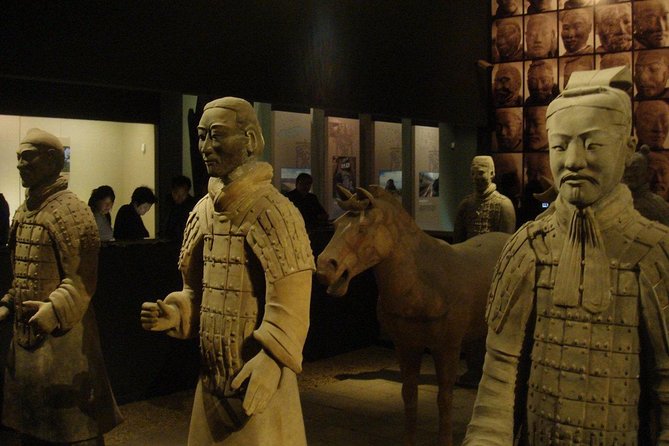
The Terracotta Army is not a small collection of statues tucked into a gallery. It is a vast underground burial complex tied to Qin Emperor Ying Zheng, the ruler who unified six warring states and became Qin Shihuang, China’s first emperor.
The scale is the first shock. Thousands of life-size clay soldiers, horses, and other figures were unearthed here. Each soldier has a different facial expression, hairstyle, posture, or uniform detail, so the display feels less like a row of copies and more like an entire military force frozen in place.
The project began when Ying Zheng was only 13 years old. Nearly 720,000 people and 38 years were needed to complete the enormous mausoleum project. Those numbers help explain why this visit matters: you are not simply looking at old objects, but at the surviving part of a huge imperial plan.
A guide gives that scale a human shape. You learn how the figures were made, why different ranks were arranged as they were, and how the tomb relates to Qin power. Without help, you can still admire the sight, but you may miss the reasons the pits were organized so carefully.
The site is protected as a UNESCO site, and conservation work remains visible. Some figures are complete, while others are broken or still being restored. That unfinished quality is part of the experience. You are seeing an archaeological project, not a perfectly polished theme park.
More Museums in Xi'an
- Half-Day Mini Group Xian Tour to Terracotta Warriors Museum
★ 5.0 · 467 reviews - Private Xi’an Tour: Terracotta Warriors, Hanyangling Museum, Cave Homes
★ 5.0 · 101 reviews - Xi’an: Terracotta Army Museum Group Tour
★ 4.5 · 85 reviews
Starting at the museum ticket office
This experience does not include hotel pickup or an air-conditioned vehicle. You make your own way to the museum, then meet your guide at the museum ticket office or another confirmed meeting point.
That arrangement keeps the price lower than a full transport excursion, but it puts the responsibility for arrival on you. Read the meeting instructions carefully and keep the guide’s contact details available. Several successful visits depended on direct contact through WeChat, and guides have been praised for finding people even in the crowded entrance area.
The guide handles the included entrance ticket and leads you through the museum. The advertised skip-line entry is useful, especially when queues are long, but it does not mean the buildings will be empty. Once inside, you still share the galleries and viewing areas with a large number of other people.
That distinction matters. The benefit is less time spent waiting to enter. The benefit is not private access to the pits, and the standard experience does not promise a private viewing area.
Pit 1: the grandest first impression
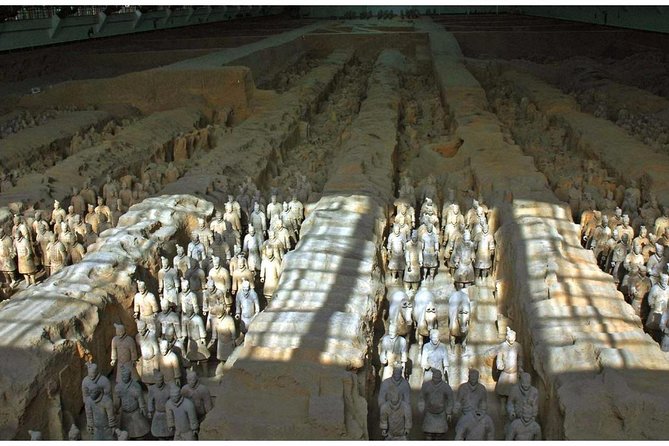
Pit 1 is usually the visual centerpiece. From the viewing platform, you look down across long rows of soldiers and horses, with restoration work continuing in parts of the excavation.
This is the place where the army’s scale becomes clear. A single figure is impressive, but hundreds arranged in military formation create the real impact. The orderly ranks also make Qin military power easier to picture than any textbook description can.
A guide helps you notice details in the formation and points out the difference between figures that may look similar at first glance. With a large crowd pressing toward the railings, that direction is useful. You may otherwise spend your time trying to find a clear view or wondering which section deserves your attention.
Pit 1 can also be the most crowded area. One practical suggestion from an experienced guide was to begin with Pit 2 or Pit 3 and finish at Pit 1 closer to midday, rather than arriving at the busiest hall first. The tour may follow a different order, so ask about the sequence if crowd levels matter to you.
Give yourself time for photographs, but stay realistic. The viewing platforms can be busy, and you may need patience to get an unobstructed picture. Guides including Chelsea and Peter have been praised for helping visitors find good photo positions without losing the thread of the tour.
Pits 2 and 3: smaller spaces, useful details
Pits 2 and 3 are smaller than the main hall, but they are not leftovers. They show different sections of the army and help you understand how the larger formation worked.
The change in scale can be welcome after Pit 1. You have a better chance to focus on individual figures, damaged pieces, restoration areas, and the distinctions between military roles. The guide’s commentary is especially useful here because the visual impact is less immediate than in the main hall.
Pit 3 is often linked with command arrangements, while Pit 2 gives a different view of the excavation and its varied figures. The supplied tour information confirms access to all three pits, but it does not promise a particular route or a private section of any pit.
This is also where tour quality becomes important. Some guides have been praised for clear explanations and for answering questions patiently. Aurora was noted for calm explanations and good recommendations, while Cynthia was praised for offering a strong two-hour introduction. Alice helped a small group focus on the most important areas without adding transport or unrelated attractions.
A few guests felt rushed, especially when they wanted lots of photos. You can reduce that risk by telling the guide at the start that you want time at each pit. The advertised length is two to three hours, so the visit has a firm limit, but a clear request should help set expectations.
More Terracotta Warriors visits:
- Mini Group Xian Day Tour to Terracotta Army, City Wall, Pagoda and Muslim Bazaar
★ 5.0 · 1,320 reviews - Xi’an: Terracotta Army Mini Group or Private Tour
★ 5.0 · 926 reviews - Xian: Terracotta Army Ticket & Guided Bus Tour with Options
★ 4.6 · 579 reviews - Customized Private Day Tour of Terracotta Warriors and Xi’an
★ 5.0 · 513 reviews
The Bronze Chariots Exhibition
The Bronze Chariots Exhibition adds a different kind of detail to the visit. The pits give you mass and spectacle. The bronze chariots offer a closer look at craftsmanship and imperial display.
Do not treat this as a quick extra that can be skipped automatically. It helps connect the clay army with the wider burial complex and the emperor’s desire to carry an entire court and military world into the afterlife.
The information provided does not specify how long the group spends in the exhibition or describe every object on display. Your guide’s approach may shape this section. If the chariots interest you, say so early and ask for enough time to see them properly.
The mausoleum site is also part of the broader visit. The army itself is only one section of the Qin emperor’s enormous burial project, and the surrounding site gives useful context even when the main pits receive most of the attention.
What the English-speaking guide adds
This is not a tour where the guide merely points toward the soldiers and repeats dates. At its best, it turns a huge archaeological display into a readable story.
The strongest guide feedback centers on four things: clear English, solid historical explanations, patience, and practical help inside the museum. Chelsea received repeated praise for answering questions, guiding guests through crowded halls, and offering suggestions for food and activities in Xi’an. Freya was praised for being friendly, engaging, and helpful after a late arrival.
Peter used a small headset so the group could hear clearly. That is a valuable feature in a noisy museum, although the tour information does not promise a headset on every departure. Wang Kai was praised for explaining the pits in detail, and Jimmy was credited with making the history easy to follow.
The guide can also save you from the informal sales pressure found around major Chinese attractions. At the museum ticket office, English-speaking guides may approach people directly. A prearranged guide means you avoid haggling and uncertainty.
Still, the service is not perfectly consistent. One guide repeatedly promoted a meeting with a local farmer and museum purchases, even after the guest declined. Other guests also felt pressured to buy things. The company responded that guides should not push sales and said it would address the issue.
You can protect your afternoon by stating plainly that you want only the museum tour. If a guide suggests shopping or an extra stop, you are entitled to decline. The entrance ticket and guided visit are the core service.
Price, inclusions, and what you still arrange
At $45.87 per person, this is a reasonable price if you value an explanation of the site and want help with entry. The fee includes the Emperor Qin Shihuang’s Terracotta Warriors Museum ticket, access to Pits 1, 2, and 3, and a professional English-speaking guide.
The price does not include lunch or an air-conditioned vehicle. That is an important difference from a full-day excursion with hotel pickup. You should budget separately for getting to the museum and for food.
A guide is particularly good value here because the museum is large, crowded, and visually repetitive at first glance. If you already know the Qin dynasty well and prefer to move alone, the guide may feel less essential. If this is your first visit, the historical explanation can make the admission fee far more useful.
Group discounts are available, which could improve the value for families or larger parties. A small group can also make it easier to ask questions, although the exact group size is not stated. Some departures have effectively felt private when only one small party booked.
The tour has a 4.6 rating from 53 reviews, with many strong scores for guides and the museum itself. That rating suggests a generally good experience, but the mixed comments about rushing, crowd control, and shopping are worth taking seriously.
Timing, crowds, and the two-hour limit
The advertised duration is two to three hours. That is enough for the main pits and the Bronze Chariots Exhibition when the group keeps moving, but it is not a relaxed full-day archaeological study.
The busiest periods can change the feel of the visit. During a national holiday, one group found the museum extremely packed, even with an efficient guide. Another visitor described Pit 1 as crowded but still worth the effort.
If you have flexibility, an off-season visit may be more comfortable. If you must visit during a busy period, arrive ready for noise, slow movement, and blocked views. The skip-line benefit will help with entry, but it cannot remove the crowds inside.
Tell the guide if photography is important to you. Some guides have been praised for helping guests take pictures, while another guest felt the pace did not leave enough time for photographs. Clear communication is the simplest way to avoid disappointment.
The tour requires good weather. If poor weather causes cancellation, you are offered another date or a full refund. You can cancel for a full refund up to 24 hours before the start time, but changes or cancellations inside that window are not accepted.
Who should book this experience?
I would choose this tour if you want the museum’s main sights explained in good English and do not need transport included. It is a strong fit for first-time visitors, couples, families, and anyone who wants to understand the soldiers rather than simply take pictures of them.
It also suits a short Xi’an schedule. Two to three hours leaves room for other city sights, and several guides have provided useful food or activity suggestions for the rest of the day.
You may prefer a different arrangement if you want hotel pickup, lunch, a private pit experience, or a slow photography-focused visit. One guest expected private pit access but found that it was not part of this tour. Do not assume that a guided ticket includes special archaeological access.
Should you book the Terracotta Warriors tour?
Book it if you want a practical, guided introduction to one of China’s most important archaeological sites. The ticket covers the key pits, the guide can explain the Qin emperor’s vast burial project, and the skip-line entry helps reduce wasted time.
Before paying, confirm the meeting point, plan your own transport, and tell the guide that you do not want shopping stops. Ask for a steady pace and time for photos, especially if you are visiting during a holiday.
The museum itself is the reason to come. The right guide, including people such as Chelsea, Cynthia, Freya, Aurora, Alice, Peter, or Wang Kai, can turn the visit from a crowded look over a railing into a clear, memorable lesson in imperial China.
FAQ
Does the tour include Terracotta Warriors Museum admission?
Yes. The price includes the entrance ticket to Emperor Qin Shihuang’s Terracotta Warriors Museum and access to Pits 1, 2, and 3.
Is transportation included?
No. An air-conditioned vehicle is not included, and the tour does not include hotel pickup. You arrange your own way to the museum and meet the guide at the stated meeting point.
How long does the tour last?
Plan for approximately two to three hours.
Does the tour include an English-speaking guide?
Yes. A professional English-speaking guide is included. Guide names reported for this experience include Chelsea, Cynthia, Freya, Aurora, Alice, Peter, Wang Kai, Jimmy, Christina, Nancy, and others.
Can I cancel for a full refund?
Yes, if you cancel at least 24 hours before the experience start time. Cancellations made less than 24 hours in advance are not refunded. If poor weather causes the operator to cancel, you are offered another date or a full refund.
Is lunch included?
No. Lunch is not included.
Newest reviews from Xi'an
- Xi’an Night Tour: South Gate Square and Big Wild Goose Pagoda Square★ 4.0 · 4 reviews
- Customized Private Terracotta Army Tour Optional City Attractions★ 5.0 · 4 reviews
- Xi’an North Railway Station Transfer To Downtown Hotel★ 5.0 · 4 reviews
- Privately Guided Tour to Mt.Hua★ 5.0 · 4 reviews
- Private Chengdu Highlights Day Trip: Panda Base and City from Xi’an by Train★ 5.0 · 4 reviews
- Xi’an City Center Private Cycling and Walking Tour★ 5.0 · 4 reviews
- Xi’an: Full-Day Terracotta Warriors & Local Food Tour★ 4.8 · 4 reviews
- Xi’an Day Tour Terracotta Warriors and Song of Everlasting Sorrow★ 5.0 · 4 reviews
Terracotta Warriors Tours, compared.

Mini Group Xian Day Tour to Terracotta Army, City Wall, Pagoda and Muslim Bazaar
Read our review →

Terracotta Army Ticket & Guided Bus Tour with Options
Read our review →
Customized Private Day Tour of Terracotta Warriors and Xi’an
Read our review →
Exclusive Terracotta Army Tour & Local Family Lunch
Read our review →
Half-Day Mini Group Xian Tour to Terracotta Warriors Museum
Read our review →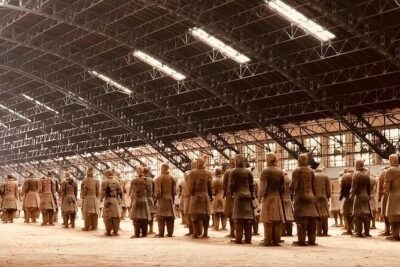

Private Customizable Terracotta Warriors Day Tour with Options
Read our review →Browse the lists this tour appears in