
Reviewed · 2-DAY EXPERIENCES
TramOramic Sightseeing Tour plus 2-Day Tramways Ticket
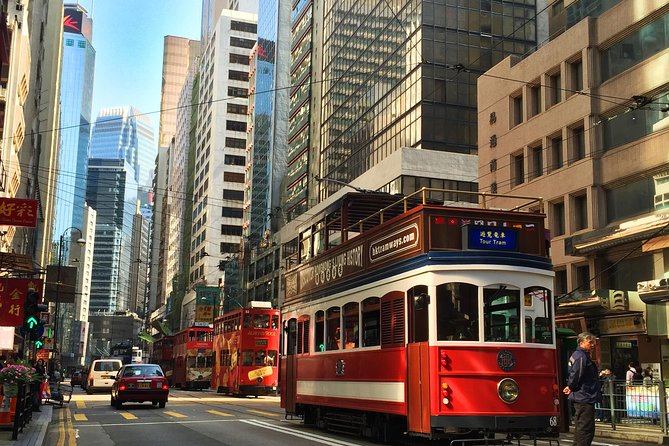
Hong Kong looks best from a moving tram. This combo pairs a one-hour vintage tram tour with two days of unlimited rides, giving you a guided introduction and a cheap way to keep exploring afterward. I like the old-fashioned double-decker, open-top car and the chance to see Hong Kong Island at street level, not through a coach window.
I also like the onboard photographs, videos, artifacts, and commentary in eight languages. The main catch is practical: the boarding point can be hard to find, the tram may crawl through traffic, and the audio narration may occasionally lag behind the view. Sit upstairs, arrive early, and do not schedule this right before a flight.
In This Review
- Key points before you book
- Why this old tram is a smart introduction to Hong Kong
- Boarding at Western Market or Causeway Bay
- The upper deck is where the tour comes alive
- From Macau Ferry Pier to Man Wa Lane
- Statue Square and the banking district
- Tai Yau Plaza, Times Square, and Causeway Bay
- Happy Valley Race Course and the cemeteries
- What the Heritage Corner adds
- How much value is in the two-day Golden Ticket?
- Who should book this experience?
- Booking advice and cancellation
- Should you book the TramOramic tour?
- FAQ
- How long does the TramOramic sightseeing tour last?
- Where does the tour begin?
- Is the tram open-top?
- Is commentary available in different languages?
- What does the two-day ticket include?
- Which landmarks does the route pass?
- Is hotel pickup included?
- Can I cancel for a full refund?
Key points before you book
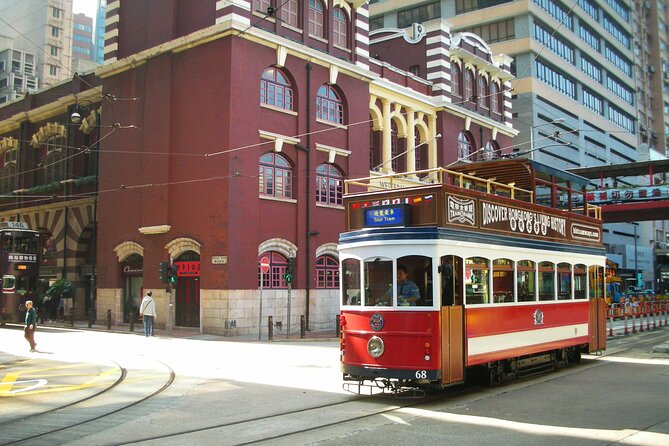
- A 1920s-style open-top tram: The upper deck gives you the best views of Hong Kong Island and its jumble of old shops, offices, towers, and cemeteries.
- One tour plus two days of rides: The Golden Ticket lets you use Hong Kong Tramways independently after the guided hour.
- Two possible starting points: Your departure is from Western Market Terminus or Causeway Bay Terminus, depending on the time selected.
- Eight-language audio commentary: The narration explains local life, city sights, and the history of the century-old tram system.
- A useful first-day orientation: The route passes Central, Wan Chai, Causeway Bay, Happy Valley, and several major landmarks.
- Small enough to feel manageable: The tram holds a maximum of 36 people, though seats on the upper deck remain the prize.
Why this old tram is a smart introduction to Hong Kong
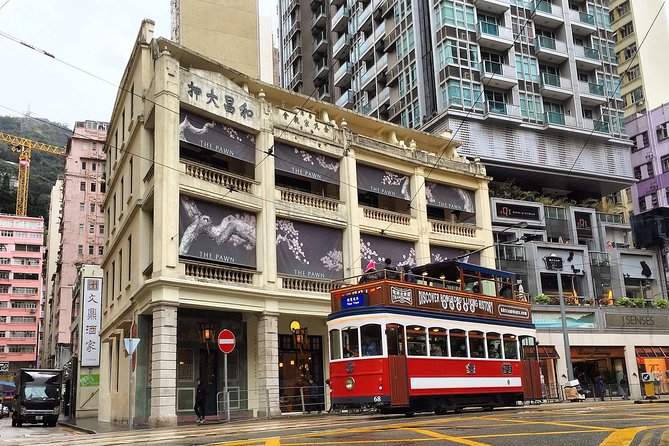
Hong Kong’s famous ding ding trams are not just sightseeing vehicles. They are part of ordinary city life, carrying people along Hong Kong Island while traffic squeezes past on both sides. This tour gives you the pleasant version first: an open upper deck, a planned route, and explanations that help you understand what you are seeing.
That matters because Hong Kong can feel like a wall of signs and towers when you first arrive. From the tram, the city becomes easier to read. The route links historic streets, financial districts, shopping zones, racecourse grounds, and older residential areas. You get a broad first impression without spending an hour puzzling over tram routes.
The tour lasts about 60 minutes. It is not a full-day sightseeing program, and it does not stop for long visits at each landmark. Think of it as a moving introduction. You see the sights, hear the background, and then use the included pass to return to the areas that caught your eye.
The overall rating is 4.4 out of 5 from 35 ratings, which fits the experience well. The best parts are the upper-deck ride, the historic vehicle, and the extra two-day pass. The weaker points are usually connected to instructions, traffic, and the audio system rather than the basic idea.
A few more tours worth putting side by side
- Hong Kong Disneyland: Non-Stop 2-Day Fun Ticket
★ 4.5 · 13 reviews - Beijing 2-Day Tours: Great Wall, Forbidden City & Top Highlights
★ 5.0 · 688 reviews - Beijing: Top 6 Highlights All Inclusive 2-Day Private Tour
★ 5.0 · 472 reviews
Boarding at Western Market or Causeway Bay
The tour begins at one of two termini. The exact starting point depends on the departure time you choose, so check that detail carefully before leaving your hotel.
Western Market Terminus is near the old Western Market area and gives you a starting point on the western side of Hong Kong Island. Causeway Bay Terminus places you farther east, near one of the island’s major shopping districts. The two choices are useful, but they are not interchangeable when you are planning your day.
The boarding directions deserve attention. Causeway Bay can be a confusing place for a first-time visitor, and simply seeing Causeway Bay on your confirmation may not be enough to find the precise tram location. Allow extra time. One person needed help locating the stop and another missed the departure after failing to identify the terminus.
This is the sort of small problem that can spoil an otherwise simple outing. I would arrive early, ask a tram inspector or local transport worker if necessary, and keep the mobile ticket ready. The tour is near public transportation, but the immediate boarding point still requires some care.
The upper deck is where the tour comes alive
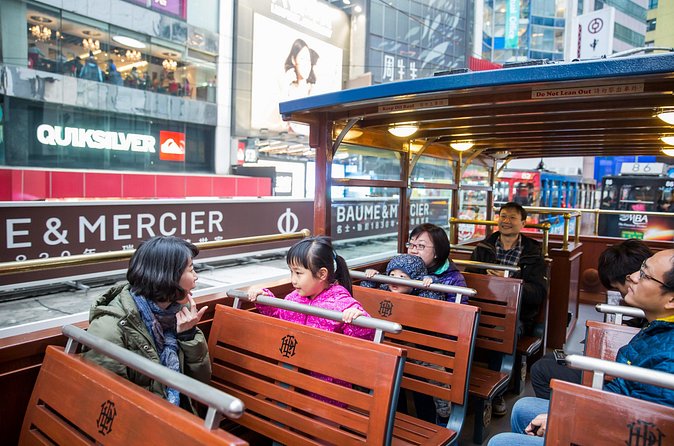
The open upper deck is the reason to book this particular ride instead of simply taking a standard tram. You get a higher view over traffic, shop signs, passing pedestrians, and the changing architecture of Hong Kong Island.
Go early if you want the best seats upstairs. The lower deck is still useful if the weather is poor, but it cannot match the sense of place from the open top. The upper deck also makes it easier to look across the street and spot details that pass quickly at ground level.
The tram is styled after a 1920s vehicle, so expect a heritage experience rather than modern transport comfort. Heavy traffic in the tram lanes can slow the journey. That is part of the reality of riding through Hong Kong, but it means the one-hour timing is approximate and the vehicle may not move at a steady pace.
This is not a silent ride. You will hear recorded commentary through provided earpieces, with options in eight languages. The narration covers local life and the story of Hong Kong’s century-old tram system. It adds useful context, especially when you are looking at a street or building with no idea why it matters.
There is one technical weakness to watch for. The audio may not start automatically, and the narration can occasionally be out of step with the tram’s position. Check your earpiece early and tell the staff if the commentary is not playing. A little attention at the start can make the difference between a useful tour and an hour of unexplained scenery.
From Macau Ferry Pier to Man Wa Lane
The route begins with a look at busy waterfront and central-city areas. Macau Ferry Pier is one of the recognizable points along the way, connecting the tram ride to Hong Kong’s wider network of ferries and island travel.
You then pass Man Wa Lane, an older street area associated with traditional shops and local commerce. From the open tram, you get only a passing view, but that is part of the appeal. The tour shows how older fragments survive beside modern towers instead of placing every historic feature behind a museum door.
Tak Wing Pawnshop adds another reminder of the city’s commercial past. Pawnshops are a familiar part of Hong Kong’s urban story, and seeing one from the tram helps connect the commentary about local life with actual streets and storefronts.
Do not expect time to get off and inspect these places. The value is in seeing how they fit into the city’s working streets. If something catches your interest, mark it mentally and use your two-day pass to return later.
A completely different kind of day out on the same trip:
- Hong Kong: Dolphin Cruise, Big Buddha & Lantau Island Tour
★ 4.2 · 1,512 reviews - Ngong Ping 360: Cable Car Return Tickets & Combos
★ 4.6 · 1,431 reviews - Lantau Island Day Trip – Big Buddha & Tai O
★ 4.5 · 1,328 reviews - Big Bus Hong Kong Open Top Hop-On Hop-Off Sightseeing Tour
★ 4.0 · 1,077 reviews
Statue Square and the banking district
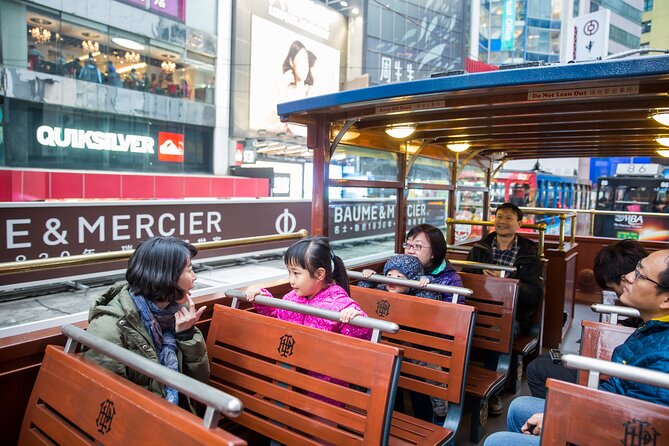
The tram continues toward Statue Square and the central business district. Here, the ride shifts from older street scenes to Hong Kong’s financial center.
You pass the former Supreme Court building, the Bank of China building, and the Lippo Centre. These buildings represent different periods and styles, and the contrast is best understood from the street. Look upward. The tram’s open deck gives you a natural view of the towers as they rise around the tracks.
The route does not provide an architectural lecture at every building, so listen closely when the commentary turns to the central district. The audio helps explain how government, finance, and daily public life share a remarkably tight area.
This section also shows the tour’s limits. Hong Kong’s streets can be crowded, and the tram cannot pause whenever a landmark appears. If you want detailed photographs of the Bank of China building or Statue Square, use the later pass for a slower return trip.
Tai Yau Plaza, Times Square, and Causeway Bay
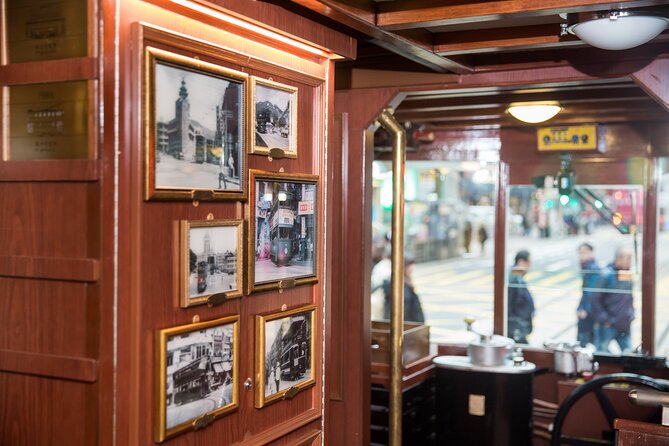
As the tram moves east, the character changes again. Tai Yau Plaza and Times Square place you in the retail-heavy side of Hong Kong Island, where large commercial buildings and constant movement replace the quieter historic details of the western route.
Causeway Bay is a useful part of the orientation because it gives you a clear sense of Hong Kong’s shopping districts. It also explains why the Causeway Bay boarding point can be tricky. The area is large, busy, and filled with streets, malls, and transport connections.
The tram offers a relaxed way to see this district without committing to a shopping visit. You can watch the street activity from above, then decide later where you want to spend time. This is especially helpful if you have only a short stay and want to identify areas before setting off on foot.
The tour’s audio commentary is most useful here when it links the modern city to everyday routines. Hong Kong is not only a collection of famous towers. It is also people commuting, shopping, working, and sharing narrow streets with the trams.
Happy Valley Race Course and the cemeteries
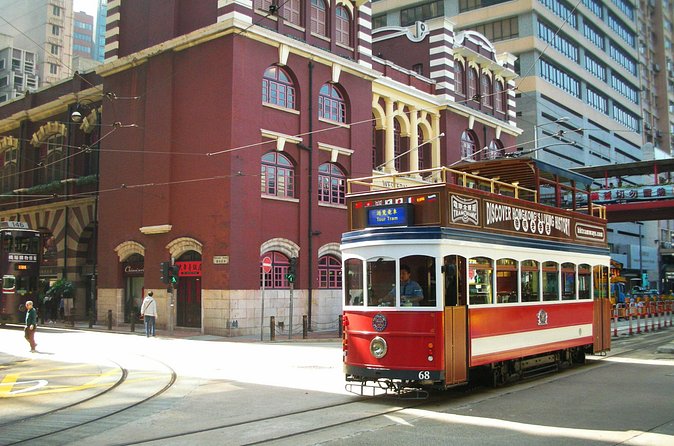
One of the route’s more surprising sections passes Happy Valley Race Course and the Happy Valley Cemeteries. The combination is a good example of Hong Kong’s compressed geography: recreation, public roads, and burial grounds sit close together, surrounded by the city.
The racecourse is a major visual change from the dense commercial districts. The cemeteries offer another pause in the city’s rhythm, even though the tram continues moving. You may find this part less immediately dramatic than the towers, but it adds depth to the route and shows a side of Hong Kong that a shopping-focused visit can miss.
This is also a good reason to take the tour early in your stay. You receive a broad view of several districts, including places you might not otherwise put on your plan. The two-day pass then lets you revisit the route at your own speed.
What the Heritage Corner adds
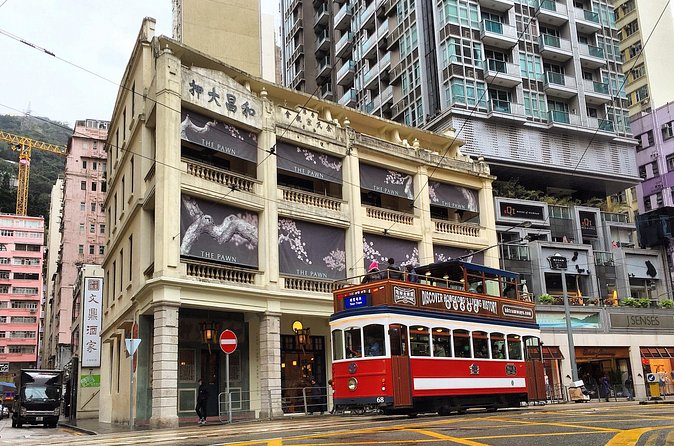
The tram includes a Heritage Corner and Photo Gallery with photographs, videos, and artifacts about the tram system. These displays give the ride a stronger sense of purpose than a simple loop around the city.
You can see how the tram network has been presented through time and connect the old vehicle beneath you with the city’s past. The displays are particularly useful if you enjoy transport history or want more context than the audio alone provides.
Do not expect a large museum visit. This material is part of the tram experience, not a separate attraction requiring a long stop. Still, it is a worthwhile touch, especially for families and anyone curious about how a century-old public transport system became part of Hong Kong’s identity.
Special tram souvenirs are included, along with free WiFi. These extras will not determine the value of the booking, but they make the experience feel more complete.
How much value is in the two-day Golden Ticket?
The ticket includes unlimited use of Hong Kong Tramways for two days after the sightseeing ride. That sounds generous, and it can be useful, but you should compare it with the very low normal tram fare.
A standard tram ride costs about HKD 2.3, with half-price fares for seniors. If you take only a few rides, the pass may not save money compared with paying as you go. The real value comes from convenience and freedom. You can ride a section more than once, use the tram between walks, or return to an area you saw during the tour without worrying about individual fares.
The pass also removes some of the fear that comes with using an unfamiliar system. After the guided hour, you will have seen how the trams work and gained confidence about where the route goes. That makes the independent rides much easier.
I would use the pass for short hops rather than treating the tram as the fastest way across the island. Traffic can slow the old cars, and the routes are limited. For a scenic street-level ride, though, it is hard to beat the price of an ordinary tram journey.
Remember that the tram is often crowded. Boarding and exiting can take effort, and the entrances and exits are arranged differently from many modern buses. Sitting upstairs is more comfortable for sightseeing, but you need to allow time to move through the car when leaving.
Who should book this experience?
I recommend this tour to first-time visitors who want a simple introduction to Hong Kong Island. It also suits families, since the old tram, open deck, and visual city tour are easy to enjoy without a long walking route.
It works well for anyone with limited time. The hour gives you a quick overview, and the two-day pass lets you continue exploring without arranging another sightseeing activity.
The tour is less suitable if you need exact timing. Traffic may slow the tram, and the return to your starting point can take longer than expected. Do not make this your final activity before heading to the airport, especially if you still need to collect luggage.
It may also disappoint you if you expect a live guide speaking throughout the ride. The commentary is recorded, delivered through earpieces, and supported by onboard displays. The host is present, but the main information comes from the audio system.
The maximum group size is 36 people, which keeps it smaller than a large coach excursion. Most people can participate, and the tour is close to public transportation. Food, drinks, hotel pickup, and hotel drop-off are not included.
Booking advice and cancellation
The price is listed at $24.94 per person. I consider it fair when you value the open-top heritage ride, the commentary, and the two-day pass together. It is less compelling as a pure transport bargain because ordinary tram fares are so low.
Book it for the experience, not simply for the included rides. Then make the most of the pass by riding during the following two days and returning to places you only glimpsed from the upper deck.
Free cancellation is available if you cancel at least 24 hours before the local start time. Changes or cancellations made less than 24 hours ahead are not accepted for a refund.
Should you book the TramOramic tour?
Book it if you want an easy first look at Hong Kong Island, especially if you can arrive early for an upper-deck seat. The historic tram, useful narration, and two-day pass make this a pleasant introduction with practical follow-up value.
Skip it if you are already comfortable with Hong Kong’s tram system, want a fast trip, or have a tight airport schedule. For most first-time visitors, though, this is a friendly and memorable way to get your bearings, with enough independent riding afterward to justify the extra cost.
FAQ
How long does the TramOramic sightseeing tour last?
The guided sightseeing portion lasts approximately one hour.
Where does the tour begin?
The tour begins at either Western Market Terminus or Causeway Bay Terminus, depending on the departure time selected.
Is the tram open-top?
Yes. The experience uses a vintage, double-decker tram with an open upper deck.
Is commentary available in different languages?
Yes. Commentary about local life and the history of Hong Kong’s tram system is available in eight languages.
What does the two-day ticket include?
The Golden Ticket provides unlimited access to Hong Kong Tramways for two days, allowing you to explore Hong Kong Island independently after the sightseeing tour.
Which landmarks does the route pass?
The route passes Macau Ferry Pier, Man Wa Lane, Tak Wing Pawnshop, Statue Square, the former Supreme Court, Bank of China building, Lippo Centre, Tai Yau Plaza, Times Square, Happy Valley Race Course, and Happy Valley Cemeteries.
Is hotel pickup included?
No. Hotel pickup and drop-off are not included.
Can I cancel for a full refund?
Yes, if you cancel at least 24 hours before the experience start time. Cancellations made less than 24 hours ahead are not refunded.
Newest reviews from Hong Kong
- Lantau Peak Sunrise Climb★ 5.0 · 4 reviews
- Hong Kong MiniBus Transfer: Hotel / Cruise Terminal and Airport★ 4.5 · 4 reviews
- Hong Kong: Lantau Island & Tai O Cruise, Skip The Line Cable Car★ 3.5 · 4 reviews
- Private & Personalized Hong Kong Street Art Tour with a Local★ 5.0 · 4 reviews
- Classic Afternoon Tea Voyage in Hong Kong for 4 Pax★ 4.0 · 4 reviews
- 2025 Chinese New Year Fireworks Open Bar Yacht Dinner Cruise HK★ 4.5 · 4 reviews
- Hong Kong Heritage Walk★ 4.0 · 4 reviews
- Private Full Day Sightseeing Tour of Kowloon in Hong Kong★ 5.0 · 4 reviews
2-Day Experiences, compared.

Beijing 2-Day Tours: Great Wall, Forbidden City & Top Highlights
Read our review →
Top 6 Highlights All Inclusive 2-Day Private Tour
Read our review →
Beijing Private Tour: 2 Days Forbidden City and Mutianyu Great Wall VIP Tour
Read our review →
Mini Group: 2-Day Beijing Highlights and Great Wall Tour
Read our review →
2-Day Avatar Mountain, Glass Bridge, and Mt. Tianmen Tour
Read our review →
2-Day Customized Warriors Tours & Xian Top Attractions
Read our review →
2-Day Mini Group to Avatar Mountain, Glass Bridge and Mt. Tianmen
Read our review →
2-Day Beijing Highlights Small-Group Guided Tour
Read our review →Browse the lists this tour appears in