Reviewed · BEIJING TOURS
6-Day Small Group Beijing Xi’an Tour
The wall is only the beginning. This six-day Beijing and Xi’an tour packs China’s imperial monuments, ancient defenses, grand religious sites, and famous performances into one tightly managed trip. I like the choice of Mutianyu, a better-preserved Great Wall section with striking watchtowers, and I like the small group size, capped at 18 people.
I also like that the tour avoids shopping stops, factory stores, tea ceremonies, and other time-wasting diversions. Guides such as Kevin, Tracy, Maggie, Selina, and Barry have earned praise for clear explanations and practical help. The main drawback is the pace: six days is enough for highlights, but not enough for much free time, and the included Day 4 transport needs clarification because the detailed plan says a flight while the overview refers to a high-speed train.
In This Review
- Key points at a glance
- A six-day route for China’s biggest first impressions
- Day 1: A simple arrival in Beijing
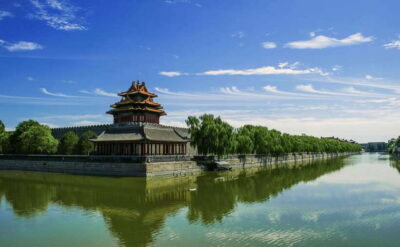
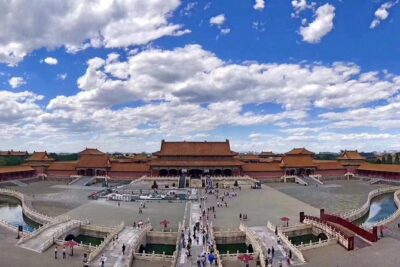
- Day 2: From Tiananmen Square into the Forbidden City
- Day 3: Watchtowers and hutong lanes at Mutianyu
- Day 4: The Summer Palace and the move to Xi’an
- Day 5: The Terracotta Army and Xi’an’s Tang-era culture
- Day 6: City walls, tai chi, and the Muslim Quarter
- What the guides add to the experience
- What is included, and where the value sits
- Who should book this Beijing and Xi’an tour?
- Should you book it?
- FAQ
- How long is the tour?
- What cities does the tour visit?
- Is transport from Beijing to Xi’an included?
- What meals are included?
- Is accommodation included?
- Is the Great Wall cable car included?
- Is the Bird’s Nest visit an interior tour?
- Is the final transfer to the Xi’an airport included?
- Is the Tang Dynasty Show available all year?
Key points at a glance
- Mutianyu instead of a crowded Great Wall section: You receive round-trip cable car service and about three hours at one of China’s most scenic wall sites.
- A strong first look at Beijing: Tiananmen Square, the Forbidden City, Temple of Heaven, Summer Palace, hutongs, and the Bird’s Nest are all included.
- Xi’an adds a different chapter: The Terracotta Warriors, Big Wild Goose Pagoda, old city wall, Muslim Quarter, and Tang Dynasty performance give the second half its own character.
- Small group, capped at 18: This is more manageable than a large coach tour, especially during hotel pickups and site visits.
- Shows and meals are built in: You get a Beijing acrobatic performance, a Tang Dynasty music and dance show, one dinner, three lunches, and five breakfasts.
- Good guide support: English-speaking guides help with timing, local transport questions, and practical matters such as airport departures.
A six-day route for China’s biggest first impressions
This is a highlights tour, not a slow cultural retreat. You move from Beijing’s imperial center to the Great Wall, then fly to Xi’an for Qin dynasty relics and Tang-era culture. The route makes sense geographically, but each day carries a full load.
The price is $1,229 per person. For that amount, you receive five hotel nights in twin-sharing rooms, five breakfasts, three lunches, one dinner, admission fees, guides, drivers, air-conditioned vehicles, bottled water, and one economy-class journey from Beijing to Xi’an. That can be solid value if you want the major arrangements handled for you.
You will still pay for international flights, a Chinese visa, gratuities, a single-room supplement if traveling alone, and transport from Xi’an to the airport or railway station on the final day. Since the cancellation policy is strict and non-refundable, I would confirm dates, passport details, room needs, and Day 4 transport before paying.
A few more tours worth putting side by side
- 6 Days Central Tibet Culture Small Group Tour
★ 5.0 · 53 reviews - 6 Days Lhasa Gyantse Shigatse Group Tour
★ 5.0 · 12 reviews - 6-Day Private Tour: Guilin Terraces, Fenghuang & Zhangjiajie
★ 5.0 · 7 reviews
Day 1: A simple arrival in Beijing
Your guide meets you at Beijing Capital Airport after you collect your luggage and clear customs. A driver takes you to the hotel, and the guide helps with check-in.
This is a useful beginning after a long international flight. You do not need to work out a taxi, train connection, or hotel address while tired. The first day is otherwise light, with about an hour assigned to the arrival transfer.
The meeting information gives a 9:00 a.m. start at Capital Airport in Shunyi. That time matters, so check how it applies to your arrival date. If your flight lands later, confirm the pickup plan in advance rather than assuming the group will wait.
Day 2: From Tiananmen Square into the Forbidden City
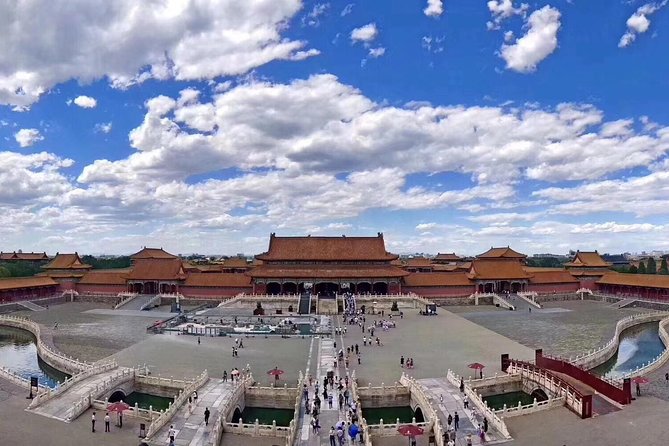
The morning starts at Tiananmen Square, where you have about 30 minutes. This is a quick orientation stop rather than a long visit. The square’s immense scale makes more sense once you are there, but the short time means your guide will need to keep the group moving.
From the square, you enter the Forbidden City, also called the Palace Museum. Three hours gives you time to see major halls, courtyards, and pavilions while hearing how the imperial court worked. The value here is not just the architecture. A good guide can explain the separation between public ceremonies and private palace life, which helps turn a huge collection of buildings into a readable place.
The Forbidden City can feel overwhelming without structure. I would stay close to your guide, note the meeting point, and wear shoes that can handle hours on hard ground. The itinerary gives three hours, but it does not promise an unhurried examination of every hall.
The Temple of Heaven follows, with about 90 minutes. Its design reflects imperial ceremonies connected with the heavens and hopes for good harvests. The site offers a different mood from the palace complex, with architecture arranged around ritual purpose rather than court administration.
The evening finishes at the Red Theater Acrobatic Show. The performance lasts about an hour and adds a welcome change of pace after a day of monumental buildings. Acrobatic shows depend on timing, balance, and physical control, so this is less a history lesson and more a display of stage skill.
Day 2 is packed, but the sequence works. You get the political center, imperial residence, religious complex, and a performance in one day. If you prefer to linger over museum displays or take long photo breaks, this schedule may feel brisk.
Day 3: Watchtowers and hutong lanes at Mutianyu
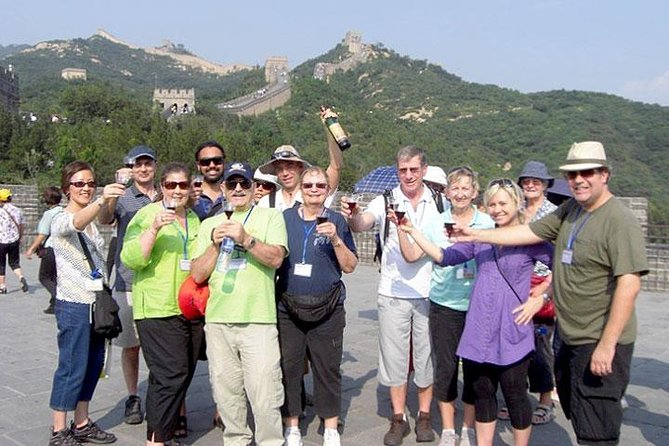
Mutianyu is one of the strongest choices on the route. You have about three hours there, and round-trip cable car service is arranged. That removes a major physical hurdle, though walking on the wall still involves uneven surfaces and inclines.
The well-preserved wall and its watchtowers give you the visual experience most people hope for: masonry tracing the ridges and disappearing into the distance. The exact walking distance is not specified, so you should not expect a full-length hike. Instead, use your time for the sections your guide indicates and leave room for the return cable car.
This is the day when practical clothing matters most. Wear shoes with a firm sole, carry the two bottled waters provided per person per day, and keep your belongings light. The cable car helps with access, but it does not turn the Great Wall into a flat stroll.
After returning toward central Beijing, the coach stops at the National Stadium, known as the Bird’s Nest, for about 15 minutes. This is a photo stop from a distance, not an interior visit, and admission is not included. Fifteen minutes is enough for a quick picture and a look at the Olympic-era design, but not much else.
The hutong visit gives the day a more human scale. A rickshaw takes you through old alleyways, and you have the chance to visit a local family. This is valuable because the imperial sites show official China, while the hutongs offer a glimpse of ordinary neighborhood life and traditional urban patterns.
The hutong portion lasts about an hour. It is short, so think of it as an introduction rather than a full neighborhood study. The rickshaw also means you observe more than you walk, which may suit you after Mutianyu.
A completely different kind of day out on the same trip:
- From Beijing: Mutianyu Great Wall Tours with Options
★ 4.9 · 9,216 reviews - Beijing: Forbidden City Tour(Group/Private)-Tickets Included
★ 4.8 · 7,974 reviews - Beijing: T-Square & Forbidden City Group or Private Tour
★ 4.8 · 4,446 reviews - All-Inclusive Tour: Tiananmen Square, Forbidden City, Great Wall
★ 5.0 · 2,873 reviews
Day 4: The Summer Palace and the move to Xi’an
The Summer Palace receives about three hours in the morning. It was an imperial garden with water, pavilions, and long walking routes, and it gives you a softer counterpoint to the Forbidden City. I like this stop because it lets you see how the imperial household used an outdoor retreat rather than only formal palace compounds.
Three hours sounds generous, but the site is large. Your guide will likely focus on the best-known areas, and you should ask where the group will meet before taking photos or walking ahead. Comfortable shoes remain important.
After lunch or the morning visit, the plan transfers you to the airport for Xi’an. The detailed information says you take one economy-class flight from Beijing to Xi’an, then meet a local guide on arrival and go to a downtown hotel.
There is a point to verify before booking. One general description refers to a high-speed train, while the day-by-day plan and included services specify airfare. Those are not interchangeable experiences. Confirm the actual transport, baggage arrangements, departure airport, and whether the flight is included for your dates.
This change of city is one of the tour’s strengths. Beijing gives you imperial power and modern national symbols. Xi’an shifts the focus toward ancient military burial art, Buddhist links, city defenses, food, and Tang-era performance.
Day 5: The Terracotta Army and Xi’an’s Tang-era culture
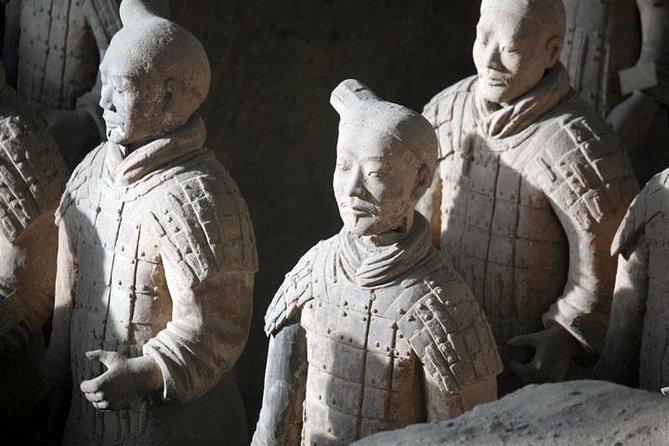
The Terracotta Warriors take up about three hours. The museum displays three excavated pits containing life-sized warrior figures, horses, and ancient weapons. The scale is impressive, but the guide’s explanation is what helps you understand why the pits matter and how the figures were arranged.
Allow yourself time to look at the rows and the individual faces. The figures are not identical, and the sheer number can make the first view feel almost unreal. At the same time, a three-hour visit can pass quickly, especially if the museum is crowded or your group has a fixed meeting time.
The Big Wild Goose Pagoda follows in the afternoon. Built during the Tang dynasty to store Buddhist scriptures brought from ancient India, it connects Xi’an to the movement of ideas and religion across Asia. The visit lasts about an hour, so you will see the site as part of a wider city tour rather than study every detail.
The evening brings the Tang Dynasty Music and Dance Show, paired with a dumpling dinner. This is a smart inclusion because the day has been heavy on archaeology. Music, costumes, movement, and food offer a more sensory look at Xi’an’s Tang-era identity.
The show lasts about 90 minutes. Seasonal scheduling matters: the theater is not open in January, February, or March. The available information does not explain the replacement plan, so ask what happens if your trip falls in those months.
The included meal count lists one dinner, and this is the dinner specifically described. Three lunches and five breakfasts are also included, but not every meal. Budget for additional food and ask your guide about meal timing so you are not surprised by gaps between stops.
Day 6: City walls, tai chi, and the Muslim Quarter
The final morning begins at Xi’an’s City Wall Park, with about two and a half hours. The old wall gives you a different view of the city and a chance to observe daily local routines. You may also practice tai chi with a master, an appealing detail for anyone who wants more than monument photography.
The long stop gives you room to enjoy the setting at an easier pace than Day 2. Still, the schedule calls this a leisure visit, not a guaranteed tai chi lesson, so treat participation as an opportunity rather than the central feature.
Lunch takes place in the Muslim Quarter, a lively area known for local food. The meal is not simply fuel between monuments. It gives the tour a chance to show Xi’an as a living food city shaped by different cultural influences.
The day ends without an included airport drop-off. Because the group has different departure times, you go to the airport or railway station on your own. Your guide helps hail a taxi, but you pay for that transfer unless you arrange a private service.
That arrangement is manageable if you have a later departure and feel comfortable following instructions. If you have a tight connection, heavy luggage, or limited confidence navigating the final transfer, arrange private transport in advance.
What the guides add to the experience
The strongest praise goes to the guides. Kevin in Beijing and Tracy in Xi’an are described as professional, friendly, and good at keeping people updated about timing and requirements. Maggie is praised for clear English, site knowledge, patience, and help taking photos.
Selina receives especially warm comments for being kind, available, and willing to explain Chinese culture and daily life. Barry is noted for helping with an extra evening show and making sure a departing person reached the right airport areas. These details matter because an organized guide can save time and reduce stress in a country where transport, entrances, and language may feel unfamiliar.
Guide quality can vary by departure, of course. The names above are useful examples, not a promise that one particular person will lead your group. What you can reasonably expect is an English-speaking guide in each city, with drivers and air-conditioned vehicles handling the road transfers.
The group limit of 18 is another plus. It is small enough for questions and easier head counts, but it is not a private tour. You will still follow a shared timetable and accommodate other people’s interests and departure plans.
What is included, and where the value sits
At $1,229, the package is aimed at people who value convenience over designing every detail themselves. The admission fees alone cover several major sights, while the hotel nights, local guides, vehicles, meals, bottled water, and Beijing to Xi’an transport remove much of the planning work.
Twin-sharing accommodation is included. Solo visitors must pay a compulsory single-room supplement, available on request. If you are traveling alone, ask for the exact amount before booking because the advertised per-person price assumes shared lodging.
The no-shopping policy is worth calling out. There are no factory stores, tea ceremonies, shopping site restaurants, or other sales-focused diversions. That keeps your limited six days aimed at monuments, neighborhoods, food, and shows.
Tips for guides and drivers are not included, and gratuities are recommended. Visa fees and international flights are also outside the price. These extras do not make the tour poor value, but they should be part of your real budget.
The tour is not suitable for wheelchair users or people over 80. Most other people can participate, but the Great Wall, large palace grounds, city wall, and long sightseeing days demand reasonable mobility.
Who should book this Beijing and Xi’an tour?
I would recommend it to a first-time China visitor who wants the main sights without arranging domestic transport, hotels, admissions, and local guides separately. It also suits couples, families with older children, and friends who prefer a clear schedule and a small shared group.
It is a good fit if you want context at the Forbidden City, Terracotta Warriors, and religious sites, rather than simply arriving, taking a photo, and leaving. The guide support is especially useful for people who do not speak Chinese or who want help with airport transfers and day-to-day timing.
I would hesitate if you prefer slow mornings, independent meals, or long stretches in one neighborhood. The route is efficient but full. Beijing alone could fill six days, and Xi’an deserves more time than the roughly two sightseeing days provided here.
The strict non-refundable policy also makes this a poor match for uncertain plans. Confirm your travel dates, passport information, room arrangement, seasonal show schedule, and Beijing to Xi’an transport before committing.
Should you book it?
Book this tour if your priority is a well-organized first look at Beijing and Xi’an, with major admissions, guides, hotels, shows, and intercity transport largely handled. The strongest reasons are Mutianyu, the no-shopping format, the small group cap, and the repeated praise for guides who explain clearly and help with practical problems.
Choose something slower if you want independent exploration or more time at each site. Before paying, get written confirmation that Day 4 uses the included flight, ask about the hotel names, check the Tang Dynasty show if you travel in January through March, and price the final Xi’an transfer. With those points settled, the tour offers a solid, high-content introduction to two of China’s essential cities.
FAQ
How long is the tour?
The tour lasts approximately six days and includes five nights of accommodation.
What cities does the tour visit?
It visits Beijing and Xi’an, with sightseeing in both cities and transport between them on Day 4.
Is transport from Beijing to Xi’an included?
Yes. The included services specify one economy-class journey from Beijing to Xi’an. The detailed day-by-day plan says this is a flight, although another general description refers to a high-speed train, so you should confirm the arrangement for your dates.
What meals are included?
The package includes five breakfasts, three lunches, and one dinner. The dinner is connected with the Tang Dynasty Music and Dance Show and dumpling meal.
Is accommodation included?
Yes. Five hotel nights are included in twin-sharing rooms. A compulsory single-room supplement applies to solo visitors and is available on request.
Is the Great Wall cable car included?
Yes. Round-trip cable car service at the Mutianyu section is arranged, and admission to the site is included.
Is the Bird’s Nest visit an interior tour?
No. The itinerary describes a 15-minute photo stop from a distance, and admission is not included.
Is the final transfer to the Xi’an airport included?
No. Airport or railway station drop-off on Day 6 is not included. The guide can help hail a taxi, while a private transfer can be arranged separately.
Is the Tang Dynasty Show available all year?
No. The theater is not open in January, February, or March. Ask about the plan for those travel months before booking.
Newest reviews from Beijing
- Beijing: Explore the Forbidden City in Hanfu★ 5.0 · 4 reviews
- Beijing Tai Chi and Tea Ceremony Experience★ 5.0 · 4 reviews
- Jinshangling Great Wall Of Beijing Tickets And Other Option★ 4.0 · 4 reviews
- Private Full-Day Great Wall of China Hiking Tour from Jiankou to Mutianyu★ 4.5 · 4 reviews
- Tour the Great Wall with a Native from Downtown Beijing★ 4.8 · 4 reviews
- Beijing: Badaling Great Wall Private Tour w Language Option★ 4.3 · 4 reviews
- Beijing:Summer Palace & Tea or Calligraphy Experience Tour★ 4.6 · 4 reviews
- 7 Days Private Tour of Beijing, Xian, Shanghai by Bullet Train★ 5.0 · 4 reviews
Beijing Tours, compared.

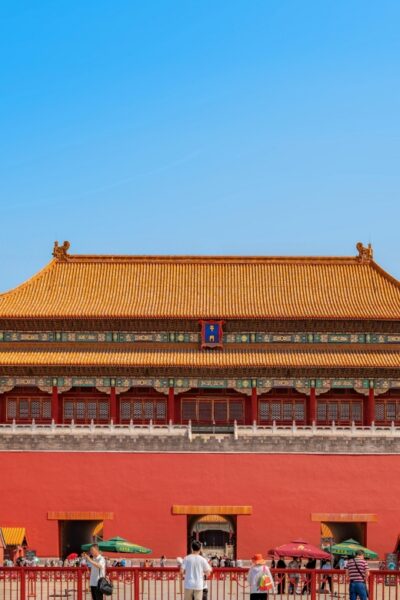
Forbidden City Tour(Group/Private)-Tickets Included
Read our review →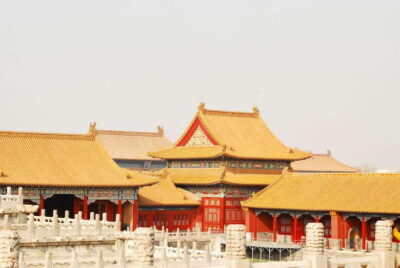
T-Square & Forbidden City Group or Private Tour
Read our review →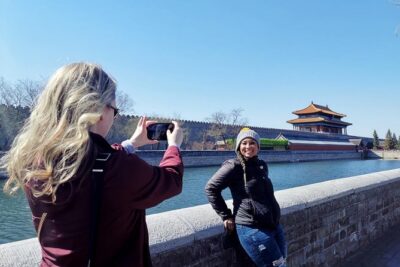
All-Inclusive Tour: Tiananmen Square, Forbidden City, Great Wall
Read our review →
MuBus: Mutianyu Great Wall ENG/ESP/RUS Guided Bus Tour
Read our review →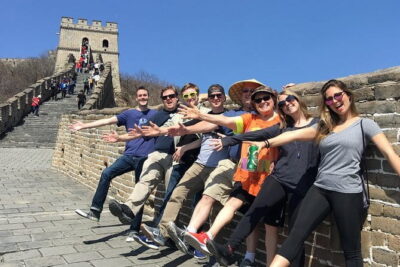
4-Hour Small Group Tour to Forbidden City with Entry Tickets
Read our review →