
Reviewed · CHINESE FOOD TOURS
Beijing: Hidden Gems Guided Food Tour with Beer and Tastings
Come hungry, leave with a new map of Beijing. This 3.5-hour evening walk links four small local eateries through the old hutongs near Shichahai, mixing food, neighborhood life, and stories about the city. I especially like the four-course tasting route, which gives you a proper dinner rather than a few token samples, and the way the tour pairs familiar dishes with less common ones. The rooftop hotpot stop, with its bell tower view and local craft beer, is a fine opening act.
The main drawback is the walking and access. You cover about 1.5 miles through narrow lanes, and the tour is not suitable for people with mobility impairments. Food choices can also change with vendor availability, so you should treat the menu as a strong guide rather than a fixed promise.
In This Review
- Key points at a glance
- Why this Beijing food walk works so well
- Meeting at Shichahai and walking into old Beijing
- Copper pots, mutton, and a rooftop view
- Beijing noodles in a courtyard hideaway
- The rare Muslim dish with an imperial connection
- Spring pancakes and the meaning of family meals
- What the guides add to the evening
- Price, portions, and what you receive for $75
- Who should book this tour
- Practical advice for a smoother evening
- FAQ
- Where does the Beijing food tour meet?
- What time does the tour begin?
- How long does the experience last?
- How far do you walk?
- How many food stops are included?
- Is beer included?
- What foods are featured?
- Is the tour offered in English?
- Is the tour suitable for people with mobility impairments?
- Should you book it?
Key points at a glance
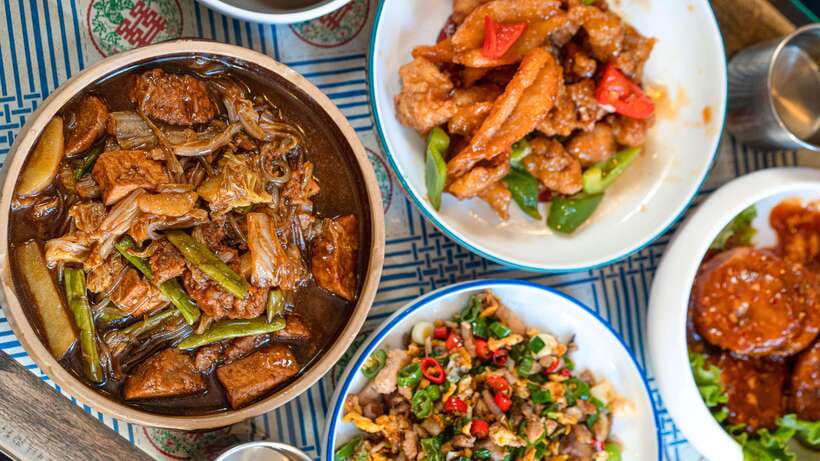
- Four substantial food stops: Expect enough food for dinner, including hotpot, Beijing noodles, spring pancakes, and a rare Muslim specialty.
- A rooftop view with hotpot: Thin mutton and beef cook in traditional copper pots while you look toward Beijing’s historic bell tower.
- A real hutong walk: The route covers about 2.5 kilometers through old lanes near Shichahai, not just a restaurant strip.
- Local drinks included: One pint of locally brewed craft beer is included, along with unlimited beer and sodas during the tour.
- Strong guide element: Guides such as Janice, Tony, Winnie, Yoyo, Joe, and Haitao are repeatedly praised for clear English, warmth, and useful food and city context.
- Best booked early in your trip: It gives you a practical introduction to Beijing dishes and ideas for what to eat later.
Why this Beijing food walk works so well
Beijing food can be hard to decode in a short visit. Menus may have limited English, dishes can arrive without explanation, and the best neighborhood restaurants are often tucked behind an unmarked doorway. This tour solves that problem by taking you to four local places and explaining what you are eating as you go.
I like the balance. You do not spend the whole night sitting at one table, but you also do not spend the evening nibbling one dumpling before rushing onward. The tastings add up to dinner, and the walking between stops gives your stomach a little time to catch up.
The setting matters just as much as the food. Starting near Shichahai places you in one of the city’s old lake and hutong districts, where narrow lanes spread out from the area around the Forbidden City. The guide explains how these lanes developed between courtyard homes and how the word hutong is used.
The food stories add another layer. Spring pancakes connect eating with family and the Chinese New Year season. The Muslim stop points to a less visible part of Beijing’s food culture. The noodles show how strongly locals identify with one particular bowl. It is a good reminder that Beijing cuisine is not just roast duck and imperial palace associations.
More Food Tours in Beijing
- Beijing Hutong Breakfast Food Tour
★ 5.0 · 155 reviews - Beijing Hutong Breakfast Food Tour
★ 5.0 · 120 reviews - Beijing Walking Food Tour with a Local Friend
★ 5.0 · 73 reviews
Meeting at Shichahai and walking into old Beijing
The meeting point is Shichahai Subway Station, Exit C, at street level. The station is on Line 8, and using the subway is strongly recommended. If you take a taxi or Didi, show the driver the Chinese address: 什刹海地铁站C东南口.
Meet 10 minutes before the 6:30 PM start. This is worth taking seriously. Traffic around Shichahai can be heavy during rush hour, and arriving late could be stressful at the very moment you need to find a guide in a busy area.
From the station, you walk through roughly 2.5 kilometers of hutong lanes. These passages date back to the 12th century and were formed around rows of courtyard residences once linked with officials and wealthy families. The lanes have changed over time, but they still offer a view of daily neighborhood life that a major monument cannot provide.
I find this part especially useful at the start of a Beijing visit. You learn how the city is arranged, how traditional homes fit together, and how much of old Beijing remains in small pockets. The route is not a formal architecture lecture. It is a food walk with urban history along the way, which keeps the information easy to absorb.
The lanes are narrow, and you may walk on uneven surfaces. The tour operates in all weather, so comfortable shoes and clothing suited to the forecast are sensible. Anyone who finds extended walking difficult should choose a different food experience.
Copper pots, mutton, and a rooftop view
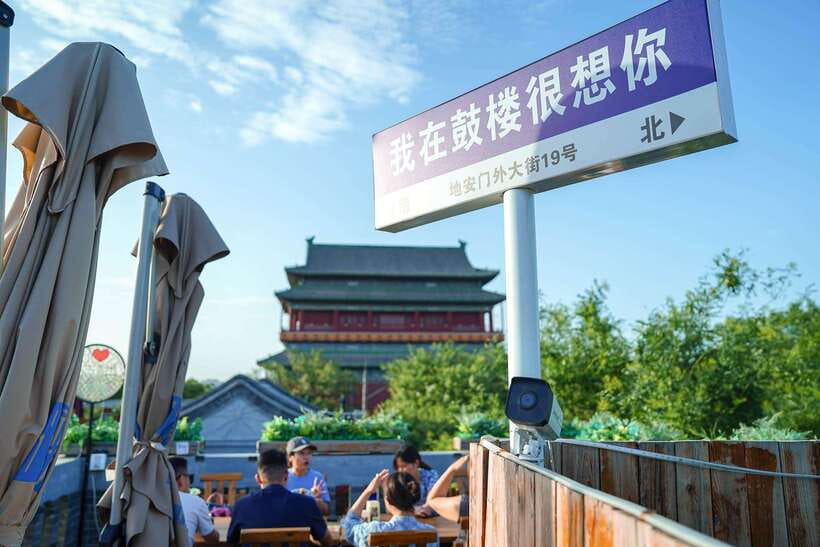
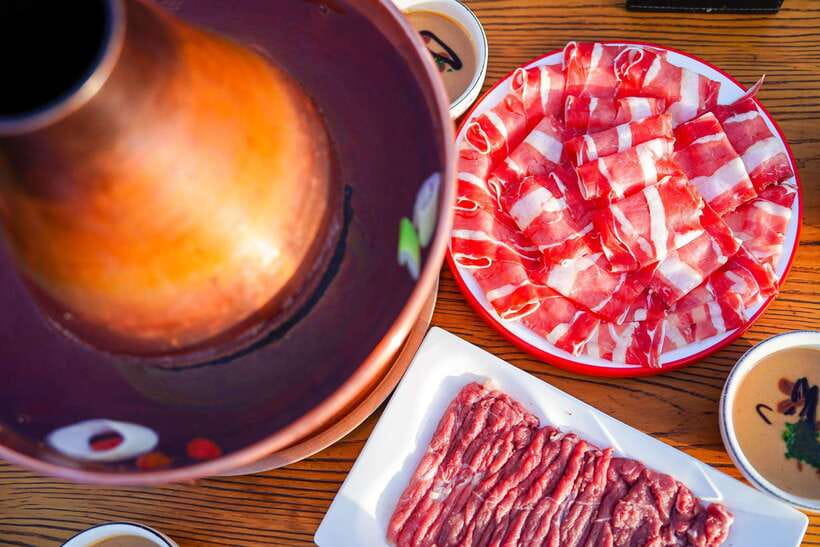
The first major food stop brings you to a hotpot restaurant with rooftop views toward Beijing’s historic bell tower. This is a particularly good match of place and dish. Beijing mutton hotpot is cooked in traditional copper pots, usually with a clear broth that lets the quality of the ingredients do the work.
Thin slices of mutton and beef go into the simmering pot for a quick cook. You then dip the meat into a sauce based on sesame paste. That sauce gives the meal its creamy, nutty character and provides a strong contrast to the clean broth.
For many people, this will be the most familiar format of the evening, but the setting makes it memorable. You are not simply being handed a plate of meat. You are sharing a pot, cooking at the table, and eating in a style that feels social and unhurried.
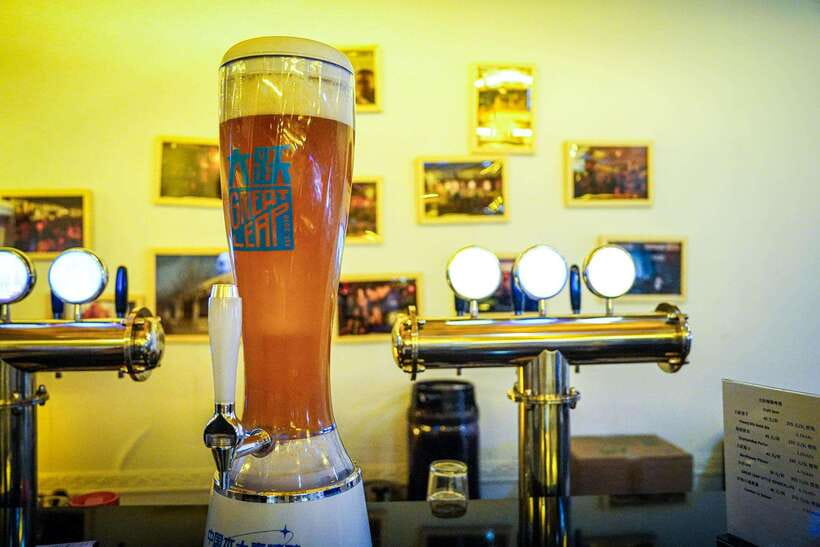
A pint of local craft beer is included. The combination is practical as well as enjoyable: the beer cuts through the sesame-heavy sauce, while the rooftop view gives you a reason to look up between bites.
The stop may be less comfortable for anyone who prefers a quiet, formal meal. Hotpot is communal and hands-on, and the table can become busy with ingredients, dipping sauce, and cooking. That is part of its appeal, but it is useful to know before booking.
Beijing noodles in a courtyard hideaway
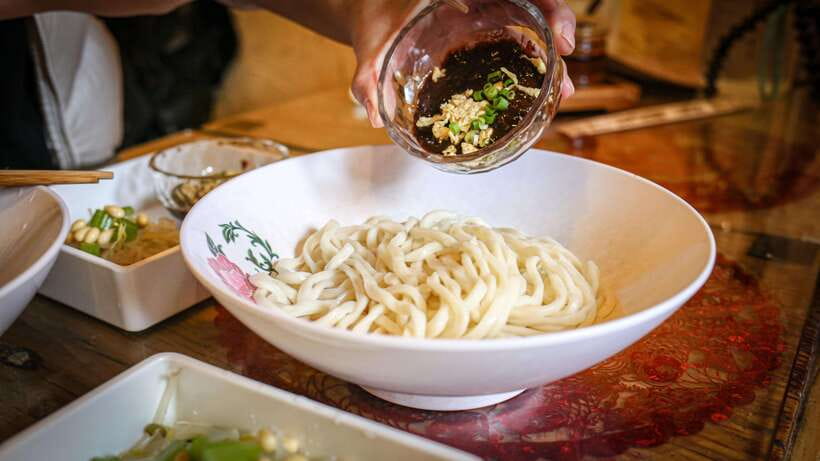
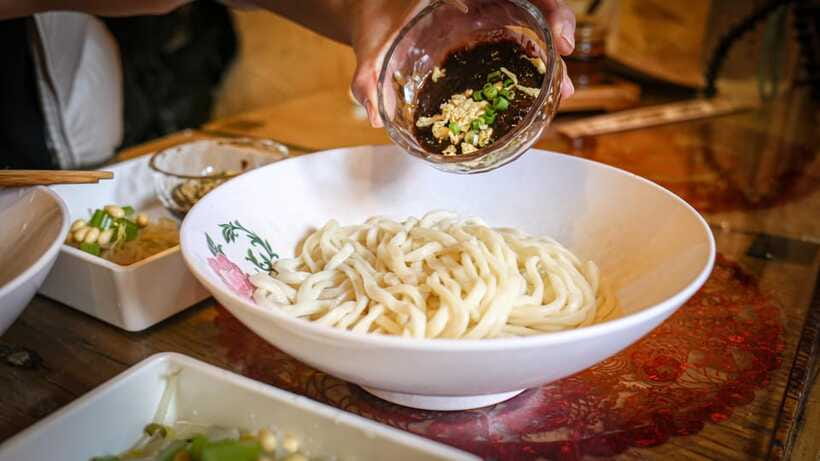
The noodle stop takes you into a small restaurant deep inside a hutong courtyard. It is described as a hole-in-the-wall place, so do not expect a polished dining room or a broad menu designed for international visitors.
The dish is Beijing-style noodles, often called Beijing noodles by local people. The name itself tells you how strongly the city identifies with this food. The noodles are made with a secret recipe, and the point of the stop is to taste a dish that locals treat as a basic part of home-city comfort food.
This is one of the places you would be unlikely to find without a guide. It is not only the hidden location that matters. You also get an explanation of how the dish fits into Beijing eating habits, which makes an everyday bowl more interesting.
I would pay close attention here to the contrast with the hotpot. The first stop is shared cooking and dipping. The noodle stop is more direct, with the flavor of the noodles and sauce carrying the meal. That change keeps the route from feeling repetitive.
Several guides have been praised for explaining each dish clearly. Janice, Winnie, Yoyo, Joe, and Haitao are among the names that come up often in the tour feedback, but guide assignments can vary. The consistent strength is the format: an English-speaking local guide who explains the food instead of leaving you to guess.
A completely different kind of day out on the same trip:
- From Beijing: Mutianyu Great Wall Tours with Options
★ 4.9 · 9,216 reviews - Beijing: Forbidden City Tour(Group/Private)-Tickets Included
★ 4.8 · 7,974 reviews - Beijing: T-Square & Forbidden City Group or Private Tour
★ 4.8 · 4,446 reviews - All-Inclusive Tour: Tiananmen Square, Forbidden City, Great Wall
★ 5.0 · 2,873 reviews
The rare Muslim dish with an imperial connection
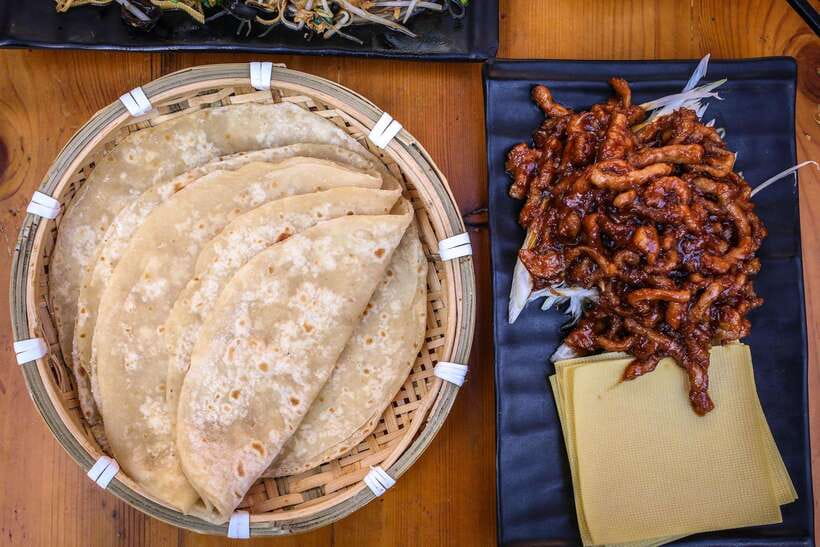
The Muslim eatery is one of the tour’s most unusual stops. It is a neighborhood diner frequented mainly by local men, and the atmosphere is described as plain and local rather than set up for sightseeing.
The dish served here is a rare Beijing specialty, one of the few remaining local places that still prepares it. It was also known as a favorite of Empress Cixi, the Qing-era ruler often called the Dragon Lady. That connection gives the tasting a memorable historical angle, but the greater value is that you are trying a food tradition that is becoming harder to find.
This is not a stop for anyone who wants only famous, easy-to-recognize dishes. The appeal is discovery. You are given the chance to taste something that does not appear on every standard Beijing food list, in a restaurant used by neighborhood regulars.
The setting may feel more rugged than the rooftop hotpot restaurant. That difference is useful. Beijing food culture includes grand palace associations, family dishes, working-neighborhood meals, and Muslim culinary traditions. A tour that shows only attractive restaurants would miss much of that range.
The supplied details also mention baijiu, the strong Chinese spirit, and bottles kept behind the counter. You might get an introduction to local drinking customs or a taste of rice wine or baijiu, depending on the evening and what is operating that day. Drink carefully if offered. The tour already includes beer, and the food is filling.
Spring pancakes and the meaning of family meals
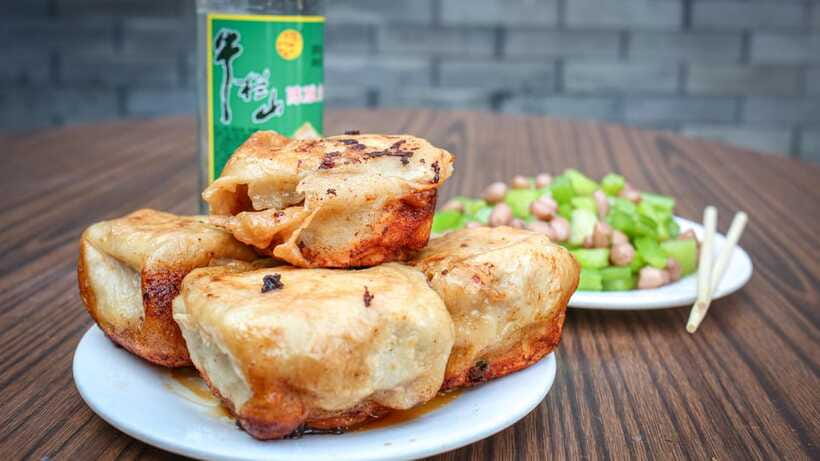
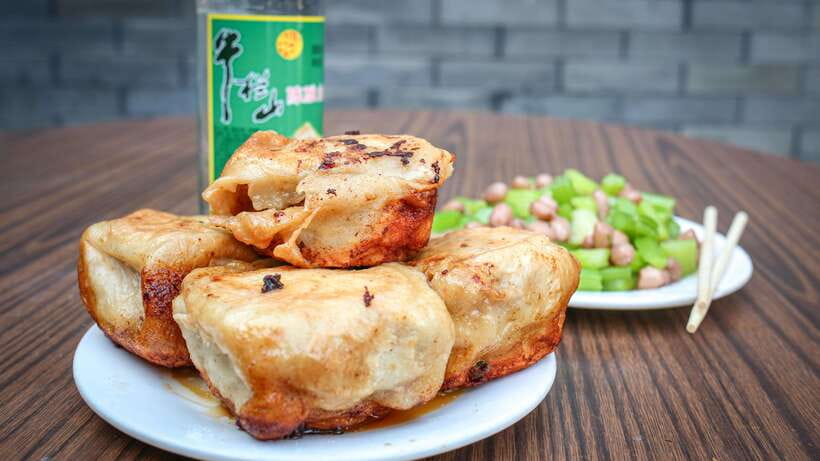
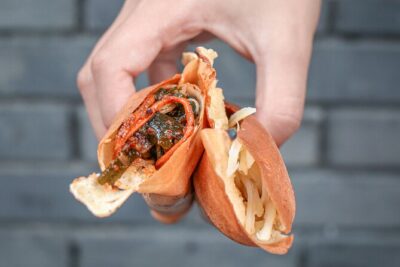
The final featured stop is run by a husband-and-wife team specializing in spring pancakes. These thin pancakes are made fresh to order and eaten much like a burrito, with fillings wrapped inside.
Their seasonal meaning gives the dish its charm. Spring pancakes are traditionally enjoyed with family during Chinese New Year to welcome spring and hope for a good harvest. They also symbolize family reunion and togetherness.
That makes this more than a final snack. By this point, you have eaten food associated with restaurants, neighborhood habits, Muslim Beijing, and family celebrations. The pancake brings the focus back to the home table.
Fresh preparation is important here. You get a sense of the work behind a dish that might otherwise look simple. The pancake itself is not the whole story. It is the wrapping, the shared process, and the occasion linked to it.
If you arrive after a full meal, you may struggle. The tour includes four food stops and is repeatedly described as filling. Take the advice to arrive hungry seriously. You may finish with little interest in a late dinner.
What the guides add to the evening
The food is the reason to book, but the guide can make or break the pace. The strongest pattern in the feedback is praise for guides who combine clear English with warmth and local knowledge.
Janice is described as especially easy to understand and attentive to making people comfortable. Tony is praised for his energy and humor, while Winnie receives credit for adding context about history, society, and the city economy as well as food. Yoyo is noted for her passion for local dishes and hutong stories. Haitao is praised for useful tips and a charismatic manner.
These details matter because the route moves through places you might not recognize. A guide can explain what to order, how a dish is eaten, and why a modest restaurant matters. You also get help with practical matters, such as metro directions. One guide even helped a participant sort out a subway problem after the walk.
Guide names are not guaranteed, and the company uses several English-speaking guides, including Joe, Uyi, Tara, Teagan, Zoe, Carmen, Bonnie, and others. Still, the repeated praise suggests that the guide role is central rather than an afterthought.
The best use of your guide is to ask questions. Ask what to order later in Beijing, which dishes are regional, and how to recognize a good local noodle shop. You are paying for access to food, but also for a short lesson in how to eat your way through the city.
Price, portions, and what you receive for $75
At $75 per person, this is not a bargain meal in Beijing terms. It is good value if you want a full evening of food, one pint of craft beer, unlimited beer and sodas, an English-speaking guide, and a planned walk through places that are difficult to locate independently.
The four stops are the key. You are not paying for a single restaurant reservation with a guide attached. You are paying for a progressive meal that would require research, translation, transport, and a fair amount of trial and error to recreate.
The price makes less sense if you already know Beijing well, speak Chinese, and enjoy finding restaurants independently. It also may not suit a very light eater. The tour is designed to replace dinner, and the portions can leave you extremely full.
For a first or short visit, I think the value is stronger. You get a broad sample in one evening, and you can use the information afterward. Many people schedule it for their first night because it helps them get comfortable with local food and gives them ideas for the rest of the trip.
Food availability can cause changes. The stated stops and dishes may be adjusted if a vendor is closed or ingredients are unavailable. That is a practical reality of eating in small local businesses, not a flaw unique to this tour. Book it for the style of experience, not as a rigid promise that every plate will appear exactly as described.
Who should book this tour
I would recommend it most strongly to you if you:
- Are visiting Beijing for the first time
- Want a complete dinner rather than tiny samples
- Enjoy small local restaurants more than polished tourist dining rooms
- Like learning the meaning behind traditional food
- Want to explore hutongs with a purpose
- Need an English-speaking guide to handle the food and route
- Are happy to try unfamiliar dishes and drinks
It is also a strong choice for a solo visitor or couple who wants company for the evening. The format encourages conversation at the food stops, and the supplied feedback includes both small groups and enjoyable private-feeling outings.
I would hesitate if you have mobility limitations, strict dietary needs that you have not discussed in advance, or a dislike of communal hotpot and strong drinks. Dietary requirements should be given when booking, but the available information does not promise that every restriction can be accommodated.
The tour requires at least two people to operate. If that minimum is not met, the booking can be canceled after confirmation, with an alternative date or full refund offered. That is worth knowing if your schedule in Beijing is tight.
Practical advice for a smoother evening
Use the subway if possible. Shichahai is on Line 8, and the station exit is clearer than trying to meet a guide in traffic.
Arrive 10 minutes early, especially if you are unfamiliar with Beijing’s metro system. Keep the Chinese meeting address available for a taxi or Didi: 什刹海地铁站C东南口.
Wear comfortable shoes. The route is about 2.5 kilometers through hutong lanes, and the tour runs in all weather. A light layer is useful because you move between outdoor lanes and different restaurants.
Do not eat a large meal beforehand. The hotpot, noodles, rare specialty, spring pancakes, and drinks are intended to amount to dinner.
Tell the company about dietary needs before the tour. Do not wait until the first restaurant, since changes may be harder once the group is on the move.
If you are choosing between booking this on your first or last night, choose the first night. The city and food tips are more useful when you still have days left to act on them.
FAQ
Where does the Beijing food tour meet?
It meets at Shichahai Subway Station, Exit C, at street level. The station is served by Line 8.
What time does the tour begin?
The tour begins at 6:30 PM. You should meet the guide 10 minutes before the start time.
How long does the experience last?
The walking food tour lasts 3.5 hours.
How far do you walk?
The route covers about 1.5 miles, or 2.5 kilometers, through Beijing’s historic hutong lanes.
How many food stops are included?
Four food stops with tastings are included. The food is intended to be equivalent to dinner.
Is beer included?
Yes. The experience includes one pint of locally brewed craft beer, plus unlimited beer and sodas during the tour.
What foods are featured?
The planned food experiences include Beijing mutton hotpot, Beijing-style noodles, a rare Muslim Beijing specialty, and spring pancakes. The exact itinerary can change based on daily vendor operations and availability.
Is the tour offered in English?
Yes. It includes a live English-speaking guide.
Is the tour suitable for people with mobility impairments?
No. The experience is listed as unsuitable for people with mobility impairments because it includes a substantial walk through hutong lanes.
Should you book it?
Book this tour if you want Beijing served in neighborhood-sized portions: a shared copper pot, a courtyard noodle shop, a rare Muslim dish, and family-style spring pancakes. The food is substantial, the route has real local character, and the best guides add useful context without turning dinner into a classroom.
Skip it if you need a fixed menu, cannot walk 2.5 kilometers, or prefer to choose every restaurant yourself. For most first-time visitors who want a tasty and well-organized first evening in Beijing, the $75 price is justified by the amount of food, the drinks, the guide, and the access to places you would probably miss alone.
More Drinking Tours
- Beijing Hutong Walking Food and Beer Tour at Hidden Restaurants
★ 5.0 · 1,132 reviews - Authentic Old Beijing Hutong Food and Beer Private Tour
★ 5.0 · 49 reviews - Beijing Imperial Dining Experience at Bai Jia Da Yuan Restaurant with Houhai Lake Bar Tour
★ 5.0 · 16 reviews - Beijing Hutong Dinner and Beer Walking Private Tour
★ 5.0 · 9 reviews
Newest reviews from Beijing
- Beijing: Explore the Forbidden City in Hanfu★ 5.0 · 4 reviews
- Beijing Tai Chi and Tea Ceremony Experience★ 5.0 · 4 reviews
- Jinshangling Great Wall Of Beijing Tickets And Other Option★ 4.0 · 4 reviews
- Tour the Great Wall with a Native from Downtown Beijing★ 4.8 · 4 reviews
- Private Full-Day Great Wall of China Hiking Tour from Jiankou to Mutianyu★ 4.5 · 4 reviews
- Beijing: Badaling Great Wall Private Tour w Language Option★ 4.3 · 4 reviews
- Beijing:Summer Palace & Tea or Calligraphy Experience Tour★ 4.6 · 4 reviews
- 7 Days Private Tour of Beijing, Xian, Shanghai by Bullet Train★ 5.0 · 4 reviews
Chinese Food Tours, compared.
Authentic Local Food Tour in Central Shanghai
Read our review →
Hong Kong’s Tin Hau Hidden Eats Food Tour with 7+ Local Tastings
Read our review →
Hong Kong Food Tour: Central and Sheung Wan Districts
Read our review →
Late Night Food Tour in the Shanghai’s French Concession
Read our review →Browse the lists this tour appears in