
Reviewed · LAMA TEMPLE TOURS
Beijing: Lama Temple (Yonghe Temple) Admission Ticket
The incense tells you this is still a living temple. Beijing’s Lama Temple, or Yonghe Temple, gives you ornate imperial buildings, Tibetan Buddhist art, and a chance to see local worship rather than a purely staged monument. I like the calm courtyards and the remarkable 18-meter sandalwood Buddha. I also like the simple $10 admission, especially when advance booking saves you from arranging the ticket yourself. The main drawback is that the booking process requires your passport details, and the temple can become very crowded on major prayer days.
This is a self-guided visit, not a tour with a guide or audio commentary. You receive entry to the main halls and exhibitions, but you must make sense of the complex on your own. The provider, PANDA144, usually sends the ticket information through email or WhatsApp, and several bookings included a small electronic guide with practical visiting notes.
In This Review
- Key points to know before you go
- Why Yonghe Temple belongs on your Beijing plan
- From imperial residence to Tibetan Buddhist temple
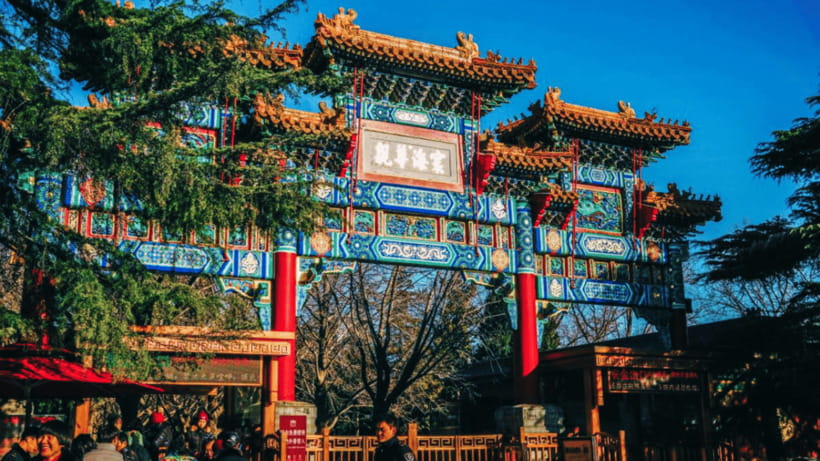
- Entering through the three archways
- Yonghe Gate and the main courtyards
- The four learning halls
- The 18-meter sandalwood Maitreya Buddha
- Incense, prayer, and the temple’s living character
- How the ticket service works in practice
- Timing, closing rules, and practical limits
- Is $10 good value?
- Who will enjoy Yonghe Temple most?
- Should you book the Lama Temple ticket?
- FAQ
- What is included with the Lama Temple ticket?
- Is a guided tour included?
- Is the GetYourGuide QR code the valid admission ticket?
- Do I need to provide my passport information?
- Can I skip the security check?
- When is the latest I can enter?
- Can I cancel the booking for a refund?
Key points to know before you go
- The 18-meter sandalwood Buddha: A single-piece statue of Maitreya Buddha, famous for its size and workmanship.
- A former imperial residence: The site began as a residence for the future Emperor Yongzheng before becoming a temple.
- Four styles in one complex: Han, Manchu, Tibetan, and Mongolian design details appear across the halls and courtyards.
- A working place of worship: You may see people burning incense, praying, and moving through the temple with quiet purpose.
- Fast-track ticket arrangement: The $10 ticket includes reservation and access to the main temple buildings, but not a security bypass.
- Passport details are required: Your full name and passport number must match the identification used at the entrance.
Why Yonghe Temple belongs on your Beijing plan
Beijing has no shortage of grand imperial sights, but Yonghe Temple offers a different kind of visit. The Forbidden City presents court life on a vast scale. Yonghe Temple is smaller, more intimate, and still used for daily religious practice.
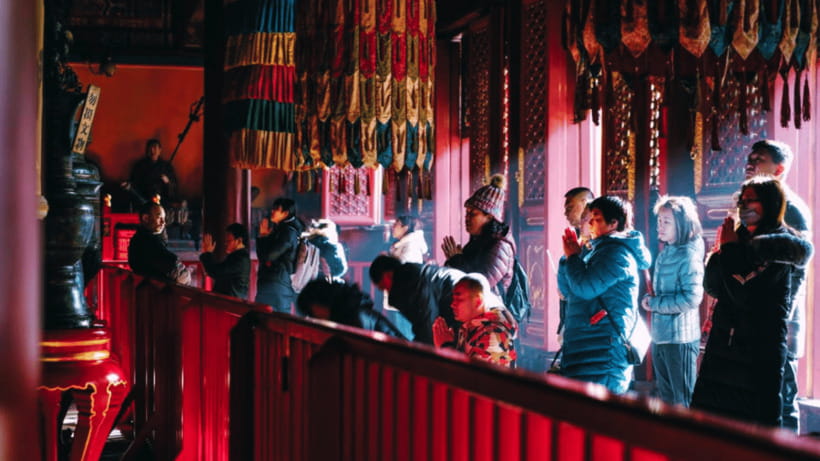
I like the fact that you are not only looking at old roofs and painted beams. You can watch people light incense and offer prayers in the same courtyards you are exploring. Smoke from the incense burners can soften the view of the halls, giving the visit a quiet, solemn feeling. On busy days, that calm may be mixed with crowds, but the religious purpose of the place remains clear.
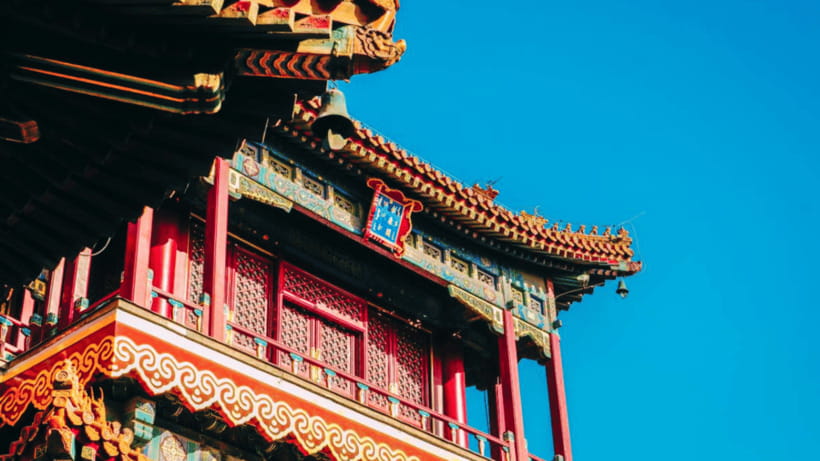
The site also rewards visitors who enjoy architectural details. Its design brings together Han Chinese, Manchu, Tibetan, and Mongolian influences. That mix reflects the temple’s imperial background and its place within Tibetan Buddhism in Beijing.
The admission price is about $10 per person. That is reasonable for access to the full complex and its cultural exhibitions, particularly if you have limited time in Beijing and want a straightforward visit without arranging entry at the temple yourself.
More Lama Temple visits:
- Temple Heaven, Lama Temple, Summer Palace & Peking Duck Bus Tour
★ 5.0 · 377 reviews - Temple Heaven, Summer Palace, Lama Temple, Hutong Bus Tour
★ 4.7 · 319 reviews - Temple of Heaven, Summer Palace, Lama Temple, Hutong Tours
★ 5.0 · 311 reviews
From imperial residence to Tibetan Buddhist temple
Yonghe Temple was built in 1694, during the 33rd year of Emperor Kangxi’s reign. It was first connected to the future Emperor Yongzheng, who lived there before taking the throne.
In 1725, the residence became an imperial palace. In 1744, during Emperor Qianlong’s reign, it was converted into a Tibetan Buddhist temple. Those changes explain why the site feels both imperial and religious. You see the ordered courtyards and formal gates of a royal compound, but the halls also contain Buddhist statues, thangkas, ritual objects, and places for prayer.
I find this background useful because it helps you read the buildings. This is not simply an old temple that happened to survive. It passed through several roles, and each role left its mark on the complex.
The temple’s name can cause a little confusion. You may see it called Lama Temple, Yonghe Temple, or Yonghe Gong. These names refer to the same Beijing attraction.
Entering through the three archways
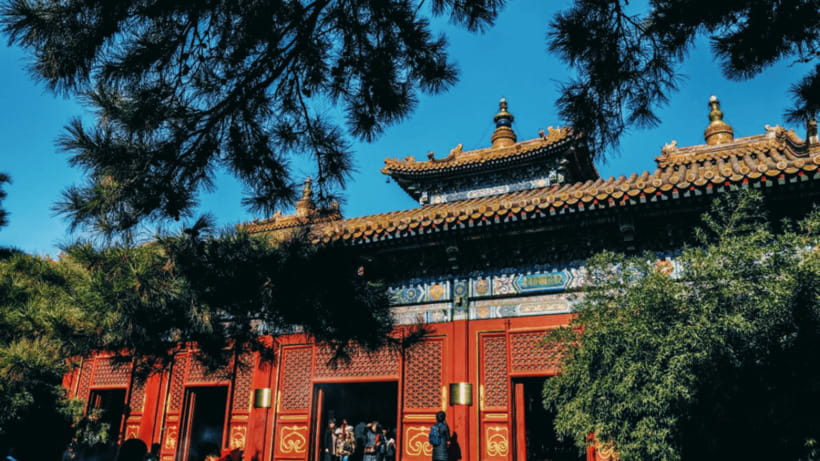
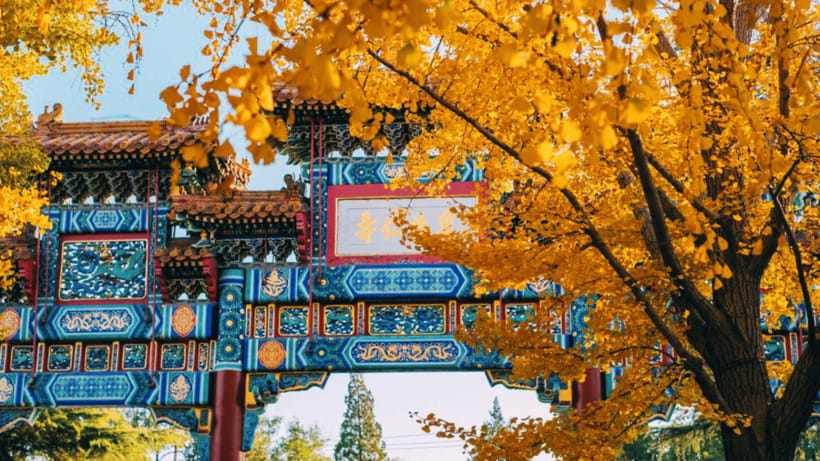
The visit begins with the temple’s entry sequence, including three decorated archways and the Yonghe Gate. These structures prepare you for the main courtyards and create a gradual move from the city into the temple grounds.
You will need to show the confirmed ticket at the designated entrance channel and then pass through security. The ticket arrangement provides fast-track access to the ticket process, but it does not let you skip security checks. Do not bring pets, weapons, sharp objects, or explosive substances.
Your passport is important. Real-name booking is mandatory, so the name and passport number submitted during booking must be genuine and must match your identification at the gate. The QR code from GetYourGuide alone is not the admission ticket. Wait for the confirmation email or the message sent through WhatsApp.
This is the one part of the experience that requires care. Several bookings were handled quickly, sometimes with the ticket arriving on the morning of the visit, but you should not assume that the initial booking QR code is enough. Send your full name and passport number promptly.
Yonghe Gate and the main courtyards
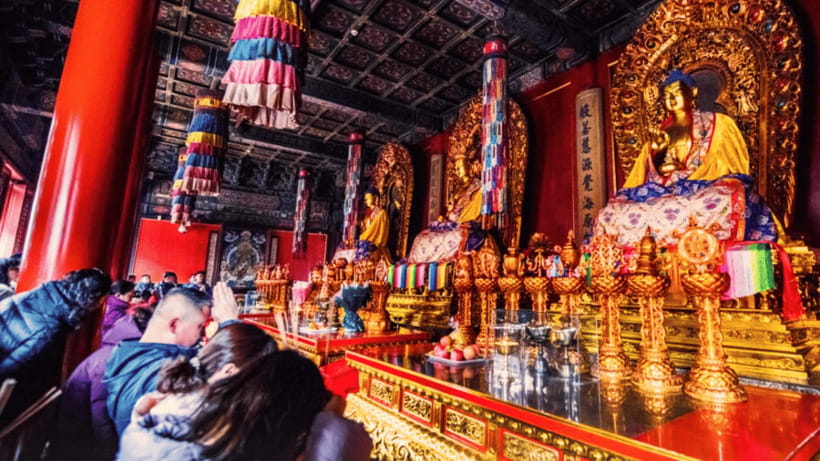
Once inside, you move through a series of courtyards and halls rather than following a fixed guided route. That freedom is useful. You can pause at the details that catch your eye, then continue when the crowd begins to gather.
The Yonghe Gate leads toward the main religious buildings. Painted surfaces, carved details, rooflines, and incense burners give the complex much of its visual character. The setting is orderly, but it does not feel empty or frozen in the past.
The temple is not huge compared with Beijing’s largest historic sites. That can be an advantage. You can see the major buildings in a single visit without spending an entire day crossing enormous courtyards. At the same time, its compact size means busy periods can feel crowded, especially when many people arrive to pray.
I would give myself enough time to move slowly. The ticket is valid for a one-day visit, but the practical length depends on how carefully you study the architecture and exhibitions. A quick walk can cover the main route, while a slower visit gives you more time with the statues, thangkas, and sacred objects.
A few more tours worth putting side by side
- From Beijing: Mutianyu Great Wall Tours with Options
★ 4.9 · 9,216 reviews - Beijing: Forbidden City Tour(Group/Private)-Tickets Included
★ 4.8 · 7,974 reviews - Beijing: T-Square & Forbidden City Group or Private Tour
★ 4.8 · 4,446 reviews - All-Inclusive Tour: Tiananmen Square, Forbidden City, Great Wall
★ 5.0 · 2,873 reviews
The four learning halls
One of the complex’s notable features is the group known as the Four Learning Halls. These include the Hall of Medicine Buddha, Mathematics Hall, Tantric Hall, and Lecture Hall.
The names hint at the broad role of the temple. This was not only a place for ceremonies. It also supported Buddhist study and teaching. You can think of these halls as part of the intellectual side of the temple, alongside the more immediately impressive statues and prayer spaces.
The exact experience of each hall may depend on access and crowd conditions on the day of your visit. Still, the group adds depth to the temple layout. You are seeing a place designed for worship, learning, imperial connection, and public religious life.
Three exhibition rooms are also included. These give you a chance to look beyond the main route and consider the objects and traditions connected with the temple. Since no audio guide is included, I recommend reading any available signs carefully and using the small electronic guide sent with some bookings if you receive one.
The 18-meter sandalwood Maitreya Buddha
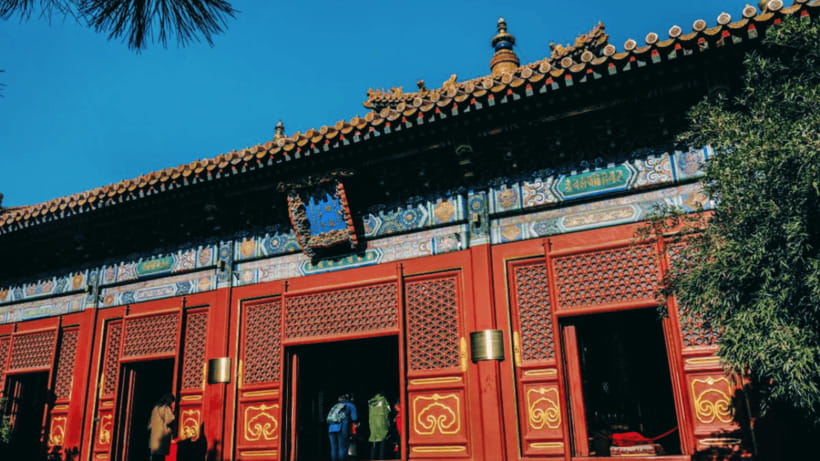
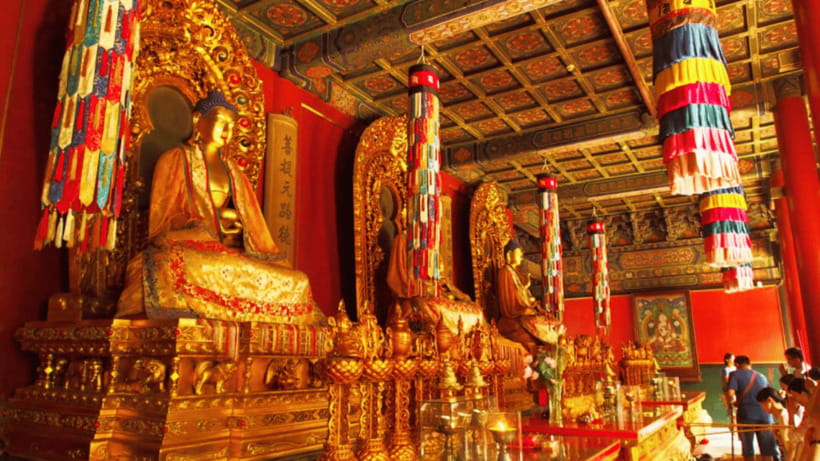
The grandest single sight is the Maitreya Buddha carved from one piece of sandalwood. At 18 meters tall, it is listed in the Guinness World Records, with the record dating from 1990.
This statue gives the visit its big visual finish. The scale is hard to grasp from a description alone. Once you are inside the hall, look upward and take in how the statue fills the vertical space. It is not just a large object placed in a room. The height, material, and religious meaning work together.
Photography conditions may vary inside the halls, and the space can be crowded. Give yourself time to look rather than treating the statue as a quick photo stop. The most rewarding part is often the contrast between the quiet interior, the carved sandalwood, and the groups moving through the hall in prayer.
The Buddha is also a good reminder that Yonghe Temple is not only an architectural attraction. The complex contains objects meant for devotion, not just display. Please act respectfully in the halls and avoid treating worshippers as part of the scenery.
Incense, prayer, and the temple’s living character
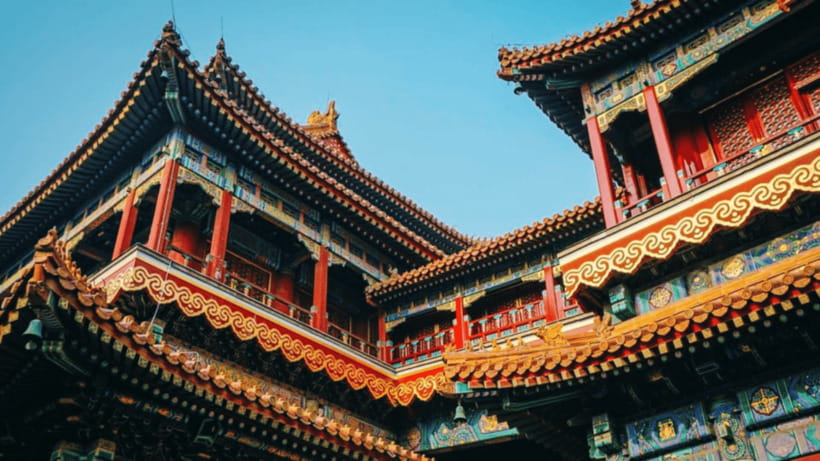
The most memorable aspect for many people is the presence of active worship. You may see visitors carrying incense, bowing, praying, or standing quietly near the burners.
That activity changes the way you experience the site. The smoke, movement, and repeated gestures make the courtyards feel connected to present-day Beijing. You are not walking through a vacant museum. You are entering a functioning religious place.
The atmosphere is often peaceful, but do not confuse peaceful with silent or empty. On January 1, the temple was reported to be especially crowded because many people came to pray. Major holidays and popular prayer periods can bring similar pressure on the courtyards.
I would visit at a less crowded time if your schedule allows, but the ticket information does not promise a specific quiet period. Go with patience, keep your voice low near the halls, and allow people using the temple for worship to move first.
How the ticket service works in practice
The main benefit of this product is convenience. PANDA144 arranges the real-name admission and sends the completed ticket details, often by email or WhatsApp. Several bookings were praised for quick communication, clear instructions, and help with the entry process.
That convenience matters if you are visiting Beijing for the first time or do not want to handle a Chinese attraction’s reservation system yourself. The reservation fee is included, so the $10 price covers more than the basic admission charge.
The process also has a firm requirement: send your passport name and number in time. If the provider does not receive those details, the booking can be canceled and a cancellation fee may apply. Your passport must be genuine, and the information must match at the entrance.
Do not head to the gate with only the original GetYourGuide QR code. The instructions specifically say that it is not a valid admission ticket. Wait for the actual confirmation, then show the ticket at the correct entrance channel.
The experience does not include a guide, transportation, or an audio guide. You are paying for organized entry and access, not a narrated tour. That makes it a good match for independent visitors who enjoy setting their own pace. If you want detailed explanations of Buddhist symbolism or temple history, you will need to arrange that separately.
Timing, closing rules, and practical limits
The activity is described as a one-day admission, with starting availability dependent on the date selected. Final entry is one hour before closing, and everyone must leave 30 minutes before closing.
Those rules matter because a late arrival can turn a relaxed visit into a rushed one. I would not schedule Yonghe Temple as the final five-minute stop before another booking. Give yourself time for security, the entrance route, and the halls at a respectful pace.
The site is wheelchair accessible, which makes the organized entry useful for visitors who need a more predictable admission process. Security is still required, and the product does not include a special security lane.
Bring your passport. Avoid sharp objects and other prohibited items so you do not lose time at the entrance. Pets are not allowed.
Free cancellation is available up to 24 hours before the visit for a full refund. That gives you some flexibility, but the separate passport-submission requirement remains important. A flexible cancellation policy does not remove the need to complete the real-name booking correctly.
Is $10 good value?
For most visitors, yes. The price is modest for one of Beijing’s better-known religious and historic sites, and it includes admission to the major buildings and exhibitions plus the reservation fee.
The value is strongest when you want a self-guided visit. You can see the archways, halls, learning rooms, exhibitions, religious objects, and sandalwood Buddha without paying for a full private tour. The compact layout also means you can fit the temple into a day of sightseeing without committing to a long excursion.
The value is less clear if you expect personal interpretation. No guided tour or audio guide is included, and the ticket service itself does not provide a detailed live explanation of every hall.
I would compare the fee with the time and effort required to arrange admission on your own. For an independent visitor comfortable with local booking procedures, buying directly may be worth investigating. For a first visit to Beijing, the paid reservation service can be worthwhile simply because it handles the passport-based entry process and sends clear instructions.
Who will enjoy Yonghe Temple most?
I recommend this visit if you enjoy religious buildings, historic architecture, Buddhist art, or places that still serve their original purpose. It also suits anyone looking for a calmer change of pace after Beijing’s enormous palaces and public squares.
Families can manage the compact complex more easily than a huge palace site, though children should be reminded that this is a working temple and not only a sightseeing stop. The large Buddha may be the easiest feature for younger visitors to appreciate.
Photographers will find colorful details, roof decorations, incense, and strong vertical views inside the halls. However, the crowds and religious use of the site mean you should take photographs carefully and respectfully.
This is not the best choice if you want a guided lesson in Tibetan Buddhism or a tour with transport included. It is also not ideal for anyone who dislikes entering crowded religious places during prayer periods.
Should you book the Lama Temple ticket?
I would book it if you want an easy, self-guided visit and are willing to provide your passport details promptly. The 18-meter sandalwood Buddha, the mix of imperial and Buddhist design, and the sight of people praying make Yonghe Temple more meaningful than a simple architecture stop.
Before paying, decide what kind of experience you want. If you need a guide, this ticket will not provide one. If you want flexible entry, access to the full complex, and help with real-name booking for about $10, it is a practical choice.
Just remember three things: the GetYourGuide QR code is not the final ticket, security checks still apply, and crowded prayer days can change the mood. With those points clear, Yonghe Temple offers one of Beijing’s most direct encounters with living religious culture.
FAQ
What is included with the Lama Temple ticket?
The ticket includes fast-track ticket entry, access to the major temple buildings and cultural exhibitions, and the reservation fee.
Is a guided tour included?
No. The experience does not include a guided tour or an audio guide. You explore the temple independently.
Is the GetYourGuide QR code the valid admission ticket?
No. The QR code is not valid for entry by itself. You must wait for the confirmation email or communicate through WhatsApp to receive the ticket details.
Do I need to provide my passport information?
Yes. Real-name ticket booking is required. You must provide your full name as it appears on your passport and your passport number.
Can I skip the security check?
No. The fast-track arrangement does not include skipping security checks. You must show the ticket at the designated entrance channel and pass through security.
When is the latest I can enter?
Final entry is one hour before the temple closes. Visitors must leave 30 minutes before closing.
Can I cancel the booking for a refund?
Yes. You can cancel up to 24 hours before the visit for a full refund. If the required passport details are not submitted on time, the booking may be canceled and a cancellation fee may apply.
Newest reviews from Beijing
- Beijing: Explore the Forbidden City in Hanfu★ 5.0 · 4 reviews
- Beijing Tai Chi and Tea Ceremony Experience★ 5.0 · 4 reviews
- Jinshangling Great Wall Of Beijing Tickets And Other Option★ 4.0 · 4 reviews
- Tour the Great Wall with a Native from Downtown Beijing★ 4.8 · 4 reviews
- Private Full-Day Great Wall of China Hiking Tour from Jiankou to Mutianyu★ 4.5 · 4 reviews
- Beijing: Badaling Great Wall Private Tour w Language Option★ 4.3 · 4 reviews
- Beijing:Summer Palace & Tea or Calligraphy Experience Tour★ 4.6 · 4 reviews
- 7 Days Private Tour of Beijing, Xian, Shanghai by Bullet Train★ 5.0 · 4 reviews
Lama Temple Tours, compared.
Temple Heaven, Lama Temple, Summer Palace & Peking Duck Bus Tour
Read our review →
Temple Heaven, Summer Palace, Lama Temple, Hutong Bus Tour
Read our review →
Temple of Heaven, Summer Palace, Lama Temple, Hutong Tours
Read our review →
Beijing Historical Tour II including Summer Palace, Lama Temple & Panda Garden
Read our review →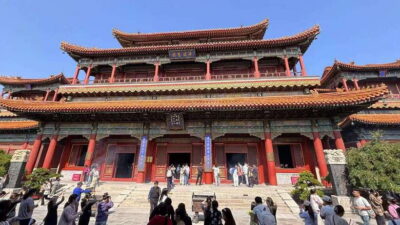
Beijing Lama temple ticket; #1 efficacious; limited Discount
Read our review →
Panda House, Temple of Heaven, Lama Temple, Summer Palace & Lunch
Read our review →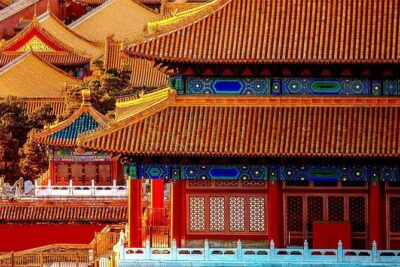
Private Day Tour Forbidden City Lama Temple and Temple of Heaven
Read our review →Browse the lists this tour appears in