
Reviewed · LAMA TEMPLE TOURS
Beijing: Yonghe Lama Temple Entry Ticket
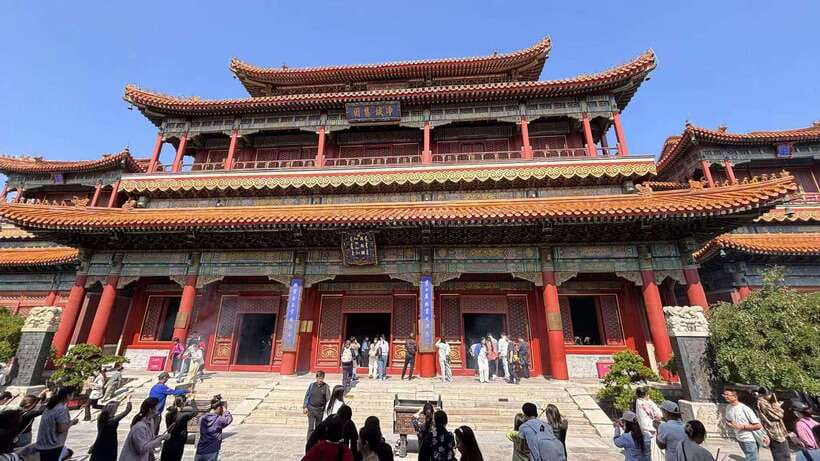
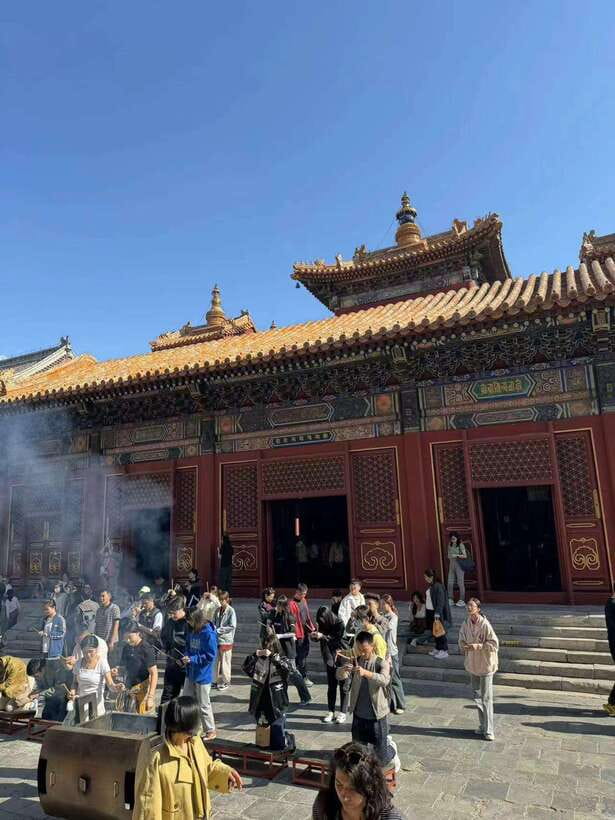
Beijing’s grandest Buddhist complex rewards a quiet hour. Yonghe Lama Temple, also called Yonghe Lamasery, offers a simple QR entry ticket to one of China’s best-preserved Tibetan Buddhist temples. You can spend about two hours moving through its gates, courtyards, halls, and incense-filled grounds.
I like the easy subway access and the fact that the ticket includes booking service, so you are not left sorting out admission at the last minute. I also like the temple’s unusual imperial background, from its early life as a palace to its later role as a major center of Buddhism outside Tibet.
The main drawback is the ticket instruction: the general GetYourGuide QR code is not valid. You must use the correct QR code sent by email or WhatsApp, along with your passport. That extra step is small, but it matters at the gate.
In This Review
- Key points to know before you go
- Why Yonghe Lama Temple matters in Beijing
- Entering with a QR code and passport
- The two-hour visit through the temple grounds
- What makes the imperial history unusual
- Getting there from Beijing’s subway system
- Is the $9 ticket good value?
- Wheelchair access and practical comfort
- Who will enjoy this entry ticket most?
- My advice for planning the visit
- Should you book Yonghe Lama Temple?
- FAQ
- How much does the Yonghe Lama Temple ticket cost?
- How long does the visit last?
- What do I need to enter Yonghe Lama Temple?
- Where do I find the correct QR code?
- How do I reach Yonghe Lama Temple by subway?
- Is the experience wheelchair accessible?
- Can I cancel the ticket for a refund?
Key points to know before you go
- Use the correct QR code: The general booking QR code will not work. Check your email or WhatsApp for the entry code provided for the temple.
- Bring your passport: Entry requires the QR code and passport together.
- Allow about two hours: That is enough time for a focused visit through the temple complex.
- Take the subway: Yonghegong Station on Line 2 or Line 5 is only about a two-minute walk from the entrance.
- Visit a former imperial residence: The site began as part of the city wall and later became a palace before changing into a Buddhist temple.
- Pay $9 for convenience: The price covers the temple ticket and booking service, making it useful if you value a prearranged entry more than the lowest possible cost.
Why Yonghe Lama Temple matters in Beijing
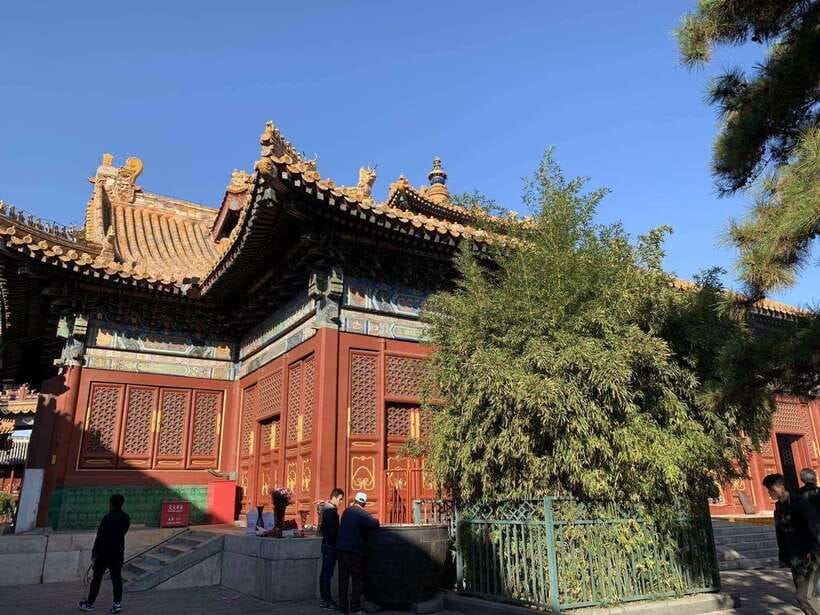
Yonghe Lama Temple is not just another historic stop on a Beijing sightseeing list. It is the city’s principal and largest Buddhist temple, and it has a rare connection to both the Qing imperial court and Tibetan Buddhism.
The complex was built in 1694 as part of the city wall for Emperor Yongzheng, before he took the throne in 1722. That detail gives the site a different feel from a temple built solely for religious use. Its early purpose was tied to the imperial household, and the buildings later changed function in a major way.
In 1744, Emperor Qianlong sent 300 Tibetan monks and 200 Chinese students to live and study there. From that point, the former palace served as a temple and monastery. It became one of the most important Buddhist centers outside Tibet.
I find that history especially useful when walking through the grounds. You are not looking at a single-period monument. The site reflects imperial power, Chinese religious life, and Tibetan Buddhist teaching in one compact visit.
More Lama Temple visits:
- Temple Heaven, Lama Temple, Summer Palace & Peking Duck Bus Tour
★ 5.0 · 377 reviews - Temple Heaven, Summer Palace, Lama Temple, Hutong Bus Tour
★ 4.7 · 319 reviews - Temple of Heaven, Summer Palace, Lama Temple, Hutong Tours
★ 5.0 · 311 reviews
Entering with a QR code and passport
The ticket is designed to keep entry simple. You use the correct QR code and show your passport, then enter the park without buying a separate ticket at the site.
The important word here is correct. The GetYourGuide QR code itself is not valid for entry. You need to check the email or WhatsApp message connected with your booking and find the proper QR code for Yonghe Lama Temple.
I would check this before leaving your hotel, not while standing at the entrance. Open the message in advance, keep your passport handy, and make sure your phone has enough battery. The process is meant to save time, but only if you have the right code ready.
The ticket also includes the booking service charge. At $9 per person, you are paying for admission plus the convenience of arranging it ahead of time. That is fair value if you prefer a ready-to-use ticket and want to avoid handling the purchase on arrival.
If you are focused only on finding the absolute cheapest admission, this may not be the best choice. The main benefit is simplicity, not a guided tour or a long list of extras.
The two-hour visit through the temple grounds
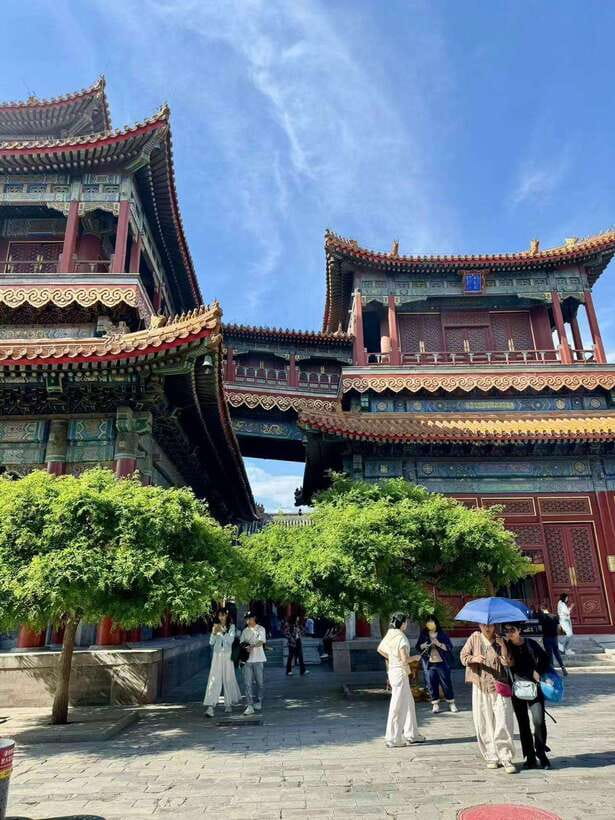
The advertised duration is two hours, which gives you enough time to see the complex without rushing. This is a self-guided entry ticket, so your pace is your own. You can move steadily through the grounds, pause at the important halls, and give more time to details that catch your eye.
The visit begins with the setting itself. Yonghe Lama Temple is the largest and best-preserved lamasery in present-day China, so the scale matters. It is more than a small neighborhood shrine. The complex gives you room to understand how an active religious institution could function within an imperial capital.
As you move farther into the grounds, the change from palace to monastery becomes easier to picture. The site’s story is not presented only through dates. Its buildings and courtyards help show how the place was adapted for Buddhist study and worship after 1744.
You should plan to walk at a comfortable pace rather than treat the temple as a quick photo stop. Two hours is long enough for a meaningful visit, but it is not an unlimited amount of time for slow study of every feature.
Because no guide is included, the quality of your visit depends partly on how much context you bring with you. Read the basic history before arriving, then use the visit to connect the dates and names with the actual complex. Emperor Yongzheng and Emperor Qianlong are not side notes here. Their decisions shaped the temple you see today.
What makes the imperial history unusual
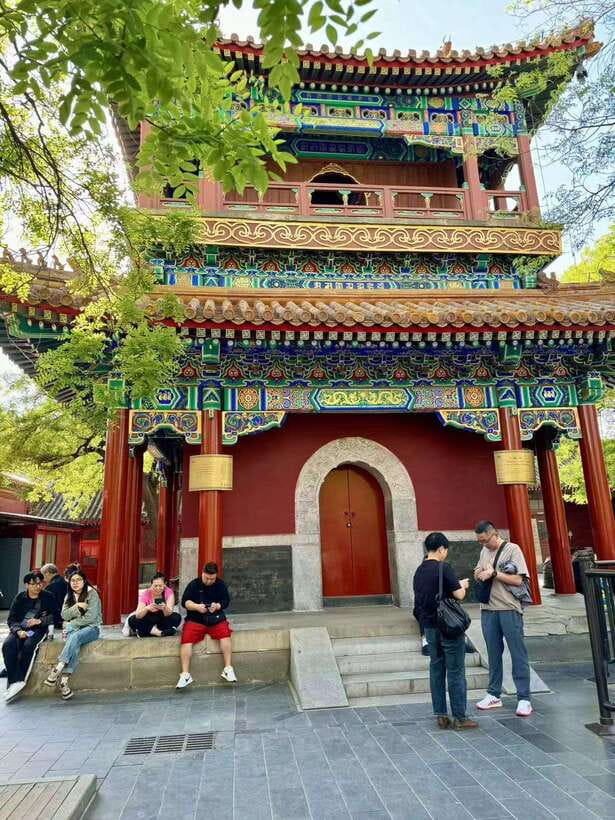
Many Beijing sites connect to the emperors, but Yonghe Lama Temple has a particularly clear change of purpose. It began in 1694 as part of the city wall and was connected with Emperor Yongzheng before his accession. Later, his son Qianlong helped turn the residence into a major center for Buddhist life.
The arrival of 300 Tibetan monks and 200 Chinese students in 1744 is one of the most striking facts about the site. It shows that the temple was not simply decorated as a religious building. It was also intended as a place for teaching, residence, and study.
That background adds weight to the visit. You can think of the complex as a meeting point between the Qing court, Chinese students, and Tibetan monks. It also explains why the temple is described as one of the greatest Buddhist centers outside Tibet.
I appreciate that the history gives the entry ticket more value than a quick architectural look. Even without a guide, you have a clear story to follow. The temple’s importance comes from how it was used, not only from how old it is.
A few more tours worth putting side by side
- From Beijing: Mutianyu Great Wall Tours with Options
★ 4.9 · 9,216 reviews - Beijing: Forbidden City Tour(Group/Private)-Tickets Included
★ 4.8 · 7,974 reviews - Beijing: T-Square & Forbidden City Group or Private Tour
★ 4.8 · 4,446 reviews - All-Inclusive Tour: Tiananmen Square, Forbidden City, Great Wall
★ 5.0 · 2,873 reviews
Getting there from Beijing’s subway system
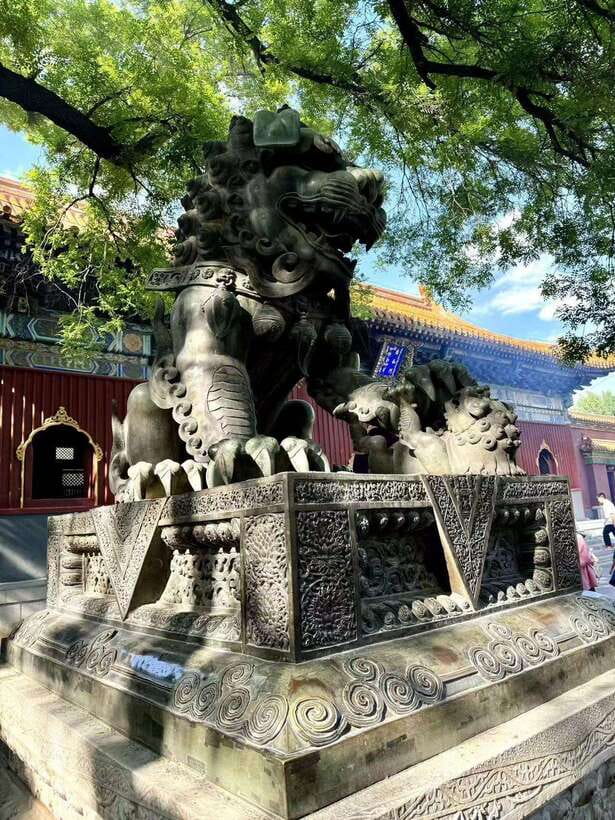
The easiest route is by subway. Take Line 2 or Line 5 to Yonghegong, also called Yonghe Temple, Station. Use Exit F, walk south for a few meters, turn east, and you should reach the temple after about two minutes.
That short walk makes this a practical stop for a day of sightseeing. You do not need a private car or a long transfer from the subway. The location is especially helpful if you are building your own Beijing itinerary and want to fit the temple between other city sights.
Several buses also serve the area:
- Bus 13, 116, 117, or 684 stops at Yonghegong Station.
- Bus 13, 18, 44, 75, 116, 684, Te 2, or Te 12 stops at Yonghegong Qiao Dong Station.
- Bus 117 or 125 stops at Yonghegong Qiao Bei Station.
For most people, I would choose the subway. The instructions are shorter, the station is close, and the walk is brief. Bus routes give you more options, but they require closer attention to the stop names.
Is the $9 ticket good value?
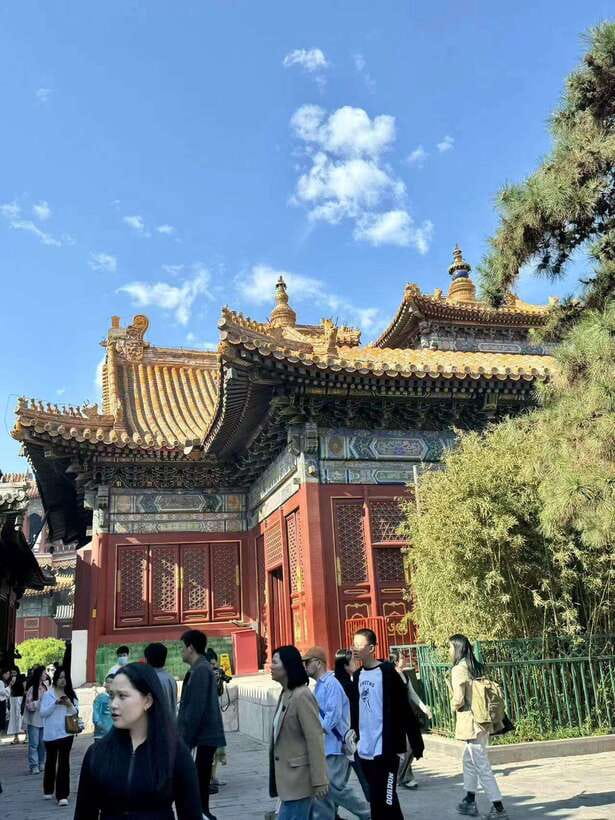
At $9 per person, the ticket sits in the modest price range for a major Beijing cultural site. Its value depends on what you want from the visit.
You receive the Yonghe Lamasery admission ticket and the booking service charge. You do not receive a guide, transportation, meals, or a longer tour. If you want interpretation from a local expert, you would need a different arrangement.
For a self-guided visit, the price is reasonable because the temple has real historical importance and you can spend about two hours there. The QR system also saves you from arranging entry at the venue, which is useful if you have a tight sightseeing plan.
The value is strongest for first-time visitors who want a clean, planned entry. If you are comfortable managing tickets yourself and are seeking the lowest price, compare the total cost before booking.
I would also treat the cancellation terms as part of the value. You can cancel up to 24 hours in advance for a full refund, and you can reserve now and pay later. Those options help if your Beijing schedule is still changing.
Wheelchair access and practical comfort
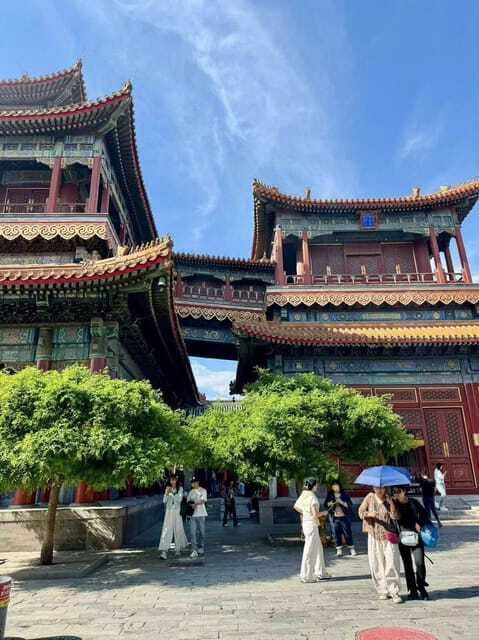
The experience is listed as wheelchair accessible, which makes it a useful option for visitors who need step-free access or want to confirm accessibility in advance. Still, an accessible listing does not tell you every detail about surfaces, routes, or individual halls.
If wheelchair access is essential for your visit, confirm the practical route before arrival. The ticket information supports accessibility, but it does not provide a room-by-room description of the temple.
For everyone, comfortable shoes are sensible. The visit lasts about two hours and takes place across a large religious complex. You will get more from the temple if you can move at an easy pace rather than hurry from gate to gate.
Keep your passport and phone together. The passport is part of the entry process, and the phone holds the QR code. This is one place where a little preparation prevents a needless delay.
Who will enjoy this entry ticket most?
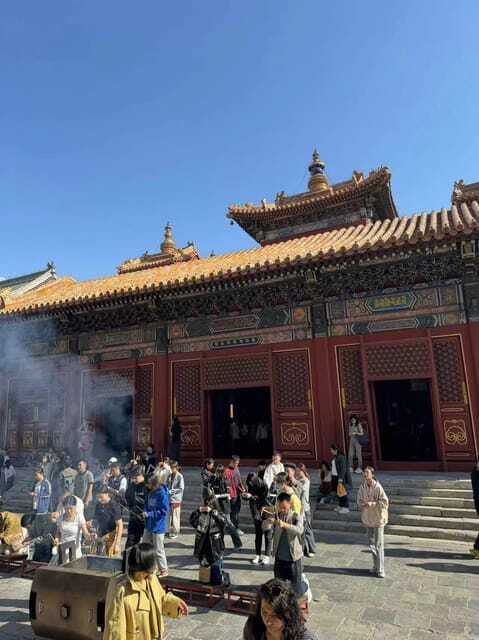
I would recommend this experience to you if you want to explore Beijing independently but prefer to have admission arranged before you arrive. It suits visitors who enjoy historical buildings, religious sites, and imperial stories more than staged entertainment.
It is also a good fit for:
- First-time Beijing visitors who want a major Buddhist site with simple subway access.
- History-minded visitors interested in Emperor Yongzheng, Emperor Qianlong, and Qing-era religious policy.
- Independent sightseers who do not need a guide in every hall.
- Visitors with a two-hour gap in a larger Beijing sightseeing day.
- People who value free cancellation and reserve-now, pay-later terms.
You may want something else if you need a guided explanation throughout the complex. The ticket gets you inside, but it does not promise a tour, commentary, or a named guide.
The same is true if your main goal is a fast visit with no preparation. The incorrect QR code warning means you should read your booking message carefully before heading out.
My advice for planning the visit
Start by checking the entry message. Find the valid QR code, save it where you can open it quickly, and carry the passport used for the booking.
Next, plan around the subway. Yonghegong Station on Line 2 or Line 5 is the clearest choice, and Exit F is the one specified for the short walk to the temple. If you prefer buses, choose your route from the listed stops and note the exact Chinese place name, since several stops have similar names.
Give yourself the full two hours if the history interests you. You can visit faster, but rushing would undercut the temple’s main strength: its combination of imperial residence, Buddhist monastery, and Tibetan Chinese religious connection.
I would also read the short historical background before entering. Knowing that Qianlong brought 300 Tibetan monks and 200 Chinese students helps you see the site as a center of study and religious exchange, not simply a collection of old halls.
Should you book Yonghe Lama Temple?
Book it if you want a well-located, self-guided visit to one of Beijing’s most important Buddhist sites, and you value having the ticket arranged in advance. The $9 price is reasonable for admission and booking support, especially with free cancellation up to 24 hours before the visit.
Skip it if you need a guide, hotel pickup, or a detailed explanation at every stop. Most importantly, do not book without planning to check the correct QR code in your email or WhatsApp.
For independent sightseeing, this is a practical and worthwhile temple visit. Its best feature is not a flashy add-on. It is the chance to walk through a major former imperial residence that became a leading Buddhist center, with entry handled in a relatively simple way.
FAQ
How much does the Yonghe Lama Temple ticket cost?
The ticket costs $9 per person. This includes the Yonghe Lamasery admission ticket and the booking service charge.
How long does the visit last?
The stated duration is two hours. You can use that time to explore the temple complex at your own pace.
What do I need to enter Yonghe Lama Temple?
You need the valid QR code and your passport. The general GetYourGuide QR code is not valid for entry.
Where do I find the correct QR code?
Check the email or WhatsApp message connected with your booking. The correct entry QR code is provided there.
How do I reach Yonghe Lama Temple by subway?
Take Subway Line 2 or Line 5 to Yonghegong, also called Yonghe Temple, Station. Leave through Exit F, walk south for a few meters, turn east, and continue for about two minutes.
Is the experience wheelchair accessible?
The activity is listed as wheelchair accessible. The provided information does not give further details about routes inside each hall.
Can I cancel the ticket for a refund?
Yes. You can cancel up to 24 hours in advance for a full refund. You can also reserve now and pay later.
Newest reviews from Beijing
- Beijing: Explore the Forbidden City in Hanfu★ 5.0 · 4 reviews
- Beijing Tai Chi and Tea Ceremony Experience★ 5.0 · 4 reviews
- Jinshangling Great Wall Of Beijing Tickets And Other Option★ 4.0 · 4 reviews
- Private Full-Day Great Wall of China Hiking Tour from Jiankou to Mutianyu★ 4.5 · 4 reviews
- Tour the Great Wall with a Native from Downtown Beijing★ 4.8 · 4 reviews
- Beijing: Badaling Great Wall Private Tour w Language Option★ 4.3 · 4 reviews
- Beijing:Summer Palace & Tea or Calligraphy Experience Tour★ 4.6 · 4 reviews
- 7 Days Private Tour of Beijing, Xian, Shanghai by Bullet Train★ 5.0 · 4 reviews
Lama Temple Tours, compared.
Temple Heaven, Lama Temple, Summer Palace & Peking Duck Bus Tour
Read our review →
Temple Heaven, Summer Palace, Lama Temple, Hutong Bus Tour
Read our review →
Temple of Heaven, Summer Palace, Lama Temple, Hutong Tours
Read our review →
Beijing Historical Tour II including Summer Palace, Lama Temple & Panda Garden
Read our review →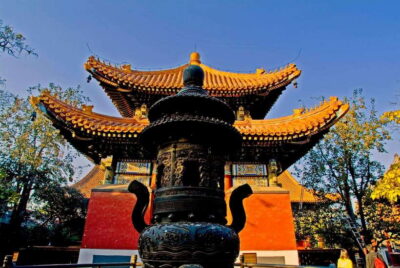
Beijing Lama temple ticket; #1 efficacious; limited Discount
Read our review →
Panda House, Temple of Heaven, Lama Temple, Summer Palace & Lunch
Read our review →
Private Day Tour Forbidden City Lama Temple and Temple of Heaven
Read our review →Browse the lists this tour appears in