
Reviewed · CITY TOURS
Pingyao Ancient City Full-Day Walking Tour
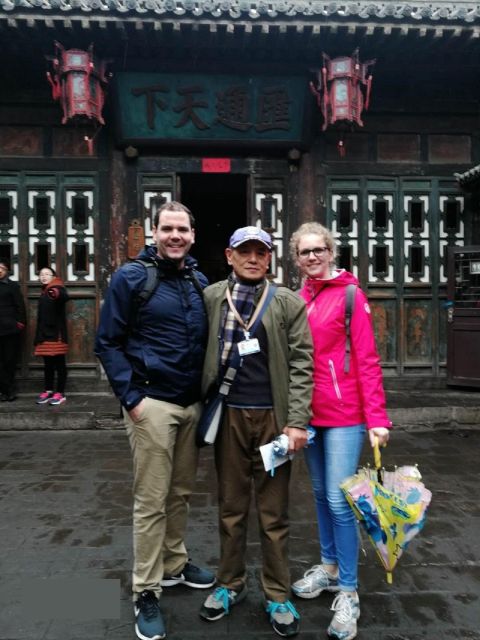
Pingyao rewards slow walking. This private tour makes the old town easier to understand, with excellent city-wall views and a clear route through the places that shaped China’s early commerce and government. I especially like the chance to see Pingyao with an English-speaking guide, rather than guessing at the meaning of its courtyards and carved details, and the flexibility of a group of up to six.
I also like that guides such as Mike, Lisa, Grace, Leo, and Joanna have helped visitors with more than dates and names, including photo stops, restaurant suggestions, show tickets, and explanations of ordinary life. The main consideration is cost: at $229 per group, plus admission tickets and meals, this is much better value for a small group than for one or two people.
In This Review
- Key points to know before booking
- Why Pingyao works so well on foot
- Starting in Pingyao, with pickup kept simple
- Walking the brick and stone city wall
- Rishengchang and the story of Chinese banking
- The Ancient Security Guard Company
- Inside the Yamen, Pingyao’s old government compound
- Ming and Qing Street, where the old town feels most alive
- The Confucian Temple and the city’s educated class
- A private pace, with room for food and real-life questions
- Is $229 good value for your group?
- Who should book this Pingyao walking tour?
- FAQ
- How long does the Pingyao walking tour last?
- Where does the guide meet the group?
- Is transportation included?
- How much is admission to the attractions?
- What languages are available?
- Is this a private tour?
Key points to know before booking
- Six hours of sightseeing inside a UNESCO-listed old town: The advertised experience lasts eight hours, with about six hours set aside for sightseeing.
- The wall gives you the best quick overview: Walking sections of Pingyao’s brick and stone fortifications lets you look across low tiled roofs and into old courtyards.
- A private guide changes the visit: Your English-speaking guide can adjust the pace, answer questions, help with photos, and shape the route around your interests.
- China’s early banking story comes alive at Rishengchang: This former exchange bank explains how Pingyao became an important center of finance.
- The Yamen is more than an old office: Its rooms once included courts, meeting areas, homes, gardens, and a prison.
- Budget for the entrance ticket: Admission costs 125 RMB per adult, with half price for children and no charge for the guide.
Why Pingyao works so well on foot
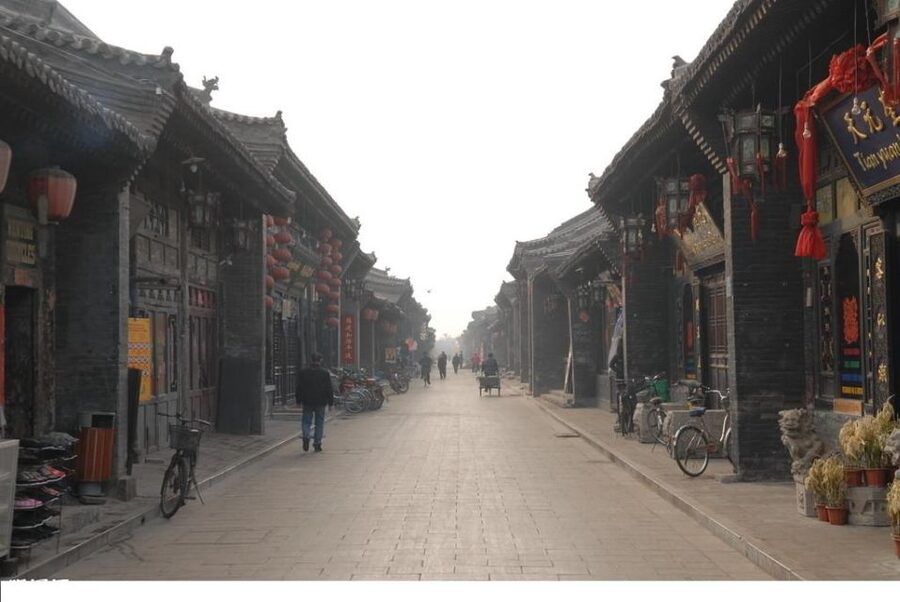
Pingyao is one of China’s best-preserved ancient cities, and its appeal comes from the way the old town still reads as a complete place rather than a collection of isolated monuments. Narrow lanes connect courtyard homes, shops, temples, banks, government buildings, and defensive walls.
That makes walking the right way to see it. You are not simply moving from one ticket gate to another. You are watching the city change from a commercial street to a quiet residential lane, then opening into a temple courtyard or government compound.
The old town is also fairly easy to grasp from the ground. Most historic buildings are low-rise, so the tiled roofs and enclosed courtyards remain visible as you move through the streets. A guide helps you notice the layout, social divisions, architectural details, and symbols that would otherwise blur into a pleasant but puzzling procession of old buildings.
The tour is private, so the day can be shaped around your group. That matters in Pingyao, where you may want extra time for photos, a slower look at a courtyard, or a short rest after walking the wall. Mike was especially willing to pause for photographs and breaks, while Claire found Joanna patient during extended photo sessions and questions.
More walking tours in China:
- Beijing Hutong Walking Food and Beer Tour at Hidden Restaurants
★ 5.0 · 1,132 reviews - Private Beijing Walking Tour of the Forbidden City with 7 Options
★ 5.0 · 675 reviews - Dark Side of Hong Kong – Kowloon Caged Homes Walking Tour
★ 5.0 · 418 reviews
Starting in Pingyao, with pickup kept simple
The guide meets you at your Pingyao hotel if you are staying inside the old city. If your accommodation is outside the ancient city, you meet inside the old town instead. The guide provides the pickup, but transportation is not included, so this is best understood as a walking experience rather than a vehicle-based city tour.
The full duration is listed as eight hours, with around six hours of sightseeing. That leaves time for meeting up, moving into the sightseeing area, and returning to Pingyao, though the exact shape of the day depends on your meeting point and pace.
Communication before the tour is useful. Dianne was contacted in advance to arrange the meeting, and her guide arrived on time at the hotel. That kind of coordination is especially helpful in an old city where streets can be confusing and vehicle access may not be direct.
Your guide may speak English and Chinese. The strongest feedback centers on clear English explanations, local context, and a willingness to help beyond the formal route. Lisa, for example, assisted with other tourist matters, including show tickets. That extra help can save time when you are trying to organize the rest of your stay.
Walking the brick and stone city wall
The city wall is the best opening chapter because it gives you a quick sense of Pingyao’s shape. Built from bricks and stones, it wraps around the historic center and rises above the lanes and courtyard homes.
Walking on sections of the wall gives you views across the old town’s many tiled roofs. You can also look down into domestic courtyards, which helps explain how tightly homes, shops, and public buildings fit together. From street level, Pingyao can feel like a maze. From the wall, the plan becomes much clearer.
The wall also shows why Pingyao was more than a pretty old town. Its defensive form reflects the need to protect a place with commercial power, official authority, and valuable goods moving through it. A guide can explain how the fortifications relate to the city’s streets and buildings, rather than leaving you with only a photo opportunity.
The drawback is physical. This is a walking day, and the wall adds steps and uneven surfaces to the route. You should tell the guide when you need to rest. The private format makes that easier than a large scheduled group.
Rishengchang and the story of Chinese banking
Rishengchang Exchange Bank is one of the most important stops because it connects Pingyao’s architecture to its role in business. It is described as China’s first exchange bank, a place where money could be transferred across long distances before modern banking systems existed.
The courtyards and rooms are not just old interiors to admire. They help you picture how a financial enterprise operated in the Ming and Qing period, when merchants needed safer ways to move funds between distant cities. This is where a good guide earns the fee by explaining the purpose of each space and the people who used it.
Grace received praise for explaining architecture, symbolism, history, and important people connected with Pingyao. That kind of detail is valuable at Rishengchang, where a quick walk through the rooms could otherwise leave you with little more than the fact that it was an old bank.
You should expect a historical visit rather than a modern museum presentation. The attraction is the preserved setting and the story attached to it. If commercial history does not interest you, this may be less engaging than the wall or the street scenes. For most visitors, though, it is the stop that explains why Pingyao mattered far beyond its city walls.
More full-day tours in China:
- Beijing Full Day Tours: Tiananmen Sq, Forbidden City, Great Wall
★ 5.0 · 1,634 reviews - Private Shanghai Full Day City Tour with Old and New Highlights
★ 5.0 · 995 reviews - Beijing Classic Full-Day Tour including the Forbidden City, Tiananmen Square, Summer Palace and Temple of Heaven
★ 4.0 · 610 reviews - Beijing Essential Full-Day Tour including Great Wall at Badaling, Forbidden City and Tiananmen Square
★ 4.5 · 609 reviews
The Ancient Security Guard Company
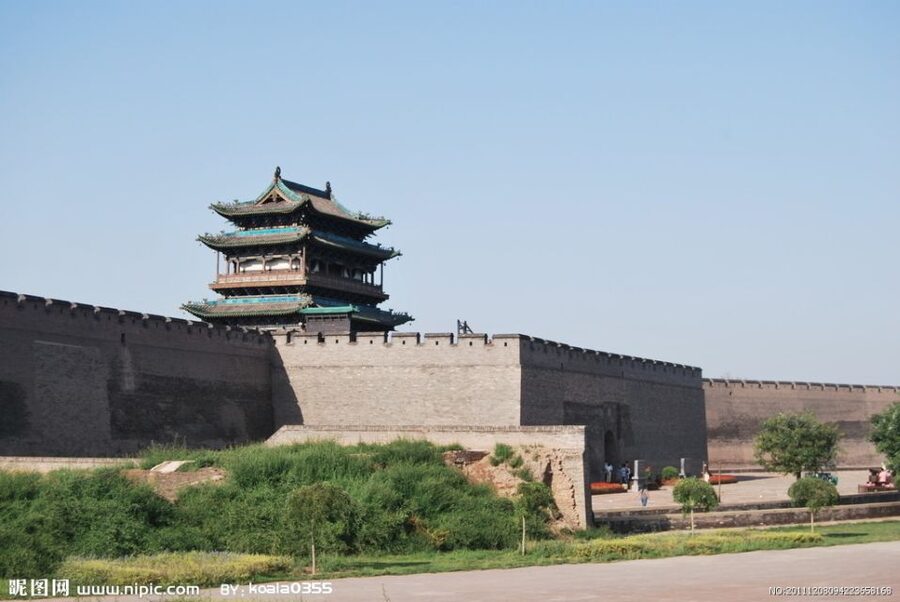
The Ancient Security Guard Company adds a different side to Pingyao’s commercial past. It was the only private organization of armed escorts in Pingyao’s history and one of the two most famous during the Ming and Qing period.
This stop helps connect banking and trade with the practical problem of moving valuable goods. Financial success required protection, and private security companies filled a role that modern travelers may associate with banks, police, couriers, and insurance all at once.
The site is particularly useful after Rishengchang. First you see how money was handled, then you see how goods and valuables could be protected on the road. Ask your guide to connect the two places if that link interests you.
The provided highlights focus on five major attractions, so the exact amount of time spent at the security company may depend on your preferences and the day’s pacing. Since this is a private group, you can ask to include it or give it more attention if the subject catches your interest.
Inside the Yamen, Pingyao’s old government compound
A Yamen was a local government office. Pingyao’s Yamen dates from 1346, during the Yuan Dynasty, and once served as both workplace and residence for the magistrate who acted as mayor, judge, and senior official.
This is one of the most useful stops for understanding how authority functioned in an old Chinese city. The compound was entered through a ceremonial gate and contained more than 300 rooms. These included offices, a court, meeting rooms, living quarters, a garden, and a prison.
That range of spaces gives the Yamen a human scale. Government was not held in one modern office block. Administration, justice, family life, meetings, and punishment were all part of one enclosed complex.
I would give this stop time rather than rushing through it for photographs. The layout is the main story. Your guide can show how the compound separated public duties from residential areas and explain the role of the magistrate. It is also a useful contrast with the private courtyard homes and commercial buildings elsewhere in the city.
Ming and Qing Street, where the old town feels most alive
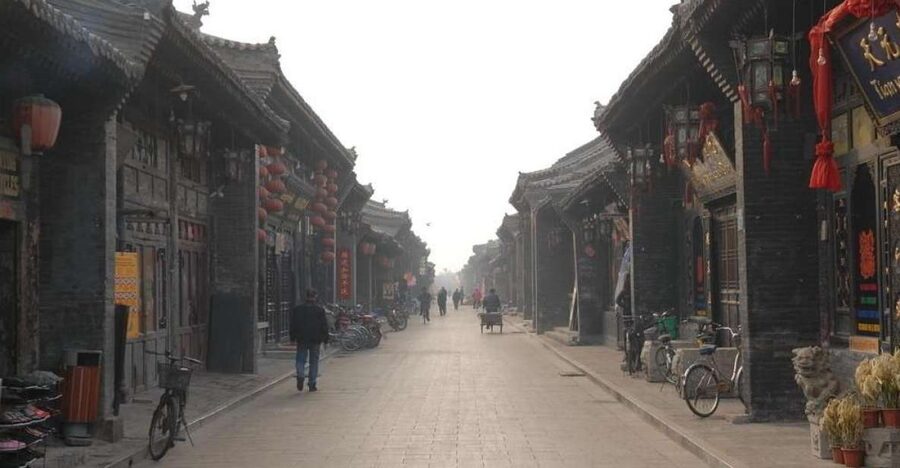
Ming and Qing Street is the most immediately atmospheric section of the walk. Traditional shops and homes remain in place, built with brick and stone in the architectural style of the Ming and Qing periods.
This is where you get the strongest sense of Pingyao as a lived-in town. The narrow street, old facades, small businesses, and traditional building forms offer a direct contrast with present-day Chinese city architecture.
You will also have plenty of chances for photographs here. Claire appreciated having time for photo sessions, and several guides were happy to stop when the group wanted a picture. That is a small but important benefit of a private tour. You are not forced to choose between keeping up and getting the image you want.
The trade-off is that the street can feel more commercial than the quieter lanes. The tour is not designed to hide the modern uses of the old buildings. Instead, it lets you see how the historic setting functions today, with shops and daily activity folded into an old architectural shell.
The Confucian Temple and the city’s educated class
Pingyao Confucian Temple offers a quieter change of mood. Its layout reflects the importance of education and Confucian values in traditional Chinese society.
One memorable detail is the route once used by the No. 1 scholars of the annual imperial examinations, known as Zhuangyuan. Walking along that path gives the visit a personal angle. You are not only looking at a temple compound. You are following the footsteps of students who succeeded in a demanding examination system and gained status through learning.
The temple is especially worthwhile if you want to understand the ideals behind the old society, not just its buildings. The guide can explain what the spaces meant to scholars and officials, and how education connected to government service.
As with the Yamen, the value depends on explanation. Without context, the temple may look like another traditional compound. With a clear guide, its layout becomes a lesson in ambition, learning, rank, and public duty.
A private pace, with room for food and real-life questions
The best part of this tour is not only the list of sights. It is the chance to ask questions as they arise. Lisa explained everyday life as well as famous places, and Mike shared stories about older ways of living in Pingyao. Those details can turn an architectural walk into a clearer picture of how people worked, lived, studied, governed, and traveled.
Lunch is not included, but your guide can help you find a restaurant. Mike took one group to an excellent place for lunch, which is useful when you do not read the local menus or know which streets to trust for a meal.
Still, you should treat that as guide assistance rather than a promised restaurant inclusion. Meals cost extra, and the tour price does not cover them.
The route can also be personalized. If you have a special interest in temples, banking, government, architecture, photography, or local life, send that preference in advance. The provider says additional visiting preferences can be arranged, but the exact route remains subject to the day’s plan.
Is $229 good value for your group?
The price is $229 for a private group of up to six people. Admission is separate at 125 RMB per adult, half price for a child, with the guide admitted free. Meals, hotel accommodation, and transfer are also excluded.
For six people, the guide fee works out to about $38 per person before tickets and food. That is a reasonable arrangement for a full private day, especially if you value English explanations, flexible stops, and help with local arrangements.
For two people, the same price becomes much harder to justify. You are paying for privacy, a tailored pace, and direct access to the guide, not for shared transportation or included meals. Solo visitors should compare this cost with a self-guided visit or a shared group tour.
The strongest value comes from the guide’s contribution. Joanna covered the major places clearly, Grace added detail about symbolism and architecture, Leo offered a kind and attentive visit, and Mike adjusted the day for photographs and rest. If you simply want to walk the streets and take pictures, you may not need this level of service. If you want the city to make sense, the price is easier to defend.
Free cancellation is available up to 24 hours before the tour for a full refund, and you can reserve now and pay later. Starting times depend on availability, so confirm the time when booking.
Who should book this Pingyao walking tour?
I would recommend it most strongly to first-time visitors who have one full day in Pingyao and want the main sights explained in English. It also suits families and small groups, since the guide can slow down, stop for photos, and respond to different interests.
History fans will get the most from the combination of the wall, exchange bank, security company, Yamen, temple, and old street. The route covers defense, commerce, security, government, education, and daily life, giving you a broad picture of the city in one day.
You may prefer to explore alone if your budget is tight, you dislike planned sightseeing, or you want to spend hours browsing shops at your own pace. The tour is also not ideal if you expect transportation, meals, or entrance fees to be bundled into the price.
For everyone else, this is a well-shaped way to get your bearings fast and then understand what you are seeing. The six-hour sightseeing block is long enough for the principal sights without turning the day into a race, provided you communicate your preferred pace.
FAQ
How long does the Pingyao walking tour last?
The full experience lasts eight hours, with approximately six hours devoted to sightseeing in Pingyao Ancient City.
Where does the guide meet the group?
If your hotel is inside Pingyao Ancient City, the English-speaking guide meets you in the hotel lobby. If your hotel is outside the old city, you meet inside the old town.
Is transportation included?
No. The experience includes an English-speaking guide and pickup from a Pingyao hotel lobby, but transfer costs are not included.
How much is admission to the attractions?
Admission costs 125 RMB per adult. Children pay half price, and the tour guide enters free. The guide will help you buy the entrance tickets on the tour day.
What languages are available?
The live guide service is available in English and Chinese.
Is this a private tour?
Yes. It is a private group experience for up to six people. The guide can accommodate special visiting preferences if you provide them.
Newest reviews from China
- Beijing: Explore the Forbidden City in Hanfu★ 5.0 · 4 reviews
- Private 2 Day Tour of Dalian City★ 5.0 · 4 reviews
- scooter and hiking trip in the rainforest★ 5.0 · 4 reviews
- Xi’an Night Tour: South Gate Square and Big Wild Goose Pagoda Square★ 4.0 · 4 reviews
- Guangzhou VIP Car Tour– Tailored Sightseeing & Shopping Adventure★ 5.0 · 4 reviews
- Lantau Peak Sunrise Climb★ 5.0 · 4 reviews
- Beijing Tai Chi and Tea Ceremony Experience★ 5.0 · 4 reviews
- Chengdu: City Walking Tour with Food and Culture Stops★ 4.7 · 4 reviews
City Tours, compared.
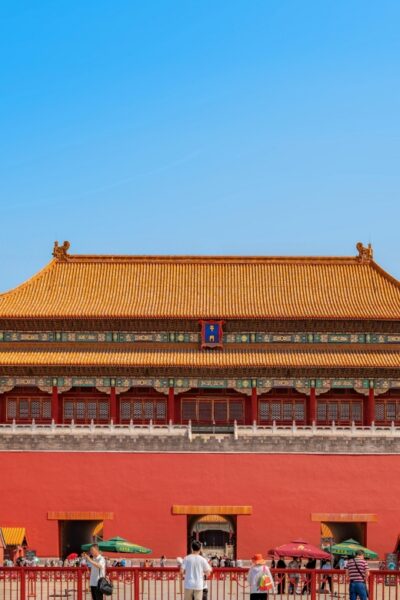
Forbidden City Tour(Group/Private)-Tickets Included
Read our review →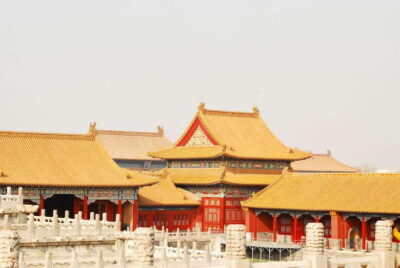
T-Square & Forbidden City Group or Private Tour
Read our review →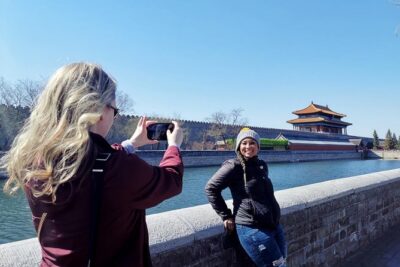
All-Inclusive Tour: Tiananmen Square, Forbidden City, Great Wall
Read our review →
4-Hour Small Group Tour to Forbidden City with Entry Tickets
Read our review →
Beijing Full Day Tours: Tiananmen Sq, Forbidden City, Great Wall
Read our review →
Mini Group Xian Day Tour to Terracotta Army, City Wall, Pagoda and Muslim Bazaar
Read our review →
Tianmen Square, Forbidden City & Royal Museum Tours
Read our review →
Beijing Forbidden City Ticket Booking (Optional: guide service)
Read our review →Browse the lists this tour appears in