
Reviewed · FRENCH CONCESSION TOURS
Shanghai French Concession Walking Tour-Tip Based
The past still shapes modern Shanghai. This 2.5-hour walking tour moves through tree-lined streets, former clubs, racecourse grounds, old lane houses, and polished Xintiandi, while a native Shanghainese guide explains how the city changed. I like the personal angle, especially with Bill, who adds local stories and anecdotes rather than simply pointing at buildings. I also like the clear route, which ends near South Huangpi Road Subway Station, with cafés, shops, and restaurants close by.
The main catch is the tip-based price. The $3.59 booking charge reserves your place, but it is not the full tour cost. You are asked to tip the guide at the end, with 150 to 300 yuan, about $20 to $40, recommended per person. That can still be fair value, but you should understand the real cost before booking.
In This Review
- Key points to know before you go
- Why the French Concession is worth two and a half hours
- Starting at the Okura Garden Hotel and former French Club
- Jinjiang Hotel and a major diplomatic moment
- The former French Racecourse at Culture Plaza
- Huaihaifang and the everyday lane-house compound
- Sinan Mansions and a polished change of mood
- Ending at Xintiandi, where old lanes meet modern Shanghai
- What Bill adds to the walk
- The real cost and the value you receive
- Timing, meeting point, and practical planning
- Who will enjoy this Shanghai walk most
- Should you book this French Concession tour?
- FAQ
- How long does the Shanghai French Concession walking tour last?
- Where does the tour begin?
- Where does the tour end?
- Is the $3.59 payment the full tour price?
- What is included in the tour?
- Can I cancel for a full refund?
Key points to know before you go
- A native Shanghainese guide leads the walk: Bill draws on a lifetime in Shanghai and adds personal context to the city’s past and present.
- Six stops connect old and new Shanghai: You move from the former French Club and Jinjiang Hotel to Sinan Mansions and Xintiandi.
- The route takes about two and a half hours: Each listed stop receives about 20 minutes, with walking and sitting breaks between some locations.
- The tour is tip-based: The small online payment is only a reservation charge, while 150 to 300 yuan per person is the suggested gratuity.
- The French Concession is the main attraction: Tree-lined roads, old residences, wrought iron details, and French-era planning give this part of Shanghai a distinct feel.
- The finish is convenient: The walk ends at Xintiandi, near South Huangpi Road Subway Station, where you can continue with food, shopping, or rest.
Why the French Concession is worth two and a half hours
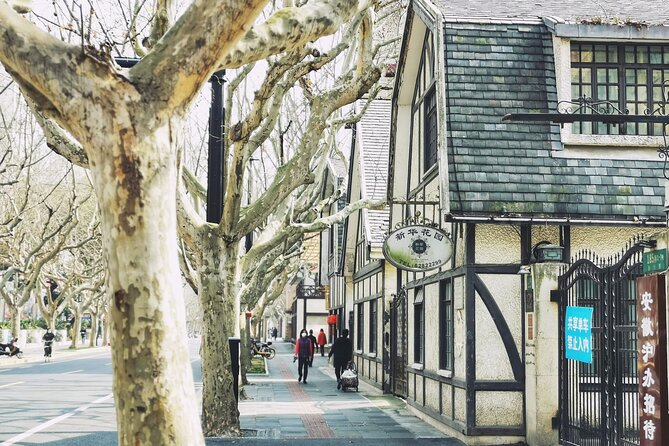
Shanghai can feel enormous and hard to read at street level. The former French Concession gives you a more manageable way into the city. From 1849 to 1943, the area was administered by the French government. Its broad, leafy avenues and preserved houses still carry traces of that period.
You will not be touring a museum with a fixed collection. The streets themselves are the exhibit. Wrought iron fences, stair railings, old villas, lane houses, and converted compounds show how Shanghai absorbed European ideas without losing its Chinese character.
That mix is what makes the route useful. You get architecture, political history, hotel history, urban change, and present-day Shanghai in one walk. The tour also gives you a human guide to the city, which matters here because many important details are easy to miss from the sidewalk.
The route is not built around major admission-ticket attractions. All six stops list free entry. You are paying mainly for the guide’s time, explanations, and local perspective. That makes the quality of the guiding central to the experience.
More Walking Tours in Shanghai
- Shanghai City Guided Walking Tour | China’s 1st and Best Rated
★ 5.0 · 285 reviews - Shanghai Highlights Walking Tour With A Real Local
★ 4.9 · 153 reviews - Shanghai Breakfast Walking Tour of Former French Concession
★ 5.0 · 139 reviews
Starting at the Okura Garden Hotel and former French Club
The meeting point is the Okura Garden Hotel Shanghai at 58 Mao Ming Nan Lu in Huangpu District. The first stop is the site of the former French Club, and you spend about 20 minutes here.
This opening works well because it introduces the French Concession through a building and a place tied to the area’s colonial past. The old French presence is not just an abstract date on a timeline. It survives in the street plan, façades, railings, and former institutions you encounter along the walk.
You should expect an exterior-focused visit rather than a long indoor tour. The admission cost is free, and the supplied details do not indicate that interior access is included. Bring your attention to the surrounding streets as much as the hotel itself. The visual pleasure is in the old buildings, shade trees, and details that make this district feel different from Shanghai’s newer commercial areas.
This is also where Bill’s role can make the route more than a pleasant stroll. His background as someone born and raised in Shanghai gives him a reason to connect the location with the city he has known through both difficult and prosperous periods. That personal viewpoint was one of the strongest elements praised in the feedback, along with his humor and friendly manner.
Jinjiang Hotel and a major diplomatic moment
The second stop is Jinjiang Hotel, also planned for about 20 minutes. You visit what is described as China’s oldest modern hotel and the place where the Sino-American joint declaration on normalizing relations was announced.
That detail gives the walk a useful change of scale. The former French Club helps explain local architecture and social life. Jinjiang Hotel brings you into the political story of modern China and Shanghai’s place in international affairs.
A good guide can make a hotel exterior carry considerable weight. Here, Bill explains why the site matters rather than treating it as another attractive old building. You get a reminder that Shanghai’s hotels have served as stages for major public events, not just places for overnight stays.
The stop should suit anyone who likes history with a clear location attached to it. If you prefer only architectural sightseeing, the political background may feel like a pause from the visual side of the route. I think that pause improves the walk, since it keeps the French Concession from becoming a collection of façades without meaning.
The former French Racecourse at Culture Plaza
At Culture Plaza, you spend roughly 20 minutes visiting the former French Racecourse. The stop shows how the district’s open spaces and leisure institutions have changed over time.
A racecourse may sound like a small detail, but it helps explain the social world that developed under French administration. The area was not simply a residential quarter. It also had clubs, recreation, and public spaces shaped by the foreign presence.
The name Culture Plaza suggests the site’s later use and changing identity. The tour places those layers together, letting you see how one part of Shanghai can shift from colonial-era leisure ground to a modern urban gathering place.
This stop may be less visually dramatic than Sinan Mansions or Xintiandi. Its value comes from the story Bill tells around it. You are learning to read the city as a place that has been repeatedly repurposed, not a preserved historical set frozen in one period.
More French Concession walks:
- Eat Like a Local Through Shanghai’s French Concession
★ 5.0 · 353 reviews - Late Night Food Tour in the Shanghai’s French Concession
★ 5.0 · 260 reviews - French Concession Guided Walking Tour | China’s 1st & Best Rated
★ 5.0 · 91 reviews - Private Walking Tour in the Former French Concession
★ 5.0 · 67 reviews
Huaihaifang and the everyday lane-house compound
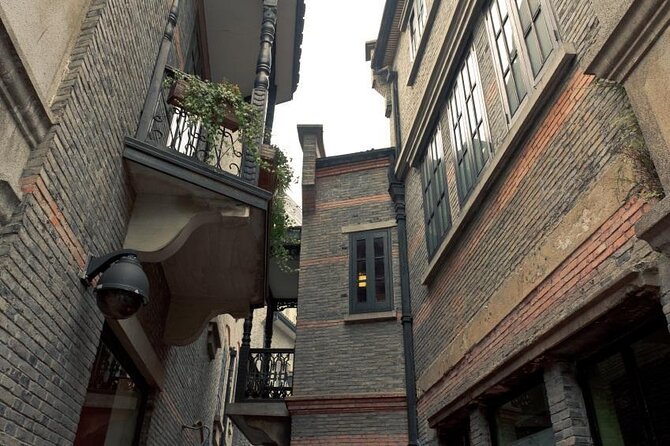
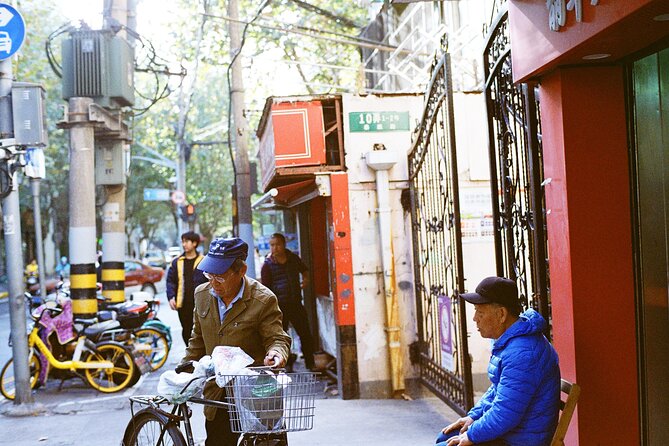
Huaihaifang brings the tour closer to local residential life. The stop focuses on a lane-house compound, with about 20 minutes to look at this distinctive type of Shanghai housing.
Lane houses are important because they show how the city’s private and communal life developed at street level. Instead of viewing only grand hotels and fashionable streets, you see the kind of compact residential setting that gives the French Concession much of its character.
This part of the walk should appeal to you if you prefer ordinary urban details over famous landmarks. The lanes, entrances, shared edges, and older homes can say more about daily life than a grand monument. The tour does not list a separate admission fee, so the experience comes from walking through or viewing the compound with the guide’s explanation.
Keep your expectations sensible. A 20-minute stop will not provide a full architectural study of lane houses. It is a focused introduction, and you will likely get more from it if you pay attention to how the residential compound fits into the wider streets around it.
Sinan Mansions and a polished change of mood
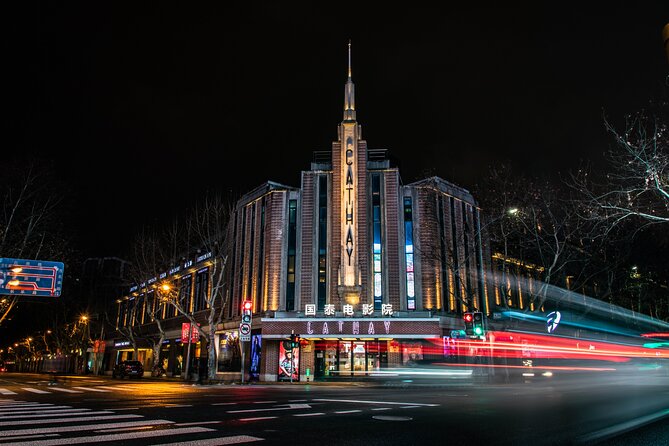
Sinan Mansions is described as one of Shanghai’s most fashionable quarters. The area was remodeled from 51 Art Deco residential blocks into a compound of restaurants, shops, and other modern venues.
This is where the tour makes its sharpest turn from historic district to stylish present-day Shanghai. You can see how old residential buildings are being given new commercial life while keeping much of their original architectural identity.
The setting also helps explain a tension that runs through the French Concession. Preservation can keep a neighborhood attractive and usable, but restoration often changes who uses it and what it costs to spend time there. Sinan Mansions is polished and appealing, yet it is less like an untouched historic neighborhood than a carefully renewed one.
I like this stop because it gives you a practical comparison. Earlier locations help you understand the old French-administered district. Sinan Mansions shows how Shanghai packages that past for current city life. The contrast is useful, even if you prefer the rougher and more lived-in feel of older lanes.
Ending at Xintiandi, where old lanes meet modern Shanghai
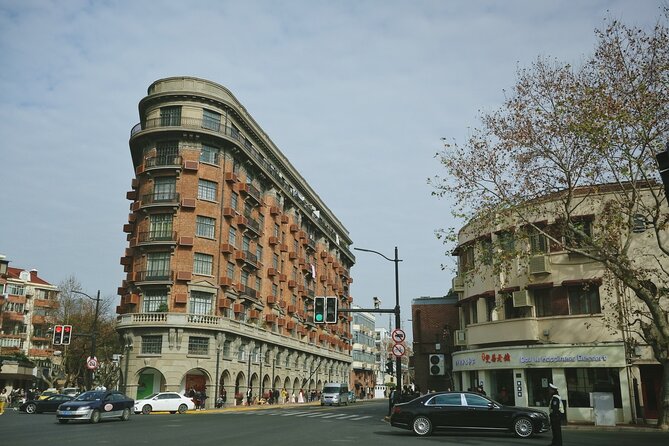
The walk finishes at Xintiandi, at 123 Madang Road in Huangpu District, near South Huangpi Road Subway Station. You spend about 20 minutes here in a neighborhood rebuilt from a deteriorated lane-house area.
Xintiandi is made up of cafés, souvenir stores, art galleries, and other modern venues. Its appeal comes from the way old lane-house forms were turned into a fashionable district. You can admire the preserved style, browse, eat, or simply stop for a rest after the walk.
This is a convenient end point because the tour does not leave you in an isolated part of the city. You can continue your afternoon with a meal, shopping, or a subway ride. If you want a quiet finish, the area also gives you space to sit and review what you have seen.
Xintiandi is not the strongest place for an untouched sense of old Shanghai. It is a redeveloped commercial quarter, and the experience is more polished than local. That is not a flaw if you want an easy finish with services nearby. It is worth knowing if your main goal is to see historic neighborhoods before redevelopment.
What Bill adds to the walk
The most repeated praise centers on Bill. His strengths are described as knowledgeable, funny, friendly, patient, and engaging, though I would put the emphasis on his local connection. He was born and raised in Shanghai and presents the city through both public history and personal experience.
That matters on a route where many stops could otherwise blur together. A former club, hotel, racecourse, residential compound, restored Art Deco quarter, and redeveloped lane area are more useful when someone explains how they connect.
The feedback also highlights frequent breaks to sit down. That is a practical benefit. A two and a half hour walk can feel long in Shanghai’s heat, humidity, or city traffic, so pauses make the pace easier. Still, you should wear comfortable shoes and plan for outdoor conditions. The experience requires good weather, and there is no promise of extensive indoor shelter.
Bill also helps with the human side of the tour. One note praises his willingness to take photos, while another points to his patience when explaining the significance of each stop. Those details matter if you want a relaxed walk rather than a fast list of dates and names.
The real cost and the value you receive
The advertised $3.59 per person is not the complete price. It is a reservation payment, and the suggested tip at the end is 150 to 300 yuan per person, roughly $20 to $40 or euros depending on exchange rates.
That means you should judge this as a paid guided walk, not a $3.59 attraction. At the recommended amount, the value depends on what you want from a guide. You are not paying for admissions, meals, transport, or a major indoor sight. You are paying for about two and a half hours of interpretation and company across a historic part of Shanghai.
I think the value is strongest if you are new to the city, enjoy history, or want help noticing details you would otherwise pass. The route covers a lot of ground and links six locations that would be less meaningful as separate photo stops.
The tip system gives you flexibility, but it also creates uncertainty. If you prefer to know the exact cost before booking, this arrangement may annoy you. If you are comfortable paying according to your satisfaction, it lets you decide what the guiding was worth.
The maximum group size is listed as 100 people. That is a high possible limit for a walking tour. The available information does not say how large the usual group is, so you should not assume an intimate small-group experience. A large group could make conversation and street positioning harder, especially around narrow lanes.
Timing, meeting point, and practical planning
The route starts at the Okura Garden Hotel and ends at Xintiandi. The start and finish are in different places, so plan to arrive at the first address rather than navigating to the ending point by mistake.
You can reach the area by public transportation, and the ending is especially convenient because it is near South Huangpi Road Subway Station. Since the tour lasts about two and a half hours, avoid scheduling a fixed attraction immediately afterward unless you allow extra time.
The listed itinerary gives each of the six stops about 20 minutes. That totals about two hours, leaving roughly 30 minutes for walking between locations, explanations on the way, and breaks. The actual pace may vary, especially with group size and street conditions.
Most people can participate, and service animals are allowed. The tour is outdoors and depends on good weather. If poor weather cancels the experience, you are offered another date or a full refund. You can also cancel for a full refund up to 24 hours before the start time, but changes or cancellations inside that window are not accepted.
Who will enjoy this Shanghai walk most
I would recommend this experience to you if you want a first look at the French Concession without planning your own route. It suits history-minded visitors, architecture fans, and anyone who enjoys learning how a city changed through different political and economic periods.
It is also a good choice if you value a local guide’s stories. Bill’s native connection to Shanghai is a key reason to choose this walk over simply following a map between the same neighborhoods.
You may want something else if you dislike tip-based pricing, need a guaranteed small group, or want long indoor visits. The tour is a street-level introduction, not a museum program or a specialist architectural lecture.
Families and older visitors may appreciate the sitting breaks, but the route still involves continuous walking. Anyone concerned about heat, rain, or limited stamina should check the weather and consider how comfortable they are outdoors for two and a half hours.
Should you book this French Concession tour?
Book it if you want a friendly, story-led introduction to one of Shanghai’s most distinctive districts. The combination of colonial-era sites, diplomatic history, lane-house neighborhoods, Art Deco redevelopment, and Xintiandi gives you a clear sense of how old and new Shanghai share the same streets.
Go in with the correct budget: the $3.59 charge only holds your place, and the recommended final tip is 150 to 300 yuan per person. If Bill is leading your walk, the personal stories, historical explanations, photo help, and relaxed breaks add real value.
Skip it if you need a fixed all-in price or a guaranteed small group. For most first-time visitors who want context without a complicated half-day plan, this is a practical and appealing way to get oriented.
FAQ
How long does the Shanghai French Concession walking tour last?
The tour lasts approximately two hours and 30 minutes. It includes six stops, with about 20 minutes planned at each location, plus walking time and breaks.
Where does the tour begin?
The tour begins at the Okura Garden Hotel Shanghai, 58 Mao Ming Nan Lu, Huangpu District, Shanghai, 200041.
Where does the tour end?
The tour ends at Xintiandi, 123 Madang Road, Huangpu District, Shanghai, 200020, near South Huangpi Road Subway Station.
Is the $3.59 payment the full tour price?
No. The payment made during booking only reserves your place. The experience is tip-based, with recommended tips of 150 to 300 yuan, about $20 to $40 or euros, per person.
What is included in the tour?
A professional English-speaking guide is included. Admission tickets are free at the listed stops.
Can I cancel for a full refund?
Yes. You can cancel at least 24 hours before the experience start time for a full refund. Poor-weather cancellations offer another date or a full refund.
Newest reviews from Shanghai
- Quick Tour to Xi’an Terracotta Warriors from Shanghai by Air in One Day★ 5.0 · 4 reviews
- Shanghai Zhujiajiao water town,Yugarden&Bund one day tour★ 5.0 · 4 reviews
- Wuzhen Private Full-Day Tour from Shanghai★ 5.0 · 4 reviews
- Private Round Trip Transfer to Zhouzhuang Water Village from Shanghai★ 5.0 · 4 reviews
- Full Day Private Tour Amazing Shanghai City Highlights★ 5.0 · 4 reviews
- Shanghai Tower Observation Deck 118 floor Tickets Pre-booking.★ 5.0 · 4 reviews
- Private Wet Market Visit with Cooking Class in Shanghai★ 3.0 · 4 reviews
- Zhujiajiao & Shanghai:Small Group Tour Water Town to Skyline★ 5.0 · 4 reviews
French Concession Tours, compared.
Eat Like a Local Through Shanghai’s French Concession
Read our review →
Late Night Food Tour in the Shanghai’s French Concession
Read our review →
Shanghai Breakfast Walking Tour of Former French Concession
Read our review →
French Concession Guided Walking Tour | China’s 1st & Best Rated
Read our review →
Private Walking Tour in the Former French Concession
Read our review →
Private Yu Garden, The Bund, French Concession, Pudong Half-Day Tour
Read our review →
Shanghai bar hopping tour in the former french concession
Read our review →
Browse the lists this tour appears in