
Reviewed · MUSEUMS
Beijing Half Day: National Museum of China In-depth Tour with Subway Transfer
China’s past is waiting underground. This four-hour private tour makes the huge National Museum of China easier to understand, guiding you through ancient artifacts, Buddha statues, jade, and selected cultural displays without leaving you to face the museum alone. I especially like the expert English-speaking guide and the hotel pickup with one-way transport, two useful touches in a city where museum access can take planning. The main drawback is time: four hours covers the key sections, but the museum is so large that you will see only a fraction of it.
I also like the way the guides adjust the visit to the crowd. Mike has been praised for finding quieter routes, while Cathy, William, Diana, and Herbie have each been singled out for clear English, warmth, and helpful explanations. The museum can be extremely crowded, and ticket availability may be difficult to handle independently, so this tour is most useful for first-time visitors who want context and a planned route.
In This Review
- Key points at a glance
- Why the National Museum deserves half a day
- Ancient China: pottery, jade, bronze, and Sanxingdui
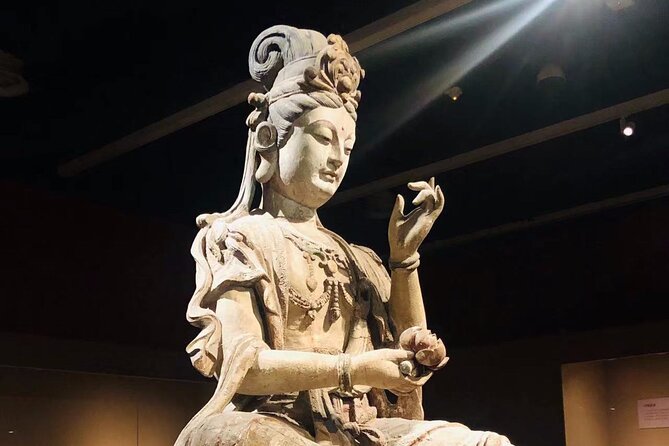
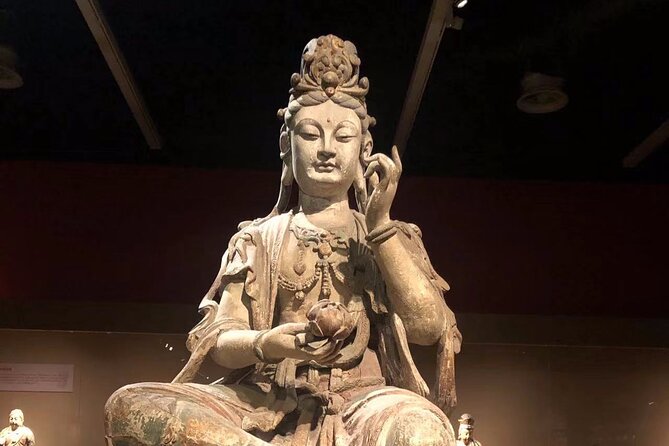
- The Buddha statues and the calm face of Guanyin
- A private guide matters inside a crowded museum
- Hotel pickup and the Beijing transfer
- Is $114 good value?
- How to get the most from the four hours
- Who should book this museum tour?
- Final verdict: book it for context, not total coverage
- FAQ
- How long does the National Museum tour last?
- What time does the guide meet me?
- Is transportation included?
- Is the museum admission included?
- Is this a private tour?
- Can I cancel for a full refund?
Key points at a glance
- Ancient China is the main event: See pottery, jade, bronze vessels, Sanxingdui objects, and artifacts spanning prehistoric times through the 1911 Revolution.
- A guide saves time: The museum has many rooms and exhibitions, so an expert can focus your attention on the most important pieces.
- Private touring keeps things personal: Only your group participates, making it easier to ask questions and adjust the pace.
- Hotel pickup is included: The guide meets you at 8:30 a.m. or 1 p.m., then travels with you by subway or taxi.
- The Buddha gallery adds a different mood: Look for the painted wooden Guanyin from the Song Dynasty, known for its calm expression.
- Book ahead for a smoother plan: The experience is commonly reserved about 19 days in advance, and museum tickets can be hard to secure on your own.
Why the National Museum deserves half a day
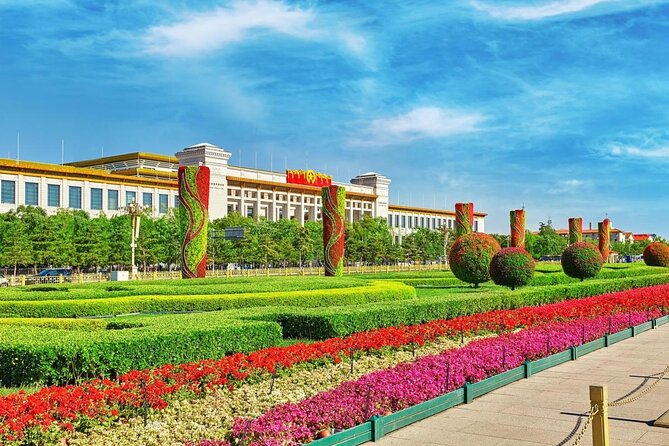
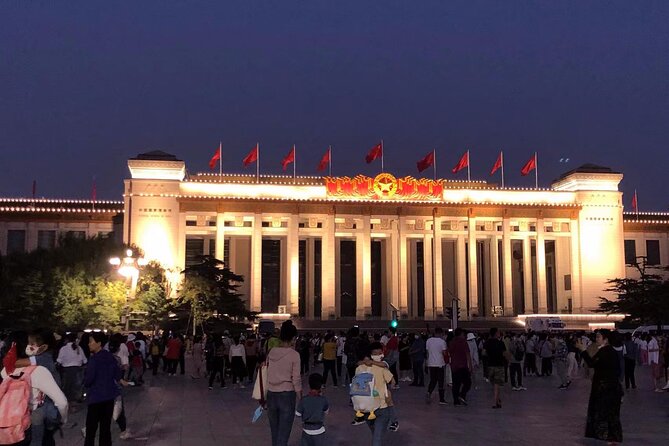
The National Museum of China is not a small stop you can rush through in 45 minutes. Its collection contains more than 1.4 million relics, including nearly 6,000 designated first-class cultural relics. That number tells you two things: the museum offers exceptional range, and you need a plan.
The collection follows the long arc of Chinese civilization, from prehistoric objects to modern political history. A guide helps turn that enormous span into a readable story. Instead of wandering from case to case, you can see how pottery, jade, bronze work, religious art, and court culture fit into changing periods.
The tour lasts about four hours. That is a sensible length for a focused introduction, but not enough for every permanent gallery. I would treat this as a carefully chosen first visit, not a complete survey of the building.
The strongest part is the Ancient China Exhibition Hall. It takes about two hours and reaches from prehistoric periods through the 1911 Revolution. You will encounter objects from roughly two million years ago through later imperial eras, with the guide selecting pieces that explain major developments in Chinese culture.
More Museums in Beijing
- Beijing: Tianmen Square, Forbidden City & Royal Museum Tours
★ 4.6 · 1,288 reviews - Beijing:Jingshan Park (Palace Museum Garden) Ticket
★ 4.5 · 185 reviews - Beijing’s Forbidden City with Special Viewing of Treasure Gallery and the Great Wall Ruins at Badaling
★ 4.5 · 24 reviews
Ancient China: pottery, jade, bronze, and Sanxingdui
The Ancient China section begins with objects that can look modest until someone explains why they matter. Painted pottery jars, for example, carry unanswered questions about early communities and their beliefs. They are not simply old household goods. Their shapes, designs, and uses offer clues about people who left no written record.
The jade dragon is another early highlight. It is described as having a reputation as China’s first dragon, a powerful symbol that later became closely linked with Chinese identity and imperial authority. Seeing it in person gives you a useful reminder that major cultural symbols often began in much earlier, less familiar periods.
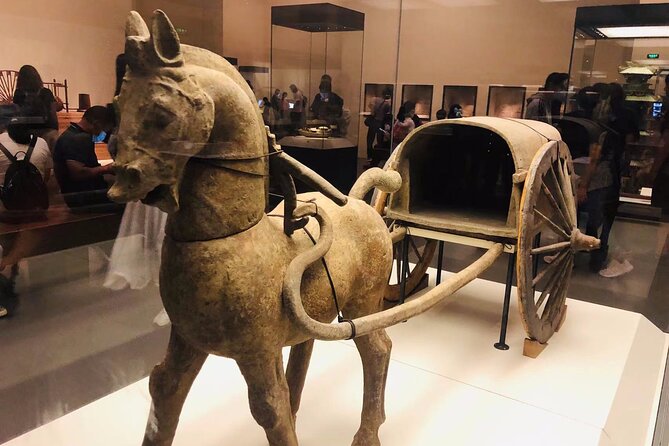
One especially memorable object is a 2,000-year-old refrigerator. That detail catches the imagination because it breaks the usual picture of ancient life. Your guide can help place it in the context of food storage and technical skill, turning an unusual object into a small window onto daily life.
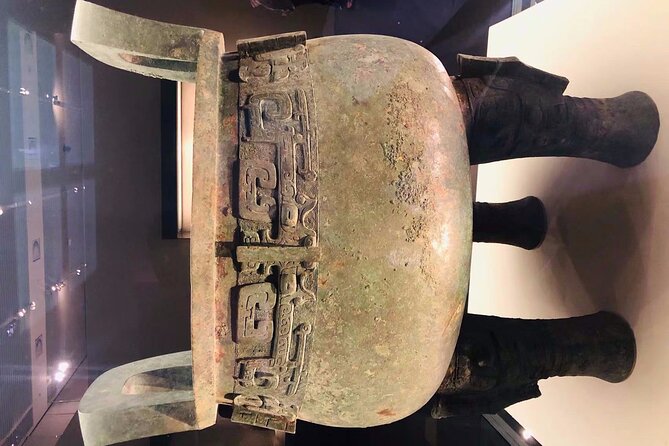
Bronze work brings the ancient galleries to their grandest point. The Simuwu Ding, unearthed in Henan Province in 1939, is one of the hall treasures. Its size and careful workmanship show the power of early states and the importance of ritual vessels.
The Siyang Fangzun is another major piece. Its four sheep heads, facing the four directions, make it easy to recognize even in a crowded display. This is where a good guide earns the fee. Rather than giving you a list of dates, the guide can point out how the vessel combines religious meaning, animal imagery, and remarkable bronze casting.
The Sanxingdui material adds a striking change of tone. This site civilization is famous for its unusual forms and mysterious appearance, and it helps widen your idea of ancient China beyond the familiar dynasties centered around the Yellow River. The museum’s ancient collection is strongest when it shows that China’s past was not one single, tidy story.
The Buddha statues and the calm face of Guanyin
After the ancient history section, the tour spends about an hour in the Ancient Buddha Statue exhibition room. This part feels different from the bronze and archaeological galleries. The emphasis shifts toward faith, sculpture, facial expression, and the changing ways artists represented Buddhist figures over time.
The most important stop here is a painted wooden statue of Guanyin from the Song Dynasty. Its peaceful smile and refined image have drawn comparisons with the Mona Lisa. That comparison is a little dramatic, but it gives you a useful clue about the statue’s appeal: the expression rewards close attention rather than a quick photograph.
I would ask your guide to explain how the statue’s material, paint, posture, and facial features help identify its period and purpose. A well-placed question can turn a beautiful object into a lesson in religious art. Guides Cathy and Diana have been praised for answering questions carefully and making historical details easy to follow, which is particularly helpful in this gallery.
The itinerary can also include other sections, such as food culture. The exact amount of time available depends on how long your group spends in the main galleries and how crowded the museum is. If you have a special interest, tell the guide early. The private format makes that request more realistic than it would be on a large group outing.
A private guide matters inside a crowded museum
The museum’s size is both its strength and its challenge. On a busy day, you may face packed rooms and slow movement around popular objects. You could spend hours simply trying to decide where to go next.
This is where the tour’s strongest practical advantage appears. Mike has been praised for working around crowds and taking groups to the right places at the right time. He has also been described as clear, entertaining, and especially strong on Chinese history. That combination matters because a guide who knows the material but cannot manage a crowded room is only half useful.
Cathy is another frequently praised guide. She has been described as having excellent English, a good sense of humor, and a friendly style that makes long historical explanations easier to absorb. William has also received praise for clear English and broad knowledge, along with the ability to chat about modern China and subjects beyond museum history.
Diana and Herbie bring similar strengths. Diana is described as friendly and good at bringing objects to life, while Herbie is known for being helpful and easy to spend time with. The exact guide assigned to you may vary, but the repeated pattern is clear: the value depends heavily on the individual guide, and the available names have made a strong impression.
Because this is a private activity, you do not share the visit with another group. That means you can ask why an object matters, request a slower explanation, or move on when a section does not interest you. Families and mixed-interest groups will find that flexibility useful.
More Private Drivers in Beijing
- Beijing:Mutianyu Great Wall Private Trip with English Driver
★ 5.0 · 1,263 reviews - Private Mutianyu Great Wall Trip with English-Speaking Driver
★ 5.0 · 927 reviews - Private Mutianyu Great Wall Trip With English-Speaking Driver
★ 5.0 · 899 reviews - Small Group 6km hiking Jinshanling Great Wall EN speaking driver
★ 5.0 · 347 reviews
Hotel pickup and the Beijing transfer
Your guide meets you in your hotel lobby at either 8:30 a.m. or 1 p.m. The morning start gives you more of the day afterward, while the afternoon option can fit around a morning visit to another Beijing sight.
Transport to the museum is by subway or taxi. The package includes a single-way taxi transfer, while the itinerary also describes subway travel as an option. Since those details leave some room for interpretation, confirm the planned transport when you book or when the guide contacts you.
The included pickup is more valuable than it may first appear. You do not need to locate the museum entrance alone or work out the first stage of the route in an unfamiliar city. One guide even arranged a taxi after the visit and checked that the group reached its hotel safely. That kind of help is not guaranteed as a formal feature, but it shows the practical attitude you may encounter.
Return transport is not listed as included. Plan your next move before the tour ends, especially if you have a timed reservation elsewhere. Your guide may be able to help arrange a taxi, but you should not assume that a return ride is part of the price.
Is $114 good value?
At $114 per person, this is not the cheapest way to enter a museum. You are paying for more than admission. The price includes a professional English-speaking guide, hotel pickup, national museum ticket booking, and one-way taxi transfer. The tour is also private, so the guide’s attention belongs to your group.
The value becomes stronger if you have struggled with museum tickets. Independent booking may be difficult because tickets can become available only seven days ahead, and the booking process may be difficult to complete on a Chinese-language site. In one case, the requested date could not be secured, but an alternative date was arranged.
That is an important qualification. Booking this experience does not mean every date is guaranteed. You may be offered another day if tickets are unavailable, so check the date carefully before finalizing other plans.
I think the price makes the most sense for a first Beijing visit, a short stay, or anyone who wants history explained rather than simply displayed. If you already speak Chinese, enjoy planning museum routes, and have plenty of time, you may prefer to arrange entry independently. If you have only one chance to see the museum, the guide and ticket assistance can justify the extra cost.
How to get the most from the four hours
Go in with a short list of priorities. The Ancient China Exhibition Hall deserves the largest share of your attention, followed by the Buddha statue room. Ask to see the Simuwu Ding, Siyang Fangzun, jade dragon, Sanxingdui material, and Song Dynasty Guanyin.
Do not try to inspect every case. The museum’s scale makes that unrealistic, and rushing can flatten the experience into a march past glass cabinets. I would rather understand ten important objects than vaguely remember one hundred.
Ask questions as you go. Why was this vessel made? What does the animal design mean? How do historians date this statue? Which objects are connected with daily life rather than ritual? The private setup gives you room for this kind of conversation.
Crowds may affect the order of the visit. A strong guide can change direction and return to a popular case later, which is more useful than stubbornly following a fixed route. Wear comfortable shoes and keep your schedule after the tour flexible enough to allow for movement through the building.
Most people can participate, and confirmation is provided when you book. The activity is private, but group discounts are available. If you are traveling with family or friends, compare the total cost for your group rather than looking only at the per-person figure.
Who should book this museum tour?
This tour suits you if you want a clear introduction to Chinese history without spending days planning museum visits. It is particularly useful for first-time visitors, couples, families, and small groups with different levels of interest in history.
It also suits you if museum ticket booking feels like a hassle. The ticket arrangement and hotel pickup remove two chores that can otherwise eat into your Beijing schedule.
You may want to skip it if you prefer silent, self-guided museum visits or want to explore every gallery at your own pace. Four hours is focused rather than exhaustive, and the transport details should be confirmed in advance.
The strongest reason to book is the guide. Mike, Cathy, William, Diana, and Herbie have each been praised for clear communication, patience, humor, and strong command of Chinese history. A good guide turns the National Museum from a huge collection into a story you can follow.
Final verdict: book it for context, not total coverage
I recommend this tour if you want to see the National Museum’s major ancient treasures and understand why they matter. The Ancient China gallery alone gives you painted pottery, jade, bronze, Sanxingdui artifacts, and objects covering an extraordinary span of time. The Buddha gallery then offers a quieter look at religious art, with the Song Dynasty Guanyin as a likely highlight.
Book it with realistic expectations. You will not cover the entire museum, and a crowded day can limit what you see. But with private guiding, hotel pickup, ticket help, and a strong record of clear English explanations, this is a practical way to make four hours count.
FAQ
How long does the National Museum tour last?
The experience lasts approximately four hours. About two hours are planned for the Ancient China Exhibition Hall and about one hour for the Ancient Buddha Statue exhibition room, with time for additional displays such as food culture if the schedule allows.
What time does the guide meet me?
The guide meets you in your hotel lobby at either 8:30 a.m. or 1 p.m.
Is transportation included?
Hotel pickup and a single-way taxi transfer are included. The itinerary also says the guide may use the subway or taxi to reach the National Museum, so confirm the specific transport plan.
Is the museum admission included?
Yes. National Museum tickets are included, and the provider handles ticket booking.
Is this a private tour?
Yes. Only your group participates in the activity. Group discounts are also available.
Can I cancel for a full refund?
You can cancel at least 24 hours before the experience starts for a full refund. Cancellations or changes made less than 24 hours before the start time are not accepted for a refund.
Newest reviews from Beijing
- Beijing: Explore the Forbidden City in Hanfu★ 5.0 · 4 reviews
- Beijing Tai Chi and Tea Ceremony Experience★ 5.0 · 4 reviews
- Jinshangling Great Wall Of Beijing Tickets And Other Option★ 4.0 · 4 reviews
- Private Full-Day Great Wall of China Hiking Tour from Jiankou to Mutianyu★ 4.5 · 4 reviews
- Tour the Great Wall with a Native from Downtown Beijing★ 4.8 · 4 reviews
- Beijing: Badaling Great Wall Private Tour w Language Option★ 4.3 · 4 reviews
- Beijing:Summer Palace & Tea or Calligraphy Experience Tour★ 4.6 · 4 reviews
- 7 Days Private Tour of Beijing, Xian, Shanghai by Bullet Train★ 5.0 · 4 reviews
Museums, compared.
Tianmen Square, Forbidden City & Royal Museum Tours
Read our review →
Half-Day Mini Group Xian Tour to Terracotta Warriors Museum
Read our review →
Beijing:Jingshan Park (Palace Museum Garden) Ticket
Read our review →
Private Chengdu Day Tour: Giant Pandas and Jinsha Site Museum
Read our review →
Private Xi’an Tour: Terracotta Warriors, Hanyangling Museum, Cave Homes
Read our review →
Terracotta Warriors Museum Ticket with Professional English-speaking tour guide
Read our review →
Customized Day Tour to Terracotta Army and Horses Museum
Read our review →Browse the lists this tour appears in