

Reviewed · HUTONG TOURS
Beijing Hutongs Walking Tour
Old Beijing survives in its lanes. This small-group walk takes you beyond imperial Beijing into Nanluoguxiang and Mao’er Hutong, where gray courtyard homes, old trees, and local stories reveal a quieter side of the capital. I like the relaxed pace, and I like that guide Roy Li uses questions and conversation rather than rushing through a script. The main drawback is simple: the meeting point requires careful timing, and one late arrival led to a missed tour.
At $30 per person, this is a fair introduction to Beijing’s traditional neighborhoods, especially early in your visit. The 90-minute to two-hour route covers several meaningful areas, but it does not include admission tickets, and the exact finish point needs attention because the details mention both Houhai and the Drum Tower.
- Nanluoguxiang sets the scene: Begin near a historic lane tied to Beijing’s Yuan Dynasty-era street plan and courtyard architecture.
- Mao’er Hutong adds personal stories: See the former residence associated with Empress Wanrong, wife of China’s last emperor, Puyi.
- Roy Li earns strong praise: His clear English, preparation, and quiz-style approach help turn a walk into a conversation.
- The group is capped at 15 people: That keeps the walk more personal than a large city tour, though the experience may feel less intimate at full capacity.
- The route ends near Beijing’s lakeside hutongs: Houhai and the narrow channel toward Qianhai add water, lanes, and a change of pace.
- Plan around the meeting point: Meet at Nanluoguxiang South Gate, near Exit E of Nanluoguxiang Station, at 10:00 a.m.
In This Review
- Why Beijing’s Hutongs Are Worth Your Morning
- Meeting at Nanluoguxiang South Gate
- Nanluoguxiang and the Yuan Dynasty Street Plan
- Mao’er Hutong and Empress Wanrong’s Former Home
- From Courtyards Toward Qianhai and Houhai
- A Guide Who Makes the Walk Interactive
- Is $30 a Fair Price?
- Who Will Enjoy This Hutong Walk Most?
- Small Details That Will Improve Your Experience
- Should You Book the Beijing Hutongs Walking Tour?
- FAQ
- Where does the Beijing Hutongs Walking Tour begin?
- What time does the tour start?
- How long does the tour last?
- What places does the route visit?
- Are admission tickets included?
- Can I cancel for a full refund?
Why Beijing’s Hutongs Are Worth Your Morning

Beijing’s great imperial sights explain the power of the old capital. The hutongs explain how ordinary city life fit around that power.
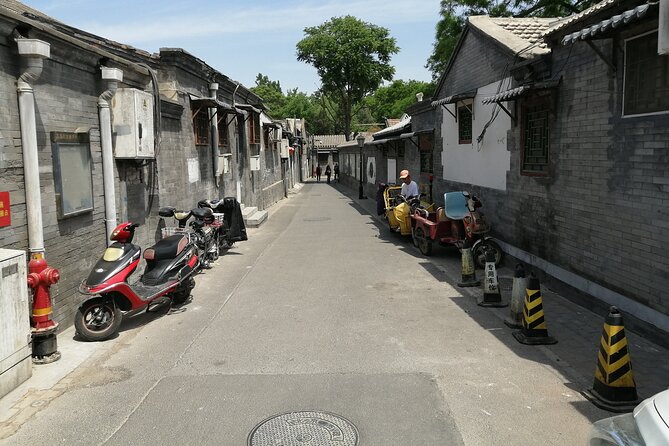
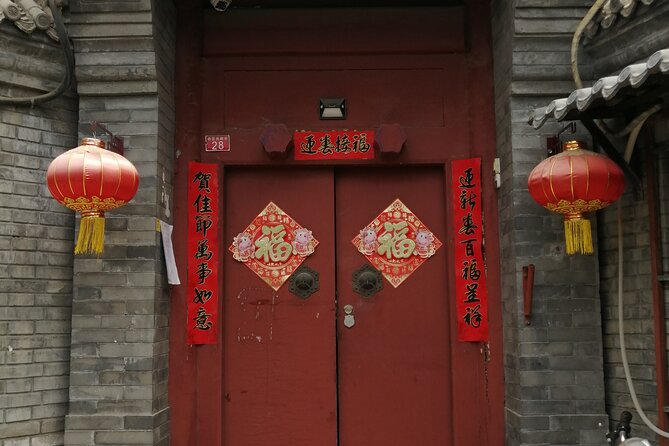
A hutong is a traditional lane lined with courtyard homes. These neighborhoods once formed much of central Beijing, with family compounds opening onto narrow public streets. You do not need a long lecture to appreciate them. Walking slowly past gray walls, old trees, and gateways gives you a better feel for the city than another quick photo stop at a grand monument.
I like this tour because it gives you context without demanding a full day. In roughly 90 minutes to two hours, you move from Nanluoguxiang through Mao’er Hutong toward the water around Qianhai and Houhai. That is enough time to notice details, ask questions, and still leave room in your schedule for lunch or another sight.
The tour is also useful at the start of a Beijing visit. You get basic clues about the city’s architecture, stories from the imperial period, and insight into Chinese customs, including traditional ideas about time-keeping. Those details can help the rest of your Beijing sightseeing make more sense.
Meeting at Nanluoguxiang South Gate

The meeting point is at Nanluoguxiang South Gate, near Nanluoguxiang Metro Station Exit E. You can reach the station on Line 6 or Line 8, and the tour begins at 10:00 a.m.
This is one of the most important practical details. The location is given in English and Chinese as 南锣鼓巷南口 or 南锣鼓巷地铁站E出口. Save the Chinese name on your phone before leaving your hotel. Beijing metro stations can have several exits, and a few minutes of confusion can become a missed departure.
The tour provider has a clear expectation about punctuality. One person waited about 25 minutes after failing to find the guide, while Roy explained that he had been at the meeting point with four other people and had left because the person arrived too late. The lesson is not complicated: arrive early, confirm Exit E, and keep your phone available.
This is a mobile-ticket experience, so you do not need a paper voucher. The English-speaking guide is included, while admission tickets are not. Since the route is primarily a walk through public lanes, the absence of an included ticket may not affect your plans, but you should ask the guide if you want to enter any paid site along the way.
More Walking Tours in Beijing
- Beijing Hutong Walking Food and Beer Tour at Hidden Restaurants
★ 5.0 · 1,132 reviews - Private Beijing Walking Tour of the Forbidden City with 7 Options
★ 5.0 · 675 reviews - Forbidden City Private Walking Tour with Optional Sights
★ 5.0 · 400 reviews
Nanluoguxiang and the Yuan Dynasty Street Plan
The first part of the walk brings you into Nanluoguxiang, a lane that reaches back to the Yuan Dynasty. Its traditional courtyard homes and gray architectural style offer an immediate contrast with Beijing’s wide avenues and monumental public buildings.
The value here is visual and structural. Instead of seeing one preserved building behind a gate, you walk through a neighborhood pattern. The lanes, courtyards, walls, and mature trees show how homes were arranged and how people moved through old Beijing.
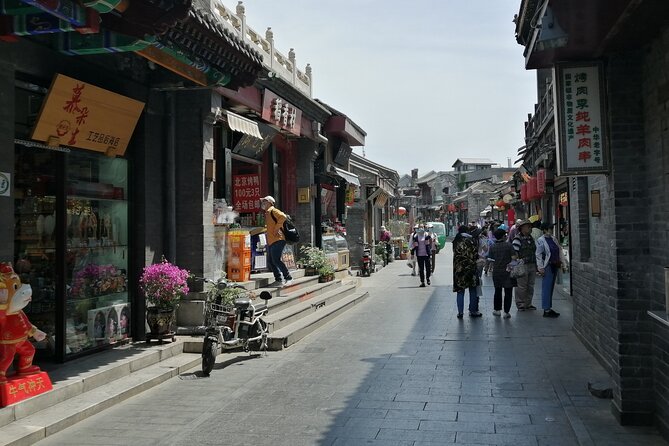
Nanluoguxiang is also a useful place to start because it is easy to connect with the rest of the city by metro. The area can attract plenty of foot traffic, and a guided walk helps you look past the obvious shops and signs. You are not simply walking down a famous lane. You are learning what makes its buildings recognizably traditional.
I would keep your expectations sensible. This is not a private visit to a family courtyard, and the supplied details do not promise entry into private homes. Much of the experience comes from seeing the street pattern and hearing the guide explain what you are looking at.
Mao’er Hutong and Empress Wanrong’s Former Home
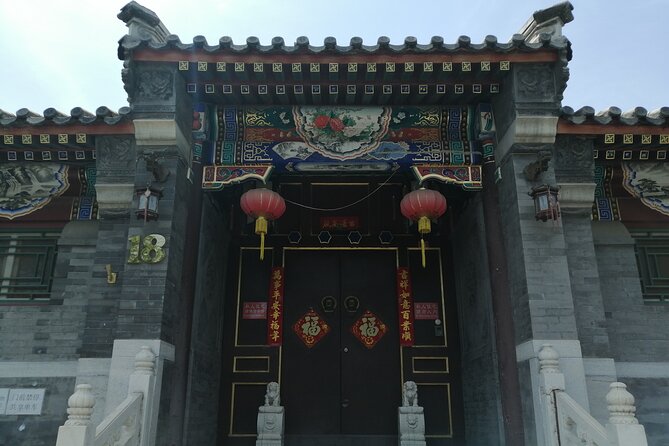
From Nanluoguxiang, the route continues along Mao’er Hutong. This lane is tied to several notable buildings and stories, including the residence associated with Empress Wanrong, the wife of Puyi, China’s last emperor.
That stop gives the walk a human scale. The end of the imperial system can seem remote when you see it only through palaces and official titles. A former residence connects those political changes to a particular person and a particular neighborhood.
The stop is also practical for photography. The tour identifies the Empress’s Mansion as a place to pause for pictures, so you get a clear landmark along the walk rather than a continuous stream of lanes with no fixed point. Your guide can help explain why the building matters and how it fits into the story of Puyi and Wanrong.
Do not expect a full palace visit. The information supplied for this experience describes a photo stop at the former residence, not a guaranteed interior tour. That distinction matters if you are choosing this walk mainly for access inside historic buildings.
From Courtyards Toward Qianhai and Houhai
The route then reaches a narrow channel joining Qianhai Lake and Houhai Lake. This change in scenery gives the walk a welcome rhythm. You begin among lanes and courtyard walls, then move toward water and the broader setting around Beijing’s northern lake district.
The lakeside portion helps you connect the hutongs to the wider old city. Beijing’s traditional neighborhoods were not isolated museum pieces. They sat beside waterways, streets, residences, and public areas that shaped daily movement.
The stated end point is Houhai in Xicheng District, while the tour details also say the walk finishes at the Drum Tower. Those places are close within the same general historic area, but the wording is not perfectly consistent. I would confirm the exact finish location with Roy or the operator before booking if you have a tight afternoon plan.
That uncertainty is a minor nuisance, not a reason to reject the tour. The route clearly aims to finish in the old city around Houhai and the Drum and Bell Towers. You should simply avoid scheduling a nonrefundable activity immediately afterward.
More hutong walks:
- Temple Heaven, Summer Palace, Lama Temple, Hutong Bus Tour
★ 4.7 · 319 reviews - Temple of Heaven, Summer Palace, Lama Temple, Hutong Tours
★ 5.0 · 311 reviews - Beijing Private Hutong Food Walking Tour
★ 5.0 · 299 reviews - The Hutong Experience by Bike
★ 5.0 · 163 reviews
A Guide Who Makes the Walk Interactive
The strongest praise goes to the guide. Roy is described as speaking clear English, preparing well, and involving the group with questions and short quizzes. That approach suits a neighborhood walk because the subject is not only architecture. It includes customs, people, time-keeping, and the fate of the last emperor.
I like a guide who makes you look up from your phone. A question about a roofline, courtyard, or old city custom can turn an ordinary lane into something you notice for the rest of your visit. Roy’s quiz-style method also gives the walk a little energy without making it feel like a classroom.
The tour is advertised for a maximum of 15 people. That is small enough for personal interaction in most cases, though it is not a private tour. If the group reaches its limit, you may need to stay close to hear every explanation in a narrow lane.
The overall rating is 4.8 from 22 ratings, with 95 percent recommending the experience. That is a strong record, and the positive comments focus on the qualities that matter most here: clear English, preparation, historical insight, and an engaging manner. One failed departure shows that organization and punctuality still matter as much as the guide’s personality.
Is $30 a Fair Price?
At $30, I see this as a reasonable orientation tour rather than a bargain-priced stroll. You are paying for an English-speaking guide, a planned route, and interpretation that would be difficult to assemble on your own in a short visit.
You can walk through hutongs without paying anyone. The value comes from knowing what you are seeing. Without context, a gray wall may be just a gray wall. With a good explanation, the same wall can tell you about traditional courtyard design, the old capital, and the people linked to a particular address.
The group limit improves the value. A 15-person maximum is not as personal as a private guide, but it should be more manageable than a large coach group. You also get a route that links several areas instead of stopping at one famous lane.
Admission tickets are not included. Based on the stated route, the main experience is an outdoor neighborhood walk, so this may not add much cost. Still, keep a little flexibility in your budget if the guide suggests a paid attraction or if you decide to visit the Bell or Drum Tower separately.
Who Will Enjoy This Hutong Walk Most?
I would choose this for a first or second day in Beijing, when you want a gentle introduction to the city’s older neighborhoods. It works well for people who prefer stories and local architecture to a packed schedule of major monuments.
It is also a good fit if you want a short activity before lunch. The start time gives you a full morning, and the route length is manageable for most people according to the stated participation information. Service animals are allowed, public transportation is nearby, and most people can take part.
Families may appreciate the questions and quiz format, especially if children find long museum explanations tiring. The walk also suits solo visitors who want some company without committing to a full-day group excursion.
I would look elsewhere if your priority is entering many historic homes, receiving private attention, or seeing a long list of major monuments. This tour is about atmosphere, streets, and explanation. It does not replace the Forbidden City, the Bell and Drum Towers, or a full historical tour of Beijing.
Small Details That Will Improve Your Experience
Arrive at least 10 to 15 minutes before 10:00 a.m. Use the Chinese meeting-point name and Exit E, not just the general station name. The missed departure described above is a good warning that being somewhere near the station is not enough.
Wear shoes suited to a steady city walk. The route passes through lanes and continues toward the lakes, so comfort matters more than polished footwear. The tour lasts about 90 minutes to two hours, but allow extra time if the group pauses for questions or photographs.
Keep the morning open after the walk. The route may finish at Houhai or near the Drum Tower, and both areas can make a useful base for continuing your own sightseeing. Since the exact end wording is not fully clear, avoid booking a timed attraction across town right away.
Use the guide’s explanations as a starting point. If Roy brings up Chinese time-keeping, Puyi, Wanrong, or courtyard design, note the names. A short walk can give you several threads to follow at another museum or historic site.
The cancellation terms are friendly but firm. You receive a full refund if you cancel at least 24 hours before the start time. Changes or cancellations inside that window are not refunded, and the tour requires a minimum number of participants. If the operator cancels for that reason, you are offered another date or a full refund.
Should You Book the Beijing Hutongs Walking Tour?
Book it if you want a short, guided look at old Beijing beyond the imperial monuments. The route links Nanluoguxiang, Mao’er Hutong, the former residence associated with Empress Wanrong, and the water around Qianhai and Houhai. At $30, the price makes sense when you value interpretation and a small group more than simply wandering alone.
Roy’s clear English and interactive style are the tour’s biggest strengths. Just arrive early at Nanluoguxiang Station Exit E, confirm the finish point, and remember that admission tickets are separate.
Skip it if you need guaranteed interior access, a private guide, or a tightly timed route. For everyone else, this is a relaxed way to begin understanding how Beijing’s old neighborhoods fit together.
FAQ
Where does the Beijing Hutongs Walking Tour begin?
The tour begins at Nanluoguxiang South Gate, near Exit E of Nanluoguxiang Metro Station. The station is served by Line 6 and Line 8.
What time does the tour start?
The stated start time is 10:00 a.m. Arriving early is wise because the guide may leave after waiting for late arrivals.
How long does the tour last?
The walk lasts approximately 1 hour 30 minutes to 2 hours.
What places does the route visit?
The route includes Nanluoguxiang, Mao’er Hutong, the former residence associated with Empress Wanrong, and a narrow channel connecting Qianhai and Houhai lakes. The finish is described as Houhai, with the Drum Tower also identified as the ending area.
Are admission tickets included?
No. The English-speaking guide is included, but admission tickets are not included.
Can I cancel for a full refund?
Yes. You can cancel at least 24 hours before the start time for a full refund. Cancellations or changes made less than 24 hours before the start time are not refunded.
Newest reviews from Beijing
- Beijing: Explore the Forbidden City in Hanfu★ 5.0 · 4 reviews
- Beijing Tai Chi and Tea Ceremony Experience★ 5.0 · 4 reviews
- Jinshangling Great Wall Of Beijing Tickets And Other Option★ 4.0 · 4 reviews
- Private Full-Day Great Wall of China Hiking Tour from Jiankou to Mutianyu★ 4.5 · 4 reviews
- Tour the Great Wall with a Native from Downtown Beijing★ 4.8 · 4 reviews
- Beijing: Badaling Great Wall Private Tour w Language Option★ 4.3 · 4 reviews
- Beijing:Summer Palace & Tea or Calligraphy Experience Tour★ 4.6 · 4 reviews
- 7 Days Private Tour of Beijing, Xian, Shanghai by Bullet Train★ 5.0 · 4 reviews
Hutong Tours, compared.

Beijing Hutong Walking Food and Beer Tour at Hidden Restaurants
Read our review →
Temple Heaven, Summer Palace, Lama Temple, Hutong Bus Tour
Read our review →
Temple of Heaven, Summer Palace, Lama Temple, Hutong Tours
Read our review →




Beijing City Walk: Explore Hutongs Life and Old Beijing
Read our review →Browse the lists this tour appears in