
Reviewed · WORKSHOPS
Beijing Private Tai Chi Class
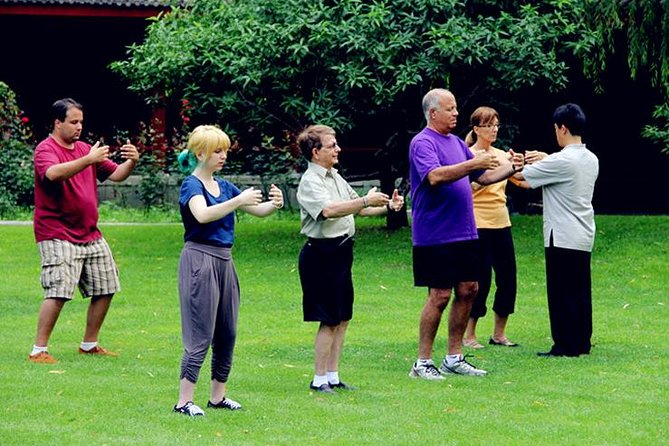
Slow movement can reveal a city. This private Beijing tai chi class gives you one-on-one instruction in a calm setting, while introducing the ideas behind yin and yang, Taoism, breathing, and internal martial arts. I like the step-by-step format, and I especially like that the lesson includes more than memorizing graceful poses: you also try standing meditation, push hands, and simple self-massage.
The private format is a real plus for beginners because your instructor can keep correcting and encouraging you instead of losing you in a large class. The main consideration is the fixed 90-minute length. It is enough for a thoughtful introduction, but not enough to master a full tai chi routine or gain much physical skill. The class also depends on good weather, and hotel transportation, food, and drinks are not included.
In This Review
- Key points before you book
- What this Beijing tai chi class is really like
- Meeting your instructor at Tian Tan Dong Lu
- The opening lesson: tai chi, Taoism, and yin and yang
- Learning the nine-step tai chi form
- Standing meditation and push hands
- Self-massage for daily tension
- Why the private format matters
- Choosing morning or afternoon
- What the class feels like for beginners
- The setting and the sense of place
- Booking, cancellation, and practical planning
- Should you book the Beijing private tai chi class?
- FAQ
- How long does the Beijing private tai chi class last?
- Is the class suitable for beginners?
- What will I learn during the class?
- Is the class private?
- Where does the class start and finish?
- What happens if bad weather cancels the class?
Key points before you book
- A private beginner class: Only your own group takes part, so you can ask questions and receive direct corrections.
- English-speaking instruction: The lesson is taught by qualified tai chi masters, including instructor Eric Liu.
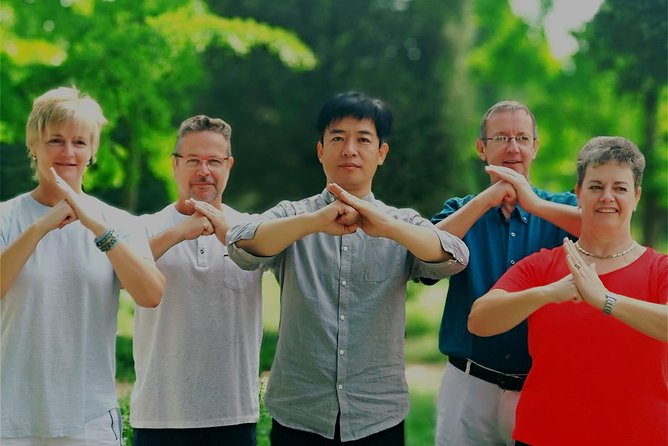
- More than tai chi forms: You learn Taoist ideas, yin and yang, breathing, standing meditation, push hands, and self-massage.
- A nine-step form: The class uses a simple nine-step method to introduce basic tai chi movement.
- Morning or afternoon timing: You can select a class time that fits your Beijing plans.
- A central meeting point: The listed start point is at 旻园1 Tian Tan Dong Lu in Dong Cheng District, with the class ending back there.
What this Beijing tai chi class is really like
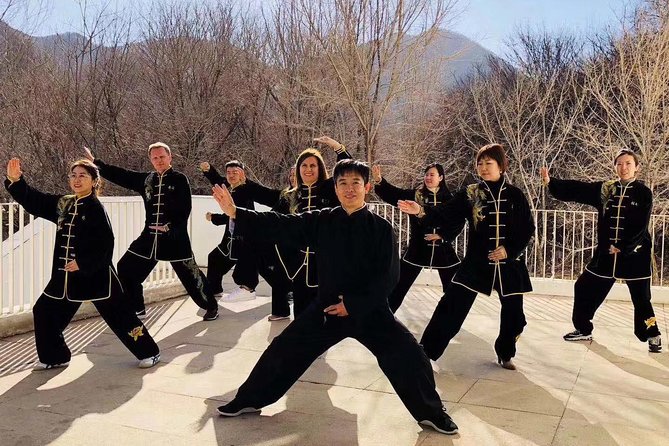
This is a beginner lesson, not a performance or a fast-paced fitness class. You work through slow, deliberate movements while paying attention to posture, breathing, balance, and concentration.
The class is designed to make tai chi understandable from the start. Instead of simply copying an instructor, you learn why the movements are performed slowly and how the practice connects with Chinese ideas about energy, balance, and health.
The experience lasts about 1 hour and 30 minutes. That gives your instructor time to explain the background, demonstrate the movements, guide you through the form, and introduce the meditation and massage exercises.
I would approach this as a cultural activity with a gentle physical element. You are not signing up for a strenuous workout. You are signing up to slow down, pay attention, and gain a practical introduction to a Chinese art that can otherwise seem mysterious from the outside.
More workshops and classes in Beijing:
- Beijing Calligraphy Class
★ 4.9 · 112 reviews - Chinese Calligraphy Class for Small Group
★ 5.0 · 104 reviews - Beijing: Dumpling Making Workshop with Meal and Tea
★ 4.7 · 69 reviews
Meeting your instructor at Tian Tan Dong Lu
The listed meeting point is 旻园1 Tian Tan Dong Lu, in Beijing’s Dong Cheng District. The activity finishes at the same meeting point, so you do not need to arrange a separate return transfer.
The address is close to the Temple of Heaven area, which gives the lesson a useful connection to one of Beijing’s major cultural districts. One review describes a class held in a park setting and another notes that Eric could arrange meeting locations in several parts of Beijing. Still, you should confirm your exact meeting instructions before setting out, particularly if you plan to meet somewhere other than the listed address.
Hotel pickup and drop-off are not included. You will need to make your own way to the start point, and the price also excludes food and drinks. Comfortable shoes are recommended. That is practical advice, since even slow movement feels awkward if your footwear is stiff or unstable.
The class is private, meaning only your group participates. That is especially useful if you are traveling with a partner, family members, or a small group of friends. You can move at your own pace without worrying about holding up strangers.
The opening lesson: tai chi, Taoism, and yin and yang
The class begins with context. Your instructor explains tai chi as a Chinese martial art and introduces the Taoist ideas that shape its practice.
You hear about yin and yang, the paired forces often used to describe balance, change, and complementary qualities. This matters because tai chi is not just a sequence of attractive movements. The slow pace, shifting weight, relaxed posture, and controlled breathing all relate to the idea of finding balance rather than forcing motion.
The teaching also includes the concept of Qi, or energy. You should treat this as part of the traditional philosophy of tai chi rather than as a medical promise. The experience presents tai chi as a practice associated with general well-being, calm, focus, and bodily awareness.
This introduction helps explain why the movements are so measured. If you only watch tai chi in a park, it can look like very slow exercise. With the cultural background, you begin to see the focus on control, relaxation, and the connection between mind and body.
Eric Liu receives particularly strong praise for making these ideas clear and approachable. His instruction is described as patient, friendly, and helpful, with demonstrations that make the concepts easier to follow. That kind of personality matters in a private class. A stiff or overly formal teacher could make beginners self-conscious, while a patient teacher gives you room to make mistakes.
Learning the nine-step tai chi form
The central practical part of the lesson is a nine-step tai chi form. This provides a manageable structure for your first class.
You are taught basic movements in a simple, gradual order. The instructor demonstrates each part, then guides you as you copy it. Expect repeated adjustments to your stance, arm position, weight transfer, and breathing. Tai chi rewards attention to small details, so the pace is intentionally unhurried.
The nine-step format is useful because it gives you something concrete to remember after the class. A completely open-ended introduction can leave you with a pleasant memory but no clear sense of what you learned. Here, the form gives you a short sequence that you can think back to later.
Do not expect to perform the entire sequence perfectly by the end. One review describes the class as a great introduction, and that is the right way to judge it. You are building a foundation, not completing a martial arts course.
The private setting improves this part of the lesson. If your hands are in the wrong position or your balance is off, the instructor can correct you directly. You can also ask for a movement to be shown again without feeling that you are slowing down a full group.
A few more tours worth putting side by side
- From Beijing: Mutianyu Great Wall Tours with Options
★ 4.9 · 9,216 reviews - Beijing: Forbidden City Tour(Group/Private)-Tickets Included
★ 4.8 · 7,974 reviews - Beijing: T-Square & Forbidden City Group or Private Tour
★ 4.8 · 4,446 reviews - All-Inclusive Tour: Tiananmen Square, Forbidden City, Great Wall
★ 5.0 · 2,873 reviews
Standing meditation and push hands
The class also includes standing meditation. This is a quieter exercise in which you focus on posture, breathing, and awareness while remaining still.
For many first-time participants, this may be the most unfamiliar part of the lesson. It can feel simple, but holding your attention in one place takes practice. The exercise gives you a better sense of tai chi as an internal discipline rather than a collection of flowing shapes.
You also get an introduction to push hands. The information provided does not describe the exact format or length of this section, so you should think of it as a brief experience rather than a full study of the technique.
Push hands helps show the martial side of tai chi. It connects balance, sensitivity, and controlled movement with the art’s original purpose. That makes the lesson more complete. You are not only learning how tai chi looks, but also getting a taste of how it relates to contact and response.
The instructor’s guidance is important here. Push hands can sound intimidating to someone who expects a martial arts exercise, but the class is specifically made for beginners. The emphasis is on experience and understanding, not competition.
Self-massage for daily tension
Another part of the class covers self-massage methods intended to relieve pain and stress in daily life.
This adds a practical touch to the lesson. You do not leave with only a short form to remember. You also learn simple techniques connected with relaxation and physical care.
The description does not specify which parts of the body are addressed or how long this section lasts. It is best to view it as an introductory demonstration, not a substitute for medical treatment or professional massage.
I like the balance of the program. The tai chi form gives you movement, standing meditation gives you stillness, and self-massage gives you something directly useful for everyday tension. Together, these elements make the class feel broader than a basic exercise session.
Why the private format matters
A private class costs $58 per person. The value depends heavily on how many people are in your group and how much you care about personal instruction.
For a solo participant, the price buys a focused lesson with an English-speaking master. For two or more people, you share the experience while still avoiding the distance and lack of attention that can come with a large class. Group discounts are available, so it is worth checking the final price if you are booking for several people.
I see the strongest value for people who want to ask questions. You can stop and clarify a movement, request another demonstration, or explain your experience level without competing for the teacher’s attention.
The class also suits a special occasion. One person arranged it for a bachelorette party with a cousin, and the private format made it possible to create a more personal activity than the usual sightseeing stop. It is a quieter choice for a celebration, a family outing, or a couple looking for something different.
The value is less clear if you already practice tai chi seriously. You may find the nine-step introduction too basic, although the cultural explanation and chance to work with an instructor could still be worthwhile.
Choosing morning or afternoon
You can choose a morning or afternoon class. That flexibility helps you fit the lesson into a busy Beijing schedule.
A morning session could work well if you want a calm start before sightseeing. An afternoon class may suit you better if you prefer to visit major attractions earlier in the day and use tai chi as a slower change of pace later on.
Because the class takes place outdoors or depends on suitable conditions, weather can affect the schedule. If poor weather causes cancellation, you are offered another date or a full refund.
I would avoid placing this class on the tightest part of your itinerary. Give yourself enough time to reach the meeting point, especially if you are coming from another district. The activity itself is only about 90 minutes, but Beijing journeys can take longer than the map suggests.
What the class feels like for beginners
You do not need previous tai chi experience. The class is built for beginners, and the instruction follows a step-by-step method.
You should still expect to feel a little clumsy at first. Tai chi asks you to coordinate slow movements with breathing and concentration, which is harder than it looks. The reviews repeatedly praise Eric Liu’s patience, and that quality is especially important if you have no background in martial arts or meditation.
The class is also suitable for a wide range of participants. Most people can take part, and children must be accompanied by an adult. Comfortable shoes are the main clothing advice provided, so choose something that lets you stand securely and move without restriction.
The experience may not suit you if you want an energetic workout, a long training session, or a formal martial arts assessment. It is gentle, introductory, and reflective by design.
The setting and the sense of place
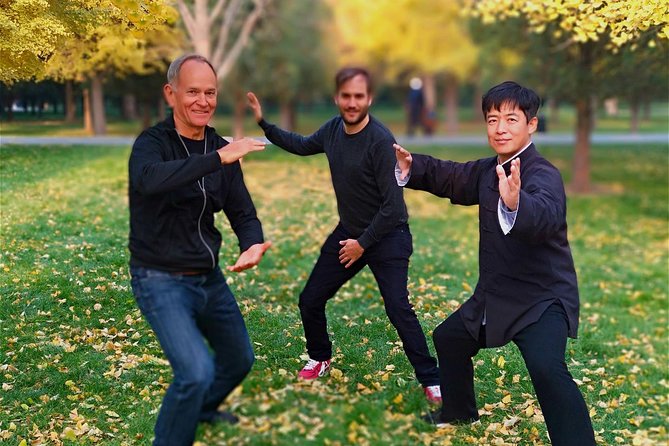
Learning tai chi in Beijing gives the activity a cultural connection that a similar class at home may not have. The meeting point is in the Dong Cheng District, near the Temple of Heaven area, and the class can take place in a park setting.
That setting matters. Tai chi is often associated with public parks and communal morning exercise in China, so practicing outdoors connects the lesson with a familiar part of Chinese daily life.
The experience is still private, so you are not simply watching local groups exercise. You receive direct instruction from your own master. The result is a useful middle ground: a personal lesson with a clear cultural setting.
Do keep your expectations realistic. The information does not promise a famous landmark view, a long park walk, or a tour of the Temple of Heaven. The focus is the tai chi lesson itself. Any scenery or public activity around you is an added benefit, not the main program.
Booking, cancellation, and practical planning
The experience is often reserved about 17 days ahead, so advance planning is sensible if your Beijing dates are fixed. Confirmation is provided when you book, and a mobile ticket is available.
Free cancellation applies if you cancel at least 24 hours before the local start time. Changes or cancellations made less than 24 hours ahead are not accepted for a refund. Since weather can affect the class, keep an eye on messages close to the activity date.
The stated recommendation is comfortable shoes. Children need an adult with them, and most people can participate. Since transportation is not supplied, plan your route to 旻园1 Tian Tan Dong Lu before class day.
Should you book the Beijing private tai chi class?
I would book this if you want a calm, culturally focused activity and prefer learning through direct instruction. It is especially good for first-timers, couples, families, small groups, and anyone curious about the link between tai chi, Taoism, yin and yang, meditation, and daily well-being.
The strongest reasons to choose it are the private format, the patient teaching associated with Eric Liu, and the mix of movement, meditation, push hands, and self-massage. You get a genuine introduction rather than a quick photo opportunity.
I would skip it if you want a demanding workout, a full martial arts course, or a sightseeing tour with many landmarks. At $58 per person, the price is easiest to justify when you value personal guidance and can use the lesson as a meaningful break from Beijing’s busy sightseeing schedule.
FAQ
How long does the Beijing private tai chi class last?
The class lasts approximately 1 hour and 30 minutes.
Is the class suitable for beginners?
Yes. The class is specifically designed for beginners and teaches tai chi through a simple, step-by-step method.
What will I learn during the class?
You learn about tai chi and its culture, a nine-step tai chi form, standing meditation, push hands, and self-massage methods intended to help relieve daily pain and stress.
Is the class private?
Yes. Only your own group participates in the activity.
Where does the class start and finish?
The listed meeting point is 旻园1 Tian Tan Dong Lu, Dong Cheng District, Beijing, China, 100061. The activity ends back at the meeting point.
What happens if bad weather cancels the class?
If poor weather causes cancellation, you are offered a different date or a full refund.
Newest reviews from Beijing
- Jinshanling Great Wall to Simatai West Sunset Hiking Private Tour★ 5.0 · 4 reviews
- Private Tour: Mutianyu/Badaling Great Wall and Temple of Heaven★ 5.0 · 4 reviews
- Beijing: Forbidden City Guided Tour with Options★ 4.3 · 4 reviews
- Beijing: Acrobatic Show Tickets Traditional & Modern Fusion★ 5.0 · 4 reviews
- Beijing: Private Biking Tour Along Central Axis of Beijing★ 4.8 · 4 reviews
- Best Beijing Day Tour To Forbidden City and Great Wall★ 5.0 · 4 reviews
- BusDa- Private Tour: Mutianyu Great Wall &Ming Tombs(Chang Ling)★ 5.0 · 4 reviews
- Beijing: Explore the Forbidden City in Hanfu★ 5.0 · 4 reviews
Workshops, compared.

Half-Day Chengdu Cooking Class with a Local Market Visit
Read our review →
Organic Chinese Dumpling Class with Market Walk
Read our review →

Online Cooking Class Beijing Dumplings and Cuisine by Sunflowerli Renowned Chef
Read our review →
Organic Xiao Long Bao Soup Dumpling Class & Market Walk
Read our review →
Beijing Wangfujing Calligraphy Class by Forbidden City
Read our review →Browse the lists this tour appears in