
Reviewed · SHOW
Chengdu: Sichuan Opera Show ShufengYayun & Covered Bowl Tea
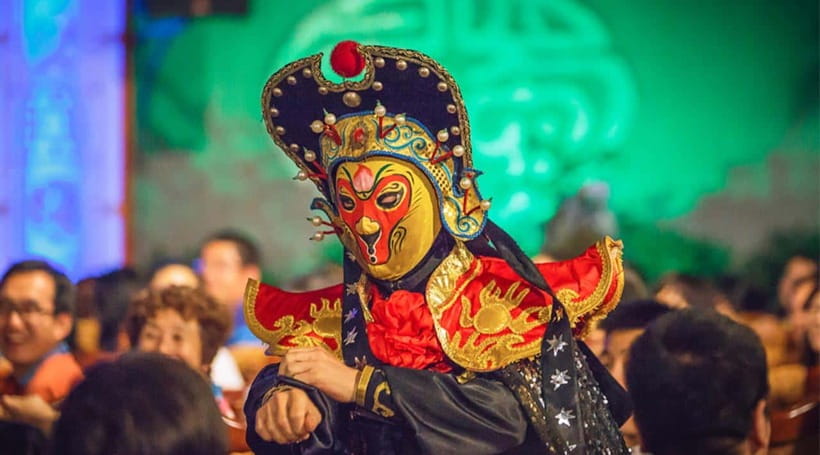
Face-changing is only the beginning. This 80-minute Sichuan opera show pairs quick-change stage magic with traditional music, puppets, shadow play, fire breathing, and Chengdu’s famous covered bowl tea. I like the mix of serious folk art and playful audience extras, and I like that the show takes place at ShufengYayun, a long-running pear garden venue near Qingyang Palace.
At $34 per person, the package offers solid value if you want several pieces of Sichuan culture in one evening. The main drawback is that seats are randomly assigned within your chosen section, and costume photography, makeup, and professional photos cost extra.
In This Review
- Key points to know before booking
- Why ShufengYayun makes a good Chengdu evening
- Finding the ticket booth on Qintai Road
- What the 80-minute program includes
- 1. Opening drums and gongs
- 2. One-act play
- 3. Huqin string music
- 4. Folk music and Penna
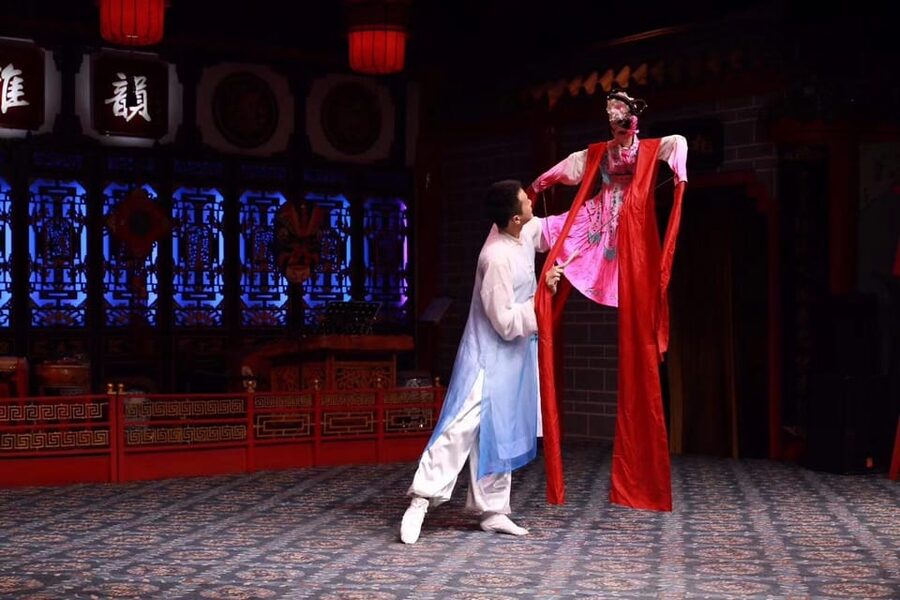
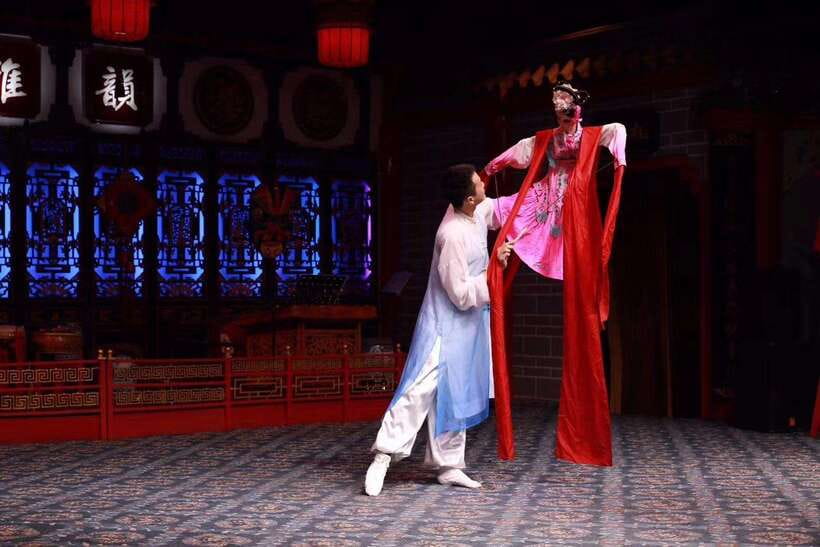
- 5. Puppetry
- 6. Selected Sichuan opera scenes
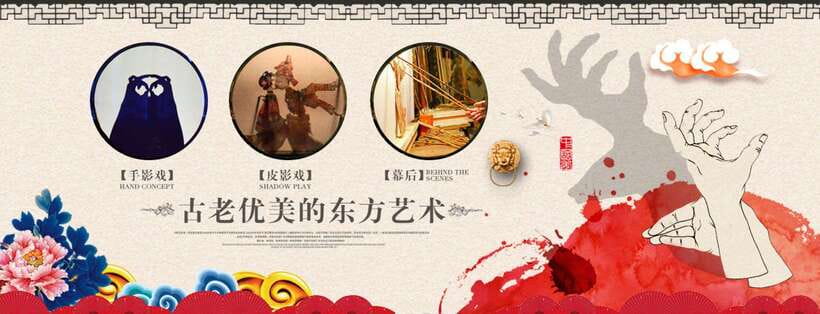
- 7. Shadow play and hand shadow
- 8. Rolling lights
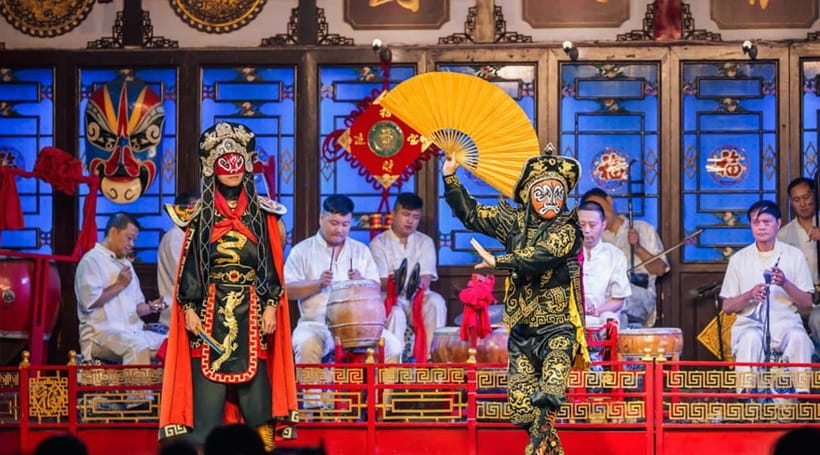
- 9. Fire breathing and face-changing
- Covered bowl tea gives the evening a local rhythm
- Seating classes and the extras that come with them
- Is $34 a fair price?
- Who will enjoy this most
- Practical timing and cancellation details
- Should you book ShufengYayun?
- FAQ
- How long does the Sichuan opera show last?
- What time should I arrive?
- Where do I collect my ticket?
- Is covered bowl tea included?
- Can I choose my exact seat?
- Is costume photography included?
- Can I cancel the booking?
Key points to know before booking
- The show runs for about 80 minutes, beginning at 8:00 p.m. Arrive 15 minutes early.
- Covered bowl tea is included, along with a plate of sunflower seeds for each table.
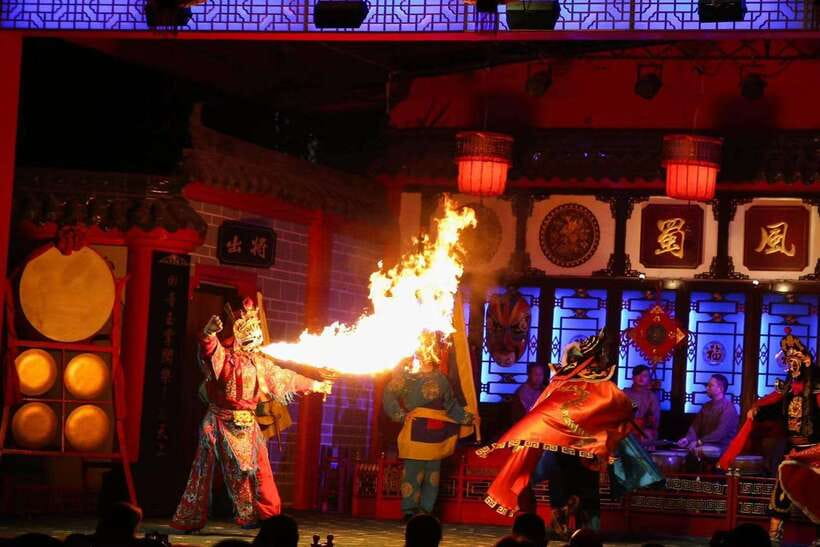
- Face-changing and fire breathing come near the end, so stay through the final scenes.
- Your seat is assigned within its ticket area, not selected in advance.
- Premium extras differ by seating class, including costumes, massage, ear cleaning, dessert, or a souvenir.
- The venue sits near Qingyang Palace, with Du Fu Thatched Cottage and Wuhou Shrine also nearby.
Why ShufengYayun makes a good Chengdu evening
Chengdu is known for pandas, spicy food, teahouses, and a relaxed pace. Sichuan opera adds another side of the city: theatrical, highly visual, and rooted in local performance traditions.
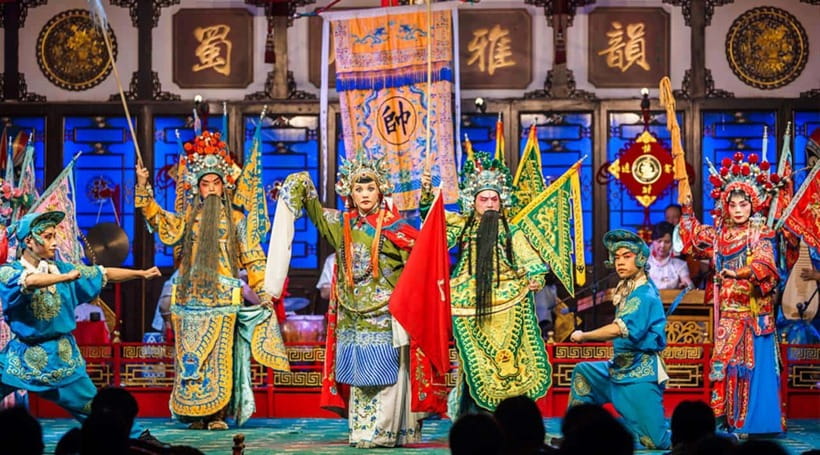
ShufengYayun was established in 1998 and presents folk arts from western Sichuan alongside classical Chinese opera. It is based within the old buildings associated with Qingyang Palace, near Qintai Ancient Path. The setting matters. You are not simply watching a stage show in a modern entertainment hall. You are entering a traditional-style theater area linked to one of Chengdu’s old cultural districts.
The venue is also close to Qingyang Palace, a well-known Taoist temple, and within reach of Du Fu Thatched Cottage and Wuhou Shrine. That makes the opera especially easy to pair with a daytime visit to Chengdu’s historic sights.
I like this setting because it gives the evening a local frame. The architecture is described as simple and dignified, with the calm character associated with old Sichuan. The performance itself is designed for both Chinese and international audiences, so you do not need to understand every line to follow the action.
That said, this is a stage presentation rather than a quiet look at everyday opera training. The program is made for an evening audience, with short segments and visual highlights. If you want a full-length traditional opera performed in one style, this variety show may feel too quick. If you want an accessible introduction, the changing acts work well.
More shows in Chengdu:
- Chengdu: Sichuan Opera Shu Feng Yan Yun Evening Show Ticket
★ 4.7 · 185 reviews - Chengdu Sichuan Opera Show Ticket – Shu Feng Ya Yun
★ 4.4 · 73 reviews - Sichuan Culture Opera Show in Chengdu
★ 4.5 · 69 reviews
Finding the ticket booth on Qintai Road
The meeting point takes a little care because the ticket collection point and the theater entrance are different places.
First, go to the ticket booth at the entrance of the Municipal Cultural Park, located in the middle of Qintai Road. The Chinese name is 市文化公园大门口. You use your phone number to collect the ticket and choose a seat within the available area.
After collecting the ticket, walk to the Old Theater, or 老戏台. It is about a one-minute walk from the booth. This is where you enter for the performance.
Check your email before leaving for the address, transport instructions, and ticket collection details. This is one of those evenings where arriving early saves stress. The venue asks you to arrive 15 minutes before the 8:00 p.m. start, and that time gives you room to find the booth, collect the ticket, and reach the theater.
English and Chinese assistance is available on site. If you are unsure where to go, approach the staff at the venue and ask for help with seating.
What the 80-minute program includes
The exact order can change, and the performance on the night takes priority. Still, the advertised program gives you a clear idea of the evening.
1. Opening drums and gongs
The performance begins with Nao Tai, an opening drum and gong presentation. This kind of start sets a clear theatrical mood. The sound is direct and physical, and it helps the audience shift from chatting over tea to paying attention to the stage.
It is also a useful introduction if you have never seen Chinese opera. The show does not begin quietly. The drums and gongs announce that the theater is open and the action is underway.
A few more tours worth putting side by side
- Chengdu: Giant Panda Breeding Research Base Ticket
★ 4.5 · 580 reviews - Half-Day Chengdu Cooking Class with a Local Market Visit
★ 5.0 · 465 reviews - Tuktuk Food Tour Through Chengdu’s Local Eats
★ 5.0 · 435 reviews - Private Half-Day Chengdu Panda Breeding Center Tour with Optional Volunteer
★ 5.0 · 353 reviews
2. One-act play
A short play follows. Since the performance is aimed at an international audience as well as local people, you can expect the action, costumes, gestures, and stage movement to carry much of the meaning.
The possible limitation is language. Even with visual clues, you may not catch every detail of the story. That is normal here. Focus on expression, movement, music, and the reactions between characters rather than trying to translate every line.
3. Huqin string music
The huqin is a traditional Chinese string instrument. Its sound gives the program a change of pace after the opening theater pieces.
This section is valuable because it shows that Sichuan opera is not only about painted faces and tricks. The music has its own place in the tradition. You get a brief look at the instrumental side of the art before the next folk performance.
4. Folk music and Penna
The program also includes a folk music segment called Penna. The available information does not explain the exact form of this act, so the presentation may be best understood as one of the evening’s shorter folk arts displays.
The variety is part of the appeal. Instead of asking you to sit through one long story, the show moves through several forms. That keeps the pace lively, though anyone hoping for a detailed explanation of each tradition may find the transitions brief.
5. Puppetry
The puppet show brings a more playful touch. Puppetry is easy to follow from a distance because movement and shape do much of the work.
This is a good section for families and for anyone who wants a break from the more formal opera scenes. It also helps show the range of performance traditions presented at ShufengYayun.
6. Selected Sichuan opera scenes
The selected opera scenes are the heart of the evening. Sichuan opera uses strong gestures, costume details, music, and carefully controlled movement. You may not understand every spoken passage, but the visual style remains clear.
The show is a sampler, so expect selected highlights rather than a single long plot. That format suits a first visit. You can see how the performers use posture, timing, facial expression, and costume to create character.
7. Shadow play and hand shadow
The hand-shadow segment adds a small-scale contrast to the larger stage acts. Instead of relying on elaborate costumes or loud musical cues, it uses hands, light, and silhouette.
It is a reminder that Chinese performance traditions can be highly inventive with simple tools. This act may be shorter than the opera scenes, but it gives the program a welcome change in texture.
8. Rolling lights
Rolling lights are another specialty segment. The name suggests a juggling or balance display using lights, though the exact staging can vary.
As with the other short acts, the value comes from the surprise of the change. The show keeps moving from music to theater to visual skill, which is why the 80-minute length feels manageable.
9. Fire breathing and face-changing
The finale brings the best-known Sichuan opera attractions: fire breathing and face-changing. The rapid face changes are performed by actors whose movements must be precise enough to make the change appear almost instant.
This is the part many people are waiting for, but it works better because the earlier acts establish the wider tradition first. Fire breathing adds danger and spectacle. Face-changing adds mystery and technical skill.
The exact method is not explained as part of the show, and preserving that mystery is likely part of the fun. You can enjoy it as theater rather than treating it like a demonstration with a lecture attached.
Covered bowl tea gives the evening a local rhythm
Each ticket includes one cup of gaiwan tea, also called covered bowl tea. The gaiwan has three parts: a bowl, a lid, and a saucer.
To drink from it, you use the lid to hold back the leaves while sipping from the bowl. The lid can be pressed and rotated to control the tea’s strength and keep it warm. That small movement is part of the custom, not just a practical trick.
I like this inclusion because it gives you something to do before the show and during quieter moments. You are not only watching a performance. You are also handling a traditional tea set in the way it is meant to be used.
A plate of sunflower seeds is provided at each table. Additional food and drinks from the on-site menu are not included, so keep that in mind if you expect a full meal. This is an opera and tea outing, not a dinner package.
The tea may be the most useful part of the evening for someone interested in ordinary Chengdu culture. Tea drinking is closely tied to the city’s social life, and the gaiwan offers a simple introduction without requiring a separate tea ceremony booking.
Seating classes and the extras that come with them
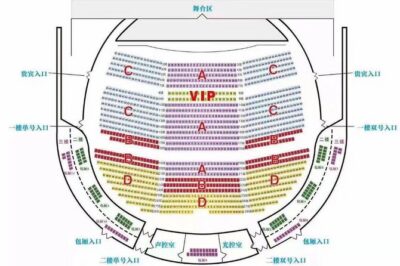
The seating chart divides tickets into three areas:
- Yipin class: Seats in the red area. This includes covered bowl tea, sunflower seeds, and one added benefit: a premium costume experience, fruit platter, or massage and ear cleaning with dessert.
- Erpin class: Seats in the green area. This includes covered bowl tea, sunflower seeds, and one choice of massage, ear cleaning, dessert, or souvenir.
- Sanpin class: Seats in the blue area. This includes the same basic tea and sunflower seed arrangement, plus one choice of massage, ear cleaning, dessert, or souvenir.
The seats are randomly assigned within the area you purchase. You cannot assume that a higher-priced option lets you select a particular chair. If being close to the stage matters to you, check the seating chart carefully before paying.
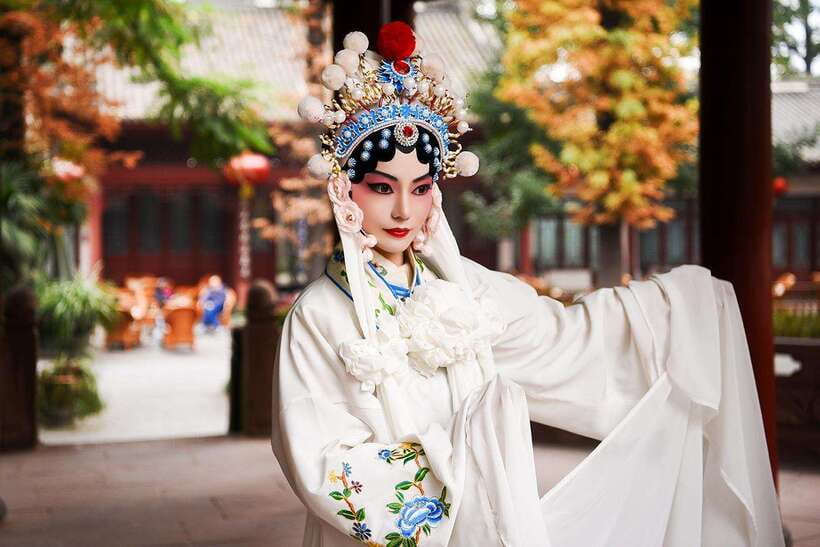
The costume benefit in the Yipin package is for trying on the costume only. It does not include makeup, hairstyling, a scenic background, or a professional photographer.
You can pay separately at the venue for a full costume photography experience. That option includes makeup and hair styled in a look similar to the performers, a professional photo session, a customized background, and at least 10 edited photos. You need to arrive at least one hour early for this extra service, and the additional fee must be confirmed and paid directly on site.
This distinction is important. The included costume experience is a fun try-on. It is not a finished portrait session.
Massage and ear cleaning are unusual additions to an opera ticket. They may appeal to you if you enjoy Chengdu’s tea-house culture and its relaxed approach to leisure. They may feel less relevant if you want to focus only on the stage.
Is $34 a fair price?
At $34 per person, the experience offers more than a basic theater ticket. You receive an 80-minute production, a cup of covered bowl tea, sunflower seeds, and one benefit linked to your seating class.
The value is strongest for first-time visitors to Chengdu who want one efficient evening introduction to Sichuan performance. You get drums, opera, instrumental music, folk music, puppetry, shadow work, rolling lights, fire breathing, and face-changing without buying separate tickets.
It is less useful if you have already seen several Sichuan opera productions or want a quiet, highly focused theatrical performance. The variety format favors breadth over depth.
The included extras also affect the value. A massage, dessert, souvenir, or costume try-on may make the ticket feel more generous, but these are complimentary additions rather than the main reason to book. Choose based on the show and location first.
The 80-minute duration is another plus. It fits neatly into an evening after dinner, and you are unlikely to feel trapped in a long production if the Chinese dialogue becomes difficult to follow.
Who will enjoy this most
I would suggest this show to you if you want:
- A first look at Sichuan opera without committing to a long performance
- A visual show that works even if you do not speak Chinese
- An evening activity near Qingyang Palace and Qintai Road
- A cultural experience that includes tea rather than only stage entertainment
- A family-friendly mix of puppetry, music, physical skill, and theatrical effects
- A compact program with a clear finale
The show may not suit you as well if you need detailed English explanations, dislike assigned seating, or want a full meal included. The performance is accessible through sight and sound, but the story details may not always be clear to non-Chinese speakers.
It is also worth checking the day’s schedule because the content and order can change. The advertised acts are a guide, not a guarantee of an identical running order.
Practical timing and cancellation details
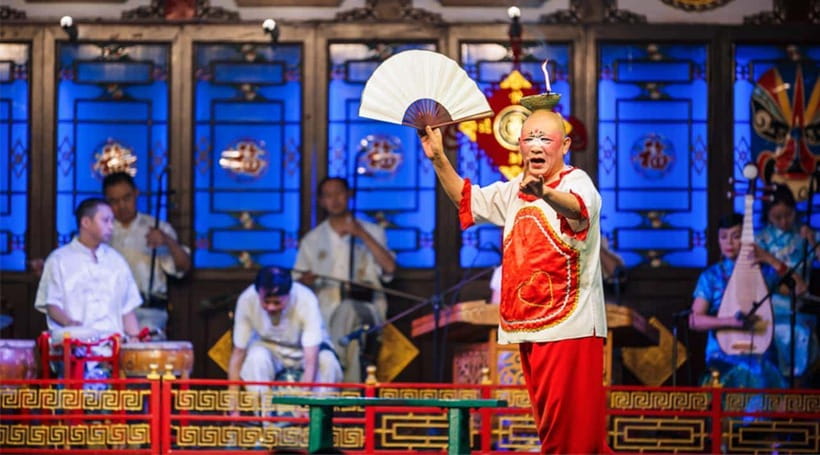
The show starts at 8:00 p.m. and lasts about 80 minutes. Arrive at least 15 minutes early for ticket collection and seating. If you are booking the paid makeup and photography option, arrive at least one hour early.
The experience is wheelchair accessible, and small-group availability is offered. A host or greeter may assist in Chinese or English.
You can reserve now and pay later, which helps if your Chengdu schedule is still shifting. Cancellation is allowed up to 24 hours before the experience for a full refund.
Should you book ShufengYayun?
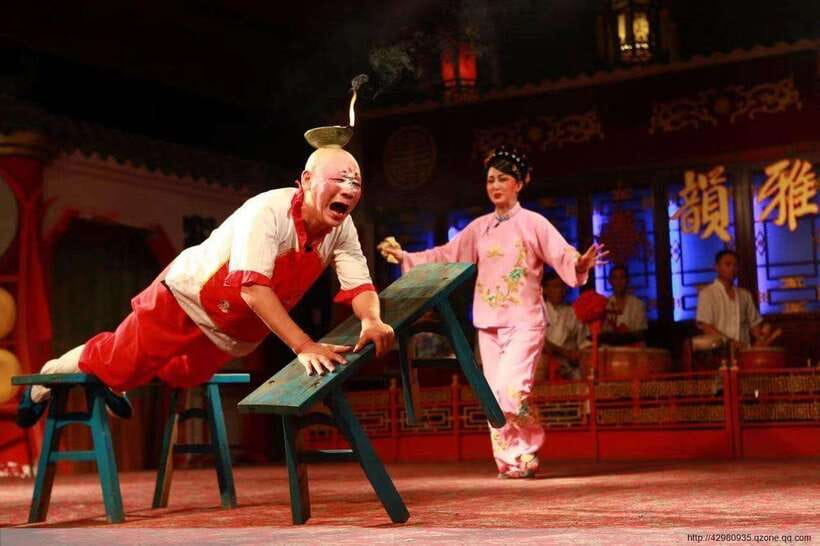
Book it if you want a convenient, good-value introduction to Chengdu’s stage traditions, especially if face-changing and fire breathing are high on your list. The covered bowl tea, historic-style setting, and short format give the evening more local character than a standard theater attraction.
I would choose a ticket area based on your seating budget, then treat the massage, dessert, souvenir, or costume try-on as a bonus. Arrive early, read the ticket instructions carefully, and do not confuse the included costume try-on with the separately priced photo package.
For a first Sichuan opera experience, this is a sensible pick: varied, visual, and easy to fit into a Chengdu evening.
FAQ
How long does the Sichuan opera show last?
The performance lasts approximately 80 minutes and begins at 8:00 p.m.
What time should I arrive?
You should arrive 15 minutes before the performance. If you want the paid makeup, hairstyling, and photography option, arrive at least one hour early.
Where do I collect my ticket?
Collect your ticket at the booth near the entrance of the Municipal Cultural Park on Qintai Road, marked 市文化公园大门口. Afterward, walk about one minute to the Old Theater, or 老戏台, for entry.
Is covered bowl tea included?
Yes. Each ticket includes one cup of gaiwan tea, also called covered bowl tea, plus a plate of sunflower seeds per table.
Can I choose my exact seat?
No. Seats are randomly assigned within the seating area linked to your selected ticket class. Check the seating chart before booking to understand the area you are buying.
Is costume photography included?
No. The Yipin costume benefit is for trying on the costume only. Makeup, hairstyling, a photographer, a customized background, and edited photos require an additional payment at the venue.
Can I cancel the booking?
Yes. You can cancel up to 24 hours in advance for a full refund. You can also reserve now and pay later.
Newest reviews from Chengdu
- Golden Buddha & Cloud Sea: Emei Mountain Private Tour★ 5.0 · 4 reviews
- All Inclusive Private Panda Base Traditional Painting Experience★ 5.0 · 4 reviews
- Chengdu: City Walking Tour with Food and Culture Stops★ 4.7 · 4 reviews
- Classsic sichuan Opera at sichuan Provincial Theater★ 5.0 · 4 reviews
- One Day Trip to Dujiangyan Irrigation System & Mount QingCheng Tour★ 5.0 · 4 reviews
- Private Day Tour: Dujiangyan Panda Base and Irrigation Project★ 5.0 · 4 reviews
- Private Day Tour: Chengdu Panda and Leshan Buddha★ 4.0 · 5 reviews
- One Day Giant Panda Leisure Private Tour in Chengdu★ 5.0 · 5 reviews
Show, compared.
Shanghai Circus World: ERA2 Intersection of Time Acrobatics Show
Read our review →
Red Theatre Beijing Acrobatic Show Tickets Official Booking
Read our review →
Sichuan Opera Shu Feng Yan Yun Evening Show Ticket
Read our review →
Great Tang Dynasty Night Show & Dumpling Meal Option
Read our review →
Beijing Golden Mask Dynasty Show with Private Transfer
Read our review →
Beijing Roast Duck Banquet and Acrobatics Show with VIP Seats Evening Tour
Read our review →Browse the lists this tour appears in