
Reviewed · CHENGDU TOURS
Learn cold noodle and wolf-teeth potato at local home
Street food tastes better when family recipes lead the way. This small Chengdu cooking class focuses on two famous Zigong snacks, cold noodles and wolf-teeth potatoes, taught by Karen, whose mother sold both dishes from a local food stall. I like the personal connection to Sichuan salt and the chance to learn a homemade chili oil recipe. The main consideration is that this is a short, focused class, not a broad survey of Sichuan cooking.
You will cook in a group capped at six people, which should leave room for direct help at the stove. I also like that spice can be adjusted, and that the price of $31 includes ingredients, equipment, an apron, water, snacks, and a recipe. The meeting point is on Zhongxin Road in Chengdu, and you must arrange your own transportation there and back.
In This Review
- Key Points to Know Before You Book
- Why These Two Zigong Snacks Matter
- Meeting Karen on Zhongxin Road
- Preparing Cold Noodles the Zigong Way
- Cutting Wolf-Teeth Potatoes
- The Chili Oil Lesson
- Tasting Your Own Work
- Is $31 a Fair Price?
- Who Will Enjoy This Cooking Class?
- What Could Be Better
- Cancellation and Practical Details
- Should You Book It?
- FAQ
- How long does the cooking experience last?
- Where does the class begin and end?
- Are ingredients and cooking equipment included?
- Can I join if I cannot eat spicy food?
- How many people can join the class?
- Is transportation included?
Key Points to Know Before You Book
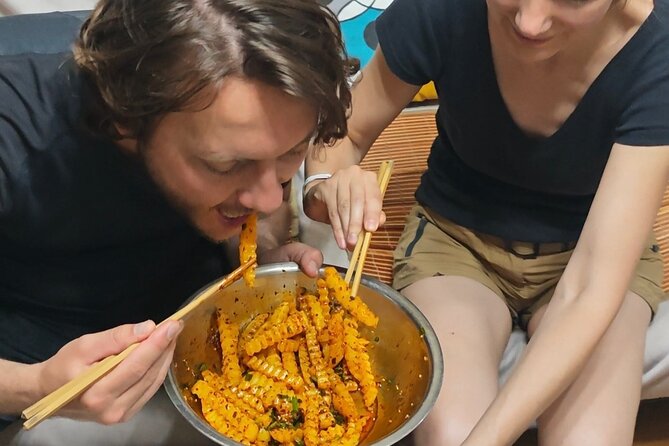
- Zigong family cooking: Karen learned these dishes from her mother, who sold cold noodles and wolf-teeth potatoes for years.
- Two Sichuan snacks: You prepare both dishes, then sit down to taste what you made.
- Homemade chili oil: The class includes Karen’s family method, with no chili required if you cannot handle spicy food.
- Small group size: A maximum of six people makes this more personal than a large demonstration.
- Short Chengdu activity: Plan on about one hour and forty minutes to two hours, including cooking and tasting.
- Useful inclusions: Food, cooking equipment, apron, water, snacks, and a recipe are covered in the $31 price.
Why These Two Zigong Snacks Matter
Cold noodles and wolf-teeth potatoes are not random menu choices. They are popular snacks from Zigong, a city in Sichuan known for its salt production. That salt connection matters here because Karen grew up in Zigong, where both of her parents worked in a salt factory and her grandfather worked as a boiler man.
For you, this gives the class a clear sense of place. You are not simply learning two easy recipes from a generic cooking school. You are learning food tied to one family, one city, and the flavors Karen remembers from childhood.
Her memories are part of the appeal. After school, she would buy cold noodles or wolf-teeth potatoes at a grocery near school, then eat them with classmates before going home. Later, she helped her mother prepare food for the family stall by cutting and frying potatoes, steaming noodles, and cooling them for service.
That background helps explain why the class is likely to feel personal rather than formal. Karen is not presenting herself as a professional chef. She learned the methods from her mother, and she teaches the food as home cooking. If you want polished restaurant technique, this may not be the right choice. If you want a family-style recipe with a real connection to Zigong, it is a strong fit.
A few more tours worth putting side by side
- Chengdu: Giant Panda Breeding Research Base Ticket
★ 4.5 · 580 reviews - Half-Day Chengdu Cooking Class with a Local Market Visit
★ 5.0 · 465 reviews - Tuktuk Food Tour Through Chengdu’s Local Eats
★ 5.0 · 435 reviews
Meeting Karen on Zhongxin Road
The class begins at Zhongxin Road in Chengdu’s Jinniu District and ends at the same meeting point. The activity is near public transportation, but transportation to and from the meeting point is not included, so allow time to reach the address.
The meeting starts with introductions. This is a small but useful part of the visit because Karen can learn about your food preferences before cooking begins. Tell her about allergies or dietary restrictions early. The class specifically asks for this information, and chili can be left out if you cannot eat spicy food.
You should arrive on time. The total schedule is short, so a late start could reduce the time available for cooking and tasting. A mobile ticket is provided, and confirmation arrives when you book.
The group limit is six people. That number matters in a hands-on class. You are not just watching a cook work from across a crowded room. You should have a better chance to ask questions, check your technique, and get help while preparing the dishes.
Preparing Cold Noodles the Zigong Way
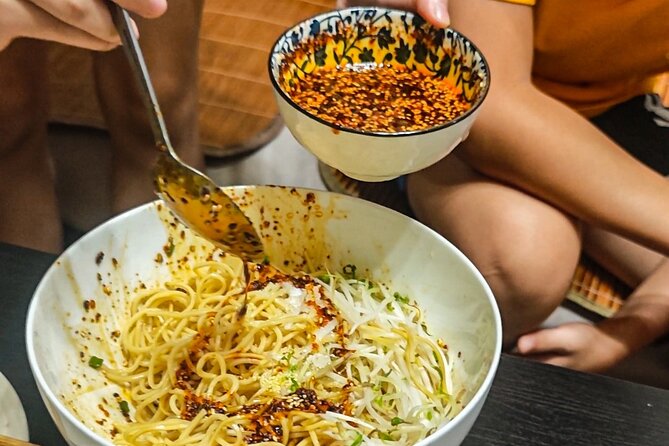
The first part of the cooking session introduces the ingredients and the method for making cold noodles. You then prepare the dish under Karen’s guidance, rather than simply watching a demonstration.
The process includes steaming and cooling the noodles, a method Karen learned while helping her mother. That detail gives you a better idea of what makes the recipe different from a simple bowl of noodles with sauce. Timing and texture matter. The noodles need to be prepared and cooled properly before the seasoning goes on.
Karen teaches what she describes as the authentic Zigong approach. The class does not promise restaurant-style precision, and that is part of its character. You are learning the food as it was made in her family kitchen and food stall.
The cold noodles are also a useful choice for a short class. You can work with a familiar base, then see how Sichuan seasoning changes the result. If you normally think of noodles as a hot meal, this gives you a different way to understand the balance of starch, sauce, salt, and chili.
The recipe is included, so you do not have to rely on memory after the class. That is important because the most useful cooking activities give you something you can repeat at home. You can make the noodles again and adjust the heat to suit your own kitchen.
Cutting Wolf-Teeth Potatoes
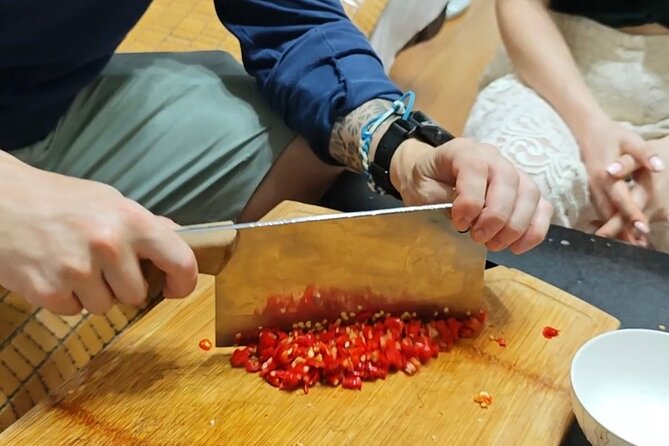
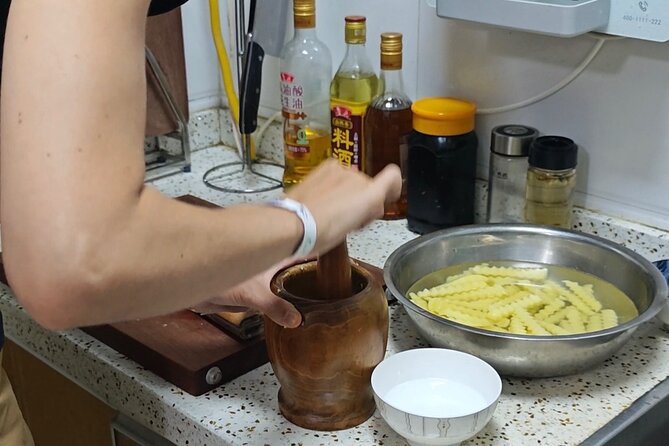
The second dish is wolf-teeth potato, a Zigong snack named for the jagged shape created when the potato is cut. The supplied information describes Karen cutting and frying potatoes while helping at her mother’s stall, so the preparation is closely linked to her childhood work.
This is likely to be the more tactile part of the class. You prepare the potatoes, fry them, and season them according to Karen’s instructions. The distinctive cut gives the snack its look and helps the seasoning cling to the potato.
For many people, this dish will be the less familiar of the two. Cold noodles are easy to recognize, but wolf-teeth potato may be new to you. That makes it a useful introduction to the snack culture of Zigong, especially if you want something beyond the better-known Sichuan dishes found on restaurant menus.
Do not expect a full meal. The class centers on two snacks, and the session lasts less than two hours. You will taste your work at the end, but this is best viewed as a cooking lesson with food to eat, not as a long lunch.
A completely different kind of day out on the same trip:
- Private Half-Day Chengdu Panda Breeding Center Tour with Optional Volunteer
★ 5.0 · 353 reviews - Chengdu: Sichuan Opera Shu Feng Yan Yun Evening Show Ticket
★ 4.7 · 185 reviews - Private Chengdu Day Tour: Giant Pandas and Jinsha Site Museum
★ 5.0 · 142 reviews - Visiting Dujiangyan Yaan Wolong Panda Base Optional Volunteering
★ 5.0 · 105 reviews
The Chili Oil Lesson
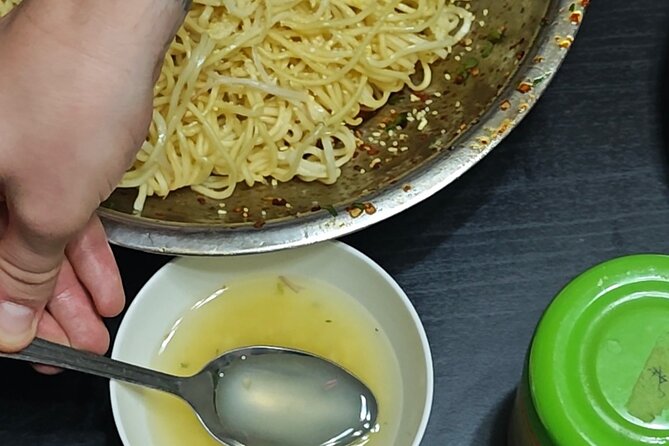
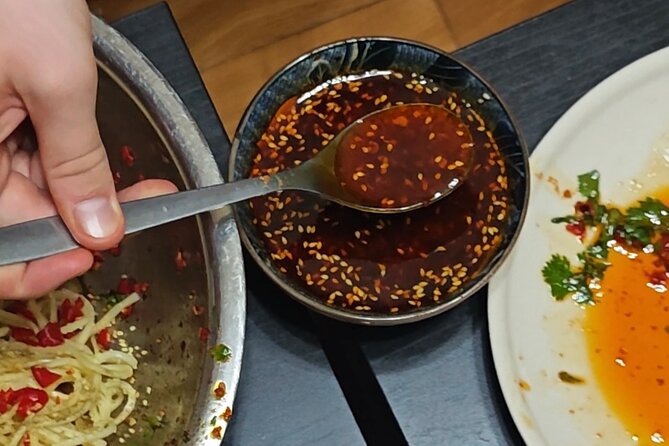
Chili oil can make or break Sichuan snacks. Karen includes her home recipe, giving the class a third skill beyond the two main dishes.
The exact ingredients and quantities are not provided in advance, so you should pay close attention during the demonstration and write notes on your recipe. The useful part is not only the heat. Homemade chili oil affects aroma, color, and the way the seasoning coats noodles and potatoes.
Spice tolerance varies widely, especially among people visiting Sichuan for the first time. Karen can omit chili if you cannot eat spicy food, so do not assume you must endure a fiery meal to take part. Tell her your limits before cooking starts.
The chili oil lesson also adds value to the $31 fee. You leave with a technique that can be used beyond this class, along with the recipes for the noodles and potatoes. If you already cook Sichuan food often, you may appreciate the family method more than the basic preparation itself.
Tasting Your Own Work
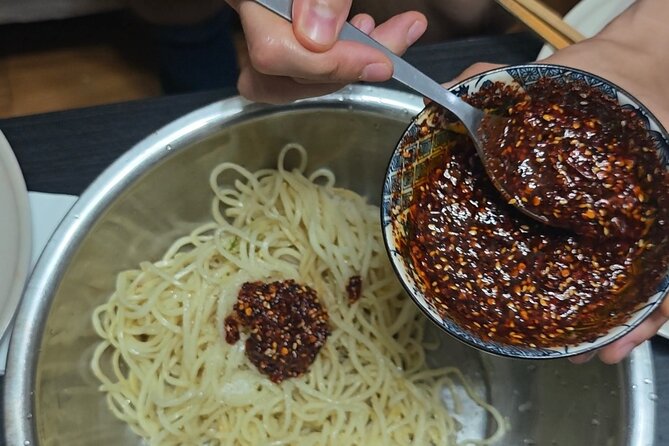
Once both dishes are finished, you taste them and share your impressions with Karen. This final stage gives the class a natural ending. You can compare the texture, seasoning, and heat of each snack while the cooking steps are still fresh.
Karen also explains some characteristics of Sichuan and Zigong cuisine at this point. That local context is valuable because it connects the food to the region instead of treating the recipes as isolated instructions.
The tasting is also where you can judge how closely your food matches your own preferences. Perhaps the potatoes need more salt, or the noodles need less chili. Cooking under instruction does not mean every plate will taste identical, and that is useful. You learn how to adjust the food rather than simply copy a fixed result.
One published comment praised Karen for explaining each step clearly and guiding the cook throughout the process. That is the strongest reason to choose this class. It is designed for participation, and the positive feedback specifically highlights clear instruction, simple preparation, and delicious results.
Is $31 a Fair Price?
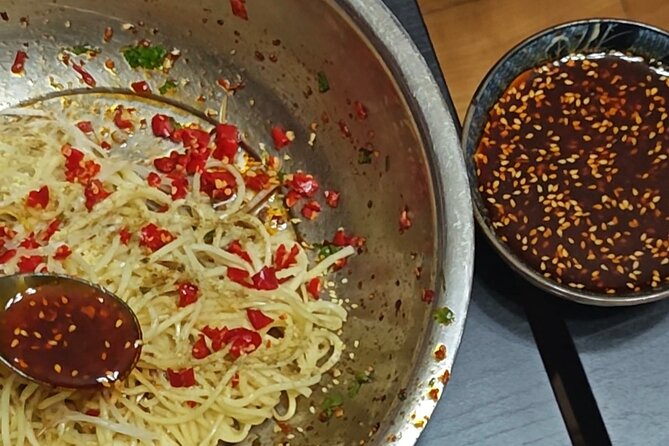
At $31, this is reasonably priced for a small, hands-on cooking session in Chengdu. The fee includes all food ingredients, cooking equipment, an apron, water, snacks, and a recipe. You also receive instruction in two dishes plus a chili oil method.
The value depends on what you want. If your priority is eating as cheaply as possible, you can find snacks in Chengdu for far less than $31. The fee is paying for access to a local teacher, a small group setting, ingredients, kitchen use, and the ability to repeat the recipes later.
The group maximum of six strengthens the value. A large cooking class might cost a similar amount while giving you less time with the instructor. Here, Karen’s family story and personal instruction are central to what you are buying.
The activity does not include transportation, so add the cost of reaching Zhongxin Road. Since the class returns to the meeting point, you do not need to plan for a separate ending location.
Who Will Enjoy This Cooking Class?
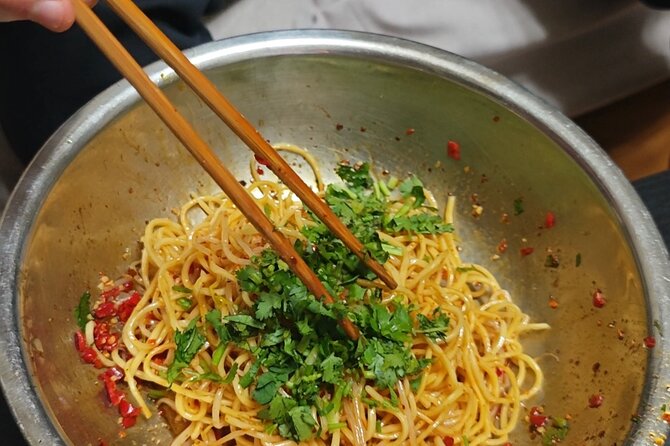
I would recommend this class to anyone who wants a short food activity with a strong local connection. It suits first-time visitors to Chengdu who want an introduction to Sichuan flavors without committing to a full-day food tour.
It is also a good option for home cooks. The dishes are described as quick and simple to make, and one participant planned to prepare them again at home. The included recipe gives you a practical souvenir rather than something that sits unused in a suitcase.
Families can take part, but children must be accompanied by an adult. The activity can include children, although the cooking work involves cutting, frying, and hot equipment, so adults should remain responsible for supervision.
This class also works for people who are cautious about spicy food. Karen can leave out chili, which makes the session more flexible. Still, if you want a full Sichuan feast with many dishes, this will feel limited. The focus stays on two snacks and their preparation.
What Could Be Better
The main limitation is the narrow scope. You will not learn a complete Sichuan meal, and the class does not cover a wide range of dishes. Some people may prefer a longer session with dumplings, mapo tofu, or other regional specialties.
The experience is also tied to one meeting point. You must get to Zhongxin Road yourself, and the information provided does not include pickup or drop-off. Check the address and transport route before setting out.
The personal, home-style approach may not suit someone seeking formal culinary training. Karen is not presenting herself as a chef, and the recipes come from her mother’s cooking. For me, that is a strength, but it is worth understanding before booking.
Finally, there are only six published ratings, even though the score is a perfect five. The comments point to clear instruction and tasty results, but the small number means you should treat that score as encouraging rather than as proof that every visitor will have the same experience.
Cancellation and Practical Details
You receive confirmation at the time of booking, and the activity accepts a mobile ticket. The minimum drinking age is 18, though drinking is not described as a central part of the class.
You can cancel for a full refund up to 24 hours before the scheduled start time. Cancellations or changes made within 24 hours are not accepted for a refund, and all cut-off times use Chengdu local time.
If your preferred date is not available on the calendar, you can message the provider, Travel Like A Local, to ask about opening it. That option is useful if your Chengdu schedule is fixed.
Should You Book It?
Book this class if you want personal instruction, local food history, and recipes you can use at home. Karen’s connection to Zigong, her mother’s food stall, and the region’s salt culture gives the session more meaning than a basic snack demonstration.
Skip it if you want a long meal, a broad Sichuan cooking course, or included transportation. For everyone else, $31 buys a compact and practical Chengdu activity, with a small group, flexible spice level, and two distinctive Zigong snacks to take home in your cooking memory.
FAQ
How long does the cooking experience last?
The activity lasts approximately one hour and forty minutes to two hours.
Where does the class begin and end?
It begins at Zhongxin Road in Jinniu District, Chengdu, and ends back at the same meeting point.
Are ingredients and cooking equipment included?
Yes. The price includes all food ingredients, cooking equipment, an apron, water, snacks, and a recipe.
Can I join if I cannot eat spicy food?
Yes. You should tell Karen about your dietary needs in advance, and she can leave out the chili.
How many people can join the class?
The activity has a maximum of six participants.
Is transportation included?
No. You must arrange your own transportation to and from the meeting point.
Newest reviews from Chengdu
- Chengdu: City Walking Tour with Food and Culture Stops★ 4.7 · 4 reviews
- Classsic sichuan Opera at sichuan Provincial Theater★ 5.0 · 4 reviews
- One Day Trip to Dujiangyan Irrigation System & Mount QingCheng Tour★ 5.0 · 4 reviews
- Private Day Tour: Dujiangyan Panda Base and Irrigation Project★ 5.0 · 4 reviews
- Private Day Tour: Chengdu Panda and Leshan Buddha★ 4.0 · 5 reviews
- One Day Giant Panda Leisure Private Tour in Chengdu★ 5.0 · 5 reviews
- Sanxingdui Ruins and Giant Pandas Private Day Tour from Chengdu★ 5.0 · 5 reviews
- Half-Day Tour at Chengdu Panda Breeding Research Base★ 4.0 · 5 reviews
Chengdu Tours, compared.

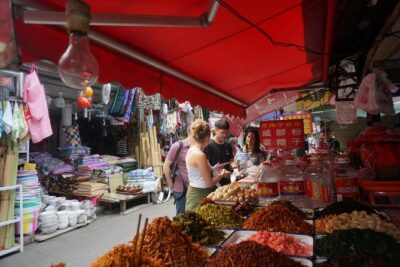
Half-Day Chengdu Cooking Class with a Local Market Visit
Read our review →

Private Half-Day Chengdu Panda Breeding Center Tour with Optional Volunteer
Read our review →
Sichuan Opera Shu Feng Yan Yun Evening Show Ticket
Read our review →
Private Chengdu Day Tour: Giant Pandas and Jinsha Site Museum
Read our review →
Visiting Dujiangyan Yaan Wolong Panda Base Optional Volunteering
Read our review →
Chengdu Sichuan Opera Show Ticket – Shu Feng Ya Yun
Read our review →Browse the lists this tour appears in