
Reviewed · HONG KONG TOURS
Private colonial Cemeteries tour
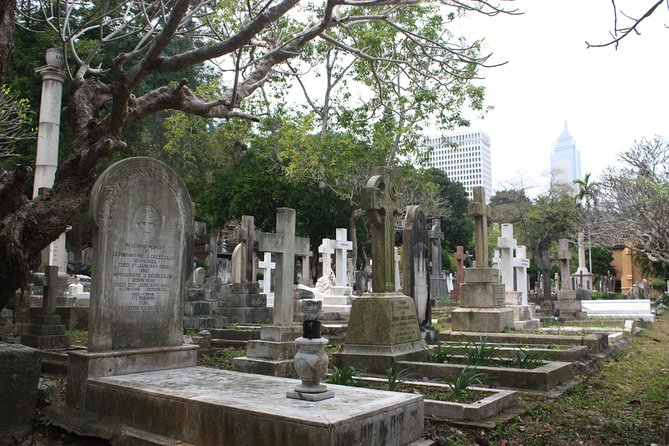
Hong Kong’s past is written in stone. This private three-hour walk through Happy Valley links Muslim, Catholic, Protestant, Jewish, Parsee, and Hindu burial grounds with the people and communities that helped shape the city. It offers a quieter, more human view of Hong Kong than the usual skyline, shopping, and harbor itinerary.
I like the private format, which lets you ask questions and set the pace with your guide. I also like the way the tour brings several faiths and communities into one compact historical story. The main drawback is the heat: Happy Valley can feel demanding in humid weather, and you will need comfortable shoes, sun protection, and your own water.
In This Review
- Key points to know before booking
- Why Happy Valley tells Hong Kong’s story
- Starting at Statue Square at 9:00 am
- The Muslim Cemetery and Hong Kong’s wider community
- St. Michael’s Catholic Cemetery and the colonial era
- Hong Kong Cemetery, the Protestant colonial ground
- Parsee and Hindu sites: two important details to clarify
- The Jewish Cemetery and a quieter finish
- What the guide adds to the experience
- Is $171.44 per person good value?
- Heat, walking, and what to bring
- Who will enjoy this cemetery tour most?
- Should you book the Happy Valley cemeteries tour?
- FAQ
- How long does the private colonial cemeteries tour last?
- Where does the tour begin?
- Where does the tour end?
- Which cemeteries are included?
- Is transportation included?
- Is this a private activity?
- Can I cancel for a full refund?
Key points to know before booking
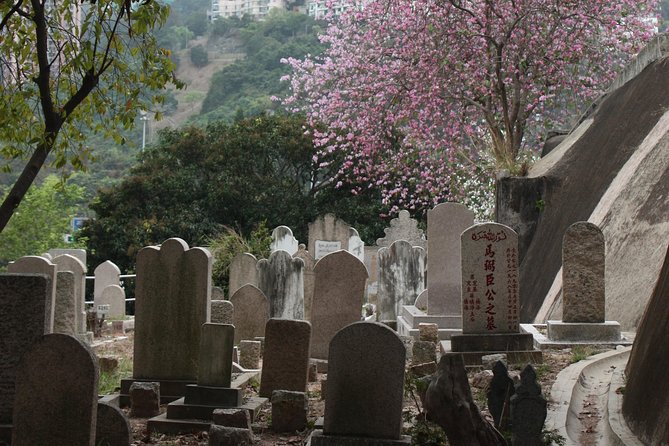
- Five cemeteries in one morning: The route connects major burial grounds in Happy Valley, with additional Parsee and Hindu sites included in the detailed stop information.
- History through individual lives: Your guide uses graves, names, and personal stories to explain Hong Kong’s growth.
- A genuinely different side of Hong Kong: The tour shifts attention from famous sights to ordinary residents, influential figures, and religious communities.
- Private guiding with public transport included: You meet at Statue Square at 9:00 am and finish near the Happy Valley Tram Terminus on Wong Nai Chung Road.
- A good family option: Children and teenagers can take part, and one family found the experience suitable for children aged 6, 9, and 11.
- Prepare for sun and humidity: Bring water, walking shoes, and an umbrella or hat, especially during warmer months.
Why Happy Valley tells Hong Kong’s story
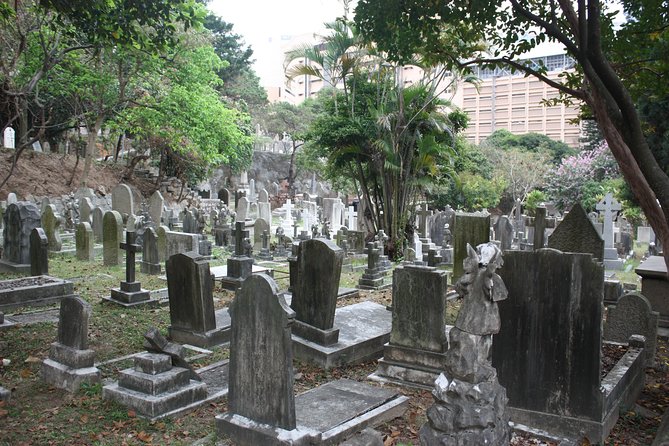
Happy Valley is best known today for its racecourse and busy urban setting. Behind that modern activity, the area’s cemeteries preserve a record of Hong Kong’s colonial era, migration, religion, trade, and community life.
That makes this tour more than a walk through old graves. You use the cemeteries as a map of the city’s development. Different burial grounds reveal who lived in Hong Kong, how communities organized themselves, and how the city changed over time.
I like this approach because it avoids treating history as a list of dates. Names and memorials give the story a human scale. You may hear about influential residents who helped move Hong Kong forward, but you also encounter the lives of ordinary people who formed the city’s daily culture.
The guide, Stefanie, is repeatedly praised for making the subject lively and easy to follow. She is described as friendly, patient, and willing to answer questions, qualities that matter on a tour built around details you might otherwise miss.
A few more tours worth putting side by side
- Hong Kong: Dolphin Cruise, Big Buddha & Lantau Island Tour
★ 4.2 · 1,512 reviews - Ngong Ping 360: Cable Car Return Tickets & Combos
★ 4.6 · 1,431 reviews - Lantau Island Day Trip – Big Buddha & Tai O
★ 4.5 · 1,328 reviews
Starting at Statue Square at 9:00 am
The tour begins at Statue Square in Central, one of the easiest parts of Hong Kong to reach by public transportation. Starting here gives the morning a clear city-center-to-Happy-Valley flow rather than making you find a remote meeting point.
Public transportation is included, which is useful in Hong Kong. You do not need to arrange a private vehicle for the route, and the end point near the Happy Valley Tram Terminus leaves you close to onward transport.
The exact order can vary, but the planned visit includes roughly 30 to 45 minutes at each cemetery. That is enough time to understand the character of each site without turning the morning into a long, exhausting memorial study.
This is a private activity, so only your own group takes part. That matters here. Cemeteries are places where quiet questions and personal interests can shape the experience. If you want more background on a particular religious tradition, family name, or period of Hong Kong’s past, you can ask without holding up a large group.
The Muslim Cemetery and Hong Kong’s wider community
The Muslim Cemetery is scheduled as the first major stop, with about 45 minutes set aside for the visit. It introduces one of the religious communities that helped form Hong Kong’s social fabric.
The value of this stop is its place in the larger sequence. You are not seeing a single colonial burial ground and being told one narrow version of the city. You are comparing communities and learning how different groups became part of Hong Kong.
A guide-led visit is especially helpful in a cemetery because the meaning of names, inscriptions, and layout may not be obvious at first glance. Stefanie’s role is to connect what you see with the people and events behind it.
Keep your pace comfortable here. You may spend more time listening than walking, so there is no need to rush from one grave to the next. The tour is designed around explanation and conversation rather than simply checking off locations.
St. Michael’s Catholic Cemetery and the colonial era
St. Michael’s Catholic Cemetery receives another 45-minute visit. Along with the Protestant cemetery, it gives you a chance to compare two important colonial-era burial grounds and the communities associated with them.
This stop works well for anyone interested in the relationship between religion and the development of Hong Kong. The cemetery is not presented as an isolated religious site. Instead, it forms part of a story about the people who lived, worked, worshipped, and raised families in the city.
The strongest part of this kind of visit is the personal detail. A gravestone can mark a date, occupation, family connection, or place of origin. With a good guide, those fragments become easier to understand. You begin to see Hong Kong not only as a port and commercial center, but also as a place where many communities put down roots.
The Catholic cemetery is also a useful pause in the route because it shows how different burial traditions can exist within the same small urban area. You do not need a specialist background in religious history to follow the explanations. The emphasis is on clear stories and practical context.
A few more tours in Hong Kong worth putting side by side
- Private Hong Kong Tour with a Local, Highlights & Hidden Gems 100% Personalised
★ 5.0 · 490 reviews - Half-Day Private Custom Tour of Hong Kong
★ 5.0 · 202 reviews - The 10 Tastings of Hong Kong With Locals: Private Street Food Tour
★ 4.5 · 124 reviews - A Private City Tour of Hong Kong with Mercedes-Benz
★ 5.0 · 121 reviews
Hong Kong Cemetery, the Protestant colonial ground
The Hong Kong Cemetery is identified as the colonial Protestant cemetery and receives about 45 minutes. This is likely to be one of the central stops for visitors interested in the British colonial period.
The cemetery helps explain the people behind the official story of Hong Kong. You can expect attention to influential residents as well as less prominent individuals whose lives still reveal how the city worked.
I appreciate that the tour does not reduce history to famous names. One of the most useful ideas running through the experience is that a city is shaped by both prominent figures and ordinary residents. Their lives together help explain Hong Kong’s culture and development.
The Protestant cemetery also adds balance to the religious range of the tour. After seeing Muslim and Catholic burial grounds, you have a clearer basis for comparison. The route becomes a lesson in how Hong Kong’s communities lived alongside one another, each with its own traditions and institutions.
The site may appeal most to adults, history fans, and people who have already seen Hong Kong’s major landmarks. Still, a family with three sons aged 6, 9, and 11 found the subject engaging enough to prompt plenty of questions. That suggests the guide’s storytelling can make serious material accessible to younger minds.
Parsee and Hindu sites: two important details to clarify
The detailed route information also names the Parsee Cemetery and a Hindu Cemetery located within the Hindu Temple. These references add another important layer to the tour’s cross-cultural focus.
There is a small point of practical uncertainty here. The experience is described as a visit to five cemeteries, while the detailed stop information names the Muslim, Catholic, Hong Kong, Parsee, Hindu, and Jewish sites. Some may be grouped together or treated as additional points within the route.
I recommend confirming the exact stops with the provider before booking if seeing every named location matters to you. The central promise remains clear: you will visit several historic cemeteries in Happy Valley and learn about the communities connected to them. The precise count and sequence should simply be checked in advance.
The Hindu site’s location within the Hindu Temple makes it different from the larger cemetery grounds. That contrast can be valuable. You are not only comparing burial places, but also seeing how religious identity is represented through different kinds of spaces.
The Jewish Cemetery and a quieter finish
The Jewish Cemetery is scheduled for about 30 minutes and provides a shorter final visit. It adds another community to the morning’s story and reinforces the tour’s central idea: Hong Kong’s past cannot be understood through one culture alone.
The shorter timing is sensible. After several 45-minute stops, you may appreciate a more compact final section. The Jewish cemetery gives the guide room to explain its importance without making the whole morning feel repetitive.
This is also where the route’s value becomes clear. The cemeteries are not famous attractions in the usual sense. You visit them because they reveal people and connections that are easy to overlook in a city better known for finance, towers, food, and shopping.
The result is a more personal portrait of Hong Kong. You leave with a stronger sense of the communities that helped build the city, not just the buildings that now fill it.
What the guide adds to the experience
A cemetery tour depends heavily on the guide. Without context, you may see rows of stones and absorb very little. With Stefanie, the emphasis is on stories, questions, and the links between individual lives and larger events.
Her strongest qualities appear to be clear explanation and genuine enthusiasm. The tour is praised for being insightful without becoming overwhelming, with enough detail to keep the route interesting while leaving room for questions.
That balance is important. A guide who lists too many names can make a cemetery visit feel like a lecture. A guide who gives too little context leaves you staring at inscriptions without knowing why they matter.
The experience also seems adaptable to different ages. Adults can focus on colonial history, migration, and religious communities. Teenagers can ask broader questions about how cities change. Younger children may respond best to the human stories and the visual details of the sites.
Because the tour is private, you have more control over the tone. You can ask for extra background or move along when your group has had enough. That flexibility is a real advantage over a large scheduled walk.
Is $171.44 per person good value?
At $171.44 per person, this is not a budget sightseeing tour. The price needs to be judged against what you are buying: about three hours of private guiding, public transportation, a route through several locations, and access to a subject that is difficult to understand without explanation.
For a solo visitor, the cost may feel high. For a couple or small group, the private format becomes easier to justify, particularly if you value questions, a personal pace, and a more unusual view of Hong Kong.
Group discounts are available, which may improve the price for families or larger private parties. Admission to the cemeteries is free, so the fee mainly covers the guide’s time, planning, and transport arrangements rather than entrance tickets.
I would not choose this tour for a first-time visitor who has only a few hours in Hong Kong and still needs to see the city’s major sights. I would consider it good value for someone who has already visited Central, Victoria Peak, or the harbor, and now wants a thoughtful local history experience.
The tour also has value for residents and repeat visitors. One person who had lived in Hong Kong for two years still found the route revealing. That is a useful sign that the subject offers more than basic orientation.
Heat, walking, and what to bring
The biggest practical concern is the weather. The route requires time outdoors, and Hong Kong humidity can make a three-hour walk feel longer than expected.
Bring:
- A full bottle of water
- Comfortable walking shoes
- An umbrella or other sun protection
- Light clothing suitable for warm weather
Water and snacks are not included. Since the tour begins at 9:00 am, the early start may help you avoid the worst heat, but you should still prepare for sun.
One useful tip is to consider a later time of year when humidity is lower, if your schedule allows. The tour is also weather-dependent. If poor weather forces cancellation, you will be offered another date or a full refund.
Most people can participate, but the route is best for anyone comfortable spending several hours walking and standing outdoors. If you are sensitive to heat, ask about the pace and exact route before confirming.
Who will enjoy this cemetery tour most?
I would recommend it to:
- History fans who want more than Hong Kong’s headline sights
- Repeat visitors looking for a different morning
- Families with curious children or teenagers
- People interested in religion, migration, and colonial society
- Residents who want a better understanding of the city around them
- Small groups who prefer private guiding and conversation
I would be more cautious about booking it if you dislike cemeteries, find memorial sites uncomfortable, or want a fast-moving sightseeing tour with dramatic views. The appeal here is reflection, detail, and human stories.
The experience is also not the best match for someone expecting a standard walking tour of Central. The meeting point is in Central, but the substance of the tour is in Happy Valley and its burial grounds.
Should you book the Happy Valley cemeteries tour?
Book it if you want to understand Hong Kong through the people and communities that shaped it. The private guide, unusual route, and strong storytelling make this a worthwhile choice for repeat visitors, families, and anyone who prefers overlooked places to crowded landmarks.
The price is substantial, but group discounts and the private format help explain it. Bring water, wear good shoes, and confirm the exact number of cemetery stops, since the advertised total and detailed site list do not match perfectly.
If that small uncertainty does not bother you, this is one of Hong Kong’s more distinctive history experiences. It leaves you with a fuller sense of the city, and probably a few names and stories you will remember long after the morning ends.
FAQ
How long does the private colonial cemeteries tour last?
The tour lasts approximately three hours.
Where does the tour begin?
It begins at Statue Square in Central, Hong Kong, at 9:00 am.
Where does the tour end?
The tour ends on Wong Nai Chung Road near the Happy Valley Tram Terminus.
Which cemeteries are included?
The route information names the Muslim Cemetery, St. Michael’s Catholic Cemetery, Hong Kong Cemetery, Parsee Cemetery, the Hindu Cemetery within the Hindu Temple, and the Jewish Cemetery. The experience is described as visiting five cemeteries, so confirm the exact stops when booking.
Is transportation included?
Yes. Public transportation is included in the experience.
Is this a private activity?
Yes. Only your group participates in the tour.
Can I cancel for a full refund?
Yes, if you cancel at least 24 hours before the scheduled start time. Cancellations made less than 24 hours in advance are not refunded, and poor-weather cancellations offer a different date or a full refund.
Newest reviews from Hong Kong
- Lantau Group Tour: Dolphin Watching, Fishing Village & Cable Car★ 4.5 · 4 reviews
- Afternoon Hiking Tour Sharp Island Geopark★ 4.5 · 4 reviews
- Hong Kong: Private Transfers From/to Hong Kong Airport(HKG)★ 4.5 · 4 reviews
- Skip The Line: Ngong Ping Cable Car Round Trip Voucher★ 3.0 · 4 reviews
- Coach Tour: Hong Kong Heritage Discovery★ 5.0 · 4 reviews
- Lantau Peak Sunrise Climb★ 5.0 · 4 reviews
- Hong Kong MiniBus Transfer: Hotel / Cruise Terminal and Airport★ 4.5 · 4 reviews
- Hong Kong: Lantau Island & Tai O Cruise, Skip The Line Cable Car★ 3.5 · 4 reviews
Hong Kong Tours, compared.

Dolphin Cruise, Big Buddha & Lantau Island Tour
Read our review →
Ngong Ping 360: Cable Car Return Tickets & Combos
Read our review →
Big Bus Hong Kong Open Top Hop-On Hop-Off Sightseeing Tour
Read our review →
Hong Kong Day Tour: City Landmarks & Highlights
Read our review →
Hong Kong International Airport Plaza Premium Lounge Access
Read our review →
Ngong Ping 360 Cable Car Ticket on Lantau Island
Read our review →Browse the lists this tour appears in