
Reviewed · CHINESE FOOD TOURS
The 10 Tastings of Hong Kong With Locals: Private Street Food Tour
Hong Kong tastes best at street level. This three-hour private tour links markets, small eateries, old streets, and local snacks, giving you a useful introduction to the city’s food culture without asking you to decode every Chinese menu alone. You can sample shrimp wonton, beef noodles, pineapple bun, milk tea, sugarcane juice, fresh fruit, and other local bites while moving through Sheung Wan, Central, and Wan Chai.
I like the private format, which keeps the pace personal and lets you ask questions as you go. I also like the mix of food and city sights, including the Mid-Levels Escalator, Stone Slab Street, Hollywood Road area, and local market streets. The main drawback is value: at $195.71 per person, this is costly for three hours, and one food stop may not match the quality you find elsewhere in Hong Kong.
In This Review
- Key points at a glance
- Why this tour works as a first taste of Hong Kong
- Starting near Sai Ying Pun and Sheung Wan
- Shrimp wonton beside The Center
- Sugarcane juice at a fourth-generation teahouse
- Graham Street Market and handpicked fruit
- Wan Chai’s dai pai dong meal
- Pineapple bun, milk tea, and the final bite
- The escalator, Stone Slab Street, and Hong Kong between bites
- What the private format adds
- Is $195.71 per person good value?
- Who will enjoy this Hong Kong food walk?
- Should you book this private street food tour?
- FAQ
- How long does the Hong Kong food tour last?
- How many tastings are included?
- Is this a private tour?
- Are vegetarian alternatives available?
- Where does the tour start and end?
- Is hotel pickup included?
Key points at a glance
- Ten tastings in three hours: Expect a steady run of food and drinks, from shrimp wonton and beef noodles to sugarcane juice, fruit, pineapple bun, and milk tea.
- A private guide for your group: Only your party and the guide take part, so the experience can be adjusted for questions, dietary needs, and walking speed.
- Markets are part of the meal: You see Chinese vegetables, meat, dried seafood, sea cucumbers, birds’ nests, and other ingredients before tasting finished dishes.
- The route crosses several Hong Kong districts: Sheung Wan, Central, the Mid-Levels, and Wan Chai each give the tour a different feel.
- Vegetarian alternatives are available: Tell the provider about dietary restrictions before you go so substitutions can be arranged.
- Plan for a fair amount of walking: You will move through markets, sloped streets, and the Mid-Levels Escalator system, with a moderate fitness level advised.
Why this tour works as a first taste of Hong Kong
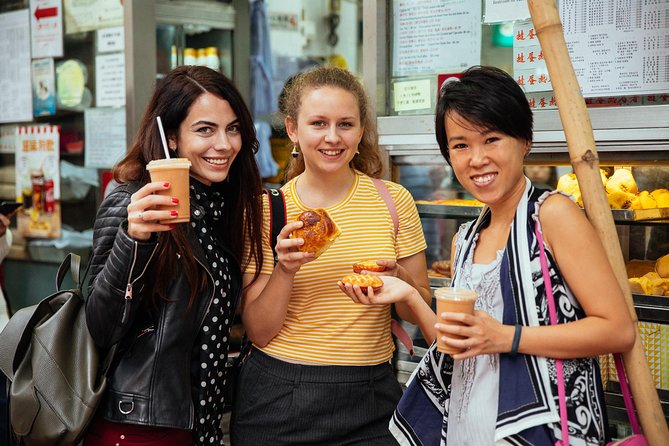
Hong Kong food can be hard to approach on your own. Menus may be brief, restaurants can be crowded, and the same dish may appear in several forms. A local guide helps explain what you are eating, how people order it, and why certain ingredients matter.
That help is especially useful in markets. You are not simply handed a plate and told its name. You get a look at the ingredients behind Cantonese cooking, including Chinese vegetables, meat, dried seafood, sea cucumbers, and birds’ nests. For many people, that market visit is the most informative part of the outing.
The food also comes in ordinary local settings rather than one polished restaurant. You eat shrimp wonton near The Center, share the atmosphere of a local lunch spot, sip sugarcane juice at a family-run teahouse, and finish with the classic pairing of pineapple bun and milk tea. This gives you a working map of Hong Kong eating habits that can help for the rest of your stay.
The tour has earned a 4.7 rating from 124 reviews, with 91 percent recommending it. Praise centers on the guides, the amount of food, and the way the walking route adds city context. Angel, Cosmos, Cosmo, Ronnie, Ling, and Caleb are singled out by name for being friendly, helpful, and engaging. Guide quality matters here, since the experience depends as much on explanation and navigation as on the food itself.
More Food Tours in Hong Kong
- Hong Kong’s Tin Hau Hidden Eats Food Tour with 7+ Local Tastings
★ 5.0 · 352 reviews - Small-Group Hong Kong Island Food Tour
★ 5.0 · 343 reviews - Hong Kong Food Tour: Central and Sheung Wan Districts
★ 5.0 · 333 reviews
Starting near Sai Ying Pun and Sheung Wan
The listed meeting information needs a careful look. The route begins near Sai Ying Pun MTR station, Exit B1, while the meeting-point details give Eco Tree Hotel Sheung Wan at 156 to 160 Des Voeux Road West. Those locations are close enough to belong to the same general area, but you should confirm the exact meeting spot and start time before setting out.
The first part is a meet-and-greet, followed by a visit to Sheung Wan’s market area. The guide introduces Chinese vegetables, meat, and the cultural role of the market building. This is a good point to ask practical questions: what ingredients are common at home, which items are used for celebrations, and how locals shop for daily meals.
The market visit lasts about an hour, making it the longest single stop. That is a sensible choice. Ten tastings can otherwise become a quick succession of bites with little explanation. Here, you have time to look closely and understand the ingredients before moving on.
The market may be lively and crowded, and conditions are not designed for relaxed sightseeing. Keep your belongings close and wear shoes suitable for wet or uneven floors. The tour is not presented as wheelchair-focused, and the moderate fitness recommendation is worth taking seriously.
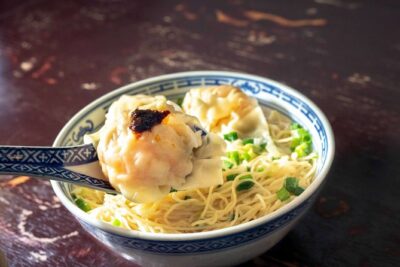
Shrimp wonton beside The Center
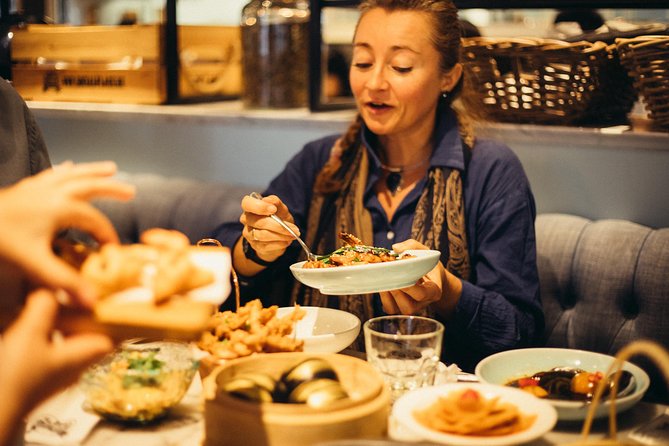
The route then reaches a local lunch restaurant near The Center, one of Hong Kong’s best-known high-rise landmarks. Here you taste shrimp wonton and eat alongside local customers. The setting matters: this is not just a dish demonstration, but a chance to see how a quick Hong Kong meal works in practice.
Some accounts of the tour describe dim sum as another strong food moment, and one guide-led route included dim sum before continuing by tram. The exact food order can vary by guide or day, so treat the published ten tastings as the framework rather than a promise that every item will arrive in one fixed sequence.
Shrimp wonton is a useful introduction because it shows the balance of seafood, wrapper, broth, and seasoning found in Cantonese cooking. If you are new to Hong Kong food, ask your guide how the dish differs from other wonton styles. The private setting should make it easy to ask without slowing down a large group.
Sugarcane juice at a fourth-generation teahouse
Near the Hollywood mural, the tour stops at a traditional teahouse led by a fourth-generation family. The listed tasting is refreshing sugarcane juice, a welcome change after walking through markets and eating savory food.
This stop has a small caveat. One person found the sugarcane drink disappointing and described it as closer to sweetened water than fresh juice. That does not make the stop worthless, but it shows why expectations should stay practical. The appeal lies partly in the family-run setting and the cultural background, not only in the drink itself.
The Hollywood mural also gives you a quick photo point and a break from the market route. Since the stop lasts about 20 minutes, it is more of a short local pause than a full tea ceremony or extended history talk.
A completely different kind of day out on the same trip:
- Hong Kong: Dolphin Cruise, Big Buddha & Lantau Island Tour
★ 4.2 · 1,512 reviews - Ngong Ping 360: Cable Car Return Tickets & Combos
★ 4.6 · 1,431 reviews - Lantau Island Day Trip – Big Buddha & Tai O
★ 4.5 · 1,328 reviews - Big Bus Hong Kong Open Top Hop-On Hop-Off Sightseeing Tour
★ 4.0 · 1,077 reviews
Graham Street Market and handpicked fruit
Graham Street Market brings you back to fresh produce and street-level shopping. Your guide selects exotic fruit for you to taste, which is a pleasant way to try something you might overlook on your own.
The value here is guidance. Fruit names and varieties may not be obvious, and a local can choose something ready to eat rather than leaving you to guess. This stop is also lighter than the noodle and wonton dishes, which helps keep the ten-tasting schedule manageable.
The market street is one of the route’s strongest city experiences because food shopping happens in plain view. You see stalls, vendors, and the tight arrangement of an older urban market district. It is a reminder that Hong Kong’s food culture is not limited to restaurants.
Wan Chai’s dai pai dong meal
In Wan Chai, the tour offers a dai pai dong experience. You eat outdoors or in a street-side setting with local customers and try beef noodles while taking in the surrounding activity.
This is one of the more distinctive stops. A dai pai dong is tied to Hong Kong’s casual street dining culture, so the setting is as important as the bowl. You get a feel for quick meals, shared public space, and the practical side of eating in a dense city.
The food can be filling. Beef noodles arrive after shrimp wonton, fruit, juice, and other samples, so pace yourself. If you are sensitive to spice, meat, or strong flavors, speak up early. Vegetarian alternatives are offered, but you should arrange them ahead of time rather than waiting until you are seated.
Pineapple bun, milk tea, and the final bite
The final food stop is pineapple bun with milk tea near Spring Garden Street. Despite its name, pineapple bun does not usually mean a fruit-filled pastry. The name refers to the crackled, pineapple-like top of the bun.
This is a fitting ending because it combines two everyday Hong Kong favorites. Milk tea is smooth and strong, while the bun provides a sweet finish after the savory dishes. One person preferred the pineapple bun and dim sum, while another enjoyed the sugarcane juice most, so your favorite may depend on how adventurous and how hungry you are.
The tour is designed to leave you full. A German-language review specifically warned that breakfast in Hong Kong is often savory rather than sweet, a useful point if you expect pastries and coffee. If you book this for an early start, prepare for noodles, wonton, or other substantial food rather than a light continental breakfast.
The escalator, Stone Slab Street, and Hong Kong between bites
Food is only half of the experience. The route includes the Central to Mid-Levels Escalator and Walkway System, described as the longest outdoor covered escalator system in the world. You do not simply travel from one restaurant to another. You get a moving view of how Hong Kong handles steep hills and heavy foot traffic.
Stone Slab Street adds a different texture. This sloped pedestrian street is paved with uneven granite slabs and lined with market stalls. It is photogenic, but the uneven surface calls for sensible footwear, especially after a full meal.
Several guides also included a ride on the old trams, known locally as the ding ding, along with stops around Soho and Hollywood Road. Because those details appear in individual tour experiences rather than the formal stop list, ask your assigned guide what transport is included on your date. Public transport can add local flavor, but it may also affect the pace of the food schedule.
What the private format adds
The tour is for only your group and your guide. That makes a real difference in Hong Kong, where small food shops and narrow market lanes are not ideal for a large party.
A private guide can explain unfamiliar dishes, adjust the pace, and offer vegetarian alternatives. You can also ask about etiquette, local history, religious traditions, and daily life. Ronnie, Angel, Ling, Caleb, and Cosmo are all praised for combining food explanations with broader city information, rather than treating the tour as a simple eating checklist.
The private setup also gives the guide room to show favorite places. One highly positive account described the experience as a personal tour of Hong Kong Island punctuated by food. That is the right way to think about it: part meal, part orientation walk, part introduction to local customs.
Still, a private booking does not guarantee a perfect guide. One very negative experience involved a guide called Matteo, who was accused of missing the meeting point, communicating poorly, acting rudely, and offering little local insight. The provider apologized and invited follow-up. This appears to be an isolated but serious service problem, and it is fair to say that guide assignment is a major variable.
Is $195.71 per person good value?
At $195.71 per person, the tour is expensive if you judge it only by the cost of the food. Hong Kong meals at local restaurants and stalls can be much cheaper than that, and you may find higher-quality versions of some tastings by exploring on your own.
The price makes more sense if you value the guide, private arrangements, market interpretation, and route planning. You are paying for ten food and drink tastings plus about three hours of local orientation. You also avoid spending your first days guessing which market, bakery, noodle shop, or teahouse is worth your time.
For a couple or family that wants personal attention, the cost may feel reasonable, especially with group discounts available. For solo visitors, the per-person price is harder to justify. You should compare it with the cost of a few independent meals and decide how much help you want with language, ordering, and navigation.
The tour is booked an average of 39 days ahead, which suggests you should reserve early if your dates are fixed. Free cancellation is available up to 24 hours before the start time. Changes or cancellations inside that window are not accepted for a refund.
Who will enjoy this Hong Kong food walk?
I would recommend it most strongly for first-time visitors who want to understand Hong Kong food quickly. It suits people who are curious about unfamiliar ingredients but would rather have a guide explain them before ordering.
It is also a good match for families and small private groups. The guide can answer children’s questions, adjust the pace, and help the group try several dishes without the pressure of keeping up with strangers.
You should think twice if you are a serious food hunter focused only on top-quality dishes. One tasting was judged average, and the sugarcane juice did not impress everyone. The tour’s purpose is variety and context, not a carefully ranked food pilgrimage.
You should also reconsider it if walking on slopes, standing in markets, or eating several small portions is difficult. The route covers multiple districts and includes uneven streets and the Mid-Levels Escalator system. Hotel pickup and drop-off are not included, and the activity ends back at the meeting point.
Should you book this private street food tour?
Book it if you want a friendly introduction to Hong Kong through food, markets, and local streets, especially early in your visit. The best parts are the market explanations, the private guide, the street-side meals, and the chance to learn what to order later on your own.
Skip it if your main goal is the cheapest possible meal or the very best version of every dish. At this price, you are buying convenience, conversation, and a planned route as much as food.
Before booking, confirm the exact meeting point, ask which tastings and transport are planned for your date, and report dietary restrictions in advance. With those details settled, this is a useful, filling, and generally well-regarded way to get your bearings in Hong Kong.
FAQ
How long does the Hong Kong food tour last?
The experience lasts approximately three hours.
How many tastings are included?
The tour includes ten food and drink tastings.
Is this a private tour?
Yes. Only your group and the local guide participate.
Are vegetarian alternatives available?
Yes. Vegetarian alternatives are offered for people with dietary restrictions.
Where does the tour start and end?
The route begins near Sai Ying Pun MTR station, Exit B1. The meeting details also list Eco Tree Hotel Sheung Wan, at 156 to 160 Des Voeux Road West. The activity ends back at the meeting point, so confirm the precise starting location before departure.
Is hotel pickup included?
No. Hotel pickup and drop-off are not included.
Newest reviews from Hong Kong
- Lantau Peak Sunrise Climb★ 5.0 · 4 reviews
- Hong Kong MiniBus Transfer: Hotel / Cruise Terminal and Airport★ 4.5 · 4 reviews
- Hong Kong: Lantau Island & Tai O Cruise, Skip The Line Cable Car★ 3.5 · 4 reviews
- Private & Personalized Hong Kong Street Art Tour with a Local★ 5.0 · 4 reviews
- Classic Afternoon Tea Voyage in Hong Kong for 4 Pax★ 4.0 · 4 reviews
- 2025 Chinese New Year Fireworks Open Bar Yacht Dinner Cruise HK★ 4.5 · 4 reviews
- Hong Kong Heritage Walk★ 4.0 · 4 reviews
- Small-Group Tour: The best bites of Mongkok★ 5.0 · 4 reviews
Chinese Food Tours, compared.
Authentic Local Food Tour in Central Shanghai
Read our review →
Hong Kong’s Tin Hau Hidden Eats Food Tour with 7+ Local Tastings
Read our review →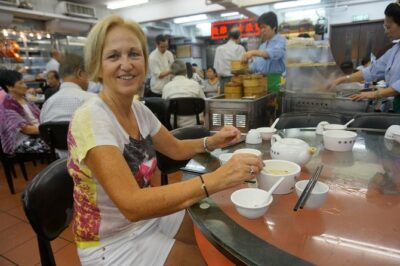
Hong Kong Food Tour: Central and Sheung Wan Districts
Read our review →
Hidden Gems Guided Food Tour with Beer and Tastings
Read our review →Browse the lists this tour appears in