
Reviewed · HISTORICAL TOURS
Coach Tour: Hong Kong Heritage Discovery
Old Hong Kong begins beyond the skyline. This five-hour New Territories tour pairs Ping Shan’s historic buildings with traditional snacks at Tai Po Market, giving you a useful look at village life, clan culture, and old Chinese architecture without the headache of arranging several outlying stops yourself. I especially like the small group limit of six and the included transfers between sights. The main catch is that hotel pickup is limited, and the early start can involve meeting at another hotel or departure point.
The itinerary has real variety: a pagoda, ancestral halls, a study hall, a walled village, a grand historic residence, and a working market. I also like that the English-speaking guide stays with you throughout the sightseeing and transfers. Just allow extra time for pickup arrangements, because the bus will not automatically know where you are staying.
In This Review
- Key points at a glance
- Why this New Territories tour is worth your morning
- Walking the Yuen Long Ping Shan Heritage Trail
- Tsui Sing Lau Pagoda and the meaning of exam success
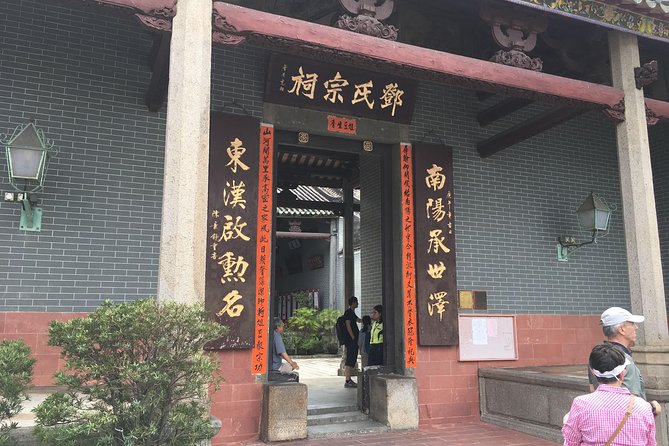
- Tang Clan Ancestral Hall, built in 1273
- Kungting Study Hall and the value of education
- Sheung Cheung Wai, a 200-year-old walled village
- Tai Fu Tai Mansion and a different kind of old Hong Kong
- Tai Po Market, snacks, and free time
- Pickup, group size, and the morning schedule
- What to pack and how to prepare
- Who will get the most from this outing
- Should you book the Hong Kong Heritage Discovery tour?
- FAQ
- How long does the Hong Kong Heritage Discovery tour last?
- Where is hotel pickup available?
- What happens if my hotel is not on the pickup list?
- What food is included?
- How large is the tour group?
- Can I leave the tour at Tai Po Market?
- What is the cancellation policy?
Key points at a glance
- Hong Kong’s oldest pagoda: See the three-story Tsui Sing Lau Pagoda, believed to date from 1486.
- A genuine New Territories trail: Walk among clan buildings and Sheung Cheung Wai, a 200-year-old walled village.
- Small-group touring: The maximum group size is six, though the wider transfer system may involve meeting other tour buses first.
- Local food stop: Tai Po Market includes a traditional snack tasting, with free time to see its food stalls.
- Convenient transport: Transfers connect the scattered sights, with pickup available from selected Kowloon and Hong Kong Island hotels.
- A guide makes the difference: Jo-elle was praised for excellent English and humor, while Andy was also specifically named as a capable guide.
Why this New Territories tour is worth your morning
Hong Kong is often reduced to skyscrapers, harbor views, shopping malls, and dim sum. Those are all part of the city, but the New Territories tell another story. Here, the focus shifts to Chinese clan lineages, study, ancestral worship, village defense, and the old trading economy that served communities away from central Hong Kong.
You can visit some of these places independently, but they are spread across different parts of the New Territories. Public transportation may get you near them, yet you would still need to work out the walking connections, opening arrangements, and historical context. This tour handles the transport and gives the buildings a clear explanation in English.
The price is $144.32 per person. That is not a bargain basement outing, especially since lunch and dinner are not included. Still, the price covers an English-speaking guide, hotel pickup where available, transfers between attractions, and a small-group format. If you value a half-day that runs in a logical order, the cost is easier to justify.
The schedule begins early, with pickup between 7:50 and 8:35 a.m. The exact time is confirmed later by the local operator. That early start is useful in Hong Kong, where you can spend the afternoon at Tai Po Market, return to central Hong Kong, or continue exploring on your own.
More historical tours in Hong Kong:
- Between Capitalism & Communism: Hong Kong History Tip Based Tour
★ 5.0 · 234 reviews - Group Vegetarian Food & Cultural Tour
★ 5.0 · 16 reviews - Private tour – Hong Kong’s major sites and history
★ 5.0 · 13 reviews
Walking the Yuen Long Ping Shan Heritage Trail
The tour’s cultural center is the Yuen Long Ping Shan Heritage Trail. This route brings together buildings associated with the Tang clan, one of the major historic lineages in the area. You are not simply looking at old façades. The buildings explain how education, family authority, religious practice, and official status shaped village life.
The trail involves walking between historic sites, so comfortable shoes are sensible. The supplied details do not give a precise walking distance, and the route is guided rather than presented as a strenuous hike. Most people can take part, but anyone who dislikes uneven outdoor walking should ask the guide about the day’s exact conditions.
The guide is important here. Jo-elle received particular praise for excellent English and a good sense of humor, while Andy was also named as a guide who handled the outing well. That matters because the buildings can look quiet and modest at first glance. Their meaning becomes clearer when someone points out the symbols, layout, and small architectural clues.
Tsui Sing Lau Pagoda and the meaning of exam success
Tsui Sing Lau Pagoda is one of the most distinctive stops. It is believed to have been built in 1486, making it Hong Kong’s oldest pagoda. The green-brick structure is hexagonal, rises about 42 feet, and has three stories.
The upper floor is linked with Fui Shing, known as the Champion Star. This deity was associated with success or failure in examinations, a reminder of how strongly education and government service influenced traditional Chinese society.
Look for the auspicious Chinese sayings inscribed on each floor. You do not need to read Chinese to appreciate the purpose of the inscriptions, but an English explanation helps you understand why this small tower mattered to local families.
This is not a huge monument, so do not expect a long interior visit or a grand panoramic viewpoint. Its value is historical and symbolic. In a short stop, you see how a local community connected spiritual belief with ambition, learning, and social advancement.
Tang Clan Ancestral Hall, built in 1273
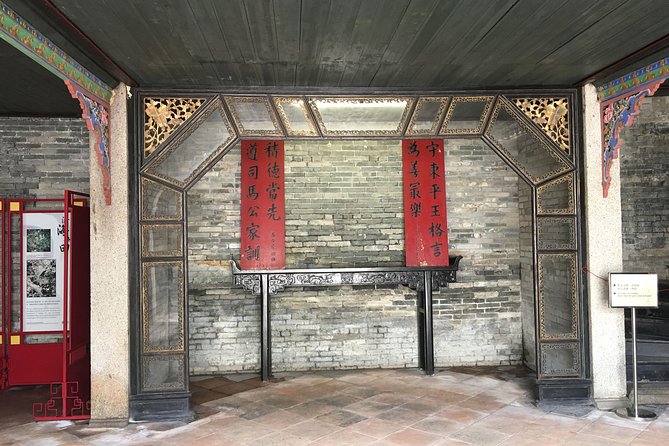
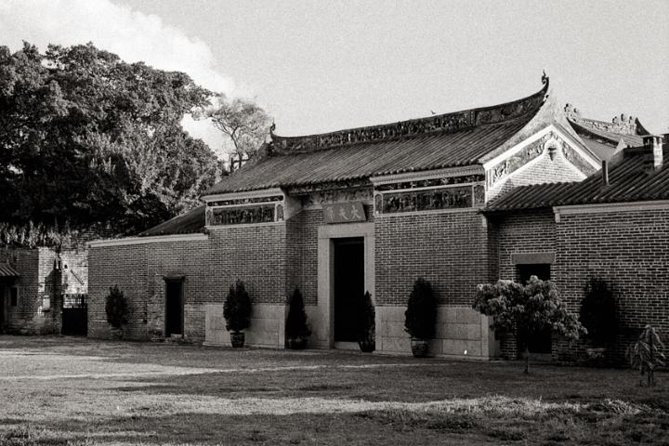
The Tang Clan Ancestral Hall is one of the architectural highlights of the morning. Constructed in 1273, it is a three-hall building with two internal courtyards and is regarded as one of Hong Kong’s finest examples of this form.
The layout deserves your attention. Traditional ancestral halls were not designed as simple houses of worship. They supported family ceremonies, community identity, and the organization of a powerful clan. The courtyards help you read the building from the inside, while the three-hall arrangement gives the complex a formal progression.
One especially useful detail concerns the raised pathway in the courtyard. Its height indicates that one of the Tang clansmen held a high-ranking position in the imperial government. That is the sort of small clue you could easily miss when exploring without a guide.
The stop is best for people who enjoy architecture and social history. If you prefer nonstop scenery, the pace may feel measured. The reward is a better understanding of why these halls were built with such care and why family status could be written into the structure itself.
A few more tours worth putting side by side
- Hong Kong: Dolphin Cruise, Big Buddha & Lantau Island Tour
★ 4.2 · 1,512 reviews - Ngong Ping 360: Cable Car Return Tickets & Combos
★ 4.6 · 1,431 reviews - Lantau Island Day Trip – Big Buddha & Tai O
★ 4.5 · 1,328 reviews - Big Bus Hong Kong Open Top Hop-On Hop-Off Sightseeing Tour
★ 4.0 · 1,077 reviews
Kungting Study Hall and the value of education
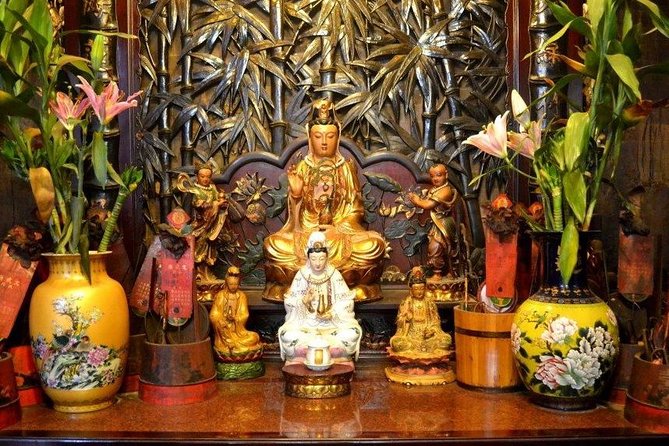
Kungting Study Hall, also written as Kun Ting Study Hall, dates from the 1870s. It served both as an ancestral hall and a place of study, giving the building a useful link between family tradition and education.
This is a two-hall structure with an enclosed courtyard. Its finely carved granite columns and granite-block foundation along the façade show the level of craftsmanship invested in a building that had both practical and ceremonial roles.
The interior design is a reminder that education was not an abstract ideal for these communities. Success in study could change a family’s standing, while the ancestral hall connected individual achievement to the larger clan.
You will likely spend more time looking at details here than taking broad scenic photographs. The appeal lies in stonework, proportions, and the guide’s explanation. If you are interested in how old Chinese communities organized learning, this is one of the most revealing stops.
Sheung Cheung Wai, a 200-year-old walled village
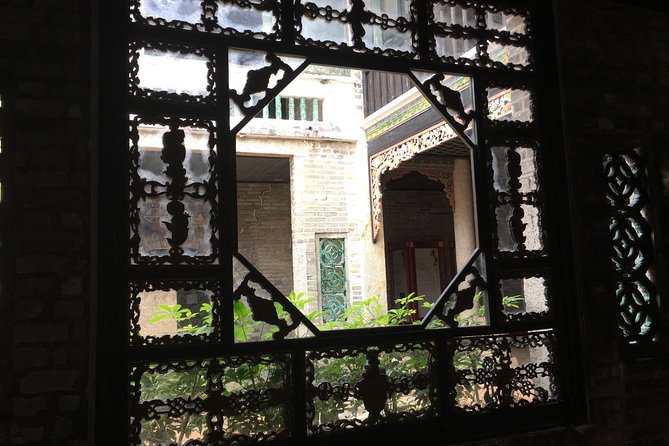
Sheung Cheung Wai gives the tour its most direct encounter with traditional village design. This walled village is about 200 years old, with rows of symmetrical houses enclosed by a green-brick wall.
The gatehouse, shrines, and some old houses remain. Part of the wall is missing, so this is not a perfectly preserved time capsule. That is actually useful. You get a sense of a living historic place rather than a fully reconstructed display.
The village layout shows how homes, family shrines, and defensive boundaries once worked together. The symmetry of the houses also makes clear that this was a planned community, not a random cluster of rural buildings.
Bring patience and look beyond the most obvious photo. The gatehouse may attract immediate attention, but the relationship between the houses and wall tells you more about village life. The stop is relatively compact, yet it helps connect the formal ancestral halls with ordinary residential life.
Tai Fu Tai Mansion and a different kind of old Hong Kong
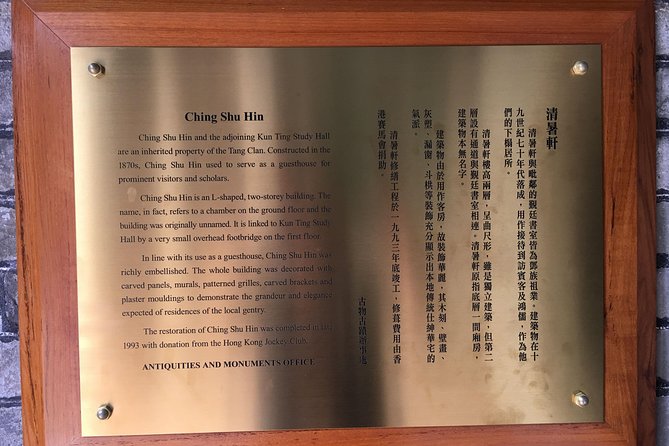
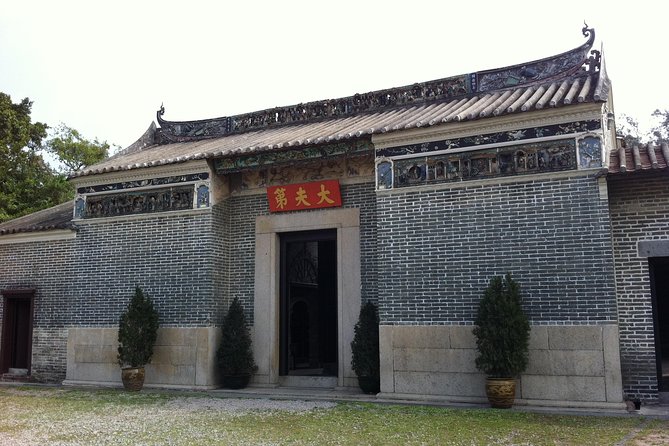
Tai Fu Tai Mansion changes the architectural mood. Located in the area east of Mai Po, the mansion was probably built in the 1870s by Man Chung-Luen, a successful merchant and philanthropist.
It is a traditional Chinese residence of the scholar-gentry class and is considered one of the most elegant historic buildings in Hong Kong. The property was declared a historic building in 1987 and renovated, with the work completed in 1988.
That restoration is worth keeping in mind. You are seeing a carefully maintained historic residence, not an untouched family home. Even so, the mansion helps explain how wealthier Chinese families lived and how commercial success could produce refined domestic architecture.
This stop adds social range to the tour. The ancestral halls show collective clan life, while Tai Fu Tai Mansion offers a look at private status and comfort. Together, they make the morning feel less like a string of unrelated monuments.
Tai Po Market, snacks, and free time
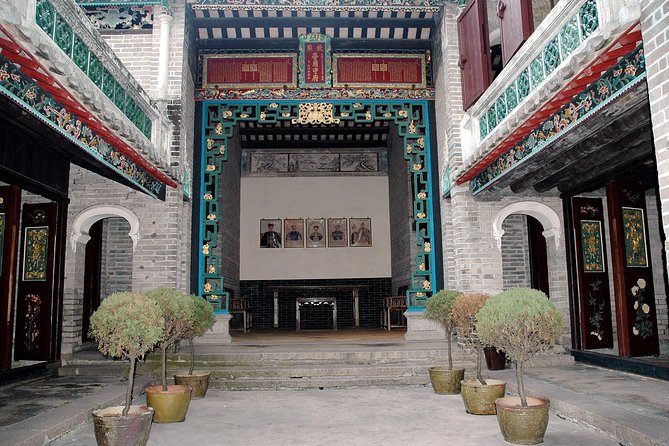
Tai Po Market is the most active stop on the route. It once served as a trading ground for food and goods from across the New Territories. Today, it remains a working food market, with vendors selling fresh vegetables, cured meats, dried seafood, and locally made sweets.
A traditional local snack tasting is included. This is a modest food experience rather than a full meal, so do not arrive expecting lunch. Since lunch and dinner are not included, you may want to plan another meal after the tour or use your free time at the market to buy something more substantial.
The market is useful because it connects the historic sites with daily life. After seeing how old clans organized their homes, halls, and study spaces, you can see the kinds of foods and products that supported communities in the area.
The tour returns you to your original departure point, but there is also an option to leave the group at Tai Po Market and spend the rest of the day there. You must ask the guide for approval beforehand and get the guide’s cellphone number before separating. You would then return to your hotel by MTR on your own.
That option works best if you want a flexible afternoon and are comfortable handling your own route back. If you prefer a fully escorted experience, stay with the group.
Pickup, group size, and the morning schedule
Pickup is offered from major centrally located hotels in Kowloon and on Hong Kong Island. It is not offered from the airport, railway station, cruise terminal, New Territories hotels, or Lantau Island hotels.
The exact arrangement deserves careful attention. Even if your hotel appears to be associated with the pickup area, you must provide the hotel name to the local operator by email or phone. The bus will not automatically identify your hotel from your booking.
If you are staying in a private home or at a hotel outside the pickup list, the operator may assign a nearby hotel as your meeting point. You need to approve that arrangement. If you do not provide a pickup location or do not accept the proposed meeting point, the booking may be rejected and refunded.
One unusual feature is the small final group size, capped at six. A transfer review described a larger gathering at one location, where people were sorted onto different tour buses, followed by a much smaller group of five on the actual outing. That is worth knowing. The initial pickup process may feel less personal, but the sightseeing group itself can be intimate.
A professional driver and a safe, professional bus were specifically praised. That is valuable in Hong Kong, where efficient transport saves both time and mental energy.
What to pack and how to prepare
Wear comfortable shoes suitable for walking through heritage areas and village streets. Bring water, though the supplied information does not specify whether refreshments beyond the snack tasting are provided.
Keep your morning free from 7:50 a.m. until roughly early afternoon. The advertised duration is about five hours, but hotel pickups can take time, and the exact start depends on your assigned collection point.
If you book within 24 hours of departure, telephone the local supplier immediately after booking. Otherwise, the bus may not come to your hotel. The operator’s office is listed as open from 7:00 a.m. to 9:00 p.m. Hong Kong time, with instructions to call again at 7:00 a.m. if no one answers outside office hours.
The tour requires good weather. If poor weather causes cancellation, you are offered another date or a full refund. Normal cancellation is free up to 24 hours before the start time, while cancellations or changes made later are not refunded.
Who will get the most from this outing
I would choose this tour if you want to see a side of Hong Kong that does not fit neatly into a first-time city-center itinerary. It suits you especially well if you enjoy architecture, local food markets, clan traditions, and guided context.
It is also a good choice if you have limited time and do not want to coordinate several New Territories connections. The included transfers turn a scattered collection of sights into a manageable morning.
Families and older visitors may appreciate the transportation, though the walking portions still require reasonable mobility. The supplied information says most people can participate, but no detailed accessibility information is provided, so ask the operator if you have specific mobility needs.
You may want to skip it if your priority is a slow lunch, shopping, or dramatic scenery. This is a history-focused outing with several compact stops. Its pleasures come from details, not spectacle.
The experience can also suit Hong Kong residents who want to fill gaps in their own local knowledge. One review came from someone born in Hong Kong who still learned new historical information on the tour. That says something useful: the New Territories can be familiar geographically yet surprisingly unfamiliar culturally.
Should you book the Hong Kong Heritage Discovery tour?
Book it if you want efficient transport, a small sightseeing group, and genuine heritage sites rather than another panoramic bus ride. The combination of Tsui Sing Lau Pagoda, Tang clan buildings, Sheung Cheung Wai, Tai Fu Tai Mansion, and Tai Po Market gives you a broad view of New Territories culture in only five hours.
The $144.32 price makes the most sense when hotel pickup is convenient and you value an English-speaking guide. It is less attractive if you are comfortable using the MTR, arranging taxis, and researching each site yourself.
Before paying, confirm your hotel address, wait for the final pickup voucher, and check whether you need to meet at a nearby hotel. With that small bit of preparation, this is a practical way to trade Hong Kong’s familiar skyline for village walls, carved stone, old examination ideals, and a market snack.
FAQ
How long does the Hong Kong Heritage Discovery tour last?
The tour lasts approximately five hours, including pickup, transfers between attractions, sightseeing, and the return to the original departure point.
Where is hotel pickup available?
Pickup is available from major centrally located hotels in Kowloon and on Hong Kong Island. It is not available from the airport, railway station, cruise terminal, New Territories hotels, or Lantau Island hotels.
What happens if my hotel is not on the pickup list?
The operator may provide a nearby pickup hotel and meeting time. You must approve the arrangement, and you should provide your hotel or accommodation address when booking.
What food is included?
A traditional local snack tasting at Tai Po Market is included. Lunch and dinner are not included.
How large is the tour group?
The activity has a maximum of six travelers in the sightseeing group. The initial hotel transfer process may involve a larger gathering before people are assigned to different tour buses.
Can I leave the tour at Tai Po Market?
You may be able to leave at Tai Po Market and return to your hotel by MTR, but you must ask the guide for approval in advance. Before leaving, get the guide’s cellphone number for urgent contact.
What is the cancellation policy?
You can cancel at least 24 hours before the experience start time for a full refund. Later cancellations and changes are not refunded. If poor weather causes the tour to be canceled, you will be offered another date or a full refund.
Newest reviews from Hong Kong
- Lantau Group Tour: Dolphin Watching, Fishing Village & Cable Car★ 4.5 · 4 reviews
- Afternoon Hiking Tour Sharp Island Geopark★ 4.5 · 4 reviews
- Hong Kong: Private Transfers From/to Hong Kong Airport(HKG)★ 4.5 · 4 reviews
- Skip The Line: Ngong Ping Cable Car Round Trip Voucher★ 3.0 · 4 reviews
- Lantau Peak Sunrise Climb★ 5.0 · 4 reviews
- Hong Kong MiniBus Transfer: Hotel / Cruise Terminal and Airport★ 4.5 · 4 reviews
- Hong Kong: Lantau Island & Tai O Cruise, Skip The Line Cable Car★ 3.5 · 4 reviews
- Private & Personalized Hong Kong Street Art Tour with a Local★ 5.0 · 4 reviews
Historical Tours, compared.
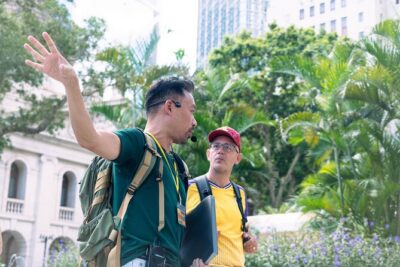
Between Capitalism & Communism: Hong Kong History Tip Based Tour
Read our review →
Beijing Historical Tour II including Summer Palace, Lama Temple & Panda Garden
Read our review →
Beijing Historical Tour I – Forbidden City, Tiananmen Square & Temple of Heaven
Read our review →
Tour of Jewish Shanghai led by a Jewish History Expert
Read our review →
Beijing Historic City Guided Walking Tour + Calligraphy Creation
Read our review →
Beijing Culture: Tea Ceremony, Heritage Instrument & Calligraphy
Read our review →
All inclusive Two-Day Xi’an private Heritage Tour
Read our review →
2-Hour Beijing Private Forbidden City Tour: History & Highlights
Read our review →Browse the lists this tour appears in