
Reviewed · HISTORICAL TOURS
All inclusive Two-Day Xi’an private Heritage Tour
Two terracotta armies make Xi’an twice as intriguing. This private two-day tour pairs the famous Qin Terracotta Warriors with the quieter underground museum at Han Yang Ling, then adds Xi’an’s city wall, Muslim Quarter, Big Wild Goose Pagoda, and traditional cave homes. I like the door-to-door transport and the chance to ask a local guide direct questions instead of piecing the city together by taxi.
I also like the flexible lunch setup. You can choose the tour without lunch, or add meals at local Chinese restaurants, an option several guests particularly enjoyed. The main drawback is the pace: two full days cover a lot, and the first day combines the museum, a long transfer, the wall, and a rural cave visit.
In This Review
- Key points at a glance
- Why this two-day Xi’an plan works
- Day one begins with the Qin Terracotta Warriors
- A family cave home changes the rhythm
- Walking Xi’an City Wall
- Han Yang Ling offers a quieter second terracotta army
- Big Wild Goose Pagoda and the Tang connection
- Bell Tower, Drum Tower, and the Muslim Quarter
- Guides who add value beyond the monuments
- What the $250.20 price really covers
- Practical details before you book
- Should you book this Xi’an tour?
- FAQ
- How long does the Xi’an private heritage tour last?
- What time does the tour start?
- Is hotel pickup included?
- Is hotel accommodation included?
- Are admission tickets included?
- Is lunch included?
- Is the tour private?
- Are City Wall bicycle or golf-cart rides included?
- Is the tour suitable for children?
- What should I wear?
Key points at a glance
- Two very different terracotta armies: Compare Qin Shi Huang’s famous life-size soldiers with the small underground figures made for Han Emperor Jingdi.
- Private guiding with named local staff: Guides including Michael, Judy, Shine, and Cathy have been praised for clear English, patience, history, food advice, and help with wider China plans.
- A practical city and countryside mix: You move from Xi’an’s ancient core to farmer cave dwellings and a local family visit.
- Door-to-door convenience: Private transfers from and back to a centrally located Xi’an hotel save time and reduce the fuss of arranging taxis.
- Lunch is optional: The listed price is $250.20 per person, but hotel accommodation and lunch are not automatically part of the basic package.
- A busy but useful two days: The itinerary suits visitors who want major sights covered efficiently, not those seeking a slow, unstructured stay.
Why this two-day Xi’an plan works

Xi’an rewards a structured visit. Its best sights are spread across the city and beyond, so getting from the Terracotta Warriors to the historic center, then out to Han Yang Ling, takes planning. This tour gives you a private vehicle and guide for both days, allowing you to cover places that would be awkward to combine on local buses or separate taxi rides.
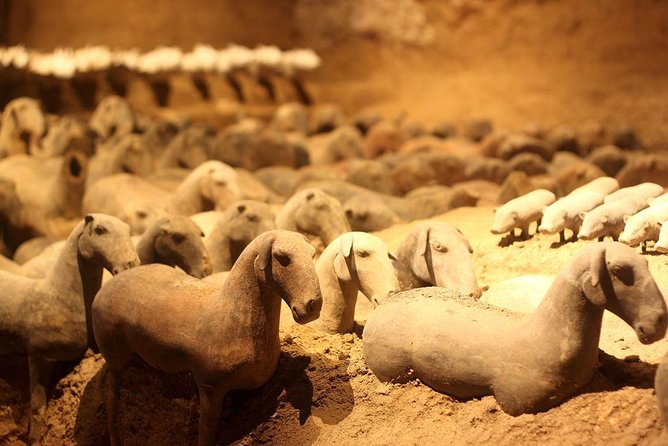
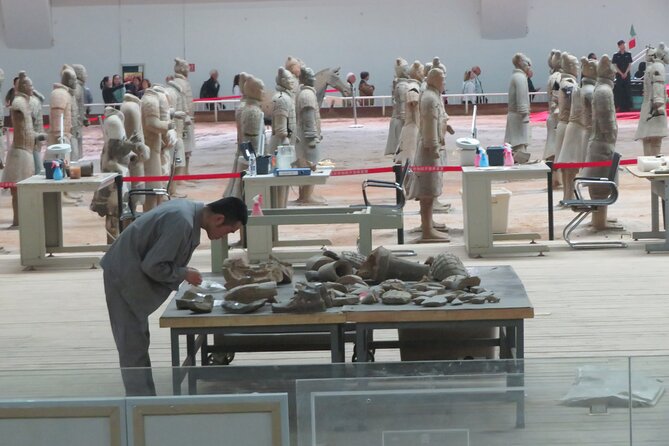
The strongest feature is the contrast between the two tomb sites. The Qin army is famous for its scale and drama. Han Yang Ling is more intimate and unusual, with an underground museum where you look down through glass at the burial objects and small figures associated with Emperor Jingdi. Seeing both helps you understand that Xi’an’s ancient burial culture was not one single tradition.
The trip also avoids becoming a museum-only schedule. You walk the City Wall, visit the Muslim Quarter, see the Bell and Drum Tower area, and stop at a traditional cave dwelling. That mix gives you monuments, food streets, transport time with a local guide, and a glimpse of how some rural families lived.
You should plan for moderate physical fitness. The schedule includes several hours at major sights, walking on historic grounds, and time outdoors in all weather. Comfortable shoes are not a minor suggestion here.
More historical tours:
Day one begins with the Qin Terracotta Warriors
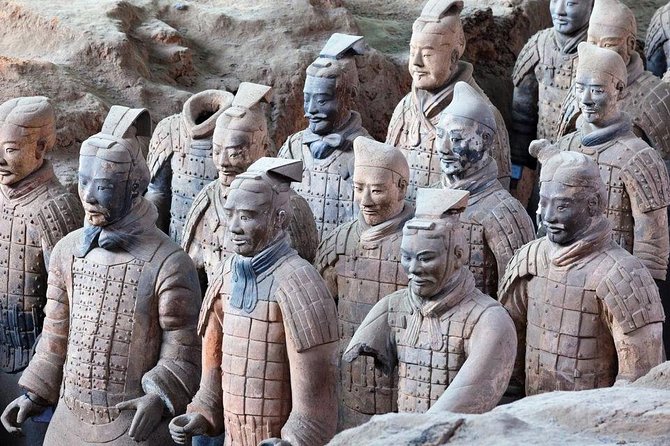
The first stop lasts about three hours, which is sensible. The Museum of Qin Terracotta Warriors and Horses is too important for a rushed hour, yet large enough that you need a guide to give the visit shape.
Your guide takes you through the figures, horses, and weapons, explaining how the army was made for Qin Shi Huang. The basic visual impact is clear even before the historical details arrive: long ranks of soldiers occupy enormous pits, each figure carrying differences in face, clothing, rank, or posture.
A private guide is especially useful here because the site can feel visually overwhelming. Instead of simply walking past rows of clay soldiers, you can ask why the army was created, how the figures relate to the emperor’s tomb complex, and what the weapons and military arrangements suggest about Qin power. The guides are also able to adjust the explanation to your interests.
This is likely the day’s most crowded and famous stop, so your private arrangement matters. You are not waiting for a large group to assemble at every display. You can spend more time on the areas that interest you and move on when your attention starts to fade.
Admission to the listed attractions is included. The tour information does not promise a particular entry time, so the exact flow may vary. Allow three hours here and expect the visit to be a major part of the day, not a quick photo stop.
A family cave home changes the rhythm
After the Terracotta Warriors, the vehicle returns toward the city. The listed transfer takes about 50 minutes, giving you a useful pause after the museum.
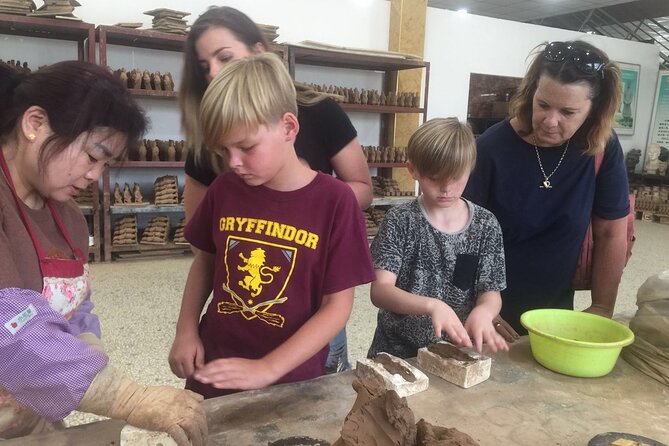
The cave dwelling visit adds something that the major monuments cannot. You visit a local family living in a traditional cave home and learn why people chose this type of housing. The stop is scheduled for about 30 minutes, so it is brief, but its value is personal rather than architectural.
It is hard to picture a lived-in cave until you see how such a home functions. Your guide acts as the bridge between you and the family, explaining local farming life and the reasons these dwellings became popular. This is also the point where a private tour feels more worthwhile than a standard sightseeing route. You can ask how daily life works, what the rooms are used for, and how the home fits the surrounding community.
Keep your expectations realistic. This is not a long village stay or a full rural workshop. It is a short encounter placed between larger attractions. If authentic local contact matters to you, it may become one of the most memorable stops. If your priority is only Xi’an’s grand monuments, you may prefer more time at the wall or in the city center.
Walking Xi’an City Wall
The itinerary information places the City Wall stop alongside the first day’s return toward Xi’an. The wall is one of the city’s defining sights because it lets you understand the old urban layout from above, not just see another gate or tower from street level.
Admission is included, but cycling and golf-cart rides cost extra. That distinction matters. Walking the wall can be rewarding, but a full circuit is a serious undertaking, and this tour does not appear to promise enough time for a complete loop. If you want to cycle, ask your guide about the available time and extra charge before setting off.
I like the wall as a counterpoint to the Terracotta Warriors. The museum takes you into the world of imperial burial and military power. The wall brings you back to the city itself, with broad views across Xi’an and a clearer sense of how the historic center was protected and organized.
The first day is therefore fairly full. Three hours at the Qin museum, a roughly 50-minute return transfer, a cave-home visit, and the wall can leave you ready for dinner. That is not a flaw, but it is worth knowing before you book. The schedule favors coverage over lingering.
A few more tours worth putting side by side
- Mini Group Xian Day Tour to Terracotta Army, City Wall, Pagoda and Muslim Bazaar
★ 5.0 · 1,320 reviews - Xi’an: Terracotta Army Mini Group or Private Tour
★ 5.0 · 926 reviews - Xi’an Evening Food Tour by TukTuk
★ 5.0 · 715 reviews - Xian: Terracotta Army Ticket & Guided Bus Tour with Options
★ 4.6 · 579 reviews
Han Yang Ling offers a quieter second terracotta army
Day two starts with pickup at about 9:00 a.m., followed by the journey to Han Yang Ling Museum, also called Jingdi’s Tomb. The museum visit is scheduled from roughly 9:30 a.m. to noon.
This is the tour’s most distinctive pairing. Many Xi’an visitors know about the Qin soldiers but skip Han Yang Ling. Here, you get to compare two imperial burial projects rather than treating the famous museum as an isolated wonder.
Han Yang Ling is described as China’s only underground museum. Its setting changes the experience. Instead of looking across vast open pits filled with upright soldiers, you view burial objects and smaller figures in an underground display. The museum feels more contained, and the contrast helps you see different ideas about the afterlife, court life, and imperial status.
Do not expect a second copy of the Qin museum. That would be the wrong standard. Han Yang Ling is valuable precisely because it is different. The figures are smaller, and the visit is less about sheer scale. It gives you a more focused look at a Han emperor’s tomb and the objects placed with him.
Three hours is enough time for a serious visit with a guide, though the day’s total schedule means you should keep an eye on the clock. Your guide can explain the connection between the tomb, Emperor Jingdi, and the objects on display rather than leaving you to read every panel alone.
Big Wild Goose Pagoda and the Tang connection
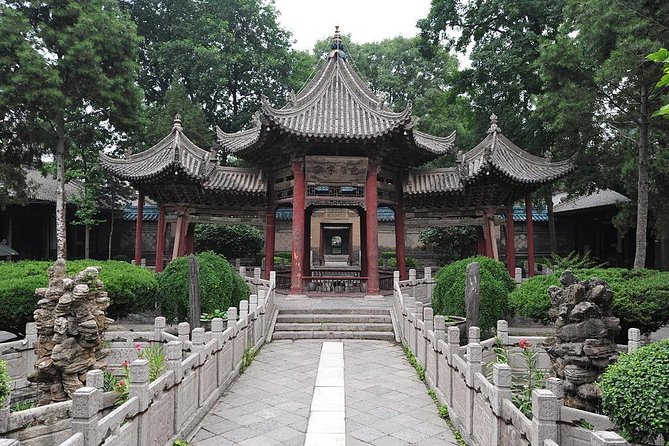
After lunch, the afternoon continues at Big Wild Goose Pagoda from about 1:40 to 3:30 p.m. The pagoda sits inside Da Ci En Temple and was built during the Tang Dynasty to store Buddhist sutras and figures brought to China.
The stop lasts about two hours, allowing time for the temple area and the pagoda itself. This is an important shift from the tomb sites. You are now looking at Xi’an as a center of Buddhism, learning, and international exchange during the Tang period.
The pagoda is not just a tall building to photograph. Its original purpose explains why it mattered: Buddhist texts and images needed a protected place, and the structure became closely tied to the spread of Buddhist teaching. A guide can give that context while pointing out what you are seeing inside the temple grounds.
The itinerary does not specify whether every interior area or tower level is open during your visit. Admission to the listed stop is included, but conditions at individual sights can change. Ask your guide what is open that day and how much time is best spent inside the temple area.
Bell Tower, Drum Tower, and the Muslim Quarter
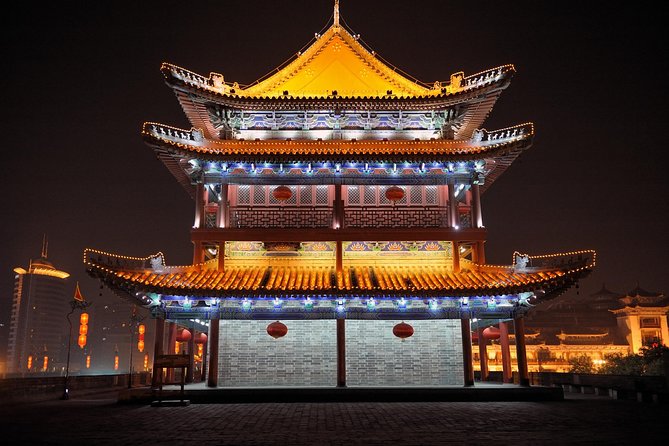
The next stop is the Bell Tower area from about 3:50 to 4:20 p.m. Admission is listed as free for this part of the tour. In ancient Xi’an, bells and drums helped mark time, with the bell associated with morning and the drum with dusk.
The schedule is short, so think of this as a look at the city’s central symbols rather than a long interior visit. Your guide can explain how the towers fit into the old city and why the Bell Tower remains such a recognizable marker of Xi’an.
From there, you walk through the Muslim Quarter for about 40 minutes. This is a food-centered district and a useful place to see a different side of the city. The area is widely visited, yet it remains part of daily local life as well as a sightseeing stop.
Forty minutes is enough to sample the atmosphere and perhaps identify foods to return for later. It is not enough for a relaxed food crawl, especially if you want to stop at several stalls. If eating is a high priority, tell your guide early. The guide can offer suggestions around your hotel as well, a service that Michael specifically provided to some visitors.
The short Muslim Quarter visit is one of the itinerary’s limitations. You see the district at the end of a long day, when you may be more interested in sitting down than comparing snacks. Still, it gives you a useful orientation and leaves you with the option of returning independently.
Guides who add value beyond the monuments
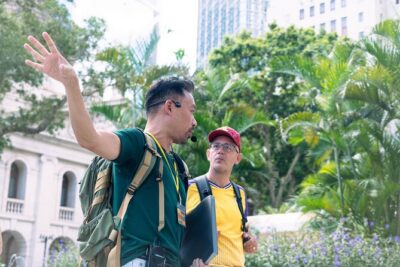
The strongest personal element is the private guide. Named guides such as Michael, Judy, Shine, and Cathy have been praised for clear English, friendly conversation, patience with children, and strong knowledge of Xi’an’s past. Shine was also praised for handling extra requests, while Michael offered food ideas and advice for other stops on a wider China trip.
That kind of help is more useful than a memorized speech. You can ask about the difference between Qin and Han burial practices, local foods, the best use of spare time, or how Xi’an fits into the rest of your itinerary. Families may also appreciate the flexibility: one group traveling with four children found Shine patient and accommodating.
The experience is private, so only your group participates. That makes it easier to adjust questions, walking speed, and the amount of time spent at each sight. It does not mean every stop can be extended freely. The second day has fixed afternoon timings, and the long distances make punctual departures important.
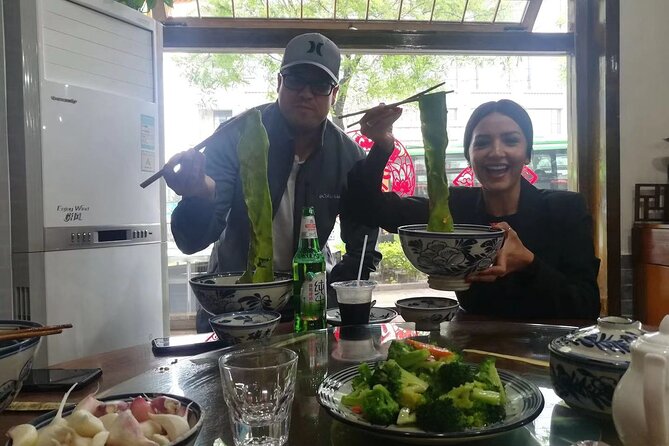
Lunch can be added at local Chinese restaurants. The food was singled out as one of the best parts of the experience by some people who chose that option, and one German-language account also praised the authentic meals. If you want the meal arrangement, select it when booking and share dietary needs in advance.
What the $250.20 price really covers
At $250.20 per person, the tour is not a budget bus outing. Its value comes from combining private transport, a professional English-speaking guide, and admission to the principal listed attractions across two days.
You are paying for time saved and coordination. The Terracotta Warriors and Han Yang Ling are outside the central sightseeing cluster, while the City Wall, pagoda, towers, and Muslim Quarter occupy different parts of Xi’an. Doing all of this by taxi could mean repeated negotiations, traffic delays, and uncertainty about where to go next.
The price does not include hotel accommodation. You arrange your own place in Xi’an, and pickup is offered from a centrally located hotel. Lunch is also optional, and cycling or a golf cart on the City Wall costs extra. Add those expenses to your real budget before deciding.
For a couple or small family that values a private vehicle and guide, the price can make sense. Group discounts are available, which may improve the per-person value for a larger private party. Solo visitors should compare the cost against joining a group tour or arranging separate tickets and transport.
Practical details before you book
The tour begins at 9:00 a.m. and operates in all weather, so dress for the forecast and bring comfortable walking shoes. Children must be accompanied by an adult, and the activity calls for moderate physical fitness.
You receive booking confirmation at the time of purchase. The tour is near public transportation, but the private pickup is the real convenience. Make sure your hotel is centrally located and provide dietary requirements when booking if you plan to add lunch.
Free cancellation is available up to 24 hours before the local start time. Changes or cancellations made less than 24 hours before departure are not accepted for a refund.
Should you book this Xi’an tour?
I would choose this tour if you have only two days in Xi’an and want the major sights handled without transport guesswork. It is especially good for first-time visitors, families, and anyone who wants both terracotta armies rather than only the headline attraction.
I would hesitate if you prefer slow museum visits, long meals, or independent wandering. The plan is full, the Muslim Quarter stop is short, and the cave-home visit will appeal most to people who value local contact as much as famous monuments.
The best reason to book is the combination: Qin and Han tombs, a city wall, a Buddhist landmark, an old-market district, and a short look at traditional rural housing. At a perfect 5.0 rating from 33 posted ratings and a 100 percent recommendation rate, the guide service has clearly been a major strength. Choose the lunch option if food is important to you, ask about City Wall cycling if that is a priority, and leave your evenings open for the places you want to explore at your own pace.
FAQ
How long does the Xi’an private heritage tour last?
The experience lasts approximately two days.
What time does the tour start?
Pickup begins at about 9:00 a.m. on both days.
Is hotel pickup included?
Private transfer from and back to a centrally located hotel is included.
Is hotel accommodation included?
No. You must arrange your own accommodation in Xi’an.
Are admission tickets included?
Admission tickets are included for the Museum of Qin Terracotta Warriors and Horses, Xi’an City Wall, Farmers’ Caves, Han Yang Ling Museum, and Big Wild Goose Pagoda. The Bell Tower and Muslim Quarter stops are listed as free.
Is lunch included?
Lunch is optional. You can choose an arrangement that includes lunch at a local Chinese restaurant, or book the tour without lunch.
Is the tour private?
Yes. Only your group participates in the activity.
Are City Wall bicycle or golf-cart rides included?
No. Cycling or riding a golf cart on the City Wall costs extra.
Is the tour suitable for children?
Children can join, but they must be accompanied by an adult.
What should I wear?
The tour operates in all weather, so dress appropriately and wear comfortable walking shoes.
Newest reviews from Xi'an
- Xi’an Night Tour: South Gate Square and Big Wild Goose Pagoda Square★ 4.0 · 4 reviews
- Customized Private Terracotta Army Tour Optional City Attractions★ 5.0 · 4 reviews
- Xi’an North Railway Station Transfer To Downtown Hotel★ 5.0 · 4 reviews
- Privately Guided Tour to Mt.Hua★ 5.0 · 4 reviews
- Private Chengdu Highlights Day Trip: Panda Base and City from Xi’an by Train★ 5.0 · 4 reviews
- Xi’an City Center Private Cycling and Walking Tour★ 5.0 · 4 reviews
- Xi’an: Full-Day Terracotta Warriors & Local Food Tour★ 4.8 · 4 reviews
- Xi’an Day Tour Terracotta Warriors and Song of Everlasting Sorrow★ 5.0 · 4 reviews
Historical Tours, compared.
Between Capitalism & Communism: Hong Kong History Tip Based Tour
Read our review →
Beijing Historical Tour II including Summer Palace, Lama Temple & Panda Garden
Read our review →
Beijing Historical Tour I – Forbidden City, Tiananmen Square & Temple of Heaven
Read our review →
Tour of Jewish Shanghai led by a Jewish History Expert
Read our review →
Beijing Historic City Guided Walking Tour + Calligraphy Creation
Read our review →
Beijing Culture: Tea Ceremony, Heritage Instrument & Calligraphy
Read our review →
2-Hour Beijing Private Forbidden City Tour: History & Highlights
Read our review →
Xi’an Full Day Sightseeing Tour – Shaanxi History Museum, Big Wild Goose Pagoda, Ancient City Wall
Read our review →Browse the lists this tour appears in