
Reviewed · HISTORICAL TOURS
Between Capitalism & Communism: Hong Kong History Tip Based Tour
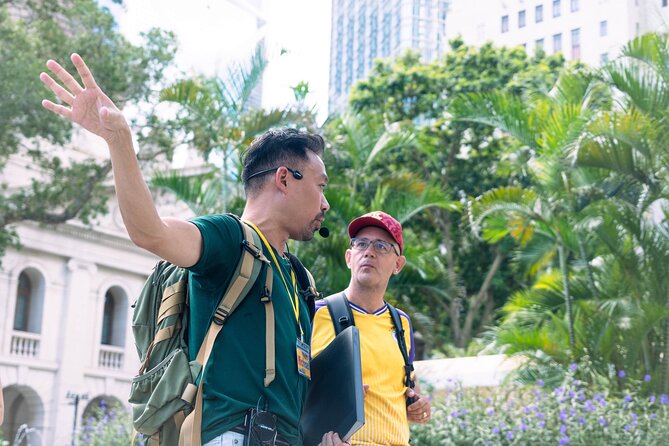
Hong Kong’s power story is hiding in plain sight. This two-hour walk connects Central and Admiralty sights to British rule, the 1997 handover, banking rivalries, feng shui, and Hong Kong’s present political system. I especially like the way it turns familiar places such as HSBC, St. John’s Cathedral, and the Mid-Levels Escalator into clues about how the city works.
I also like the personal approach. Guides including Alice, Wingman, Andy, and Armie have been praised for explaining Hong Kong through lived experience, not just dates. The main consideration is pace: you cover several stops in about two hours, with hills, city crowds, and a moderate level of walking. The street food tasting is included, but the information provided does not specify the dish or portion.
In This Review
- Key things to know before you go
- Why this walk helps you read Hong Kong
- Starting at the Court of Final Appeal
- Statue Square and Central’s feng shui rivalry
- HSBC Main Building, lions, and a city built into the harbor
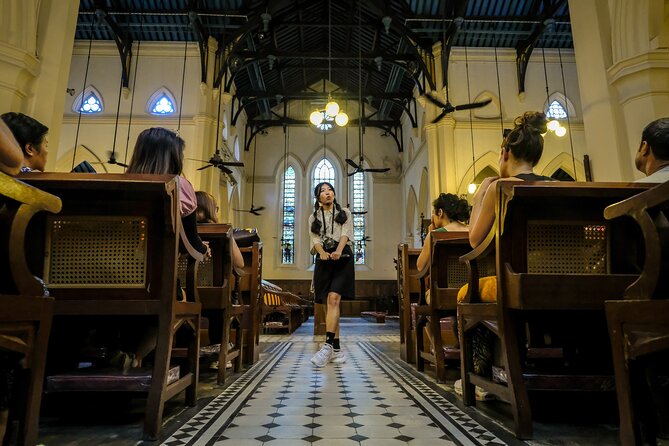
- St. John’s Cathedral and the colonial chapter
- Queen’s Road Central and the pressure of modern Hong Kong
- Riding the 800-meter Mid-Levels Escalator
- Hollywood Road, from colonial divide to creative district
- Man Mo Temple and the final turn toward older Hong Kong
- Is $2.63 good value?
- Who will get the most from this tour?
- Practical details that affect your day
- Should you book Between Capitalism & Communism?
- FAQ
- How long does the tour last?
- Where does the tour start?
- What time does the tour begin?
- Where does the tour end?
- Is transportation to the meeting point included?
- Is food included?
- Are admission tickets included?
- How many people can join the tour?
- What happens if the tour is canceled because of bad weather?
Key things to know before you go
- The route links politics to famous buildings: The Court of Final Appeal and HSBC become part of one connected story about power, money, and Hong Kong’s place within China.
- The feng shui battle is a memorable Central story: Statue Square and the HSBC building provide a colorful way to understand competition between major banks.
- Personal stories add weight: Alice, Wingman, Andy, and Armie are praised for making recent events easier to understand through direct, human explanations.
- You finish at Man Mo Temple: The route moves from courts and banks to an old temple on Hollywood Road, giving the walk a useful change of mood.
- The price is unusually low: At $2.63 per person, this is exceptional value for a guided introduction, though you should confirm the current price before booking.
- Come ready to walk: The tour lasts about two hours, uses public streets and stairs or slopes, and requires moderate physical fitness.
Why this walk helps you read Hong Kong
Hong Kong can feel like several cities packed into one. Glass towers rise above colonial buildings. A quiet cathedral sits close to banks and government offices. Ancient worship continues beside modern courts and art spaces.
That mix can be confusing if you only move from one photo stop to the next. This tour gives you a framework. It asks who controlled Hong Kong, how money shaped Central, why the British built their base where they did, and how the territory functions after its return to China.
I like that the route does not treat politics as a separate lecture. Instead, the guide uses the streets themselves. A courthouse introduces One Country, Two Systems. Bank buildings lead into feng shui and finance. Hollywood Road and Man Mo Temple show how older customs remain part of modern city life.
The strongest part is the human angle. The praise for guides such as Alice, Wingman, Andy, and Armie points to a consistent strength: explanations that connect public events with daily life. Alice’s personal account of living in Hong Kong was especially useful for putting recent changes into perspective. That matters because political history can sound dry when it is only a list of laws and dates.
The tour has a maximum of 30 people. That is not a tiny private walk, but it keeps the group within a workable size for a city route. Your experience will still depend on where you stand and how clearly you can hear, especially near traffic and crowded streets.
More historical tours:
- Group Vegetarian Food & Cultural Tour
★ 5.0 · 16 reviews - Private tour – Hong Kong’s major sites and history
★ 5.0 · 13 reviews - Hong Kong Heritage Walk
★ 4.0 · 4 reviews
Starting at the Court of Final Appeal
The walk begins at Central MTR Station, Exit K, at 11 a.m. Starting underground is practical. Central is easy to reach by public transport, and the meeting point avoids the trouble of arranging a hotel pickup.
The first stop is the Court of Final Appeal, where the guide explains how Hong Kong practices being part of China. This is the right place to begin because the building gives a physical setting to the territory’s unusual legal and political arrangement.
You will not simply hear that Hong Kong has a separate system. The point is to understand why that separation matters and why the court is an important test of it. The stop lasts about 10 minutes and admission is free.
Do not expect a courtroom visit or a long formal tour inside. The value is the outdoor explanation and the questions it raises. If you want a basic political orientation before visiting museums or reading about current events, this opening is useful.
Statue Square and Central’s feng shui rivalry
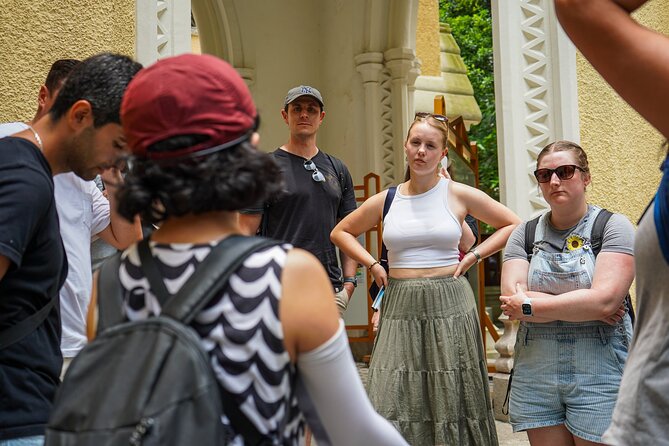
Statue Square shifts the story from law to finance. The guide explains how major banks competed through feng shui, the traditional practice of arranging buildings and spaces to encourage good fortune.
This is one of the tour’s most entertaining subjects, but it is not just a strange anecdote. Hong Kong’s financial center is full of visual symbols, powerful towers, and buildings designed to project confidence. Feng shui offers a local way to interpret that competition.
The stop lasts around 10 minutes and costs nothing. You will be standing in the open city rather than entering a paid attraction, so the guide’s storytelling is what makes the stop work.
I like this part because it gives you something to watch for later. You begin to see Central not only as a forest of offices, but as a place where business, belief, design, and status overlap.
HSBC Main Building, lions, and a city built into the harbor
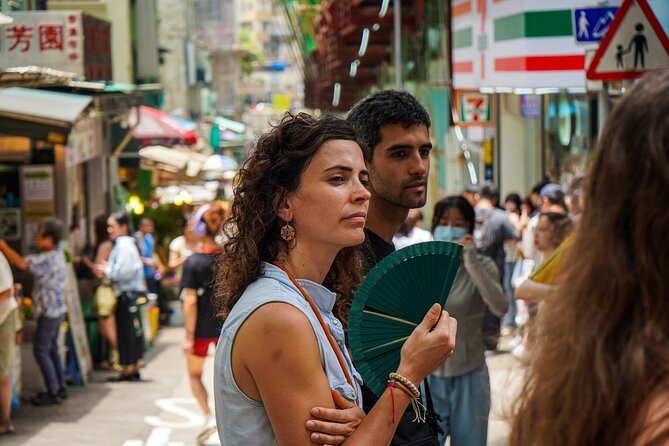
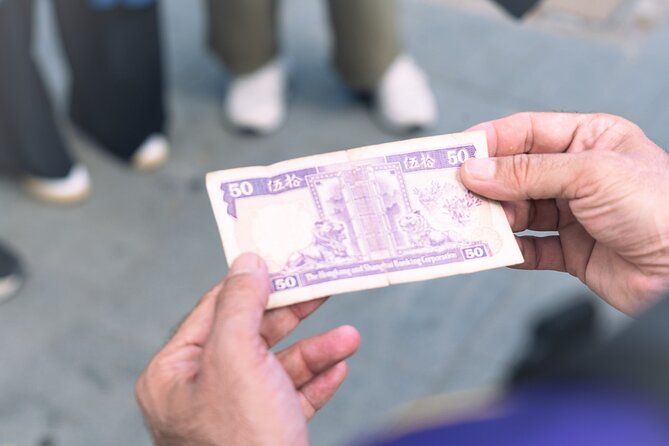
At the HSBC Main Building, the guide points out the famous guardian lions and explains the bank’s place in Hong Kong’s financial life. The description also touches on the fact that Hong Kong has no central bank that prints its own money, along with the city’s continued growth into the sea.
That combination makes this a compact but useful stop. You get architecture, banking, urban expansion, and local symbolism in one place. The lions are easy to photograph, but the explanation gives you a reason to look beyond the familiar statues.
The stop lasts about 10 minutes. It is free, and you remain outside. Since the area is busy with office workers, the guide may need to speak over the city noise. Stay close enough to hear, especially if your group is large.
This is also where the tour’s title makes sense. Hong Kong’s capitalism is not presented as an abstract economic system. It is represented by a working bank, a costly central district, and buildings that compete for attention.
A few more tours worth putting side by side
- Hong Kong: Dolphin Cruise, Big Buddha & Lantau Island Tour
★ 4.2 · 1,512 reviews - Ngong Ping 360: Cable Car Return Tickets & Combos
★ 4.6 · 1,431 reviews - Lantau Island Day Trip – Big Buddha & Tai O
★ 4.5 · 1,328 reviews - Big Bus Hong Kong Open Top Hop-On Hop-Off Sightseeing Tour
★ 4.0 · 1,077 reviews
St. John’s Cathedral and the colonial chapter
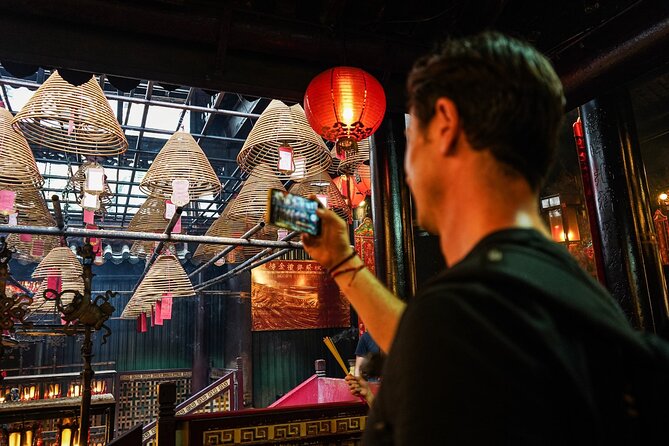
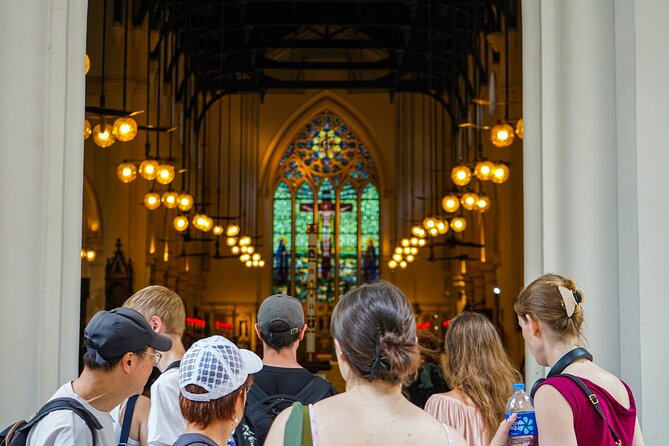
St. John’s Cathedral provides the route’s quietest pause. It is identified as Hong Kong’s oldest church and offers a clear entry into the British colonial period.
The stop lasts about 20 minutes, longer than most other points. That extra time suggests the guide has more to explain here, including colonial history, the church’s place in the city, and a personal story connected to the guide.
I like the change of atmosphere. After courts, statues, and banks, a church gives you space to think about how British rule was not only a political arrangement. It also brought institutions, architecture, religion, and a social order that shaped the city for generations.
The tour explains how the British colonized Hong Kong and later handed it back to China. You should not expect every part of that complex story in two hours, but this stop helps put the colonial chapter into a physical setting.
Admission is free. As with any active religious site, keep your voice and behavior respectful. The supplied information does not promise an interior visit or a service, so treat the cathedral primarily as a historical stop unless the guide says otherwise.
Queen’s Road Central and the pressure of modern Hong Kong
Queen’s Road Central brings you back into the city’s daily rush. Here the guide connects power suits, high rents, and nonstop commercial activity to Hong Kong’s economic identity.
This stop is less about one monument and more about reading the street. Queen’s Road Central shows you how the financial district functions at ground level. You see the pressure of land, the importance of location, and the contrast between older streets and modern business towers.
The visit lasts about 10 minutes. It is a good reminder that Hong Kong’s story is not frozen in colonial buildings or handover ceremonies. The city keeps changing, and the cost of space is part of that story.
For photography, this is likely a quick stop rather than a scenic one. The reward is context. You will understand the street better after hearing how Central became the seat of business and government.
Riding the 800-meter Mid-Levels Escalator
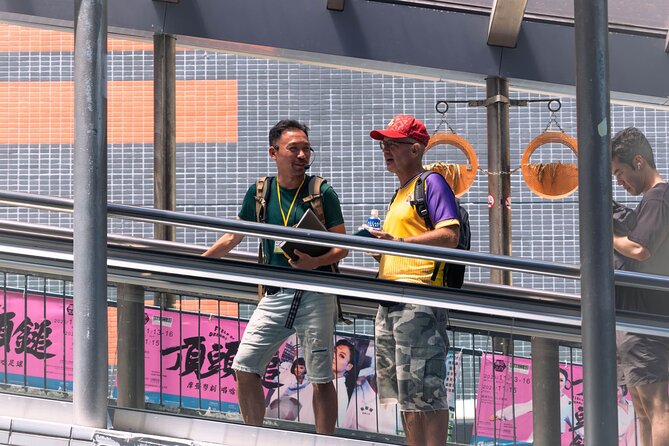
The Central-Mid-Levels Escalators are one of the route’s most practical highlights. The system stretches about 800 meters and helps people move through Hong Kong’s steep hills.
The tour uses the escalator to explain an engineering response to the city’s difficult terrain. The British chose to build Hong Kong’s capital among the hills, and the escalator shows how later infrastructure adapted to that decision.
You may ride part of the route rather than travel its entire length. The stop is listed at about 10 minutes, so do not expect a full sightseeing journey on the escalator. Its main value is seeing how transport, housing, business, and geography fit together.
This is also where the moderate fitness warning matters. The route includes walking through Central, and the wider area has slopes and steps even when the escalator is operating. Comfortable shoes will make the outing easier. The tour requires enough mobility for a city walk, not athletic ability, but it is not a sit-down history talk.
Hollywood Road, from colonial divide to creative district
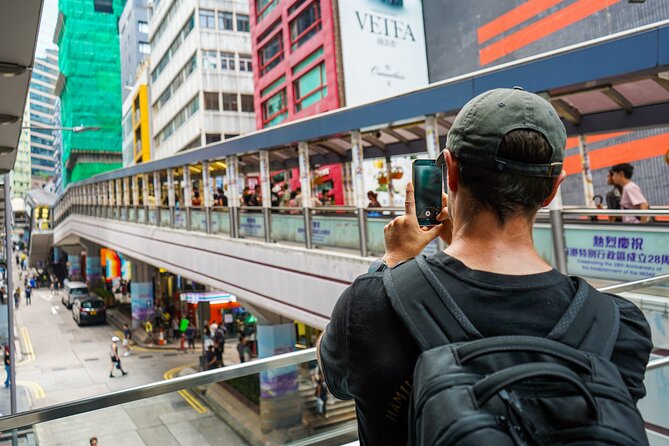
Hollywood Road changes the tone again. The guide presents it as a place that moved from a colonial divide to a center for art, food, and street life.
That shift is useful because it shows how neighborhoods take on new roles. The road is not treated as a backdrop for trendy stops alone. Its older function and changing identity are part of Hong Kong’s broader story of redevelopment and cultural change.
The stop lasts about 10 minutes. You will have time to get oriented, but not enough for a long browse through every shop or gallery. If you want to return later, note the route carefully and plan extra time after the tour.
This is also where the included street food tasting fits naturally. The exact food is not specified, so I would treat it as a small local introduction rather than a full meal. The guide also provides recommendations for a local restaurant lunch, which is helpful because the tour ends around lunchtime.
Man Mo Temple and the final turn toward older Hong Kong
The walk ends at Man Mo Temple, at 124 to 130 Hollywood Road in Sheung Wan. The temple gives the route a strong final image: ancient religious practice beside modern law, business, and politics.
The guide connects scholar worship and traditional beliefs to Hong Kong’s legal development. That link is more interesting than simply stopping at a historic temple. It brings the tour back to the central question of how different systems and eras continue to exist side by side.
The temple is not just an endpoint for directions. It gives you a chance to see that Hong Kong’s past is still active in the city. You finish with a setting that feels different from the glass towers of Central, but is still part of the same urban story.
The official end point is clear, which makes planning lunch or the rest of your afternoon easier. The guide’s local restaurant suggestions are a useful bonus, especially if you want to keep exploring Sheung Wan on foot.
Is $2.63 good value?
At $2.63 per person, the value is hard to dispute if the price is still current. You receive about two hours with a professional local guide, a structured route through Central and Sheung Wan, a street food tasting, and lunch suggestions.
The real value is not the number of stops. Most stops are only 10 minutes, and no admission fees are included because the listed sites are free. The value is the explanation tying those places together.
A private guide would offer more flexibility, but this group walk costs a fraction of a private tour. A group of up to 30 may feel less personal, and you may need to stay alert to hear every detail. Still, the low cost makes it a sensible first-day activity.
I would not book it as a food tour, architecture tour, or museum substitute. I would book it as a city orientation with food and local perspective added in.
Who will get the most from this tour?
I would recommend it to first-time visitors who want to understand Central before exploring Hong Kong on their own. It is especially useful if you are curious about politics, colonial rule, finance, and the tension between older customs and modern development.
It also suits people who prefer stories to long museum labels. The strongest guide feedback centers on clear explanations, personal accounts, and a steady flow of information. Alice’s story and the praise for Wingman, Andy, and Armie suggest that the guide can make recent history feel direct rather than remote.
You may want something else if you need a slow pace, extensive interior visits, or a full meal. The route is compact and information-heavy. With only about two hours, the guide must keep moving.
The walk is also a good choice for anyone arriving without a fixed plan for lunch. It ends near Man Mo Temple and includes local restaurant recommendations. You can continue through Sheung Wan after the formal tour.
Practical details that affect your day
The tour starts at 11 a.m. from Central MTR Station, Exit K, and ends at Man Mo Temple. Hotel pickup and drop-off are not included, so you need to reach Central independently and arrange your own way onward.
A mobile ticket is provided, and confirmation is received at booking. The route is near public transportation, which makes it easy to fit into a larger sightseeing day.
Wear comfortable shoes and bring water. The supplied details call for moderate physical fitness, and Hong Kong’s hills can make a short walk feel more demanding. The experience also requires good weather. If poor weather causes cancellation, you are offered another date or a full refund.
Free cancellation is available up to 24 hours before the start time. Changes or cancellations inside that window are not accepted for a refund, so check your plans before the deadline.
Should you book Between Capitalism & Communism?
Book this walk if you want Hong Kong’s major sights explained through politics, money, colonial rule, and local life. The personal approach, strong guide feedback, low price, and useful end point make it a smart introduction to Central.
Skip it if you want a relaxed food crawl, a private experience, or long visits inside each attraction. For most first-time visitors, though, this is an efficient way to get your bearings fast and see familiar Hong Kong from a more thoughtful angle.
FAQ
How long does the tour last?
The tour lasts approximately two hours.
Where does the tour start?
It starts at Central MTR Station, Exit K, in Central, Hong Kong.
What time does the tour begin?
The scheduled start time is 11 a.m.
Where does the tour end?
It ends at Man Mo Temple, 124 to 130 Hollywood Road, Sheung Wan, Hong Kong.
Is transportation to the meeting point included?
No. Hotel pickup and drop-off are not included, but the meeting point is near public transportation.
Is food included?
Yes. A street food tasting is included. The specific food item and portion are not stated.
Are admission tickets included?
The listed stops have free admission, and no separate attraction ticket is required according to the supplied details.
How many people can join the tour?
The maximum group size is 30 people.
What happens if the tour is canceled because of bad weather?
You will be offered a different date or a full refund.
Newest reviews from Hong Kong
- Lantau Peak Sunrise Climb★ 5.0 · 4 reviews
- Hong Kong MiniBus Transfer: Hotel / Cruise Terminal and Airport★ 4.5 · 4 reviews
- Hong Kong: Lantau Island & Tai O Cruise, Skip The Line Cable Car★ 3.5 · 4 reviews
- Private & Personalized Hong Kong Street Art Tour with a Local★ 5.0 · 4 reviews
- Classic Afternoon Tea Voyage in Hong Kong for 4 Pax★ 4.0 · 4 reviews
- 2025 Chinese New Year Fireworks Open Bar Yacht Dinner Cruise HK★ 4.5 · 4 reviews
- Hong Kong Heritage Walk★ 4.0 · 4 reviews
- Small-Group Tour: The best bites of Mongkok★ 5.0 · 4 reviews
Historical Tours, compared.
Beijing Historical Tour II including Summer Palace, Lama Temple & Panda Garden
Read our review →
Beijing Historical Tour I – Forbidden City, Tiananmen Square & Temple of Heaven
Read our review →
Tour of Jewish Shanghai led by a Jewish History Expert
Read our review →
Beijing Historic City Guided Walking Tour + Calligraphy Creation
Read our review →
Beijing Culture: Tea Ceremony, Heritage Instrument & Calligraphy
Read our review →
All inclusive Two-Day Xi’an private Heritage Tour
Read our review →
2-Hour Beijing Private Forbidden City Tour: History & Highlights
Read our review →
Xi’an Full Day Sightseeing Tour – Shaanxi History Museum, Big Wild Goose Pagoda, Ancient City Wall
Read our review →Browse the lists this tour appears in