Reviewed · CALLIGRAPHY CLASSES
Beijing Historic City Guided Walking Tour + Calligraphy Creation
Beijing’s old streets still tell stories. This 3.5-hour walk links a historic guild hall, quiet hutongs, calligraphy shops, street food areas, and the grand approach to Qianmen. I especially like the small-group format and the way the route focuses on everyday city life, not only famous monuments. The chance to connect Beijing’s past with its changing neighborhoods gives the tour more character than a simple photo stop.
The $5 price is only a reservation fee, so you should budget another 160 to 200 RMB, about $20 to $25, as a voluntary tip. I also like the mix of history, food, art, and local streets. The main consideration is that this walk does not enter Tiananmen Square, and the actual group size may need clarification because the booking information says six people per booking while the activity information lists a maximum of 50.
In This Review
- Key points to know before you go
- What this Beijing walk is really designed to show
- Starting at Huguang Guild Hall, Beijing’s 1807 cultural doorway
- One hour through Beijing’s hutong neighborhoods
- Liulichang Street and the role of calligraphy
- Yangmeizhu Byway, where old lanes meet new businesses
- Dashilan Street and the practical side of old Beijing commerce
- Qianmen Walking Street and the final approach
- The tip-based price and what you actually pay
- Group size, pace, and the small print that matters
- Who will get the most from this walk
- Should you book the Beijing historic city walk?
- FAQ
- How long does the Beijing walking tour last?
- Where does the tour begin?
- Where does the tour finish?
- Does the tour enter Tiananmen Square?
- What does the $5 price include?
- Can I cancel the tour for a refund?
Key points to know before you go
- Start at an 1807 opera hall: The Huguang Guild Hall offers a memorable opening in a historic setting.
- One hour in the hutongs: This is the longest stop and the best part for seeing traditional residential Beijing.
- Calligraphy and old arts at Liulichang: The route brings you into Beijing’s traditional art district, with calligraphy creation included in the experience title.
- A strong food and shopping finish: Dashilan and Qianmen add old brands, local snacks, shops, and plenty of street activity.
- Tip-based pricing: The $5 booking fee does not cover the guide’s main payment, so plan for the suggested 160 to 200 RMB tip.
- No Tiananmen Square entry: The walk ends nearby, but you must arrange a separate reservation at least one day ahead if you want to enter.
What this Beijing walk is really designed to show
This is not a greatest-hits tour built around long visits to Beijing’s grandest imperial monuments. Instead, it uses streets and neighborhoods to explain how the capital grew, how people lived, and how older districts are adapting to modern commerce.
That makes the route a good choice if you want more than a quick photograph at a famous landmark. You will see old hutong lanes, shopping streets, traditional arts, food stalls, and restored commercial areas. The guide’s job is to connect these places, explaining the city’s dynastic past, urban planning, and present-day changes as you walk.
The pace also appears well judged. Each stop is short except for the one-hour hutong visit, so the outing keeps moving. The route lasts about three and a half hours, beginning at 10 a.m. and ending near Qianmen Metro Station. You should expect a walking-focused morning with frequent stops for explanation and observation rather than long indoor visits.
More Calligraphy Classes in Beijing
- Beijing Calligraphy Class
★ 4.9 · 112 reviews - Chinese Calligraphy Class for Small Group
★ 5.0 · 104 reviews - Beijing Wangfujing Calligraphy Class by Forbidden City
★ 5.0 · 58 reviews
Starting at Huguang Guild Hall, Beijing’s 1807 cultural doorway
The tour begins at Huguang Guild Hall on Hu Fang Lu. Built in 1807, this hall once served merchants and officials from Hubei and Hunan provinces. It is a useful place to start because it introduces the old networks that helped shape Beijing’s commercial and political life.
You spend about 20 minutes here. The highlight is the opera stage, with its detailed traditional design. The short visit will not provide time for an extensive museum-style inspection, but it gives your guide a strong setting for explaining how people from distant provinces built associations in the capital.
I like this opening because it avoids starting with an anonymous street corner. You begin inside a place with a clear purpose and a direct link to China’s regional connections. It also gives you an early look at traditional performance culture before the walk moves into residential lanes and shopping districts.
Admission is listed as free. The practical detail is the meeting point itself: 3 Hu Fang Lu, in Beijing’s Xicheng District. You should allow enough time to reach it, since the tour begins at 10 a.m. and the walk depends on the group leaving together.
One hour through Beijing’s hutong neighborhoods
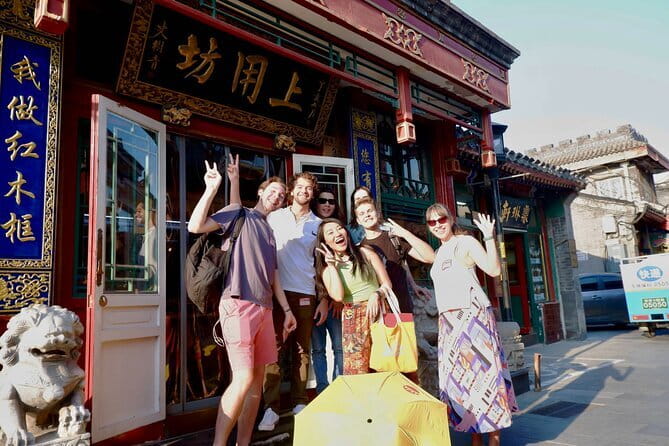
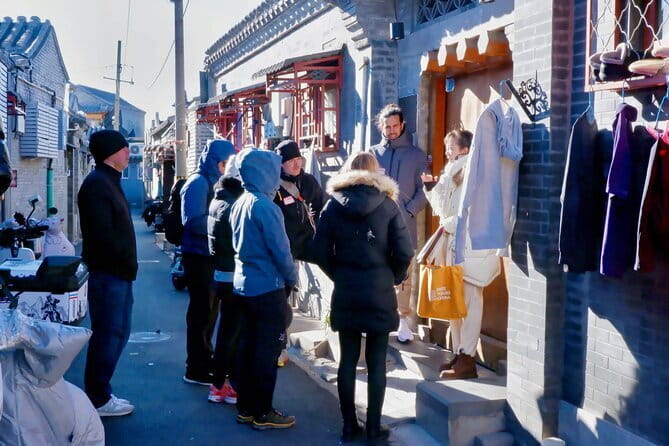
The hutong section is the heart of the experience. You spend about an hour walking through narrow lanes lined with traditional residences and older city details. This is where the tour shifts from formal history to the texture of ordinary urban life.
A hutong is not just a pretty alley. It is part of the old neighborhood system that shaped how Beijing residents lived close to one another. As you walk, your guide can place doors, courtyards, lanes, and local activity within the wider story of the capital.
This section earned strong praise for its focus on life past and present. One particularly useful point from the feedback is that the tour may not cover the large sites some people expect, such as Tiananmen Square. Instead, it gives you a closer look at a residential area. If your goal is to understand how people lived in Beijing, that change of emphasis is a benefit. If you want a checklist of imperial monuments, it may feel like a detour.
The guide also may point out small neighborhood details that are easy to miss when walking alone. One account specifically praised the off-the-main-route character of the hutongs and the way the guide kept the group moving in cold weather. You should still dress for the conditions, since a large part of this tour takes place outdoors.
The pace here matters. One hour is long enough to get a feel for the lanes without turning the morning into a single-neighborhood visit. It is also the part where you should ask questions. A good guide can explain not only what you are seeing, but how Beijing’s old districts are being preserved, altered, or used for new purposes.
Liulichang Street and the role of calligraphy
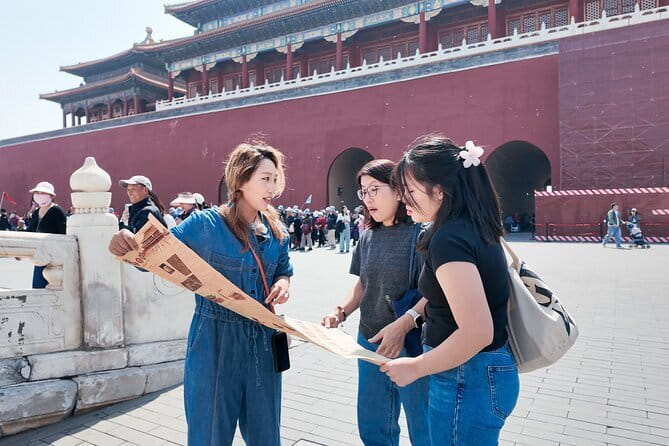
After the hutongs, the walk reaches Liulichang Street for about 40 minutes. This district is associated with antiques, painting, calligraphy, and traditional arts. Shops here add a different side of Beijing, one connected to study, collecting, writing, and old forms of craftsmanship.
The tour title includes calligraphy creation, so this is the natural point to expect that element. The supplied details do not specify the exact format, materials, or length of the hands-on activity. You should confirm those details if creating a piece of calligraphy is a major reason for booking.
Even without a long workshop, Liulichang gives the guide plenty to discuss. You can look at the role of calligraphy in Chinese culture and see how an old arts district serves both local traditions and modern visitors. It is also a sensible stop for anyone considering a small cultural souvenir rather than another mass-produced item.
The 40-minute timing keeps this from becoming a shopping expedition. That is helpful if you want context without pressure to buy. At the same time, you may want more time if you hope to browse carefully through several shops or make a purchase.
More City Tours in Beijing
- Beijing: Forbidden City Tour(Group/Private)-Tickets Included
★ 4.8 · 7,974 reviews - Beijing: T-Square & Forbidden City Group or Private Tour
★ 4.8 · 4,446 reviews - All-Inclusive Tour: Tiananmen Square, Forbidden City, Great Wall
★ 5.0 · 2,873 reviews - 4-Hour Small Group Tour to Forbidden City with Entry Tickets
★ 5.0 · 1,863 reviews
Yangmeizhu Byway, where old lanes meet new businesses
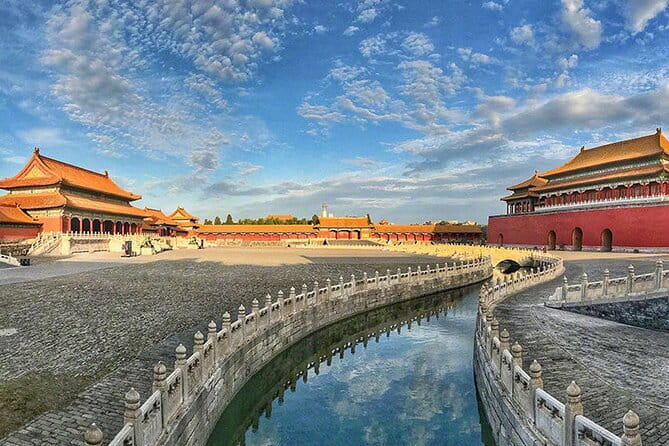
The next stop is Yangmeizhu Byway, with about 20 minutes set aside. This alley brings a newer, more design-oriented mood to the route, with boutique shops, art studios, and cafes occupying an older urban setting.
The value here is comparison. You have just seen traditional residential lanes and an established arts street. Yangmeizhu shows how older parts of Beijing can attract newer creative businesses. The route uses this contrast to explain the city’s urban planning progress and its challenges.
Twenty minutes is enough to get a quick sense of the area, but not enough for a slow cafe visit or serious shopping. Treat it as a guided look rather than free time. If a particular shop catches your eye, you may want to note its location and return later.
I find this kind of stop useful because it prevents the tour from presenting old Beijing as frozen in time. The city is still changing, and the newer shops and studios make that clear. The guide can help you see both sides without reducing the neighborhood to a simple old-versus-new story.
Dashilan Street and the practical side of old Beijing commerce
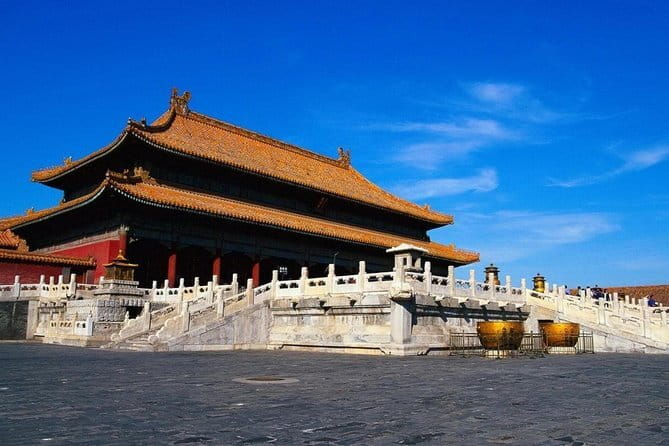
Dashilan Street is another 20-minute stop. It is one of Beijing’s oldest commercial areas, known for long-established shops, newer boutiques, local foods, and heavy pedestrian activity.
This is a good place for a street snack or a quick look at the kind of shopping district that has served residents and visitors for generations. Food tasting has been part of the experience for some participants, but the supplied details do not guarantee a specific dish or included tasting. Bring some small spending money if you want to sample something, and ask your guide what is worth trying.
Dashilan can also feel more commercial than the hutongs. That is not a flaw, but it changes the mood. You are no longer seeing mainly residential Beijing. You are seeing a public shopping corridor where old names, tourist-oriented stores, food sellers, and modern retail sit close together.
The short time here is best used for orientation. Notice how the street functions, listen to the guide’s stories about traditional businesses, and save detailed shopping for later. If you stop at every storefront, you will quickly lose contact with the group.
Qianmen Walking Street and the final approach
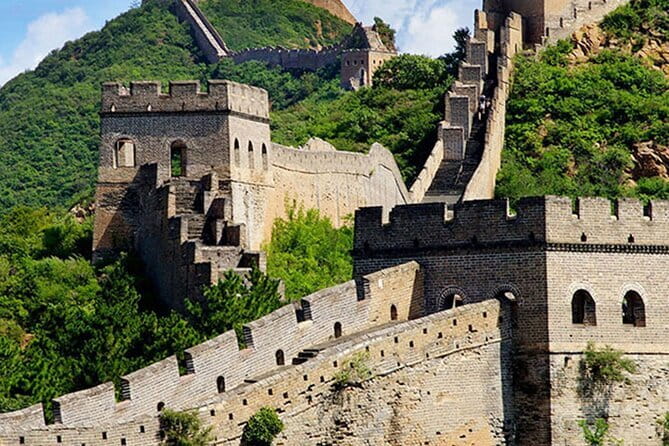
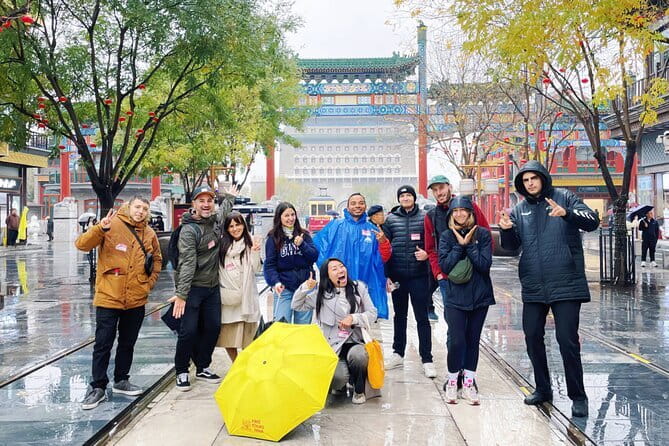
The last scheduled stop is Qianmen Walking Street, also for about 20 minutes. The route finishes near Zhengyangmen, close to Qianmen Metro Station on Lines 2 and 8 and south of Tiananmen Square.
Qianmen is a fitting end because it combines restored historic architecture, shops, food, and modern pedestrian traffic. By this point, you have moved from a guild hall to residential lanes, then through art and shopping districts. Qianmen brings those threads together in a highly visible public setting.
This is also where expectations matter most. The tour ends in front of Tiananmen Square, but it does not enter the square. You cannot treat this walking tour as a substitute for a Tiananmen visit. If you want to go inside, you must make your own reservation at least one day in advance, since same-day reservations are not possible.
The final location is practical. You can continue exploring central Beijing, find lunch, or use the nearby metro. It also makes the tour useful for a first morning in the city, since you finish in an area with easy onward transport.
The tip-based price and what you actually pay
The advertised $5 is unusually low for a three-and-a-half-hour guided walk, but it is not the complete expected cost. That payment reserves your place. The tour operates on tips, with a suggested tip of 160 to 200 RMB, roughly $20 to $25, for the guide.
That means you should judge the value using the suggested total, not the $5 headline alone. At around $20 to $25 plus the booking fee, the experience can still be good value if you want a long English-language introduction to several central districts.
The tip model gives you some control, but it also requires clear expectations. You are paying for the guide’s time, preparation, explanations, route planning, and help connecting the stops. If you prefer a fixed-price tour with every cost settled before departure, this arrangement may feel less comfortable.
The English-speaking guides receive the strongest praise for clear explanations, patience, warmth, and storytelling. Names specifically mentioned include Kris and Hao. Hao was praised for keeping the group engaged in cold weather, while Kris received strong marks for organization and for combining history, local stories, food, and drink tasting.
Group size, pace, and the small print that matters
The experience is described as a shared group tour. One part of the information says bookings are limited to six people and asks larger parties to arrange a private tour. Another section gives a maximum of 50 participants. Because those figures do not match, I would confirm the expected group size before paying if a quiet, intimate walk matters to you.
A group of six would make it easier to hear the guide and ask questions in the hutongs. A much larger group could make narrow lanes and street-side explanations less personal. The positive feedback includes praise for the tour’s organization and pace, but one person found the group much larger than expected.
The route is near public transportation, starts at Huguang Guild Hall, and ends at Qianmen Metro Station. Most people can participate, but you should be ready for several hours outside and on foot. The tour also depends on good weather and a minimum number of participants. If the operator cancels for either reason, you are offered another date or a full refund.
Free cancellation is available up to 24 hours before the start time. Changes or cancellations inside that window are not accepted for a refund, so keep the local cutoff in mind.
Who will get the most from this walk
I would recommend this tour to you if you want a compact introduction to Beijing’s older neighborhoods and prefer stories about city life to a long list of major monuments. It suits first-time visitors who want help finding context in the hutongs, old commercial streets, and traditional art districts.
It is also a good match for anyone with limited time. The route covers several central areas in one morning, and the guide can help you decide where to return later for food, shopping, or more independent wandering.
You may want a different tour if Tiananmen Square, the Forbidden City, or other major imperial sights are your top priorities. None of those is the focus here, and Tiananmen Square is not entered.
Should you book the Beijing historic city walk?
Book it if you value local stories, hutong streets, traditional arts, and food culture more than a monument checklist. The route has variety, the guides appear to bring strong energy and clear explanations, and the suggested tip remains reasonable for a half-day introduction.
Before booking, confirm the group size and the exact calligraphy activity. Also budget the full suggested tip, and make a separate Tiananmen reservation if that visit is important to you. With those points clear, this is a smart, low-cost way to see a less formal side of central Beijing.
FAQ
How long does the Beijing walking tour last?
The tour lasts approximately 3 hours and 30 minutes. It starts at 10 a.m.
Where does the tour begin?
The meeting point is Huguang Guild Hall, 3 Hu Fang Lu, Xicheng District, Beijing, China, 100052.
Where does the tour finish?
The walk ends at Zhengyangmen near Qianmen Walking Street and Qianmen Metro Station. Qianmen Metro Station is served by Lines 2 and 8.
Does the tour enter Tiananmen Square?
No. The tour ends in front of Tiananmen Square but does not enter it. You must make your own reservation at least one day ahead if you wish to visit the square.
What does the $5 price include?
The $5 payment is a booking fee to reserve your place. The tour uses a tips-based model, with a suggested guide tip of 160 to 200 RMB, about $20 to $25.
Can I cancel the tour for a refund?
Yes, you can cancel for a full refund if you do so at least 24 hours before the experience starts. Poor weather or failure to meet the minimum number of participants may also lead to a different date or a full refund.
More Walking Tours in Beijing
- Beijing Hutong Walking Food and Beer Tour at Hidden Restaurants
★ 5.0 · 1,132 reviews - Private Beijing Walking Tour of the Forbidden City with 7 Options
★ 5.0 · 675 reviews - Forbidden City Private Walking Tour with Optional Sights
★ 5.0 · 400 reviews - Beijing Private Hutong Food Walking Tour
★ 5.0 · 299 reviews
More Historical Tours in Beijing
- Beijing Historical Tour II including Summer Palace, Lama Temple & Panda Garden
★ 4.0 · 187 reviews - Beijing Historical Tour I – Forbidden City, Tiananmen Square & Temple of Heaven
★ 4.0 · 120 reviews - Beijing Culture: Tea Ceremony, Heritage Instrument & Calligraphy
★ 5.0 · 57 reviews - 2-Hour Beijing Private Forbidden City Tour: History & Highlights
★ 5.0 · 28 reviews
Newest reviews from Beijing
- Beijing: Explore the Forbidden City in Hanfu★ 5.0 · 4 reviews
- Beijing Tai Chi and Tea Ceremony Experience★ 5.0 · 4 reviews
- Jinshangling Great Wall Of Beijing Tickets And Other Option★ 4.0 · 4 reviews
- Private Full-Day Great Wall of China Hiking Tour from Jiankou to Mutianyu★ 4.5 · 4 reviews
- Tour the Great Wall with a Native from Downtown Beijing★ 4.8 · 4 reviews
- Beijing: Badaling Great Wall Private Tour w Language Option★ 4.3 · 4 reviews
- Beijing:Summer Palace & Tea or Calligraphy Experience Tour★ 4.6 · 4 reviews
- 7 Days Private Tour of Beijing, Xian, Shanghai by Bullet Train★ 5.0 · 4 reviews
Calligraphy Classes, compared.
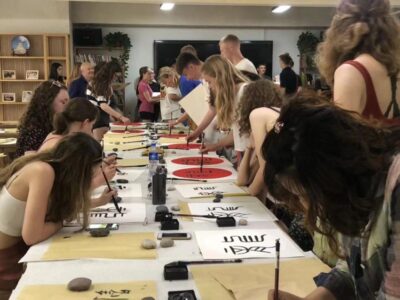
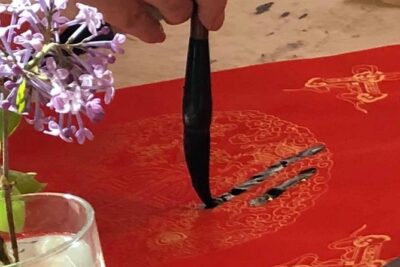
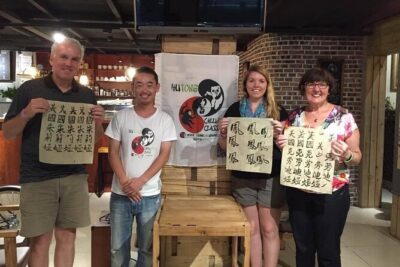
Beijing Wangfujing Calligraphy Class by Forbidden City
Read our review →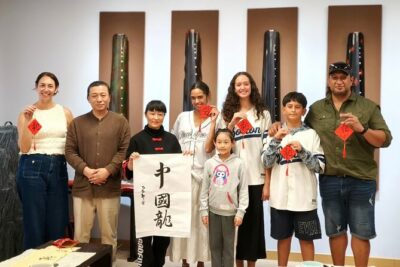
Beijing Culture: Tea Ceremony, Heritage Instrument & Calligraphy
Read our review →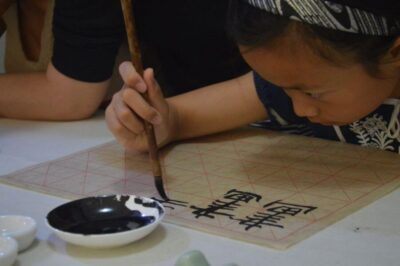
Beijing Wangfujing Calligraphy Class Nearby Forbidden City
Read our review →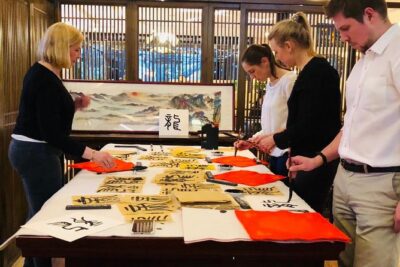
2-Hour Chinese Calligraphy with an Artist in Shanghai, China
Read our review →