
Reviewed · CALLIGRAPHY CLASSES
Noon Calligraphy Class
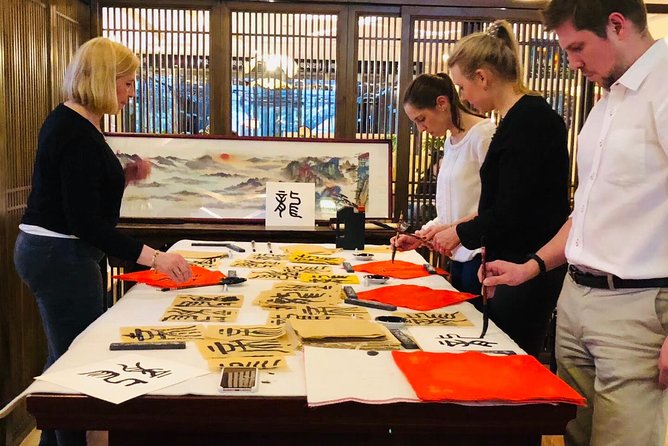
Slow down in the heart of Beijing. This one-hour calligraphy class turns ink, brush, and rice paper into a calm lesson in Chinese culture. I like the central Wangfujing location and the chance to leave with your own finished piece, not just a few photos.
I also like the friendly, patient teaching style associated with Richard and Li, who explain both brush technique and the meaning behind the characters. The main consideration is time: the shorter class may feel brief if you want plenty of practice, and the available duration must be selected when booking.
In This Review
- Key Points to Know
- Why This Beijing Calligraphy Class Is Worth Your Time
- Meeting at No. 8 Wangfujing Dongjie
- The First Brush Strokes
- Learning the Meaning Behind the Characters
- Why the Class Feels Almost Meditative
- Creating a Finished Piece to Take Home
- Choosing Between 30 Minutes, One Hour, and 1.5 Hours
- A Good Rainy-Day Activity for Couples and Families
- What the $20 Price Really Buys You
- Practical Details Before You Go
- Who Will Enjoy This Most
- Should You Book the Noon Calligraphy Class?
- FAQ
- Where does the calligraphy class meet?
- Where does the activity end?
- How long does the class last?
- How much does the class cost?
- Are calligraphy supplies included?
- Is an art teacher included?
- Can children join the class?
- How many people can attend?
- Is the meeting point near public transportation?
- Can I cancel for a full refund?
Key Points to Know
- Central Wangfujing setting: Meet at No. 8 Wangfujing Dongjie, beside the Hilton Beijing Wangfujing.
- Hands-on from the start: Use brushes, ink, rice paper, and other calligraphy supplies during the lesson.
- More than handwriting: Learn about seal carvings, ink stones, brush control, and the cultural meaning of Chinese characters.
- Relaxing pace: The class can feel almost meditative once the initial excitement settles.
- Flexible scheduling: Multiple class times are offered, with 30-minute, one-hour, and 1.5-hour choices.
- Small group format: The class accepts a maximum of 15 participants and suits adults and children with an accompanying adult.
Why This Beijing Calligraphy Class Is Worth Your Time
Beijing offers grand sights by the dozen, but a hands-on cultural class gives you a different kind of memory. Instead of looking at Chinese characters on signs or museum labels, you learn how a brush creates them one stroke at a time.
That change matters. Calligraphy is not simply a way to write Chinese. It is an art form in which pressure, speed, spacing, and rhythm shape the final image. Your teacher introduces this idea in practical terms, then lets you test it yourself with ink and paper.
I especially like that this is not presented as a performance where you watch an expert create something beautiful while you stand back. You get supplies and practice time. The work may not look perfect, but that is part of the fun. The class shows you how difficult calligraphy can be, which makes finished examples and traditional characters easier to appreciate.
The price is $20 per person. For that amount, you receive instruction, materials, and a cultural activity in a central part of Beijing. It is good value if you want something more personal than another sightseeing stop. The value is weaker if you only want a quick souvenir photo, since the real reward comes from paying attention and practicing.
More Calligraphy Classes in Beijing
- Beijing Calligraphy Class
★ 4.9 · 112 reviews - Chinese Calligraphy Class for Small Group
★ 5.0 · 104 reviews - Beijing Historic City Guided Walking Tour + Calligraphy Creation
★ 5.0 · 59 reviews
Meeting at No. 8 Wangfujing Dongjie
The class meets at the Hilton Beijing Wangfujing at No. 8 Wangfujing Dongjie, in Dongcheng District. The address is also given in Chinese as 北京东城区王府井东街8号, which is useful if you need to show it to a taxi driver or confirm the location locally.
This is a practical meeting point because Wangfujing is in central Beijing and near public transportation. You do not need to organize a separate transfer to a distant studio. The activity begins and ends at the meeting point, so it fits neatly into a day of exploring central Beijing.
Allow yourself enough time to arrive without rushing. Calligraphy rewards a settled mind, and arriving breathless from a last-minute dash through the city is not the best preparation for careful brushwork.
The class is capped at 15 people. That is not a private lesson, but it is small enough for an art teacher to answer questions and offer guidance. If you are traveling with family or friends, group discounts may also be available.
The First Brush Strokes
The lesson begins with an introduction to the basic tools: brushes, ink, rice paper, and ink stones. You also learn about seal carvings, an important part of traditional Chinese art that often appears alongside calligraphy.
For a newcomer, the tools are part of the experience. A brush does not behave like a ballpoint pen. You cannot simply press it into the paper and move it along at one fixed speed. The amount of ink, the angle of the brush, and the pressure of your hand all affect the stroke.
Expect to practice before attempting a final piece. This is one of the strongest parts of the class. You get a chance to make mistakes while the stakes are low, then apply the corrections to your finished work.
Richard is described as kind and informative, with a teaching style that gives participants plenty of practice before their final piece. Li is praised for clear, practiced instruction and for helping participants accomplish a lot in a short amount of time. Since the teacher may vary, you should expect the same general format but not assume that every class will be identical.
Learning the Meaning Behind the Characters
The class is not limited to copying shapes. The teacher explains the deeper meaning behind the words you write, giving the activity a cultural purpose.
That context helps you understand why Chinese calligraphy receives such respect. A character is both language and visual form. The placement of each stroke affects balance, and the finished character can express calm, strength, movement, or order even before you understand its pronunciation.
This is also a pleasant introduction to Chinese culture if you are studying Mandarin. One participant found the activity a useful way to stay engaged with the language. You will not become fluent in an hour, but seeing a character built stroke by stroke can make it more memorable than simply memorizing it from a textbook.
The teaching is especially useful for beginners because you can ask questions as you work. If you have wondered why a character looks the way it does, or why a stroke must be made in a particular order, this is a good place to ask.
A completely different kind of day out on the same trip:
- From Beijing: Mutianyu Great Wall Tours with Options
★ 4.9 · 9,216 reviews - Beijing: Forbidden City Tour(Group/Private)-Tickets Included
★ 4.8 · 7,974 reviews - Beijing: T-Square & Forbidden City Group or Private Tour
★ 4.8 · 4,446 reviews - All-Inclusive Tour: Tiananmen Square, Forbidden City, Great Wall
★ 5.0 · 2,873 reviews
Why the Class Feels Almost Meditative
The mood changes as the lesson continues. At first, you may feel excited or self-conscious while handling unfamiliar tools. Once you begin repeating the strokes, the activity becomes quieter and more focused.
Several comments about the class describe it as relaxing, calming, and almost like morning meditation. That makes sense. You must pay attention to the brush touching the paper, the movement of your wrist, and the amount of pressure you use. There is little room for rushing.
I like this slower rhythm as a break from Beijing’s major sights. After crowded streets, traffic, and long museum visits, a table, a brush, and a small set of characters can feel refreshingly simple.
Still, the calm atmosphere depends partly on your own approach. If you expect a fast craft demonstration, you may find the careful repetition slow. If you are happy to concentrate and improve gradually, the pace becomes one of the class’s main strengths.
Creating a Finished Piece to Take Home
The goal is not only to practice random strokes. After working through the basics, you create a final piece that you can take home.
That gives the hour a satisfying shape. You begin with unfamiliar tools, receive instruction, practice the movements, and finish with something personal. It may not have the precision of a professional calligrapher’s work, but it records your effort and your first contact with the art.
Your final piece can also become a useful reminder of Beijing because it connects a physical object with a specific cultural experience. A souvenir bought in a shop may look attractive, but a piece you made yourself carries a different memory.
Do not judge your work too harshly. The point is not to produce museum-quality calligraphy in one session. The point is to understand the discipline, feel the brush move across rice paper, and gain respect for the skill behind polished examples.
Choosing Between 30 Minutes, One Hour, and 1.5 Hours
The experience offers three duration choices: 30 minutes, one hour, and 1.5 hours. The standard description refers to an approximately one-hour class, so check the option you select when booking.
The 30-minute version may work well if you have a tight schedule or want a short cultural activity between major sights. It should be treated as a brief introduction rather than a full lesson. You will have less time to practice and ask questions.
The one-hour version is the best middle choice for most people. It gives you enough time to learn about the tools, practice basic strokes, hear cultural explanations, and work toward a final piece without taking up half your day.
The 1.5-hour class is likely the better choice if you want more correction and repetition. It makes sense for families, serious beginners, or anyone who enjoys learning a craft slowly. It also gives you more breathing room if your first attempts are uneven, which they almost certainly will be.
Multiple daily class times make it easier to fit the activity around sightseeing. That flexibility is useful in Beijing, where a day’s plans can change because of weather, transport, or the sheer size of the city.
A Good Rainy-Day Activity for Couples and Families
This class works particularly well when the weather is poor. It gives you an indoor activity with a clear purpose, rather than leaving you to fill an hour in a café or shopping center.
It is also a good choice for couples and friends. You can practice side by side, compare your strokes, and laugh at the first attempts without needing specialist art skills. The activity feels social at the beginning, then grows quieter as everyone concentrates.
Children can participate, but they must be accompanied by an adult. The format suits families because the class welcomes both adults and children, and the lesson offers a tangible result rather than a long lecture.
That said, young children who dislike careful repetition may lose interest. The best fit is a child who enjoys drawing, making things, or learning how unfamiliar objects work. If your child needs constant movement, the 30-minute option may be the safer choice.
What the $20 Price Really Buys You
At $20 per person, this is an affordable cultural activity in a central part of Beijing. The fee includes the art teacher and the calligraphy supplies used during class. You are not expected to bring your own brush, ink, rice paper, or ink stone.
The strongest value comes from the instruction. You could buy inexpensive calligraphy materials, but without guidance it is easy to hold the brush incorrectly or misunderstand the stroke order. Here, you receive immediate help and a reason to use the tools.
The price also compares well with a standard sightseeing attraction because it gives you active participation. You spend an hour making something and learning why the art matters. That is more memorable for many people than another quick stop for photographs.
Other expenses are not included. The supplied details do not list meals, transport, extra souvenirs, or additional activities, so budget for those separately. Group discounts may reduce the cost for larger parties.
Practical Details Before You Go
Confirmation is provided at the time of booking, and the activity is available with a mobile ticket. The experience is near public transportation, which makes the central meeting point easier to reach.
Most people can participate. No special artistic background is required, and the class is designed for beginners. Children need an adult with them, and the maximum group size is 15 participants.
Free cancellation is available if you cancel at least 24 hours before the start time. Cancellations made less than 24 hours ahead are not refunded, and changes inside that period are not accepted. The cut-off follows Beijing local time, so check the time carefully if you are booking from another country.
The experience is usually booked about nine days ahead. That does not guarantee that every class will sell out, but it is a useful sign that reserving before your Beijing visit is sensible, especially if you need a particular time.
Who Will Enjoy This Most
I would recommend the class to you if you:
- Want a short cultural activity in central Beijing
- Prefer making something to simply watching a demonstration
- Are curious about Chinese characters and Mandarin
- Need an indoor plan for a rainy day
- Enjoy calm, focused activities
- Are visiting with a partner, friends, or an older child
You may want to skip it if your schedule is extremely tight, you dislike seated activities, or you expect professional-level results immediately. The lesson introduces calligraphy, but it cannot replace long-term practice.
The teacher is a major part of the experience. Richard is praised for kindness and clear information, while Li is praised for practiced instruction and helping participants make good progress quickly. The exact teacher may depend on the class time, so book this for the activity itself rather than expecting a particular person unless the provider confirms that detail.
Should You Book the Noon Calligraphy Class?
Yes, if you want a low-cost, hands-on look at Chinese culture that fits easily into a Beijing sightseeing day. The central Wangfujing meeting point, supplied materials, flexible times, and finished piece make this a practical choice.
Choose the one-hour class for a balanced introduction, or the 1.5-hour option if you want more practice. The shorter session is best for a quick taste. Book it when you want to slow down, learn something specific, and take home a souvenir made by your own hand.
FAQ
Where does the calligraphy class meet?
It meets at the Hilton Beijing Wangfujing, No. 8 Wangfujing Dongjie, Dongcheng District, Beijing. The Chinese address is 北京东城区王府井东街8号.
Where does the activity end?
The activity ends back at the meeting point.
How long does the class last?
The available choices are 30 minutes, one hour, and 1.5 hours. Select your preferred duration when booking.
How much does the class cost?
The listed price is $20 per person.
Are calligraphy supplies included?
Yes. Supplies used during the class are included, including the materials needed for the calligraphy lesson.
Is an art teacher included?
Yes. The class is led by an art teacher who can answer questions and provide instruction.
Can children join the class?
Yes. Children can participate, but they must be accompanied by an adult.
How many people can attend?
The activity has a maximum group size of 15 participants.
Is the meeting point near public transportation?
Yes. The meeting point is near public transportation.
Can I cancel for a full refund?
Yes, if you cancel at least 24 hours before the experience start time. Cancellations made less than 24 hours in advance are not refunded.
More Workshops and Classes in Beijing
- Beijing: Dumpling Making Workshop with Meal and Tea
★ 4.7 · 69 reviews - Online Cooking Class Beijing Dumplings and Cuisine by Sunflowerli Renowned Chef
★ 5.0 · 65 reviews - Beijing Wangfujing Calligraphy Class by Forbidden City
★ 5.0 · 58 reviews - Beijing Wangfujing Calligraphy Class Nearby Forbidden City
★ 5.0 · 56 reviews
Newest reviews from Beijing
- Beijing: Explore the Forbidden City in Hanfu★ 5.0 · 4 reviews
- Beijing Tai Chi and Tea Ceremony Experience★ 5.0 · 4 reviews
- Jinshangling Great Wall Of Beijing Tickets And Other Option★ 4.0 · 4 reviews
- Private Full-Day Great Wall of China Hiking Tour from Jiankou to Mutianyu★ 4.5 · 4 reviews
- Tour the Great Wall with a Native from Downtown Beijing★ 4.8 · 4 reviews
- Beijing: Badaling Great Wall Private Tour w Language Option★ 4.3 · 4 reviews
- Beijing:Summer Palace & Tea or Calligraphy Experience Tour★ 4.6 · 4 reviews
- 7 Days Private Tour of Beijing, Xian, Shanghai by Bullet Train★ 5.0 · 4 reviews
Calligraphy Classes, compared.
Beijing Historic City Guided Walking Tour + Calligraphy Creation
Read our review →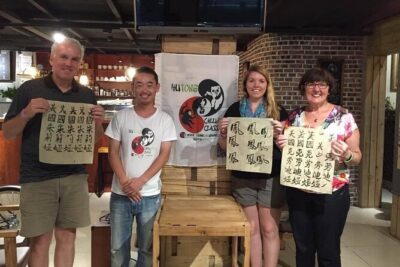
Beijing Wangfujing Calligraphy Class by Forbidden City
Read our review →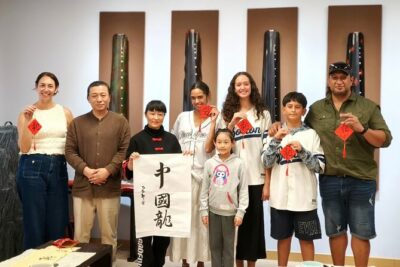
Beijing Culture: Tea Ceremony, Heritage Instrument & Calligraphy
Read our review →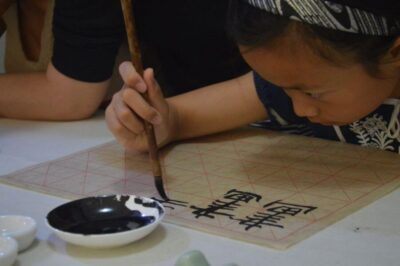
Beijing Wangfujing Calligraphy Class Nearby Forbidden City
Read our review →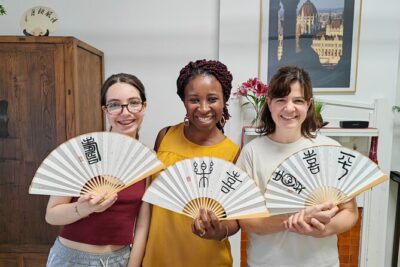
2-Hour Chinese Calligraphy with an Artist in Shanghai, China
Read our review →
Discover Old Beijing: Hutong Walking Tour & Calligraphy
Read our review →Browse the lists this tour appears in