
Reviewed · HISTORICAL TOURS
Tour of Jewish Shanghai led by a Jewish History Expert
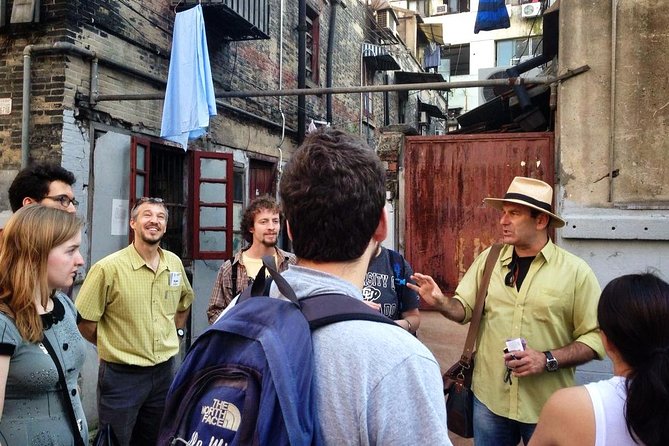
History hides in plain sight. This four-hour tour connects Shanghai’s famous Bund with Hongkou, the former Shanghai Ghetto, where Jewish refugees lived during World War II. I like the way it links the city’s Baghdadi-Jewish past with the later arrival of refugees from war-torn Europe.
I also like the small-group feel, with no more than 22 people, private transportation, and periodic chances to sit while the guide talks. The main consideration is that this is a history-first experience. If you want grand buildings, busy markets, or nonstop sightseeing, parts of the tour may feel quiet and lecture-heavy.
The tour costs $96 per person, which is fair if you value expert interpretation and a focused four-hour visit. You are paying less for a long list of attractions than for the guide’s ability to connect people, places, migration, war, and Shanghai’s changing neighborhoods.
In This Review
- Key Points to Know Before You Book
- Why Jewish Shanghai Matters
- Starting at the Peace Hotel and the Bund
- Entering Hongkou, the Former Shanghai Ghetto
- Huoshan Park and the Refugee Memorial
- The Jewish Refugees Museum at Ohel Moishe Synagogue
- The People Behind the History
- Four Hours, Private Transport, and Group Size
- Is $96 a Fair Price?
- Who Will Get the Most From This Tour?
- Booking Advice and Small Practical Details
- Should You Book the Jewish Shanghai Tour?
- FAQ
- Where does the tour begin?
- What time does the morning tour start?
- How long does the tour last?
- What places are visited?
- Is transportation included?
- What is the cancellation policy?
Key Points to Know Before You Book
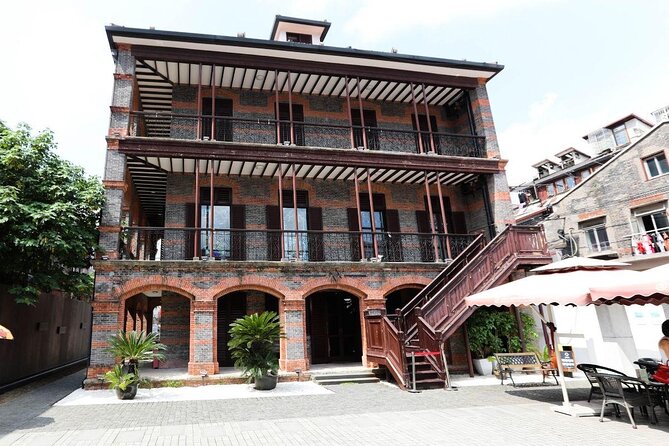
- The tour begins with Jewish Shanghai on the Bund, including the story of the Cathay Hotel and Baghdadi-Jewish developer Sir Victor Sassoon.
- Hongkou reveals the wartime refugee story, with visits to the former Shanghai Ghetto, Huoshan Park, and the Jewish Refugees Museum.
- The former Ohel Moishe Synagogue now houses the museum, making it the central indoor stop.
- The guide adds human detail, discussing Jewish refugees, Chinese residents, migrant workers, and the city’s earlier Jewish communities.
- Dvir is the main guide praised by name, while Andy and Anfisa have also led highly regarded tours.
- Choose the morning departure if possible, since the operator recommends it for better daylight and a more comfortable schedule.
Why Jewish Shanghai Matters
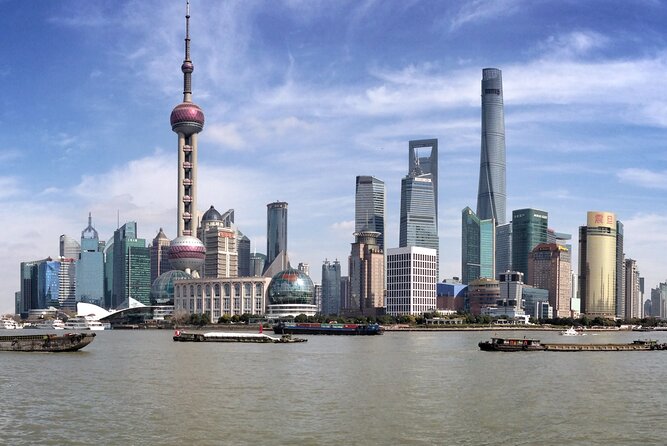
Shanghai became an escape route for Jewish refugees when many other countries had closed their doors. The city accepted people who often arrived with little money, few belongings, and uncertain plans. This tour helps you understand that Shanghai’s role was not simple or romantic. Refugees faced crowded housing, limited resources, political upheaval, and the hardships of wartime life.
The story also reaches further back. Jewish communities had already formed in Shanghai before World War II, including Baghdadi Jewish families who built businesses and shaped parts of the city’s commercial life. The tour uses this earlier chapter to explain why Shanghai mattered before the refugee influx.
That broader timeline is one of the tour’s strongest features. You are not given only a Holocaust-era account. You get a look at several waves of Jewish immigration and how each group fit into Shanghai’s changing economy and society.
The guide also places Jewish life beside the lives of Chinese residents. This matters because the Hongkou story was never separate from the surrounding neighborhood. Jewish refugees lived among Chinese families and migrant workers, sharing a dense urban setting shaped by poverty, war, and rapid change.
More historical tours:
- 4-Hour Private Shanghai Art and History Tour
★ 5.0 · 8 reviews - Private Full Day Tour: Shanghai Colonial History Tour
★ 5.0 · 6 reviews - Shanghai Propaganda and History Walking Tour
★ 5.0 · 5 reviews
Starting at the Peace Hotel and the Bund
The listed meeting location is on or near Nanjing Road East, while the detailed meeting instructions identify the Peace Hotel on the Bund. Because those descriptions do not match perfectly, I would confirm the exact meeting point after booking and arrive early.
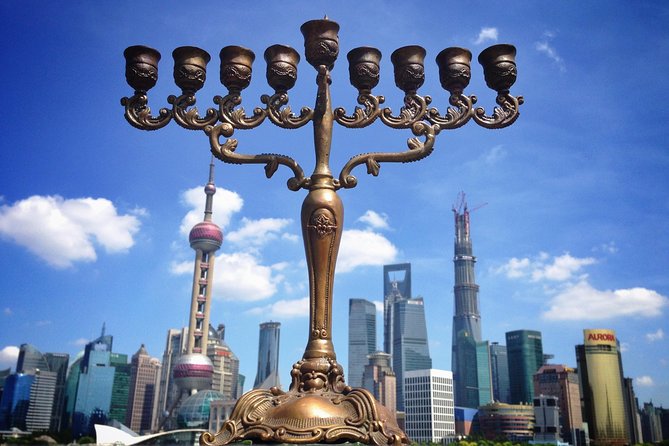
The Peace Hotel is a fitting place to begin. It was formerly the Cathay Hotel, built by Sir Victor Sassoon, a Baghdadi-Jewish real estate developer whose name is closely tied to Shanghai’s Jewish past. Before you head to Hongkou, the guide uses the Bund and its grand waterfront buildings to explain how Jewish business families became part of the city’s commercial elite.
This opening gives you useful context. You see the polished, international side of Shanghai, then later visit the more modest streets where refugees lived. The contrast helps you understand that Jewish Shanghai contained very different worlds: wealthy developers and merchants on one side, displaced Europeans trying to rebuild their lives on the other.
The Bund stop is not simply a photo opportunity. You will get city views, but the main purpose is historical orientation. Guides such as Dvir have been praised for connecting Jewish history with the larger story of Shanghai, rather than treating the Jewish community as an isolated footnote.
Entering Hongkou, the Former Shanghai Ghetto
From the Bund, private transportation takes you to Hongkou. An air-conditioned vehicle is included, a welcome feature in a city where heat, humidity, rain, and traffic can make a long walk tiring.
Hongkou is the heart of the tour. During World War II, thousands of Jewish refugees lived in this part of Shanghai. Today, the area is also home to local residents, and that modern daily life is part of what you see. This is not a preserved open-air museum where every building has been frozen in time.
That fact can surprise you. Some historic traces are easy to miss, and the neighborhood may not deliver a dramatic visual payoff at every turn. One dissatisfied opinion described the experience as mainly a history lesson with little to see. That is a fair warning if you judge tours by monuments alone.
For me, the value is in the guide’s explanation. Back lanes, ordinary buildings, and residential streets become meaningful when you understand who lived there and why. You may visit a Chinese home where Jewish refugees once lived, an especially useful stop because it brings the story down from international politics to cramped domestic life.
The walk also gives you a sense of shared space. Jewish refugees did not live in a separate European enclave with familiar comforts. They lived in a Chinese neighborhood, alongside people facing their own economic and political pressures.
Huoshan Park and the Refugee Memorial
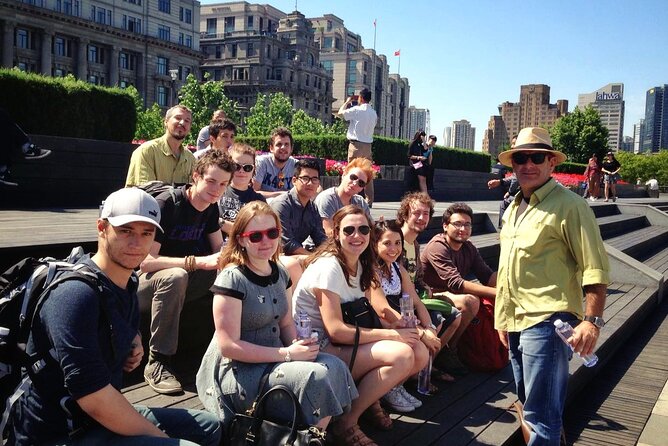
Huoshan Park includes a monument to the Jewish refugees of World War II. It is a modest stop, but it carries weight because it marks the refugee story within the neighborhood itself.
The guide may use the memorial to discuss the people who passed through Shanghai and the circumstances that brought them there. The experience is strongest when you pause rather than rush through. This is one of those places where the explanation matters more than the size of the monument.
Because the tour covers a painful subject, tone matters. The guides have been praised for treating the material with sympathy while still keeping the presentation lively. Dvir, in particular, is described as energetic, thoughtful, and capable of using dry humor without making light of the subject.
That balance is useful. Four hours of war history can become exhausting if presented as a string of dates and tragedies. A good guide helps you follow the human stories without losing sight of the larger events.
A few more tours worth putting side by side
- Authentic Local Food Tour in Central Shanghai
★ 5.0 · 1,382 reviews - Zhujiajiao Water Town and Shanghai City Private Day Tour
★ 5.0 · 1,016 reviews - Private Shanghai Full Day City Tour with Old and New Highlights
★ 5.0 · 995 reviews - Shanghai: Hop-on Hop-off Bus Ticket and Optional Attractions
★ 3.4 · 692 reviews
The Jewish Refugees Museum at Ohel Moishe Synagogue
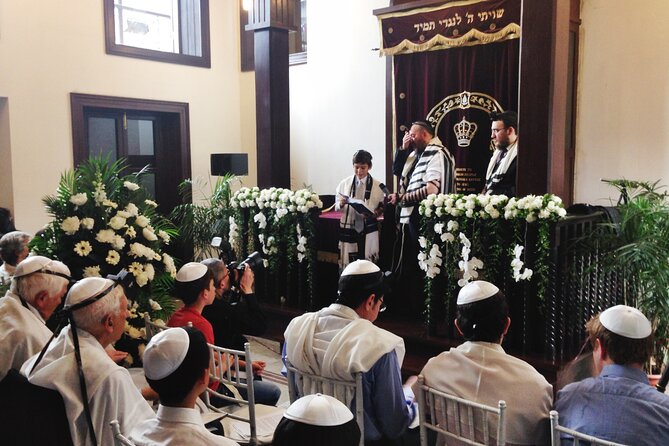
The central indoor stop is the Shanghai Jewish Refugees Museum, housed in the former Ohel Moishe Synagogue. This building gives the tour a clear physical anchor and provides a chance to step indoors during a long morning or afternoon.
The former synagogue is important not only as a museum but also as a surviving place of Jewish communal life. Its setting helps you understand how religious and social institutions supported refugees and earlier Jewish residents.
You should expect the museum visit to work best when paired with the guide’s commentary. The tour is not just a museum entry with a quick explanation outside. The guide builds the museum into a longer story about immigration, wartime Shanghai, Jewish settlement, and the people whose paths crossed in Hongkou.
The museum also helps fill in details that the streets cannot show. Residential lanes may look ordinary, and many original buildings may be altered or gone. Exhibits and interpretation provide the names, dates, and personal accounts needed to understand what happened there.
Admission to the museum is included. Food and drinks are not, so plan to eat before or after the four-hour experience rather than expecting a meal break.
The People Behind the History
The best reason to book this tour is the guide. Dvir receives the strongest praise and is described as fluent in English, passionate, entertaining, and able to speak at length without losing the thread of the story. One especially useful detail is that he sometimes arranges seated pauses, so the tour is not four straight hours on your feet.
That makes a difference. The experience is described as a walking tour, but transportation and sitting periods make it less demanding than that label might suggest. Still, you should expect time outdoors and some walking through neighborhood streets.
Andy has also led the tour, with particular praise for explaining both Jewish immigration during World War II and the earlier Jewish presence in Shanghai. Anfisa has been appreciated for an engaging manner and for covering roughly a century of history.
The variety of guides means the style may differ by departure. The consistent promise is a history expert rather than a general city guide. You should book this experience because you want interpretation, not because you need a guide to point out the city’s most famous landmarks.
The guide’s role is especially important in explaining connections among groups. You may hear about the Baghdadi-Jewish community, a real estate developer such as Sassoon, European refugees, Chinese migrant workers, and local families. These stories show that Shanghai’s Jewish past was shaped by contact between communities rather than by one group acting alone.
Four Hours, Private Transport, and Group Size
The tour lasts about four hours and has a maximum of 22 participants. That is not an intimate private tour for two, but it is still manageable for a historical walking experience. A smaller group also makes it easier to hear the guide, ask questions, and move through residential areas without becoming unwieldy.
Private transportation is included, along with an air-conditioned vehicle. Hotel pickup and drop-off are not included, and the tour ends back at the meeting point. Build extra time into your day for reaching the starting location and continuing afterward.
The tour operates in the morning and afternoon. The morning departure begins at 9:30 a.m., and the operator recommends morning tours because of the tour length and daylight. I would follow that advice, especially if you want the neighborhood walk to feel clear and comfortable.
It operates in all weather, so bring practical clothing for the forecast. The information says most people can participate, but the combination of outdoor walking, neighborhood lanes, and a four-hour schedule may not suit anyone looking for a fully seated activity.
Is $96 a Fair Price?
At $96 per person, this is not the cheapest way to spend half a day in Shanghai. You are paying for transportation, museum admission, an air-conditioned vehicle, and a guide who focuses on a narrow and specialized subject.
The value improves if you have a personal connection to Jewish history, study World War II, or want to understand Shanghai beyond the Bund and skyscrapers. The tour also works well for visitors who prefer a serious subject presented through real places instead of a general sightseeing circuit.
The value is weaker if you mainly want visual attractions. The former ghetto is a living neighborhood, not a fully restored historic district. Some sites are modest, and the experience depends heavily on listening.
The very high recommendation rate and 4.9 rating indicate strong satisfaction overall, but the lower opinion is worth taking seriously. If your idea of a good tour requires constant movement and spectacular sights, you may find the museum and neighborhood walk too subdued.
Who Will Get the Most From This Tour?
I would recommend it most strongly to:
- People interested in Jewish history and World War II
- Visitors who want to understand Shanghai’s international past
- Families and older adults who prefer a guided historical experience with transportation
- First-time Shanghai visitors who want more than the standard city highlights
- Repeat visitors looking for a different side of Hongkou and the Bund
- Anyone who values a guide’s stories as much as the buildings themselves
It is less suitable for someone with only a short window in Shanghai, since the tour takes four hours and focuses on one historical subject. It is also not the best choice if you want a food tour, shopping outing, or broad introduction to every major sight.
Booking Advice and Small Practical Details
Confirmation is sent within 48 hours, subject to availability. You can request a morning or afternoon departure in the special requirements field, but the morning option is the wiser choice according to the operator’s guidance.
Check the meeting point carefully. The information gives Nanjing Road East as the start location and also describes meeting at the Peace Hotel. That could simply reflect nearby location wording, but I would not leave it unclear on the day.
Free cancellation is available up to 24 hours before the start time. Changes or cancellations made inside that window are not accepted for a refund, and the experience requires a minimum number of participants. If the operator cancels because that minimum is not reached, you are offered another date or experience, or a full refund.
The tour is often booked well in advance, with an average booking lead time of 82 days. That suggests you should not wait until the last minute if this is a priority, particularly if your Shanghai schedule is fixed.
Should You Book the Jewish Shanghai Tour?
Book it if you want a serious, human account of how Jewish communities became part of Shanghai’s story. The combination of the Bund, the former ghetto, Huoshan Park, a refugee home, and Ohel Moishe Synagogue gives the subject a clear shape.
I especially like the way the tour moves between grand commercial Shanghai and ordinary Hongkou streets. The experience asks you to listen and look closely, since some of the most important sites are modest. Dvir’s strong reputation, along with positive experiences led by Andy and Anfisa, adds confidence that the guide will make the places meaningful.
Skip it if you want a fast-paced sightseeing tour or a neighborhood filled with restored monuments. But if you are willing to spend four hours with a difficult and often overlooked chapter of Shanghai’s past, this is a worthwhile use of half a day.
FAQ
Where does the tour begin?
The listed start location is Nanjing Road East in Huangpu District, while the detailed meeting information identifies the Peace Hotel on the Bund. Confirm the exact meeting point after booking.
What time does the morning tour start?
The morning tour starts at 9:30 a.m. An afternoon option is also available, but the morning tour is recommended because of the tour length and daylight.
How long does the tour last?
The experience lasts approximately four hours and ends back at the meeting point.
What places are visited?
The tour includes the Bund area near the Peace Hotel, Hongkou, the former Shanghai Ghetto, the Jewish Refugees Museum in the former Ohel Moishe Synagogue, Huoshan Park, back lanes, and a Chinese home where Jewish refugees once lived.
Is transportation included?
Yes. Private transportation in an air-conditioned vehicle is included. Hotel pickup and drop-off are not included.
What is the cancellation policy?
You can cancel up to 24 hours before the start time for a full refund. Cancellations or changes made less than 24 hours before the start time are not accepted for a refund.
Newest reviews from Shanghai
- Private Qibao Ancient Town Walking Tour with Tea Tasting and Calligraphy Experience★ 5.0 · 4 reviews
- Shanghai Pudong and Shanghai Hongqiao Airport to Hotels Transfer★ 5.0 · 4 reviews
- Flexible Airport Layover Tour of Shanghai City Highlights with Spa Option★ 5.0 · 4 reviews
- Discover Local Life and Street Food Shanghai Bike Adventure★ 5.0 · 4 reviews
- Shanghai Zhujiajiao water town,Yugarden&Bund one day tour★ 5.0 · 4 reviews
- Quick Tour to Xi’an Terracotta Warriors from Shanghai by Air in One Day★ 5.0 · 4 reviews
- Wuzhen Private Full-Day Tour from Shanghai★ 5.0 · 4 reviews
- Private Round Trip Transfer to Zhouzhuang Water Village from Shanghai★ 5.0 · 4 reviews
Historical Tours, compared.
Between Capitalism & Communism: Hong Kong History Tip Based Tour
Read our review →
Beijing Historical Tour II including Summer Palace, Lama Temple & Panda Garden
Read our review →
Beijing Historical Tour I – Forbidden City, Tiananmen Square & Temple of Heaven
Read our review →
Beijing Historic City Guided Walking Tour + Calligraphy Creation
Read our review →
Beijing Culture: Tea Ceremony, Heritage Instrument & Calligraphy
Read our review →
All inclusive Two-Day Xi’an private Heritage Tour
Read our review →
2-Hour Beijing Private Forbidden City Tour: History & Highlights
Read our review →
Xi’an Full Day Sightseeing Tour – Shaanxi History Museum, Big Wild Goose Pagoda, Ancient City Wall
Read our review →Browse the lists this tour appears in