
Reviewed · HISTORICAL TOURS
4-Hour Private Shanghai Art and History Tour
Shanghai has an artistic side worth seeking out. This private tour links M50, the Shanghai Propaganda Poster Art Centre, and Tianzifang, giving you a useful mix of contemporary art, political design, old lane housing, and local shopping. I like the clear three-stop plan, and I like that your guide can adjust the pace for your own group.
The strongest feature is the human context. A guide such as Mason can add background on Chinese history and culture instead of simply pointing at buildings. The main drawback is time: three stops in roughly four hours means you will get an introduction rather than a slow, detailed study of each place. The extra $15 charge after four hours is also worth noting.
In This Review
- Five Things to Know Before You Go
- Why This Tour Works for Art-Curious Visitors
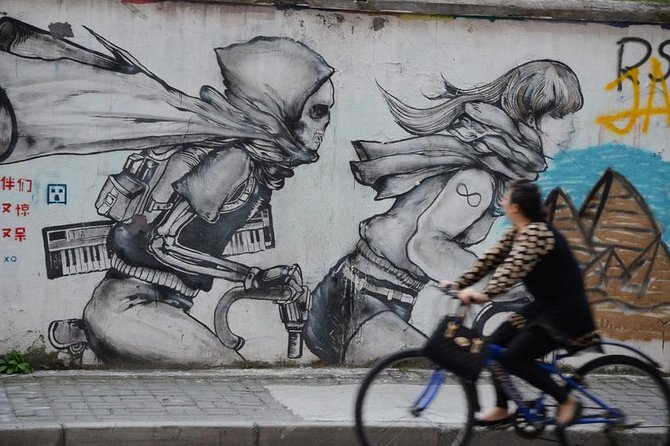
- M50: Shanghai’s Former Factory District
- The Poster Museum and China’s Twentieth Century
- Tianzifang and the Former French Concession
- What Your Private Guide Adds
- Transport, Walking, and Timing
- Is $85 Per Person Good Value?
- Who Should Book This Shanghai Art Tour?
- Booking and Cancellation Details
- Should You Book It?
- FAQ
- How long does the Shanghai art and history tour last?
- What places are included on the tour?
- Is hotel pickup included?
- What transportation is used?
- Are entrance fees included?
- Is there an extra charge for going over four hours?
Five Things to Know Before You Go

- M50 begins the tour with contemporary art: A former industrial site now filled with galleries and creative spaces.
- The poster museum adds serious historical weight: Its collection covers Chinese posters from the 1910s through the 1970s.
- Tianzifang supplies the street-level atmosphere: Old Shikumen lane houses meet shops, cafés, art spaces, and souvenirs.
- Private transport keeps the schedule simple: Groups of one to four use local premium Uber service, while larger groups receive an air-conditioned minivan.
- Downtown pickup is included, but not everywhere: Hotels outside central Shanghai require a meeting arrangement, and there is no hotel drop-off.
Why This Tour Works for Art-Curious Visitors
Shanghai can feel enormous at first. Skyscrapers, colonial-era streets, old lane neighborhoods, museums, and shopping districts all compete for your attention. This tour gives you a narrow but useful theme: how art and design reflect the city’s changing identity.
I like that the route does not stick to one period. M50 represents present-day creative work. The propaganda poster museum looks at political art and public messaging during the twentieth century. Tianzifang shows how historic residential lanes now function as a fashionable shopping and arts district.
That combination gives you more than a gallery visit. You can compare official art with independent art, then see how older homes have been adapted for modern life. A good guide helps connect those places, especially if you want to understand why Shanghai’s cultural character feels so layered.
The tour is private, so only your own party participates. That matters here. Art is personal, and you may want to spend longer on a poster, ask about a historical period, or move along quickly if a gallery is not your style. A large group would make those small adjustments harder.
The schedule usually begins with a morning or afternoon departure. The listed duration is three to four hours, with each main stop planned for about an hour. That makes this a sensible half-day addition to a larger Shanghai itinerary, not an all-day art course.
More historical tours:
- Tour of Jewish Shanghai led by a Jewish History Expert
★ 5.0 · 106 reviews - Private Full Day Tour: Shanghai Colonial History Tour
★ 5.0 · 6 reviews - Shanghai Propaganda and History Walking Tour
★ 5.0 · 5 reviews
M50: Shanghai’s Former Factory District
Your guide picks you up at the hotel lobby, assuming your hotel is in the downtown area, and takes you to M50. The site occupies a former factory complex that has become one of Shanghai’s best-known art districts.
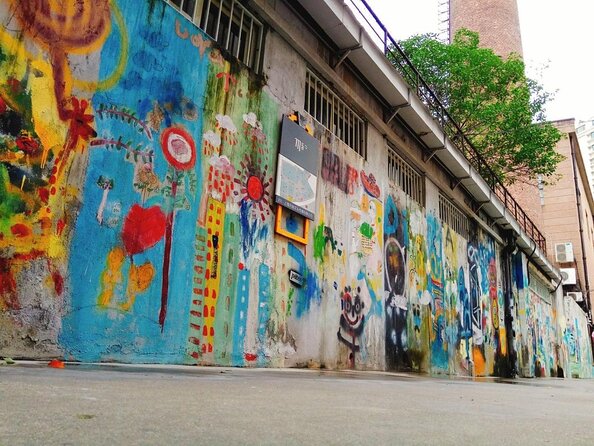
The setting is part of the appeal. Instead of entering a purpose-built museum with polished halls, you explore an old industrial property repurposed for creative work. The tour describes M50 as comparable to New York’s SoHo, though you should treat that as a broad comparison rather than an exact match. The important point is that this is a working arts quarter, not just a single exhibition.
You might find galleries, studios, and changing displays with different styles. The information provided does not promise a fixed list of exhibitions, so the exact experience can vary. That flexibility is both a strength and a limitation. You may encounter something memorable, but you should not book this expecting one guaranteed blockbuster collection.
The planned visit lasts about one hour. I think that is enough for a first look, particularly with a guide who can explain the area and help you decide where to focus. If contemporary art is your main reason for booking, you may wish to ask in advance how much time can be devoted to M50.
M50 also offers a useful contrast with the next stop. Here, the emphasis is on newer artistic expression and Shanghai’s creative present. At the poster museum, you turn toward art made for public communication and political purpose.
The Poster Museum and China’s Twentieth Century
The Shanghai Propaganda Poster Art Centre is the most distinctive stop on the route. It is a private museum devoted to posters dating from the 1910s through the 1970s, making it different from a standard art gallery or general city museum.
Posters can reveal a great deal about a society. They show which images, slogans, ideals, and public messages were considered important at a particular time. Even if you are not an art specialist, you can look at how design was used to shape public thinking and represent national change.
The visit is scheduled for about an hour, and admission is included. That is helpful because the museum is a central part of the tour rather than an optional extra. Your guide can provide historical context, which makes the collection easier to understand than it would be if you simply walked through alone.
This is also where the tour earns its history title. M50 may appeal to your eye, but the poster collection asks you to think about politics, culture, and memory. The two stops work well together because they show very different reasons art gets made and displayed.
The museum may not suit every child or every visitor who wants only light sightseeing. Its subject is serious, and the material is tied to China’s twentieth-century political history. Still, it is likely to be the stop that stays with you longest because it offers something you will not find on a standard Shanghai highlights tour.
A particularly useful tip is to tell your guide what you already know about Chinese history. If you have little background, you may want a slower explanation. If you have studied the period, you may prefer to focus on design, collecting, and the museum itself.
Tianzifang and the Former French Concession
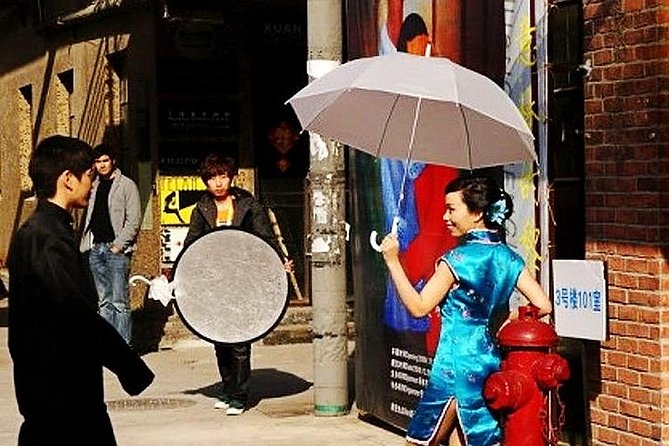
The final stop takes you into Tianzifang, an area of alley houses in the former French Concession. Here, traditional Shikumen housing is mixed with modern shops, art spaces, cafés, and souvenir stalls.
Shikumen homes are important because they represent a distinct Shanghai residential style. The narrow lanes and stone-framed entrances show how urban homes were organized in older neighborhoods. Tianzifang is not preserved as a quiet historical exhibit, though. It is an active commercial district, and the modern uses are very much part of the experience.
I like this stop because it puts the city’s past into daily use. You are not only looking at old architecture from behind a barrier. You are walking through lanes where you can browse, shop, and see how the area has changed.
At the same time, Tianzifang can feel more commercial than the tour’s art theme suggests. If you dislike shopping streets, you may find the souvenir stores less interesting than M50 or the poster museum. If you enjoy local design, small gifts, and wandering through old lanes, this may be your favorite part.
The itinerary allows about an hour here. That is enough for a walk and some browsing, but not enough for a long meal, extended shopping, and a detailed architectural study. I would save major purchases for later unless you are comfortable carrying them for the rest of the day, since hotel drop-off is not included.
A few more tours worth putting side by side
- Authentic Local Food Tour in Central Shanghai
★ 5.0 · 1,382 reviews - Zhujiajiao Water Town and Shanghai City Private Day Tour
★ 5.0 · 1,016 reviews - Private Shanghai Full Day City Tour with Old and New Highlights
★ 5.0 · 995 reviews - Shanghai: Hop-on Hop-off Bus Ticket and Optional Attractions
★ 3.4 · 692 reviews
What Your Private Guide Adds
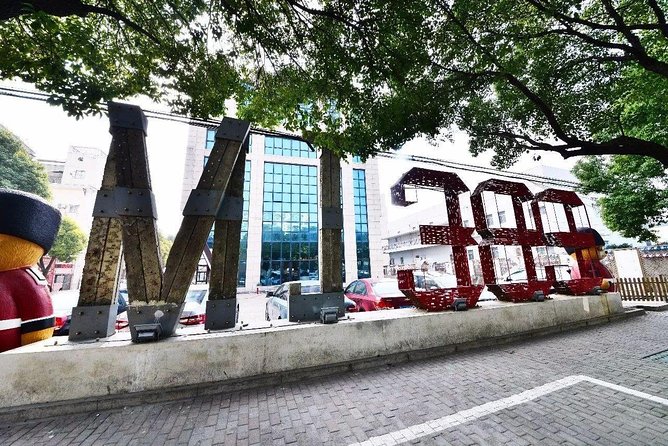
A private guide is the reason to choose this tour instead of visiting the three places independently. The guide is described as English-speaking and well-informed about Shanghai’s art and culture. The most positive account connected with the experience gives special praise to Mason for explaining Chinese history and culture alongside the art.
That kind of explanation can change the day. At M50, your guide may help you understand how a former factory area became an art center. At the poster museum, historical background can prevent the collection from feeling like a wall of unfamiliar images. In Tianzifang, your guide can point out the relationship between Shikumen homes and the newer businesses occupying them.
The private format also lets you ask direct questions. You can request more history, more art, or more time for shopping. The tour is not described as a formal lecture, so the quality of your conversation will depend partly on what you ask and what your guide knows about your interests.
I would tell the guide at the start if you prefer a relaxed walk, a brisk schedule, or extra detail at the poster museum. Since the tour is only three to four hours, clear priorities matter.
Transport, Walking, and Timing
Local transport is included, which makes the route easier to manage in a city as large as Shanghai. For one to four people, the group travels by local premium Uber. Groups of more than four receive an air-conditioned minivan.
The transfer between stops is useful because the three locations are not one compact museum complex. You avoid arranging several separate rides and can keep the day moving. Still, traffic and pickup conditions can affect the pace, so I would not schedule a tight flight, train, or reservation immediately after the tour.
The experience requires a moderate level of physical fitness. You should expect walking at all three stops, along with time spent standing in galleries and moving through lanes. Comfortable walking shoes are specifically recommended, and that is good advice.
The tour operates in all weather. Shanghai’s conditions can change, and the route includes outdoor walking at M50 and Tianzifang, so dress for the forecast. Rain does not automatically cancel the experience, but poor weather may make the lane walking less pleasant.
Hotel pickup applies only to downtown hotels. Hotels in outlying areas, including Jiading, Songjiang, Qingpu, Jinqiao, and Chuansha in Pudong, are not covered by the standard pickup arrangement. In that case, your guide will provide instructions for meeting downtown.
There is no hotel drop-off. Plan your next move before you start, especially if you have luggage or a fixed evening booking.
Is $85 Per Person Good Value?
At $85 per person, this tour is not the cheapest way to see M50, Tianzifang, and the poster museum. You are paying for a private guide, local transport, hotel pickup in the downtown area, and entrance fees. For a small group, that package can make good sense.
The value improves when two or more people share the private experience. You get direct attention without joining a large group, and the transport removes some of the hassle of coordinating the route yourself. Group discounts are offered, though the exact discount is not provided.
For one person, the price is harder to assess. The private format remains convenient, but you are carrying the full per-person cost. If you are confident using Shanghai’s local transport and comfortable researching the sites, you could spend less independently. You would, however, lose the historical interpretation and the ease of having one person manage the route.
Watch the clock. A $15 surcharge applies after the four-hour tour period. The tour’s listed duration is approximately three to four hours, so ask your guide about timing if you want to linger. A slow start, traffic, or extended time at one stop could push the day beyond the included period.
Personal expenses are not included. That means you should budget separately for shopping, food, and any other purchases in Tianzifang.
Who Should Book This Shanghai Art Tour?
I think this experience suits you best if you have already seen Shanghai’s major landmarks or want something different from skyscrapers and traditional sightseeing. It is also a good choice if you enjoy having historical context but do not want to spend a full day inside museums.
The tour works particularly well for:
- Couples or families who want a private pace
- Small groups interested in art, design, and Chinese history
- First-time visitors looking for a focused half-day outing
- People who prefer hotel pickup and arranged local transport
- Visitors who want to see Tianzifang beyond its shopping reputation
It may be less suitable if you want a long, specialist-level gallery tour. M50 receives about an hour, and the whole experience covers three different places. You will see a range of subjects, but you will not study every gallery or spend several hours at the poster museum.
Families can join, but children must be accompanied by an adult. Younger children may find the poster museum’s historical subject less immediately engaging than Tianzifang. The private format does give parents more control over the pace.
The tour is also a practical choice for a short Shanghai stay. Since it combines several districts and includes transport, you can get a broad sense of the city’s creative and historical character without building the route yourself.
Booking and Cancellation Details
Confirmation is sent within 48 hours of booking, subject to availability. Free cancellation is available if you cancel at least 24 hours before the local start time.
If you cancel less than 24 hours in advance, the amount paid is not refunded. Changes made within that same 24-hour window are not accepted, so check your schedule before the cutoff.
I would also confirm your hotel location and preferred departure time when booking. Downtown pickup is included, but an outlying hotel requires a downtown meeting point.
Should You Book It?
Book this tour if you want a compact, private look at Shanghai’s art and cultural past, with a guide to connect the pieces. M50, the poster museum, and Tianzifang offer three different moods, and the route is more interesting than a standard list of city sights.
I would especially recommend it for small groups who value explanation and easy transport. The praise for Mason’s history and culture commentary shows what a strong guide can add. Just keep your expectations in check: this is a sampler, not an exhaustive art tour.
Skip it if you prefer to linger for hours at one museum, avoid shopping districts, or keep costs as low as possible. For everyone else, $85 per person is a reasonable price for a private half-day, provided you stay within the four-hour limit and confirm that downtown pickup applies to your hotel.
FAQ
How long does the Shanghai art and history tour last?
The experience lasts approximately three to four hours. The planned visit is about one hour at M50, one hour at the Shanghai Propaganda Poster Art Centre, and one hour in Tianzifang.
What places are included on the tour?
The route includes M50 Creative Park, the Shanghai Propaganda Poster Art Centre, and Tianzifang in the former French Concession.
Is hotel pickup included?
Hotel pickup is included for hotels located in downtown Shanghai. Pickup does not include outlying areas such as Jiading, Songjiang, Qingpu, Jinqiao, and Chuansha in Pudong. A downtown meeting point can be arranged instead.
What transportation is used?
Groups of one to four people travel by local premium Uber. Groups larger than four receive an air-conditioned minivan.
Are entrance fees included?
Yes. Entrance fees and local transportation are included in the tour price. Personal expenses are not included.
Is there an extra charge for going over four hours?
Yes. A $15 surcharge applies after the four-hour tour period.
Newest reviews from Shanghai
- Quick Tour to Xi’an Terracotta Warriors from Shanghai by Air in One Day★ 5.0 · 4 reviews
- Shanghai Zhujiajiao water town,Yugarden&Bund one day tour★ 5.0 · 4 reviews
- Wuzhen Private Full-Day Tour from Shanghai★ 5.0 · 4 reviews
- Private Round Trip Transfer to Zhouzhuang Water Village from Shanghai★ 5.0 · 4 reviews
- Full Day Private Tour Amazing Shanghai City Highlights★ 5.0 · 4 reviews
- Shanghai Tower Observation Deck 118 floor Tickets Pre-booking.★ 5.0 · 4 reviews
- Private Wet Market Visit with Cooking Class in Shanghai★ 3.0 · 4 reviews
- Zhujiajiao & Shanghai:Small Group Tour Water Town to Skyline★ 5.0 · 4 reviews
Historical Tours, compared.
Between Capitalism & Communism: Hong Kong History Tip Based Tour
Read our review →
Beijing Historical Tour II including Summer Palace, Lama Temple & Panda Garden
Read our review →
Beijing Historical Tour I – Forbidden City, Tiananmen Square & Temple of Heaven
Read our review →
Tour of Jewish Shanghai led by a Jewish History Expert
Read our review →
Beijing Historic City Guided Walking Tour + Calligraphy Creation
Read our review →
Beijing Culture: Tea Ceremony, Heritage Instrument & Calligraphy
Read our review →
All inclusive Two-Day Xi’an private Heritage Tour
Read our review →
2-Hour Beijing Private Forbidden City Tour: History & Highlights
Read our review →Browse the lists this tour appears in