
Reviewed · GIANT PANDA TOURS
Private Dujiangyan Panda Base Panda Rescue Center Volunteer for a Day
Panda care is messier than the photos suggest. This Chengdu day trip lets you work with keepers at the Dujiangyan Panda Center, rather than simply watching pandas from behind a rail. I especially like the private guide and door-to-door transport, plus the chance to help prepare food, clean enclosures, and observe two feeding sessions. The main catch is simple: this is not a guaranteed close-contact or panda-holding experience, and some parts of the day can involve waiting.
The center sits outside Chengdu, about 1.5 hours by private vehicle, at the foot of a sacred mountain. You will spend roughly six hours on site, with a buffet lunch, volunteer fees, entry, a certificate, and a small souvenir included in the $307 price. That is a serious sum, but the cost covers more than admission. You are paying for private transport, a guide, organized access, and a contribution to panda care.
In This Review
- The Five Things You Should Know First
- From Chengdu Hotel to Mountain Panda Center
- Morning Work: Bamboo, Cleaning, and Panda Food
- Feeding Sessions Give You the Closest Look
- Lunch in the Workers’ Dining Area
- Afternoon Panda Care and Quiet Observation
- What the Conservation Setting Adds
- The Big Question: Is $307 Worth It?
- Who Will Enjoy This Day Most?
- Practical Tips for a Better Visit
- Should You Book the Dujiangyan Panda Volunteer Day?
- FAQ
- How long does the Dujiangyan panda volunteer experience last?
- What time does pickup begin?
- Is transportation included?
- Does the tour include lunch?
- Can I hold a panda during the visit?
- What volunteer activities are included?
The Five Things You Should Know First
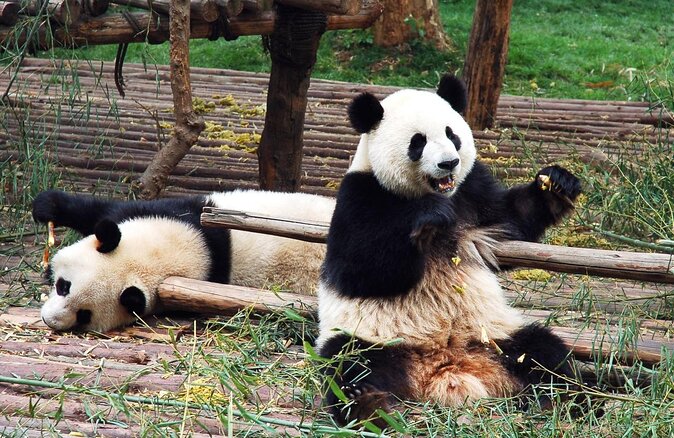
- You do real basic care work: Expect to clear old bamboo, remove waste, prepare fresh bamboo, clean indoor and outdoor areas, and make simple panda food.
- Feeding is the emotional highlight: The two feeding sessions are brief but can bring you close to the animals, depending on the center’s rules and the day’s group size.
- Panda holding is no longer part of the program: Older descriptions and past experiences refer to holding pandas, but the current rules prioritize animal health and no longer offer this activity.
- Your day begins early: Hotel pickup is scheduled for 7:00 am, followed by a drive of about 90 minutes to 1.5 hours.
- Lunch is included and local: You eat a buffet meal at the center, often in the workers’ dining area. It is generally described as flavorful, though it may not suit every palate.
- The experience is private: Only your own group takes part, with an English-speaking guide and private air-conditioned vehicle.
From Chengdu Hotel to Mountain Panda Center
The day starts at 7:00 am in your hotel lobby. Your English-speaking guide and driver take you out of Chengdu in a private, air-conditioned vehicle, saving you the trouble of arranging a taxi or piecing together public transport.
The drive takes about 1.5 hours, though exact timing depends on your hotel and road conditions. This is one of the quieter benefits of booking privately. You can ask questions, discuss Chengdu and Chinese life, and adjust the conversation to your interests. Guides such as Worley, Jenny, Neil, and Sam have received especially warm praise for their care, clear English, and willingness to stay involved throughout the day.
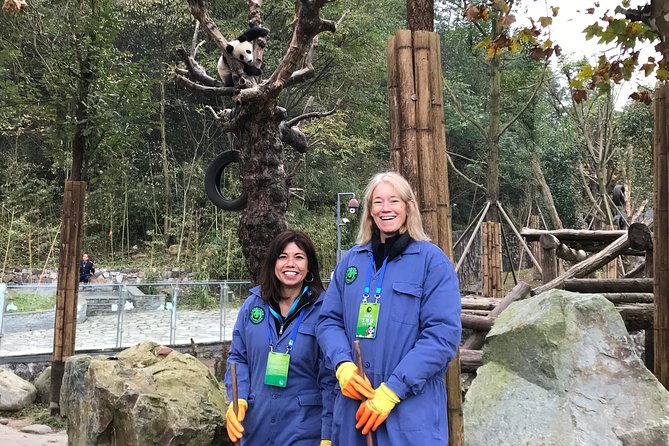
At the center, you change into the required work clothes, put on gloves, and receive an orientation. You will be asked to follow the rules and sign a waiver. The staff explain the day’s tasks and the center’s work with giant pandas.
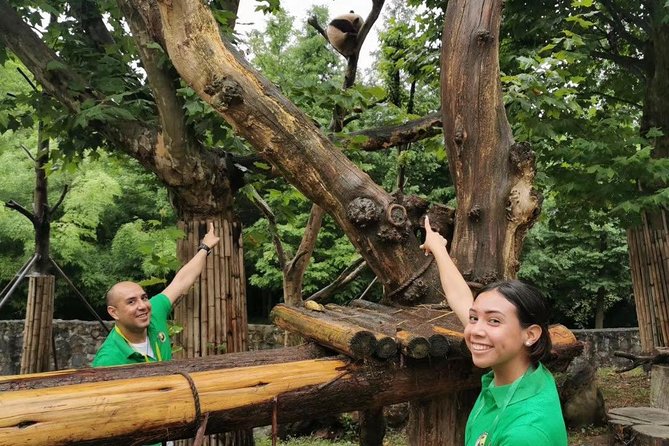
The base is a nonprofit research and rescue center, not an ordinary city zoo. It is set in a mountain environment with carefully planned habitats intended to reflect conditions closer to the wild. An internal shuttle carries you up the mountain to the main conservation area.
That setting gives the day a stronger sense of purpose. You are not simply arriving at a row of display enclosures, taking a few pictures, and leaving. You see the practical routines that support animals that need constant care.
More giant panda visits:
- Chengdu: Giant Panda Breeding Research Base Ticket
★ 4.5 · 580 reviews - Private Half-Day Chengdu Panda Breeding Center Tour with Optional Volunteer
★ 5.0 · 353 reviews - Private Chengdu Day Tour: Giant Pandas and Jinsha Site Museum
★ 5.0 · 142 reviews
Morning Work: Bamboo, Cleaning, and Panda Food
Your first task is usually enclosure cleaning. That means removing old bamboo, scooping waste, clearing the floor, and replacing used material. You may also help break and prepare fresh bamboo for the pandas.
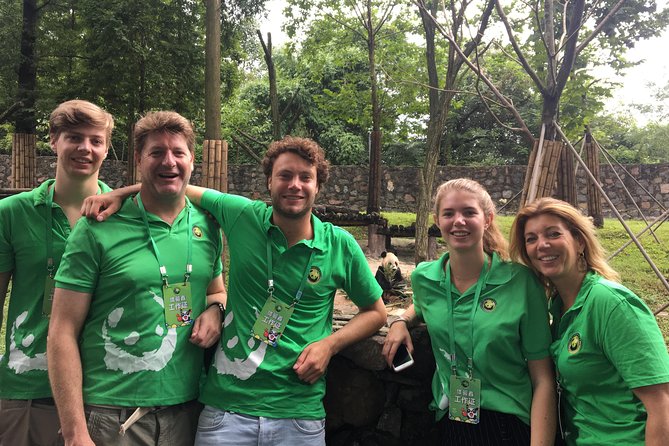
Let’s be clear: this is light physical work, but it is still work. If your idea of volunteering is standing beside a panda and smiling for a camera, this program will disappoint you. The chores can be messy, and the green polyester work shirt is not designed for tropical comfort.
The good news is that the tasks make the animals’ routines easier to understand. Giant pandas eat large amounts of bamboo, so their enclosures quickly fill with stalks and leaves. Removing the old material and preparing fresh food shows you the steady labor behind the cuddly image.
You may also help prepare panda cakes or other food. One account describes rolling portions from a prepared mixture, while the main program emphasizes fresh food preparation and feeding. The exact activity can vary with the center’s schedule.
There can be a slightly awkward rhythm here. You work for a while, return to an office or service area, then wait for the next scheduled task. Some people enjoy the slower pace. Others find it frustrating, particularly when pandas are visible but you are told to finish the job first.
My advice is to treat the work as the point of the visit, not as an obstacle between photo opportunities. You will have time to observe the animals, but the center is using you as a temporary helper, not staging a nonstop panda show.
Feeding Sessions Give You the Closest Look
The first feeding is usually the most memorable part of the morning. After preparing food, you join the keeper and help feed the pandas under staff supervision.
Past descriptions of the program included extremely close contact and panda holding. The rules have since become stricter, and holding is no longer available. Do not book this day expecting to cradle a cub.
Feeding access can still be close, but it is controlled. You may watch a keeper feed the panda or take part in the process, depending on the center’s instructions. One critical account described only a few minutes of watching a feeding and no photography during the activity. Other accounts describe hand-feeding that felt personal and unhurried.
That difference matters. The amount of contact can depend on animal welfare rules, the number of participants, staff instructions, and the panda’s own mood. Pandas are not performers. If one is sleepy, the schedule does not magically turn it into a playful photo model.
You should also expect limits on photography. Your guide may take pictures and short videos during the day, but you may not be allowed to take your own camera or phone into every feeding moment. Guides including Jenny, Neil, and Worley have been praised for documenting the experience, which can be useful when your hands are occupied or photography is restricted.
The feeding sessions are short, but the practical value is high. You learn how keepers manage food, watch animal behavior, and keep people at a safe distance. It is a better lesson in conservation than simply seeing a panda lounge in a public enclosure.
Lunch in the Workers’ Dining Area
After the morning activities, you sit down for the included buffet lunch. The food is local Chinese fare, usually served in the center’s cafeteria or workers’ dining area.
Several accounts describe the meal as simple, generous, and very good. It offers a genuine pause in the day, and eating alongside local staff gives the visit a less polished, more everyday feel. You are not being ushered into an expensive tourist restaurant.
Still, the meal may not work for everyone. If you are unfamiliar with Chinese food or have a limited diet, bring snacks. The center itself is not described as having a wide range of food outlets, and one account specifically advises bringing something extra if local dishes are not to your taste.
Lunch also creates a natural break from the physical tasks. In hot weather, this matters. One visit took place in August heat approaching 97 degrees Fahrenheit, while another found pandas more active on a rainy day. Weather affects both your comfort and the animals’ behavior.
A few more tours worth putting side by side
- Half-Day Chengdu Cooking Class with a Local Market Visit
★ 5.0 · 465 reviews - Tuktuk Food Tour Through Chengdu’s Local Eats
★ 5.0 · 435 reviews - Chengdu: Sichuan Opera Shu Feng Yan Yun Evening Show Ticket
★ 4.7 · 185 reviews - Visiting Dujiangyan Yaan Wolong Panda Base Optional Volunteering
★ 5.0 · 105 reviews
Afternoon Panda Care and Quiet Observation
After lunch, you usually have time to walk through the center and see pandas of different ages, along with red pandas. This is the more familiar zoo-like part of the visit, but the mountain setting and smaller crowds can make it feel calmer than a standard city attraction.
You may see young pandas playing, adults eating, or many animals sleeping. Afternoon heat often means less movement, especially in summer. For the best chance of active animals, an early arrival is useful, and a cooler or rainy day may help.
The second work period returns you to enclosure care. You may clean indoor and outdoor areas, replenish bamboo, record observations such as behavior and weight, and assist with another feeding.
The record-keeping element gives you a glimpse of the center’s research role. You are not conducting independent scientific work, but you can see that care involves more than feeding and sweeping. Staff monitor the pandas closely and use regular observations as part of their routine.
Again, the pace may feel uneven. Some people describe waiting between activities, including time in the office or service area. A film about panda research may be shown, followed by more waiting before the next task.
I would rather have a slower schedule than rushed animal contact, but the program could do a better job explaining these pauses. If you need constant activity, this may feel padded. If you are happy to work, watch, rest, and learn at a measured pace, it is easier to accept.
What the Conservation Setting Adds
The value of this experience comes from its connection to animal care. You are paying volunteer and donation fees, and the program includes an honorary certificate and souvenir from the center. The fees support the visit and contribute to the nonprofit facility’s work.
That does not turn every chore into major conservation research. You will not be rehabilitating a panda or making decisions about breeding. Your role is basic, supervised assistance. But basic work still has meaning when it helps staff maintain enclosures and prepare food.
The center’s research and rescue focus also changes how you look at the pandas. You learn about diet, behavior, weight, and daily care instead of seeing only the animal’s cute side. The work is a useful reminder that conservation depends on repetitive jobs that rarely appear in promotional photos.
The red pandas are another pleasant part of the visit. They are easy to overlook when giant pandas are the main attraction, but seeing both species helps make the center feel like a broader conservation facility rather than a single-animal photo stop.
The Big Question: Is $307 Worth It?
At $307 per person, this is expensive for a day trip from Chengdu. The price includes hotel pickup and return, a private vehicle, an English-speaking guide, entry, volunteer and donation fees, lunch, a certificate, and a souvenir.
If you only want to see pandas, you can find cheaper ways to do that. A normal panda base visit will likely make more sense for a short schedule or a tight budget. You should not pay this amount simply for a guarantee of close-up photographs, because the current rules do not promise panda holding and contact is controlled.
The value improves if you care about three things: a private experience, behind-the-scenes duties, and supporting a conservation center. The guide remains with your group, helps translate with staff, explains what is happening, and can often take photos during the day. That personal help is important because the center’s staff may not provide full English explanations.
The price also buys convenience. A private pickup removes transport worries, especially for a mountain site outside central Chengdu. Group discounts may be available, though the listed price is $307 per person and should be checked at booking.
For a family, the cost can add up quickly. Yet children who enjoy animals may remember clearing bamboo and feeding pandas more vividly than a standard viewing platform. The program says most people can participate, but the work area may be uneven and the tasks are not entirely passive.
Who Will Enjoy This Day Most?
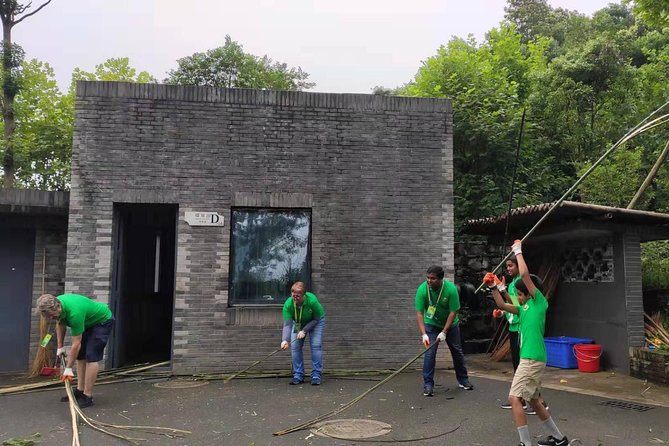
I would choose this for someone who wants an active animal experience and accepts that the animals set the terms. Panda lovers, families with older children, photographers who value guided access, and visitors interested in conservation are the best fit.
It also suits you if you want a private guide who can explain more than the pandas. Worley was praised for discussing Chengdu, Chinese life, and the center, while Neil stayed with an injured participant and helped with translation and local medical care. That level of support can make a long day much easier.
I would hesitate if you mainly want a guaranteed panda cuddle, a short visit, or nonstop entertainment. You may spend more time cleaning, waiting, and watching sleeping pandas than you expect.
The program is also less polished than a tightly timed sightseeing tour. The schedule can include gaps, and the amount of animal contact depends on center rules. That is a fair trade for animal welfare, but you should know it before paying.
Practical Tips for a Better Visit
- Wear comfortable clothes under the work gear. The supplied green shirt may feel hot, especially in summer.
- Bring snacks if you are selective about food. The buffet is local Chinese food, and the center may not have much else to buy.
- Expect dirt and waste. Cleaning panda enclosures is part of the real work, not a symbolic gesture.
- Plan for a long day. Pickup is around 7:00 am, the drive takes about 1.5 hours each way, and the full experience lasts roughly seven to eight hours.
- Ask about current photography rules. You may not be allowed to take pictures during every feeding moment.
- Do not assume panda holding is offered. The current program no longer includes holding to protect the animals’ health.
- Consider the season. Summer heat can leave pandas less active in the afternoon. Cooler or rainy weather may offer more movement, though it can make outdoor chores less comfortable.
- Use the private guide. Ask questions during the drive and between activities. Guides such as Jenny, Worley, Neil, and Sam have been singled out for strong service and personal attention.
Free cancellation is available when you cancel at least 24 hours before the start time. Changes or cancellations made inside that window are not accepted for a refund.
Should You Book the Dujiangyan Panda Volunteer Day?
Book it if you want to support a panda center while doing real, modest work, and if $307 fits your budget. The strongest parts are the private transport, attentive English-speaking guide, two supervised feeding sessions, enclosure care, and the chance to see how much daily labor goes into keeping pandas healthy.
Skip it if your main goal is holding a panda or getting unlimited close-up pictures. Those expectations no longer match the current rules.
My final advice is to view this as a conservation day with panda contact, not a panda photo package. Arrive ready to clean bamboo, tolerate some waiting, eat a local buffet lunch, and let the animals decide how much attention they give you. If that sounds worthwhile, this can become one of your most memorable days in Chengdu.
FAQ
How long does the Dujiangyan panda volunteer experience last?
The experience lasts about seven to eight hours in total. The on-site volunteer program takes roughly six hours, with about 1.5 hours of driving each way from Chengdu.
What time does pickup begin?
Hotel pickup is scheduled for 7:00 am. The guide meets you in your hotel lobby.
Is transportation included?
Yes. The price includes hotel pickup and drop-off in a private, comfortable, air-conditioned vehicle.
Does the tour include lunch?
Yes. A buffet lunch is included in the price. It is local Chinese food served at the center.
Can I hold a panda during the visit?
No. Panda holding is no longer part of the current program because the center has tightened its rules to protect the animals’ health.
What volunteer activities are included?
You may help clean indoor and outdoor enclosures, remove old bamboo and waste, prepare fresh food, assist with feeding, make panda food, and record observations such as behavior and weight.
Newest reviews from Chengdu
- Chengdu: City Walking Tour with Food and Culture Stops★ 4.7 · 4 reviews
- Classsic sichuan Opera at sichuan Provincial Theater★ 5.0 · 4 reviews
- One Day Trip to Dujiangyan Irrigation System & Mount QingCheng Tour★ 5.0 · 4 reviews
- Private Day Tour: Dujiangyan Panda Base and Irrigation Project★ 5.0 · 4 reviews
- Private Day Tour: Chengdu Panda and Leshan Buddha★ 4.0 · 5 reviews
- One Day Giant Panda Leisure Private Tour in Chengdu★ 5.0 · 5 reviews
- Sanxingdui Ruins and Giant Pandas Private Day Tour from Chengdu★ 5.0 · 5 reviews
- Half-Day Tour at Chengdu Panda Breeding Research Base★ 4.0 · 5 reviews
Giant Panda Tours, compared.

Private Half-Day Chengdu Panda Breeding Center Tour with Optional Volunteer
Read our review →
Beijing Historical Tour II including Summer Palace, Lama Temple & Panda Garden
Read our review →
Private Chengdu Day Tour: Giant Pandas and Jinsha Site Museum
Read our review →
Visiting Dujiangyan Yaan Wolong Panda Base Optional Volunteering
Read our review →
Beijing Private Tour to Temple of Heaven, Panda House and Summer Palace
Read our review →
Panda House, Temple of Heaven, Lama Temple, Summer Palace & Lunch
Read our review →Browse the lists this tour appears in