
Reviewed · CHINESE FOOD TOURS
Private Food Tour: Hong Kong Island
Hong Kong tastes best one small plate at a time. This four-hour private food walk links old Sheung Wan eateries with markets, tea shops, and family-run restaurants, giving you a useful introduction to Cantonese food and the city’s Chinese-British past. I like the mix of famous local dishes and ordinary neighborhood stops, and I also like having a guide who can adjust the pace for your own group. The main drawback is the food focus: seafood, wheat-based noodles, and meat are central, so this is not suitable for vegetarians, gluten-free diners, or people with seafood allergies.
The route also includes a ride on Hong Kong’s Ding Ding tram, the Mid-Levels Escalator, Graham Street Market, and Wan Chai. Guides Andy and Mel receive especially warm praise for their humor, clear English, historical detail, and ability to shape the day around a group’s interests. Still, you should arrive hungry. This is breakfast, lunch, and dessert packed into four hours.
In This Review
- Key points at a glance
- Starting among Sheung Wan’s old food shops
- Yum cha and trolley-served dim sum
- Dried seafood, tea, and the local pantry
- Wonton noodles from a family-run shop
- Central, Gough Street, and the Mid-Levels Escalator
- Milk tea and the city’s British connection
- Riding the Ding Ding to Wan Chai
- Roast meat, rice, and the final egg tart
- How much value do you get for $236.69?
- Who will enjoy this private food walk?
- Should you book it?
- FAQ
- How long does the private food tour last?
- Where does the tour start?
- Where does the tour finish?
- What food is included?
- Is transportation included?
- Can people with dietary restrictions join?
Key points at a glance
- Dim sum by trolley: Start with a traditional yum cha meal in a tea house with a history stretching back nearly a century.
- Four classic tastes: Sample dim sum, wonton noodles, roast meat with rice, and an egg tart, along with Hong Kong milk tea.
- A true private outing: Only your party joins the guide, so the pace and conversation can be more personal than on a large group tour.
- Three districts in one walk: Sheung Wan, Central, and Wan Chai each reveal a different side of Hong Kong Island.
- Transport adds local flavor: The route uses walking, the Mid-Levels Escalator, and the Ding Ding tram, with the tram fare paid separately.
- Best for curious eaters: This suits adults and families who want context with their food, not just a checklist of tastings.
Starting among Sheung Wan’s old food shops
The tour begins at 28 Des Voeux Road West in Sheung Wan, a practical starting point for seeing how old Hong Kong still functions. You can also request hotel pickup, but that does not mean a private car. You will still walk and use public transport, and the pickup arrangement is tied to the longer five-hour option.
Sheung Wan is a good place to begin because it brings several parts of Hong Kong together. Traditional Chinese businesses sit near newer shops and restaurants, while steep streets and narrow lanes lead you through a district shaped by long-standing trade, food, medicine, and religious customs.
Your guide uses the neighborhood as a classroom rather than rushing you straight from one restaurant to another. The route can include a dried seafood shop, a Chinese medicine shop, and Graham Street Market, which has more than a century of local trading life behind it.
The market is especially useful if you want to understand what Hong Kong cooks buy before the food reaches your plate. Stalls sell vegetables, seafood, and other everyday ingredients. It is not presented as a polished food hall, which is exactly the point. You get a look at a working neighborhood market, though the narrow streets and uneven walking route may feel busy for anyone who prefers a slower, more open setting.
More Food Tours in Hong Kong
- Hong Kong’s Tin Hau Hidden Eats Food Tour with 7+ Local Tastings
★ 5.0 · 352 reviews - Small-Group Hong Kong Island Food Tour
★ 5.0 · 343 reviews - Hong Kong Food Tour: Central and Sheung Wan Districts
★ 5.0 · 333 reviews
Yum cha and trolley-served dim sum
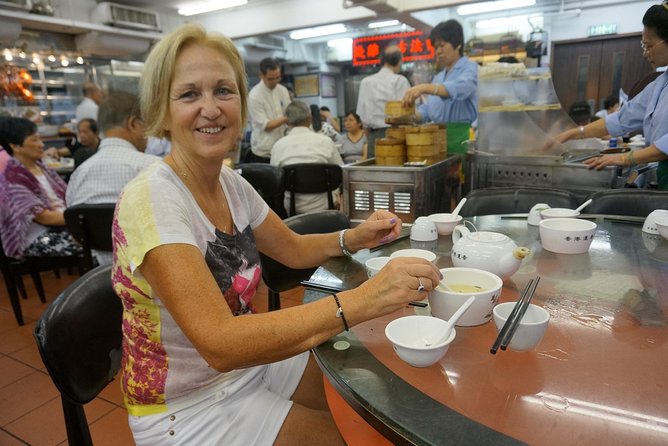
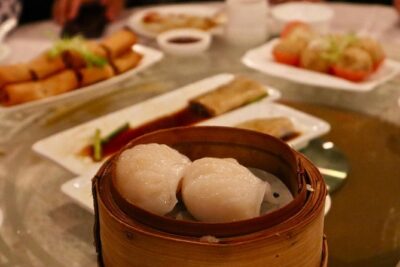
Your first substantial tasting is a traditional dim sum breakfast, or yum cha. The tea house serves dishes from a trolley, an old-fashioned style that gives the meal a sense of occasion without making it formal.
Dim sum is more than a collection of steamed snacks. It is a social meal built around small portions, tea, conversation, and choice. With a guide beside you, you can learn how this style of dining fits into Cantonese life and how Hong Kong made it its own.
The restaurant is described as lively and popular, with a history approaching 100 years. That atmosphere matters. A quiet tasting counter can make food feel like a museum exhibit, but a busy tea house shows you how the meal works in daily life.
The portions are varied, but the exact dishes can depend on what is available and what your group prefers. You should not eat breakfast before arriving. The early dim sum stop is one of the most praised parts of the outing, and it also gives you the strongest sense of traditional Hong Kong dining.
If you have limited mobility, ask about the walking pace before booking. One guide, Andy, received particular praise for keeping the outing comfortable for a group of four people over age 65. That suggests the route can be handled at a measured pace, but it remains a walking tour through sloped streets.
Dried seafood, tea, and the local pantry
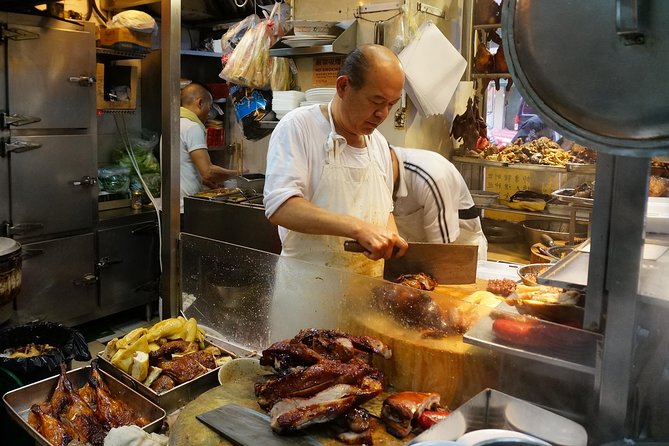
After dim sum, the route moves through Sheung Wan’s Seafood Street, the area around Des Voeux Road West known for dried seafood shops. Dried fish, shellfish, herbs, and other preserved ingredients are used in Chinese cooking and traditional tonics.
You may not want to buy anything here, and you do not need to. The value is in seeing the trade close up and learning why these ingredients matter. The shopfronts offer a sharper look at Cantonese food culture than a restaurant menu alone can provide.
A stop at Kai Fat Tea adds a different note. This small shop sells tea, assorted candies, and Chinese sweets made from fruit and other natural ingredients. The stop is short, around 15 minutes, but it gives your guide a chance to explain tea and local snacks without turning the morning into a long lecture.
The food stops work best because they are tied to places where the ingredients are sold. You are not only eating wonton noodles later. You are also seeing the shops, markets, and traditions that surround the dish.
Wonton noodles from a family-run shop
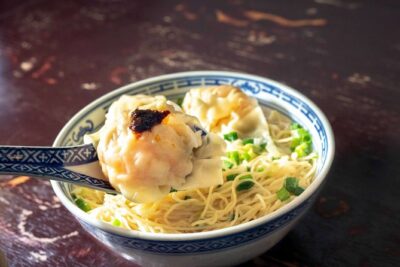
The next major tasting is wonton noodle soup at a family-run shop dating from the 1960s. The restaurant has been recommended by the Michelin Guide, but the appeal here is not fine dining. Wonton noodles are a modest local specialty, and their quality depends on careful preparation.
The dish is simple in appearance, usually built around noodles, broth, and wontons. That simplicity leaves little room to hide mistakes. Your guide can explain why a shop with a narrow focus may spend decades refining one bowl.
This is one of the better stops for understanding Hong Kong’s approach to food. The city has plenty of grand restaurants, but local food culture often places as much value on consistency, speed, and craft as it does on decoration.
You should expect a tasting portion rather than a large standalone meal, since several more foods follow. The tour is designed to let you compare several specialties, not fill up on one bowl. Even so, the total amount of food is substantial, especially when you add dim sum, roast meat, milk tea, sweets, and an egg tart.
A completely different kind of day out on the same trip:
- Hong Kong: Dolphin Cruise, Big Buddha & Lantau Island Tour
★ 4.2 · 1,512 reviews - Ngong Ping 360: Cable Car Return Tickets & Combos
★ 4.6 · 1,431 reviews - Lantau Island Day Trip – Big Buddha & Tai O
★ 4.5 · 1,328 reviews - Big Bus Hong Kong Open Top Hop-On Hop-Off Sightseeing Tour
★ 4.0 · 1,077 reviews
Central, Gough Street, and the Mid-Levels Escalator
The route continues into Central, one of Hong Kong Island’s oldest and most active districts. The streets rise and narrow as you move away from the waterfront, and the area brings together temples, colonial buildings, modern businesses, boutiques, and restaurants.
Gough Street offers a slower stretch, with colonial-style buildings, small shops, and newer restaurants. Tai Kwun, the restored Central Police Station compound, may also appear along the route. It now includes heritage spaces, art, performances, and lifestyle venues, giving you a look at how Hong Kong reuses old buildings rather than simply replacing them.
The Mid-Levels Escalator provides a welcome break from climbing. The outdoor system runs for about 800 meters and rises roughly 135 meters, with the scheduled ride taking around 15 minutes. It is not an attraction that replaces walking, but it helps connect Central with the higher streets.
Use this stretch to watch daily city life pass by. The escalator is practical transport first, yet it also gives you a moving view of shops, lanes, and changing neighborhoods. The route is not a single nonstop escalator ride in the sense of an amusement attraction, so keep your expectations sensible.
Milk tea and the city’s British connection
Traditional Hong Kong milk tea is one of the clearest food reminders of the city’s British colonial past. It is made in a strong tea style and served as an everyday drink rather than a special dessert.
The tour includes a cup, along with assorted candies and local snacks. This is a small tasting, but it helps explain why Hong Kong food cannot be placed neatly in either a purely Chinese or purely British box.
That blend appears again in the egg tart at the end. The custard tart is based on an English pastry idea, yet the Hong Kong version has become a local classic with its own place in bakeries and family food memories.
Riding the Ding Ding to Wan Chai
At some point, you board the Hong Kong tramway, known locally as the Ding Ding. The electric tram system began operating in 1904 and is noted for its double-decker fleet.
The tram fare is not included, so keep a little money or a payment method ready. The ride takes about 20 minutes and connects the central part of the route with Wan Chai. It also saves you from walking the entire distance while giving you a useful look at the city from street level.
Transport is one of the strengths of this outing. You are not sealed inside a tour vehicle, and the movement between districts becomes part of the experience. The tradeoff is that you need to be ready for normal public transport, street crossings, stairs, and changing walking conditions.
Wan Chai brings another shift in mood. Old tenement buildings, small temples, restaurants, bars, and newer businesses share the same district. The tour ends in or near Wan Chai, with stops around Hennessy Road and Southorn Playground.
Roast meat, rice, and the final egg tart
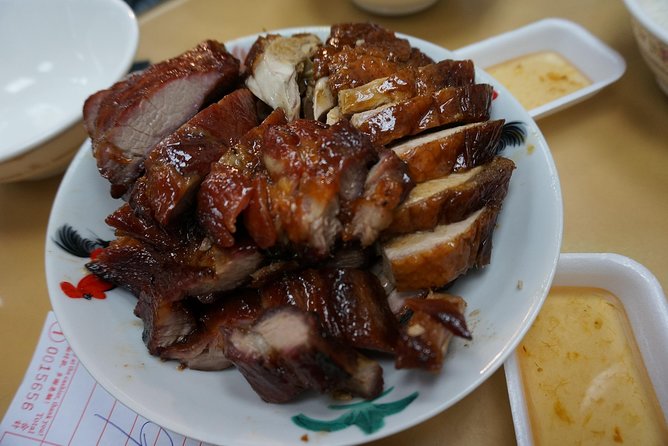
A family-run restaurant connected with more than a century of history serves the roast meat course. It is known for English roast meat, including char siu, and offers a mixture of traditional roasted meats with rice and homemade sauces.
Char siu is one of Hong Kong’s most recognizable Cantonese foods. The appeal lies in the balance of roasted edges, tender meat, and sweet-savory sauce. Since this is a tasting tour, you get to try the combination without committing to a full restaurant meal.
The final stop is a bakery on Hennessy Road with about 60 years of history. It is associated with a former Hong Kong governor’s personal preference, but you do not need that connection to appreciate the food. The egg tart is a fitting finish because it links local bakery culture with the British influence that also appears in milk tea.
Southorn Playground may be included near the end. The public recreation ground draws office workers, sportsmen, spectators, and people taking a short break. It is a plain, useful ending to a route that has shown you restaurants, markets, transport, and neighborhood streets rather than only major sights.
How much value do you get for $236.69?
At $236.69 per person, this is not a cheap way to eat in Hong Kong. You are paying for a private guide, several tastings, route planning, food history, and the ability to keep the outing suited to your own group.
The value improves if you are new to Hong Kong, have only one day in port, or want a clear introduction before exploring alone. One family used the outing during a cruise stop and arranged transportation around it, making the experience a practical first look at the city.
For two people, the total price is substantial. For a family or small group, the private format can make more sense because you are not sharing the guide with strangers. It is also useful for older adults who may need a calmer pace, or for a group that wants to ask many questions about food and local life.
The food itself would cost much less if you ordered the dishes independently. That comparison is fair, but it misses the point of the tour. The real purchase is guidance through unfamiliar districts, help choosing local specialties, and the chance to connect each dish with a place and tradition.
The tour is booked about 60 days ahead on average, so it is sensible to reserve early if your Hong Kong dates are fixed. Free cancellation is available until 24 hours before the start time. Changes or cancellations inside that window are not refunded.
Who will enjoy this private food walk?
I would choose this tour if you want your first Hong Kong food day to have structure. It suits people who enjoy walking, ask questions, and prefer family-run shops and neighborhood markets to a polished restaurant itinerary.
It is also a strong choice for a cruise stop. The route covers a lot in four hours, and the private format makes it easier to keep the group moving without wasting time waiting for a large party.
Families can benefit from the custom approach, but tell the provider if children are joining. The food is not suitable for every diet, and the guide needs to know about your group before the day begins.
You should skip it if you want a relaxed sit-down lunch, a vehicle-based tour, or a menu built around vegetarian and gluten-free choices. You should also think twice if four hours of eating and walking sounds tiring. This is a full morning and early afternoon, not a gentle snack stroll.
Should you book it?
Book it if you want a private introduction to Hong Kong’s food and neighborhoods, and if dim sum, noodles, roast meat, milk tea, and egg tarts all sound appealing. The strongest reasons are the varied route, the local transport, and guides such as Andy and Mel, whose humor, clear English, and flexible pacing receive especially high praise.
I would be more cautious about the price if you already know Hong Kong well or are happy finding inexpensive food on your own. For a first visit, a short port call, or a group that values personal attention, the cost buys more than five tastings. It gives you a practical map of how Hong Kong eats.
FAQ
How long does the private food tour last?
The tour lasts approximately four hours.
Where does the tour start?
The standard meeting point is 28 Des Voeux Road West in Sheung Wan, Hong Kong. Hotel pickup may be available, depending on the option booked.
Where does the tour finish?
The tour finishes in Wan Chai with a local egg tart as dessert.
What food is included?
The included tastings are assorted dim sum, wonton noodles, traditional milk tea, barbecue roast meat with rice, and an egg tart. Assorted candies and local snacks are also included.
Is transportation included?
The tour uses walking and public transportation. The Ding Ding tram ride is part of the route, but the tram cost is paid separately. Hotel pickup, when booked, remains a walking and public transport tour rather than a car tour.
Can people with dietary restrictions join?
The tour is not suitable for vegetarians, gluten-free diners, or people with seafood allergies. You should also inform the provider if children are joining.
Newest reviews from Hong Kong
- Lantau Peak Sunrise Climb★ 5.0 · 4 reviews
- Hong Kong MiniBus Transfer: Hotel / Cruise Terminal and Airport★ 4.5 · 4 reviews
- Hong Kong: Lantau Island & Tai O Cruise, Skip The Line Cable Car★ 3.5 · 4 reviews
- Private & Personalized Hong Kong Street Art Tour with a Local★ 5.0 · 4 reviews
- Classic Afternoon Tea Voyage in Hong Kong for 4 Pax★ 4.0 · 4 reviews
- 2025 Chinese New Year Fireworks Open Bar Yacht Dinner Cruise HK★ 4.5 · 4 reviews
- Hong Kong Heritage Walk★ 4.0 · 4 reviews
- Private Full Day Sightseeing Tour of Kowloon in Hong Kong★ 5.0 · 4 reviews
Chinese Food Tours, compared.
Authentic Local Food Tour in Central Shanghai
Read our review →
Hong Kong’s Tin Hau Hidden Eats Food Tour with 7+ Local Tastings
Read our review →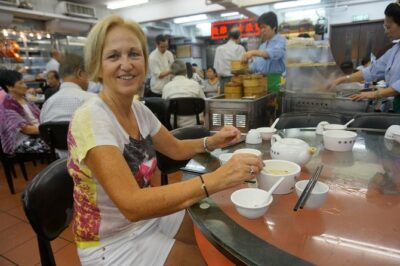
Hong Kong Food Tour: Central and Sheung Wan Districts
Read our review →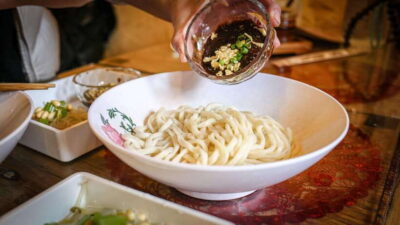
Hidden Gems Guided Food Tour with Beer and Tastings
Read our review →Browse the lists this tour appears in