
Reviewed · MUSEUMS
Shanghai: Private Tour of the Shanghai Museum
Ancient art rewards a closer look. This three-hour private tour gives you a clear path through the Shanghai Museum, with a guide explaining why bronze vessels, porcelain, and jade mattered in Chinese life. I like the focused route and the chance to ask questions instead of wandering past labels. I also like that the tour includes museum admission and is available in English or Chinese.
The main consideration is the price: $60 per person is fair if you want interpretation, but less appealing if you prefer to explore quietly on your own. Cameras are not allowed, special exhibitions cost extra, and you must bring a passport or ID card.
In This Review
- Key points at a glance
- Why this Shanghai Museum tour is worth considering
- Meeting your guide at the East Wing entrance
- Bronze Gallery: where objects carried authority
- Ceramics Gallery: understanding China’s porcelain tradition
- Jade Gallery: objects shaped by belief and status
- Other galleries and a flexible final stretch
- The guides make the biggest difference
- Is $60 per person good value?
- Who should book this museum experience?
- Practical points before you book
- Should you book the Shanghai Museum private tour?
- FAQ
- How long does the Shanghai Museum private tour last?
- What languages are available?
- Is museum admission included?
- Is entry to special exhibitions included?
- Where do I meet the guide?
- What should I bring, and are cameras allowed?
Key points at a glance
- Bronze vessels reveal ancient power: Learn how Shang and Zhou ritual objects reflected religion, rank, and government.
- Ming and Qing porcelain gets proper attention: Blue-and-white ceramics are explained as art, technology, and trade goods.
- Jade carries moral meaning: The guide connects carving methods with ideas of purity, status, and burial customs.
- Private guiding makes three hours count: You can ask questions and request more time in areas that interest you.
- Guide quality is a major strength: Vicky, Linda Chen, and Tom received especially warm praise for clear English, patience, and engaging explanations.
- Plan for museum rules: Meet at the East Wing entrance, bring identification, and leave your camera behind.
Why this Shanghai Museum tour is worth considering
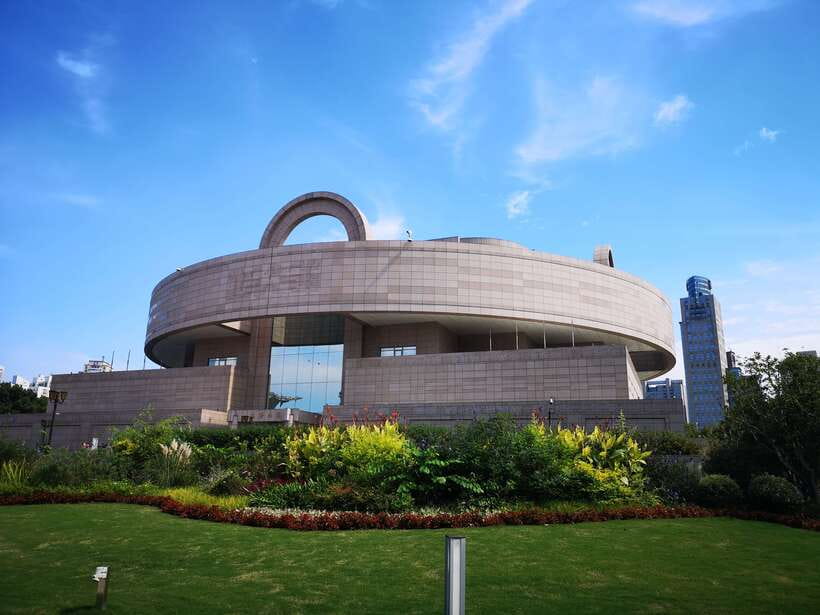
The Shanghai Museum is a large stop for anyone trying to make sense of Chinese art. Its objects span long periods, different materials, and changing ideas about power and beauty. Without help, it is easy to admire the cases but miss the point.
This private tour gives your visit a storyline. You start with bronze, move to ceramics, then see jade and other galleries selected according to what is open and what interests you. That order works well because it moves from early ritual culture to later artistic refinement, while giving you useful comparisons along the way.
I especially like the private format. Three hours is not enough to see everything in detail, but it is enough to build a strong foundation. You can ask why a vessel was made, how porcelain was produced, or why jade held such a high place in Chinese culture. A public group tour may have a fixed script. Here, the guide can respond to your questions and adjust attention to your interests.
The experience has a 5 out of 5 rating from the supplied feedback, with praise focused on the guides rather than on flashy extras. That matters. A museum tour succeeds or fails on explanation, pacing, and the person leading you through the galleries.
More museums:
- Shanghai: Xintiandi, CCP Museum and French Concession Tour
★ 5.0 · 9 reviews - Shanghai: Natural Museum tickets with guide(optional)
★ 4.8 · 8 reviews - Private Shanghai Day Tour: Shanghai Museum, Yu Garden, Bund, Huangpu Cruise
★ 5.0 · 6 reviews
Meeting your guide at the East Wing entrance
You meet at the entrance of the Shanghai Museum East Wing. The guide holds a sign with your name, which should make the first meeting easier in a busy museum setting.
You do not get hotel pickup, so you need to make your own way to the museum. That is a small but important point when planning your morning or afternoon. Allow enough time to reach the entrance, locate the East Wing, and have your identification ready.
Bring your passport or ID card. Cameras are not allowed, so do not plan your visit around taking photographs of the collection. You can still focus on the objects themselves, take mental notes, and ask the guide about pieces you want to remember later.
The tour lasts three hours, with starting times based on availability. That duration suits people who want substance without spending an entire day indoors. It also leaves room for you to continue through the museum on your own after the guided portion, using the guide’s suggestions about other galleries and special displays.
The tour is wheelchair accessible, and live guiding is offered in English or Chinese. If language is important to your plans, select the option that fits your needs when booking.
Bronze Gallery: where objects carried authority
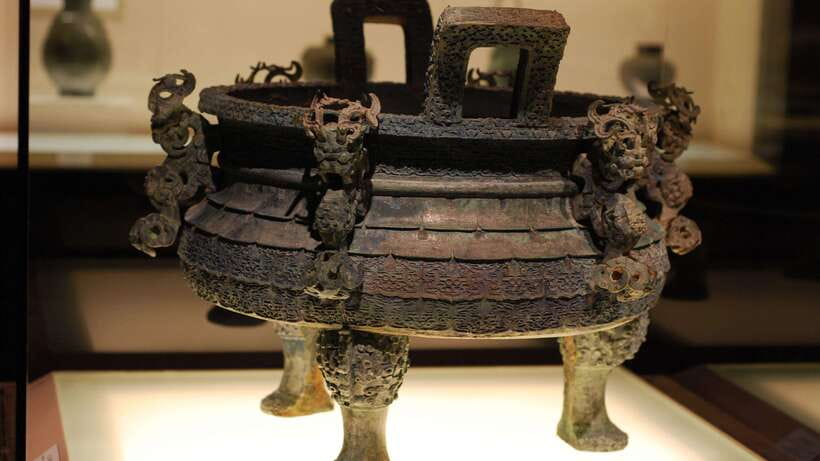
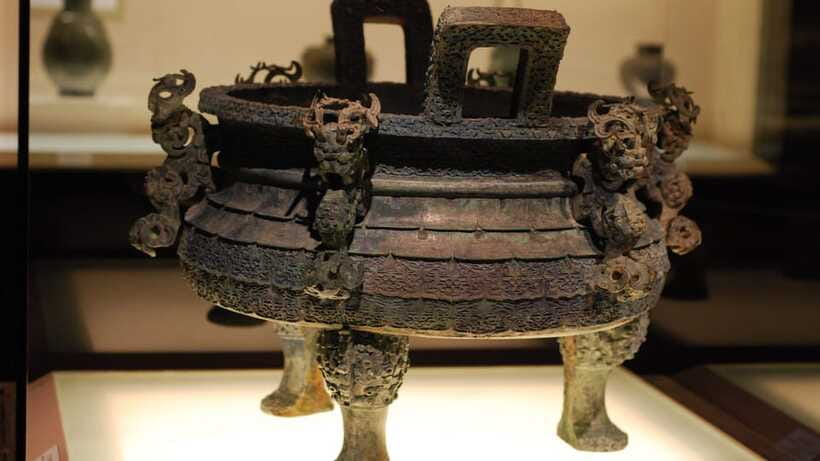
The tour begins with bronze objects from the Shang dynasty, dated from 1600 to 1046 BC, and the Zhou dynasty, dated from 1046 to 256 BC. This is an excellent opening because bronze in ancient China was not simply a material for making tools or weapons.
Your guide explains how bronze vessels were used in rituals and what they say about social rank. A ritual vessel could show who held power, which ceremonies mattered, and how political and religious life were linked. Weapons also help you think about the practical side of authority, not just the ceremonial one.
Look closely at the shapes, handles, legs, and surface decoration. The point is not only that these objects are old. It is that ancient metalworkers had strong control over casting, and that the objects were designed for specific roles. Your guide can explain the casting methods and help you see why the technology was advanced for its time.
I find this gallery particularly valuable with a guide because bronze objects can appear similar at first glance. Context gives them meaning. You learn to ask what an object was for, who could use it, and what its decoration communicated.
The possible drawback is pace. Bronze deserves careful attention, and the museum contains many objects competing for your eye. If you already have a strong interest in early Chinese ritual culture, tell your guide at the beginning so the time can be shaped around it.
Ceramics Gallery: understanding China’s porcelain tradition
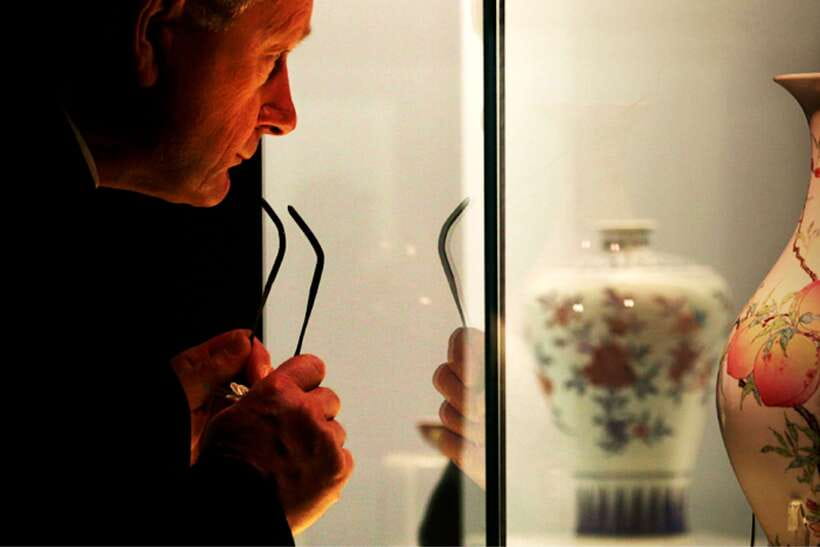
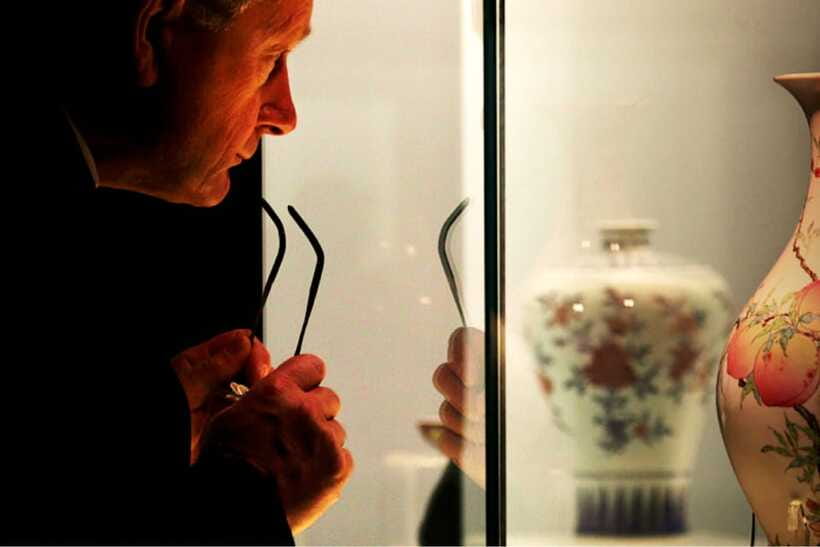
From bronze, you continue to the Ceramics Gallery, with special attention to porcelain from the Ming and Qing dynasties. This section brings a different kind of pleasure. Bronze often feels tied to ritual and authority, while ceramics let you consider household use, decoration, technical skill, and changing taste.
The guide traces how Chinese ceramic art developed across dynasties. You will hear about different styles and influences, along with the reasons porcelain became so important. The famous blue-and-white pieces deserve extra time, since their clean contrast and detailed designs are easy to admire without knowing what makes them historically important.
A good explanation helps you look past the color. Notice the precision of the painted patterns, the shape of each vessel, and the relationship between decoration and function. You may also learn how ceramic production depended on technical control, from shaping to firing and finishing.
One supplied review singled out Vicky for giving exceptional explanations about Chinese ceramics. That is useful information if this gallery is your main reason for booking. Another visitor praised Vicky’s patience, strong English, and ability to answer questions across many subjects. Guide assignments can change, so you cannot count on receiving Vicky, but the feedback points to ceramics as one of the tour’s strongest teaching areas.
This stop may be the highlight for art lovers who enjoy surface detail. It may be less satisfying if you want a quick overview and do not care about comparing styles. Tell your guide what you want from the gallery, and you should get more from the time available.
A few more tours worth putting side by side
- Authentic Local Food Tour in Central Shanghai
★ 5.0 · 1,382 reviews - Zhujiajiao Water Town and Shanghai City Private Day Tour
★ 5.0 · 1,016 reviews - Private Shanghai Full Day City Tour with Old and New Highlights
★ 5.0 · 995 reviews - Shanghai: Hop-on Hop-off Bus Ticket and Optional Attractions
★ 3.4 · 692 reviews
Jade Gallery: objects shaped by belief and status
The Jade Gallery shifts the focus from fired clay to carved stone. The pieces date back thousands of years, and the guide explains jade’s place in Chinese tradition, including its use in burial objects and ornamental pieces.
Jade matters here for more than its color or smooth finish. It was linked with purity and moral integrity, which helps explain why it held such cultural weight. The material could signal status, serve a symbolic purpose, or accompany the dead.
Pay attention to the workmanship. Jade is hard, so carving it required patience and control. Your guide points out the techniques used to shape and decorate the objects, helping you understand the labor behind what can look like a small, simple ornament.
This gallery offers a useful contrast with the bronze and ceramics rooms. Bronze tells you about ritual systems and political structure. Ceramics show technical and decorative development. Jade brings personal belief, moral values, burial customs, and status into the picture.
The limitation is that the itinerary gives only a general outline for the jade section. Your guide may spend more or less time here depending on your interests and the day’s schedule. If jade is your priority, say so early rather than waiting until the final part of the tour.
Other galleries and a flexible final stretch
After the main bronze, ceramics, and jade sections, your guide introduces other galleries available that day. The exact route can depend on what is open, the museum schedule, and your interests.
This flexible part is one reason a private tour can work better than a fixed group visit. You might want more ceramics, more early objects, or a broader look at another collection. The guide can point you toward areas that make sense after the main route.
Do not expect to cover every department in three hours. The museum is too substantial for that. The practical goal is to understand a few important collections and leave with a framework for exploring further.
At the end, you have a short question-and-answer session. Use it. Ask about an object you still do not understand, request suggestions for galleries to see next, or ask about resources and special exhibitions. This final conversation can turn a pleasant museum walk into a useful plan for the rest of your visit.
The guides make the biggest difference
The strongest praise is aimed at the guides’ teaching and personal approach. Linda Chen was described as informed, enthusiastic, kind, and friendly. Her use of background stories and small anecdotes helped make the displays easier to follow.
That kind of guiding is important in a museum. Dates and names alone can make your attention wander. Stories give the objects a reason to matter, while a friendly guide makes it easier to stop and ask a basic question.
Vicky received praise for ceramics expertise, patience, and excellent English. She was also credited with handling many questions across the museum. Tom was described as thorough, entertaining, and highly informed, and he also helped with organizing the visit.
You are not guaranteed one particular guide, but these names show the level of service associated with the experience. The feedback also suggests that the operator communicates before the meeting. One visitor was contacted through WhatsApp with the exact meeting point, which can be helpful when you are trying to find the correct entrance.
The tour is available in English and Chinese. If you need detailed interpretation, make your language preference clear when booking. A guide who can explain technical details in a language you understand will make a major difference here.
Is $60 per person good value?
At $60 per person, this is not the cheapest way to enter a museum. Admission is included, but you pay mainly for the guide’s time, explanations, and flexibility.
I think the price is reasonable for first-time visitors who want to understand what they are seeing. Ancient Chinese bronze, porcelain, and jade can be beautiful but unfamiliar. A good guide helps you notice function, symbolism, technology, and social meaning that may not be obvious from a case label.
The value is weaker if you are already comfortable reading museum information and prefer to set your own pace. You may cover fewer galleries than you would alone, since three hours are spent following a planned route and discussing selected pieces.
The private format improves the value for couples, families, or small groups with shared interests. You can ask direct questions, request more attention to ceramics or jade, and avoid spending time on subjects that do not appeal to you. The tour is also a sensible choice if your Shanghai schedule is tight and you want a structured introduction rather than a long, unplanned museum visit.
Admission to special exhibitions is not included. Drinks are also not included, though that is a minor cost compared with the guiding fee. The larger budget point is the missing hotel pickup, since you must arrange transport to the museum yourself.
Who should book this museum experience?
I would recommend it to first-time visitors who want cultural context without committing to a full-day museum visit. It suits art lovers, history fans, curious families, and anyone who finds large collections hard to approach alone.
It is especially useful if Chinese art is unfamiliar to you. The guide can explain why a vessel, bowl, or carved ornament mattered, rather than leaving you with a room full of attractive but disconnected objects.
It also fits people who enjoy conversation. The tour’s best feature is the chance to ask questions and shape the discussion. If you like moving silently from case to case, a self-guided visit may suit you better.
Wheelchair users can consider the experience because it is listed as wheelchair accessible. You should still confirm any personal access needs when arranging the visit, since the available route can vary.
Practical points before you book
Keep these details in mind:
- The meeting point is the Shanghai Museum East Wing entrance.
- The guide holds a sign with your name.
- Bring your passport or ID card.
- Cameras are not allowed.
- Museum entry is included.
- Special exhibition entry is extra.
- Hotel pickup and drinks are not included.
- English and Chinese guiding are available.
- The tour lasts three hours.
- You can cancel up to 24 hours before the start for a full refund.
- You can reserve now and pay later, which helps if your Shanghai schedule is still changing.
The no-camera rule is the detail most likely to catch you off guard. If you normally photograph objects to remember them, prepare to rely on written notes or your memory. Since the tour ends with suggestions for further galleries and resources, you can still build a useful personal record through notes.
Should you book the Shanghai Museum private tour?
Book it if you want the museum to make sense, not just look beautiful. The three-hour route covers the Bronze, Ceramics, and Jade galleries, and the guides receive consistent praise for patience, English skills, subject knowledge, and engaging stories.
I would be most inclined to book if this is your first visit, your time is limited, or you are particularly interested in Chinese ceramics. Vicky’s reported strength in that area makes the porcelain section a likely highlight, while Linda Chen and Tom are also praised for clear and thoughtful guiding.
Skip it if you want complete independence, plan to photograph the collection, or already know exactly which galleries you want to see. For everyone else, $60 per person buys a useful introduction, direct access to a local expert, and a much better chance of understanding why these objects matter.
FAQ
How long does the Shanghai Museum private tour last?
The tour lasts three hours.
What languages are available?
Live guiding is available in English and Chinese.
Is museum admission included?
Yes. Entry to the Shanghai Museum is included in the tour price.
Is entry to special exhibitions included?
No. Special exhibition entry is not included.
Where do I meet the guide?
You meet at the entrance of the Shanghai Museum East Wing. The guide holds a sign with your name.
What should I bring, and are cameras allowed?
Bring your passport or ID card. Cameras are not allowed inside the experience.
Newest reviews from Shanghai
- Quick Tour to Xi’an Terracotta Warriors from Shanghai by Air in One Day★ 5.0 · 4 reviews
- Shanghai Zhujiajiao water town,Yugarden&Bund one day tour★ 5.0 · 4 reviews
- Wuzhen Private Full-Day Tour from Shanghai★ 5.0 · 4 reviews
- Private Round Trip Transfer to Zhouzhuang Water Village from Shanghai★ 5.0 · 4 reviews
- Shanghai Tower Observation Deck 118 floor Tickets Pre-booking.★ 5.0 · 4 reviews
- Full Day Private Tour Amazing Shanghai City Highlights★ 5.0 · 4 reviews
- Private Wet Market Visit with Cooking Class in Shanghai★ 3.0 · 4 reviews
- Zhujiajiao & Shanghai:Small Group Tour Water Town to Skyline★ 5.0 · 4 reviews
Museums, compared.
Tianmen Square, Forbidden City & Royal Museum Tours
Read our review →
Half-Day Mini Group Xian Tour to Terracotta Warriors Museum
Read our review →
Beijing:Jingshan Park (Palace Museum Garden) Ticket
Read our review →
Private Chengdu Day Tour: Giant Pandas and Jinsha Site Museum
Read our review →
Private Xi’an Tour: Terracotta Warriors, Hanyangling Museum, Cave Homes
Read our review →
Beijing Half Day: National Museum of China In-depth Tour with Subway Transfer
Read our review →
Terracotta Warriors Museum Ticket with Professional English-speaking tour guide
Read our review →Browse the lists this tour appears in