
Reviewed · MUSEUMS
Beijing: China National Film Museum Entry Reservation
Films tell China’s story. Beijing’s China National Film Museum gives you a broad look at that story through 21 exhibition halls, working cinema spaces, film artifacts, and displays covering a century of Chinese filmmaking. I like the scale of the place, and I like that the visit costs only $4.82 while giving you far more than a simple gallery stop.
I also appreciate the practical QR-code entry, which lets you go directly inside instead of waiting at a ticket counter. The main drawback is language. An English textual and visual guide is included, but several exhibition labels and descriptions may be in Mandarin only, so you should not expect every display to explain itself in English.
In This Review
- Key points to know before you go
- A large museum built for Chinese cinema
- Starting on the first floor
- Floors two through four and a century of movies
- What the exhibition is like for English speakers
- The six movie halls and IMAX GT screen
- A realistic two-hour plan
- The value of a $4.82 admission
- Getting inside with the correct QR code
- Who will enjoy this museum most
- How it compares with a standard cinema visit
- Booking, cancellation, and planning advice
- Should you book the China National Film Museum?
- FAQ
- How much does admission to the China National Film Museum cost?
- How long does the museum visit take?
- How many exhibition halls does the museum have?
- Does the museum have movie theaters?
- Are movie screenings included with admission?
- Is an English guide available?
- What do I need to bring?
- Which QR code should I use for entry?
- Is the museum wheelchair accessible?
Key points to know before you go
- A century of Chinese film: Floors two, three, and four trace Chinese cinema through different periods and stages.
- 21 exhibition halls: The museum gives you plenty to see, from filmmaking displays to major artistic achievements.
- Six cinema halls: The complex includes an IMAX GT hall and seating for more than 1,000 people in total.
- Two-hour visit: This is a useful basic time allowance, though film fans may want longer.
- English guide included: You receive an English version of the textual and visual guide, but some on-site descriptions remain in Mandarin.
- Use the correct QR code: The separate code sent by email or WhatsApp is your admission ticket. The code inside the booking app is not enough.
A large museum built for Chinese cinema
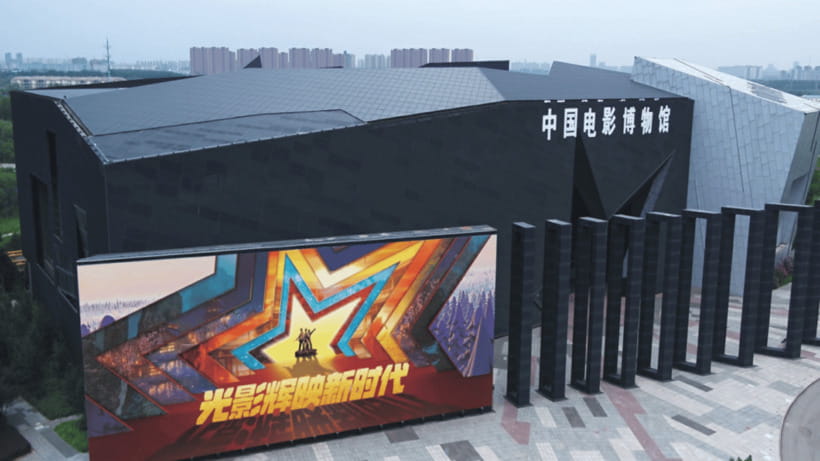
The China National Film Museum is not a small collection tucked into a neighborhood building. It is a large public cultural institution covering about 8.7 acres, with nearly 38,000 square meters of architectural space.
The museum opened to the public in 2007 after being founded in 2005. That scale matters. You are not simply walking past a few famous movie posters. The building is designed to present Chinese film as a national art form, an industry, and a record of changing ideas.
For me, the museum’s greatest strength is its range. You can look at filmmaking as a technical process, follow the work of important directors and artists, and see how movies developed across different eras. The experience is useful even if you do not know many Chinese films beforehand.
It also gives you a different side of Beijing. The Forbidden City and the Great Wall explain major parts of China’s older story. This museum helps explain how modern China has represented itself on screen.
More Museums in Beijing
- Beijing: Tianmen Square, Forbidden City & Royal Museum Tours
★ 4.6 · 1,288 reviews - Beijing:Jingshan Park (Palace Museum Garden) Ticket
★ 4.5 · 185 reviews - Beijing Half Day: National Museum of China In-depth Tour with Subway Transfer
★ 5.0 · 70 reviews
Starting on the first floor
The first-floor exhibition is called The Theme Exhibition of A New Journey of Struggle. The supplied details do not provide a room-by-room breakdown, so you should think of this as a major introductory exhibition rather than a short lobby display.
Its position on the first floor makes it a natural starting point. You can begin here before moving upstairs to the longer century-wide presentation. Take a little time to understand the museum’s broad approach, then continue to the historical galleries with that framework in mind.
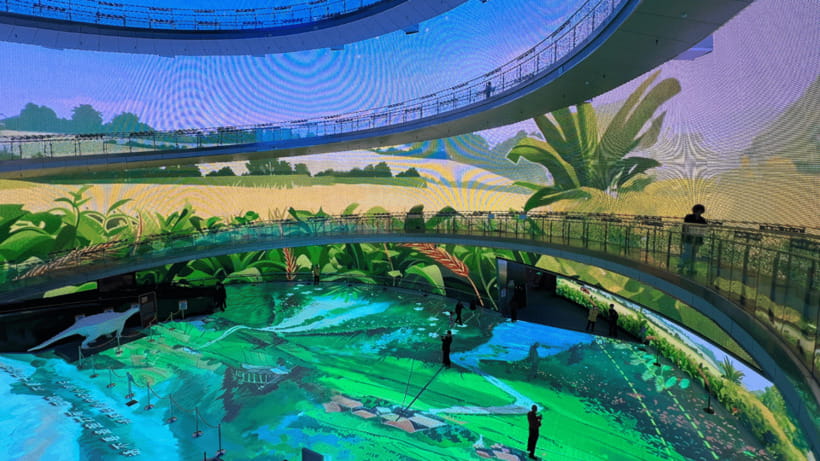
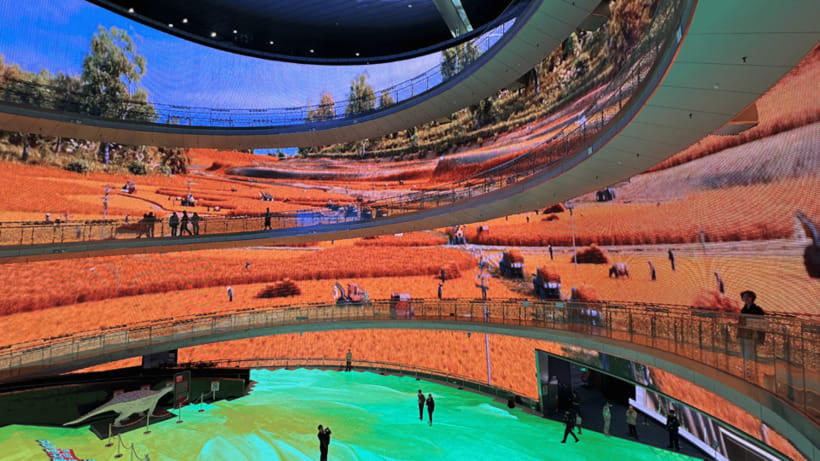
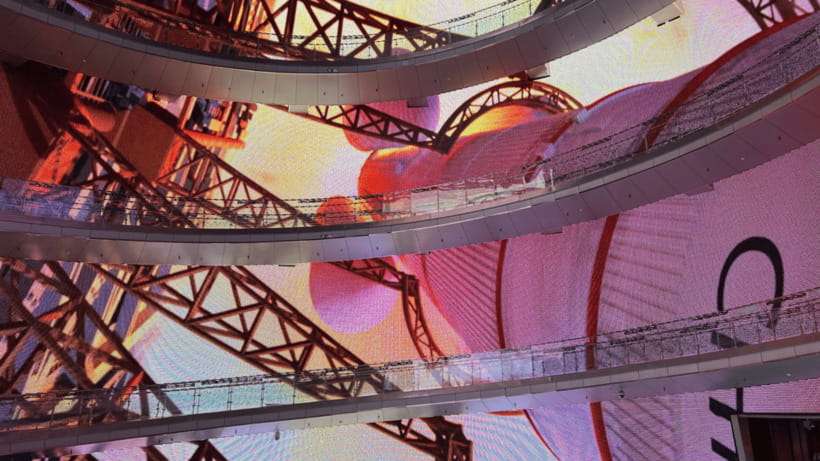
One unusual feature worth noting is the entrance area connected with dinosaur displays. A visit can begin with an unexpectedly striking visual scene before you reach the main film galleries. If you are visiting with children, this may help hold their interest at the start, even though the museum’s central subject is cinema.
The dinosaur displays should not be your main reason for booking. They are an added feature, not the focus of the two-hour visit. Still, they give the arrival sequence a little more variety than a standard film archive.
Floors two through four and a century of movies
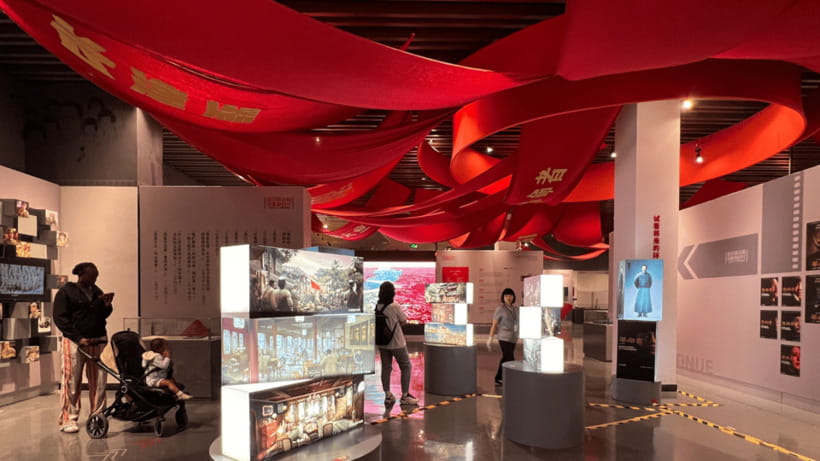
The main exhibition, A Century of History, A Century of Glory, occupies the second, third, and fourth floors. It follows Chinese film through different periods and stages, showing how the medium developed over roughly one hundred years.
This arrangement is valuable because it gives you a timeline rather than a random collection of objects. You can consider how film language, production methods, and artistic priorities changed over time. The displays also present the achievements of many filmmakers, so the story is not limited to a handful of famous titles.
The museum also aims to reveal how films are made. That practical side can make the visit more approachable. You are not required to arrive as a film scholar. Displays about production and filmmaking techniques can help you understand the work behind what appears on the screen.
I would plan to spend most of your two hours on these three floors. Move at a steady pace, but do not rush the sections that catch your attention. The building contains 21 exhibition halls with a combined exhibition area of about 13,000 square meters, so even a quick look can involve a lot of walking.
The size creates both value and a challenge. At $4.82, you receive access to a very large public museum for the price of a modest snack in Beijing. On the other hand, two hours may feel short if you read every panel or stop for every film-related object.
What the exhibition is like for English speakers
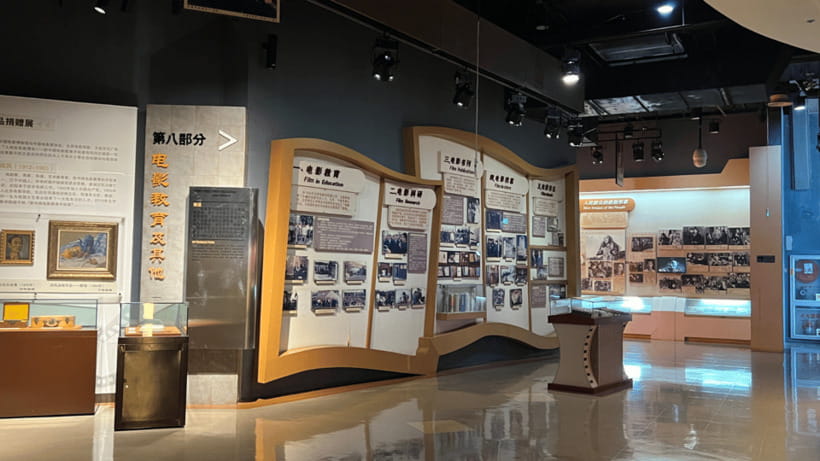
This is the most important practical warning. An English textual and visual guide is included, but the exhibition itself may not have English explanations beside every object.
One Spanish-speaking visitor described the museum as very large and interesting, but noted that the information was all in Chinese. A German visitor had the same basic problem, finding the descriptions available only in Mandarin. Those comments point to a real limitation for international visitors.
You can still enjoy the building, objects, visual displays, and broad arrangement without reading every line. Film images communicate something across language barriers, and the museum’s organization gives you a general sense of the subject. Still, visitors who want detailed historical context may find the experience less satisfying without Chinese reading ability.
Use the English guide carefully. It may help you follow important themes and visual material, but do not assume it translates every caption in every hall. If you care strongly about detailed interpretation, allow extra time to compare the guide with the displays you find most interesting.
This is not a reason to reject the museum outright. It is a reason to choose it for the right purpose. I would recommend it more readily to film fans, visitors interested in modern Chinese culture, and people comfortable learning from visual material than to someone seeking a fully English-language museum experience.
A completely different kind of day out on the same trip:
- From Beijing: Mutianyu Great Wall Tours with Options
★ 4.9 · 9,216 reviews - Beijing: Forbidden City Tour(Group/Private)-Tickets Included
★ 4.8 · 7,974 reviews - Beijing: T-Square & Forbidden City Group or Private Tour
★ 4.8 · 4,446 reviews - All-Inclusive Tour: Tiananmen Square, Forbidden City, Great Wall
★ 5.0 · 2,873 reviews
The six movie halls and IMAX GT screen
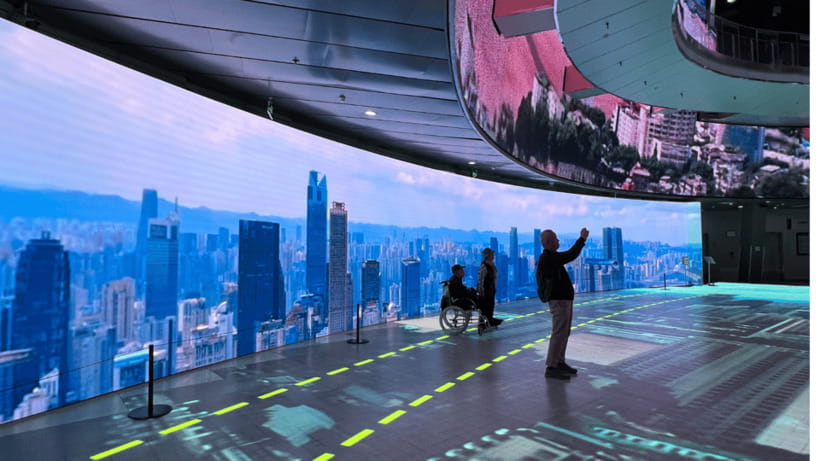
The museum has six movie halls, including an IMAX GT hall. Together, the halls can accommodate audiences of more than 1,000 people.
That makes the complex more than a collection of historical displays. It is also a functioning cinema center. You can connect the museum’s film exhibits with the experience of watching a movie in a proper screening hall, though a paid screening is not included with admission.
Do not assume your museum reservation includes a film. The entry reservation covers access to the museum, while movie tickets cost extra. If you want to see a screening, check availability and pricing separately before you visit.
The IMAX GT hall is a particular draw for people who care about presentation quality. The available information does not list specific films or screening times, so you should treat it as an additional possibility rather than a guaranteed part of your visit.
For a two-hour plan, the exhibition halls are the safer priority. A screening could change the length of your visit and may require a separate purchase. If you are mainly interested in the museum’s historical displays, you can skip the cinema program and keep your visit focused.
A realistic two-hour plan
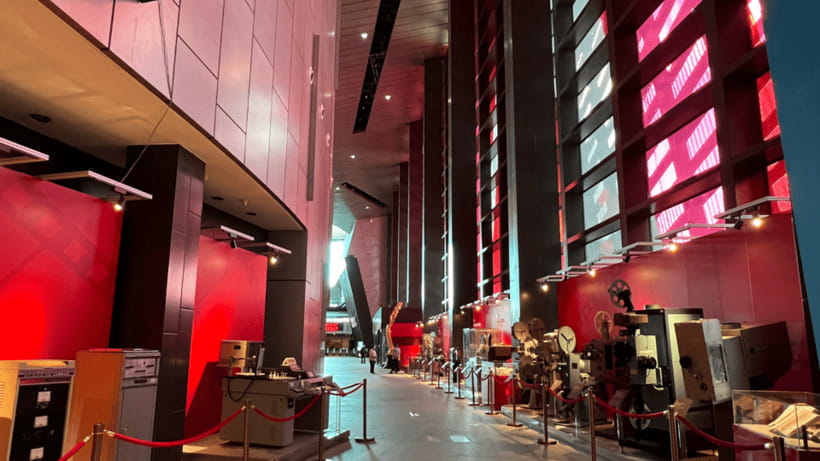
A sensible visit begins with the first-floor exhibition and entrance displays. Give yourself enough time to get oriented, especially if the building feels larger than expected.
Next, move through the second-floor section of A Century of History, A Century of Glory. Pay attention to the way the exhibition introduces the development of Chinese cinema, then continue upward through the third and fourth floors.
Use the English guide to identify sections that deserve closer attention. Do not try to read every Mandarin description. That approach can turn a manageable visit into a tiring one, especially in a museum with 21 halls.
Finish by checking the cinema area and the IMAX GT hall. If a screening interests you, you can decide if the extra cost and time fit your day. If not, you have still seen the central collection and gained a useful picture of Chinese filmmaking.
Two hours is a good planning figure for a general visit. It gives you time to see the major exhibition areas without promising a complete study of the museum. Film enthusiasts may want to stay longer, especially if they want to examine production displays or spend more time with the work of individual filmmakers.
The value of a $4.82 admission
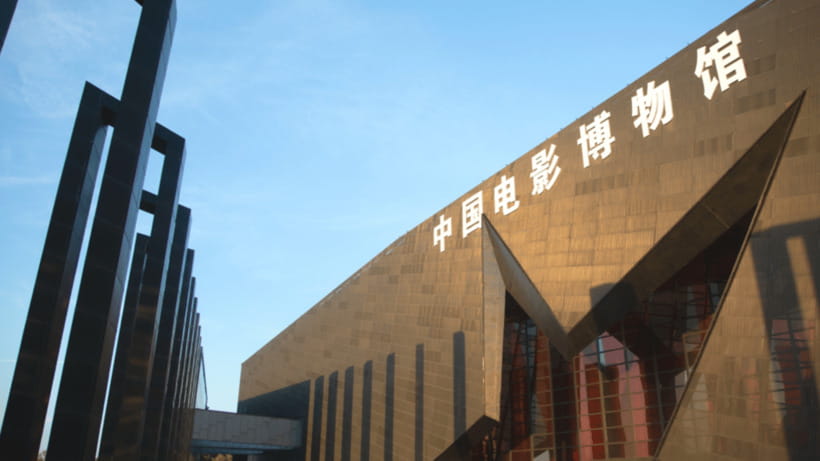
At $4.82 per person, this experience offers strong value for anyone interested in Chinese cinema or modern cultural history. The price includes the museum entry reservation and an English version of the textual and visual guide.
You are paying for access to a major national institution with 21 exhibition halls, rather than a short attraction that takes half an hour. The six movie halls and IMAX GT facility add interest, even though screenings are extra.
The low price also makes the museum an easy addition to a Beijing itinerary. You do not need to give up a full day or make a major financial commitment. If the language barrier limits how much you understand, the cost reduces the risk of disappointment.
The value is weaker for visitors who want a fully translated experience. You may see impressive displays but miss important explanations if you cannot read Mandarin. In that case, the included English guide becomes especially important, but you should still keep your expectations measured.
Getting inside with the correct QR code
The entry process is simple, but one detail matters. After booking, the separate e-ticket is sent by email or WhatsApp. You must use the QR code supplied there to enter the museum directly.
The QR code shown in the booking app is not your admission ticket. Do not rely on it at the entrance. Open the email or WhatsApp message before you arrive, and keep the correct code easy to display.
You also need to bring your passport. This is not an optional extra listed for convenience, so put it with your phone and booking confirmation before leaving your hotel.
The direct QR entry is useful because it lets you skip the ticket line. It does not remove the need to check the ticket message carefully. A few seconds spent finding the correct code can prevent an awkward pause at the entrance.
Smoking is not allowed inside the museum. The venue is wheelchair accessible, which makes the large exhibition complex more practical for visitors with mobility needs.
Who will enjoy this museum most
I would choose this experience if you have an interest in Chinese films, directors, screen art, or the development of modern Chinese culture. You will have enough material to keep a serious film fan occupied, at least for the basic two-hour visit.
It also suits families who want a large indoor cultural stop with more visual variety than a traditional art gallery. The dinosaur display areas near the entrance may appeal to children, while the movie displays give adults a clear subject to follow.
The museum is less suitable if you need every label in English. You can use the provided guide, but Mandarin appears to be the main language of many descriptions. A visitor who wants a fully explained, English-language experience should consider that limitation before booking.
It is also not the best choice if you want a guided tour. No live guide is included. You explore independently, using the guide and the museum’s own displays.
How it compares with a standard cinema visit
A regular movie screening gives you a finished story. This museum lets you look at the machinery, people, stages, and artistic choices behind that story.
That difference makes the visit worthwhile even if you do not recognize many Chinese movie titles. The museum’s purpose is broader than presenting famous films. It connects filmmaking with changing periods, technical development, and the work of many artists.
The cinema halls give the building a useful second purpose. You can see where films are presented to audiences, then return to the exhibitions and think about how those films were created. Since screenings cost extra, you can decide how much of the cinema side fits your budget.
Booking, cancellation, and planning advice
You can reserve your place and pay later, which helps if your Beijing schedule is still changing. Cancellation is free up to 24 hours before the visit for a full refund.
Starting times depend on availability, so check the date and time before booking. The stated duration is two hours, but I would leave some flexibility if you plan to read the English guide carefully or consider a paid screening.
Keep your passport with you, and save the separate QR code sent by email or WhatsApp. These two practical steps matter more than bringing any special equipment.
Should you book the China National Film Museum?
Book it if you want a low-cost, large-scale look at Chinese cinema and you are willing to explore without a live guide. The 21 exhibition halls, century-long presentation, filmmaking displays, and six cinema halls offer strong value for $4.82.
I would be more cautious if you need complete English interpretation. The included guide helps, but Mandarin-only descriptions can limit the detail you take away. For film fans and culturally curious visitors, that language issue is manageable. For everyone else, it may be the main reason to choose another Beijing attraction.
Bring your passport, use the QR code sent separately, and give yourself at least two hours. If the subject interests you, this museum offers a useful and inexpensive look at how China has told its stories on film.
FAQ
How much does admission to the China National Film Museum cost?
The entry reservation costs $4.82 per person.
How long does the museum visit take?
The stated duration is two hours. You may want more time if you plan to study the exhibitions closely or attend a paid screening.
How many exhibition halls does the museum have?
The museum has 21 exhibition halls, with a combined area of about 13,000 square meters.
Does the museum have movie theaters?
Yes. It has six movie halls, including an IMAX GT hall, with total seating for more than 1,000 people.
Are movie screenings included with admission?
No. Paid movie screenings are not included in the museum entry reservation.
Is an English guide available?
Yes. An English version of the textual and visual guide is included. However, some exhibition descriptions may be in Mandarin only.
What do I need to bring?
You need to bring your passport.
Which QR code should I use for entry?
Use the separate QR code sent by email or WhatsApp. The code displayed in the booking app is not the admission ticket.
Is the museum wheelchair accessible?
Yes. The China National Film Museum is wheelchair accessible.
Newest reviews from Beijing
- Beijing: Explore the Forbidden City in Hanfu★ 5.0 · 4 reviews
- Beijing Tai Chi and Tea Ceremony Experience★ 5.0 · 4 reviews
- Jinshangling Great Wall Of Beijing Tickets And Other Option★ 4.0 · 4 reviews
- Private Full-Day Great Wall of China Hiking Tour from Jiankou to Mutianyu★ 4.5 · 4 reviews
- Tour the Great Wall with a Native from Downtown Beijing★ 4.8 · 4 reviews
- Beijing: Badaling Great Wall Private Tour w Language Option★ 4.3 · 4 reviews
- Beijing:Summer Palace & Tea or Calligraphy Experience Tour★ 4.6 · 4 reviews
- 7 Days Private Tour of Beijing, Xian, Shanghai by Bullet Train★ 5.0 · 4 reviews
Museums, compared.
Tianmen Square, Forbidden City & Royal Museum Tours
Read our review →
Half-Day Mini Group Xian Tour to Terracotta Warriors Museum
Read our review →
Beijing:Jingshan Park (Palace Museum Garden) Ticket
Read our review →
Private Chengdu Day Tour: Giant Pandas and Jinsha Site Museum
Read our review →
Private Xi’an Tour: Terracotta Warriors, Hanyangling Museum, Cave Homes
Read our review →
Beijing Half Day: National Museum of China In-depth Tour with Subway Transfer
Read our review →
Terracotta Warriors Museum Ticket with Professional English-speaking tour guide
Read our review →Browse the lists this tour appears in