
Reviewed · HUTONG TOURS
Beijing Hutong Food Crawl Delights: Peking duck, Hotpot&More
Come hungry, leave with a new food map. This three-hour Beijing hutong food crawl links Peking duck, Mongolian hot pot, Yunnan rice noodles, and roadside snacks in one evening. I like the mix of famous dishes and tucked-away neighborhood restaurants, and I also like that an English-speaking guide explains how each meal fits into Beijing life. The $80 price is fair for three substantial food stops, drinks, and a small group, though the pace and amount of food may feel heavy if you prefer a light dinner.
The best part is the access. Places in Dongsi’s narrow alleys can be hard to find on your own, especially when menus and signs are not aimed at foreign visitors. A guide such as Mike, Andy, Miko, or Anson can make the evening feel easy and social. Just remember that the exact guide and meeting arrangement depend on your booking, and group tours do not include hotel transport.
In This Review
- Key points at a glance
- Why this Beijing food crawl works so well
- Starting at Dongsi Subway Station Exit B
- First stop: Peking duck and the art of the carving cart
- Second stop: copper-pot Mongolian hot pot
- Street snacks between the restaurants
- Third stop: Yunnan noodles in a hutong restaurant
- What the guide adds beyond the food
- How much food and drink do you really get?
- Is $80 a fair price for three hours?
- Who should book this evening?
- Final call: book it if you want a full, guided dinner
- FAQ
- How long does the Beijing hutong food crawl last?
- What food is included?
- Are drinks included?
- Where does the group tour meet?
- Can I arrange hotel pickup and drop-off?
- Is the tour offered in English?
- Can I cancel or pay later?
Key points at a glance
- Three major dishes in one evening: Try Beijing duck, copper-pot mutton hot pot, and Yunnan-style cross-bridge rice noodles.
- Dongsi hutong setting: Walk through traditional alleys lined with courtyard homes while learning about local food customs.
- A generous dinner: Three restaurants plus street snacks are intended to replace a full evening meal.
- Local-style dining: Expect fermented bean curd dipping sauce, rice wine, Erguotou, roasted tofu, lotus root cakes, and other flavors that may be new to you.
- Drinks included: Beer, sodas, and featured drinks flow freely during the food stops.
- Small groups and private options: Group tours hold fewer than 10 people, while private bookings can include hotel pickup and return.
Why this Beijing food crawl works so well
Beijing has plenty of famous dishes, but ordering them alone can be tricky. You may recognize Peking duck, yet still wonder how to wrap it, which sauces to use, or what to order beside it. Hot pot looks simple until you face a table of raw ingredients and dipping sauces. Rice noodles can be equally confusing when the broth and toppings arrive separately.
This tour solves that problem by putting a local guide at the table. The guide does more than point at food. You get help with ordering, eating, and understanding the stories behind the dishes. The strongest praise goes to the guides’ English, friendliness, and ability to turn dinner into a conversation about Beijing life.
Mike is repeatedly described as warm, funny, and easy to talk with. Andy receives praise for his clear English and lively explanations. Miko is noted for answering questions about both food and daily life in China, while Anson brings particular enthusiasm to Beijing’s culinary traditions. Your guide may be someone else, but the human side of the evening is a major reason to book.
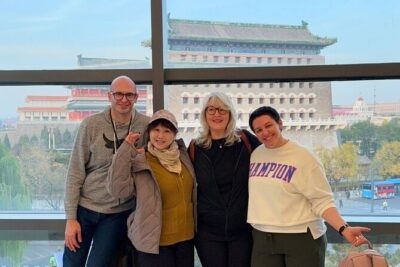
The format also suits a first night in Beijing. You meet at Dongsi Subway Station Exit B for the small group option, then move through the nearby hutongs and restaurants. By the end, you have eaten widely and learned what to seek out during the rest of your stay.
More hutong walks:
- Beijing Hutong Walking Food and Beer Tour at Hidden Restaurants
★ 5.0 · 1,132 reviews - Temple Heaven, Summer Palace, Lama Temple, Hutong Bus Tour
★ 4.7 · 319 reviews - Temple of Heaven, Summer Palace, Lama Temple, Hutong Tours
★ 5.0 · 311 reviews
Starting at Dongsi Subway Station Exit B
Dongsi is a useful starting point because it puts you close to traditional hutongs and ordinary local life. Group guests meet at Exit B, while private guests can either meet there or arrange pickup from a downtown hotel.
Arrive on time. The tour lasts about three hours, and the food schedule is fairly full. A late arrival could mean missing part of the walking introduction or joining the meal after the group has already begun.
The hutong walk gives the evening some breathing room between plates. These narrow lanes are lined with traditional courtyard houses and offer a look at Beijing beyond grand monuments and major shopping streets. Your guide explains how hutongs function as part of the city’s cultural heritage, along with local customs connected to food and family life.
Do not expect a long sightseeing walk. This is a food tour with a cultural walk woven through it. Still, that short stroll matters. It helps you understand why the restaurants are where they are and gives context to the neighborhood before the first major meal.
Bring a camera if you like street scenes, but keep your focus on the walk and the guide. The alleys are part of the experience, not simply a route between restaurants.
First stop: Peking duck and the art of the carving cart
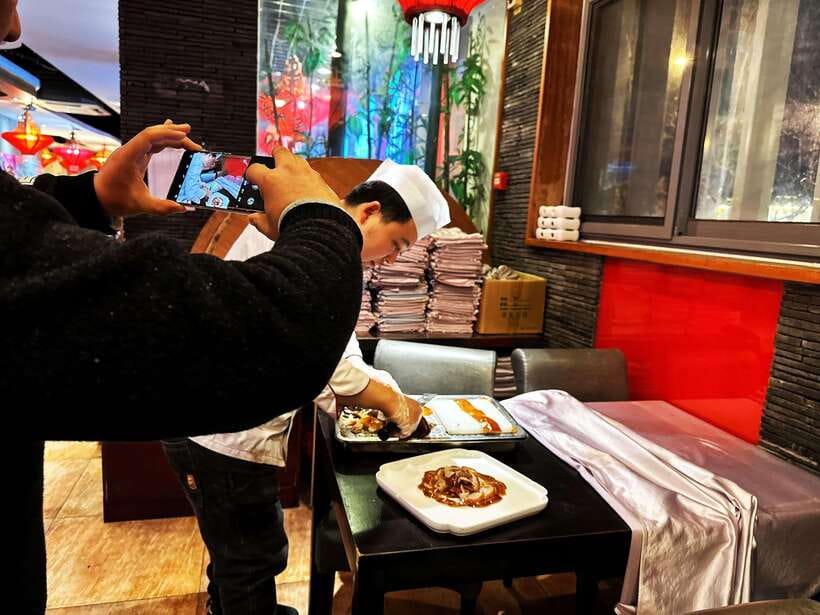
Peking duck is the evening’s most recognizable dish, and the preparation gives it a sense of occasion. At the restaurant, you can watch a chef carve the roasted duck in front of you. The appeal is clear: crisp skin, tender meat, thin wrappers, and the careful slicing that turns a whole bird into neat servings.
Your guide shows you how to eat it properly and helps select other Beijing dishes to complete the meal. For groups of more than three, the meal can include additional signature dishes, giving you more to sample beyond the duck itself.
The classic pairing is Erguotou, a strong local spirit associated with Beijing. It is not a gentle drink, so approach it with care. Beer and other drinks are also available, and the included beverage service lets you choose something more familiar if the spirit is not to your taste.
This stop is strongest for first-time visitors who want a clear introduction to Beijing cooking. The live carving is also a nice touch for anyone who enjoys seeing technique rather than receiving a finished plate with no explanation.
The possible drawback is that Peking duck is only one part of a much larger dinner. Try enough to appreciate the dish, but do not fill up too early. The later hot pot and noodle meal are not small extras.
Second stop: copper-pot Mongolian hot pot
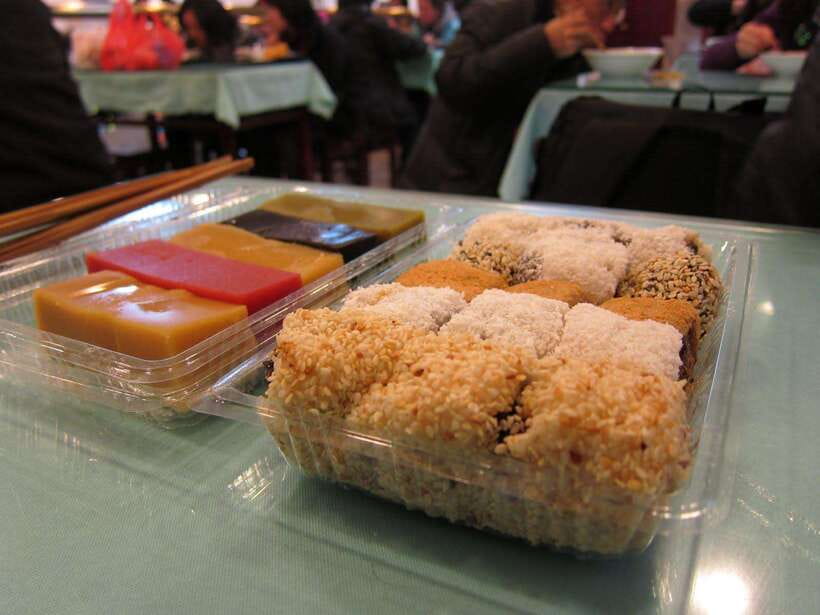
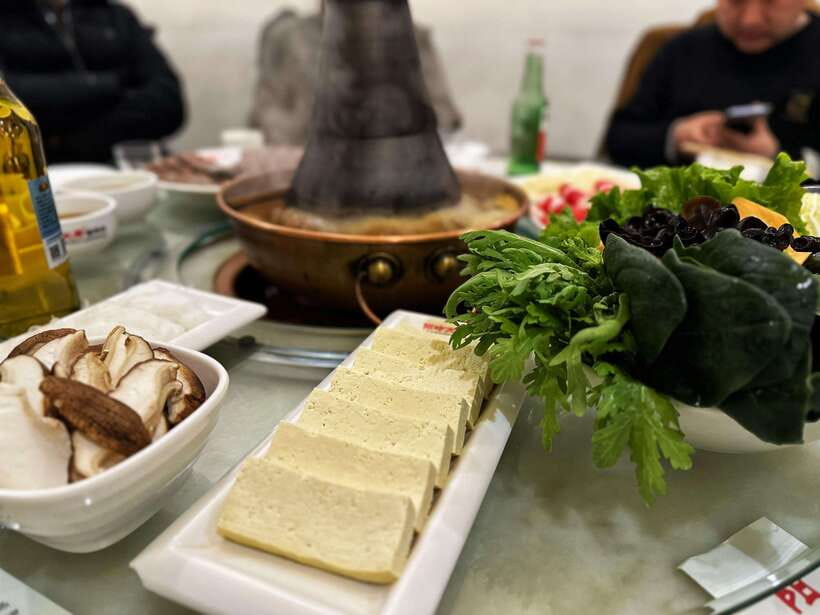
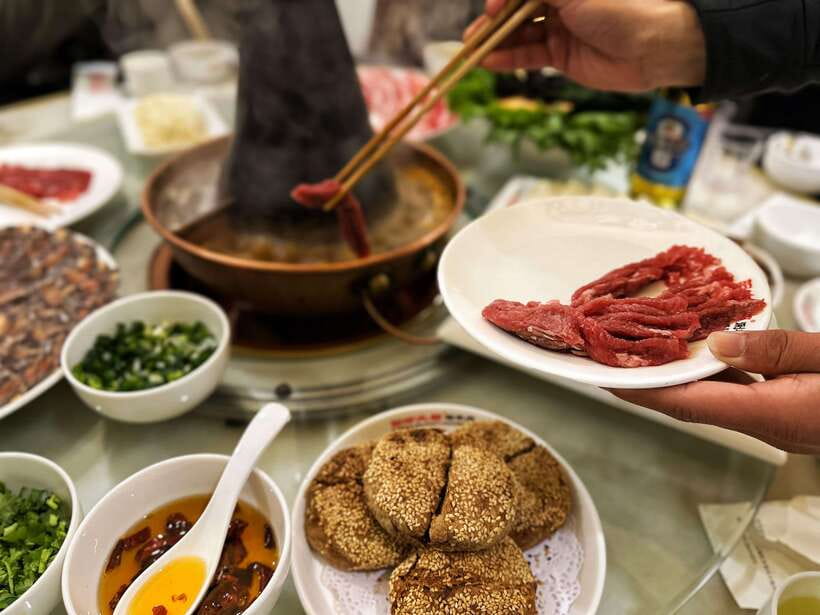
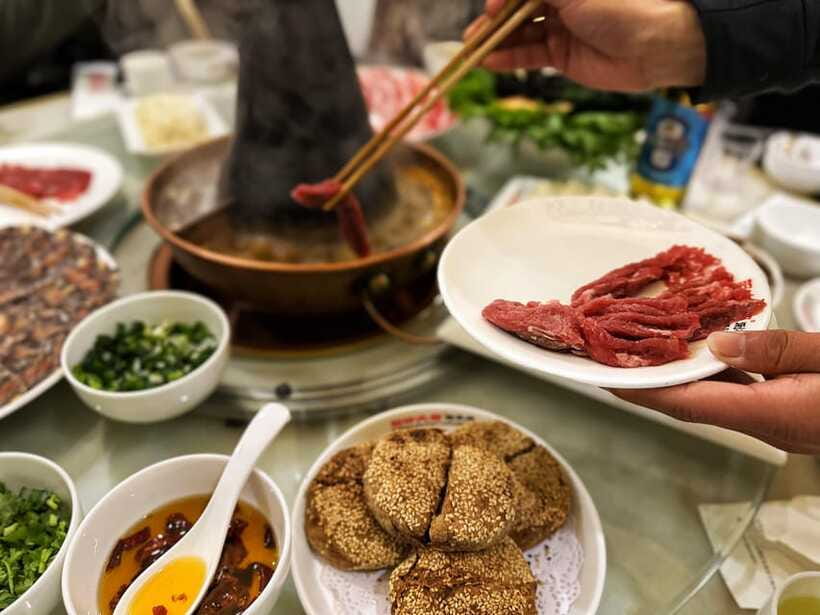
The hot pot stop shifts the mood from watching a chef work to taking part in the meal. A copper pot with a charcoal-fired center keeps the broth simmering while you cook thinly sliced mutton at the table. Beef and chicken may also be available, along with vegetables and mushrooms.
The dipping sauce is central to the experience. A typical combination includes fermented bean curd, sesame paste, and chili oil. The result is salty, creamy, earthy, and sometimes spicy, depending on how much chili you add.
Your guide can help you understand what goes into the pot and how to use the sauce. This is valuable because hot pot is less about one finished dish and more about timing. You cook small portions, dip them, and keep the meal moving.
Cold beer is the natural partner here, and unlimited beer and sodas are included. That makes the stop feel generous for the price, especially since drinks can quickly add to a restaurant bill in Beijing.
Mutton may be unfamiliar to some diners, and the meal can be rich after the duck. If you have a small appetite, pace yourself. You can taste several ingredients without treating every item as a full serving. The point is variety, not winning a contest against the broth.
More food tours in Beijing:
- Beijing: Hidden Gems Guided Food Tour with Beer and Tastings
★ 4.9 · 306 reviews - Beijing Private Hutong Food Walking Tour
★ 5.0 · 299 reviews - Beijing Hutong Breakfast Food Tour
★ 5.0 · 155 reviews - Beijing Hutong Breakfast Food Tour
★ 5.0 · 120 reviews
Street snacks between the restaurants
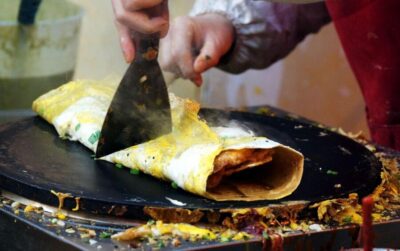
The roadside snack portion adds a less polished layer to the evening. Rather than eating only in established restaurants, you get a chance to sample local bites along the way. The exact snacks can vary, so you should treat this part as a flexible taste of the neighborhood rather than a fixed menu.
That flexibility is useful. Street food reflects what people are eating that day and what is available in the area. It also gives your guide room to explain how snack foods fit into everyday Beijing routines.
For cautious eaters, ask questions before trying anything. Your guide can explain unfamiliar ingredients and help you decide what suits you. For adventurous eaters, this may be the most memorable section because it feels less formal than the restaurant stops.
Keep your expectations practical. The tour promises sampling, not a detailed street-food banquet. You will likely have already eaten a great deal by this point, so small portions are welcome.
Third stop: Yunnan noodles in a hutong restaurant
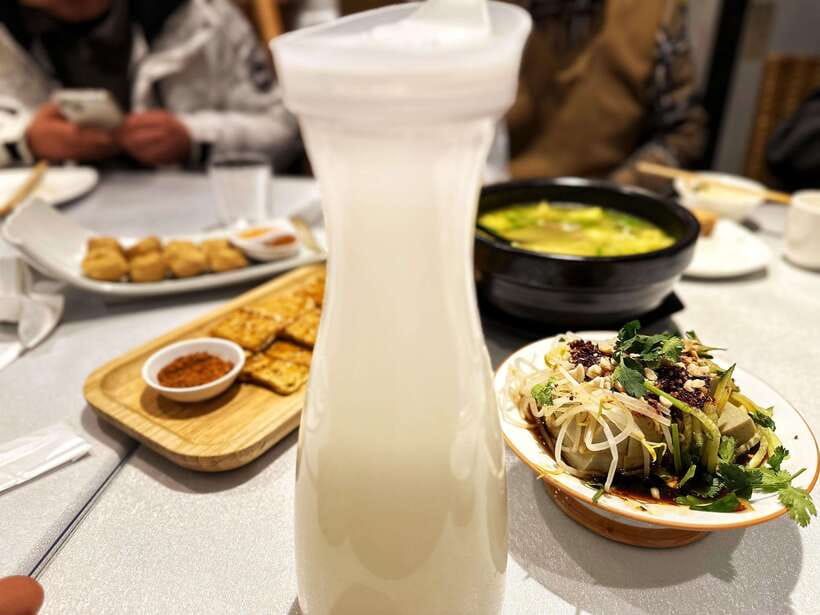
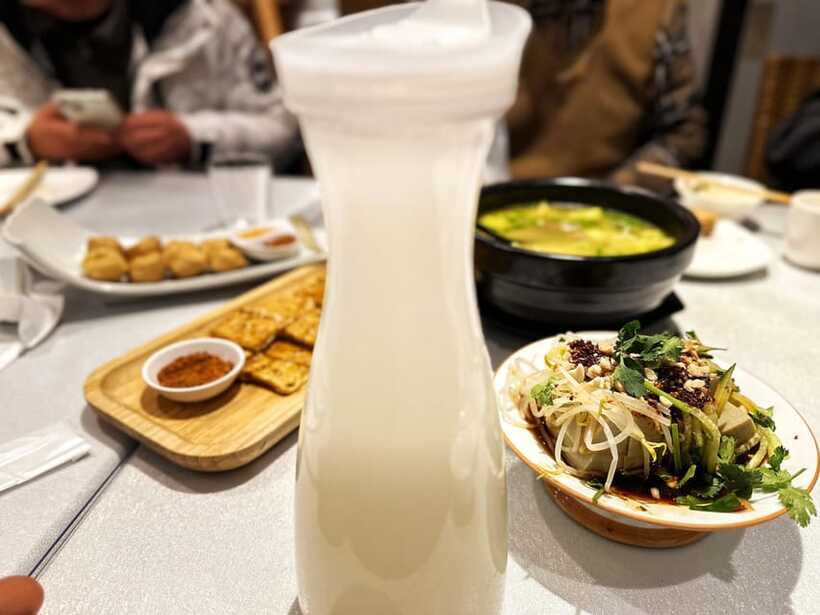
The final restaurant offers a change of flavor and texture. Yunnan-style cross-bridge rice noodles arrive with a flavorful broth and a selection of fresh ingredients. Rather than one heavy roasted or simmered dish, this meal feels more like a warm bowl assembled around broth, noodles, and toppings.
The restaurant is described as being tucked into the hutongs, which adds to the sense of discovery. This is the kind of place many foreign visitors might pass without entering, particularly if they cannot read the menu or are unsure how to order.
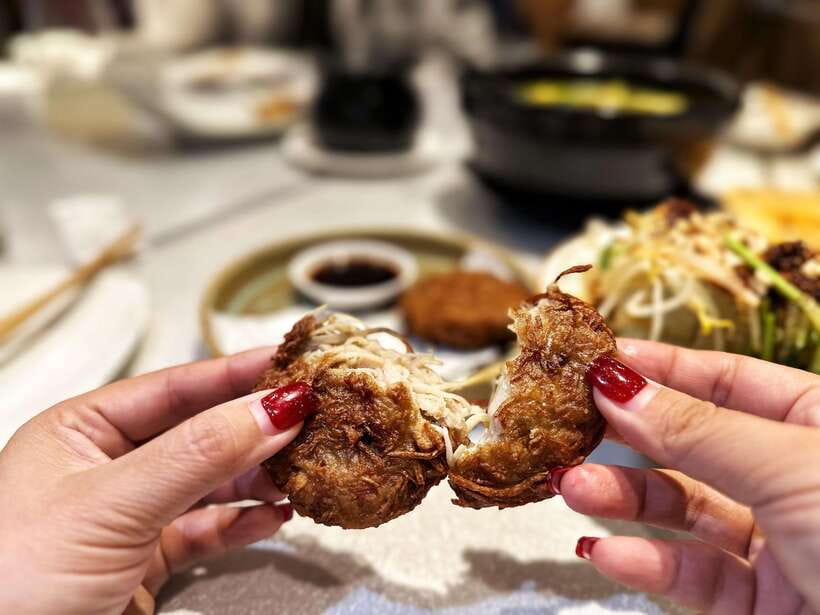
Other dishes can include roasted tofu, fried lotus root cakes, and pickled cabbage stir-fried with sweet dumplings. These sides broaden the meal and show how much Chinese cooking can vary from one regional tradition to another.
Rice wine provides the final drink pairing. It is sweet and mellow, making a softer finish after the strong flavors of hot pot and duck.
This last stop is especially useful if you want more than a narrow taste of Beijing cuisine. Yunnan food is not the same as classic northern cooking, so the noodles give you a regional contrast in the same evening. The tradeoff is simple: after two full restaurant meals and snacks, you may appreciate the flavors more than the portion size.
What the guide adds beyond the food
The guide is the key to the experience. Without one, you could order duck, hot pot, or noodles in Beijing. You would not necessarily know the customs, history, or small techniques that make each meal easier to enjoy.
The best guide reports describe relaxed conversation rather than a formal lecture. You learn about Beijing’s past, hutong life, Chinese food culture, and the story behind individual dishes. You can also ask broader questions about living in China, which helps make the evening feel personal.
The English standard appears strong across the named guides. Mike is praised for speaking clearly and making diners feel as if they were eating with an old friend. Andy is described as friendly and engaging, while Miko is credited with careful preparation and thoughtful answers. One family even appreciated that Andy helped find a suitable way for their daughter to try the final dish when she still had room for it.
That kind of flexibility matters. Food tours work best when the guide watches the group, not just the clock. You should still remember that individual guide styles differ, and no tour can promise a particular guide unless the operator confirms it.
How much food and drink do you really get?
The included food is intended to equal dinner, and the portions sound substantial. You receive Peking duck, hot pot, Yunnan cuisine, street snacks, and drinks. Several people found the amount more than sufficient, so eating a very small lunch is not necessary. A normal breakfast and a lighter afternoon meal may be a better plan.
The unlimited beer and sodas improve the value. Drinks are not an afterthought here. Beer suits the hot pot, while other featured drinks can match the duck and noodles.
Personal expenses are not included, so keep some money available for anything outside the provided meal. The core food and listed drinks are covered, but you should not assume every optional purchase is part of the $80 price.
Dietary needs are not explained in the available details. If you avoid mutton, meat, alcohol, or particular ingredients, ask about options before booking rather than assuming substitutions will be available.
Is $80 a fair price for three hours?
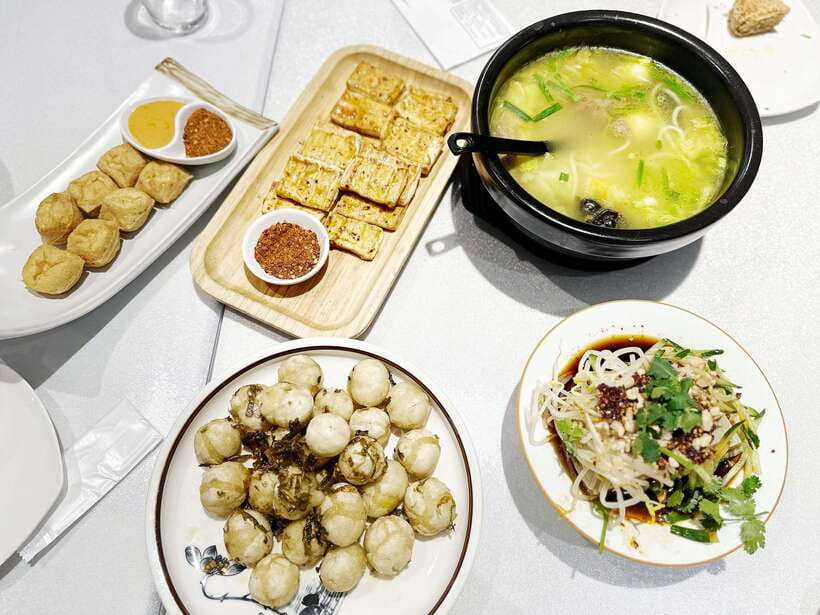
At $80 per person, this is not the cheapest way to eat in Beijing. It is also not simply a restaurant bill. The price combines three food stops, street snacks, an English-speaking guide, a hutong walk, and unlimited beer and sodas. For a visitor who wants help ordering and cultural context, that package offers solid value.
The small group limit of fewer than 10 people is another useful factor. A small group makes it easier to hear the guide, share dishes, and ask questions. It also reduces the risk of being moved through the restaurants like a large bus group.
Private tours cost more than the basic group format if you choose that option, but private guests can arrange hotel pickup and drop-off. This may be worthwhile for families, couples, or anyone who wants a slower pace. Group guests meet at Dongsi Subway Station and arrange their own way back.
The price makes the most sense for someone who would otherwise spend time guessing where to eat. If you are already confident ordering Chinese food and prefer to choose your own restaurants, you may get better value by exploring independently. If you want a guided introduction with plenty of food, the cost is easier to justify.
Who should book this evening?
I would recommend it to first-time Beijing visitors, curious eaters, couples, families with older children, and anyone who wants food and culture in the same outing. It is also a good choice for people who feel unsure about entering local restaurants alone.
The tour is less suitable if you want a quiet, light dinner or dislike sharing a table and trying unfamiliar ingredients. Three restaurant stops in three hours is a lot. Guests with limited mobility should also ask about the walking route and restaurant setup before booking, since the experience includes hutong walking and multiple venues.
It works particularly well at the start of a Beijing stay. You learn several dishes, pick up ordering tips, and get a better feel for local neighborhoods. Afterward, you can return to the foods you liked most with more confidence.
Private pickup makes the arrangement easier for downtown hotel guests, while the group format keeps the price lower and the social side stronger. Free cancellation up to 24 hours before the start and reserve-now, pay-later booking also make planning less risky.
Final call: book it if you want a full, guided dinner
Book this tour if you want to taste several major Chinese dishes without spending your first evening decoding menus and restaurant signs. The combination of Dongsi hutongs, live duck carving, table-cooked hot pot, Yunnan noodles, street snacks, and included drinks gives you a broad introduction in a short time.
Skip it if you prefer to graze slowly, choose every restaurant yourself, or avoid hearty meat-based meals. For everyone else, the strongest reason to book is the guide. A good host turns a filling dinner into a useful lesson in Beijing food and daily life, and guides such as Mike, Andy, and Miko have shown how much warmth can shape the evening.
FAQ
How long does the Beijing hutong food crawl last?
The tour lasts three hours.
What food is included?
The experience includes Peking duck, Mongolian hot pot, Yunnan-style cuisine with cross-bridge rice noodles, street snacks, and food at three main dining stops.
Are drinks included?
Yes. Unlimited beer and sodas are included, along with featured drinks such as Erguotou with the duck and rice wine at the Yunnan-style restaurant.
Where does the group tour meet?
The group tour meets at Dongsi Subway Station Exit B. The exact meeting arrangement may vary by booking option.
Can I arrange hotel pickup and drop-off?
Private tour guests can choose hotel pickup and return to their hotel if the hotel is in the downtown area. Hotel transport is not included with the small group tour.
Is the tour offered in English?
Yes. The tour includes a live English-speaking guide.
Can I cancel or pay later?
You can cancel up to 24 hours in advance for a full refund. The reserve-now, pay-later option lets you book without paying on the day of reservation.
Newest reviews from Beijing
- Beijing: Explore the Forbidden City in Hanfu★ 5.0 · 4 reviews
- Beijing Tai Chi and Tea Ceremony Experience★ 5.0 · 4 reviews
- Jinshangling Great Wall Of Beijing Tickets And Other Option★ 4.0 · 4 reviews
- Private Full-Day Great Wall of China Hiking Tour from Jiankou to Mutianyu★ 4.5 · 4 reviews
- Tour the Great Wall with a Native from Downtown Beijing★ 4.8 · 4 reviews
- Beijing: Badaling Great Wall Private Tour w Language Option★ 4.3 · 4 reviews
- Beijing:Summer Palace & Tea or Calligraphy Experience Tour★ 4.6 · 4 reviews
- Beijing Private Tour to Huaibei Ski Resort and Mutianyu Great Wall with Lunch★ 5.0 · 4 reviews
Hutong Tours, compared.
Beijing Hutong Walking Food and Beer Tour at Hidden Restaurants
Read our review →
Temple Heaven, Summer Palace, Lama Temple, Hutong Bus Tour
Read our review →
Temple of Heaven, Summer Palace, Lama Temple, Hutong Tours
Read our review →

Beijing City Walk: Explore Hutongs Life and Old Beijing
Read our review →Browse the lists this tour appears in