
Reviewed · HUTONG TOURS
Beijing Hutong Walking Tour History, Architecture and Local Life
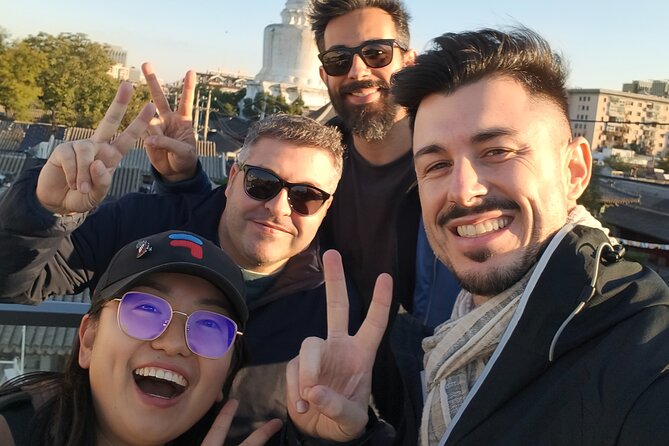
Beijing’s old lanes tell better stories than its boulevards. This three-hour walk links ancient hutongs and grand religious buildings with the modern financial center, giving you a clear look at how old Beijing still fits into daily life. I like the small maximum of 10 people, and I like that the guide explains doorways, courtyards, pagodas, and local customs instead of simply pointing at monuments. The main drawback is the pace: several stops are brief, and the Temple of Previous Dynasties is visited only if it is open.
The route begins near Xisi Subway Station and ends at Fuchengmen Station, so you do not need private transport. A traditional Beijing drink, bottled water, restaurant suggestions, and practical city advice add useful value to the $49 price. Guides Lori and Dee have both been praised for making the walk friendly, helpful, and easy to follow.
In This Review
- Key points to know before you book
- Why this short walk works in Beijing
- Xishiku Church and Beijing’s Chinese Catholic story
- Guangji Temple and traditional temple details
- Zhengyang Shuju, the Yuan Dynasty brick pagoda, and a siheyuan
- Zhuanta Lane, where the hutong becomes the main attraction
- Temple of Previous Dynasties and imperial architecture
- White Stupa Temple from a nearby café balcony
- From Xisi to Fuchengmen, with the city changing around you
- What the $49 price really covers
- Who will get the most from this walk
- Should you book the Beijing hutong walk?
- FAQ
- How long is the Beijing hutong walking tour?
- Where does the tour begin?
- Where does the tour end?
- How many people can join the tour?
- Is private transportation included?
- What is included in the price?
- Can I cancel for a full refund?
Key points to know before you book
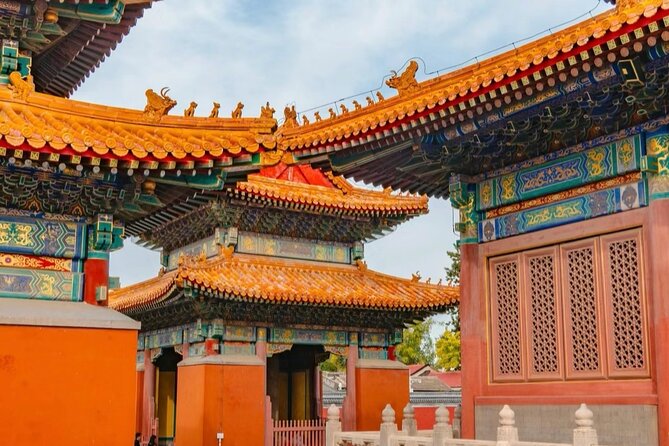
- A compact route through old Beijing: You visit a church, temple, pagoda, courtyard house, hutong, imperial temple, and White Stupa in about three hours.
- A maximum of 10 people: The small group should make it easier to ask about architecture, local life, and Beijing customs.
- Strong attention to doorways and courtyards: The walk explains how siheyuan homes were arranged and why their entrances matter.
- A useful contrast in one outing: Ancient lanes lead toward Beijing’s modern financial center, showing two sides of the city without a long transfer.
- Good practical extras: Bottled water, a traditional Beijing drink, restaurant advice, and travel tips are included.
- Mostly an exterior and street-level experience: The White Stupa is viewed from a nearby café balcony, and the Temple of Previous Dynasties depends on opening conditions.
Why this short walk works in Beijing
Beijing can feel enormous. Major sights are spread across a wide city, and a first visit often becomes a parade of palace halls, gates, and large public squares. This tour takes a different route. It gives you a compact introduction to the smaller scale of Beijing, where a narrow lane, a stone doorway, or a courtyard wall can explain just as much about the city as a famous landmark.
You spend roughly three hours walking between six stops. The stated duration includes the time needed to move from one place to the next, so this is not three hours of uninterrupted sightseeing. That is worth knowing. The reward is variety rather than long visits at each site.
I especially like the way the route mixes buildings with ordinary streets. You are not only looking at preserved architecture. You also pass through an old hutong and see how local life fits around historic homes and religious sites. The contrast with the financial center at the end gives the route a useful sense of place.
The group limit is 10 people. That matters on a walking tour built around questions. Guides Lori and Dee have been praised for being personable, helpful, and willing to answer many questions. Lori is noted for explaining how hutongs were laid out and what the doors mean. That kind of detail turns a pleasant walk into a better tool for understanding Beijing.
More Historical Tours in Beijing
- Beijing Historical Tour II including Summer Palace, Lama Temple & Panda Garden
★ 4.0 · 187 reviews - Beijing Historical Tour I – Forbidden City, Tiananmen Square & Temple of Heaven
★ 4.0 · 120 reviews - Beijing Historic City Guided Walking Tour + Calligraphy Creation
★ 5.0 · 59 reviews
Xishiku Church and Beijing’s Chinese Catholic story
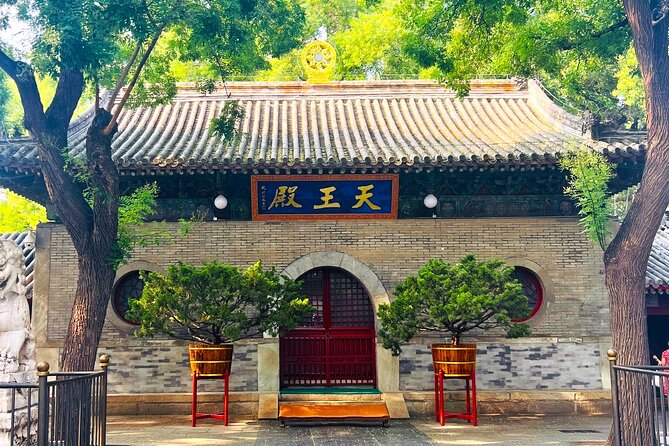
The first stop is Xishiku Church, described as Beijing’s earliest church. You spend about 10 minutes here, with admission included at no extra cost.
The appeal is not simply that it is a church. The guide introduces the building’s Chinese touch and explains its story in the setting of Beijing. That makes this a useful opening stop because it broadens the usual picture of the city. Beijing’s past is not represented by imperial buildings and Buddhist temples alone.
Ten minutes is enough for an introduction, a look at the architecture, and a few questions. It is not enough for an extended visit or a slow architectural study. If you care deeply about church history, you should treat this as a concise orientation rather than a full tour of the building.
Still, the location helps set the tone. The route is interested in the different beliefs, building styles, and layers of history found within the old city. You get a small example of that from the start.
Guangji Temple and traditional temple details
The walk continues to Beijing Guangji Temple, where you have about 20 minutes. This stop focuses on traditional Chinese temple architecture and ancient finger paintings.
That combination gives you two things to notice. The building itself shows the structure and visual language of a Chinese temple, while the paintings offer a more delicate connection to older religious art. The guide’s explanations are important here because temple details can be easy to miss when you are exploring alone.
Twenty minutes is a sensible amount of time for a focused introduction. You can look around, hear the cultural background, and continue without the stop swallowing the whole morning or afternoon. Admission is free.
The practical limitation is the same one found at several stops: this is a walking overview, not a specialist art visit. The tour gives you a framework for seeing the temple. It does not promise a long examination of every painting or architectural feature.
Zhengyang Shuju, the Yuan Dynasty brick pagoda, and a siheyuan
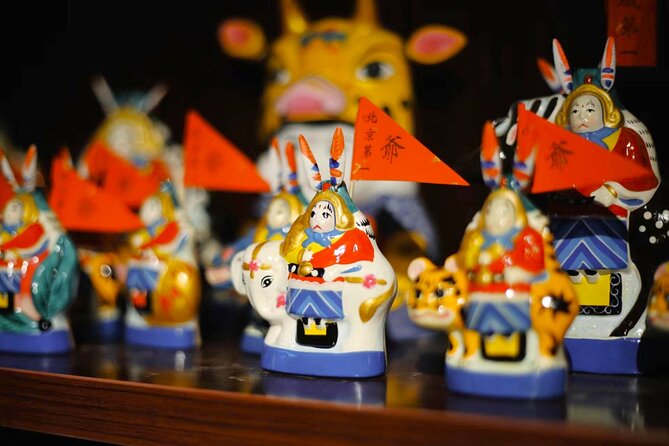
At Zhengyang Shuju, the route brings together two particularly useful pieces of old Beijing: the Wansong Brick Pagoda from the Yuan Dynasty and a collection of old Beijing images housed in a siheyuan.
The pagoda offers a direct connection to an earlier period of the city. The courtyard house adds a different kind of information. Instead of looking only at a monument, you get a sense of the traditional home structure that shaped life in Beijing’s lanes.
A siheyuan is a courtyard-style residence. Its layout, surrounding rooms, and entrance tell you something about family life, privacy, status, and movement through the house. The guide’s explanation of doors and hutong planning is likely to be most useful here. You begin to see that a plain entrance is rarely just a plain entrance.
You spend about 20 minutes at this stop. The old Beijing images help put the street outside into context, especially if you are trying to picture how the area has changed. Admission is free, and the visit avoids the expense of a major museum while still giving you a small collection of visual history.
This may be one of the strongest sections for anyone interested in architecture. You get a pagoda, a courtyard home, and historical images in one compact visit.
More Walking Tours in Beijing
- Beijing Hutong Walking Food and Beer Tour at Hidden Restaurants
★ 5.0 · 1,132 reviews - Private Beijing Walking Tour of the Forbidden City with 7 Options
★ 5.0 · 675 reviews - Forbidden City Private Walking Tour with Optional Sights
★ 5.0 · 400 reviews - Beijing Private Hutong Food Walking Tour
★ 5.0 · 299 reviews
Zhuanta Lane, where the hutong becomes the main attraction
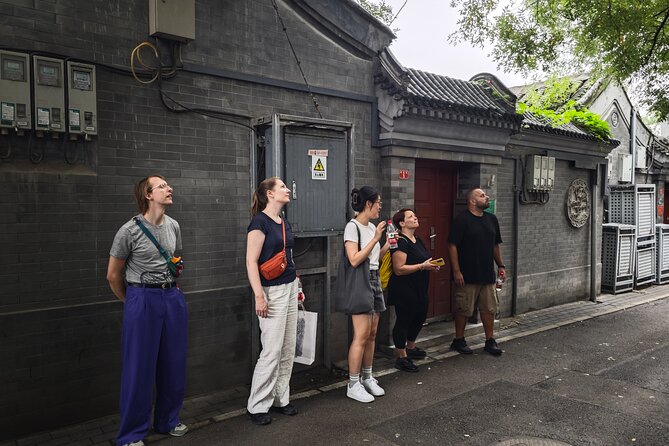
Zhuanta Lane is the most direct encounter with hutong life on the route. It is described as one of Beijing’s oldest hutongs, and the walk lasts about 15 minutes.
Here, the lane itself is the exhibit. You are looking at the proportions of the street, the entrances, the walls, and the way modern daily life occupies an old setting. The guide helps you read the area rather than simply walk through it.
This is where Lori’s explanation of hutong layout and door significance becomes especially useful. A doorway can hint at the character of a home and the way the courtyard beyond is organized. Even a short walk becomes more interesting when you understand what to look for.
Do not expect a long residential exploration. Fifteen minutes is a quick passage, and the route has several more stops ahead. The value comes from seeing an authentic old lane within a broader city walk, not from spending half a day wandering every side street.
I would pay close attention here and keep your camera ready, but remain respectful. The point is to see local surroundings, not to treat people’s homes as a stage set. The tour’s focus on daily life works best when paired with quiet observation.
Temple of Previous Dynasties and imperial architecture
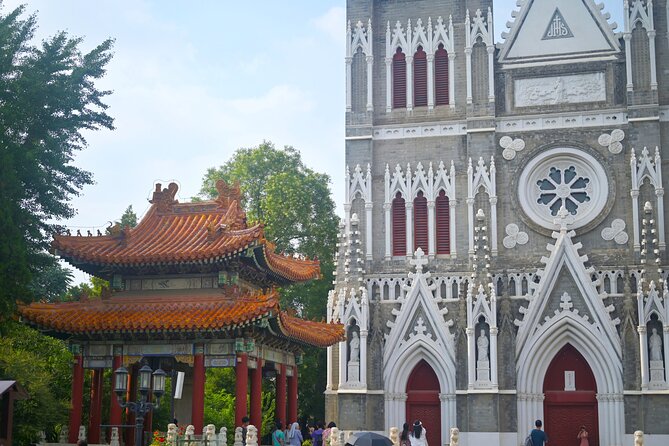
The Temple of Previous Dynasties, also called Lidai Diwang Miao, receives about 20 minutes. This stop introduces grand palatial structures and the way Chinese culture honors ancestors.
The site adds scale to the tour. After the smaller proportions of a courtyard home and hutong lane, you encounter architecture connected with imperial ceremony and remembrance. The guide explains how ancestors and earlier rulers are honored, giving the buildings a cultural purpose beyond appearance.
The important qualification is that this stop is visited if open. You should not book the walk assuming every detail here is guaranteed. If access is unavailable, the route may need to adjust, and the site itself is not a reason to book without accepting that condition.
When open, this is a good counterpoint to Zhuanta Lane. One shows life at street level, while the other presents a more formal and monumental side of Chinese history. That contrast is one of the tour’s strengths.
White Stupa Temple from a nearby café balcony
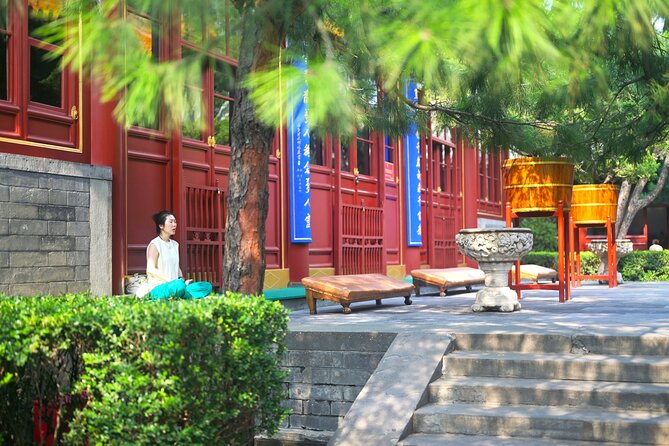
The final sightseeing stop is Miaoying, or White Stupa Temple. Rather than entering for an extended visit, the guide shows you the exterior design of the White Stupa from a nearby café balcony and explains different types of Chinese pagodas. The stop lasts about 15 minutes.
This viewpoint is a clever use of time. You get a broader look at the stupa’s shape and setting than you might from ground level, while the café offers a place to pause. The emphasis is on exterior design and comparison, so the stop suits anyone who wants to understand how pagodas differ.
It is also a clear limitation. If your main goal is an interior visit to White Stupa Temple, this tour does not promise that. You are viewing the structure from nearby and learning how to read its form.
The stop works well as a final architecture lesson because the route has already introduced a Yuan Dynasty brick pagoda. Seeing another type of pagoda after that gives you a basis for comparison. You can finish the walk with a better sense of how religious structures vary, rather than remembering only a string of names.
From Xisi to Fuchengmen, with the city changing around you
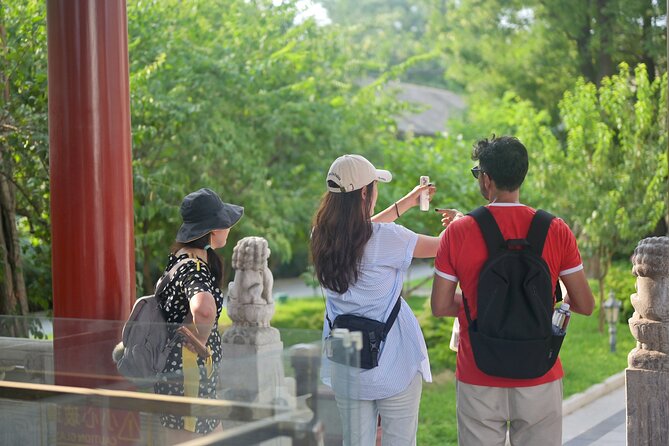
The meeting point is in the Xisi area, near Xisi Subway Station. The route ends at Exit C of Fuchengmen Station on Line 2, in the Financial Street area.
That arrangement is practical. You can reach the starting point by public transport, and you finish near another subway station instead of returning to the beginning. Since private transportation is not included, the subway connections matter. You should plan to reach the starting point independently and allow enough time to find the exact meeting place.
The route’s movement between sites is part of the experience. You see older streets and buildings, then finish near modern financial offices. Beijing is not divided into a simple old side and new side. The walk makes that change visible over a short distance.
The total duration includes travel time between locations. Expect a steady walking outing rather than six long site visits. Comfortable shoes are sensible, and you should be ready for outdoor conditions. The tour requires good weather, so a change of date or full refund is offered if poor weather cancels it.
What the $49 price really covers
At $49 per person, this is not the cheapest way to wander a hutong. You could walk parts of old Beijing on your own for little money. The question is what you want from the outing.
The fee covers the guide, admission fees and taxes, bottled water, and a complimentary traditional Beijing drink. More important, it pays for interpretation. A self-guided walk may show you a narrow lane and an old door, but it will not necessarily explain why the doorway matters or connect that home to the pagoda, temple, and imperial site nearby.
The small group improves the value. With no more than 10 people, you have a reasonable chance to ask about restaurant choices, transport, architecture, and local customs. The practical advice is useful early in a Beijing visit, when a good lunch suggestion or a clear subway tip can save time.
The price is harder to justify if you want long interior visits, extensive photography time, or private transport. Several stops last only 10 to 20 minutes, and the White Stupa is viewed from outside. I see this as a compact orientation tour, not a full-day historical program.
Who will get the most from this walk
I would recommend this tour to a first-time visitor who wants a quick introduction to old Beijing without committing to a full day. It also suits anyone who enjoys architecture but wants to connect buildings with present-day streets and homes.
The route is a good fit if you value conversation. Guides Lori and Dee are praised for answering questions and offering restaurant suggestions, and that personal help can be especially useful at the start of a China trip.
It may also suit repeat visitors who have seen Beijing’s headline sights and want a smaller-scale outing. The route offers church architecture, Buddhist temple details, old photographs, courtyard homes, a hutong, an imperial temple, and a pagoda lesson in one walk.
You may want something else if you have limited mobility, although the supplied details say most people can participate and service animals are allowed. The walk is not presented as a private vehicle tour, and the listed duration includes movement between sites.
Book at least several days ahead if your dates are fixed. The experience is often reserved about 17 days in advance, so last-minute availability may be less reliable. You can cancel for a full refund up to 24 hours before the start time. Changes made inside that window are not accepted, and the tour also depends on a minimum group size.
Should you book the Beijing hutong walk?
Book it if you want context, local streets, and a small group more than long visits inside major monuments. The strongest part is the combination of hutong life and architecture, especially the explanations of siheyuan homes, doors, pagodas, and changing city districts.
Think twice if the Temple of Previous Dynasties or White Stupa Temple is your main goal. One depends on opening conditions, and the other is viewed from a nearby café balcony. For $49, the tour earns its value through the guide’s explanations, practical advice, drink, water, and well-chosen route.
I would choose it early in a Beijing stay. It can help you understand the city’s older neighborhoods, point you toward lunch, and give you useful questions to ask during the rest of your visit.
FAQ
How long is the Beijing hutong walking tour?
The tour lasts approximately three hours, including the time spent moving between locations.
Where does the tour begin?
It begins near Xisi Subway Station in Xicheng District, Beijing.
Where does the tour end?
The walk ends at Exit C of Fuchengmen Station on Line 2, in the Financial Street area of Xicheng District.
How many people can join the tour?
The group has a maximum of 10 participants.
Is private transportation included?
No. Private transportation is not included. The route begins and ends near subway stations.
What is included in the price?
The price includes all fees and taxes, bottled water, and a complimentary traditional Beijing drink.
Can I cancel for a full refund?
Yes. You can cancel at least 24 hours before the experience start time for a full refund. Poor weather or failure to meet the minimum number of participants may also lead to a different date or a full refund.
More Hutong Walks
- Temple Heaven, Summer Palace, Lama Temple, Hutong Bus Tour
★ 4.7 · 319 reviews - Temple of Heaven, Summer Palace, Lama Temple, Hutong Tours
★ 5.0 · 311 reviews - The Hutong Experience by Bike
★ 5.0 · 163 reviews - Beijing: Hutong Culinary Walking Tour with 15+ Tastings
★ 5.0 · 162 reviews
Newest reviews from Beijing
- Beijing: Explore the Forbidden City in Hanfu★ 5.0 · 4 reviews
- Beijing Tai Chi and Tea Ceremony Experience★ 5.0 · 4 reviews
- Jinshangling Great Wall Of Beijing Tickets And Other Option★ 4.0 · 4 reviews
- Private Full-Day Great Wall of China Hiking Tour from Jiankou to Mutianyu★ 4.5 · 4 reviews
- Tour the Great Wall with a Native from Downtown Beijing★ 4.8 · 4 reviews
- Beijing: Badaling Great Wall Private Tour w Language Option★ 4.3 · 4 reviews
- Beijing:Summer Palace & Tea or Calligraphy Experience Tour★ 4.6 · 4 reviews
- 7 Days Private Tour of Beijing, Xian, Shanghai by Bullet Train★ 5.0 · 4 reviews
Hutong Tours, compared.

Beijing Hutong Walking Food and Beer Tour at Hidden Restaurants
Read our review →
Temple Heaven, Summer Palace, Lama Temple, Hutong Bus Tour
Read our review →
Temple of Heaven, Summer Palace, Lama Temple, Hutong Tours
Read our review →


Beijing City Walk: Explore Hutongs Life and Old Beijing
Read our review →Browse the lists this tour appears in