
Reviewed · MUSEUMS
Beijing: National Art Museum of China Entry Reservation
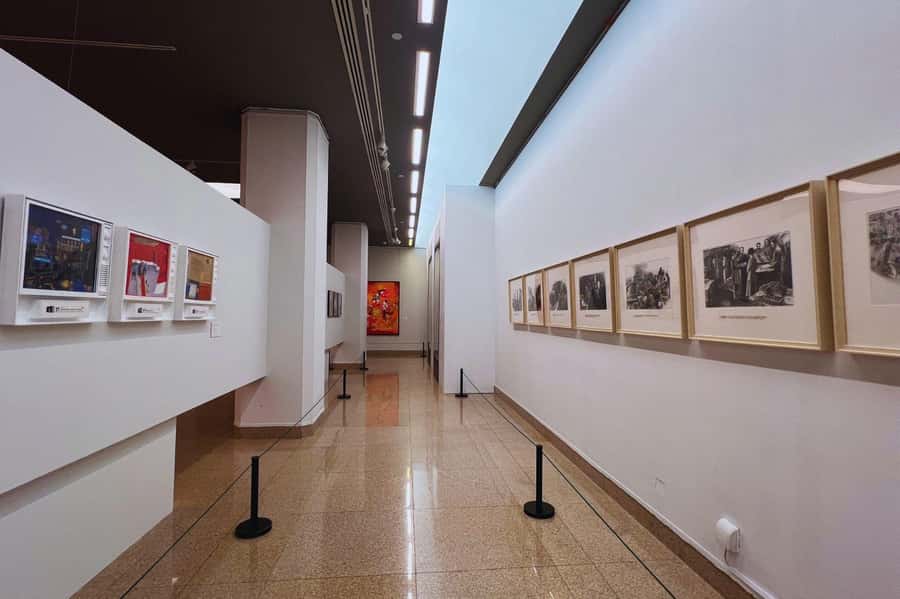
Art rewards a slower pace. This reserved entry to Beijing’s National Art Museum of China gives you about two hours to explore a major collection of Chinese art without being tied to a tour group or fixed route. Inside, you can move from traditional ink paintings and calligraphy to sculpture and modern works, using the English textual and visual guide as you go.
I like the freedom to explore at your own pace and the unusually low price of $6 per person. I also like that the reservation can help you skip the ticket line, with one visitor noting that redemption at the ticket office was easy. The main point to consider is that this is an entry reservation, not a guided tour, so you need to set your own priorities inside the museum.
In This Review
- Key points to know before you go
- Why the National Art Museum of China deserves your time
- What your two-hour visit can look like
- Traditional ink painting and calligraphy
- Sculpture, modern art, and contemporary Chinese work
- Special exhibitions can change the experience
- The English guide and the value of going independently
- Entry, identification, and the ticket office
- Is $6 good value for two hours?
- Who will enjoy this museum most?
- How to make the most of your visit
- Should you book the National Art Museum of China entry?
- FAQ
- How much does entry to the National Art Museum of China cost?
- How long does the visit last?
- What does the reservation include?
- Do I need identification?
- Can I cancel the reservation?
- Is the museum wheelchair accessible?
Key points to know before you go
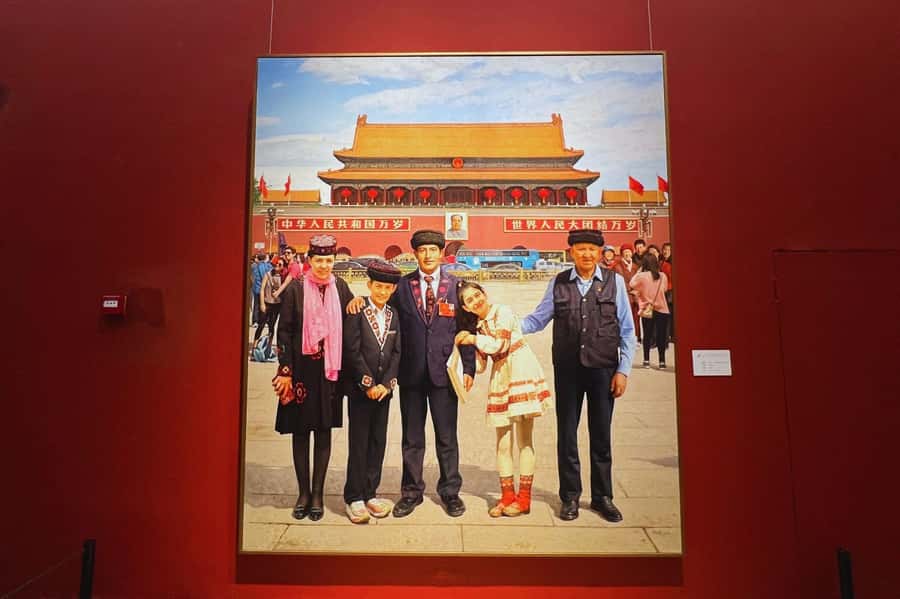
- More than 100,000 works: The museum’s collection includes traditional ink painting, sculpture, calligraphy, modern Chinese art, contemporary works, and pieces by Chinese and international artists.
- A practical two-hour visit: Two hours is enough for a focused first look, but the collection is large enough that you will need to make choices.
- English help is included: An English version of the textual and visual guide helps you understand what you are seeing without joining a guided group.
- Easy entry matters in Beijing: The pre-booked reservation is designed to help you avoid the ticket line, and passport or ID card details are required.
- Good value at $6: The price is modest for access to one of China’s major national art institutions.
- Flexible booking: You can reserve now and pay later, with free cancellation up to 24 hours before the scheduled visit.
Why the National Art Museum of China deserves your time
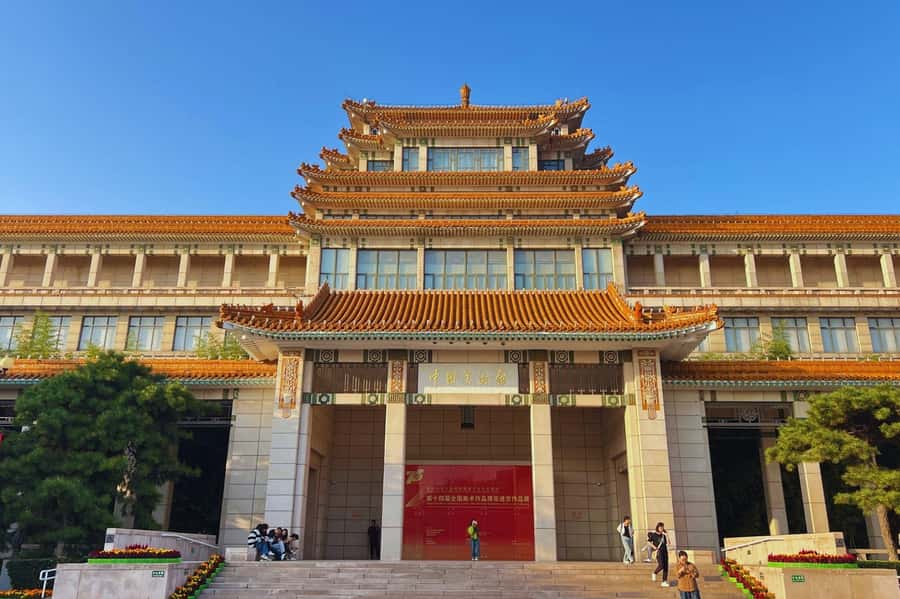
The National Art Museum of China, usually known by its initials, NAMOC, is one of Beijing’s major places for understanding Chinese art. Its collection covers old artistic forms and newer work, so you are not limited to a single period or style.
That range is the museum’s greatest strength. Traditional ink painting can sit within the same broad visit as sculpture, calligraphy, modern Chinese art, and contemporary work. You get a chance to see how artists have worked with long-established ideas while also responding to more recent changes in Chinese culture.
For me, that makes the museum more useful than a visit focused only on famous paintings. You are not simply checking off individual masterpieces. You are looking at a broad record of artistic development, with Chinese and international artists represented among the holdings and temporary exhibitions.
The collection includes more than 100,000 pieces. That number tells you two things. First, the institution has serious range. Second, you should not expect to see everything in one visit. A two-hour stop works best as a planned introduction, not as a complete survey.
More Museums in Beijing
- Beijing: Tianmen Square, Forbidden City & Royal Museum Tours
★ 4.6 · 1,288 reviews - Beijing:Jingshan Park (Palace Museum Garden) Ticket
★ 4.5 · 185 reviews - Beijing Half Day: National Museum of China In-depth Tour with Subway Transfer
★ 5.0 · 70 reviews
What your two-hour visit can look like
There is no fixed guided itinerary, which is part of the appeal. You can shape the visit around your interests and spend more time with the forms that catch your eye.
Start with a quick look at the English textual and visual guide. It should help you understand the museum’s layout and the works on display, though the supplied information does not specify the exact format or number of stops covered by the guide. Use it as a tool for choosing where to spend your limited time rather than trying to read every entry.
You might begin with traditional ink paintings and calligraphy. These works are important for seeing how line, brushwork, spacing, and restraint can carry meaning. Even if you know little about Chinese art, the guide can give you a way into the visual language.
Next, allow time for sculpture and newer Chinese work. This change of medium can help you see how artists address form, people, society, and cultural identity in different ways. You might find that a sculpture or contemporary piece makes more sense after you have looked at the older traditions beside it.
Special exhibitions and events are also part of the museum’s program. The exact displays can change, so the contents of your visit depend on the date you choose. That uncertainty is worth accepting if you enjoy seeing current programming rather than only permanent holdings.
With two hours, I would divide the visit into three parts:
- Spend the first 10 to 15 minutes getting oriented and checking the guide.
- Use about 75 to 90 minutes for the galleries and the works that interest you most.
- Keep the final 15 to 30 minutes for anything you marked earlier, plus a last look at special exhibitions.
That plan is not a rule. It simply prevents the common museum problem of spending too long in the first room and rushing through everything else.
Traditional ink painting and calligraphy
Traditional ink painting is one of the clearest reasons to choose this museum. These works offer a direct connection to Chinese artistic practice, and they reward patient looking more than a quick photograph.
You may notice that the visual effect depends on more than the subject itself. Brush marks, blank space, tone, and composition can all shape the work. The English guide is especially useful here because it can help explain the ideas behind styles that may not be immediately familiar.
Calligraphy deserves similar attention. It is not simply decorative writing placed on a wall. The movement of the brush and the shape of the characters are part of the artwork. If you rush past it, you may miss why it is displayed as fine art.
I would give yourself permission not to understand every piece at once. Choose a few works, read the guide, and look again. That simple second look is often more useful than trying to cover every gallery.
Sculpture, modern art, and contemporary Chinese work
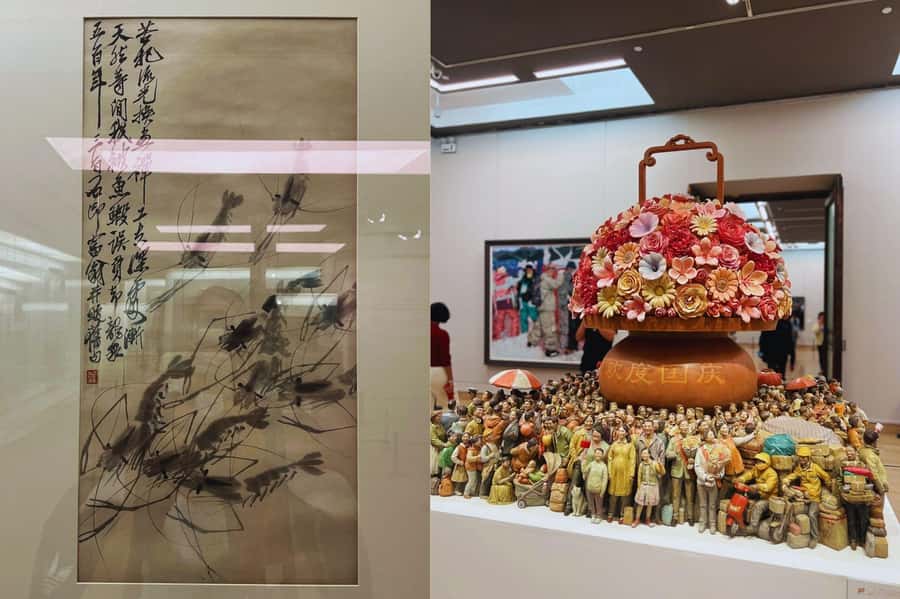
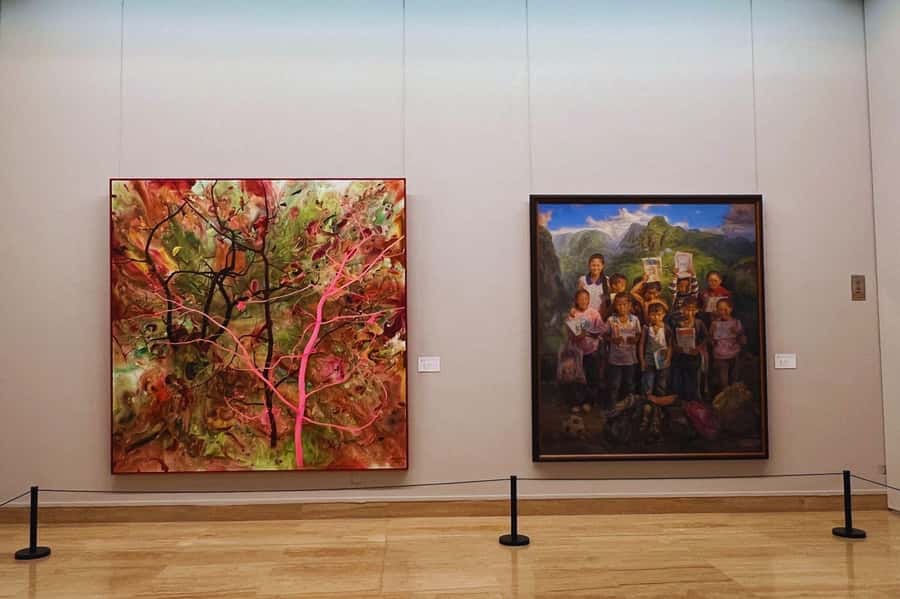
The museum also presents sculpture and modern and contemporary Chinese art. This part of the collection provides a useful counterpoint to the traditional galleries.
You might find these works easier to approach through themes, materials, or visual style rather than by trying to identify a single correct interpretation. Look at how the artist handles scale, texture, color, or the human figure. Then compare that approach with what you saw in the ink painting and calligraphy sections.
The value here is not only variety. It is the chance to observe artistic change across time and media in one institution. The museum’s stated focus on China’s artistic evolution and cultural heritage becomes clearer when you place older forms beside newer work.
The collection also includes pieces by international artists. That gives the museum a wider frame, though the available information does not identify which artists or works will be on display during your visit. Treat this as an added possibility, not a promise of specific names.
A completely different kind of day out on the same trip:
- From Beijing: Mutianyu Great Wall Tours with Options
★ 4.9 · 9,216 reviews - Beijing: Forbidden City Tour(Group/Private)-Tickets Included
★ 4.8 · 7,974 reviews - Beijing: T-Square & Forbidden City Group or Private Tour
★ 4.8 · 4,446 reviews - All-Inclusive Tour: Tiananmen Square, Forbidden City, Great Wall
★ 5.0 · 2,873 reviews
Special exhibitions can change the experience
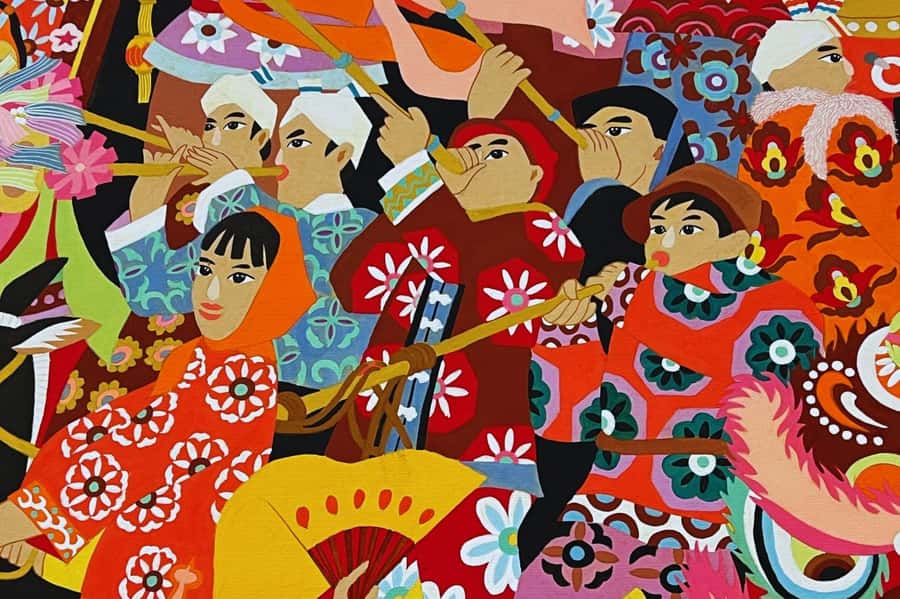
NAMOC regularly hosts special exhibitions and events. These displays may give your visit a more focused theme than the broad permanent collection.
A temporary exhibition can be helpful if you prefer a clear subject or want to spend more time with a smaller group of works. It can also change the balance of your visit, especially if the temporary display is particularly appealing to you.
The tradeoff is simple: you cannot plan around a specific special exhibition unless its details are confirmed for your date. Use the permanent collection as your base plan, then treat current exhibitions as an opportunity.
This is also a good reason not to arrive with a rigid checklist. The museum is large, and the most rewarding two-hour visit may be the one that lets you follow your interest for a while.
The English guide and the value of going independently
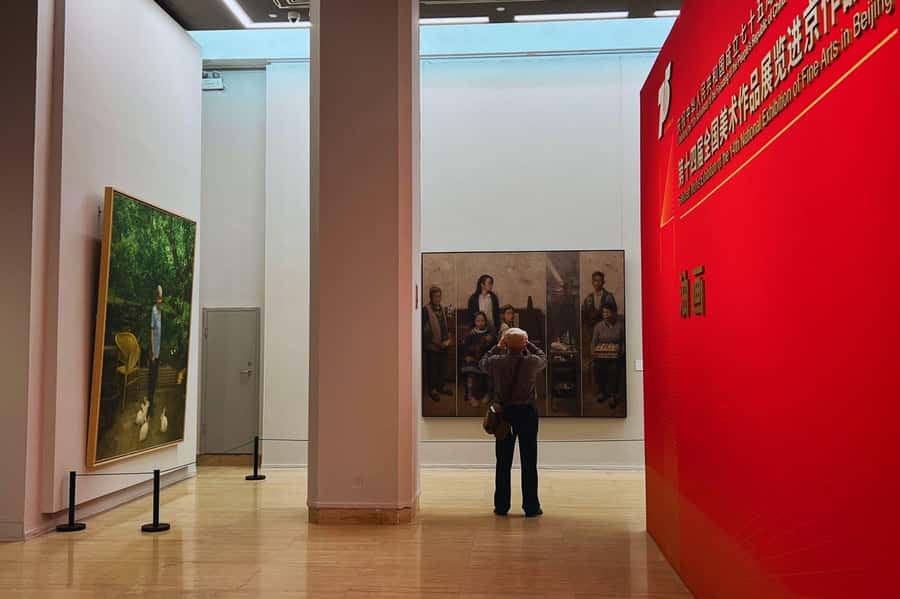
The English version of the textual and visual guide is an important part of this experience. It gives you some support without forcing you to follow a guide’s pace or listen to a long explanation in every room.
That format suits you if you like to pause, skip, return, or spend extra time with a work. It also helps if you are new to Chinese art and want basic context before making your own judgments.
The limitation is that an English guide is not the same as a personal art historian. You may still come across works that need more explanation than the guide provides. If you want a detailed discussion of technique, symbolism, or political context, a self-guided visit may feel light.
For most people, that is a fair compromise at $6. You get an organized way to approach a major museum, but you keep control of the experience.
Entry, identification, and the ticket office
Bring your passport or ID card. This is not an optional packing detail, since identification is specifically required for entry.
The reservation is intended to help you skip the ticket line. One useful practical point is that the reservation was easy to redeem at the ticket office. That means you should keep your booking details ready and allow a little time for the entry process, even though the reservation is designed to make access simpler.
The precise redemption procedure may depend on the booking instructions you receive. Follow those instructions closely, and do not assume that the reservation alone replaces identification.
Smoking is not allowed. The museum is wheelchair accessible, which makes it a practical choice for visitors who need step-free access, though the supplied information does not give further detail about galleries, restrooms, or loan equipment.
Is $6 good value for two hours?
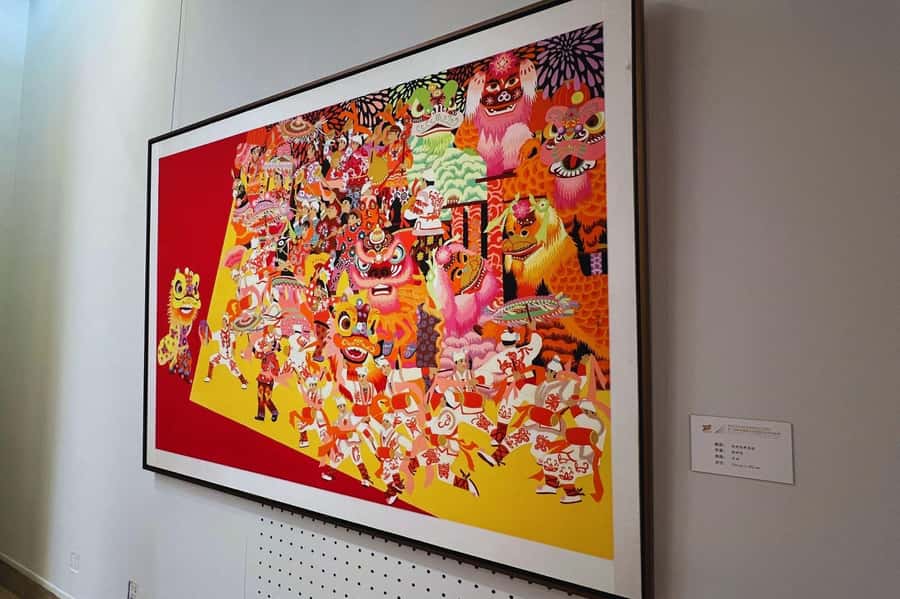
Yes, provided you want a museum visit rather than a guided sightseeing tour. At $6 per person, the price is low for entry to a national art institution with a collection of more than 100,000 pieces.
The reservation also has practical value. Beijing can be a demanding city for timed attractions, and anything that reduces uncertainty at the door is useful. You are paying not only for access, but also for a pre-booked place and English support.
Still, value depends on your interests. If you have little patience for art museums, two hours may feel long even at a low price. If you enjoy painting, calligraphy, sculpture, or Chinese cultural history, the cost is easy to justify.
The reserve now and pay later option adds flexibility. You can hold a place without paying immediately, and cancellation is free up to 24 hours in advance for a full refund. That is useful when your Beijing schedule is still changing.
Who will enjoy this museum most?
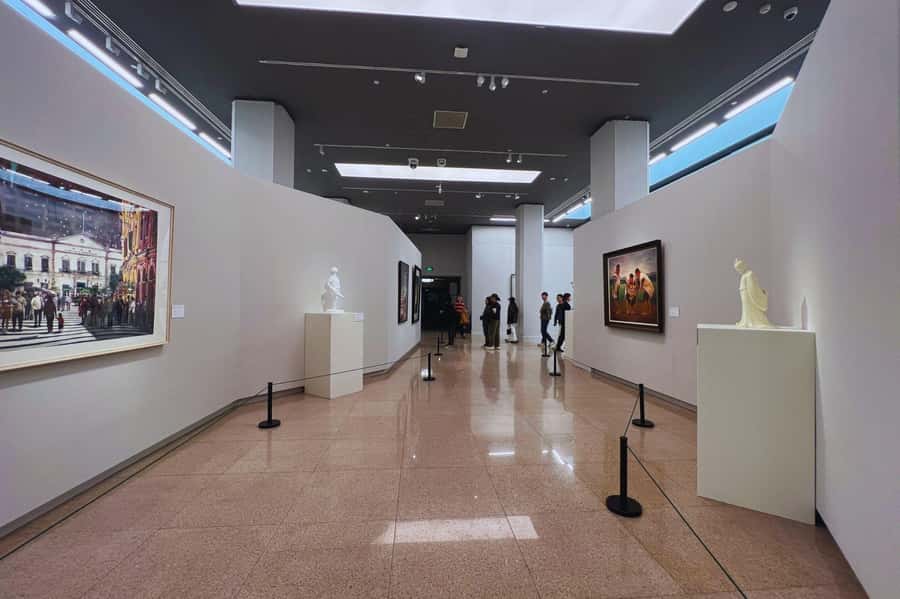
This visit suits you best if you like independent sightseeing and want a cultural stop that does not take an entire day. It is also a strong choice if you want to see traditional and newer Chinese art in the same institution.
Art students, museum fans, and visitors curious about Chinese culture should find plenty to consider. The English guide makes the collection easier to approach, especially if you do not read Chinese.
Families with very young children should note that the experience is not suitable for children under 2. Older children may enjoy the sculpture and visual variety, but the visit is still most rewarding for people willing to slow down and look carefully.
You should choose something else if you need a live guide, a tightly organized route, or a tour built around specific named artworks. The available experience gives you entry and guide material, not a personal interpreter.
How to make the most of your visit
Before you go, decide what you most want from the museum. You might focus on ink painting and calligraphy, compare traditional and contemporary work, or use the visit as a general introduction to Chinese art.
Keep your passport or ID card easy to reach. Have your reservation information ready for redemption, and remember that the simple act of entering can take attention away from the galleries if you arrive unprepared.
Inside, avoid trying to measure success by the number of rooms you cover. Pick a few works that hold your attention, use the English guide, and give yourself enough time to look twice.
A two-hour visit is also easier if you resist the urge to photograph everything. A few images may help you remember the experience, but the museum’s real value comes from direct looking and comparison.
Should you book the National Art Museum of China entry?
I would book it if you want a low-cost, flexible cultural stop in Beijing and prefer to explore independently. The combination of a reserved entry, English guide, wheelchair access, and a collection spanning ink painting, calligraphy, sculpture, modern art, and contemporary work gives you a lot for $6.
The easy ticket-office redemption is another reassuring detail. Just bring your passport or ID card and allow enough time to follow the entry instructions.
Skip it if you want a guided tour or if your schedule cannot spare about two hours. For everyone else, this is a sensible way to see one of Beijing’s major art institutions without committing to an expensive or highly structured excursion.
FAQ
How much does entry to the National Art Museum of China cost?
The entry reservation costs $6 per person.
How long does the visit last?
The stated duration is two hours. Starting times depend on availability when you book.
What does the reservation include?
It includes entry reservation to the National Art Museum of China and an English version of the textual and visual guide.
Do I need identification?
Yes. Bring your passport or ID card for entry.
Can I cancel the reservation?
Yes. You can cancel up to 24 hours in advance for a full refund.
Is the museum wheelchair accessible?
Yes, the experience is listed as wheelchair accessible.
Newest reviews from Beijing
- Beijing: Explore the Forbidden City in Hanfu★ 5.0 · 4 reviews
- Beijing Tai Chi and Tea Ceremony Experience★ 5.0 · 4 reviews
- Jinshangling Great Wall Of Beijing Tickets And Other Option★ 4.0 · 4 reviews
- Private Full-Day Great Wall of China Hiking Tour from Jiankou to Mutianyu★ 4.5 · 4 reviews
- Tour the Great Wall with a Native from Downtown Beijing★ 4.8 · 4 reviews
- Beijing: Badaling Great Wall Private Tour w Language Option★ 4.3 · 4 reviews
- Beijing:Summer Palace & Tea or Calligraphy Experience Tour★ 4.6 · 4 reviews
- 7 Days Private Tour of Beijing, Xian, Shanghai by Bullet Train★ 5.0 · 4 reviews
Museums, compared.
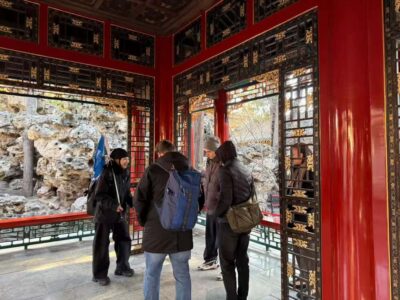
Tianmen Square, Forbidden City & Royal Museum Tours
Read our review →
Half-Day Mini Group Xian Tour to Terracotta Warriors Museum
Read our review →
Beijing:Jingshan Park (Palace Museum Garden) Ticket
Read our review →
Private Chengdu Day Tour: Giant Pandas and Jinsha Site Museum
Read our review →
Private Xi’an Tour: Terracotta Warriors, Hanyangling Museum, Cave Homes
Read our review →
Beijing Half Day: National Museum of China In-depth Tour with Subway Transfer
Read our review →
Terracotta Warriors Museum Ticket with Professional English-speaking tour guide
Read our review →Browse the lists this tour appears in