
Reviewed · WALKING TOURS
Guangzhou Walking Tour To Explore The Old Xiguan Area
Guangzhou reveals itself on foot. This 3.5-hour walk links Lychee Bay, Yong Qing Fang, and Shamian Island, giving you a close look at old Cantonese homes, local parks, markets, temples, and everyday street life. I like the route’s mix of major sights and ordinary neighborhoods, and I like that a local snack is included rather than leaving you to guess what to order. The main drawback is the steady walking and limited time at each stop, so this is not the best choice if you want a slow museum-style visit.
The tour costs $89 per person, which is a fair but not bargain-level price for a small-group experience capped at 15 people. The guide is the real value here. Guides such as Sunny, Stoney, and Mango have been praised for clear English, patience, local knowledge, and extra help with transport after the walk. The start is simple by metro, but hotel pickup is optional and drop-off is not included.
In This Review
- Key Points At A Glance
- Why Old Xiguan Is The Right Place To Start
- Meeting At Zhongshanba Station
- Renwen Temple And The First Glimpse Of Local Belief
- Liwanhu Park And Guangzhou At Leisure
- Lychee Bay And Traditional Xiguan Houses
- Duobao Road And En’ning Road: The Most Authentic Stretch
- Yong Qing Fang And The Modern Face Of An Old District
- Shangxiajiu Pedestrian Street And A Change Of Pace
- Shamian Island And The Riverside Finish
- What The $89 Price Really Buys
- Morning Or Afternoon Departure?
- Guide Quality Makes The Difference
- Who Should Book This Walk?
- Should You Book The Guangzhou Xiguan Walk?
- FAQ
- How long does the Guangzhou walking tour last?
- Where does the tour begin?
- What time does the tour start?
- Where does the tour end?
- Is hotel pickup available?
- What places are included on the walking route?
- Is food included?
- How many people can join the tour?
Key Points At A Glance
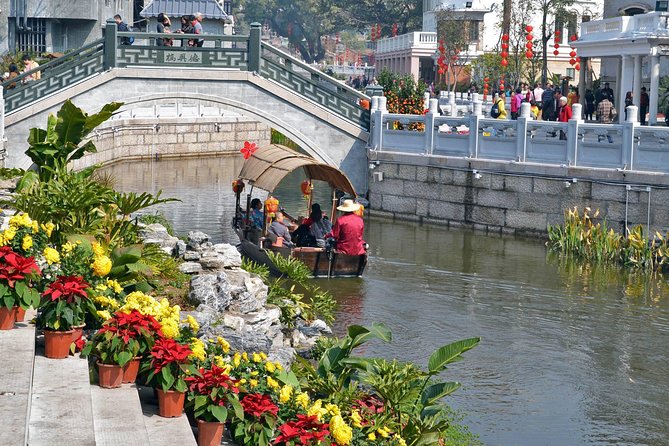
- Old Xiguan in one compact route: See Lychee Bay, traditional Xiguan houses, Yong Qing Fang, Duobao Road, En’ning Road, Shangxiajiu Pedestrian Street, and Shamian Island.
- A local snack is included: You get a taste of Cantonese food at a local restaurant, with the guide helping place it in context.
- Small group size: The maximum is 15 people, a useful limit for street walking and questions.
- Two departure times: Choose 9 a.m. or 2 p.m., depending on your sightseeing plans.
- A practical metro meeting point: Meet outside Exit A of Zhongshanba Station on Metro Line 5.
- Helpful guides: Sunny, Stoney, and Mango have received praise for patient explanations, strong English, and assistance beyond the formal route.
Why Old Xiguan Is The Right Place To Start
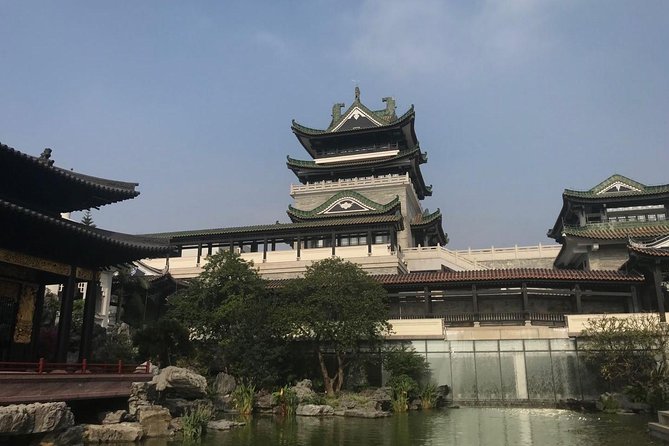
Guangzhou is a modern city, but old Xiguan gives you a more personal introduction to Cantonese life. The route moves through places where historic homes, food shops, temples, parks, and daily errands sit close together. You are not simply looking at preserved buildings from behind a barrier. You are watching a neighborhood function.
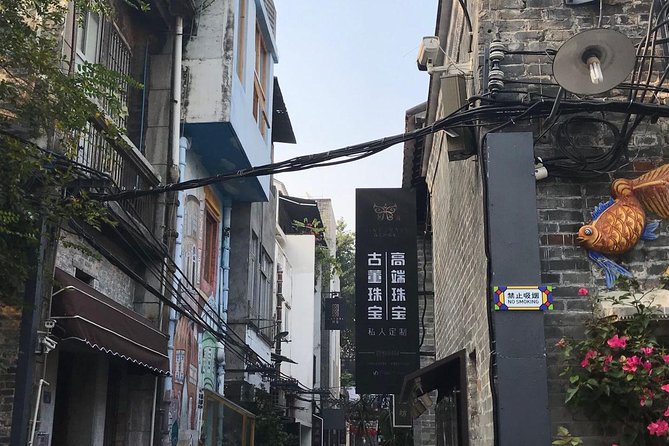
The name Xiguan refers to the western part of old Guangzhou. Its traditional homes were once linked with prosperous local families, and the surviving houses around Lychee Bay help show how that part of the city once looked. The streets around Duobao Road and En’ning Road add a different layer. Here, old shops, market activity, and snack stalls make the area feel lived in rather than arranged only for sightseeing.
I like this balance. You get recognizable sights, but you also get the small details that are hard to interpret alone. A guide can explain why a house looks different from a temple, point out the role of a lane, or help you understand a food item before you try it.
More walking tours:
- Old Guangzhou Backstreet Alley Local Market Walking Private Tour
★ 5.0 · 18 reviews - 5-Hour Sai Kwan Walking Tour with Unique Food Tasting
★ 5.0 · 17 reviews - Beijing Hutong Walking Food and Beer Tour at Hidden Restaurants
★ 5.0 · 1,132 reviews
Meeting At Zhongshanba Station
The tour begins outside Exit A of Zhongshanba Station on Metro Line 5. Your guide will be holding a nameplate, and the scheduled departures are 9 a.m. and 2 p.m. This is a meet-up tour, so you should allow enough time to reach the station and find the correct exit.
A central Guangzhou hotel pickup can be added for hotels in the Liwan, Yuexiu, Tianhe, or Haizhu districts. Pickup is optional, and the tour does not include a return transfer. That distinction matters. You finish on Shamian Island, so you will need to arrange your next move yourself.
The metro meeting point is useful because it keeps the start clear and central. It also means you are not waiting for a vehicle to collect people from several hotels. If you have only a few hours in Guangzhou, the route can work well as a focused city introduction, but you should account for the time needed after the walk to reach your next destination.
Renwen Temple And The First Glimpse Of Local Belief
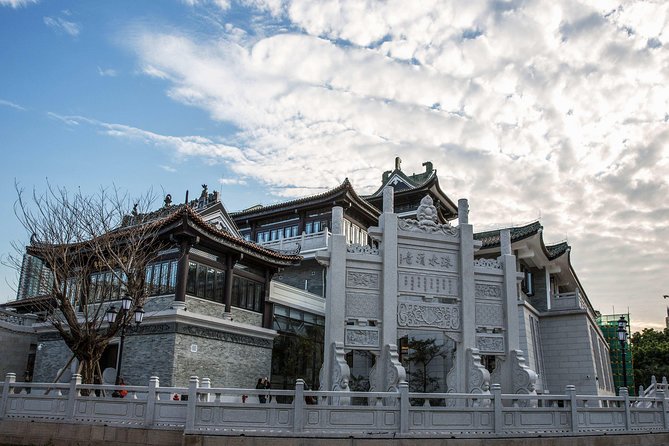
One of the first stops is Renwen Temple, described as a typical Taoist temple. This gives the walk an early cultural anchor before you move into parks and shopping streets.
I would pay attention to the guide here rather than treating the temple as a quick photo stop. The value is in understanding what you are seeing and how it fits into local life. Since the tour is led by a local guide, this is also a good point to ask basic questions about Cantonese customs, religious practice, or the design of the building.
The temple visit is not presented as a long formal tour, and admission is included. Expect a short stop within a larger walking route rather than a detailed architectural study.
Liwanhu Park And Guangzhou At Leisure
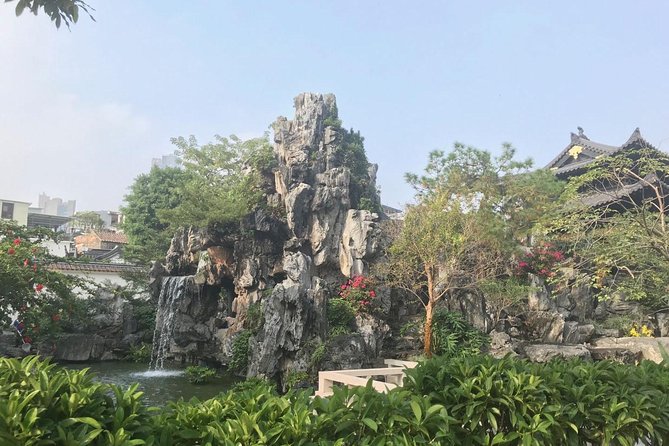
Liwanhu Park shows you a different side of Guangzhou. Local people use the park to dance, sing, and play games. That makes it a useful pause in the route, since you are seeing residents at leisure rather than only seeing old buildings.
I like this sort of stop because it gives you a feel for the city’s rhythm. A park can tell you as much about a place as a famous monument. You might see groups gathered around shared activities, hear music, or notice how older residents use public space.
The park also breaks up the walking. Still, do not expect a long rest period. The full route lasts about three and a half hours, and the park is one part of a schedule that continues toward Lychee Bay and the old streets.
A few more tours worth putting side by side
- Guided Cycle Tour of Guangzhou
★ 5.0 · 164 reviews - Customised Private Guangzhou City Tour with Flexible Itinerary
★ 5.0 · 107 reviews - Gulong Gorge Skywalk Glass Bridge and Waterfall View Private Tour
★ 5.0 · 103 reviews - Private Guangzhou Full Day City Tour with Old and New Highlights
★ 5.0 · 62 reviews
Lychee Bay And Traditional Xiguan Houses
Lychee Bay is one of the most important parts of the experience. It is known for well-preserved old Xiguan houses, once homes for wealthy local families. The area helps you picture how Guangzhou’s prosperous households lived before the city took its modern form.
The houses are valuable because they connect architecture with family and neighborhood life. You are not just seeing an old facade. You are looking at the kind of residence that reflects the social character of old Xiguan.
This is also where a guide’s explanations make a real difference. Without context, a historic house can become one more attractive street view. With Stoney, Mango, Sunny, or another local guide explaining the background, you can better understand why the houses matter and how the area changed.
The route does not promise interior access to every old house, so set your expectations accordingly. The experience focuses on walking through the area and learning from what you see along the way.
Duobao Road And En’ning Road: The Most Authentic Stretch
The walk along Duobao Road and En’ning Road is likely to be the most memorable part for anyone interested in daily life. These streets bring together local shops, market scenes, snack spots, and older buildings. They show Cantonese culture through ordinary activity, not just formal attractions.
You should take your time with your eyes here. Notice shop signs, goods displayed near the pavement, the age of the buildings, and the way the street changes from one block to the next. The point is not to rush from one named stop to another. It is to see how the old district still works as a neighborhood.
The tour includes a local snack at a restaurant. That is a small but useful addition. Food can be difficult to order when you do not know the names or ingredients, and a guide can help you approach the experience with less hesitation. The included snack is not a full meal, so plan to eat before or after the tour if you need lunch or dinner.
Mango received particular praise for speaking excellent English and showing a solo visitor a side of local life that can be hard to find on an organized outing. That is exactly where this route has an advantage. A good guide can turn a market lane and a food stop into a cultural lesson without making it feel like a lecture.
Yong Qing Fang And The Modern Face Of An Old District
Yong Qing Fang is another central stop. It is part of the old Xiguan area, but it gives you a sense of how historic Guangzhou has been presented for contemporary visitors and residents.
The contrast is useful. Earlier streets may feel more informal and lived-in, while Yong Qing Fang can help you see how old buildings and newer visitor areas sit side by side. The tour does not treat the district as a single frozen relic. It shows several versions of old Guangzhou within a short walk.
You may want to compare the atmosphere here with Duobao Road and En’ning Road. One is not automatically better than the other. Yong Qing Fang helps explain the city’s effort to preserve and present its older character, while the surrounding lanes show the less polished side of neighborhood life.
Shangxiajiu Pedestrian Street And A Change Of Pace
Shangxiajiu Pedestrian Street brings a busier commercial note to the route. It is known for shopping, food, and pedestrian activity, and it gives you another view of the old Xiguan area.
This stop works well after the quieter park and residential streets because it changes the pace. You can see how traditional Cantonese culture is expressed through shops and food as well as through temples and old houses.
The trade-off is that a pedestrian shopping street can feel crowded and noisy. If you prefer quiet historic lanes, this may be less appealing than Lychee Bay. If you enjoy watching city life and comparing storefronts, it adds useful variety.
Shamian Island And The Riverside Finish
The tour ends on Shamian Island, an island with old houses beside the Pearl River. It is a natural finish because the setting changes again. After temples, parks, old homes, markets, and shopping streets, you arrive at a more open riverside area with historic buildings.
You get about 30 minutes here. That is enough to see the main character of the island, but not enough for an unhurried exploration of every corner. Think of Shamian as the closing chapter rather than the main focus of the tour.
The end point is practical if you want to continue sightseeing in the area. It is less convenient if you expect to be returned to your hotel. No drop-off is included, so plan your onward transport before you arrive.
What The $89 Price Really Buys
At $89 per person, this is not the cheapest way to see old Guangzhou. You are paying for a local guide, a small group, bottled water, entrance fees, and a local snack. The guide is the key part of the package, since the route itself uses public streets, parks, and areas you could potentially visit without an admission charge.
The price makes the most sense in three situations. First, you want local context but do not speak Chinese. Second, you have a short stay or layover and want several old-city areas connected efficiently. Third, you prefer asking questions and learning as you walk instead of researching every stop yourself.
The group maximum of 15 is helpful. It is small enough for the guide to manage questions and keep people together, though it is not a private tour. If you want complete control over pace, meals, and photo stops, a private guide would offer more flexibility, but this experience would likely cost more.
Bottled water and entrance fees remove a few minor expenses, but they do not transform the price into a bargain. I would book it for the interpretation and route design, not for the included water.
Morning Or Afternoon Departure?
The 9 a.m. departure gives you a full day afterward. It is the better choice if you want to continue exploring Guangzhou once the walk ends on Shamian Island.
The 2 p.m. departure may suit you if you prefer a slower morning or want to fit another activity beforehand. It finishes later, so think about your evening plans and transport from Shamian Island.
Neither departure is automatically better. The right choice depends on how much walking you want to do in one day and where you plan to go next. Since the tour lasts approximately three hours and 30 minutes, leave room around it rather than booking another fixed activity immediately afterward.
Guide Quality Makes The Difference
The strongest praise for this tour centers on the guides. Sunny has been described as patient, kind, funny, and able to answer a long list of questions. Stoney has been praised for sharing history and interesting details at Lychee Bay, Yong Qing Fang, and Shamian Island.
Mango is especially useful for independent visitors. She has been praised for excellent English, friendly help, and practical support after the official route ended. In one case, she helped with a phone hotspot and waited until a Didi pickup arrived. Another experience included help choosing a follow-up destination and waiting for transportation.
These details matter because a walking tour does not end at the last explanation. If you are new to Guangzhou, help with the next step can save time and reduce stress. Of course, the exact guide depends on the departure and availability, so you should not assume you will receive a particular person.
The overall rating is 5 out of 5 from 17 reviews, with 100 percent recommending the experience. That is a small sample, but the praise is consistent: friendly guides, strong English, useful cultural explanations, and a pleasant route.
Who Should Book This Walk?
I would recommend this tour to first-time visitors who want an introduction to Guangzhou beyond modern shopping districts. It suits solo visitors, couples, and small groups who enjoy walking and want a guide to explain local customs and buildings.
It also suits anyone with a short layover, provided you can reach the meeting point and have enough time for the full tour plus your onward transport. The route offers a lot in one compact block of time.
Children aged eight and under are not recommended for this experience. Most other people can participate, but you should be ready for several hours on foot. If walking through markets, parks, old streets, and commercial areas sounds tiring rather than interesting, choose a slower activity.
Free cancellation is available if you cancel at least 24 hours before the local start time. Changes or cancellations inside that window are not accepted for a refund.
Should You Book The Guangzhou Xiguan Walk?
Book this tour if you want local life, old Cantonese neighborhoods, and a guide who can explain what you are seeing. The route is well chosen, the snack adds a welcome taste of the area, and the finish on Shamian Island gives you a strong final stop.
Skip it if you want a private pace, extensive interior visits, or a tour with hotel drop-off. At $89, the experience is worth the cost mainly because of the guide and the range of neighborhoods covered. Choose the morning for a fuller sightseeing day, the afternoon for a later start, and keep your schedule flexible after Shamian Island.
FAQ
How long does the Guangzhou walking tour last?
The tour lasts approximately 3 hours and 30 minutes.
Where does the tour begin?
It begins outside Exit A of Zhongshanba Station on Metro Line 5 in Guangzhou.
What time does the tour start?
There are two departure times each day, 9 a.m. and 2 p.m.
Where does the tour end?
The tour ends on Shamian Island in Guangzhou’s Liwan District.
Is hotel pickup available?
Optional pickup is available from centrally located hotels in the Liwan, Yuexiu, Tianhe, and Haizhu districts. Drop-off is not included.
What places are included on the walking route?
The route includes Renwen Temple, Liwanhu Park, Lychee Bay, old Xiguan houses, Duobao Road, En’ning Road, Yong Qing Fang, Shangxiajiu Pedestrian Street, and Shamian Island.
Is food included?
Yes. A local snack at a local restaurant is included, along with bottled water.
How many people can join the tour?
The tour has a maximum group size of 15 people.
Newest reviews from Guangzhou
- Gulong Gorge Glass Skywalk Bridge and waterfall View Private Tour★ 5.0 · 4 reviews
- Guangzhou VIP Car Tour– Tailored Sightseeing & Shopping Adventure★ 5.0 · 4 reviews
- Guangzhou Historical Day Tour By Metro & Boat★ 5.0 · 4 reviews
- Private Half-Day Guangzhou City Tour with Pickup★ 5.0 · 4 reviews
- Guangzhou Downtown Hotel – Baiyun Airport OneWay Private Transfer★ 5.0 · 4 reviews
- Private Guangzhou Night Tour with Canton Tower and Bar Hopping★ 5.0 · 4 reviews
- Guangzhou: Private Guided City Tour with a Local★ 4.7 · 4 reviews
- Private Guangzhou Night Tour VIP Cruise and Dim-Sum Dinner Option★ 5.0 · 4 reviews
Walking Tours, compared.
Beijing Hutong Walking Food and Beer Tour at Hidden Restaurants
Read our review →
Private Beijing Walking Tour of the Forbidden City with 7 Options
Read our review →
Dark Side of Hong Kong – Kowloon Caged Homes Walking Tour
Read our review →
Forbidden City Private Walking Tour with Optional Sights
Read our review →
Shanghai City Guided Walking Tour | China’s 1st and Best Rated
Read our review →
Introduction to Hong Kong: Central Tip Based Walking Tour
Read our review →
Browse the lists this tour appears in