
Reviewed · CHINESE FOOD TOURS
Hong Kong Street Food Tour with Locals – Dim Sum, Wonton & more
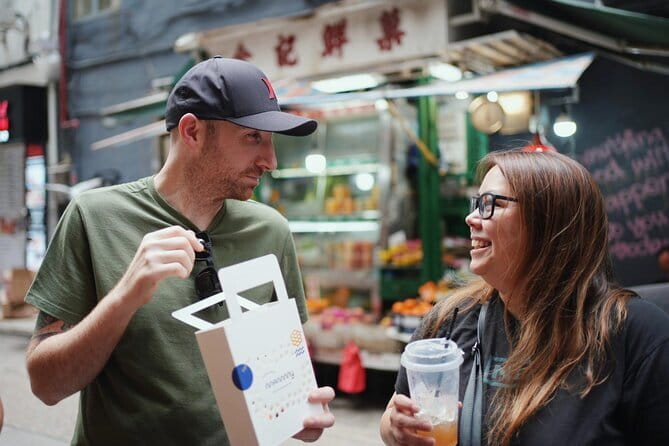
Come hungry, leave full. This three-hour walk through Central and Sheung Wan links dim sum, char siu, egg tarts, wonton noodles, tea, and more with stories about Hong Kong’s past. I like the smart route through markets and side streets, and I like that a local guide handles ordering and translation. The main catch is the food mix: seafood and pork are central to the experience, so vegetarians, halal diners, and anyone avoiding fish will find few choices.
The tour costs $52.51 per person, which is good value if you want a full meal’s worth of samples plus city context. I would book it early in a Hong Kong visit, but bring water, wear comfortable shoes, and avoid eating a large lunch first.
In This Review
- Key Points to Know Before You Go
- Why This Food Walk Works in Hong Kong
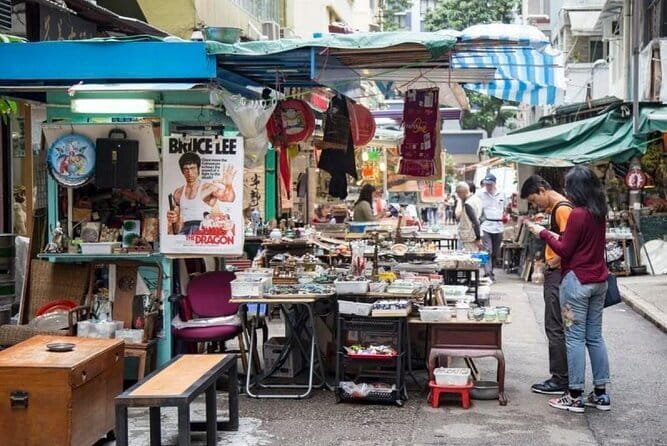
- Wing Lok Street: Bamboo Baskets and Dried Seafood
- Sheung Wan Market: Milk Tea and French Toast
- Bonham Strand West: Trade, Change, and the City
- Queen’s Road West and Possession Street: Char Siu and Egg Tart
- Herbal Tea on Queen’s Road West
- Wonton Noodles on Queen’s Road Central
- Gilman’s Bazaar: A Serious Tea Lesson
- Central Market: Egg Waffle and the Finish
- The Guides Are a Major Part of the Value
- Price, Pace, and Practical Details
- Who Should Book This Hong Kong Food Tour?
- Should You Book It?
- FAQ
- How long is the Hong Kong Street Food Tour?
- What time does the tour start?
- Where does the tour begin?
- Where does the tour end?
- What food is included?
- Is the tour suitable for vegetarians?
- Is halal food provided?
- How much walking is involved?
- What is included in the price?
- What happens if bad weather cancels the tour?
Key Points to Know Before You Go
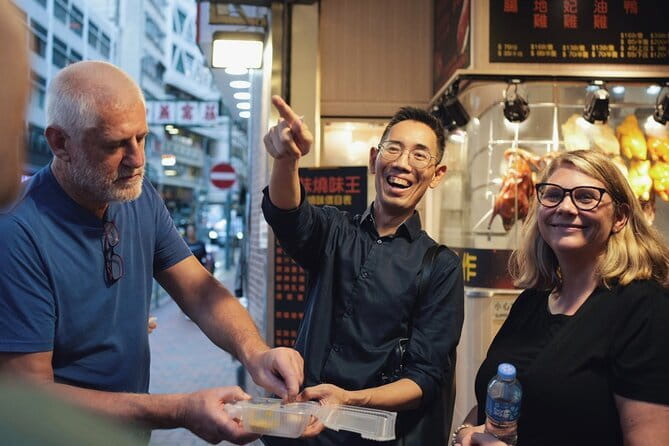
- Ten food and culture stops: The route covers dim sum, dried seafood, milk tea, French toast, barbecue pork, herbal tea, wonton noodles, pu-erh, egg waffles, and egg tarts.
- A walking introduction to Central: You move through Wing Lok Street, Sheung Wan, Queen’s Road, Possession Street, Gilman’s Bazaar, and Central Market.
- Guides make the difference: Summer, Michael, Jasmine, Andy, Alice, Stephen, Wind, Isaac, and others have been praised for clear explanations, humor, and personal stories.
- Large portions for a tasting tour: Several people found the amount of food greater than expected. Eat lightly beforehand, not heavily.
- Not built for every diet: Vegetarian food is not suitable for this tour, and halal food is not provided. Seafood and pork appear often.
- A moderate walk in a small group: The maximum group size is 20, with an easy pace and frequent stops, but you should still have moderate physical fitness.
Why This Food Walk Works in Hong Kong
Hong Kong can be a difficult city for first-time diners. Menus may be short on English, restaurants can be tucked above street level, and the best food is not always found in the places that rank highest online.
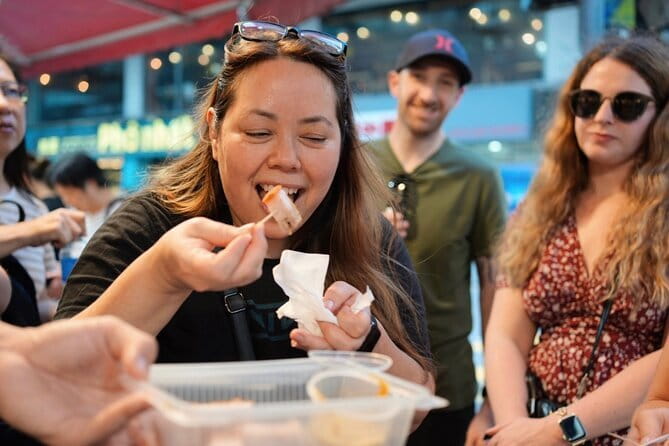
This tour removes much of that guesswork. Your guide leads you from one stop to the next, explains what you are eating, and translates when needed. That matters most at small food shops, market counters, and traditional tea sellers where ordering alone could feel like a game of charades.
I also like the mix of food and place. This is not simply a parade of snacks eaten in a conference room. You walk through old commercial streets, markets, alleys, and food halls while learning how Hong Kong changed from a port shaped by trade and colonial rule into a global financial center.
The group can include up to 20 people. That is not tiny, but the frequent stops and walking format help keep things moving. Guides have used introductions to get people talking, which is useful if you are exploring Hong Kong alone or want an easy way to meet other visitors.
More Food Tours in Hong Kong
- Hong Kong’s Tin Hau Hidden Eats Food Tour with 7+ Local Tastings
★ 5.0 · 352 reviews - Small-Group Hong Kong Island Food Tour
★ 5.0 · 343 reviews - Hong Kong Food Tour: Central and Sheung Wan Districts
★ 5.0 · 333 reviews
Wing Lok Street: Bamboo Baskets and Dried Seafood
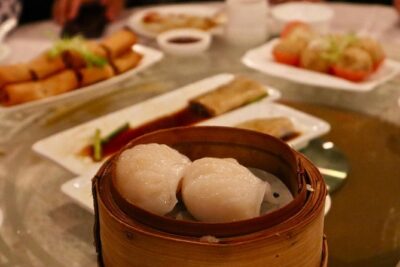
The first tasting is har gow, the translucent shrimp dumpling usually served in bamboo steamers. You learn how dim sum developed from food served to people along old trade routes and later became part of everyday Cantonese dining.
This is a good opening dish because it gives you a familiar entry point. The dumpling is small, hot, and easy to eat, while the guide can explain the filling, wrapper, and steaming method before moving on.
The same area also brings you into Hong Kong’s dried seafood trade. Shops display ingredients such as shark fin, bird’s nest, and cordyceps. The point is not just to admire costly goods, but to understand why these ingredients became linked with status, health, prosperity, and Cantonese cooking.
This stop may be less comfortable if you are sensitive to strong smells or uneasy around luxury seafood products. Still, it gives the walk a real sense of place. You are seeing a working food district rather than only eating prepared samples.
Sheung Wan Market: Milk Tea and French Toast
At Sheung Wan Market and its cooked food centre, the food shifts toward cha chaan teng culture. These casual Hong Kong cafés developed after the Second World War and mixed local tastes with British-style food.
You sample silky milk tea and crispy peanut butter French toast. The pairing is sweet, filling, and very much in the comfort-food category. It also shows how Hong Kong cooks adapted Western ideas instead of simply copying them.
The French toast is one of the heavier bites on the route. That is worth remembering because more bread, pastry, noodles, and rice-based foods follow. I would take small bites at each stop and avoid treating the first few tastings as a full meal.
The milk tea may be one of the more useful things to try early in your visit. If you enjoy it, you will spot it across Hong Kong in cafés and cooked food centres. Your guide can also help explain how local families order and enjoy these everyday dishes.
Bonham Strand West: Trade, Change, and the City
Bonham Strand West is a pause from eating, though food remains the doorway into the story. The guide discusses the impact of the 1953 Korean War trade embargo on China and how it damaged Hong Kong’s established trade economy.
The larger lesson is about adaptation. Merchants had to find new ways to make a living, and the city gradually developed new commercial and financial roles. The tour presents this shift through stories of resourceful traders moving from less formal practices into legitimate business and banking.
This section helps keep the experience from becoming a simple checklist of dishes. You begin to see why Hong Kong food contains so many outside influences and why local cooking often favors speed, practicality, and strong flavor.
A completely different kind of day out on the same trip:
- Hong Kong: Dolphin Cruise, Big Buddha & Lantau Island Tour
★ 4.2 · 1,512 reviews - Ngong Ping 360: Cable Car Return Tickets & Combos
★ 4.6 · 1,431 reviews - Lantau Island Day Trip – Big Buddha & Tai O
★ 4.5 · 1,328 reviews - Big Bus Hong Kong Open Top Hop-On Hop-Off Sightseeing Tour
★ 4.0 · 1,077 reviews
Queen’s Road West and Possession Street: Char Siu and Egg Tart
At a barbecue stop near historic Possession Point, you watch Cantonese cooks prepare char siu. The dish is known for its glossy finish, sweet-salty flavor, and tender pork. The description of glass-like crackling skin points to the roasted surface that makes the best pieces so appealing.
This is one of the more substantial tastings. It also makes the dietary limits clear. Pork appears in important parts of traditional and modern Hong Kong food, and this tour does not try to replace it with vegetarian or halal alternatives.
The nearby egg tart offers a change of pace. Hong Kong’s version uses a pastry shell and smooth baked custard. It is related to Portuguese-style custard tarts, but the tour explains how Cantonese bakers developed their own version in the 1920s.
The egg tart is a useful example of Hong Kong’s food character: outside ideas arrive, local cooks adjust them, and the new dish becomes part of the city’s own food culture. You may also appreciate the timing here, since a sweet pastry gives your palate a break from savory pork and seafood.
Herbal Tea on Queen’s Road West
The herbal tea stop introduces drinks associated with Traditional Chinese Medicine. You may try Five Flowers tea, described locally as a way to clear heat or toxins and restore balance in Hong Kong’s humid climate.
This is not likely to be everyone’s favorite flavor. Herbal drinks can taste bitter, earthy, or medicinal compared with milk tea or fruit drinks. That is part of the point. You are trying something tied to local habits rather than another universally easy snack.
The guide’s explanation gives the tasting its value. You learn how communal tea drinking and ideas about balance fit into daily life. Take this stop as cultural sampling, not as medical advice.
Wonton Noodles on Queen’s Road Central
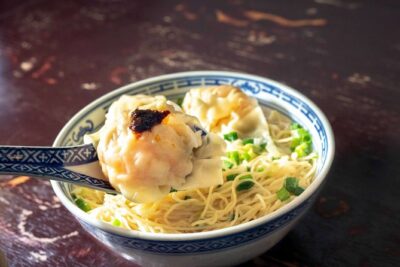
The wonton noodle stop is one of the tour’s main savory anchors. You receive shrimp-filled wontons in broth with noodles, traditionally served in a small bowl that makes a satisfying meal without becoming difficult to eat while walking.
The tour connects wonton noodles with older dumpling traditions and with the work of refugee cooks who helped reshape Hong Kong’s food scene. The bowl reflects that practical spirit: compact, fast, nourishing, and carefully assembled.
This may arrive late enough in the afternoon that it feels like the meal you were waiting for. One drawback is the order of the tastings. The route does not necessarily follow a classic progression from savory food to dessert. You could have dumplings, tea, dessert, barbecue pork, more sweets, and only later reach wonton noodles.
For some people, that makes the tour playful and unpredictable. If you prefer a carefully arranged menu, it may feel slightly disjointed. Either way, the variety is strong.
Gilman’s Bazaar: A Serious Tea Lesson
At a Chinese tea house in Gilman’s Bazaar, you handle aged pu-erh tea cakes said to be worth as much as HK$80,000. The guide explains how the tea is brewed in unglazed clay pots and how repeated infusions reveal changing layers of flavor.
This is a more focused tasting than the street snacks. You are not just drinking a cup and moving on. You get a short introduction to tea value, storage, brewing vessels, and ritual.
The stop also adds contrast. After rich pork, pastries, noodles, and dumplings, tea gives you a quieter moment. It is especially useful if you want to buy tea later in Hong Kong, though you should remember that the tour provides an introduction, not a guarantee that every tea sold elsewhere is worth its price.
Central Market: Egg Waffle and the Finish
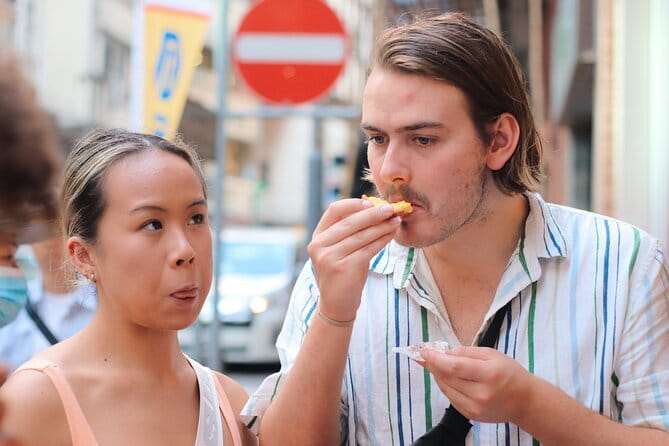
The final stop is Central Market, where you try an egg waffle. Its honeycomb shape gives you crisp edges and soft pockets inside. The tour connects it with 1950s Hong Kong ingenuity, when cooks found ways to use imperfect eggs and leftover ingredients.
It is a fitting finish because the egg waffle is portable, familiar, and visually fun. It also captures the practical creativity that runs through the tour. Hong Kong street food often grew from the need to feed people quickly and affordably, not from grand culinary planning.
The tour ends at Central Market, at 93 Queen’s Road Central, between Queen’s Road and Cochrane Street. That leaves you in a useful part of Central for continuing your afternoon or finding your way back by public transport.
The Guides Are a Major Part of the Value
The food is important, but the guide shapes the afternoon. Summer has been praised for her humor, local information, and ability to make the route enjoyable. Michael is especially good at placing food in its historical setting and explaining ingredients and cooking methods.
Jasmine brings energy and clear explanations. Andy has been singled out for his understanding of Hong Kong food and culture, while Alice is described as enthusiastic and helpful. Stephen is a strong choice if you want detailed explanations of dishes and the city.
Wind has received praise for both her food knowledge and personal help with a peanut and tree nut allergy. Isaac has used group introductions and family food stories to make the tour social. These names may not tell you who will lead your specific departure, but they show the range of guide personalities available.
The best guides do more than recite facts. They explain how people eat the food, where ingredients come from, and how dishes changed over time. That personal connection is why the experience can feel like a cultural afternoon instead of a string of restaurant visits.
Price, Pace, and Practical Details
At $52.51, the tour offers solid value if you make good use of the tastings. The food can amount to a full lunch or dinner, and you also receive three hours of guiding, translation, and neighborhood orientation. Paying for this kind of help is sensible in Hong Kong, where ordering and finding small shops can take time.
The start is at 3:00 pm at Grand Millennium Plaza Garden on Queen’s Road Central in Sheung Wan. The end is at Central Market, so the route moves through Central rather than returning you to the starting point.
Expect moderate walking, with stops usually lasting 15 to 20 minutes. The pace is described as easy, but you should still wear comfortable shoes. Summer heat, humidity, or rain can change the feel of the afternoon, and the activity may be canceled in poor weather.
Bring your own water. One person specifically found the lack of provided water disappointing during a three-hour food walk, and the advice is sensible even if the food is plentiful.
You receive a mobile ticket and booking confirmation at the time of reservation. The tour is near public transport, but hotel pickup and drop-off are not included. Free cancellation applies when you cancel at least 24 hours before the local start time. A weather cancellation gives you the choice of another date or a full refund.
Who Should Book This Hong Kong Food Tour?
I would recommend it to first-time visitors who want an early introduction to Hong Kong food, especially if you are unsure where to eat or nervous about ordering. It also suits people on a short stay, including anyone using a long layover to see Central rather than sitting at the airport.
You should arrive with a light appetite, not a full stomach. The samples add up, and several portions are more generous than the word tasting suggests.
This is not the right pick for vegetarians, halal diners, or people who do not eat seafood. The route includes fish and seafood culture, shrimp dumplings, seafood markets, and pork dishes. Peanut and tree nut concerns should be discussed with the guide in advance, since Wind was able to help one participant manage an allergy, but the supplied information does not promise allergy-free food.
Should You Book It?
Book this tour if you want a filling, guided introduction to Hong Kong food and Central’s past in one afternoon. The strongest reasons are the range of tastings, the useful translation, the relaxed walking pace, and the guides’ ability to connect food with Hong Kong’s changing identity.
Skip it if you need strict dietary control, dislike seafood or pork, or prefer a carefully ordered meal. For most adventurous eaters, though, $52.51 buys far more than ten small bites. You get a practical map of what to try next, plus enough food to make dinner optional.
FAQ
How long is the Hong Kong Street Food Tour?
The experience lasts approximately three hours.
What time does the tour start?
The tour starts at 3:00 pm local time.
Where does the tour begin?
It begins at Grand Millennium Plaza Garden, Grand Millennium Plaza, Queen’s Road Central, Sheung Wan, Hong Kong.
Where does the tour end?
It ends at Central Market, 93 Queen’s Road Central, Central, between Queen’s Road and Cochrane Street.
What food is included?
The tastings include har gow, milk tea, peanut butter French toast, char siu, egg tart, herbal tea, wonton noodles, Chinese tea, and egg waffle. The tour also includes street food tastings more generally.
Is the tour suitable for vegetarians?
No. The tour is listed as not suitable for vegetarians.
Is halal food provided?
No. Halal food is not provided.
How much walking is involved?
A moderate amount of walking is involved, with an easy pace and frequent food stops. A moderate level of physical fitness is recommended.
What is included in the price?
The price includes a professional local guide and street food tastings. Hotel pickup and drop-off are not included.
What happens if bad weather cancels the tour?
If poor weather causes a cancellation, you can choose an alternative date or receive a full refund. You can also cancel for a full refund if you cancel at least 24 hours before the experience start time.
Newest reviews from Hong Kong
- Lantau Group Tour: Dolphin Watching, Fishing Village & Cable Car★ 4.5 · 4 reviews
- Afternoon Hiking Tour Sharp Island Geopark★ 4.5 · 4 reviews
- Hong Kong: Private Transfers From/to Hong Kong Airport(HKG)★ 4.5 · 4 reviews
- Skip The Line: Ngong Ping Cable Car Round Trip Voucher★ 3.0 · 4 reviews
- Coach Tour: Hong Kong Heritage Discovery★ 5.0 · 4 reviews
- Lantau Peak Sunrise Climb★ 5.0 · 4 reviews
- Hong Kong MiniBus Transfer: Hotel / Cruise Terminal and Airport★ 4.5 · 4 reviews
- Hong Kong: Lantau Island & Tai O Cruise, Skip The Line Cable Car★ 3.5 · 4 reviews
Chinese Food Tours, compared.
Authentic Local Food Tour in Central Shanghai
Read our review →
Hong Kong’s Tin Hau Hidden Eats Food Tour with 7+ Local Tastings
Read our review →
Hong Kong Food Tour: Central and Sheung Wan Districts
Read our review →
Hidden Gems Guided Food Tour with Beer and Tastings
Read our review →Browse the lists this tour appears in