
Reviewed · LHASA TOURS
15 Days Mt Everest and Mt Kailash Kora Pilgrimage Group Tour
Sacred peaks demand serious planning. This 15-day Tibet journey links Lhasa’s great temples with Everest Base Camp and the Mount Kailash Kora, a rare route that is difficult to arrange alone. I especially like the small-group limit of 12 people and the fact that the price includes permits, accommodation, entrance fees, transport, and emergency oxygen. I also like the mix of city culture, high mountain views, monasteries, lakes, and remote roads.
The main caution is physical strain. The Kora crosses Dromala Pass at 5,630 meters, and several driving days reach passes above 4,600 meters. You need strong fitness, patience with long road journeys, and enough time to prepare your Tibet permits well before departure.
In This Review
- Key points to know before booking
- Why this route is worth the hard miles
- Lhasa begins with temples, palaces, and a gentle adjustment
- Potala Palace and Jokhang Temple form the cultural center
- Yamdrok Lake and Gyantse break up the road to Shigatse
- Shigatse leads into Everest country
- Everest Base Camp is a view, not a luxury stop
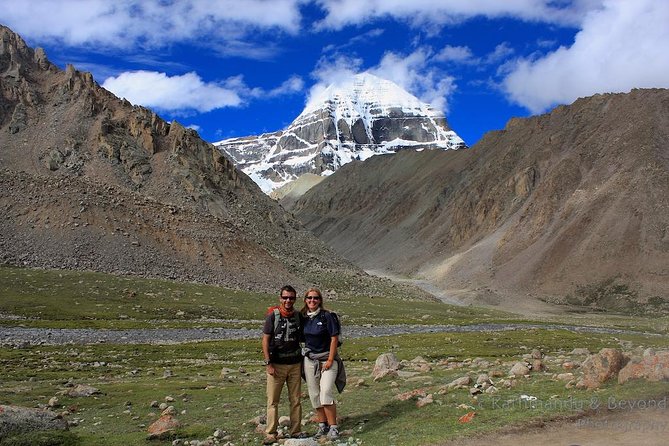
- The Mount Kailash Kora is the trip’s true test
- Remote roads and monasteries fill the return journey
- What the included services mean in practice
- Permits, visas, and booking timing matter
- Should you book this Everest and Kailash trip?
- FAQ
- How long is the Mount Everest and Mount Kailash tour?
- What is the maximum group size?
- Are Tibet permits included?
- Is airport pickup provided?
- Is airport or railway station drop-off included?
- Is food included?
- How fit do I need to be?
Key points to know before booking
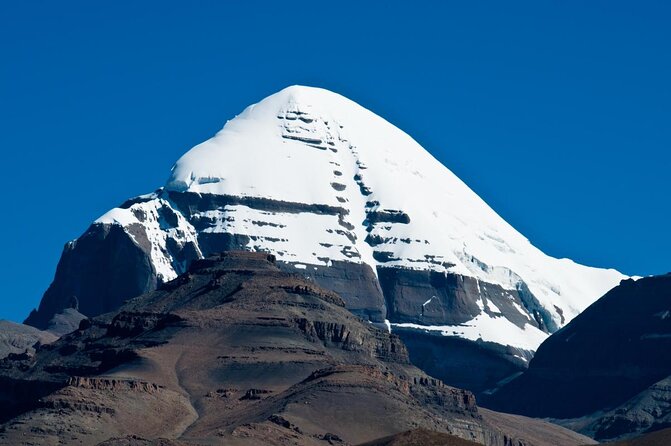
- Everest and Kailash in one trip: You visit Everest Base Camp, then continue to the sacred mountain for a three-day Kora.
- Lhasa gets proper attention: Potala Palace, Jokhang Temple, Drepung Monastery, Sera Monastery area, Norbulingka, the Tibet Museum, and Barkhor Street fill the opening days.
- A high-altitude route: The itinerary includes Tsola Pass at 4,600 meters, Gyatsola Pass at 5,248 meters, and Dromala Pass at 5,630 meters.
- Accommodation changes often: Expect hotels, guesthouses, and nomad tents rather than one fixed standard throughout.
- Useful inclusions: Tibet permits, an English-speaking local guide, transport, entrance fees, emergency oxygen, sleeping bags, airport transfers, and Kailash shuttle buses are included.
- Plan far ahead: The Tibet Tourism Bureau permit often takes about 12 working days, while solo bookings should be made more than 50 days in advance.
Why this route is worth the hard miles
At $2,280 per person, this is not a casual sightseeing holiday. It is a tightly arranged expedition-style group trip through some of Asia’s most restricted and remote territory.
The strongest value comes from the difficult paperwork and transport. Your price covers the required Tibet permits, a licensed vehicle, fuel, parking, guide and driver costs, entrance fees, accommodation, emergency oxygen, and a sleeping bag. It also includes transfers at Lhasa Gonggar Airport and Lhasa Railway Station.
That matters here. A trip reaching Everest Base Camp and Mount Kailash involves permits, long overland transfers, high passes, remote overnight stops, and changing accommodation. The logistics alone can overwhelm an independent visitor.
The price does not cover your flight or train to Tibet, travel insurance, personal spending, optional sights, or most meals. Breakfast is included for 10 days, so you should budget separately for lunches and dinners. The cost is good for the amount of transport and administration included, but it is not an all-inclusive holiday.
A small group helps keep the vehicle and daily arrangements manageable. With a maximum of 12 people, you have a better chance of hearing the guide, moving through monastery visits without constant delay, and handling the long road days with less fuss than in a large coach group.
A few more tours worth putting side by side
- Tibet Tour 8 Days Lhasa to Everest Base Camp Small Group Tour
★ 5.0 · 578 reviews - 7 Days Lhasa to Kathmandu Overland Small Group Tibet Tour via EBC
★ 5.0 · 188 reviews - 10 Days Tibet Everest Base Camp and Namtso Small Group Tour
★ 5.0 · 108 reviews
Lhasa begins with temples, palaces, and a gentle adjustment
Your first day is simple: pickup at Lhasa Gonggar Airport and transfer to your hotel. Pickup is offered at 9:30 a.m., 1 p.m., and 4 p.m. The schedule gives you a practical start, especially if your flight arrives at one of those times.
The second day introduces Lhasa’s religious and cultural side. Drepung Monastery receives about two hours. It is one of Tibet’s great Gelug monasteries, and this visit gives you a strong first look at monastic architecture and daily religious life.
You then visit the Tibet Museum for about an hour. Displays cover clothing, homes, festivals, and other parts of Tibetan culture. I like this stop because it gives context to what you see in the streets and monasteries. It is easier to understand ceremonial clothing or household objects after seeing them explained together.
Norbulingka follows in the afternoon. This former summer garden and residence of the Dalai Lama offers a change from monastery interiors. Allow two hours, and expect a quieter setting with Tibetan-style gardens and royal buildings.
The schedule is fairly full, but not overloaded by long transfers on this day. At altitude, that matters. You are better off treating the first Lhasa days as an adjustment period rather than trying to race through every corner of the city.
Potala Palace and Jokhang Temple form the cultural center
Day three brings the two major sights most people associate with Lhasa.
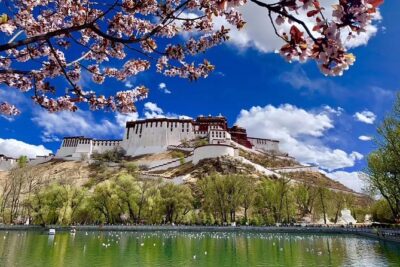
Potala Palace gets about two hours. It served as the Dalai Lama’s winter palace and now forms the city’s great visual landmark. The visit is focused, so do not expect to see every room or linger indefinitely. Still, the palace gives the trip its clearest sense of scale and power.
After lunch, you visit Jokhang Temple for another two hours. Built in the seventh century, it is regarded as Tibet’s most sacred temple. The central attraction is the statue of Buddha Shakyamuni, brought to Tibet during the reign of King Songtsen Gampo according to Tibetan tradition.
Barkhor Street completes the day. This is the place to watch local religious activity, browse for Tibetan goods, and walk through one of Lhasa’s most important public spaces. The visit is listed as free, while the temple and palace entrance fees are included.
The Lhasa section is one of the tour’s best features because it prevents the journey from becoming nothing more than a mountain transfer. You get religious sites, political history, art, and everyday city life before heading west.
Yamdrok Lake and Gyantse break up the road to Shigatse
Day four is the first major road day. You drive from Lhasa toward Shigatse, stopping at Yamdrok Lake. The lake is considered sacred, and the views from the road provide one of the trip’s memorable photo stops.
The visit itself is listed at about one hour, so keep your expectations realistic. This is a scenic stop rather than a long lakeside walk. Weather and road conditions will affect how long you stay.
The route also passes Karola Glacier, visible from the roadside about 300 meters from the main highway. You do not need a separate hike to see it, which makes the stop useful on a busy transfer day.
In Gyantse, Pelkor Chode Monastery receives about two hours. The monastery is known for its architecture, murals, and statues. This is a particularly worthwhile stop for anyone interested in Tibetan art, since the interior details offer more than another quick exterior photograph.
The road portion is a tradeoff. You spend much of the day in the vehicle, but the scenery is part of the experience. This is not a point-to-point transfer across ordinary highways. High passes, sacred water, glaciers, and changing terrain make the travel itself one of the main activities.
A completely different kind of day out on the same trip:
- From Beijing: Mutianyu Great Wall Tours with Options
★ 4.9 · 9,216 reviews - Beijing: Forbidden City Tour(Group/Private)-Tickets Included
★ 4.8 · 7,974 reviews - Beijing: T-Square & Forbidden City Group or Private Tour
★ 4.8 · 4,446 reviews - Beijing: Mutianyu Great Wall Daily Tour with Ticket & Lunch
★ 5.0 · 3,056 reviews
Shigatse leads into Everest country
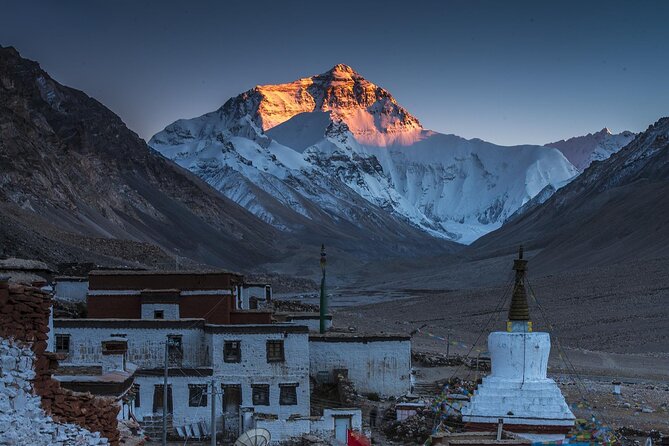
The morning visit to Tashilhunpo Monastery is a highlight of Shigatse. It is associated with the Panchen Lama and gives you another major Gelug religious center after the Lhasa monasteries.
After lunch in or near Lhatse, the trip turns toward Tingri and the Everest region. The day includes Tsola Pass at 4,600 meters and Gyatsola Pass at 5,248 meters before entering the Mount Everest National Nature Reserve.
The itinerary allows about 10 hours for this section. That figure tells you what kind of trip this is: long, demanding, and heavily dependent on road conditions. You should be prepared for stops to be adjusted and for the final arrival time to vary.
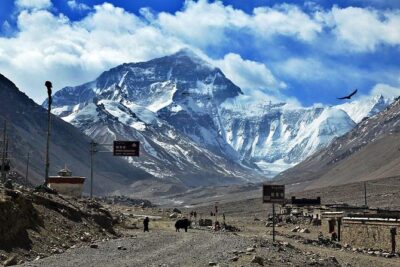
At Everest Base Camp, you stay in a camping setup described as nomad tents. The appeal is clear: you are positioned for views of Mount Everest rather than simply stopping for a quick photograph and leaving. If weather cooperates, an early sunrise viewing is planned for the next morning.
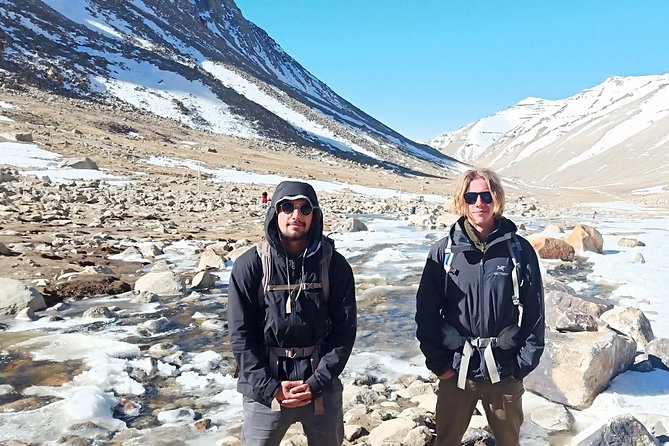
The drawbacks are equally clear. Facilities will be simpler than in Lhasa hotels, and the combination of altitude, cold, and basic accommodation can test your patience. A sleeping bag is included, which is helpful, but you should still pack clothing suited to very cold conditions.
Everest Base Camp is a view, not a luxury stop
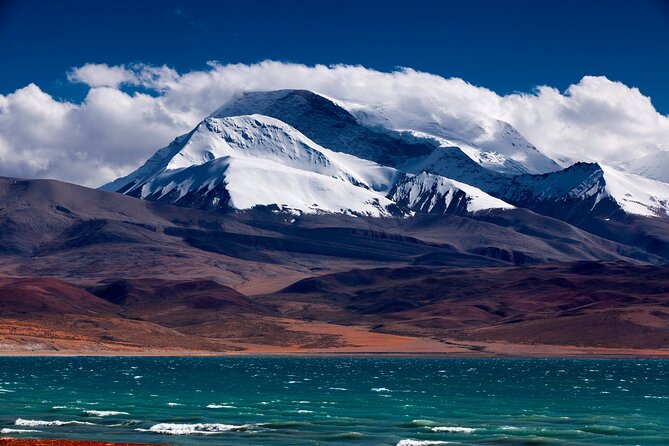
On day six, you may rise early for sunrise at Everest Base Camp. Weather decides how much you see, so the right approach is to value the setting even if clouds cover the summit.
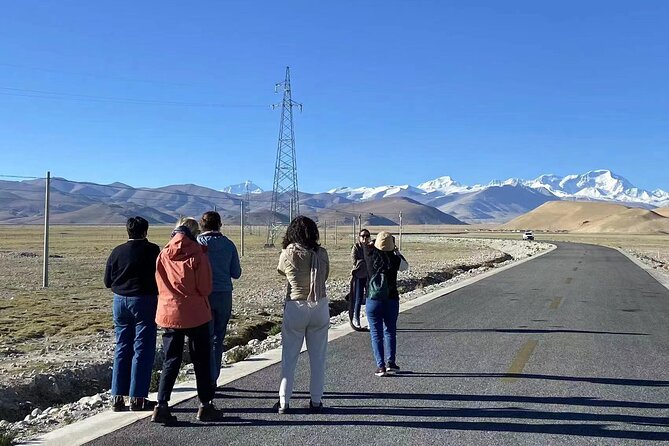
The route then heads toward Saga, with a view of Shishapangma, one of the world’s fourteen 8,000-meter peaks. Peiku Lake is another listed stop, allowing about two hours. These stops help break up the long transfer and add variety after the Everest camp.
The journey from Everest toward Saga is remote and time-consuming. You should not book this trip expecting a relaxed morning followed by a short afternoon drive. The reward is access to a part of Tibet where the open spaces and mountain views become the main attraction.
The Mount Kailash Kora is the trip’s true test
Days seven through ten focus on Mount Kailash. Day seven is mostly a transfer, with views toward the Himalayas to the south and the Trans-Himalaya to the north. It is a long approach to the mountain, but the remoteness is part of the point.
On day eight, an eco-bus takes you to Sarshung Valley, where the Kora begins. Porters and yaks are available at the start of the trek, but the cost of hiring them is not clearly listed among the included items. Ask the operator exactly what is covered before you set out, especially if you do not plan to carry your own pack.
The first trekking day is a full day at altitude. You should walk slowly, drink regularly, and follow your guide’s advice. The included emergency oxygen is reassuring, but it is not a substitute for fitness or sensible pacing.
Day nine is the hardest. You climb to Dromala Pass at 5,630 meters, the highest point of the Kora, then descend into a long valley. This is a serious physical challenge, not a symbolic stroll around a holy mountain.
Day ten is easier by comparison. You trek about nine kilometers to complete the Kora, then take the eco-bus back to Darchen. In Buddhist tradition, one circuit around a sacred mountain is believed to remove sins. You do not need to share that belief to appreciate the ritual importance of the route, the devotional movement around the mountain, and the silence of the high country.
This section suits people who want a demanding pilgrimage rather than a comfortable mountain holiday. If you have little experience walking at altitude, the Kora should be the deciding factor before you book.
Remote roads and monasteries fill the return journey
After the Kora, the route heads back through Zhongba and Lhatse. Day eleven is another full road day, with unnamed lakes, rivers, and seven high mountain passes. There are no major headline sights listed, but the journey gives you a long look at the remote interior.
That day can feel repetitive if you need constant attractions. I would treat it as recovery time after the Kora and a chance to watch the country change through the vehicle window.
Day twelve brings Sakya Monastery in Sakya County. The monastery belongs to the Sakyapa tradition and dates to the 1360s. Its enclosing walls and distinctive design make it different from the Gelug centers visited earlier.
On day thirteen, you drive from Shigatse back to Lhasa along the northern route. The Yarlung Tsangpo Valley appears along the way, and in Nyemo you may visit a Tibetan incense workshop. The stop adds a practical craft element to a schedule otherwise dominated by temples and mountains.
Day fourteen is free time in Lhasa. You can use it for shopping, rest, or a second walk through places you saw earlier. Any added group activity needs approval from the other members, so do not assume the guide can create a private sightseeing program at short notice.
What the included services mean in practice
The package covers accommodation in different forms, including hotels, guesthouses, and nomad tents. That variety suits the route, but it also means you should not expect the same comfort level every night.
An experienced local English-speaking guide accompanies the group. The guide’s role is especially important here, since permits, monastery etiquette, altitude concerns, and route changes all require clear communication.
Transport uses a vehicle with a travel license, with gas and parking included. The price also includes the shuttle buses to and from Kailash, listed at $10 per person each way, plus Lhasa airport and railway station transfers.
Two bottles of mineral water per person per day are included. Emergency oxygen is provided, and food and lodging for the guide and driver are covered. These details reduce the number of extra charges you need to manage on the road.
The package includes 10 breakfasts, not 15. Insurance, personal expenses, flights, trains, optional sights, and anything not listed remain your responsibility.
Permits, visas, and booking timing matter
You must provide passport and China visa copies in advance. The Tibet Tourism Bureau permit often takes about 12 working days, so last-minute planning can create extra costs or prevent your departure.
If you enter Tibet by air from mainland China, the original permit is sent to your hotel in China. If you take a train from mainland China, a printed copy is sent by email. If you fly from Kathmandu, you do not need a Chinese visa, but you do need a Tibet Group Visa arranged through the Chinese Embassy in Kathmandu.
Book at least 12 working days ahead if you want to join an existing group. Solo visitors are accepted, but the guidance says to book more than 50 days ahead. Twin-room pricing is the base rate. A single supplement applies unless the operator can match you with another person willing to share.
The experience is non-refundable and cannot be changed after booking. Given the permit work and remote route, confirm your dates, health, documents, and transport plans before paying.
Should you book this Everest and Kailash trip?
Book it if you want a serious Tibetan pilgrimage with major cultural sights, Everest Base Camp, and the full Mount Kailash Kora in one organized journey. The $2,280 price offers strong value for the permits, transport, accommodation, entrance fees, guide, airport transfers, emergency oxygen, and sleeping bag.
Do not book it if you want flexible sightseeing, comfortable hotels every night, or short driving days. The altitude is extreme, the Kora is demanding, and remote accommodation will be basic. The 4.6 rating and 94 percent recommendation suggest a well-received experience, with the strongest praise focused on its unusually difficult logistics and high value.
My practical advice is simple: choose this trip for access, structure, and scale. Prepare carefully, allow time for permits, carry suitable cold-weather clothing, and be honest about your fitness. If you can accept the hard road days, this itinerary gives you an extraordinary combination of Tibetan culture, sacred places, and high Himalayan scenery.
FAQ
How long is the Mount Everest and Mount Kailash tour?
The tour lasts approximately 15 days, beginning with pickup at Lhasa Gonggar Airport and ending with transfer to Lhasa airport or the railway station.
What is the maximum group size?
The group can include a maximum of 12 people.
Are Tibet permits included?
Yes. All necessary permits to Tibet are included, along with the express delivery fee for the Tibet Travel Permit.
Is airport pickup provided?
Yes. Pickup from Lhasa Gonggar Airport is offered at 9:30 a.m., 1 p.m., and 4 p.m. on the first day.
Is airport or railway station drop-off included?
Yes. Drop-off is provided from your hotel to Lhasa Gonggar Airport at 8:30 a.m., 12:30 p.m., and 2:30 p.m. on the final day. Lhasa Railway Station transfers are also provided on the first and last day.
Is food included?
Breakfast is included for 10 days. Flights, trains, personal expenses, insurance, optional sights, and anything not listed in the included services are excluded.
How fit do I need to be?
You should have a strong physical fitness level. The Mount Kailash Kora crosses Dromala Pass at 5,630 meters, making it the most demanding part of the trip.
Newest reviews from China
- Beijing: Explore the Forbidden City in Hanfu★ 5.0 · 4 reviews
- Private 2 Day Tour of Dalian City★ 5.0 · 4 reviews
- scooter and hiking trip in the rainforest★ 5.0 · 4 reviews
- Xi’an Night Tour: South Gate Square and Big Wild Goose Pagoda Square★ 4.0 · 4 reviews
- Beijing Tai Chi and Tea Ceremony Experience★ 5.0 · 4 reviews
- Guangzhou VIP Car Tour– Tailored Sightseeing & Shopping Adventure★ 5.0 · 4 reviews
- Lantau Peak Sunrise Climb★ 5.0 · 4 reviews
- Hong Kong MiniBus Transfer: Hotel / Cruise Terminal and Airport★ 4.5 · 4 reviews
Lhasa Tours, compared.
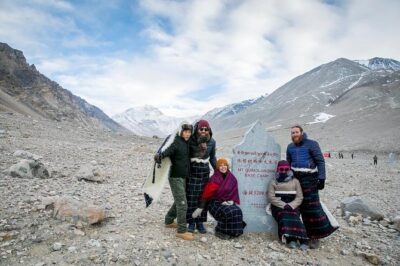
Tibet Tour 8 Days Lhasa to Everest Base Camp Small Group Tour
Read our review →
7 Days Lhasa to Kathmandu Overland Small Group Tibet Tour via EBC
Read our review →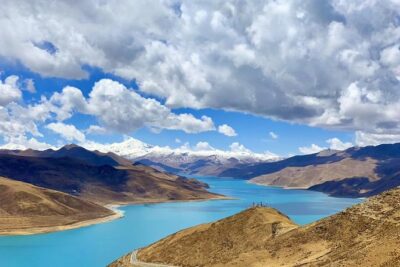
10 Days Tibet Everest Base Camp and Namtso Small Group Tour
Read our review →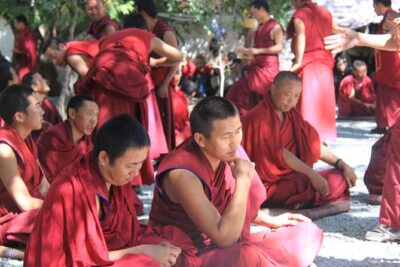
8 Days Lhasa Gyantse Shigatse Mt Everest Group Tour
Read our review →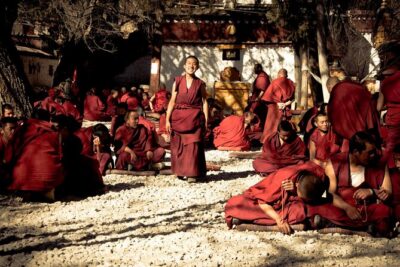
Private Guided Day Tour Potala Palace and Sera Monastery
Read our review →Browse the lists this tour appears in