
Reviewed · LHASA TOURS
8 Days Lhasa Gyantse Shigatse Mt Everest Group Tour
Tibet rewards careful planning. This eight-day group tour links Lhasa’s great temples with Yamdrok Lake, Gyantse, Shigatse, and Mount Everest, taking care of the permits, hotels, vehicles, and long-distance transfers that can be difficult to arrange alone. For a first visit, that organized approach is a major advantage.
I especially like the mix of cultural sights and high-altitude scenery, from Drepung Monastery and Potala Palace to Karola Glacier and Everest. I also like the small group limit of 12 people, the included breakfast, and the emergency oxygen tank. The main caution is altitude: the route reaches passes near 4,790 meters, and the Everest section includes very long road days.
- Drepung, Potala Palace, and Jokhang Temple give you three major views of Tibetan religious life and architecture.
- Yamdrok Lake and Karola Glacier add striking mountain scenery between Lhasa and Gyantse.
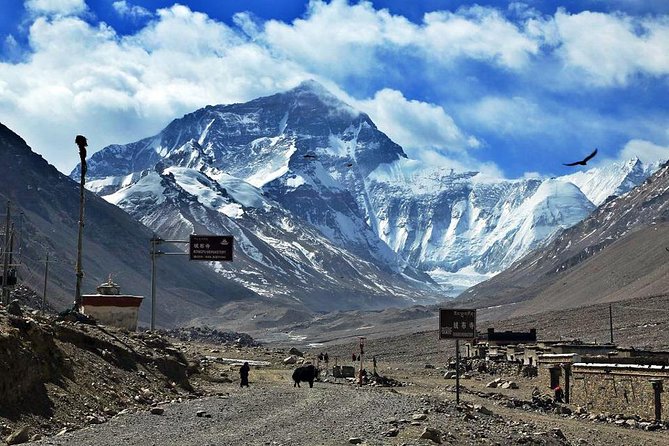
- Everest is reached by road, with a sunrise opportunity near the Everest Peak Lodge if weather allows.
- Six hotel nights and one dorm or tent night are included, with the standard package using 3-star or 4-star twin rooms.
- A maximum of 12 people keeps the group smaller than many large coach tours.
- The Tibet Tourism Bureau Permit, vehicle, guide, water, and breakfast are covered in the listed price.
In This Review
- The $1,100 price and what it really covers
- Day 1: A simple arrival in Lhasa
- Day 2: Drepung, the Tibet Museum, and Norbulingka
- Day 3: Potala Palace, Jokhang Temple, and Barkhor Street
- Day 4: Yamdrok Lake, Karola Glacier, and Gyantse
- Day 5: The long road toward Everest
- Day 6: Everest sunrise and a basic overnight
- Day 7: Tashilunpo Monastery in Shigatse
- Day 8: Transfer to the airport or railway station
- Guides, group size, and day-to-day service
- Who should book this Tibet tour?
- Should you book it?
- FAQ
- Is airport pickup included?
- Are flights or trains to Tibet included?
- What type of accommodation is included?
- Is the Tibet entry permit included?
- How large is the tour group?
- Is Mount Everest guaranteed to be visible?
The $1,100 price and what it really covers
At $1,100 per person, this tour offers solid value for a route that covers a great deal of ground. You are not paying only for sightseeing. The price includes six nights in en-suite twin rooms at 3-star or 4-star properties, one night in a guesthouse dorm bed or nomad tent, a licensed vehicle, fuel, parking, an English-speaking local guide, the Tibet Tourism Bureau Permit, liability insurance, taxes, and permit delivery.
You also receive breakfast on six mornings, two bottles of mineral water per person per day, and an oxygen tank for emergency use. Airport and railway transfers are included at set times, and Lhasa railway station transfers are available on the first and last day.
That list matters in Tibet. The sights are spread over large distances, and you cannot simply turn up and arrange every permit and transfer as you go. Having the agency handle the Tibet entry permit removes one of the biggest planning chores.
The price does not include your flight or train to Tibet, China visa, lunches, dinners, optional sights, personal insurance, tips, or personal spending. You should also budget for a single supplement if you want your own room. If the agency later matches you with another solo participant for a twin room, the supplement is refunded.
The package is strongest for two people sharing a room. Solo visitors still gain from the organized transport, but the extra room cost can make the final price less attractive.
Day 1: A simple arrival in Lhasa
The first day is intentionally light. A driver collects you and takes you to the hotel, giving you time to settle in rather than rushing straight into sightseeing.
Free airport pickup is offered at 9:30 a.m., 1 p.m., and 4 p.m. If your flight arrives outside those windows, a private transfer costs $60 per vehicle and time. Railway station pickup is available at any time on the first day.
That timing is worth checking before you book. The first day may involve only a driver, since the team is collecting and dropping off several group members. This is normal for a group departure, but you should not expect a full guided welcome at the airport.
The tour starts from Lhasa at 9 a.m. on the sightseeing days. Since high altitude can affect people differently, the gentle opening day is useful. One participant who extended the trip by a couple of days before joining found the altitude serious, and another person in the same wider group had to leave because oxygen and treatment did not improve the condition. Take that warning seriously. This is not a low-effort city break.
A few more tours worth putting side by side
- Tibet Tour 8 Days Lhasa to Everest Base Camp Small Group Tour
★ 5.0 · 578 reviews - 7 Days Lhasa to Kathmandu Overland Small Group Tibet Tour via EBC
★ 5.0 · 188 reviews - 10 Days Tibet Everest Base Camp and Namtso Small Group Tour
★ 5.0 · 108 reviews
Day 2: Drepung, the Tibet Museum, and Norbulingka
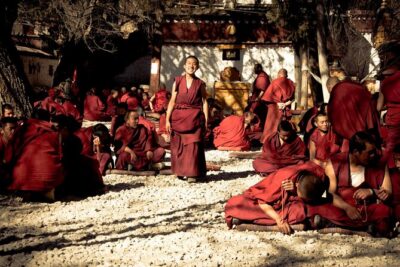
Drepung Monastery begins the cultural program. It was once one of Tibet’s most important monastic centers and served as a residence of the Dalai Lama before Potala Palace became the main seat. The two-hour visit gives you time to see the complex with a guide rather than simply taking a quick photo outside.
The monastery is a strong first stop because it introduces the religious setting that shapes so much of Tibetan art, architecture, and daily life. Expect stairs, walking, and time spent at altitude, so move at a measured pace.
The Tibet Museum follows in the afternoon. Its displays cover clothing, homes, festival customs, and everyday life. This visit helps put the grand religious buildings into a wider social setting. You see how Tibetan culture appears in ordinary objects, not only in spectacular monuments.
Norbulingka completes the day. This Tibetan-style royal garden was the Dalai Lama’s summer residence. After the stone and prayer-hall atmosphere of Drepung, the gardens offer a calmer change of pace.
The schedule gives Drepung and Norbulingka about two hours each, with one hour at the museum. That is a sensible balance. You get several major sights without trying to force every corner of each site into one exhausting day.
Day 3: Potala Palace, Jokhang Temple, and Barkhor Street
Potala Palace is the visual centerpiece of Lhasa. Built on a hill above the city, it is Tibet’s best-known building and a landmark of Tibetan architecture. The visit lasts about two hours, which is enough for a focused introduction, though not enough to explore every room at leisure.
Be ready for steps and a steady climb. The palace is not a quick ground-level museum visit. Its importance comes from its former role as the Dalai Lama’s main residence and political center, as well as its architecture and religious art.
In the afternoon, you visit Jokhang Temple, one of the most sacred temples in Tibet. It sits at the heart of Lhasa’s old center and remains a major destination for pilgrims. The atmosphere here differs from Potala Palace. Jokhang is tied closely to living religious practice, with people moving through the devotional circuit around the temple.
Barkhor Street surrounds Jokhang and functions as both a pilgrimage route and a central market area. Your two-hour walk gives you time to observe the circuit, browse the shops, and take in the rhythm of central Lhasa.
This is one of the tour’s best days, but it is also busy in terms of walking and sightseeing. Comfortable shoes matter. Keep your schedule flexible because the agency reserves the right to change the order of Lhasa attractions.
Day 4: Yamdrok Lake, Karola Glacier, and Gyantse
The road from Lhasa toward Shigatse brings the first major mountain views. At Kampala Pass, near 4,790 meters, you reach one of the route’s highest points before stopping at Yamdrok Lake.
Yamdrok is one of Tibet’s three holy lakes. The stop is short, about an hour, but the setting is the reason to pause. Blue water, mountain air, and the high pass make this a memorable contrast to Lhasa’s urban monuments.
Altitude is especially relevant here. Do not treat the lake stop as a chance to sprint around taking photographs. Keep your coat handy, drink the supplied water, and tell the guide promptly if you feel unwell.
Karola Glacier is viewed from the roadside, roughly 300 meters from the main highway. It is another quick stop, with about an hour allowed. The glacier gives you a sense of how quickly the scenery changes on this route, from lake to high pass to ice.
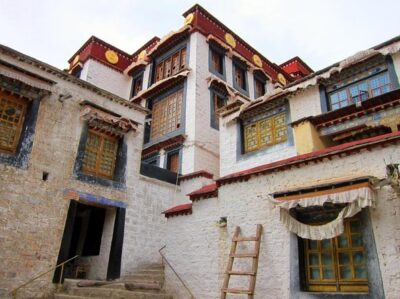
The day continues to Gyantse and Pelkor Chode Monastery. Gyantse lies about 230 kilometers south of Lhasa and roughly 100 kilometers east of Shigatse. Pelkor Chode is the town’s main monastery and is close enough to the center for a short walk.
This is a full transfer day, not a relaxed village visit. The reward is variety: a sacred lake, a glacier, and one of Tibet’s significant monasteries in one stretch of road.
A completely different kind of day out on the same trip:
- From Beijing: Mutianyu Great Wall Tours with Options
★ 4.9 · 9,216 reviews - Beijing: Forbidden City Tour(Group/Private)-Tickets Included
★ 4.8 · 7,974 reviews - Beijing: T-Square & Forbidden City Group or Private Tour
★ 4.8 · 4,446 reviews - Beijing: Mutianyu Great Wall Daily Tour with Ticket & Lunch
★ 5.0 · 3,056 reviews
Day 5: The long road toward Everest
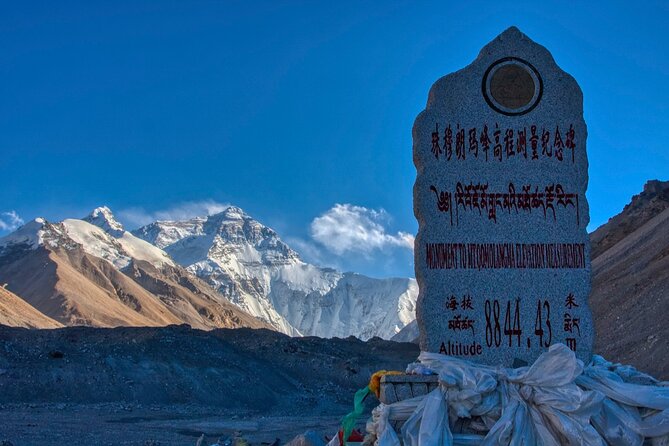
Day five is the hardest road day. You leave Shigatse for Lhatse, about 150 kilometers away, with a possible lunch stop at a local restaurant. After a short break, the route continues toward Tingri and the Qomolangma National Nature Preserve.
The schedule allows around 10 hours for the day. That is a lot of time in the vehicle, but it reflects the scale of the region. Mount Everest cannot be added as a quick side trip from Lhasa or Shigatse.
The organized vehicle is a real benefit here. You do not have to arrange permits, fuel, parking, and road transfers yourself, and the group vehicle is selected according to group size and season.
Still, you should know what you are buying. This section is about reaching Everest, not spending every hour hiking. Bring snacks and keep expectations realistic about road comfort. Lunch and dinner are not included, so carry some food that suits you, especially if you have dietary restrictions.
One participant specifically praised the careful pace of the altitude ascent and the regular breaks. That is a valuable feature on a route where rushing can turn a great trip into a medical problem.
Day 6: Everest sunrise and a basic overnight
If the weather cooperates, you can get up early for sunrise from the Everest Peak Lodge. The planned visit lasts about four hours, giving you time to see the mountain area without racing through it.
Weather controls this part of the trip. Clear conditions can offer the view you came for, while cloud or poor visibility may limit it. The agency also explains that natural disasters, road closures, avalanches, landslides, government action, or other unavoidable events can change the plan, with extra costs potentially passed to you.
The overnight accommodation is simpler than the city hotels. One night is in a guesthouse dorm bed or nomad tent rather than a private en-suite room. That arrangement helps keep the tour price under control, but it is not ideal if you need privacy or comfort every night.
Pack for cold conditions and bring patience. The included emergency oxygen tank is reassuring, but it is not a substitute for taking altitude symptoms seriously. Personal travel insurance is not included, so arrange your own coverage before departure.
Day 7: Tashilunpo Monastery in Shigatse
The route returns to Shigatse for Tashilunpo Monastery, the home of the Panchen Lama. Founded in 1447 by the First Dalai Lama, it is one of the city’s most important religious and cultural sites.
The visit lasts about two hours. After the demanding Everest section, that is a manageable amount of sightseeing. Tashilunpo also gives the itinerary a strong closing chapter, returning you to a major monastery after the high mountain detour.
The best part of this sequence is the contrast. Lhasa shows you the capital’s great religious monuments, Gyantse adds a smaller historic setting, Everest supplies the huge mountain experience, and Shigatse brings the focus back to Tibetan Buddhist tradition.
The final hotel night is included in the six standard hotel nights, assuming the route operates as planned. Accommodation can sometimes be adjusted, but if you arrange your own hotel, you must meet the group at its daily hotel and provide your own transfers to that location.
Day 8: Transfer to the airport or railway station
On the last day, the guide and driver take you to Lhasa Gonggar Airport or the railway station. Airport drop-offs are scheduled at 8:30 a.m., 12:30 p.m., and 2:30 p.m.
Check your departure time carefully. A group transfer is convenient, but it may not suit an unusually early or late flight. The agency can provide some private airport transfers for an additional fee, while railway station transfers are included at all times.
Guides, group size, and day-to-day service
The maximum group size is 12 people. That is small enough for questions and practical help, while still keeping the price lower than a private tour.
The guide is an experienced local English speaker, and the strongest praise for the service centers on punctuality, clear explanations, flexible free time, and careful coordination. Lobsang received especially warm praise for his guiding, while Emily, Beatrice, Jennie, and Merry were singled out for responsive assistance during trip planning and arrangements.
That personal support matters in Tibet, where permits, changing road conditions, and altitude concerns can complicate even a well-planned holiday. The service is not completely private, so you will sometimes work around airport collection schedules and the preferences of other group members.
Food is the weaker point for some people. Breakfast is included, but lunch and dinner are yours to arrange. One participant noted that vegetarian food choices could be improved, so bring clear dietary information and a few backup snacks.
Who should book this Tibet tour?
I would recommend it most strongly to a first-time visitor who wants the major Tibetan sights without building a route from scratch. It suits people who value organized transport, a local English-speaking guide, included permits, and a compact route through several widely separated places.
It is also a good match for couples or friends sharing a twin room. The value is less convincing for solo visitors paying the single supplement, unless the agency can match them with another participant.
You should think twice if you dislike long road transfers, basic overnight accommodation, uncertain mountain weather, or strict group schedules. You also need to be comfortable with high altitude and prepared to buy your own meals and insurance.
The cancellation rule is unusually strict: the experience is non-refundable and cannot be changed after booking. The Tibet Tourism Bureau Permit usually takes about 12 working days to arrange, and late paperwork can bring an additional permit charge of about $50 to $80.
Should you book it?
Book this tour if you want maximum coverage with minimum planning, and if seeing Everest matters as much to you as exploring Lhasa’s temples. The included permit, vehicle, hotels, guide, water, breakfasts, and emergency oxygen make the $1,100 price reasonable for the route.
Skip it if you need private rooms, independent timing, extensive food included, or a flexible cancellation policy. For the right person, this is a well-organized introduction to Tibet, with real cultural depth and an unforgettable high-altitude road journey.
FAQ
Is airport pickup included?
Yes. Free pickup from Lhasa airport is offered at 9:30 a.m., 1 p.m., and 4 p.m. on the first day. A private transfer outside those times costs $60 per vehicle and time.
Are flights or trains to Tibet included?
No. Your flight or train, China visa, lunches, dinners, personal expenses, tips, and personal travel insurance are not included.
What type of accommodation is included?
The package includes six nights in twin en-suite rooms at 3-star or 4-star hotels, plus one night in a dorm bed at a guesthouse or in a nomad tent.
Is the Tibet entry permit included?
Yes. The Tibet Tourism Bureau Permit, permit delivery fee, government tax, and agency liability insurance are included. The permit usually takes about 12 working days to apply for.
How large is the tour group?
The tour has a maximum of 12 participants.
Is Mount Everest guaranteed to be visible?
No. The itinerary provides an opportunity to see Everest and enjoy sunrise from the Everest Peak Lodge if weather conditions are good. Visibility can be affected by weather and other unavoidable conditions.
Newest reviews from China
- Private 2 Day Tour of Dalian City★ 5.0 · 4 reviews
- Beijing: Explore the Forbidden City in Hanfu★ 5.0 · 4 reviews
- scooter and hiking trip in the rainforest★ 5.0 · 4 reviews
- Xi’an Night Tour: South Gate Square and Big Wild Goose Pagoda Square★ 4.0 · 4 reviews
- Beijing Tai Chi and Tea Ceremony Experience★ 5.0 · 4 reviews
- Guangzhou VIP Car Tour– Tailored Sightseeing & Shopping Adventure★ 5.0 · 4 reviews
- Lantau Peak Sunrise Climb★ 5.0 · 4 reviews
- Chengdu: City Walking Tour with Food and Culture Stops★ 4.7 · 4 reviews
Lhasa Tours, compared.
Tibet Tour 8 Days Lhasa to Everest Base Camp Small Group Tour
Read our review →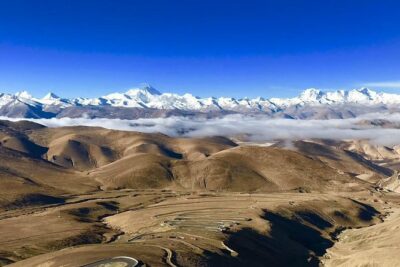
7 Days Lhasa to Kathmandu Overland Small Group Tibet Tour via EBC
Read our review →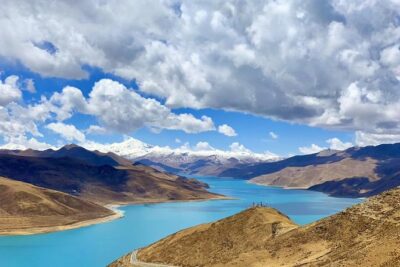
10 Days Tibet Everest Base Camp and Namtso Small Group Tour
Read our review →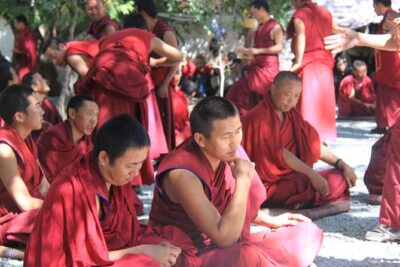
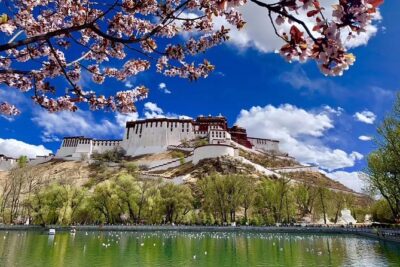
Private Guided Day Tour Potala Palace and Sera Monastery
Read our review →
9 Days Lhasa Gyantse Shigatse Everest Namtso Group Tour
Read our review →Browse the lists this tour appears in