
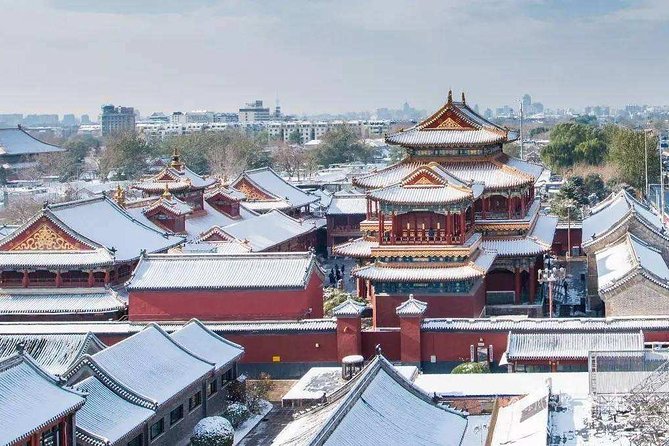
Reviewed · LAMA TEMPLE TOURS
4-Hour Private Tour: Lama Temple, Confucius Temple, Guozijian Museum with Dim Sum
Two temples, one meal, a useful window into Beijing. This private half-day tour joins Lama Temple, Confucius Temple, and the Guozijian Museum with dim sum at a local restaurant. I like the personal guide service and the chance to connect religious sites with China’s old education system. I also like having a choice of morning or afternoon departures.
The main catch is transport. Hotel pickup is included, but hotel drop-off is not. If you choose the no-transfer option, you pay for your own subway or taxi costs. A leisurely meal can also stretch the outing from about four hours to five to seven hours.
In This Review
- Key points to know before you book
- Why this temple tour works well in Beijing
- Starting at Lama Temple, Yonghegong
- From Confucius to China’s old school system
- Guozijian Museum and the Imperial College performance
- Dim sum makes the cultural lesson more practical
- Morning or afternoon: which schedule suits you?
- Private transfer, subway, and the pickup detail
- The guide can make or break the four hours
- Who will get the most from this experience?
- Is $97.20 per person good value?
- Should you book the Lama Temple and dim sum tour?
- FAQ
- How long does the tour last?
- Is hotel pickup included?
- Is transportation included?
- Is the tour private?
- Is dim sum included?
- Are admission fees included?
- Can I cancel for a full refund?
Key points to know before you book
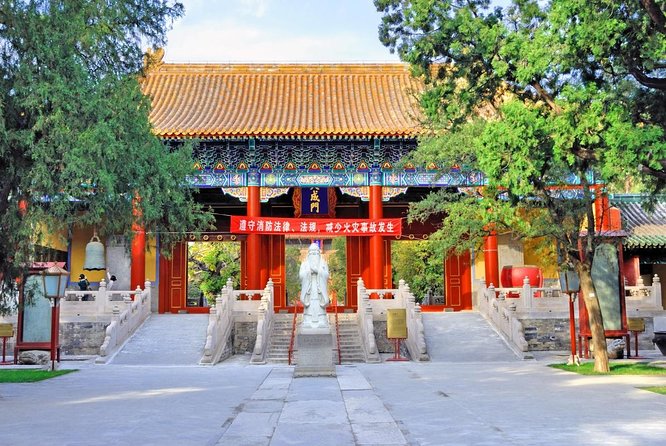
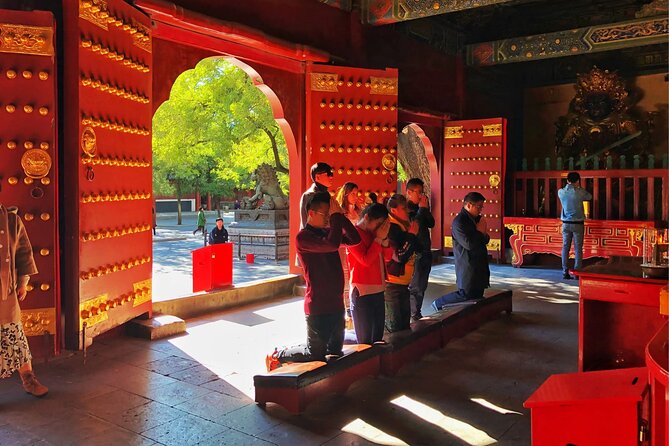
- Lama Temple offers a close look at Tibetan Buddhist practice within Beijing’s historic city center.
- Confucius Temple and Guozijian sit together, making it easy to connect philosophy, ritual, and imperial education in one visit.
- A dance performance at the Imperial College adds a visual touch to the historical explanation.
- Dim sum is included, with lunch on a morning tour or dinner on an afternoon tour.
- The private format keeps the pace flexible, with only your own group taking part.
- Guides such as Lucy, Ana, Jessie, Roy, and Jack have earned strong praise for clear English, patience, and lively storytelling.
Why this temple tour works well in Beijing
Beijing has no shortage of major sights. The hard part is understanding how they fit together. This outing helps by pairing two religious and cultural institutions with a meal and a guide who can explain the setting as you go.
Lama Temple introduces you to a living Buddhist tradition. Confucius Temple and Guozijian then shift the focus toward moral teaching, scholarship, and government service. The contrast is useful. You are not simply moving from one old building to another. You are seeing two different systems that shaped Chinese life.
I especially like the private setup for this kind of visit. Temples reward questions, and you can ask about architecture, beliefs, ritual, and local customs without waiting for a large group to catch up. The guide can also spend more time on the subjects that interest you most.
The tour costs $97.20 per person. That is not the cheapest way to see these sites, but the price includes entrance fees, a professional English-speaking guide, bottled water, and a dim sum meal. A private guide also saves you from working out the cultural connections on your own. For a first visit to Beijing, that can make the price reasonable.
Still, check the transport option carefully before paying. Private transfer is included only if you select the related option. With the other choice, your guide accompanies you by subway or taxi, but transportation costs come from your pocket.
More Museums in Beijing
- Beijing: Tianmen Square, Forbidden City & Royal Museum Tours
★ 4.6 · 1,288 reviews - Beijing:Jingshan Park (Palace Museum Garden) Ticket
★ 4.5 · 185 reviews - Beijing Half Day: National Museum of China In-depth Tour with Subway Transfer
★ 5.0 · 70 reviews
Starting at Lama Temple, Yonghegong
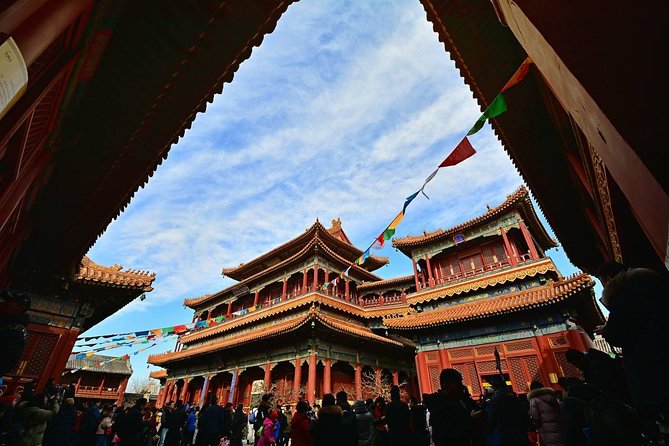
The first stop is Lama Temple, also known as Yonghegong. Your English-speaking guide meets you at your Beijing hotel, then accompanies you to the temple by private transfer, subway, or taxi, depending on the package selected.
You receive about an hour at the temple, with admission included. That is enough for a focused visit, though not enough for a slow, independent wander through every corner. Your guide’s role matters here because the temple is best understood through its religious purpose, architectural details, and place in Beijing’s cultural life.
The site is connected with Tibetan Buddhism, and the guide can explain the traditions represented there. One especially useful point raised during the tour is the temple’s complicated relationship with Tibet Buddhism. That is the kind of subject that can be hard to understand from signs alone, so having someone explain the background adds real value.
I would plan to listen closely rather than rush for photographs. The visit is not just about ornate halls or large religious images. It gives you a way to see how belief, imperial power, and modern identity overlap.
The one-hour timing may feel short if religious art is your main interest. If you want long periods for quiet observation, this organized schedule will require some discipline. The advantage is that the tour moves on before the morning or afternoon disappears at one site.
From Confucius to China’s old school system
The next stop is the Temple of Confucius. This site honors Confucius, the philosopher whose teachings shaped ideas about conduct, family duty, education, and public service across China.
Your guide explains the temple as more than a place of worship. It also represents traditional Chinese culture and the value placed on learning. That makes it a strong follow-up to Lama Temple, where the focus is more clearly religious.
The Confucius Temple and Guozijian Museum are visited together, giving the middle part of the tour a clear theme. You move from philosophical teaching to the institution that trained people for official roles in ancient China. I find this pairing more useful than visiting either place alone because the connection between ideas and government becomes easier to see.
The temple visit lasts about an hour, with admission included. Your guide can explain the meaning of the buildings and help you notice details you might otherwise pass without a second thought. If your guide is like Lucy, praised for explaining the temple’s history and its connection with Tibetan Buddhism, or Ana, praised for telling stories from the past in clear English, the visit should feel like a conversation rather than a lecture.
There is a practical point here: the amount of time spent at each area may depend on your questions and the pace of your group. Since the tour is private, you can ask for more explanation, but the overall schedule still needs to leave room for the Imperial College and the meal.
Guozijian Museum and the Imperial College performance
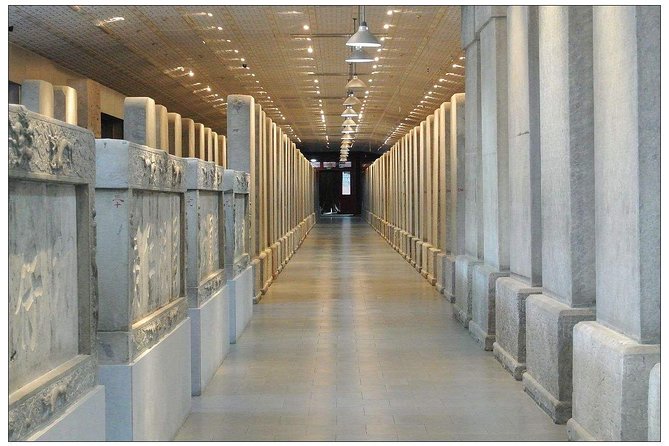
After Confucius Temple, you continue to Guozijian, the Imperial College. This was the highest educational institution in ancient China, and the buildings help show how the old educational system was organized.
This stop gives the tour its strongest historical link. Lama Temple shows one side of China’s spiritual life. Confucius Temple presents the ideals behind moral education. Guozijian shows how learning became part of the machinery of government.
The highlight is a dance performance at the Imperial College. The performance adds movement and sound to a place that could otherwise feel abstract. You are not only hearing about an ancient educational system. You are also seeing a traditional presentation within the historic setting.
The dance is not a substitute for a full cultural show, so keep your expectations in proportion. It is one part of the visit, not the entire afternoon or morning. Its value comes from how it breaks up the explanations and gives you another way to connect with the site.
I would pay attention to the guide’s interpretation here. The architecture may be attractive on its own, but the real point is understanding why this institution mattered. A good guide can help you see Guozijian as a place tied to ambition, study, examinations, and public life.
More Lama Temple visits:
- Temple Heaven, Lama Temple, Summer Palace & Peking Duck Bus Tour
★ 5.0 · 377 reviews - Temple Heaven, Summer Palace, Lama Temple, Hutong Bus Tour
★ 4.7 · 319 reviews - Temple of Heaven, Summer Palace, Lama Temple, Hutong Tours
★ 5.0 · 311 reviews - Beijing: Lama Temple (Yonghe Temple) Admission Ticket
★ 4.8 · 297 reviews
Dim sum makes the cultural lesson more practical
The included meal is one of the tour’s most appealing features. A morning tour is followed by dim sum lunch. An afternoon tour includes dinner instead.
The meal takes place at a local restaurant, and the food has received warm praise, including from people who specifically enjoyed the traditional Beijing setting. That makes the meal more than a quick stop for fuel. It gives you a chance to ask questions, slow down, and connect the morning or afternoon’s themes with everyday food culture.
Dim sum is also a smart choice for a private tour because it offers variety. You may be able to sample several small dishes rather than commit to one large plate, though the exact menu is not specified. If you have dietary needs, tell the operator when booking. Alcohol is not included, but it can be purchased separately.
Allow extra time if you enjoy sitting over a meal. The advertised visit is about three to four hours, yet a relaxed lunch or dinner can bring the total outing to five to seven hours. This is not a problem if you have room in your schedule. It could be a problem if you have a train, flight, or timed evening booking.
I like the way the meal rounds out the visit. Beijing’s temples and old schools can feel formal and distant. Sitting down for food gives the day a more ordinary, human finish.
Morning or afternoon: which schedule suits you?
The choice of departure time is helpful, especially if you are arranging several Beijing sights around the tour.
Choose the morning option if you want the temples and Guozijian completed before the rest of your day. The dim sum lunch then gives you a natural stopping point. This may suit you if you want to spend the afternoon elsewhere or prefer visiting cultural sites earlier.
Choose the afternoon option if you like a slower start or want to pair sightseeing with dinner. The later schedule may also suit you if your Beijing plans are full in the morning. The exact start time should be confirmed when you book, since the supplied details only promise a morning or afternoon choice.
The tour averages 95 days of advance booking, which suggests you should not leave it until the last moment if your dates are fixed. That is especially sensible for a private experience with a meal and guide rather than a large public departure.
Private transfer, subway, and the pickup detail
Hotel pickup is offered, but read the transport choice with care. The private-transfer option includes private transportation. If you choose the alternative, the guide accompanies you by subway or taxi, and you pay the transportation fee yourself.
One guest expected a return to the hotel and found that the pickup was one way only. The arrangement is clear: hotel pickup is included, but hotel drop-off is not. You should plan your next stop from the final location or ask your guide for practical help getting onward.
The subway option can be useful for avoiding traffic, and one guide chose it for that reason. But it may not be what you want after a meal, especially if you are carrying bags or managing tired children. The private vehicle option costs more if priced as an upgrade, but it buys comfort and less uncertainty.
Because the tour is private, only your group participates. That makes the transport conversation easier. You can ask about the best way to reach the first temple and decide how much flexibility you want.
The guide can make or break the four hours
The strongest feature of this experience is the guide. The temples are worthwhile on their own, but their meaning is much easier to grasp with clear explanation.
Several guides have been praised for different strengths. Lucy has been noted for explaining Lama Temple and its complicated connection with Tibet Buddhism. Ana has been praised for her English and her ability to tell stories about earlier periods. Jessie has been described as animated and experienced, while Roy has earned praise for brilliant English, patience, and answering questions without hurrying the group. Jack has been appreciated for being friendly and well informed about the sites.
Those names do not guarantee who will lead your tour. They do show the sort of service the operator aims to provide. I would use the private setting to ask direct questions, especially about religious practices, Confucian values, and the old school system.
One less positive experience involved a guide who did not provide enough information. That is worth keeping in mind. A private tour is only as useful as the person leading it. If the explanations feel thin, ask questions early and clearly say what interests you.
Who will get the most from this experience?
I would recommend this tour to first-time visitors who want cultural context without spending a full day on formal sightseeing. It suits couples, families with older children, and small groups who prefer a private pace.
It is also a good choice if you are curious about how religion, philosophy, education, and food fit into Beijing’s identity. The combination is more thoughtful than a simple temple checklist.
Families should note that children must be accompanied by an adult. Most people can participate, but the experience includes walking through historic sites and moving between several stops. If you have specific dietary requirements, share them at booking.
You may want a different plan if you prefer exploring entirely alone, spending several hours at one temple, or avoiding scheduled meals. The tour gives you structure. That is its strength, but also its limit.
Is $97.20 per person good value?
At $97.20 per person, I see fair value if you use the guide well and select the transport option that suits you. Entrance fees, bottled water, professional guiding, and dim sum are included. The private format also means you are not paying for a large group experience while receiving a generic commentary.
The price is less attractive if you choose the no-transfer package and then add taxi or subway costs, especially if you expected a ride back to the hotel. It is also important to allow time for the meal, since a long lunch or dinner can extend the day well beyond four hours.
Free cancellation is available until 24 hours before the start time. Changes made inside that window are not accepted, and poor weather may lead to a new date or a full refund. Those terms are simple, but you should still keep your schedule flexible enough for the meal and transport.
Should you book the Lama Temple and dim sum tour?
I would book it if you want personal guiding, three connected cultural sites, and a local meal in one manageable outing. It is especially useful for a first Beijing visit, when the difference between Buddhist practice, Confucian thought, and imperial education can otherwise blur together.
Choose the private-transfer option if comfort and a simple route matter to you. Confirm that hotel pickup is one way only, tell the operator about dietary needs, and leave extra time after the meal.
Skip it if you want a completely independent visit or a long, unhurried study of each temple. For everyone else, the combination of Lama Temple, Confucius Temple, Guozijian, dance, and dim sum offers a well-balanced introduction to Beijing’s cultural past.
FAQ
How long does the tour last?
The main visit takes about three to four hours. A leisurely dim sum lunch or dinner can extend the total outing to five to seven hours.
Is hotel pickup included?
Hotel pickup is offered. Hotel drop-off is not included.
Is transportation included?
Private transportation is included only if you select the related transfer option. If you choose the option without transfer, you pay your own subway or taxi costs, while the guide accompanies you.
Is the tour private?
Yes. Only your group participates in the activity.
Is dim sum included?
Yes. Dim sum lunch is included with the morning tour, and dim sum dinner is included with the afternoon tour.
Are admission fees included?
Yes. Entrance fees for the included sites are part of the tour.
Can I cancel for a full refund?
You can cancel at least 24 hours before the local start time for a full refund. Cancellations or changes made less than 24 hours before the start time are not accepted for a refund.
Newest reviews from Beijing
- Beijing: Explore the Forbidden City in Hanfu★ 5.0 · 4 reviews
- Beijing Tai Chi and Tea Ceremony Experience★ 5.0 · 4 reviews
- Jinshangling Great Wall Of Beijing Tickets And Other Option★ 4.0 · 4 reviews
- Private Full-Day Great Wall of China Hiking Tour from Jiankou to Mutianyu★ 4.5 · 4 reviews
- Tour the Great Wall with a Native from Downtown Beijing★ 4.8 · 4 reviews
- Beijing: Badaling Great Wall Private Tour w Language Option★ 4.3 · 4 reviews
- Beijing:Summer Palace & Tea or Calligraphy Experience Tour★ 4.6 · 4 reviews
- 7 Days Private Tour of Beijing, Xian, Shanghai by Bullet Train★ 5.0 · 4 reviews
Lama Temple Tours, compared.
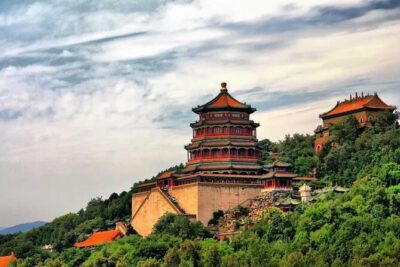
Temple Heaven, Lama Temple, Summer Palace & Peking Duck Bus Tour
Read our review →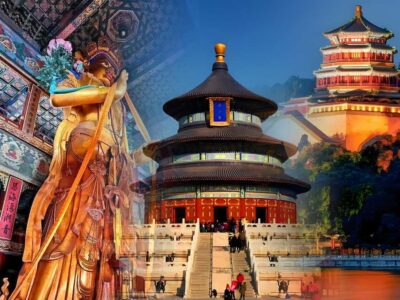
Temple Heaven, Summer Palace, Lama Temple, Hutong Bus Tour
Read our review →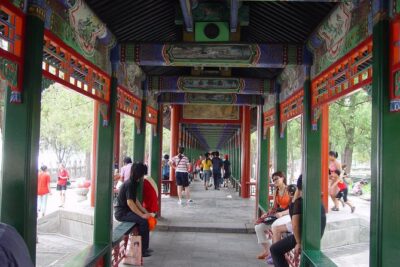
Temple of Heaven, Summer Palace, Lama Temple, Hutong Tours
Read our review →
Beijing Historical Tour II including Summer Palace, Lama Temple & Panda Garden
Read our review →
Beijing Lama temple ticket; #1 efficacious; limited Discount
Read our review →
Panda House, Temple of Heaven, Lama Temple, Summer Palace & Lunch
Read our review →Browse the lists this tour appears in