
Reviewed · CALLIGRAPHY CLASSES
Beijing liulichang : Learn Calligraphy orCarving from Master
Make something you can actually take home. This two to two-and-a-half-hour workshop brings you into Beijing’s old Liulichang cultural district, where you choose between calligraphy, silk fan painting, and seal carving. I like the small-group format, which gives you time with the artisan instead of sending you through a rushed demonstration. I also like the chance to create a personal keepsake, especially a Chinese name seal that you can use for years.
The main consideration is getting there on your own, since transportation is not included. You also need to choose one principal workshop, so this is not a full survey course in Chinese art. Still, the session may include some calligraphy practice even if you select carving, and the five available ratings are all five-star scores.
In This Review
- Key points at a glance
- Starting at Liulichang East Street
- Choosing your Chinese art form
- Calligraphy: slow brushwork with a personal meaning
- Fan painting: a useful piece of art
- Seal carving: the most unusual choice
- Inside the traditional studio
- What the two to two-and-a-half hours feel like
- Why the personal souvenir is worth the price
- What the strongest praise tells you
- Practical details before you book
- Is this Liulichang workshop right for you?
- FAQ
- How long does the Liulichang workshop last?
- Which activities can I choose from?
- Do I need previous artistic experience?
- Where is the meeting point?
- Is transportation included?
- What languages are available, and can I book privately?
Key points at a glance
- Three hands-on choices: Practice calligraphy, paint a silk round fan, or carve your own Chinese name seal.
- A real Liulichang setting: Meet at the east street entrance, take a short cultural walk, then continue into a traditional studio.
- Practice comes before the final piece: Seal-carving participants work on sample stones before touching the finished stone.
- Personal guidance matters: English and Chinese instruction is available, with private and small-group formats offered.
- A useful $75 souvenir: You leave with artwork made by your own hands, not a mass-produced trinket.
- Good for curious beginners: No prior experience is needed, but children under five cannot take part.
Starting at Liulichang East Street
Your meeting point is the small square at the entrance to Liulichang East Street. Look for a guide holding a Sino-Voyages sign. This detail matters in Beijing, where a precise meeting place can save you from wandering around a crowded commercial street with your phone out.
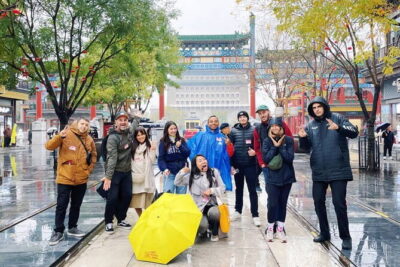
The session begins with a short walk through Liulichang before you enter the studio. That opening gives you a feel for the district’s connection to Chinese arts, books, calligraphy, and traditional craft. It is not a long sightseeing tour, so keep your expectations sensible. You are getting an introduction and a little local context, not a full walking tour of Beijing.
I like this order. You first see the setting, then try the craft connected to it. The studio portion feels more meaningful when you have already walked through the cultural district and heard a few stories about the area from the local guide.
The guides speak English and Chinese. Bruce Gao is named in the feedback from several sessions, and one account also describes working with Bruce and his friend. Communication support was especially helpful during seal carving, where the meaning and shape of the Chinese characters matter as much as the cutting itself.
More Calligraphy Classes in Beijing
- Beijing Calligraphy Class
★ 4.9 · 112 reviews - Chinese Calligraphy Class for Small Group
★ 5.0 · 104 reviews - Beijing Historic City Guided Walking Tour + Calligraphy Creation
★ 5.0 · 59 reviews
Choosing your Chinese art form
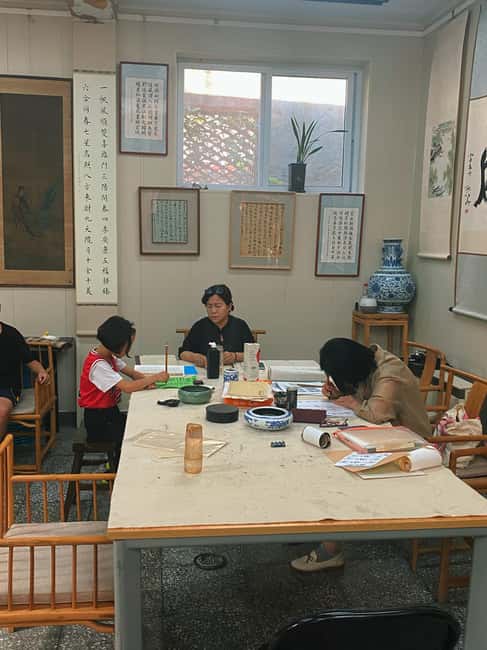
The most important decision comes early: select one of three activities. Each has a different pace and a different kind of souvenir. Think about what you want to bring home before booking.
Calligraphy: slow brushwork with a personal meaning
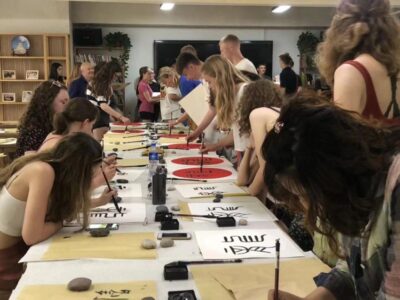
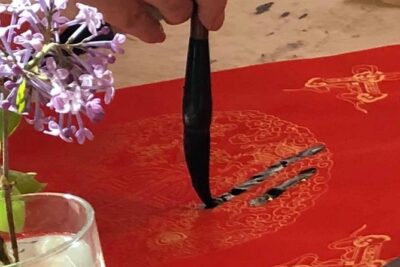
Calligraphy is the most direct introduction to Chinese brush art. You learn how ink, water, brush pressure, and movement work together. The goal is not simply to copy a character neatly. It is to find a steady rhythm and understand why each stroke has its place.
You can write a meaningful Chinese proverb or your own name on rice paper. That gives the lesson a personal angle. A proverb creates a piece with a broader cultural meaning, while your name makes the souvenir more closely tied to your time in Beijing.
The session is suitable for complete beginners. You do not need to arrive knowing how to hold a brush or write Chinese. Expect practice before the final sheet, since brushwork takes control and patience. Your first attempts may look less like museum pieces and more like honest evidence that you tried. That is part of the charm.
Calligraphy is likely the best choice if you want a quiet activity and a souvenir that is easy to pack. It also helps people who choose seal carving, since practicing the characters first can make the carving process easier.
Fan painting: a useful piece of art
Fan painting offers a different experience. You paint on a delicate silk round fan, creating something decorative that also has a practical purpose. Classic subjects include bamboo and orchids.
This option may suit you if you enjoy color and image-making more than lettering. The finished fan is lighter and more visual than a calligraphy sheet or stone seal. It also makes a distinctive souvenir, though you will want to protect it carefully in your luggage.
The supplied details do not specify the exact amount of instruction or the motifs available beyond bamboo and orchids, so ask the guide what designs are possible when you arrive. The small-group setting should give you a chance to ask for help with composition and brush control.
A completely different kind of day out on the same trip:
- From Beijing: Mutianyu Great Wall Tours with Options
★ 4.9 · 9,216 reviews - Beijing: Forbidden City Tour(Group/Private)-Tickets Included
★ 4.8 · 7,974 reviews - Beijing: T-Square & Forbidden City Group or Private Tour
★ 4.8 · 4,446 reviews - All-Inclusive Tour: Tiananmen Square, Forbidden City, Great Wall
★ 5.0 · 2,873 reviews
Seal carving: the most unusual choice
Seal carving is the most distinctive option. You create a Chinese name chop, a traditional stamp used as a personal signature. Instead of simply purchasing a carved seal in a shop, you learn how the characters are planned and cut.
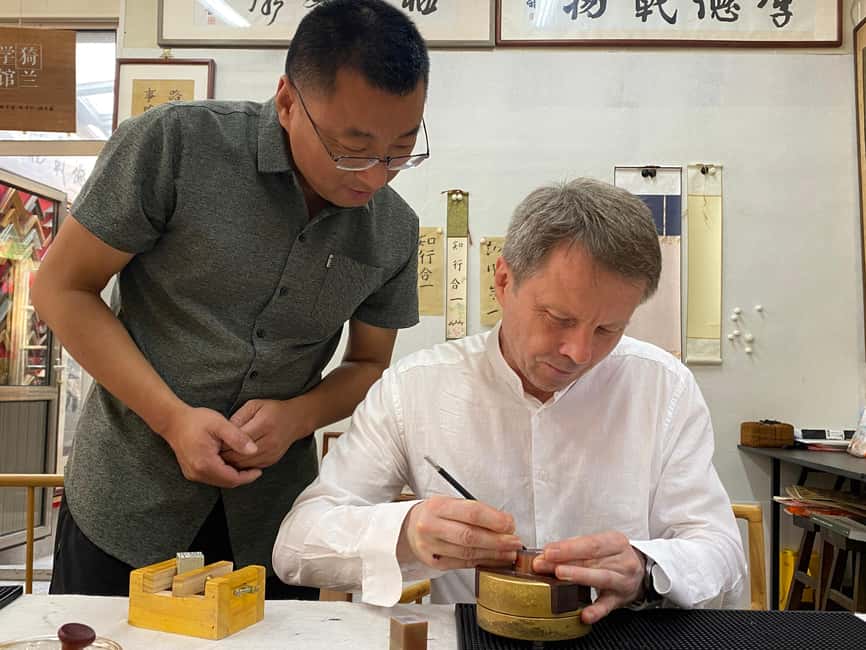
This activity rewards patience. One participant who chose seal making appreciated getting to practice on several other stones before working on the final one. That is a useful feature for beginners. You can learn how the tool behaves, how much pressure to use, and how easily a small mistake can change a character.
The process also includes a chance to practice calligraphy, since you need to write or understand the characters that will appear on the stone. That gives the carving a stronger connection to language and personal identity.
Choose seal carving if you want the most hands-on and memorable workshop. It may also be the best pick for people who enjoy making objects rather than decorating paper. The tradeoff is that carving demands more concentration, and the final result may show the marks of a first attempt. That is not a flaw. It proves you made it.
Inside the traditional studio
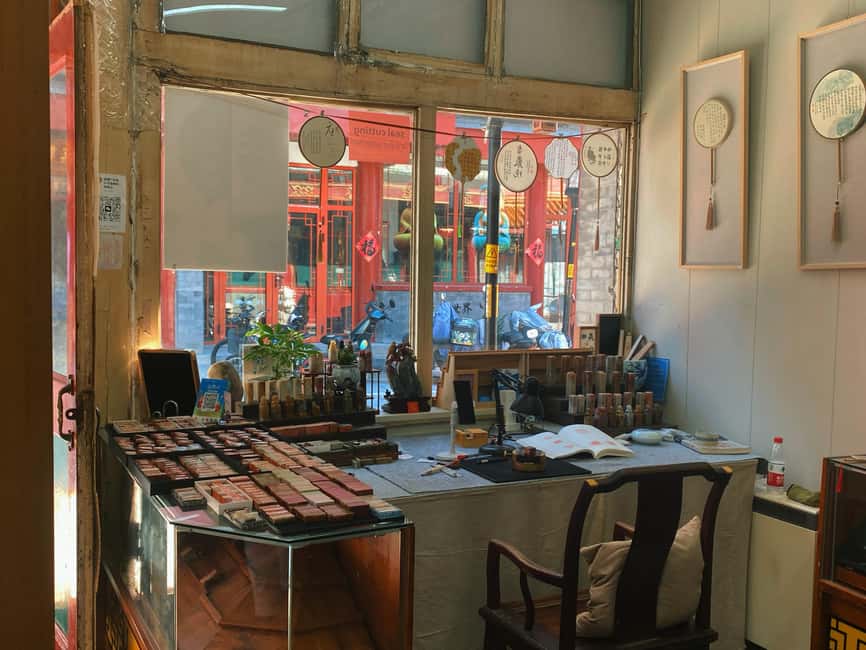
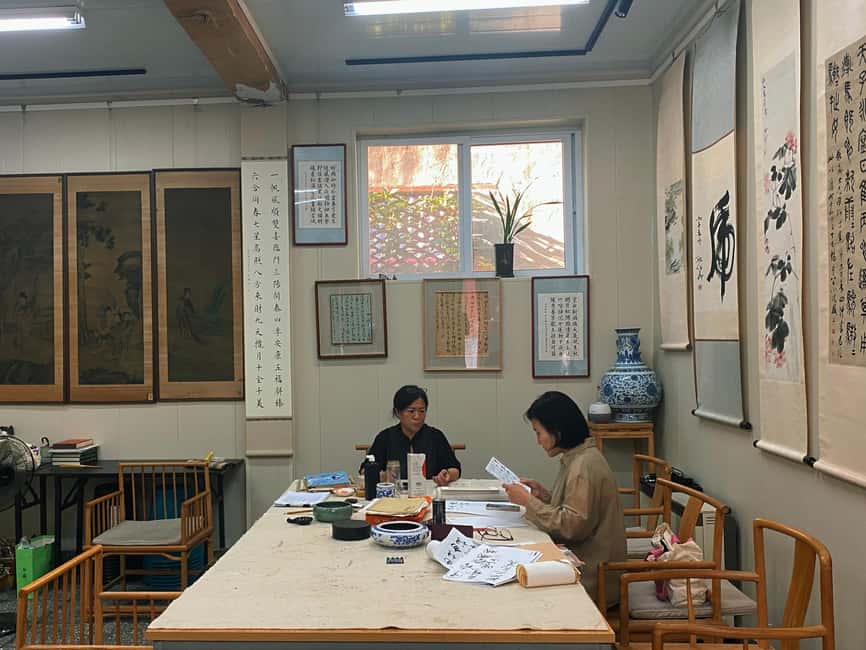
The studio is described as a calm setting away from the crowds. That quiet atmosphere is important because all three arts need attention. Brushwork, silk painting, and stone carving are poor matches for a rushed, noisy classroom.
Your artisan provides the materials and demonstrates the basic technique. You then work under guidance, asking questions as you go. The experience is not designed as a lecture. You spend most of the time making something.
The small-group or private format is a real advantage here. In a large class, you might wait while an instructor helps someone else. With fewer people, you can get corrections while your work is still in progress. That is particularly useful for seal carving, where the wrong angle or too much force can damage the design.
The instructor’s role is more coach than performer. English support is available, but artistic instruction can still involve gestures, demonstration, and close observation. The feedback repeatedly praises the help and patience of the instructors. That is exactly what a first-time craft session needs.
What the two to two-and-a-half hours feel like
The total time is long enough for a proper introduction without taking over your day. The short Liulichang walk comes first, followed by the studio lesson and your chosen craft.
A likely rhythm is:
- Meet the guide at Liulichang East Street
- Walk briefly through the cultural district
- Enter the traditional studio
- Learn about the selected art form
- Practice the basic movements or characters
- Create the final calligraphy, fan, or seal
- Take your handmade piece home
Do not treat the duration as a guarantee that every activity will receive equal time. You choose one workshop, and the level of personal guidance can shape the pace. A seal may require more careful work than a simple calligraphy exercise, while a painted fan depends on how much detail you choose to add.
You should arrive ready to concentrate. This is not an attraction where you snap a photograph and move on in twenty minutes. The value comes from slowing down and allowing the instructor to correct you.
Why the personal souvenir is worth the price
At $75 per person, this is not the cheapest way to spend an afternoon in Beijing. You can buy calligraphy, fans, and seals for less in local shops. The difference is that here you receive materials, instruction, cultural explanation, and the satisfaction of making the object yourself.
I think the price makes the most sense for people who place value on participation. A shop-bought seal may be more polished, but it will not carry the same memory. A fan painted under guidance has a story attached to it. A sheet of calligraphy in your own hand can remind you of the effort behind every stroke.
The price also includes the artisan’s time. That matters in a small group, where you can receive individual corrections rather than a standard demonstration. Private sessions are available, though the supplied information does not state an additional price for that option.
If you are mainly looking for a low-cost sightseeing stop, this may feel expensive. If you want an activity that adds a personal layer to your visit, the value is stronger. You are paying for time, attention, and a finished object, not just entry to a room.
What the strongest praise tells you
The most consistent positive point is the instruction. One participant called the instructor very helpful and supportive. Another praised Bruce and his friend for being patient and encouraging. That matters more here than flashy surroundings because a beginner’s enjoyment depends on how safely and clearly the technique is explained.
The seal-carving session received especially specific praise. The chance to practice on several stones before carving the final piece reduced the pressure of making a mistake. The added calligraphy practice also helped connect the written characters to the finished seal.
Another participant took part in both calligraphy and carving with the master’s supervision and described the session as a way to learn about Chinese cultural heritage. The activity seems to work best when you treat it as a creative lesson with cultural context, not merely as a souvenir factory.
The feedback also includes strong praise for the atmosphere away from Beijing’s major tourist sites. Liulichang still gives you a sense of place, and the studio setting offers a change of pace from crowded landmarks.
Practical details before you book
Transportation is not included, so plan your route to the small square at the entrance of Liulichang East Street. The exact starting times vary, and you need to check availability for the date you want.
You can book a private or small-group session. A smaller format is worth considering if you want detailed corrections, have a particular name or proverb in mind, or are traveling with family or friends.
The activity is wheelchair accessible. Children under five cannot participate. Older children may be able to join, but the supplied information does not state a minimum age beyond that restriction.
No previous experience is needed. Curiosity is encouraged, which is the right attitude. You do not need to know Chinese, understand calligraphy theory, or have artistic training. You simply need to be willing to practice and accept that handmade work will look handmade.
You can cancel up to 24 hours ahead for a full refund, and reserve now while paying later. Those terms are helpful if your Beijing schedule is still shifting.
Is this Liulichang workshop right for you?
I would book this experience if you want a quiet, creative break from Beijing’s major sights and like the idea of bringing home something made by you. Seal carving is my strongest recommendation for a distinctive souvenir, especially because the practice stones help beginners build confidence. Calligraphy is the easiest option to pack, while fan painting suits anyone who prefers images to characters.
I would skip it if you want a fast tour, a large historical presentation, or a bargain-priced activity. The $75 cost is easiest to justify when you value personal instruction and a handmade keepsake.
For most curious adults and older children, this is a thoughtful way to spend part of a Beijing afternoon. You walk through Liulichang, meet an artisan, learn why the craft matters, and leave with more than a photograph. You leave with evidence of your own effort.
FAQ
How long does the Liulichang workshop last?
The activity lasts approximately two to two-and-a-half hours, including the short introduction to Liulichang and the selected studio workshop.
Which activities can I choose from?
You can choose one hands-on activity: Chinese calligraphy, painting on a silk round fan, or carving a Chinese name seal.
Do I need previous artistic experience?
No. Previous experience is not needed, and curiosity is encouraged.
Where is the meeting point?
Meet at the small square entrance of Liulichang East Street. The guide will hold a Sino-Voyages sign.
Is transportation included?
No. Transportation to the venue is not included.
What languages are available, and can I book privately?
Instruction is available in English and Chinese. Private and small-group formats are available.
Newest reviews from Beijing
- Beijing: Explore the Forbidden City in Hanfu★ 5.0 · 4 reviews
- Beijing Tai Chi and Tea Ceremony Experience★ 5.0 · 4 reviews
- Jinshangling Great Wall Of Beijing Tickets And Other Option★ 4.0 · 4 reviews
- Private Full-Day Great Wall of China Hiking Tour from Jiankou to Mutianyu★ 4.5 · 4 reviews
- Tour the Great Wall with a Native from Downtown Beijing★ 4.8 · 4 reviews
- Beijing: Badaling Great Wall Private Tour w Language Option★ 4.3 · 4 reviews
- Beijing:Summer Palace & Tea or Calligraphy Experience Tour★ 4.6 · 4 reviews
- Beijing Private Tour to Huaibei Ski Resort and Mutianyu Great Wall with Lunch★ 5.0 · 4 reviews
Calligraphy Classes, compared.
Beijing Historic City Guided Walking Tour + Calligraphy Creation
Read our review →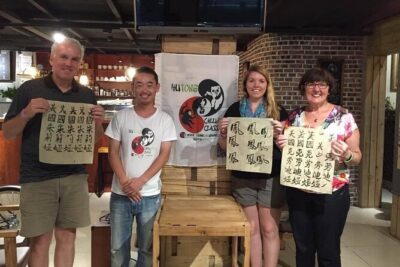
Beijing Wangfujing Calligraphy Class by Forbidden City
Read our review →
Beijing Culture: Tea Ceremony, Heritage Instrument & Calligraphy
Read our review →
Beijing Wangfujing Calligraphy Class Nearby Forbidden City
Read our review →
2-Hour Chinese Calligraphy with an Artist in Shanghai, China
Read our review →Browse the lists this tour appears in