
Reviewed · WALKING TOURS
Private 2-Hour Walking Tour of Shanghai’s Jewish Ghetto
Shanghai’s past is closer than it looks. This private walk through Hongkou District connects the Jewish Refugees Museum, former refugee neighborhoods, Chinese daily life, and a Buddhist temple in one compact two-hour outing. I like the access to places you could easily miss on your own, especially the local streets and, with the right guide, former Jewish refugee housing. I also like that the tour is private, so your questions and pace matter.
The main caution is focus. Only part of the tour centers directly on Jewish history, while Xiahai Temple and modern neighborhood life take up meaningful time. At $131.28 per person, the price can make sense for a small group that wants personal guidance, but it feels high if you mainly want to see the museum, which you can visit independently.
In This Review
- Key points to know before booking
- Why Hongkou matters to Shanghai’s Jewish story
- Starting on Changyang Road
- Ohel Moishe Synagogue and the Jewish Refugees Museum
- The Joint Distribution Committee and the work of helping refugees
- Huoshan Park and a quiet memorial pause
- Walking through a living neighborhood
- Xiahai Temple, the unexpected final stop
- What the guides add, and where they may fall short
- Is $131.28 per person fair?
- Who should book this walk?
- Should you book the Shanghai Jewish Ghetto tour?
- FAQ
- How long is the walking tour?
- Where does the tour start?
- Where does the tour end?
- Is the tour private?
- Is an English-speaking guide included?
- Is admission to the Jewish Refugees Museum included?
- Is admission to Xiahai Temple included?
- Are food and drinks included?
- Is hotel pickup and drop-off provided?
- Can I cancel for a full refund?
Key points to know before booking
- Ohel Moishe Synagogue is the emotional center: The Jewish Refugees Museum occupies the former synagogue and explains why Shanghai became a place of refuge.
- Hongkou gives you more than museum displays: The walk includes local lanes, shops, seafood stalls, restaurants, and glimpses of present-day neighborhood life.
- Guide quality shapes the experience: Guides including Annie, Mason, Masin, Zoe, Mary, and others have received strong praise, but the level of Jewish history expertise can vary.
- Xiahai Temple changes the subject: This Buddhist temple offers useful cultural context, yet some people find it unrelated to a tour focused on Jewish refugees.
- It is a true private tour: Only your party participates, with an English-speaking local guide and a return to the starting area.
- Two hours passes quickly: The museum can take much of the allotted time, so ask early if you want more street history, former refugee homes, or time for questions.
Why Hongkou matters to Shanghai’s Jewish story
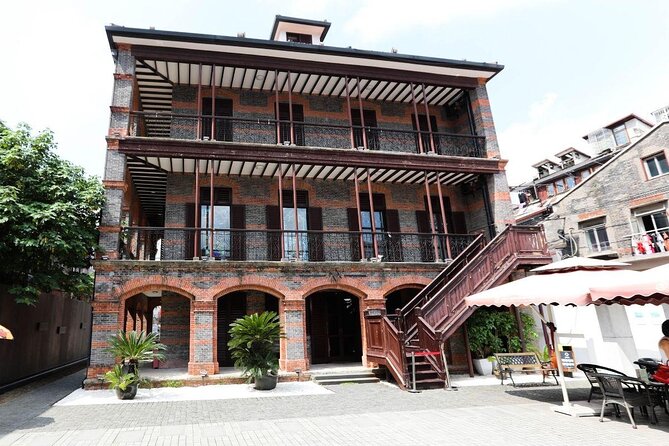
The Hongkou District is not a polished memorial zone. It is a lived-in part of Shanghai, with ordinary streets and active local businesses. That is part of the appeal. You are not simply moving between grand monuments. You are walking through an area where Jewish refugees once lived alongside Chinese residents during some of the hardest years of the 20th century.
Jewish refugees arrived in Shanghai in several waves. Some came earlier from places such as Iraq, Iran, and Russia. Others fled persecution in Europe, including the Nazi period. Shanghai offered a rare place of entry for people who had few options left.
Your guide sets this story against the streets themselves. The subject becomes more understandable when you see the small lanes, older buildings, neighborhood shops, and modest living spaces rather than only reading dates on a wall.
That setting also helps explain why this tour can feel different from a standard museum visit. You get a local Chinese perspective on a Jewish community that once lived here, rather than a tour led by a Jewish expat or a specialist guide with family ties to the refugees. For some people, that wider viewpoint is useful. For others, it may feel less personal or less precise.
More Walking Tours in Shanghai
- Shanghai City Guided Walking Tour | China’s 1st and Best Rated
★ 5.0 · 285 reviews - Shanghai Highlights Walking Tour With A Real Local
★ 4.9 · 153 reviews - Shanghai Breakfast Walking Tour of Former French Concession
★ 5.0 · 139 reviews
Starting on Changyang Road
The meeting point is on Changyang Road in Yangpu District. There is no hotel pickup, so you need to reach the starting point yourself. The area is near public transportation, and one guide, Mary, even helped a group find the right subway after the tour.
The meeting instructions deserve attention. Some people had trouble communicating in advance about exactly when and where to meet, while others received detailed directions by email from the local office. I would confirm the meeting point and guide contact before setting out, especially if you are unfamiliar with Shanghai’s street layout.
Once together, you walk rather than ride between the main stops. That matters here. The lanes and older residential areas are part of the story, and a car would turn the neighborhood into scenery viewed through glass.
Because the tour ends back at the meeting point, you can plan the rest of your day from there. The format is simple, but allow enough time to arrive without rushing. A late start would cut into the museum and walking time, and two hours is already a tight schedule.
Ohel Moishe Synagogue and the Jewish Refugees Museum
The Jewish Refugees Museum is the tour’s central stop. It was built on the site of Ohel Moishe Synagogue, a sanctuary that served Jewish refugees in Shanghai. The building gives the story a physical center: this was not merely a temporary exhibit about displaced people. It was a place where refugees gathered, prayed, and tried to maintain a community.
Inside, you can expect exhibitions about Jewish life in Shanghai and the events that brought refugees here. The museum also helps explain the role of the synagogue during years of war, persecution, and uncertainty.
This is where the guide’s contribution varies most. A strong guide can connect the displays to the surrounding district, explain the arrival of refugees from different parts of Europe and the Middle East, and answer questions about how the community lived. Guides such as Annie, Mason, Masin, and Zoe have been praised for clear English, warmth, and strong background knowledge.
But the museum also has its own material and volunteer interpretation. Some visitors felt the displays explained the subject well enough to visit without a private guide. Others found the guide essential, especially when they wanted the wider political and social context.
My advice is to treat the museum as more than a quick photo stop. Read the displays, then ask your guide to explain what happened outside the synagogue. If your family has a direct connection to Shanghai’s Jewish community, tell the guide at the beginning. One participant visited the synagogue because a parent had spent eight years in China after fleeing the Nazis, and that personal connection made the stop especially powerful.
The museum may take close to half your two-hour tour. If your priority is Jewish history, say so before the walk begins and ask for enough time here.
The Joint Distribution Committee and the work of helping refugees
The route also passes the American Jewish Joint Distribution Committee. Your guide explains how the organization helped refugees who arrived in Shanghai with little money, few possessions, and uncertain futures.
This stop is more about explanation than admission or a formal museum visit. You will likely hear how aid centers supported people with basic needs and helped the displaced community survive. The value depends heavily on the guide’s ability to put the organization into the larger story.
The stop is useful because it moves the tour beyond buildings and dates. Refugee life was not sustained by the synagogue alone. Aid networks, local contacts, and support from outside Shanghai all mattered.
If your guide rushes this section, ask for specific examples of the help provided. The route includes several important references, and a clear sequence makes the story easier to follow. Some people felt explanations were not arranged logically, so questions can help keep the narrative on track.
A completely different kind of day out on the same trip:
- Authentic Local Food Tour in Central Shanghai
★ 5.0 · 1,382 reviews - Zhujiajiao Water Town and Shanghai City Private Day Tour
★ 5.0 · 1,016 reviews - Private Shanghai Full Day City Tour with Old and New Highlights
★ 5.0 · 995 reviews - Shanghai: Hop-on Hop-off Bus Ticket and Optional Attractions
★ 3.4 · 692 reviews
Huoshan Park and a quiet memorial pause
Huoshan Park offers a break from the narrow streets. The park includes a monument commemorating Jewish immigrants, giving you a place to pause and think about the people whose lives unfolded in this district.
This is not a major sightseeing park, and you should not expect a grand landmark. Its value is its mood and setting. After the museum’s documents and photographs, a small green space can make the past feel less abstract.
A good guide will explain what the memorial represents and tie it to the streets you have already walked. The park also helps pace the tour. Hongkou can be crowded and visually busy, so a short stop in a quieter area is welcome.
If you want detailed architecture or a long look at specific former Jewish buildings, ask your guide to point them out along the way. The exact route and amount of street commentary may depend on the guide.
Walking through a living neighborhood
The most distinctive part of the experience may be the shift from formal history to present-day life. You pass through a local neighborhood where Chinese residents still live, work, shop, and socialize.
You might see craft shops, seafood stalls, and simple restaurants. These are not staged attractions. They show how the district functions now, which makes the walk feel more grounded than a visit limited to memorial buildings.
Several guides have taken groups into older residential spaces, sometimes with permission from local residents. One guide showed visitors the room where his grandfather had rented accommodation to Jewish refugees. Another guide, Annie, helped a group enter homes where Jewish refugees had lived, while an elderly Chinese couple welcomed visitors into their room and spoke through her.
These moments are unusual and cannot be guaranteed. They depend on local permission, timing, and the guide’s relationship with the neighborhood. You should regard them as possible personal encounters, not promised program items.
This part also calls for courtesy. You are walking through someone’s home area, not an open-air museum. Follow your guide’s lead, ask before taking photographs, and remember that today’s residents are not part of a performance.
The modern neighborhood can be a strength or a mismatch. I like it because it shows that history sits inside ordinary life. If you want an itinerary devoted only to Jewish sites, however, you may prefer to spend your full visit at the museum and nearby historical buildings.
Xiahai Temple, the unexpected final stop
The tour concludes at Xiahai Temple, a Buddhist temple once associated with fishermen and known as the fish man’s temple. It is described as being off the main tourist route and offers a chance to learn how a Chinese religious site functions within the neighborhood.
This stop broadens the tour beyond the refugee story. Your guide can explain Buddhist customs and the temple’s local role while you look around the sacred grounds.
Still, the change in subject is the clearest weakness of the tour. Some people appreciate the cultural comparison and the chance to see a less visited place. Others feel the temple has little to do with Jewish Shanghai and would rather use those minutes to see more refugee housing, Jewish architecture, or neighborhood sites.
I would make your preference clear at the start. If you are curious about Chinese religion and want a wider look at Hongkou, keep the temple. If your interest is family research, wartime refuge, or Jewish community life, ask whether the final section can be shortened or replaced with more Jewish-related commentary.
What the guides add, and where they may fall short
The strongest praise is reserved for the guides. Annie is repeatedly described as warm, prompt, articulate, and excellent in English. She has been especially valued for adapting the walk to people’s interests and helping visitors understand both Jewish refugee life and modern Hongkou.
Mason and Masin have also received high marks for personal stories, clear explanations, and local knowledge. One guide invited a group into his home and showed photographs connected with refugee accommodation. Zoe has been praised for going beyond the basic route, answering questions, and making sure the group understood the area. Mary helped with subway directions, a small service that can be very useful at the end of a walking tour.
The experience is not perfectly consistent. Some guides have been described as sweet and helpful but less prepared on Jewish history. A few explanations felt insensitive or lacked the emotional understanding that this subject can require, particularly for people with family connections to the Holocaust or wartime displacement.
This does not mean a Chinese local guide is a poor choice. In fact, a local perspective can show how the district fits into Shanghai life today. It simply means you should not assume every guide has the same specialist background.
At booking or before the meeting, ask for a guide with strong Jewish history experience if that is your main reason for going. Also explain any family connection or research goal. A private format gives you a better chance of shaping the conversation.
Is $131.28 per person fair?
The listed price is $131.28 per person, with group discounts available. That is a serious price for two hours, especially since the museum is the main paid admission and can be visited without a private guide.
For a couple or a small group that values a private English-speaking guide, the cost may be reasonable. You are paying for local orientation, transport-free walking between sites, historical explanation, and the possibility of personal access to residential spaces. The best guides make the neighborhood readable in a way that a museum brochure cannot.
The value drops if the guide mainly repeats information already available inside the museum, rushes the displays, or spends too much time at the unrelated temple. It also drops if your party is large enough that the per-person price becomes difficult to justify.
I would book this for the access and conversation, not simply for admission tickets. If you plan to visit the museum on your own and only want Jewish sites, independent exploration may give you more control. If you want a local person to connect the museum with homes, streets, aid organizations, and current neighborhood life, the private format has a stronger case.
Who should book this walk?
This tour suits you if you want a focused introduction to Jewish Shanghai but also care about present-day Hongkou. It is a good fit for first-time visitors who want context without committing to a full-day excursion.
It is particularly useful for anyone researching family connections. Tell the guide about names, dates, or places that matter to you, although the tour does not promise formal genealogy research.
You should also enjoy walking through ordinary urban areas. This is not a polished sequence of grand buildings. The appeal comes from modest streets, local life, museum displays, and the contrast between Jewish refugee history and Chinese neighborhood culture.
You may want another option if you are seeking a specialist Jewish historian, a fully Jewish-focused route, or a longer visit to individual sites. Two hours is enough for an introduction, not an exhaustive study.
Should you book the Shanghai Jewish Ghetto tour?
Book it if you want a private, human-scale introduction to Hongkou and are willing to accept a broader route. The museum, synagogue, memorial, local streets, and possible access to former refugee homes can create a moving and memorable visit, especially with a guide such as Annie, Mason, Masin, or Zoe.
Skip it, or visit the museum independently, if your only goal is Jewish history and you do not want time spent at a Buddhist temple or in present-day Chinese neighborhoods. Before booking, confirm the meeting details, state your priorities, and ask how much time will be given to the museum and Jewish sites.
At $131.28 per person, this is a personal guiding experience rather than a bargain sightseeing ticket. Choose it for the stories, local access, and questions you can ask. That is where the tour earns its keep.
FAQ
How long is the walking tour?
The tour lasts approximately two hours.
Where does the tour start?
It starts on Changyang Road in Yangpu District, Shanghai.
Where does the tour end?
The activity ends back at the meeting point.
Is the tour private?
Yes. Only your group participates in the private activity.
Is an English-speaking guide included?
Yes. A local English-speaking guide is included.
Is admission to the Jewish Refugees Museum included?
Yes. Admission to the Jewish Refugees Museum is included.
Is admission to Xiahai Temple included?
Yes. Admission to Xiahai Temple is included.
Are food and drinks included?
No. Food and drinks are not included.
Is hotel pickup and drop-off provided?
No. Hotel pickup and drop-off are not included.
Can I cancel for a full refund?
Yes, if you cancel at least 24 hours before the experience start time. Cancellations made less than 24 hours in advance are not refunded.
More 2-Hour Experiences
- 2-Hour Chinese Calligraphy with an Artist in Shanghai, China
★ 5.0 · 46 reviews - 2-Hour Private Chinese Ink and Brush Painting Workshop in Shanghai
★ 5.0 · 15 reviews - Private 2-Hour Shanghai Lanes and Alleyways Walking Tour
★ 4.5 · 14 reviews - 2-Hour “Ancient & Modern” Beijing Sidecar Tour (Day /Night)
★ 5.0 · 36 reviews
Newest reviews from Shanghai
- Quick Tour to Xi’an Terracotta Warriors from Shanghai by Air in One Day★ 5.0 · 4 reviews
- Shanghai Zhujiajiao water town,Yugarden&Bund one day tour★ 5.0 · 4 reviews
- Wuzhen Private Full-Day Tour from Shanghai★ 5.0 · 4 reviews
- Private Round Trip Transfer to Zhouzhuang Water Village from Shanghai★ 5.0 · 4 reviews
- Full Day Private Tour Amazing Shanghai City Highlights★ 5.0 · 4 reviews
- Shanghai Tower Observation Deck 118 floor Tickets Pre-booking.★ 5.0 · 4 reviews
- Private Wet Market Visit with Cooking Class in Shanghai★ 3.0 · 4 reviews
- Zhujiajiao & Shanghai:Small Group Tour Water Town to Skyline★ 5.0 · 4 reviews
Walking Tours, compared.
Beijing Hutong Walking Food and Beer Tour at Hidden Restaurants
Read our review →
Private Beijing Walking Tour of the Forbidden City with 7 Options
Read our review →
Dark Side of Hong Kong – Kowloon Caged Homes Walking Tour
Read our review →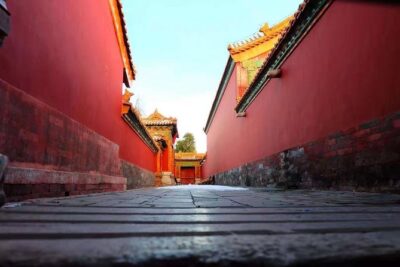
Forbidden City Private Walking Tour with Optional Sights
Read our review →
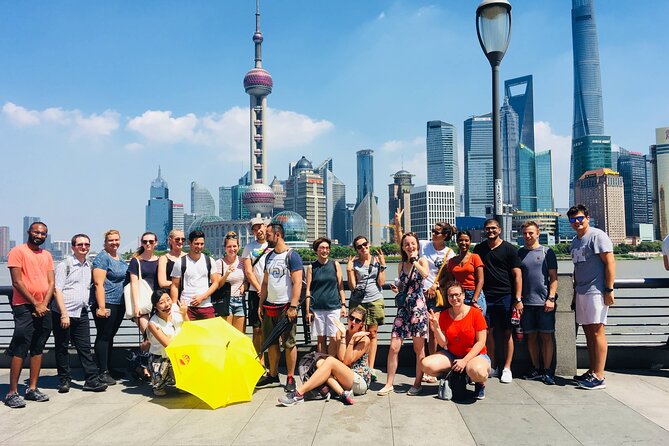
Shanghai City Guided Walking Tour | China’s 1st and Best Rated
Read our review →
Introduction to Hong Kong: Central Tip Based Walking Tour
Read our review →
Browse the lists this tour appears in