
Reviewed · TEA TASTINGS
Tea Tasting and Pairing Concept Workshop
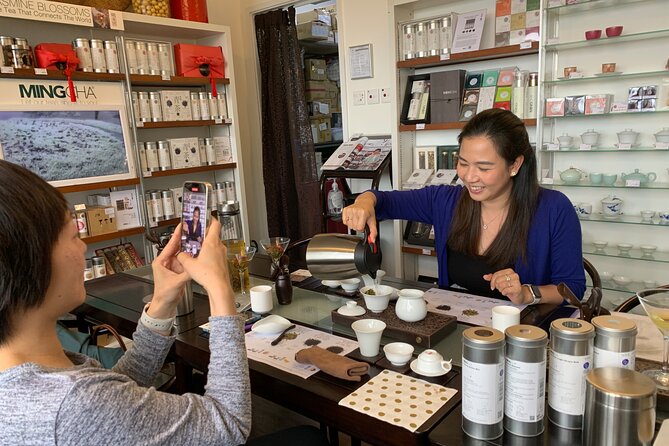
Tea can turn a snack into a lesson. This 90-minute workshop at MingCha Tea House combines four premium Chinese teas with dried nuts, chocolate, and flower honey toast. I like the hands-on brewing and the chance to compare green, scented green, red, and oolong teas. The main drawback is the location in Chai Wan, which is less central than many Hong Kong sightseeing stops.
You will taste, smell, watch, and handle the tea rather than simply sip a cup and leave. Vivian, the host, receives especially warm praise for her humor, patience, and clear teaching. Still, the $65.60 price is a considered purchase for a short activity, so it makes the most sense if tea is a real interest or you want a calm cultural break.
In This Review
- Key points to know before booking
- What happens during the 90-minute tea workshop
- Green, scented green, red, and oolong teas
- Learning the gongfu method with traditional tea ware
- Pairing tea with nuts, chocolate, and flower honey toast
- Vivian’s teaching style and the mood of the class
- Reaching MingCha Tea House in Chai Wan
- Is $65.60 a fair price?
- Who will get the most from this experience?
- Timing, booking, and cancellation details
- My verdict on this Hong Kong tea class
- FAQ
- How long does the Tea Tasting and Pairing Concept Workshop last?
- How much does the workshop cost?
- Which teas are included?
- What food is paired with the tea?
- Where does the workshop begin and end?
- Is the workshop suitable for children?
- How many people can join the activity?
- Can I cancel for a full refund?
Key points to know before booking
- Four tea styles in one sitting: Sample green, scented green, red, and oolong teas selected from premium categories.
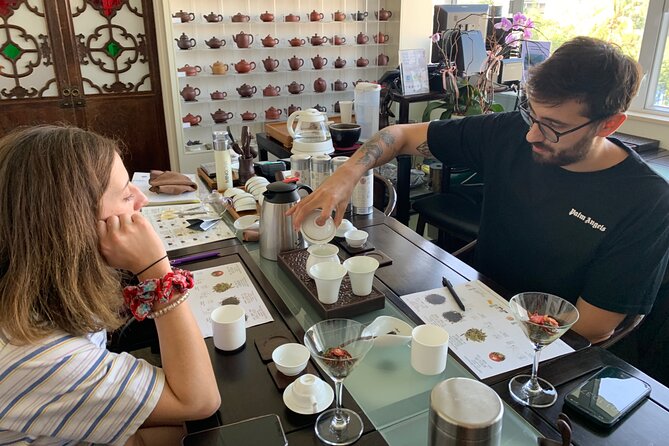
- Gongfu brewing by hand: Use traditional tea ware to learn how tea is prepared and poured in the Chinese style.
- Food pairings with a purpose: Try dried nuts, chocolate, and flower honey toast alongside different teas.
- A strong host makes the difference: Vivian is praised for her warmth, humor, teaching, and help with practical needs such as arranging a taxi.
- Small-group setting: The workshop accepts a maximum of 20 people, making it more personal than a large tasting.
- Plan around Chai Wan: The meeting point is at MingCha Tea House, B2, 15/F, Fortune Factory Building Block B, 40 Lee Chung Street.
What happens during the 90-minute tea workshop
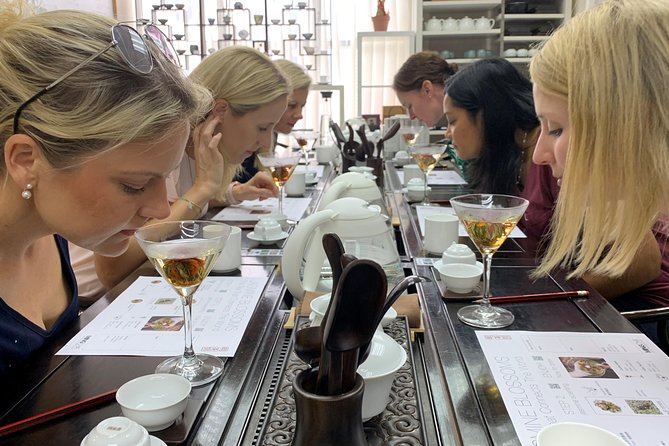
The session is built around tasting, but it is not a passive tasting flight. You use your senses to look at dry leaves, smell the tea, taste the brewed liquid, and notice how preparation changes the result.
The exact order of the four teas is not specified, so you should expect the host to guide the sequence rather than follow a fixed public menu. The categories are clear: green, scented green, red, and oolong. That gives you a useful spread of tea styles, from lighter flavors to fuller and more aromatic cups.
I like this format because four teas are enough to show real differences without turning the class into a blur of samples. A longer tasting can sound impressive, but too many cups make it hard to remember what you liked. Here, you have time to compare the teas and ask for recommendations.
The workshop also includes a before-and-after look at tea leaves. You can see how dry leaves change once they meet hot water, then connect that visual change with the aroma and taste in your cup. That small experiment is one of the more useful parts of the session, especially if you usually buy tea in bags and have never paid much attention to whole leaves.
More tea tastings:
- Tea Tasting & Brewing Experience
★ 5.0 · 10 reviews - Traditional Chinese Tea Ceremony Experience
★ 4.7 · 74 reviews - Beijing Culture: Tea Ceremony, Heritage Instrument & Calligraphy
★ 5.0 · 57 reviews
Green, scented green, red, and oolong teas
The four categories give the class a broad introduction to Chinese tea. Green tea offers a lighter starting point, while scented green tea adds fragrance to the tasting. Red tea, a category often described in English as black tea, brings a deeper profile. Oolong sits between styles and can show how varied partially processed tea can be.
The point is not simply to label each cup. You learn how the tea’s character connects with food and preparation. The host can also suggest other teas that may suit your taste, which is valuable if you want to continue exploring after the workshop.
A tasting like this is best approached with an open mind. You may arrive thinking you prefer strong tea and leave liking a scented green, or come expecting floral tea to be too delicate and find that it works well with something sweet. The class gives you a structured way to test those assumptions.
The information is practical rather than overly formal. You learn about tea types and preparation while drinking them, so the lesson does not feel separate from the pleasure of the tasting.
Learning the gongfu method with traditional tea ware
The hands-on brewing is a major reason to choose this workshop. You do not just watch Vivian prepare everything. You learn how to steep and pour tea using traditional tea ware and the gongfu method.
This style uses small vessels and careful pouring. The process makes you slow down and pay attention to the leaves, water, timing, and serving. Even if you never recreate the full method at home, it helps explain why the same tea can taste different when prepared with care.
One particularly useful part is learning how to pour properly. That sounds minor, but it is the sort of detail many casual tea drinkers never learn. You also gain a better sense of how tea is shared and served in a traditional setting.
The workshop is described as family-friendly, and the activity has enough visual action to keep children involved. Handling tea ware, watching leaves open, smelling the brewed tea, and trying small food pairings gives younger participants several ways to take part. Parents should still consider their children’s patience around hot liquids and breakable cups, since the session centers on careful tea preparation.
Pairing tea with nuts, chocolate, and flower honey toast
The food is not a full meal. It is a set of small pairings designed to show how tea interacts with different flavors and textures.
You will try dried nuts, chocolate, and flower honey toast with the teas. These choices cover savory, rich, sweet, and floral notes. A nut can bring out one side of a tea, while chocolate may make a fuller tea seem softer or more rounded. The flower honey toast adds another sweet and fragrant combination.
The value here is practical. After the workshop, you can make better choices when serving tea at home. You may learn that a tea you find too light on its own works well with sweet food, or that a stronger tea holds up better beside chocolate.
The pairing also breaks up the tasting. Ninety minutes of sipping without food could become tiring, especially for children or anyone new to tea. Small bites give the session a relaxed rhythm and make the lesson easier to remember.
The available details do not specify the amount of food or whether the pairings can be adjusted for allergies and dietary needs. If that matters to you, ask MingCha Tea House before booking rather than assuming the snacks can be changed.
More workshops and classes in Hong Kong:
- Organic Chinese Dumpling Class with Market Walk
★ 5.0 · 88 reviews - Organic Xiao Long Bao Soup Dumpling Class & Market Walk
★ 5.0 · 62 reviews - Hong Kong Market Walking Tour & Chinese Cooking Class
★ 5.0 · 24 reviews - Photography Workshop and Photowalk (FIND YOUR DIRECTION)
★ 5.0 · 19 reviews
Vivian’s teaching style and the mood of the class
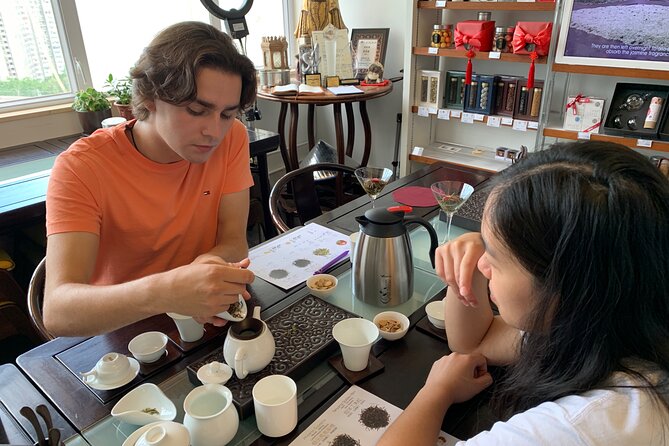
The host matters a great deal in a workshop like this. Vivian is repeatedly praised for being friendly, funny, passionate, and easy to follow. Her teaching appears to balance facts with conversation, which helps the class stay warm rather than stiff.
You also get a sense of personal attention from the way she responds to visitors. She has helped arrange a taxi and waited with one person until it arrived. That is a small detail, but it tells you something useful about her approach: the experience does not end the instant the last cup is poured.
Another strong detail is the Jasmine Blossoms presentation. One participant described it as especially beautiful and later took Jasmine Blossoms back to Bangkok for friends and colleagues. The supplied information does not say that this tea is part of the four-tea tasting, so I would not book expecting it as a guaranteed sample. Still, its mention suggests that the tea house may offer memorable specialty teas beyond the core workshop.
The class has a maximum of 20 people. That is not an intimate private lesson, but it is still more manageable than a large public demonstration. Your experience will depend partly on the final group size. With fewer people, you may have more time for questions and personal recommendations.
Reaching MingCha Tea House in Chai Wan
The meeting point is MingCha Tea House, B2, 15/F, Fortune Factory Building Block B, 40 Lee Chung Street, Chai Wan, Hong Kong. The activity ends at the same location.
Chai Wan is not the first area most visitors picture when planning a Hong Kong tea experience. That can be a drawback if your schedule is packed with stops around Central, Tsim Sha Tsui, or Victoria Harbour. You need to allow time to reach the building and find the tea house on the 15th floor.
The upside is that the workshop takes you beyond the most familiar sightseeing zones. You are visiting a working tea house rather than adding another polished attraction to a central shopping district. The meeting point is near public transportation, which helps, though the information provided does not identify a specific station or route.
Give yourself extra time to find Fortune Factory Building Block B. Industrial and commercial buildings can be less intuitive to navigate than hotels or museums, and a late arrival would cut into a short 90-minute session. Check the confirmation sent after booking for the most current meeting instructions.
Is $65.60 a fair price?
At $65.60 per person, this is not a cheap cup of tea. You are paying for instruction, four premium tea categories, traditional brewing, food pairings, and a guided experience lasting about an hour and a half.
I think the price can be fair if you value context and participation. A simple tasting would cost less, but it would not necessarily teach you how to prepare and serve the tea or explain why certain foods work with particular styles. The value increases for couples, families, and curious drinkers who want an activity they can discuss and repeat at home.
The price is harder to justify if you only want a quick drink or have limited time in Hong Kong. Since transport to Chai Wan is part of your day, the workshop works best when you plan it as a deliberate stop rather than squeeze it between two central attractions.
The high rating is encouraging. It has a five-star rating from 57 reviews, with 100 percent recommending it. That does not remove the basic price and location considerations, but it does support the idea that the teaching and atmosphere are the main strengths.
Who will get the most from this experience?
I would recommend the workshop to you if you fit one or more of these descriptions:
- You enjoy tea but know little about Chinese tea categories.
- You want a cultural activity that does not involve a long walking route.
- You like learning by tasting and handling objects rather than listening to a lecture.
- You are traveling with children who can manage a careful food and drink activity.
- You want ideas for pairing tea with snacks at home.
- You prefer a small-group class to a large sightseeing presentation.
It is also a good choice for someone who already drinks tea but wants to improve technique. Learning to steep and pour properly can change the way you approach loose-leaf tea.
I would be more cautious if you need a full afternoon meal, dislike fragrant teas, or have strict dietary requirements that need advance confirmation. The snack pairings are part of the experience, but this is not afternoon tea in the hotel-lounge sense.
Timing, booking, and cancellation details
The workshop runs for about 1 hour and 30 minutes, with two possible start times. The available details do not list those exact times, so check the booking calendar before planning your transport.
Confirmation is sent within 48 hours of booking, subject to availability. The activity accepts a maximum of 20 people and provides a mobile ticket, which is handy if you are moving around Hong Kong with only your phone.
Free cancellation is available up to 24 hours before the local start time for a full refund. Changes or cancellations inside that 24-hour window are not accepted for a refund. The policy also says that poor weather can lead to a new date or a full refund, although the workshop takes place indoors, so confirm the current arrangements if bad weather is forecast.
My verdict on this Hong Kong tea class
This workshop offers more than a tasting tray. You learn how tea leaves change, how traditional tea ware is used, how pouring affects the ritual, and how food can alter what you taste. Vivian’s friendly teaching appears to be the heart of the experience, and the strong rating supports that impression.
The two real questions are price and location. At $65.60, you should want a lesson, not just a beverage. And in Chai Wan, the tea house requires some planning if your hotel and sightseeing are elsewhere.
I would book it if you want a calm, hands-on cultural activity and are happy to make the trip for a focused tea lesson. I would skip it if your Hong Kong schedule is tight or you are looking only for a quick traditional drink near the main tourist districts.
FAQ
How long does the Tea Tasting and Pairing Concept Workshop last?
The workshop lasts approximately 1 hour and 30 minutes.
How much does the workshop cost?
The listed price is $65.60 per person.
Which teas are included?
You sample four teas from selected categories: green, scented green, red, and oolong.
What food is paired with the tea?
The pairings include dried nuts, chocolate, and flower honey toast.
Where does the workshop begin and end?
It begins at MingCha Tea House, B2, 15/F, Fortune Factory Building Block B, 40 Lee Chung Street, Chai Wan, Hong Kong. It ends back at the same meeting point.
Is the workshop suitable for children?
A family-friendly option is available, so children can join that version of the experience.
How many people can join the activity?
The maximum group size is 20 people.
Can I cancel for a full refund?
Yes. You must cancel at least 24 hours before the local start time for a full refund. Cancellations or changes made less than 24 hours before the start are not refunded.
More Food Tours in Hong Kong
- Hong Kong’s Tin Hau Hidden Eats Food Tour with 7+ Local Tastings
★ 5.0 · 352 reviews - Small-Group Hong Kong Island Food Tour
★ 5.0 · 343 reviews - Hong Kong Food Tour: Central and Sheung Wan Districts
★ 5.0 · 333 reviews - Hong Kong Street Food Tour with Locals – Dim Sum, Wonton & more
★ 5.0 · 226 reviews
Newest reviews from Hong Kong
- Lantau Peak Sunrise Climb★ 5.0 · 4 reviews
- Hong Kong MiniBus Transfer: Hotel / Cruise Terminal and Airport★ 4.5 · 4 reviews
- Hong Kong: Lantau Island & Tai O Cruise, Skip The Line Cable Car★ 3.5 · 4 reviews
- Private & Personalized Hong Kong Street Art Tour with a Local★ 5.0 · 4 reviews
- Classic Afternoon Tea Voyage in Hong Kong for 4 Pax★ 4.0 · 4 reviews
- 2025 Chinese New Year Fireworks Open Bar Yacht Dinner Cruise HK★ 4.5 · 4 reviews
- Hong Kong Heritage Walk★ 4.0 · 4 reviews
- Private Full Day Sightseeing Tour of Kowloon in Hong Kong★ 5.0 · 4 reviews
Tea Tastings, compared.
Beijing Culture: Tea Ceremony, Heritage Instrument & Calligraphy
Read our review →
Chinese Tea ceremony in Beijing Hutong courtyard
Read our review →
Leshan Buddha + Panda Base or Old Tea House Private Day Tour
Read our review →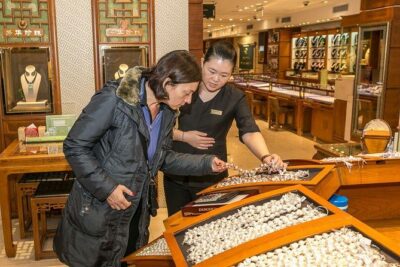
Private Beijing Markets Tour with Tea Tasting at Hongqiao Pearl Market
Read our review →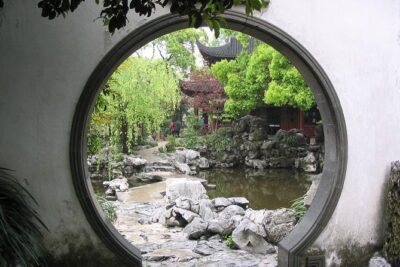
3-Hour Shanghai Yu Garden &Old Town Private Tour with Tea Tasting
Read our review →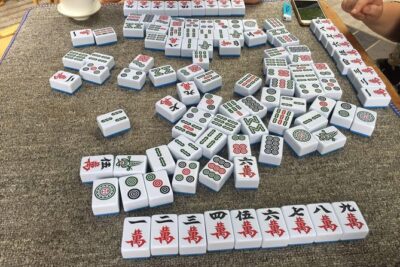
Half-day Private Mahjong course in Local Tea House
Read our review →Browse the lists this tour appears in